
Last updated November 18, 2026
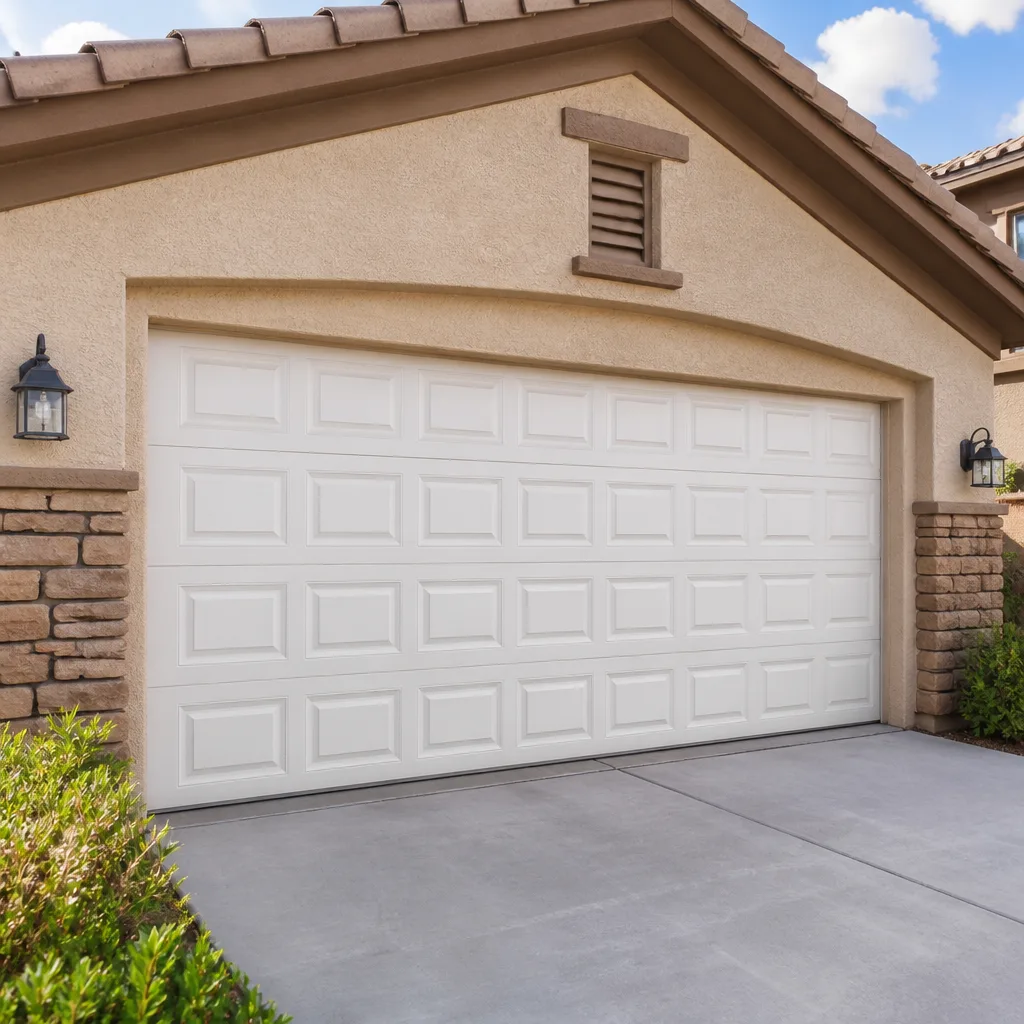 Raised-panel steel
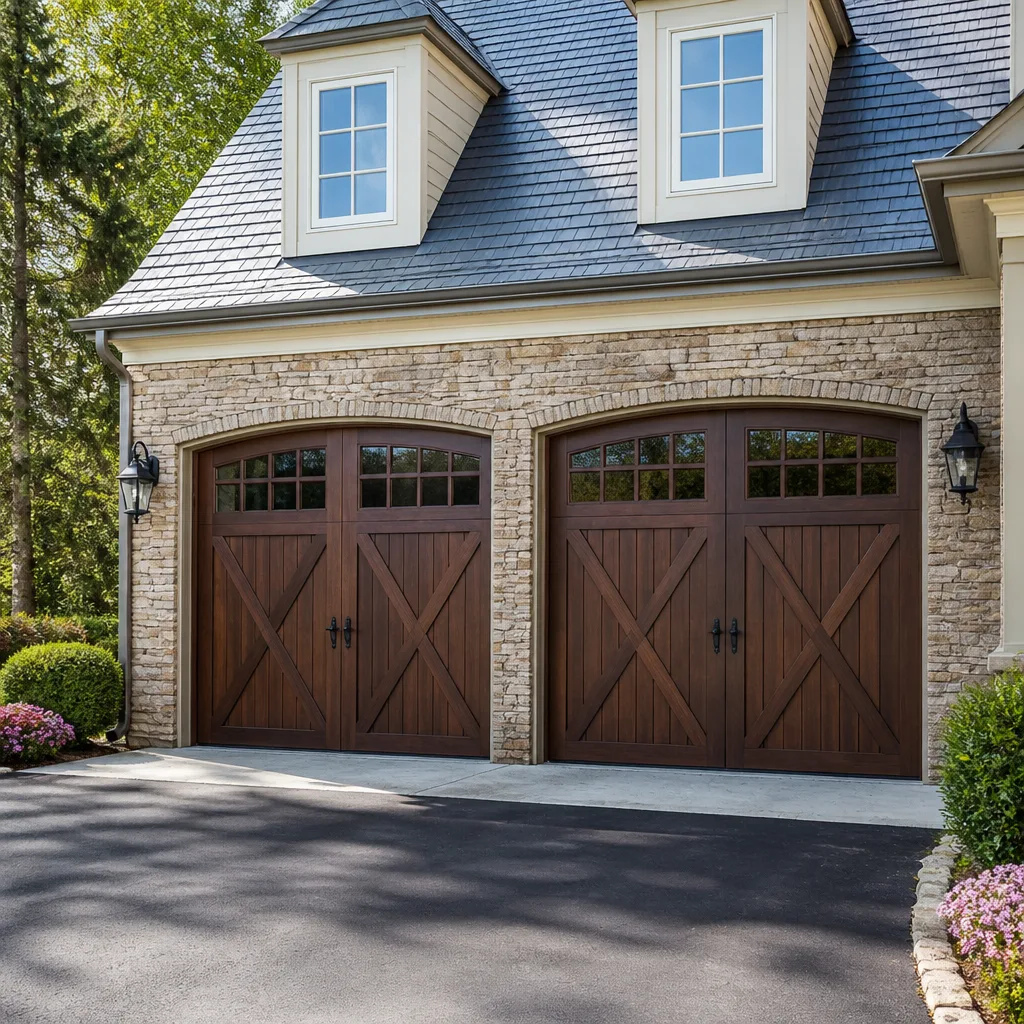 Carriage house
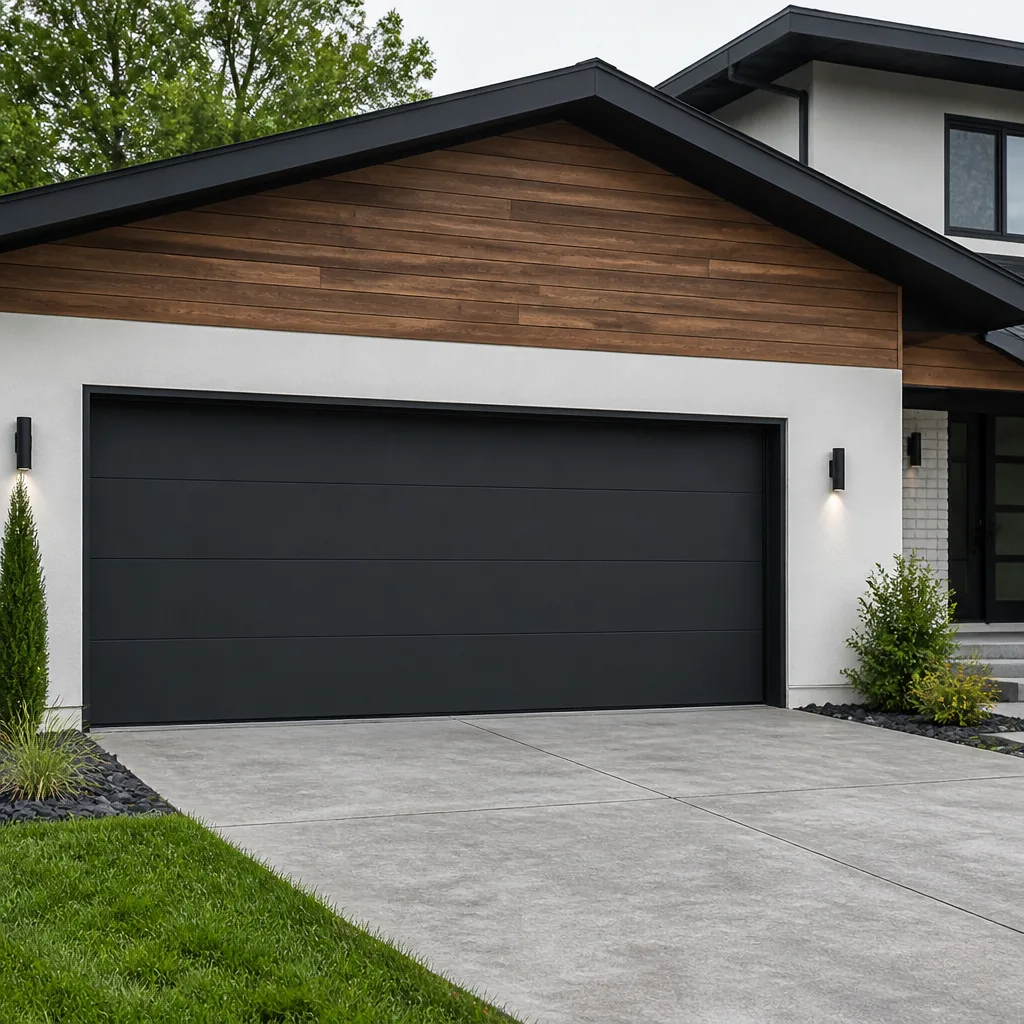 Modern flush
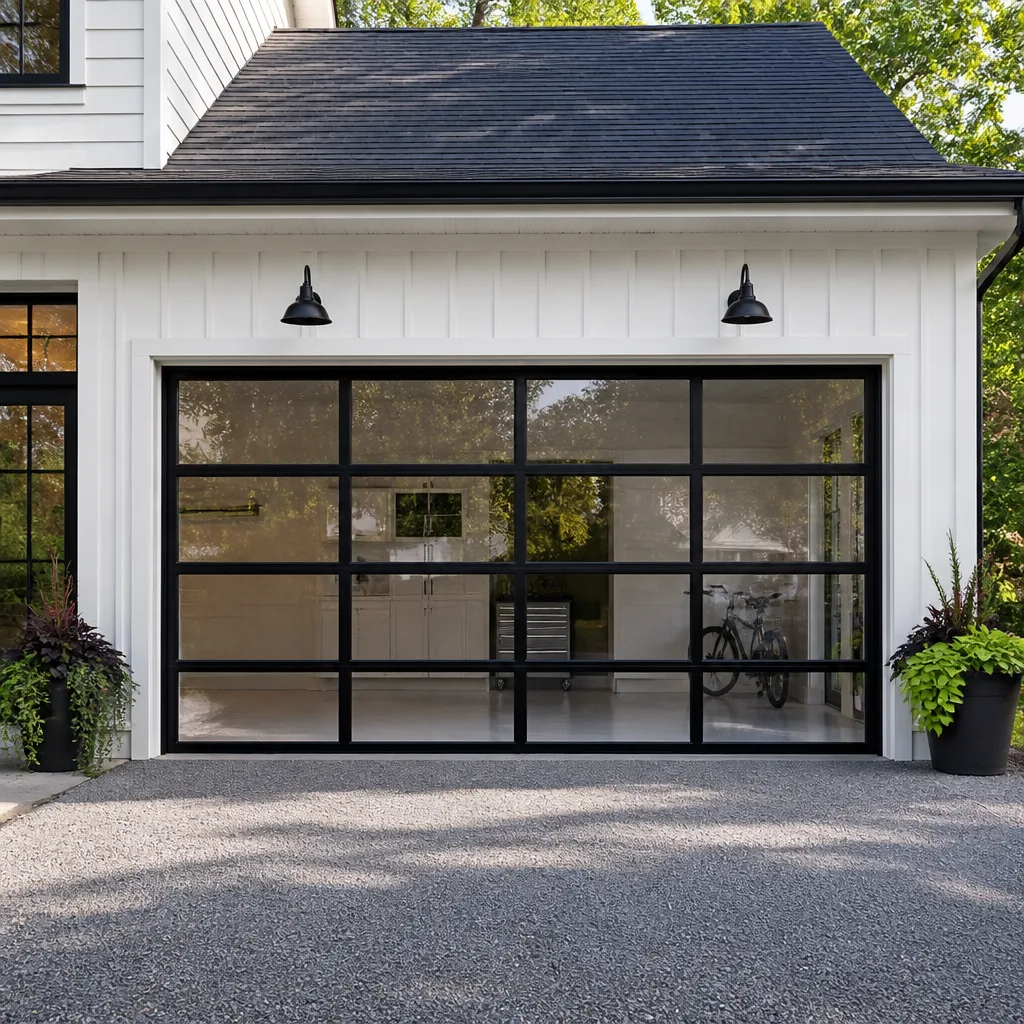 Full-view glass
 LiftMaster openers
 Chamberlain openers
Full 25-point door and opener safety check with every visit - springs, cables, rollers, tracks, and your LiftMaster or Chamberlain opener included
You get a price before we start. It does not change when the pro arrives.
Get your free estimateDIY vs Professional Emergency Garage Door: What’s Safe to Do Yourself
The manual release cord is designed for homeowner use. The cable drum above it is not. At 11 p.m., knowing exactly where that line sits is the entire decision. Most garage door emergencies look more fixable than they are, and the ones that look scariest are often the easiest to stabilize. That gap between appearance and reality is where injuries and bigger repair bills come from. This guide draws a hard line between interventions that make a dangerous situation safer and interventions that make it worse under time pressure. We’ll cover the five actions any homeowner can take regardless of mechanical skill, the three that look safe and aren’t, and what “making it worse” actually looks like mechanically. We do this work in Whitney, where a door that jammed on a 108-degree afternoon behaves differently than the same door on a mild spring morning.
Quick Answer
You can safely stabilize almost any garage door emergency, but you should only repair a narrow set of them. Stabilizing means making the door safe to leave alone until a technician arrives: releasing the opener if the door is stuck, disconnecting power, keeping people and vehicles clear. Repairing anything that involves springs, cables, or the track under load requires a trained professional. The distinction matters because most emergency calls we run in Whitney involve a homeowner who did the right stabilizing step and then crossed the line into the wrong repair step.
Styles & brands we work with
- Raised-panel steel
- Carriage house
- Modern flush
- Full-view glass
- LiftMaster openers
- Chamberlain openers
Table of Contents
- Stabilization vs. Repair: The Line That Decides Everything
- The Five Emergency Actions That Are Safe for Any Homeowner
- The Three Actions That Look Safe and Are Not
- Why Darkness and Stress Change the Risk Profile
- What “Making It Worse” Looks Like Mechanically
- Track and Panel Damage: When Stabilizing Is the Whole Fix
- Opener Emergencies You Can Address Yourself
- Whitney Conditions That Trigger Emergency Calls
 Before
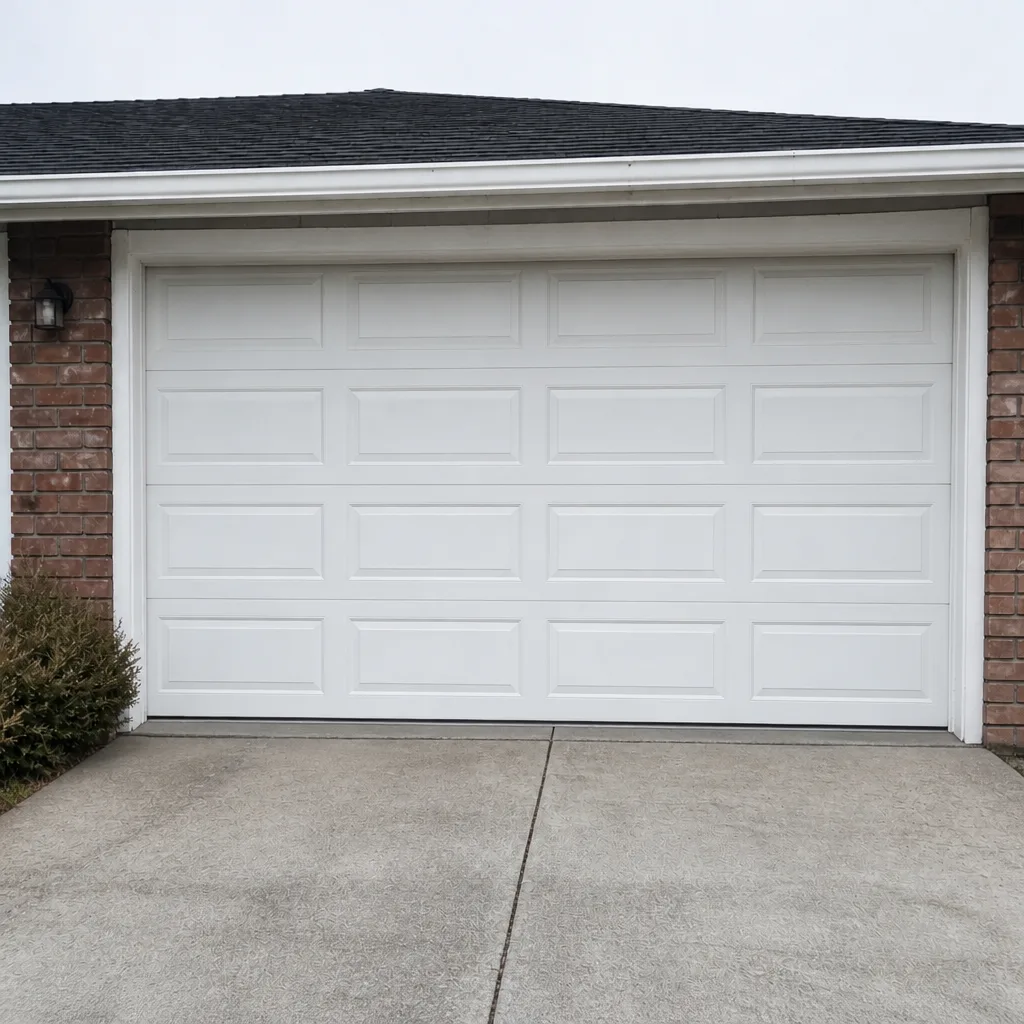 After
Stabilization vs. Repair: The Line That Decides Everything
Stabilization makes a broken door safe to ignore until someone qualified arrives. It doesn’t restore function. Repair restores function, and on a garage door, “function” means moving 150 to 300 pounds of door on a torsion spring wound to hundreds of pounds of tension. Those are not the same job, and the confusion between them causes most of the injuries we hear about.
A torsion spring is the coiled steel bar above your door that counterbalances its weight. When it breaks, the door becomes a dead weight. A homeowner can safely leave a dead-weight door closed or propped and call for help. A homeowner who tries to re-tension that spring is working with stored energy that can release without warning. The same logic applies to the lift cables that run from the springs to the door’s bottom corners: those cables are under constant tension, and a frayed one can snap with enough force to cut through a hand.
Stabilization is almost always within reach. Repair is almost always not. If you remember one thing from this guide, make it that. In Whitney, where we see plenty of doors that were installed when the surrounding subdivisions went up over the last decade, the springs are often still original and reaching the end of their cycle life. Knowing the difference between stabilizing and repairing helps you stop at the right point.
The Five Emergency Actions That Are Safe for Any Homeowner
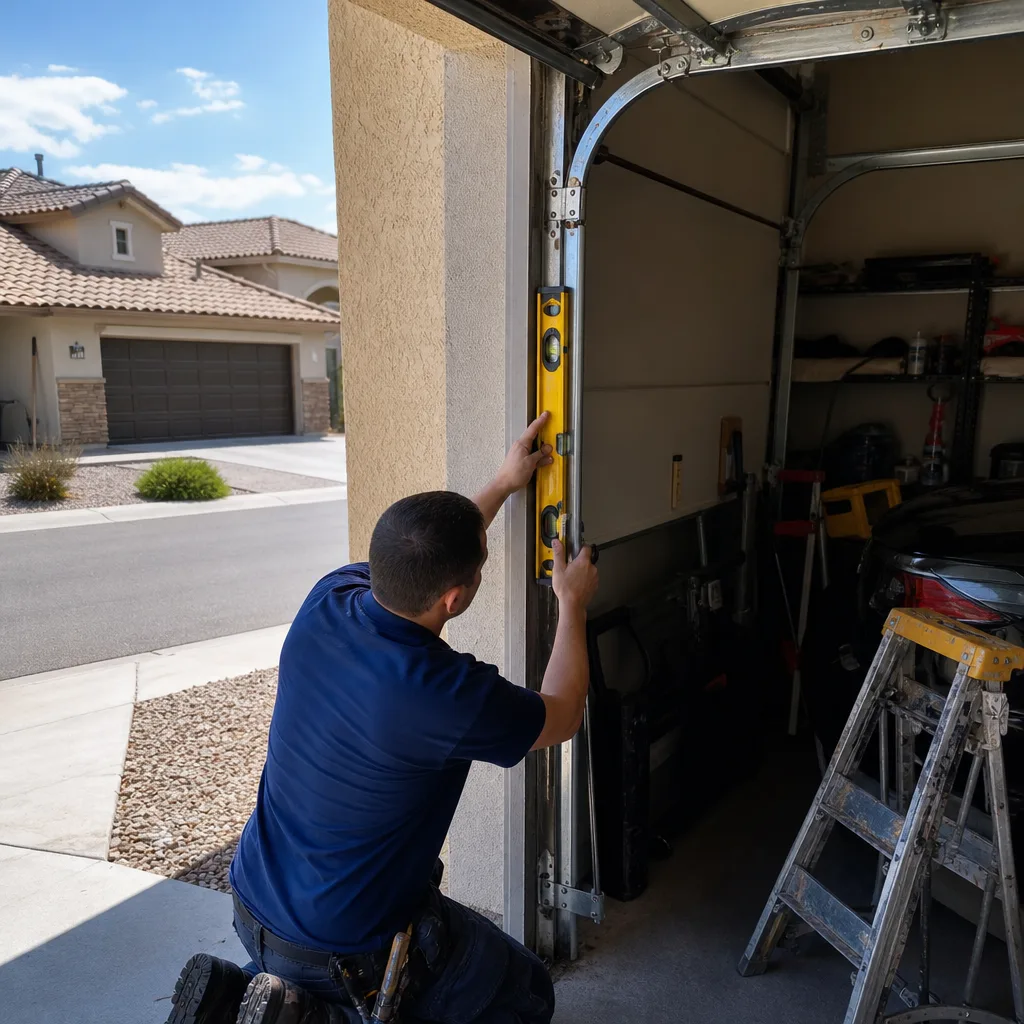
These five actions are safe regardless of your mechanical comfort level. Each one has a correct procedure, and doing it correctly matters as much as doing it at all.
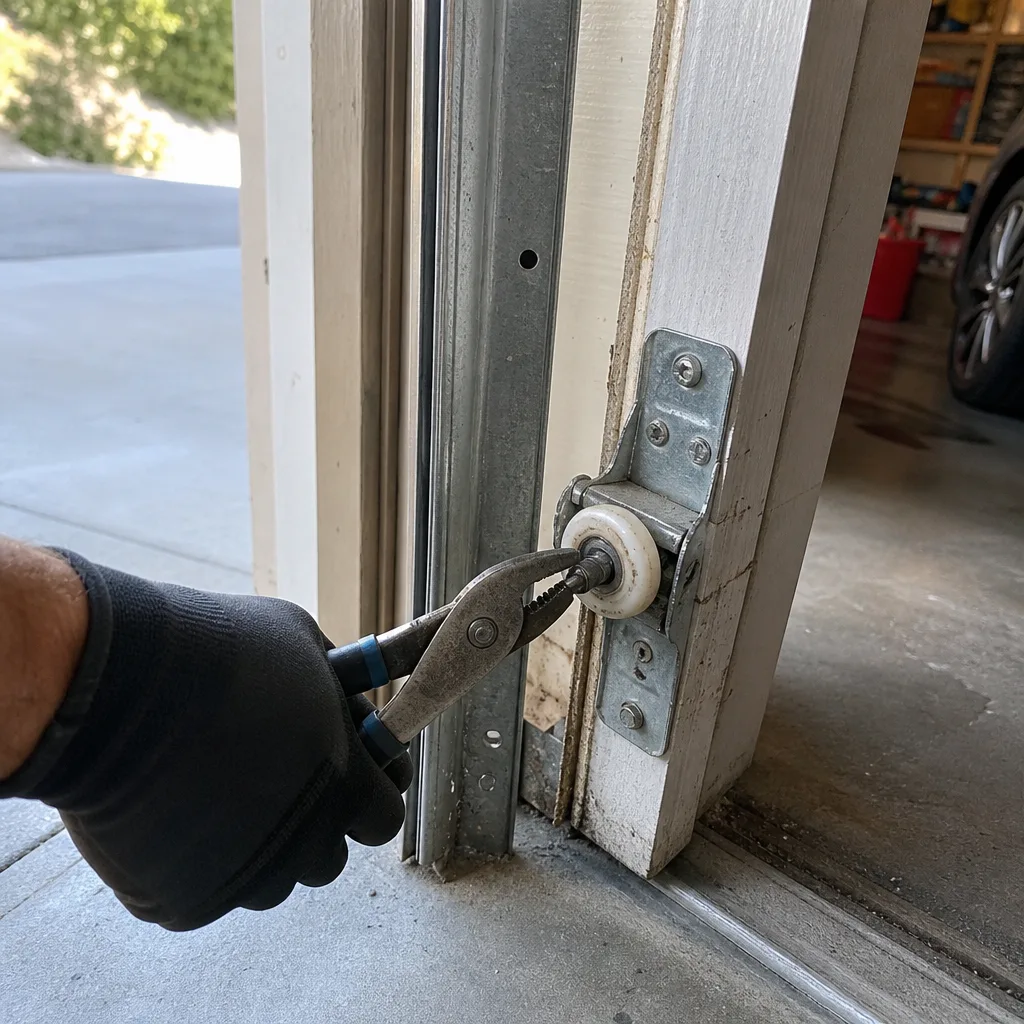
- Disconnect the opener and pull the manual release cord. The cord hangs from the trolley carriage, the sliding piece that connects the opener rail to the door. Pull it straight down and the door disconnects from the motor. Do this only when the door is fully closed. Pulling it with the door partway up can drop the door.
- Cut power at the wall switch or breaker. If the door is moving erratically, cycling on its own, or the opener is making grinding noises, kill power before anything else. A logic board that’s failing can trigger the door at random, and the last thing you want is the door moving while you’re standing under it.
- Clear the path and block access. Keep vehicles out of the garage, keep kids and pets away, and place something heavy in front of the door if it’s not fully seated. A door that’s hanging a few inches open is a door that can drop the rest of the way.
- Prop a partially open door with a sturdy support. If the door is stuck partway up, slide a 2×4 or a heavy adjustable prop under the bottom panel at both ends and secure it. This keeps a door with a broken spring from sliding down unexpectedly.
- Photograph everything before you touch it. Take clear photos of the spring, the cables, the track, and the inside of the opener housing. These photos are what a technician uses to quote the repair, and they’re also the record of the condition you found the door in. When we arrive, we do our own photo record, and comparing the two eliminates disputes about what was broken before we got there.
None of these require tools beyond a phone and something to prop with. All of them are reversible. And all of them keep you out of the danger zone until a technician can assess the door.
The Three Actions That Look Safe and Are Not
These are the ones homeowners try most often, usually because a video made them look manageable. Each involves stored energy or heavy moving parts in a way that doesn’t show on camera.
Cable reattachment
A cable that has slipped off its drum looks like a quick re-hook. It isn’t. The lift cable carries the full counterbalance load on that side of the door. If the cable has come loose, the spring is likely holding tension that will release the moment the cable is re-engaged. A snapped cable travels fast enough to cause deep lacerations. If you see a cable off its drum, stop and call. Our Garage Door Repair in Whitney team handles cable replacements routinely, and the correct procedure involves winding down the spring tension first, which is not a homeowner job.
Spring winding
Torsion spring winding requires two winding bars inserted into the spring cone and turned in controlled increments while the technician holds the tension. There is no safe way to do this with hand tools, a pipe wrench, or whatever’s in the garage. Springs store enough energy to break bones. A homeowner with no training should never attempt it, and neither should a handyman. This is the single most dangerous task on a garage door.
Track realignment under load
A bent track that’s causing the door to bind looks like something you can nudge back into place with a rubber mallet. The problem is that a misaligned track is often holding a door that’s already under uneven load. Straightening the track while the door is attached can release that load suddenly. Worse, a track that’s been bent and re-bent loses its structural integrity. If the door is stuck because of track damage, stabilize it and call. Our Garage Door Opener Repair & Installation in Whitney team can assess whether the track needs realignment or replacement.
Why Darkness and Stress Change the Risk Profile
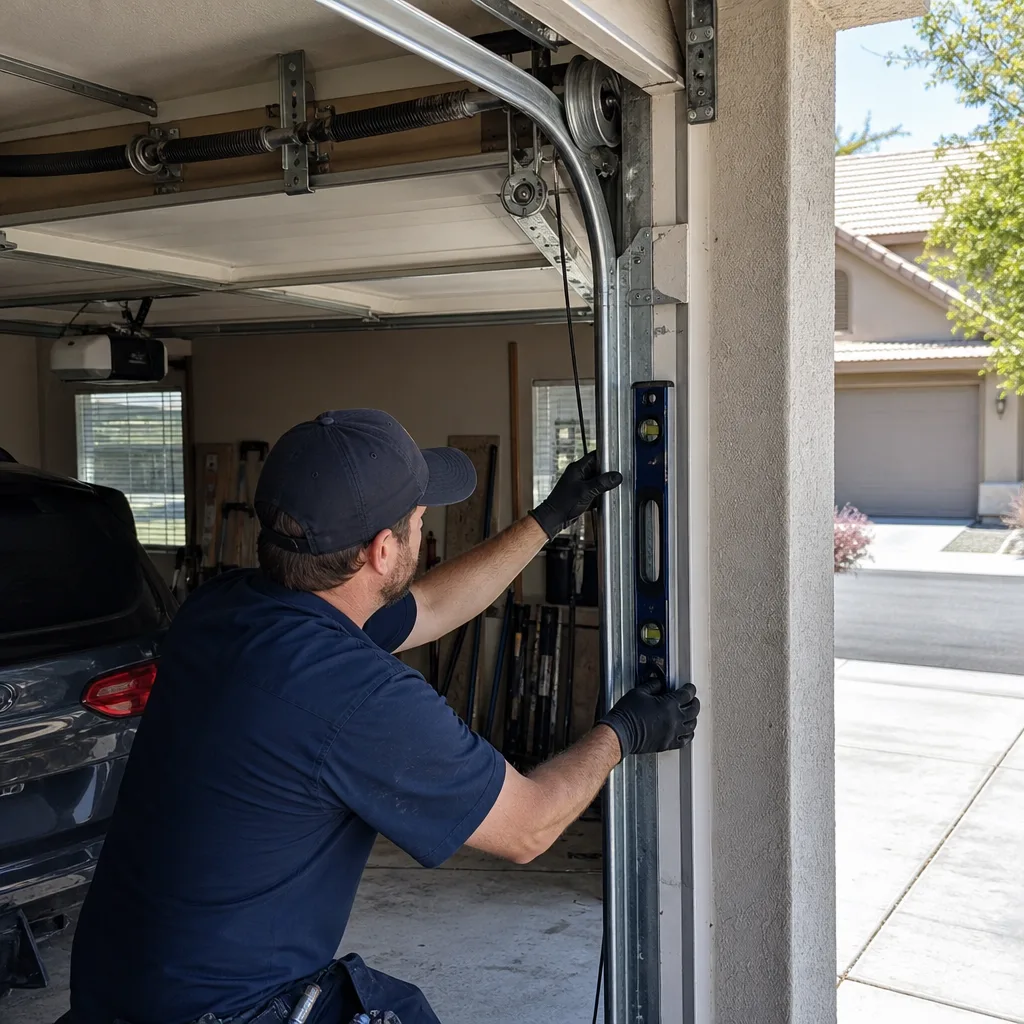
A task that’s borderline-safe in daylight becomes genuinely dangerous at 11 p.m. under stress. This isn’t about being cautious; it’s about the mechanics of the situation changing.
- Lighting. Most garages have one overhead bulb, and its shadow falls exactly where the spring and cable drums sit. What looks like a clean spring in daylight looks like a clean spring in a shadow at night.
- Footing. A garage floor with oil residue, condensation, or a slight slope doesn’t matter in daylight. It matters a lot when you’re standing on a step stool reaching for a track.
- Reaction time. Stress narrows attention. A homeowner who would notice a frayed cable in daylight often doesn’t register it at night, because the focus is on “getting the door down.”
- Time pressure. The car is inside, the kids need to be at school in the morning, or a delivery is due. Time pressure is what pushes borderline decisions into unsafe territory. In our experience, the calls that come in at midnight for a Whitney door that “just needs a quick fix” are the calls where the homeowner tried the quick fix first.
We’d rather have the call before the fix than after. Calling at 11 p.m. for an assessment is free, and our lines are staffed by a live person around the clock. Calling at 11 p.m. after a cable snapped is a longer, more expensive repair.
What “Making It Worse” Looks Like Mechanically
Recognizing the stop point means knowing what the next failure looks like before it happens. Each of these signals means the homeowner has reached the line.
- The door lifts unevenly, one side first. That’s the sign a cable has jumped its drum on one side. If you try to run the opener to “even it out,” the drum will bend and the cable may snap.
- The spring makes a clunk and the door stops responding. That’s a broken torsion spring. The door is now dead weight. If you pull the manual release expecting the door to stay put, it will drop.
- The door reverses halfway down, repeatedly. That’s a limit switch or safety sensor issue. If you bypass the sensors to force the door down, the door can close on a person or a vehicle.
- The opener runs but the door doesn’t move. That’s a stripped gear in the opener or a broken trolley. If you keep running it, the gear strips further and you’ll be buying a new opener instead of a part.
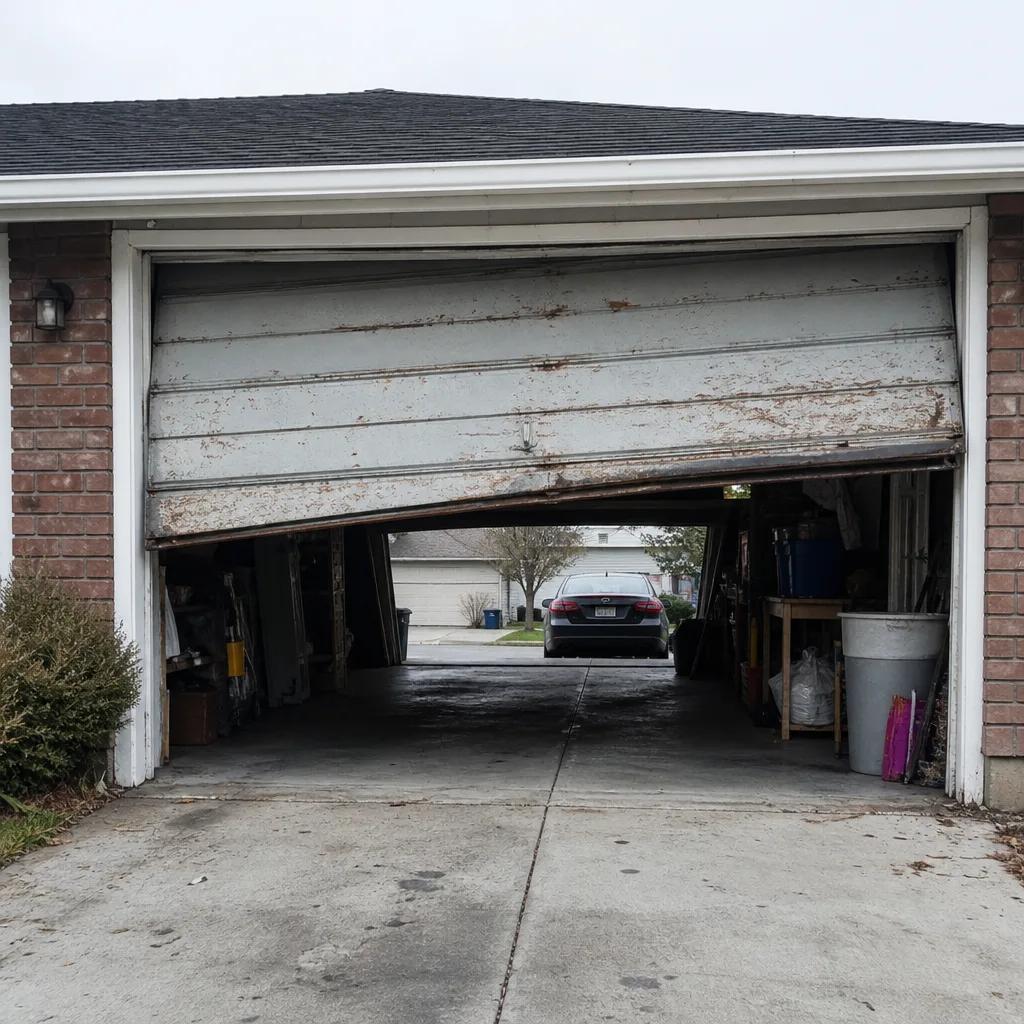
- The track bows out when the door moves. That’s the door pushing against a bent track under load. If you try to force it, the door panels can buckle and the door can come off its hinges.
Each of those is your stop point. Stabilize and call. When we arrive, the first thing we do is photograph the failure, and Clause 4 of The Haven Standard is why you see the failed part before anyone quotes a replacement. That’s not a sales technique; it’s how we avoid the “was that broken before we got here?” conversation.
Track and Panel Damage: When Stabilizing Is the Whole Fix
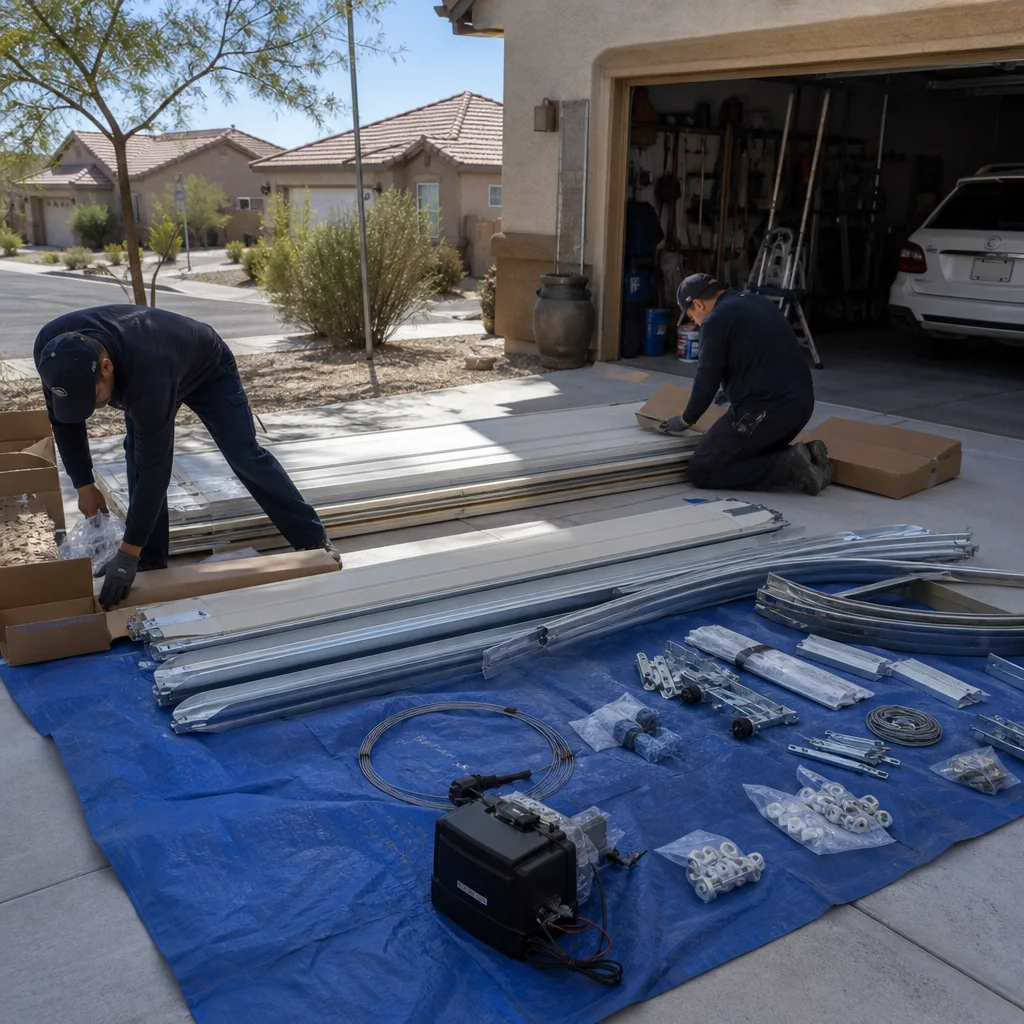
Not every emergency requires a full repair. Some calls we run in Whitney end with the door stabilized and the homeowner told that the damage is cosmetic and the door can be safely used once a technician does a minor track adjustment. The distinction matters for cost, and it’s one more reason a written quote before work starts is worth insisting on.
A dented bottom panel from a car backing into the door is a repair, not an emergency. A track that’s been nudged out of vertical alignment by a glancing hit is often a 30-minute realignment. A Clopay or Amarr door with a bent panel doesn’t always need the whole door replaced; single panels are replaceable on most models, and that’s a much smaller job than it sounds. Our Garage Door Installation in Whitney team can tell you whether the panel is replaceable or the door needs to come out, and we’ll show you the measurement and the part number before you decide.
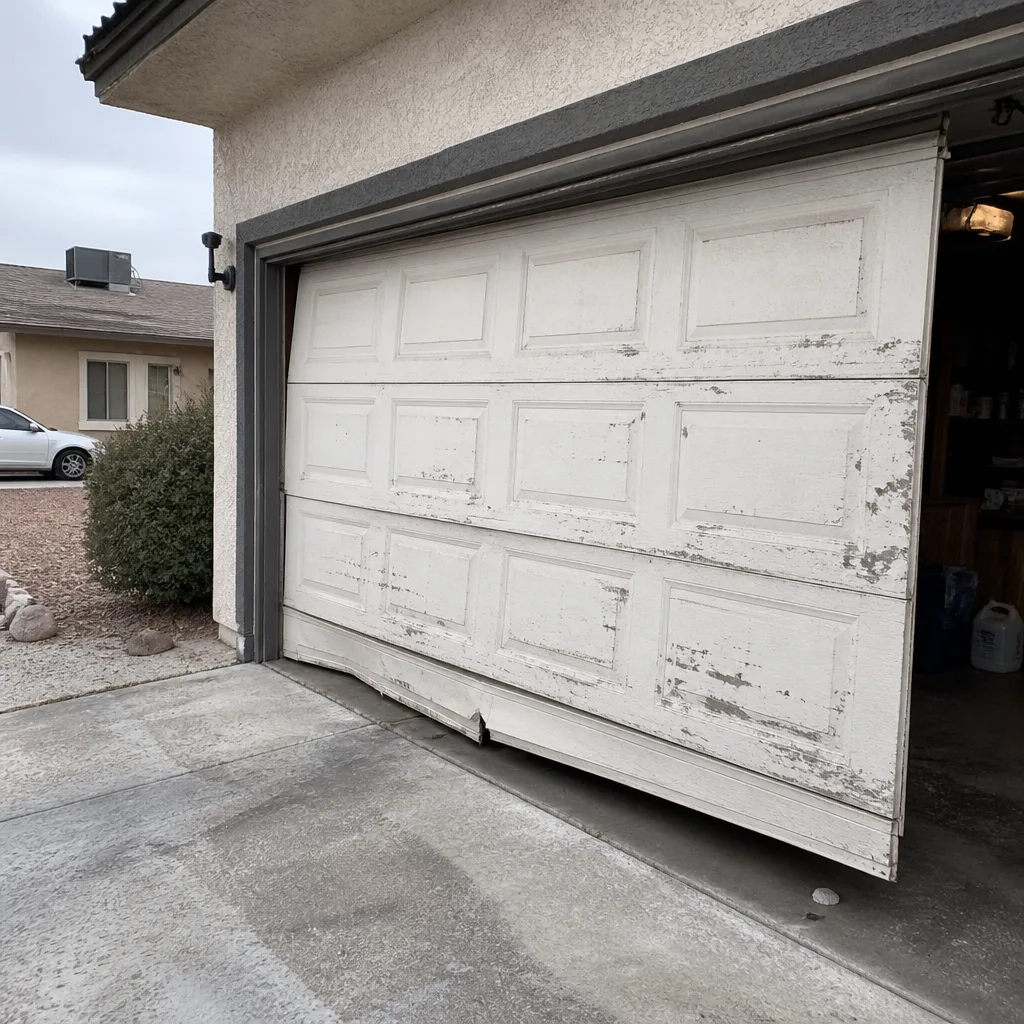
What is not a small job: a door that’s been pushed off its hinges, a drum that’s bent, or a bottom section that’s separated from the stiles. Those require a real repair, and forcing the door in the meantime makes the fix more expensive. The rule of thumb: if the door is no longer square in the opening, or if the panels are visibly separating, call for an assessment before running the opener again.
Opener Emergencies You Can Address Yourself
Openers are lower-risk than the door itself, and there’s a small set of fixes you can safely try before calling. A Chamberlain or Genie opener that won’t respond often has a dead remote battery or a tripped wall switch. A door that reverses immediately usually has a misaligned safety sensor, and the sensors have small LED indicators that tell you which one is out of line. A door that opens but doesn’t close, or closes but doesn’t open, is often a limit switch adjustment.
What you should not do: bypass the safety sensors, force the travel limits past their stop points, or open the opener housing to inspect the logic board. Those are the interventions that turn an opener repair into an opener replacement. Our Garage Door Opener Repair & Installation in Whitney team swaps logic boards, gears, and trolley carriages on all eight major brands, and the parts are names you’ll recognize.
One thing we see often in Whitney: openers that were installed with the door and have never had a battery change in the remote or the wall unit. If the door worked yesterday and doesn’t work today, check the remote battery before assuming the opener is dead.
Whitney Conditions That Trigger Emergency Calls
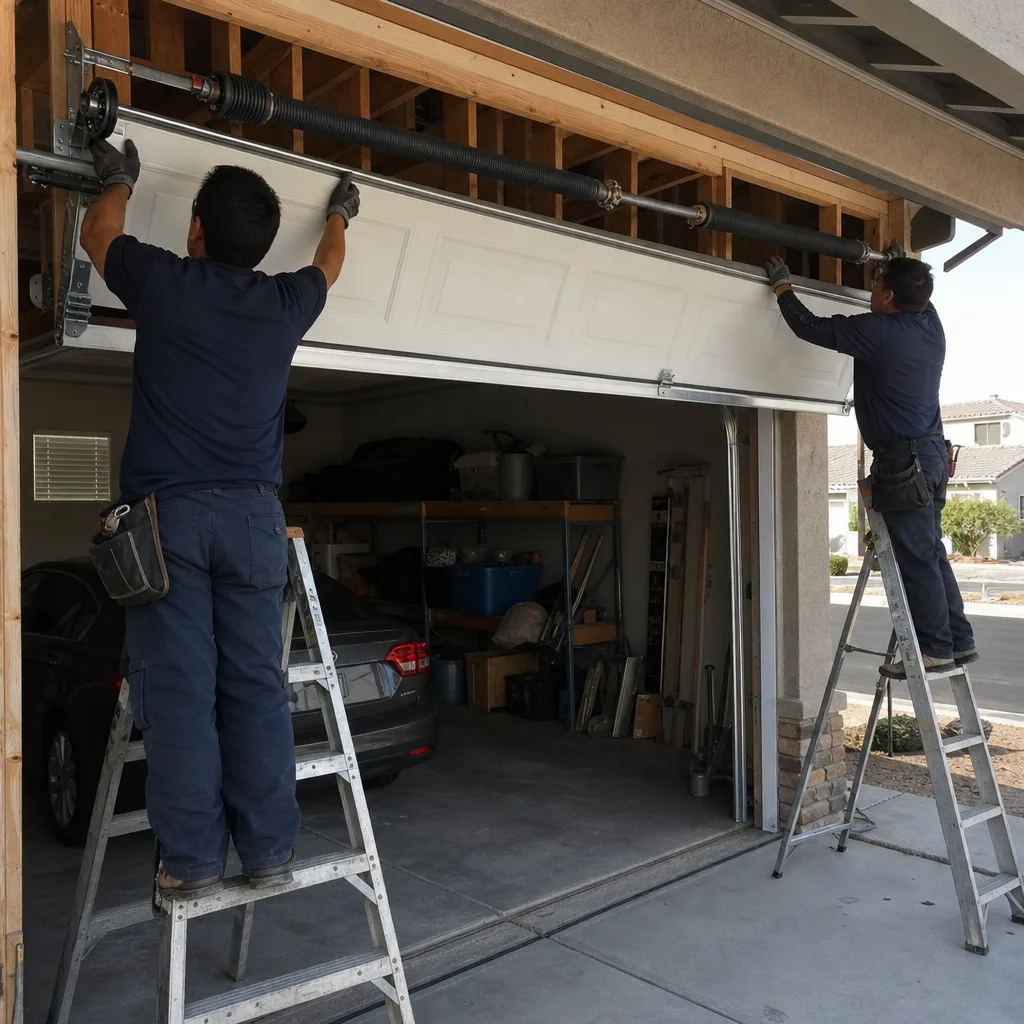
Whitney’s climate puts specific stresses on garage doors that don’t show up in milder markets. Summer temperatures over 100 degrees are routine, and the heat cycles a garage through wide swings every day. That expansion and contraction is hard on torsion springs, which is why the spring failure calls we get in Whitney cluster in the late-summer months. A door that was fine in April is often a door with a cracked spring by August.
Dust and wind-blown grit are the other factor. Tracks accumulate grit that grinds on the rollers, and rollers that grind produce the bent tracks we see on emergency calls. If you hear a rhythmic squeal from the door, that’s the rollers, and a quick lubrication with a silicone-based spray is a safe homeowner fix. It’s one of the few door-related maintenance tasks that’s genuinely DIY-friendly.
We don’t say this to scare you into a service call. We say it because knowing your door’s seasonal pattern is the difference between a scheduled repair and a 2 a.m. one. If you’re near the Henderson or Green Valley side of Whitney, your door sees slightly less dust than the west-facing subdivisions, but the heat exposure is the same. Servo Garage Doors Whitney home is where the full range of services is laid out if you’re mapping out a maintenance plan.
Common Mistakes to Avoid
- Pulling the manual release with the door partway open. It’s designed for use with the door fully down. Pulling it mid-travel drops the door.
- Trying to hold up a broken door while reaching for a tool. A door with a broken spring is dead weight and will win. Stabilize it first, then call.
- Bypassing the safety sensors to force the door closed. Those sensors exist because a closing door can kill someone. Never defeat them, even temporarily.
- Spraying WD-40 on the torsion spring. It attracts dust, which accelerates wear. Silicone spray on the rollers and hinges is the correct lubrication.
- Ignoring a single “clunk” from the spring. A torsion spring often breaks with one loud noise, then leaves the door barely operable. The door isn’t fixed after the noise stops.
- Letting a handyman attempt a spring or cable job. These require specific training and specific tooling. A handyman who says “sure” is telling you they’ve never done it, and in Whitney, that call is more common than you’d think.
- Calling after the repair attempt. A door that was safe to stabilize for $0 usually isn’t safe to repair after a failed DIY attempt for the original amount. Call first.
See the difference
BeforeAfter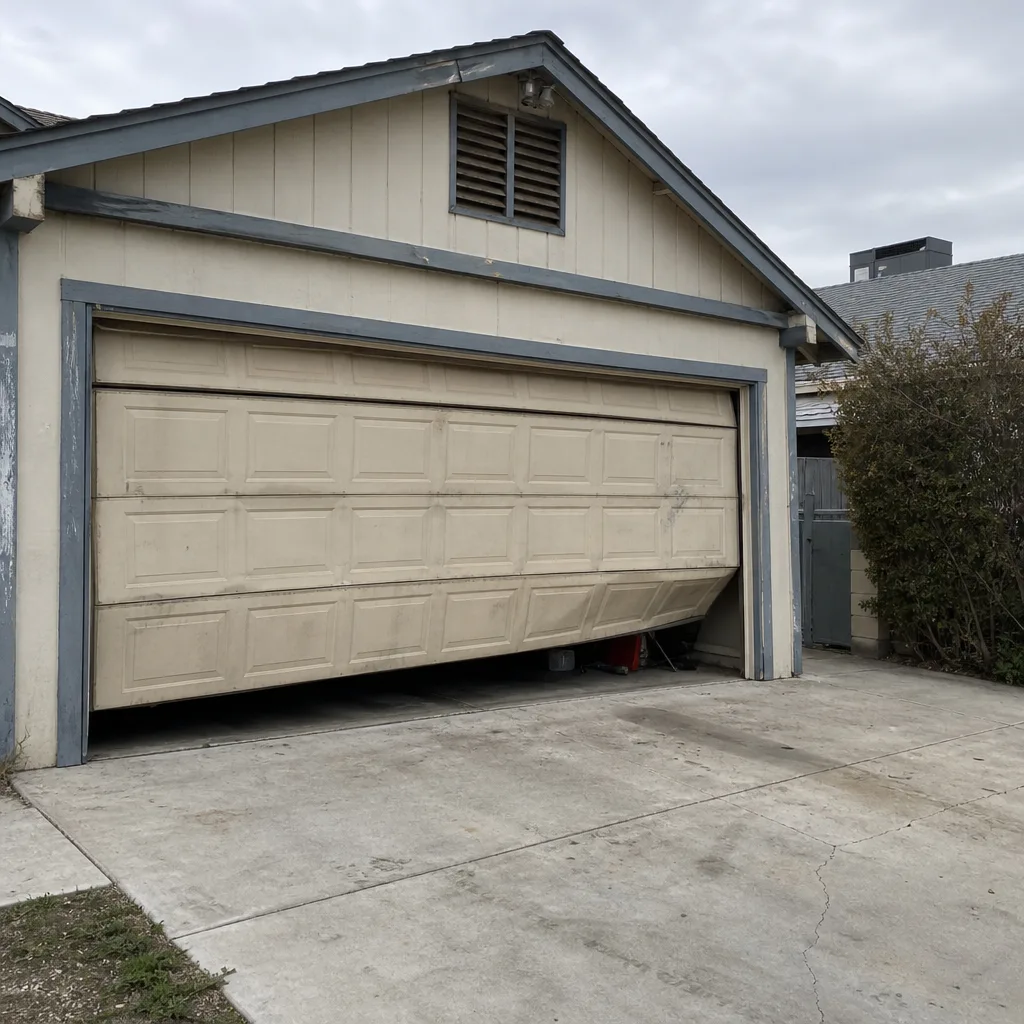 Before
 After
 Before
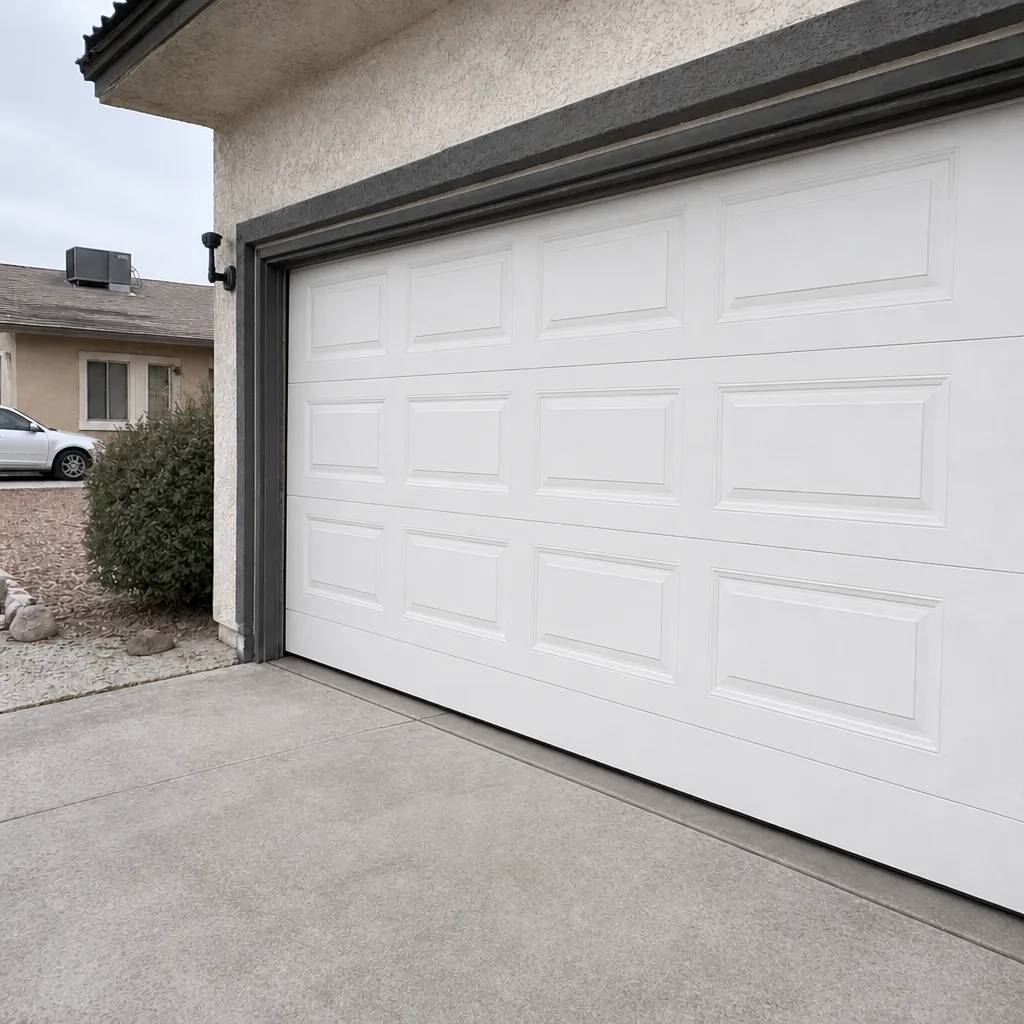 After
When to Call a Professional
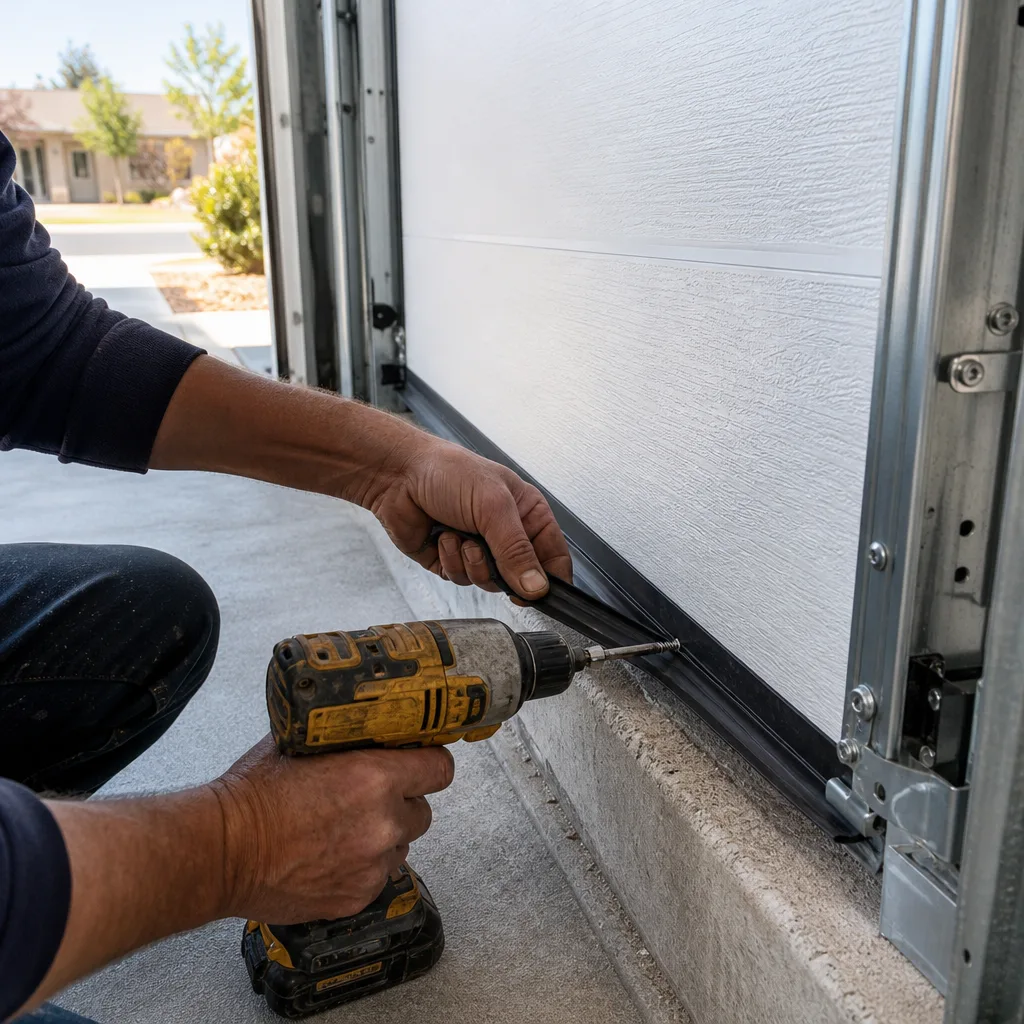
Call a professional the moment the failure involves springs, cables, or track under load; the moment the door moves unevenly or drops; the moment you see frayed cable or bent hardware; or the moment you’ve done everything in the five safe actions and the door is still in a condition you can’t leave safely overnight. Our technicians have up to 11 years of experience, and we’ve made 18,000+ garage doors right on the same written-price-first system. Servo Garage Doors Whitney offers free estimates in Whitney – call (888) 402-1096. Every job gets a flat written price and written scope before any work starts, per Clause 1 of The Haven Standard, and a documented photo record when the technician leaves, per Clause 4. If you’ve already got an estimate from another company, bring it in for a free second opinion. No coupon, no code.
Frequently Asked Questions
It’s safe to stabilize the door at night, but it’s not safe to attempt a real repair. The five safe actions (release the opener, kill power, clear the path, prop a partially open door, photograph everything) work under any lighting. Anything involving springs, cables, or a loaded track is more dangerous at night because shadows, fatigue, and time pressure all push toward worse decisions. Call us at (888) 402-1096 and a live person answers, day or night.
No. Torsion and extension springs hold hundreds of pounds of stored energy and require two winding bars, controlled increments, and specific training. A homeowner attempting a spring replacement risks serious injury. The safer move is to stabilize the door and call. We stock spring sizes for all major brands including Clopay and Amarr doors in Whitney, and we photograph the failed spring before quoting the replacement.
Try the manual release cord with the door fully closed, then work from there. If the door has a broken spring, releasing it won’t help because the door is dead weight. In that case, call us at (888) 402-1096 and we’ll quote a same-day repair. We answer around the clock, and a named technician is dispatched with an on-the-way text, not a callback window.
Most emergency repairs in Whitney run between about $180 and $450 depending on what failed, with spring replacements at the higher end and opener or sensor repairs at the lower end. Every quote is a flat written price and written scope before work starts, per Clause 1 of The Haven Standard. There’s no upcharge for the emergency call itself. Call (888) 402-1096 for an exact quote on your door.
No. The written price and written scope are agreed before any work starts. If the technician finds something the original scope didn’t cover, they’ll photograph it and quote the addition before touching it. That’s the whole point of Clause 1 and Clause 4 of The Haven Standard: you see what we found, and you approve the price, in writing, before we work.
Yes. The local professional we connect you with holds their own license and insurance as Nevada requires, and their license number is listed, not buried in fine print. Our technicians are background-checked and uniformed on every job. If you want to see the license before dispatch, ask and we’ll send it.
The Bottom Line
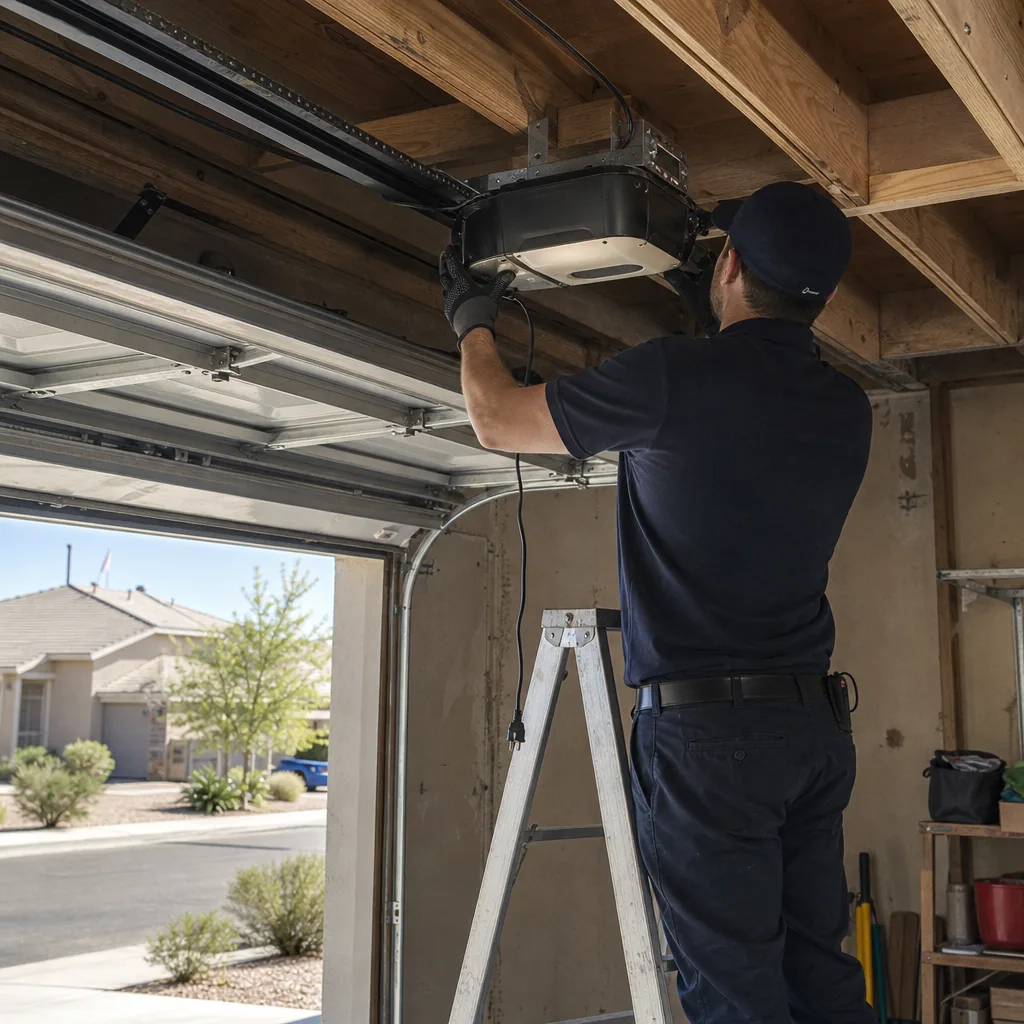
In a garage door emergency, the safest move is almost always stabilizing the door and calling for help. Stabilize means releasing the opener with the door down, killing power, clearing the path, propping a partially open door, and photographing everything. Repair means anything involving springs, cables, or a loaded track, and it belongs to a trained professional. The gap between the two is where homeowners get hurt, and it’s the gap this guide exists to close. If you’re on the fence, call. Our lines are staffed 24 hours, and a phone assessment costs nothing. We’re proud to serve the homeowners of Whitney, and we’d rather you call us before the repair attempt than after.
Written by the team at Servo Garage Doors Whitney.