
Last updated November 18, 2026
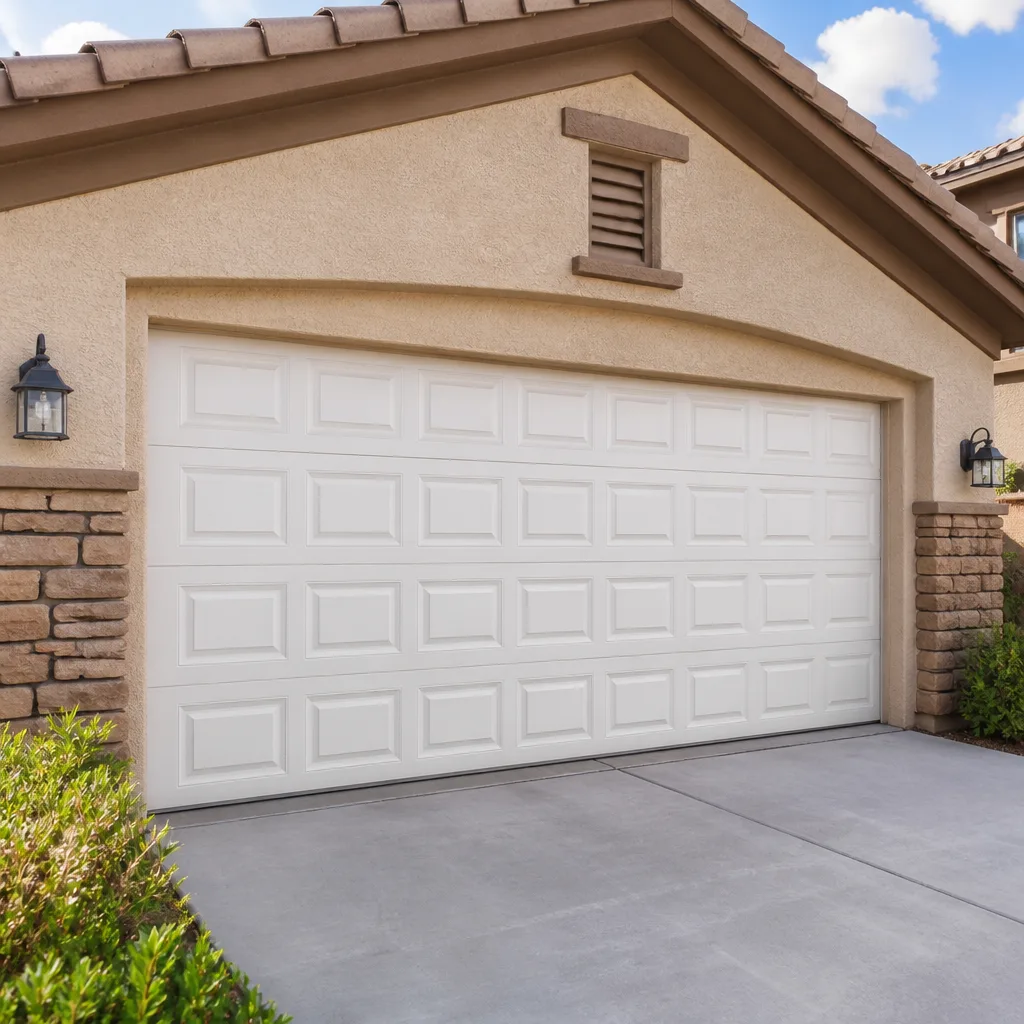 Raised-panel steel
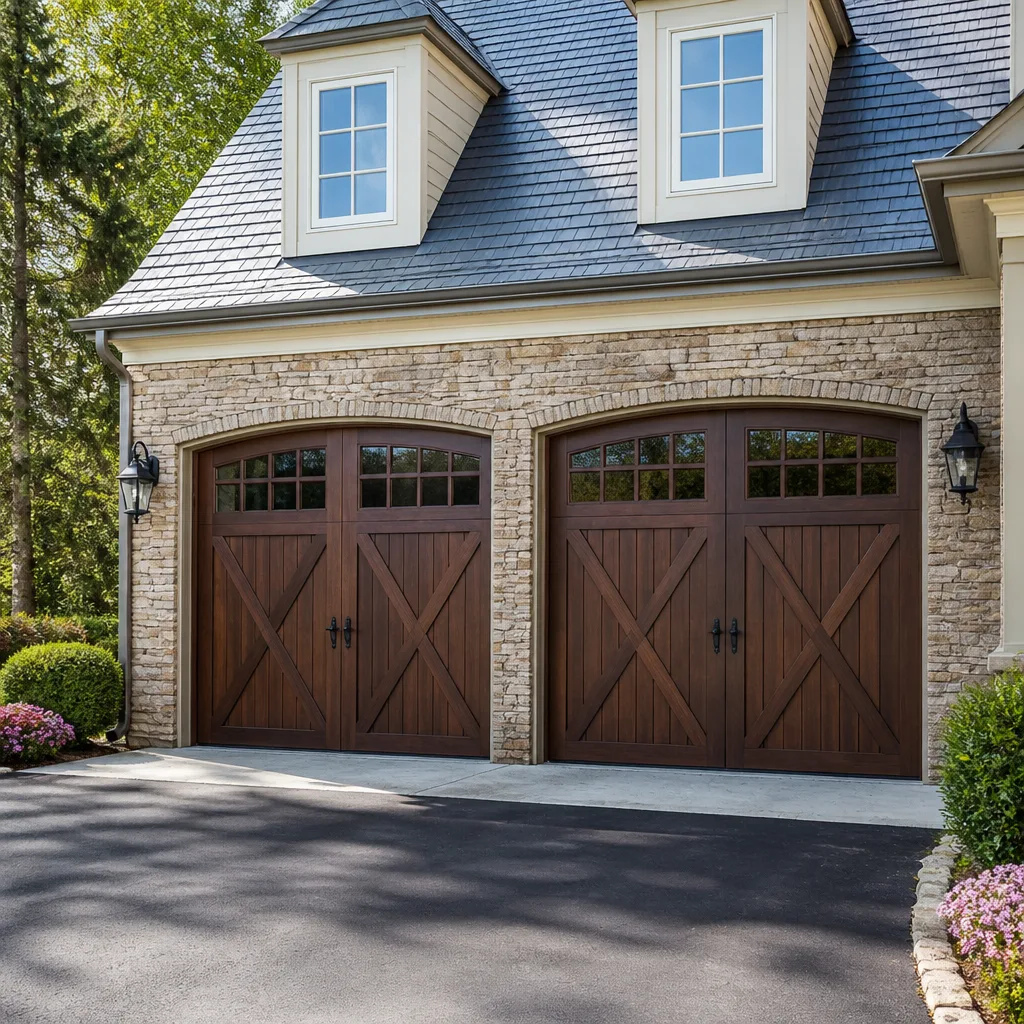 Carriage house
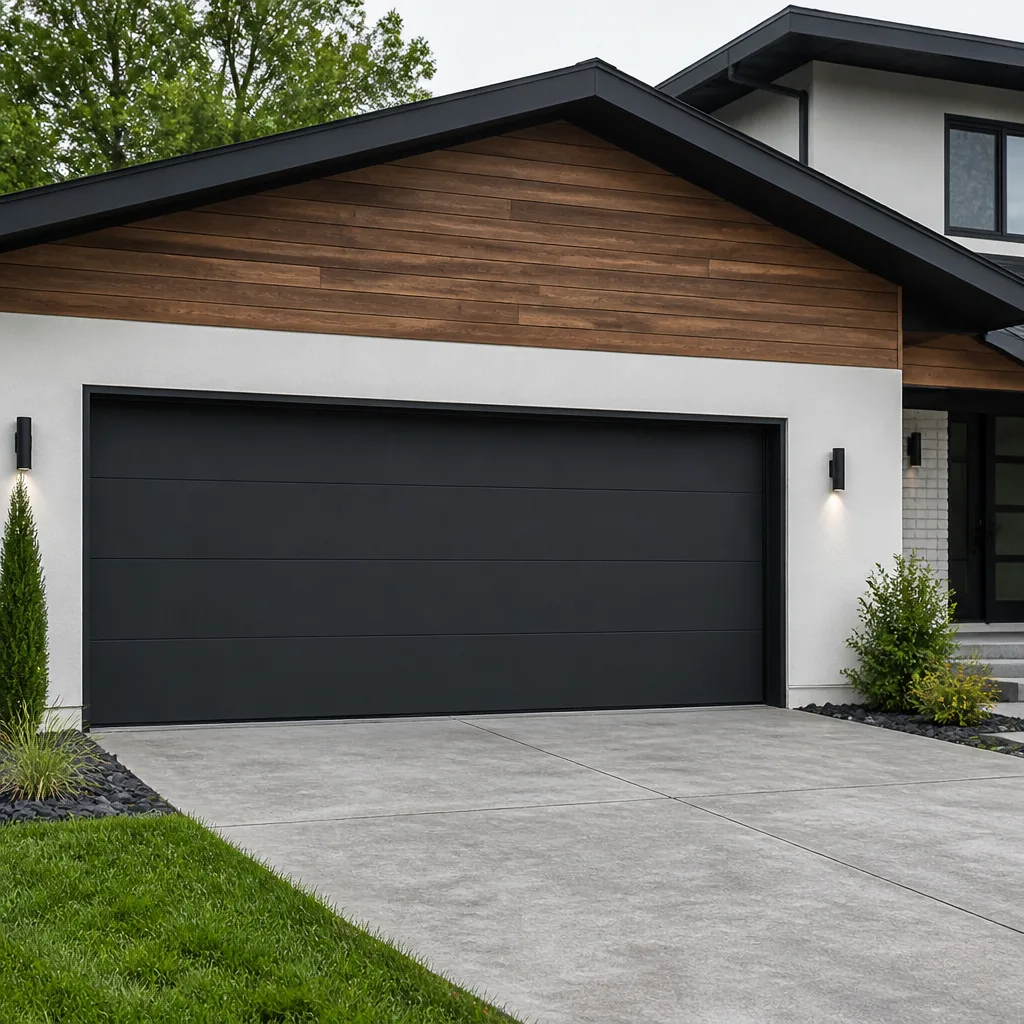 Modern flush
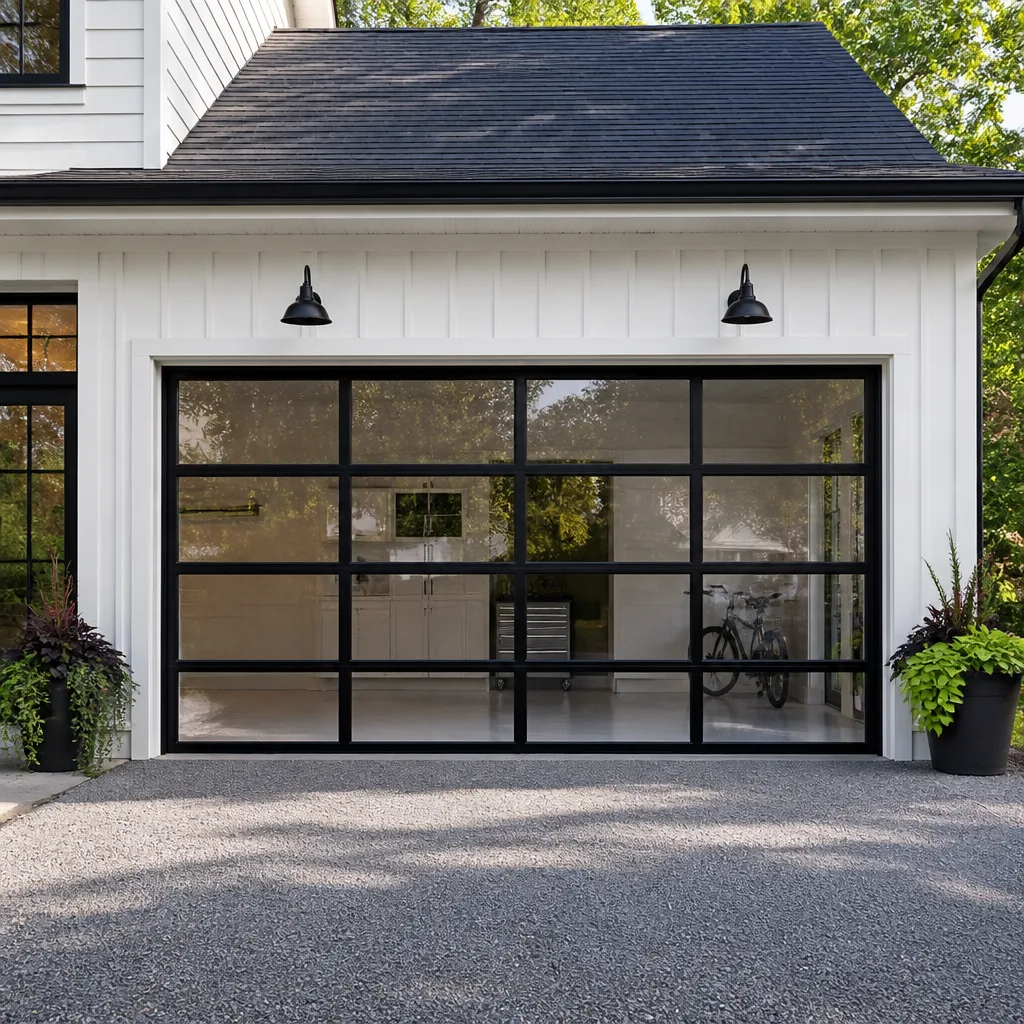 Full-view glass
 LiftMaster openers
 Chamberlain openers
Full 25-point door and opener safety check with every visit - springs, cables, rollers, tracks, and your LiftMaster or Chamberlain opener included
You get a price before we start. It does not change when the pro arrives.
Get your free estimateDIY vs Professional Garage Door Parts: What’s Safe to Do Yourself
A wound torsion spring stores roughly 100 foot-pounds of torque above your head, enough to throw a grown adult across a garage floor if it releases wrong. The YouTube video showing a homeowner unwinding one in a T-shirt has 200,000 views. The ER visit doesn’t. That gap between what looks easy and what’s actually safe is the whole question here. Below we sort every common garage door part into three honest buckets: safe to DIY, safe with the right tools, and professional-only because of stored energy. Some of it you can do this Saturday in Whitney without a second thought.
Quick Answer
Rollers, hinges, weather seal, and the safety sensors are safe for most homeowners to replace themselves. Torsion springs, extension springs, cables, and bottom brackets are professional-only because they hold stored energy that can maim or kill when released. Everything else depends on whether you own the right tools and can work safely off a ladder.
Styles & brands we work with
- Raised-panel steel
- Carriage house
- Modern flush
- Full-view glass
- LiftMaster openers
- Chamberlain openers
Table of Contents
- What “Stored Energy” Actually Means
- Parts That Are Safe to DIY
- Parts That Are Safe Only With the Right Tools
- Parts That Are Professional-Only
- The Bottom Bracket: The Worst DIY Attempt
- How a Failed DIY Repair Changes the Diagnosis
- Common Mistakes to Avoid
- When to Call a Professional
 Before
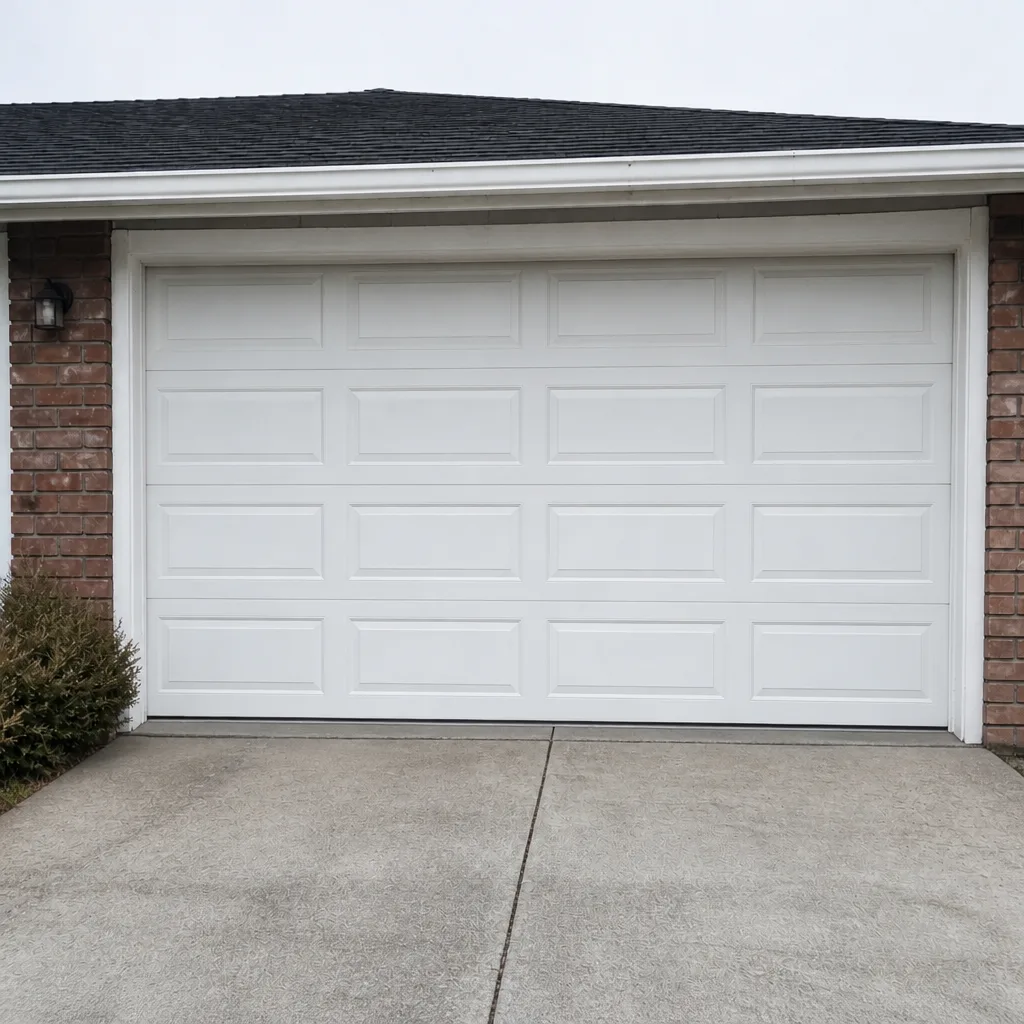 After
What “Stored Energy” Actually Means
A garage door is a balance machine. The motor lifts maybe 30 pounds; the springs do the rest. On a standard 7-foot door, one torsion spring is wound to somewhere between 8 and 12 full turns depending on door weight, and that winding compresses the steel into a coiled energy well. The spring is trying to unwind at all times. Your door counterbalances against that force on every open and close.
When we say “stored energy,” we mean potential energy in a mechanical system – force held in place by a restraint. Two restraints matter. First, the winding cone set screws that clamp the spring to the torsion bar. Second, the bottom bracket at each corner, which anchors the lift cable that runs up the side of the door. If either restraint fails or is deliberately released by the wrong tool or the wrong number of turns, the energy discharges instantly. There is no warning creak. Springs release in roughly a tenth of a second.
For a torsion spring wound past the manufacturer’s spec, the discharge can carry enough torque to break bones in the hand and forearm, and there are documented fatalities from bottom-bracket releases. That’s why we classify by hazard, not by complexity. A torsion spring is a simple, cheap part – about $60 to $110 for the steel in the Whitney market. It’s also the most dangerous thing in the garage.
Parts That Are Safe to DIY
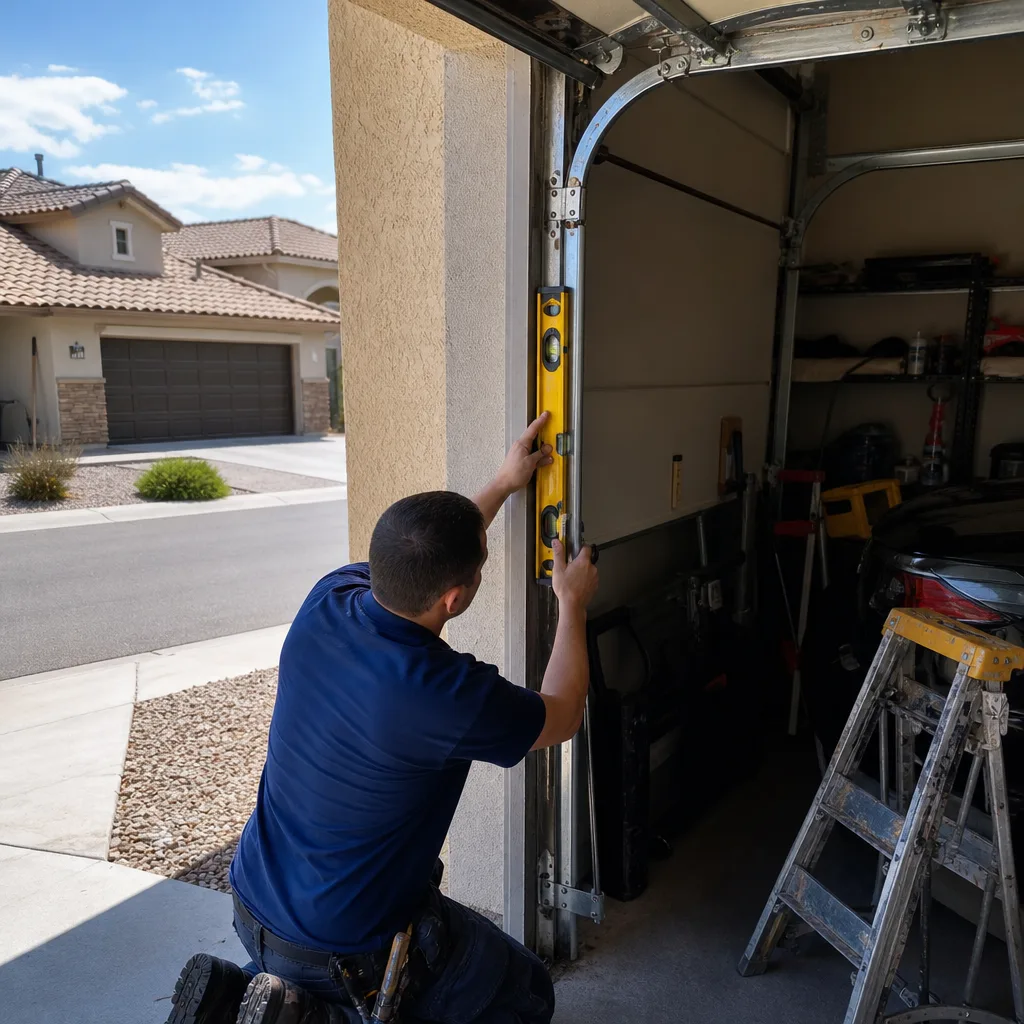
These parts hold no meaningful stored energy once the door is fully closed and the opener is unplugged. You can replace them with hand tools in an afternoon, and if the replacement goes sideways the door simply won’t move – it won’t hurt you.
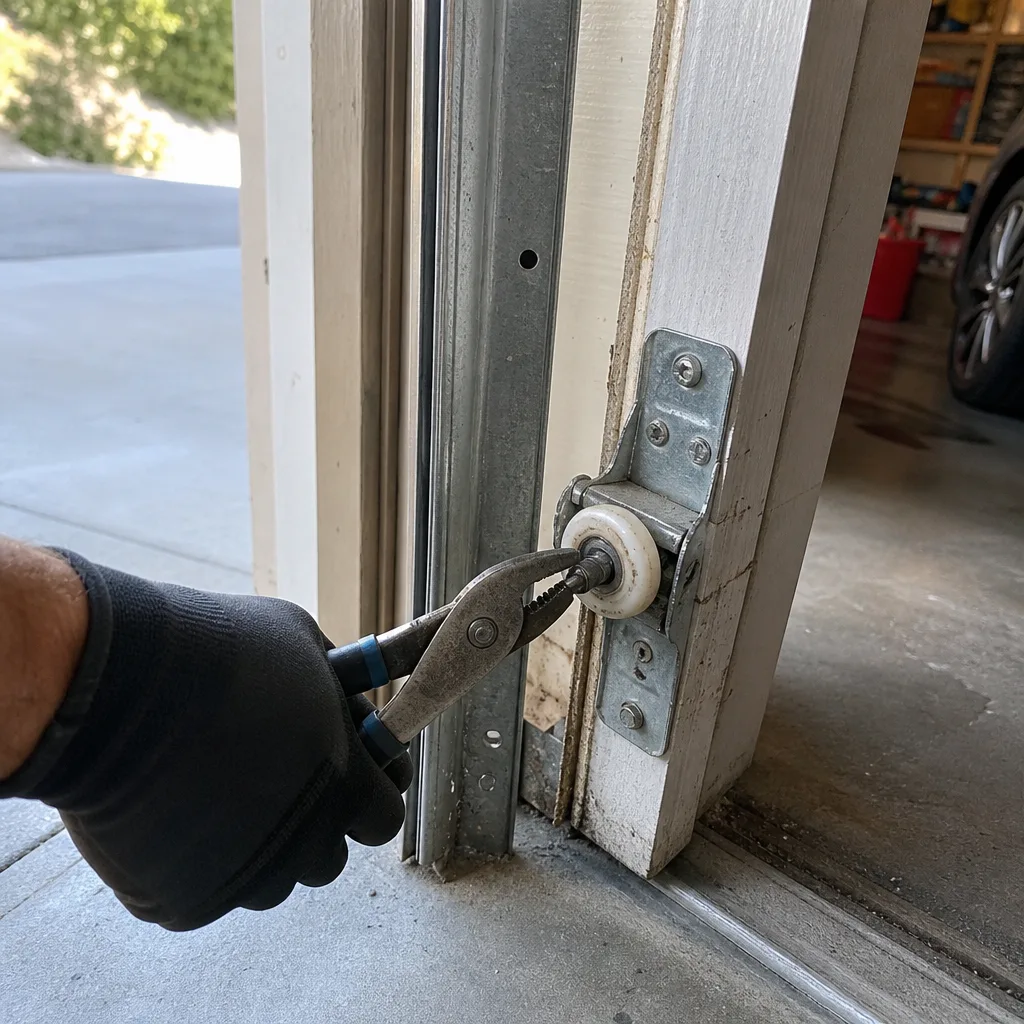
- Nylon or steel rollers. About $3 to $9 each. Pop the hinge pin out, swap, push back. Do all twelve at once if one is grinding.
- Hinges. $4 to $11 apiece. Standard 18-gauge hinges match common residential doors, including Clopay and Amarr panels. Match the number stamped on the old hinge.
- Bottom weather seal (the rubber gasket). $25 to $55 for a full-door roll. Pull the retainer out of the channel, slide in the new one, no tools required.
- Safety sensors and photo-eye wiring. $20 to $60 for a matched pair. Aligned correctly, they’re a 20-minute swap. Misalignment is the biggest cause of “my door won’t close” calls we get in Whitney.
- The wall-mounted opener button and its low-voltage wiring. $10 to $30 for a basic unit. Standard doorbell wire, standard 2-wire hookup.
- Weather stripping around the door perimeter. $30 to $70 for aluminium retainer plus vinyl insert. This is the single highest-value DIY job in our climate; the summer heat here flattens cheap vinyl in about 18 months.
One safety note even on the “easy” list: unplug the opener from the wall and pull the manual release to disengage it before you touch the rollers or hinges. A door activated by a child with a remote while you have a hand between the panels is a real injury pattern, and we’ve seen it in Whitney more than once.
Parts That Are Safe Only With the Right Tools
These jobs sit in the middle. Nothing here will release stored energy into your skull, but they demand specific tools, scaffolding-level ladder work, or torque awareness. Be honest with yourself about what’s in your garage.
- Limit switch adjustment on a screw-drive opener. Requires a small Philips head and patience. Incorrect limit causes the door to reverse or slam. Genie and Chamberlain units are 15-minute adjustments with the manual open.
- Opener belt or chain replacement. Requires a socket set, a torque spec from the manual, and the ability to tension correctly. A slack chain jumps and a tight chain destroys the trolley carriage in a year.
- Trolley carriage and disconnect cord. Standard replacement in most units, but the trolley has to be properly re-engaged on the rail, which means understanding how the carriage locks to the shuttle.
- Drum and cable replacement on extension-spring doors. Extension springs run alongside the track and stretch rather than twist. Safer than torsion, but a stretched extension spring is not the same as a relaxed one – the safety cable down the middle of the spring is what stops it from becoming a projectile.
- Panel replacement on a steel door. Panel-only replacement is possible, but the panel has to match the door model exactly. Color batches vary year to year; a 2016 Clopay panel ordered in 2026 often ships a shade off in direct sunlight.
The honest test: can you name the torque spec, the correct wrench size, and the number of winding turns for the part in your hand without looking it up? If not, this is the professional column, not the DIY column. And if the door is a Clopay or Amarr panel system newer than about 2010, call us for the model number before you order anything – Whitney homes built between 2016 and 2022 are mostly the newer panel profiles, and those aren’t the parts a 20-year-old door used.
Parts That Are Professional-Only
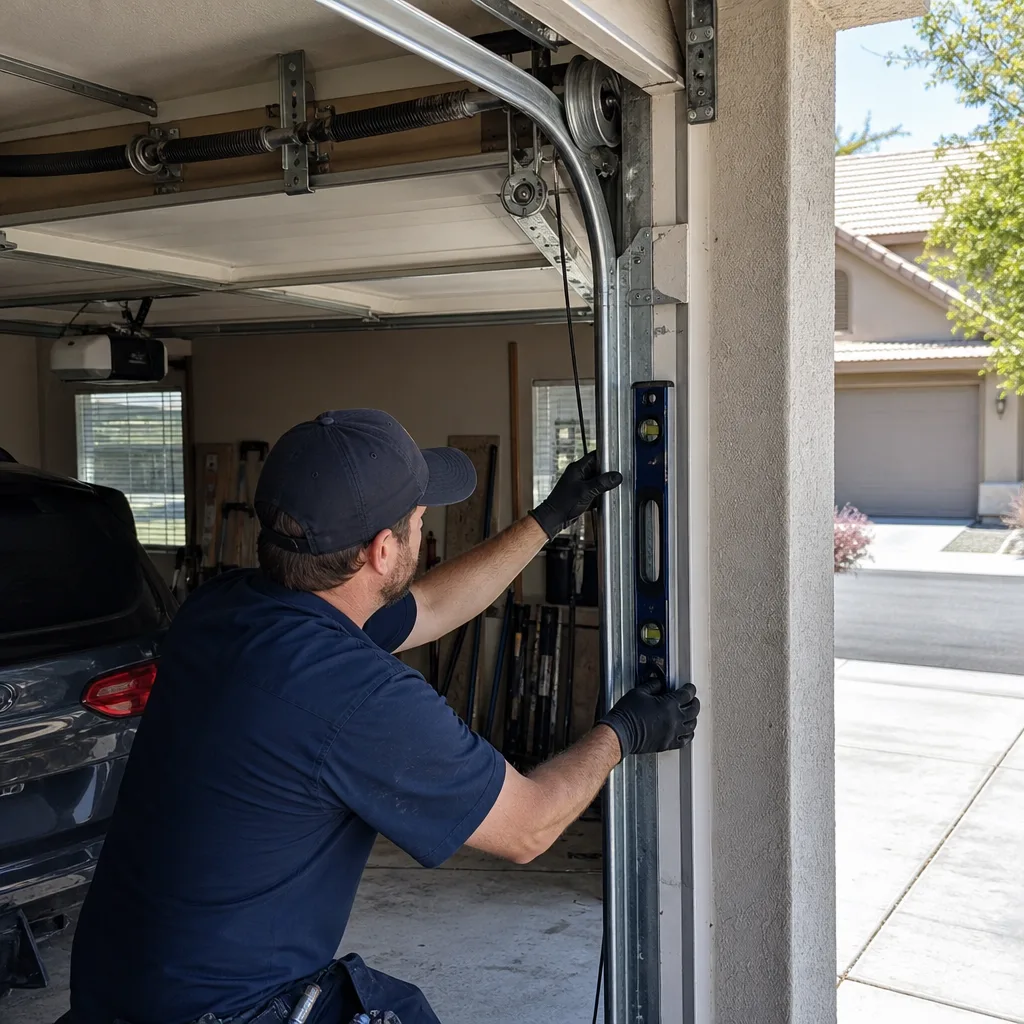
These parts carry stored mechanical energy or anchor it. They are not a “harder” job; they are a different category of risk.
- Torsion springs (and the winding bars that manipulate them). A pair of proper winding bars, sized to the cone, is the required tool – not a screwdriver, not a pipe wrench. The bars must be fully inserted to depth, held at 90 degrees to each other while you transfer winding turns, and the set screws torqued against the shaft. This is one of the few garage door tasks where a competent DIYer still has no business working alone.
- Extension springs without the safety cable installed. If the cable that runs through the center of the spring is missing or broken, do not touch the spring. A broken extension spring without a safety cable becomes a heavy steel missile aimed at whoever is standing nearest.
- Cables. A cable under tension snaps back like a whip if the bottom bracket lets go. Cables are the single biggest cause of serious injuries we know of in this trade, and the number is high nearly every year. Do not remove, loosen, or cut a cable.
- Bottom brackets and the bottom corner of the door. See the next section.
- Center bearing plate and torsion bar assembly. Requires the door to be fully supported and all tension relieved before anything is loosened. Never a homeowner job.
One more: the logic board inside your opener head. It’s only low-voltage DC and a LiftMaster or Chamberlain board swap is technically capable of being done by hand, but the board is a $180 to $320 part and if you mis-match the revision you’ll burn the new board. That’s the only “professional-only” item on the list driven by economics rather than risk.
The Bottom Bracket: The Worst DIY Attempt
Most DIY guides rate the bottom bracket “moderate difficulty.” That rating is wrong, and it’s the single content decision in the DIY garage door genre we’d most like to correct. The bottom bracket is a steel plate bolted to the bottom corner of the door. It anchors one end of the lift cable. The other end of that cable is under the full tension required to lift the door.
To remove a bottom bracket, you must first fully relieve the tension on that cable – which means the door has to be supported by something other than the cables and springs. That means a pair of tall jack stands under the bottom corners on a level floor, the door fully closed, the opener disconnected, and the springs relieved under controlled winding. If you loosen the two 3/8-inch lag bolts on the bottom bracket while the door’s weight is still riding on its cables, the plate releases with the cable attached and the cable whips. We have seen the aftermath. It isn’t a bloody finger; it’s a hand that won’t work properly again.
The other reason bottom-bracket swaps belong to professionals: a stripped lag bolt hole in the door frame is a much bigger repair than the original job. If you find one of the four lag bolts is spinning rather than biting – which happens on older Whitney doors after years of dry heat cycling – stop and call. Oversized through-bolts and reinforcement plates are a technician fix and there’s no way around it. Free second opinion on any bottom-bracket work another company has quoted; bring the paperwork.
How a Failed DIY Repair Changes the Diagnosis
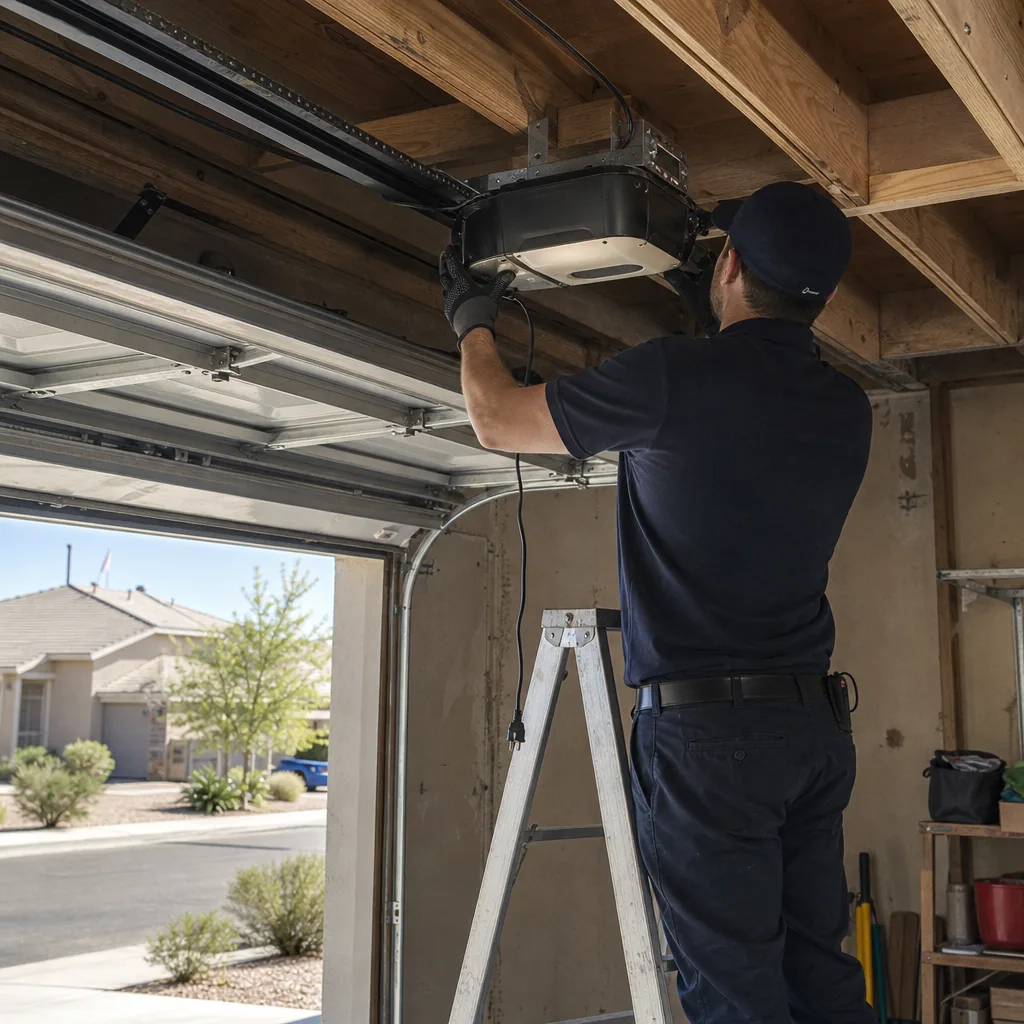
Our first visit after a homeowner DIY repair starts differently. The failed part isn’t where we expect it, because someone has been here already, and the door may now be a cascade of small problems rather than one clean failure. We photograph the starting state before touching anything – that’s the founding rule, and Clause 4 of The Haven Standard. The photo record tells us which parts were replaced and when, which is information a fresh-quoted door doesn’t give us.
Then the labor starts adding up:
- Wrong part installed. A cable replacement using the wrong length is 20 minutes of corrected work; a drum replacement using a mismatched profile usually takes the cable with it and now both drums, both cables, and often the bottom brackets are in scope. That’s an $80 job turned into a $340 job.
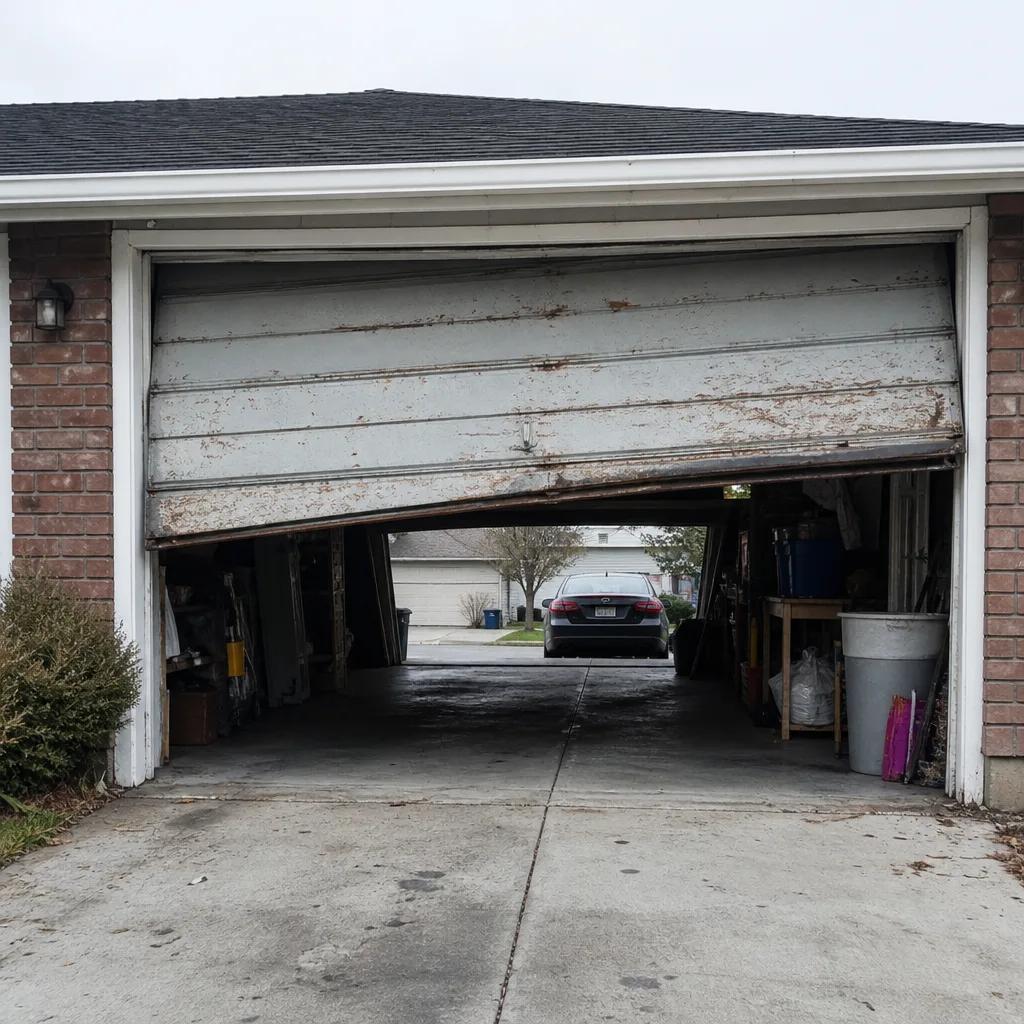
- Sheet-metal damage. A torsion spring that was partly wound and released crack a roller hinge and buckle at the track joint. Track straightening or replacement isn’t on the original scope. Extra $80 to $180.
- Open limit switches left at the wrong setting. The door travels too far and the panel skin crinkles against the header. Cosmetic on the surface, structurally relevant to the panel.
- Wrong opener board revision. The new board burns on first power-up. You’ve paid for a part you can’t return.
One honest note: none of this is a lecture on the customer. We photograph the failed part before quoting anything, then walk through the corrected scope with a flat, written price before any work starts. If a DIY job is 80% right and only needs one part, that’s what the quote says. If it’s three parts deep, that’s what it says instead. That’s the paper trail the reader came for.
Common Mistakes to Avoid
- Unwinding a torsion spring by guessing turns. Every spring has a counting spec in its manufacturer documentation. On a 7-foot door, that’s typically 8 to 12 quarter-turns depending on weight and drum. Guessing means you either can’t balance the door or you lose control mid-release.
- Using a screwdriver or pipe in the winding cone instead of proper winding bars. The cone can accept a hex key or a screwdriver, but neither is rated for the torsion the spring exerts, and both snap under load. Two incidents in our Whitney records involved socket extensions used as winding bars.
- Cutting a lift cable to shorten it. Cables come in fixed lengths for a reason. A shortened cable means the drum is miswound and the door doesn’t track square. It also invalidates the door’s weight rating.
- Buying rollers by price instead of by grade. Whitney’s summer heat – the door tracks and rollers reach 130 to 150 degrees in direct sun in July and August – shortens nylon life drastically. Cheap nylon rollers are $4 and last about a year here. The $11 grade holds three or more.
- Mis-aligning safety sensors after replacement. Getting the pair “roughly matching” isn’t alignment. The sensors must be square to each other and within a few inches of correct height off the floor, or the door undoes every attempt to close. Test with a cardboard box, not with your hand.
- Replacing a single panel without matching the model year. Panel color drifts between manufacturing years, especially on whites and greys. Always call for the model and lot before ordering.
- Working on the door with the opener plugged in. Homeowners do it because they were in a hurry. It is the easiest serious injury to prevent, and it happens constantly.
When to Call a Professional
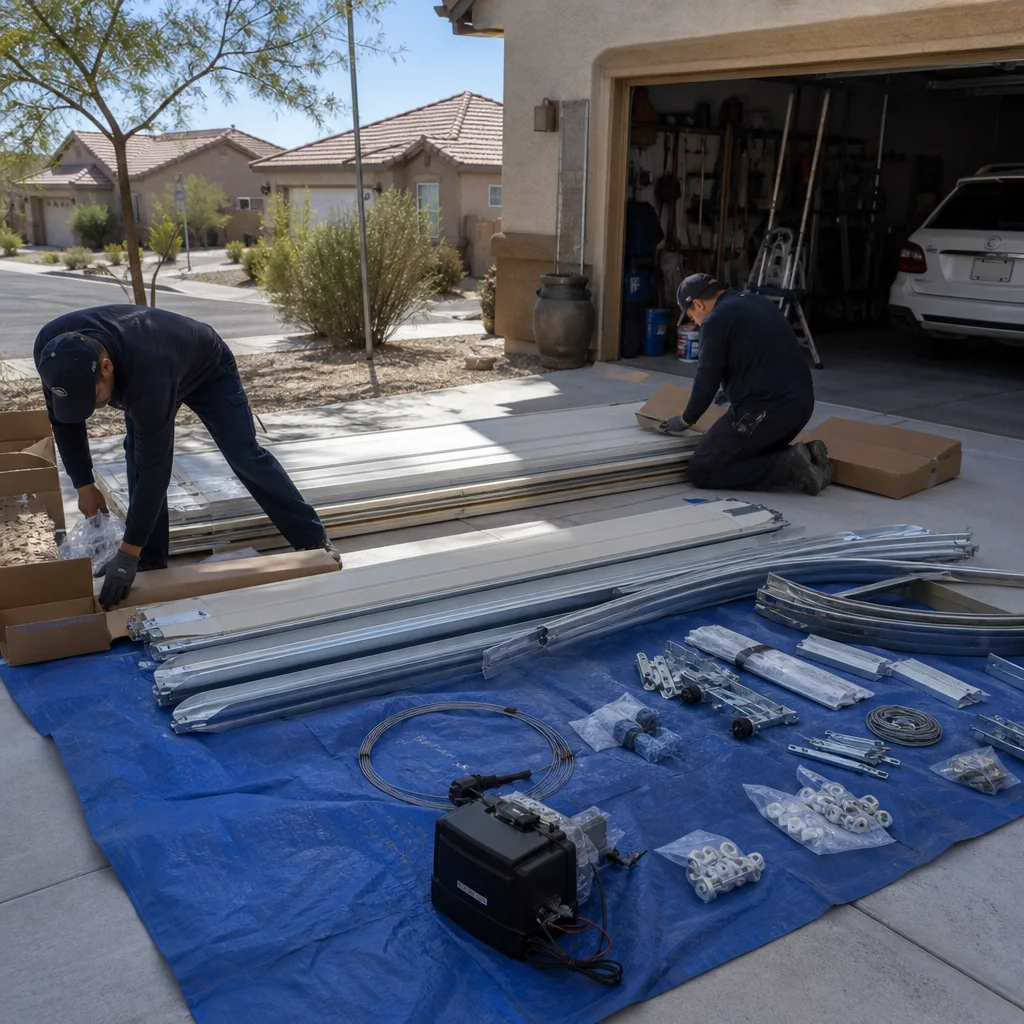
Call a professional before you touch a torsion spring, an extension spring without a safety cable, any cable under tension, the bottom bracket, or the center bearing plate. Call immediately if a spring has visibly broken – even if the door “still works,” the remaining unwound spring is now carrying twice the load and will fail in weeks. Call if a panel assembly has buckled at the track joint, if the door is out of square by more than half an inch, or if you’ve tried any DIY repair on a bottom bracket or cable and the door now sits unevenly.
Call us and we’ll give you a written price and written scope before any work begins – Clause 1 of The Haven Standard. We photograph what failed and include the record on the visit. If you have a written estimate from another company, bring it and we’ll do a free second opinion, no coupon required. Servo Garage Doors Whitney offers free estimates in Whitney.
See the difference
BeforeAfter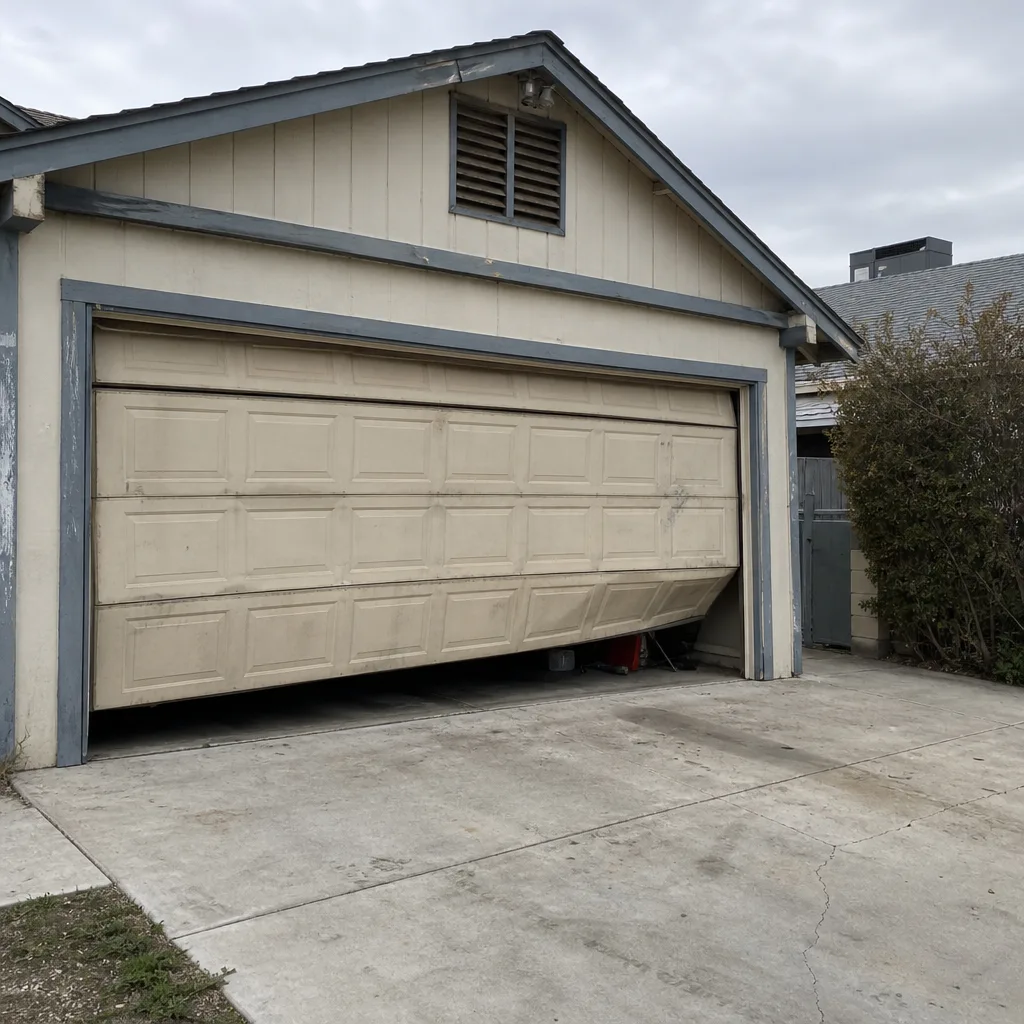 Before
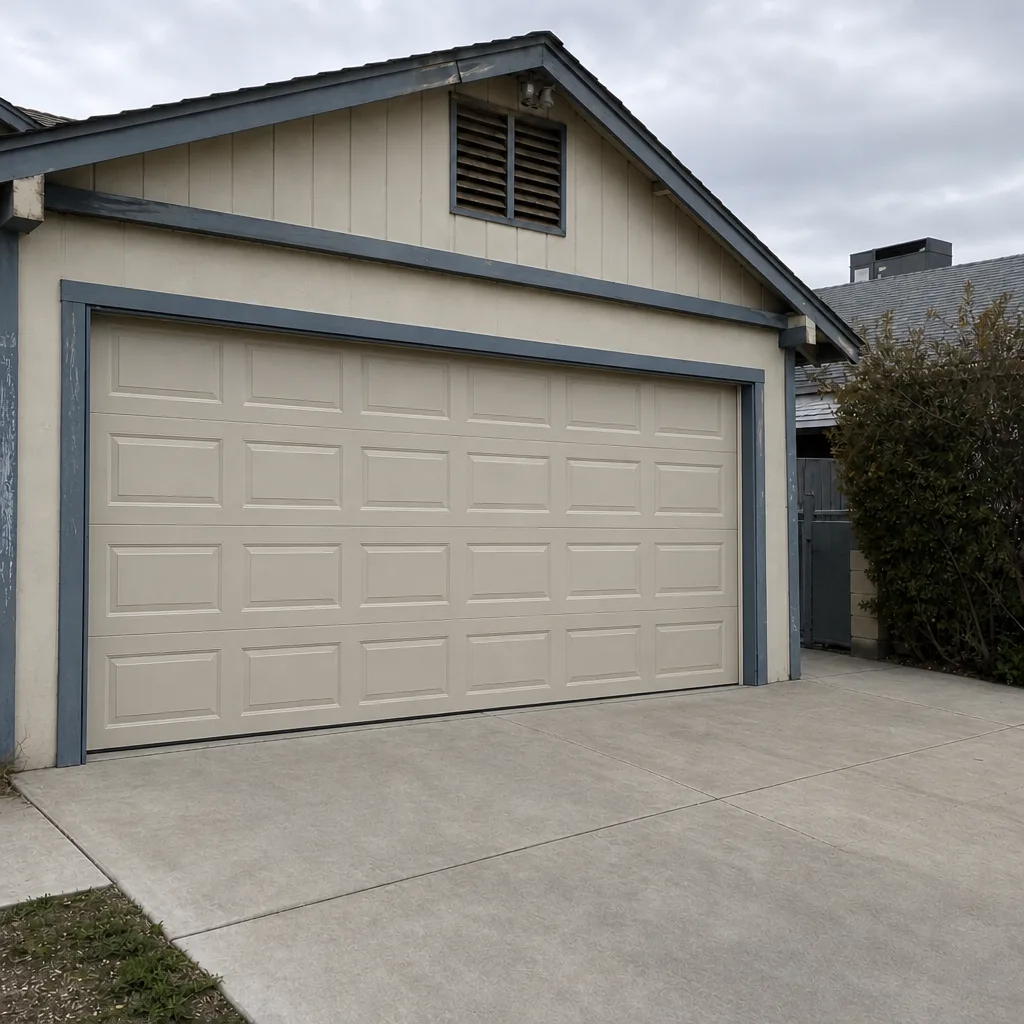 After
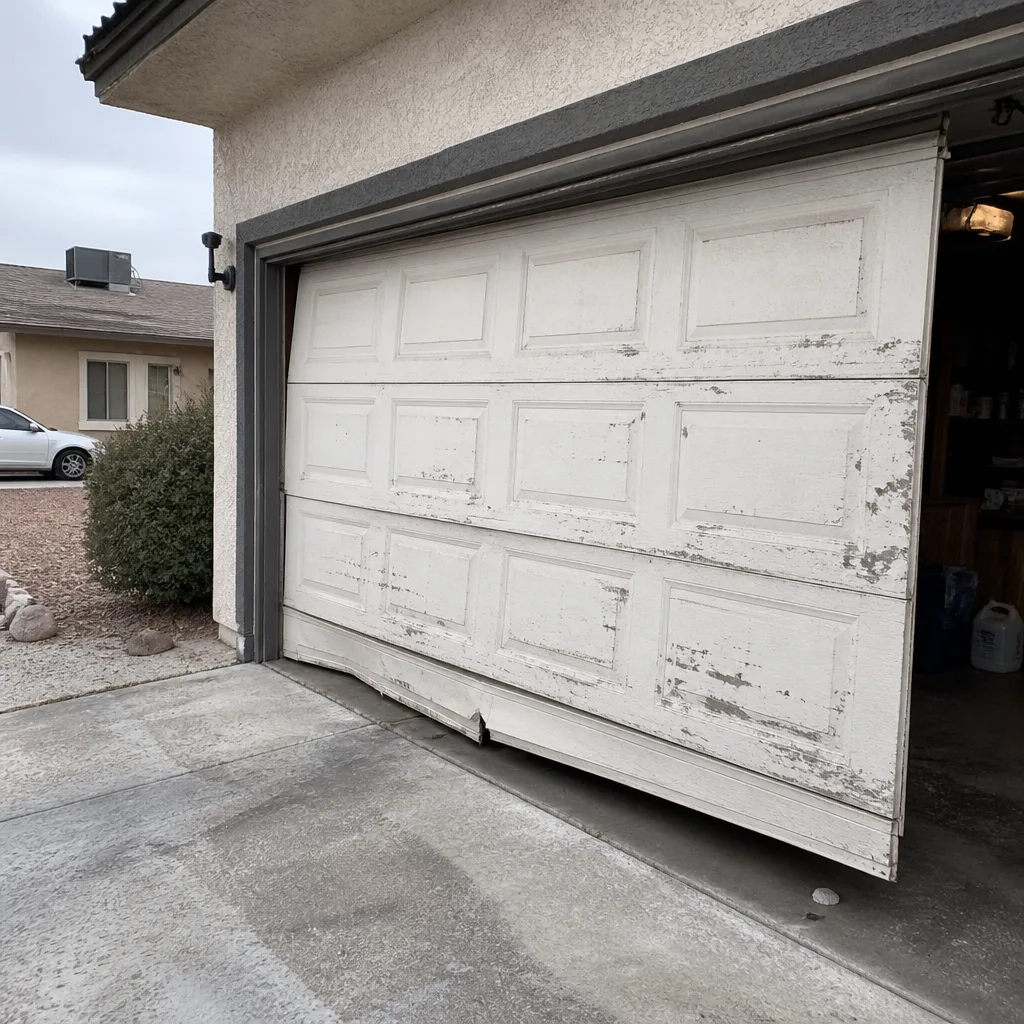 Before
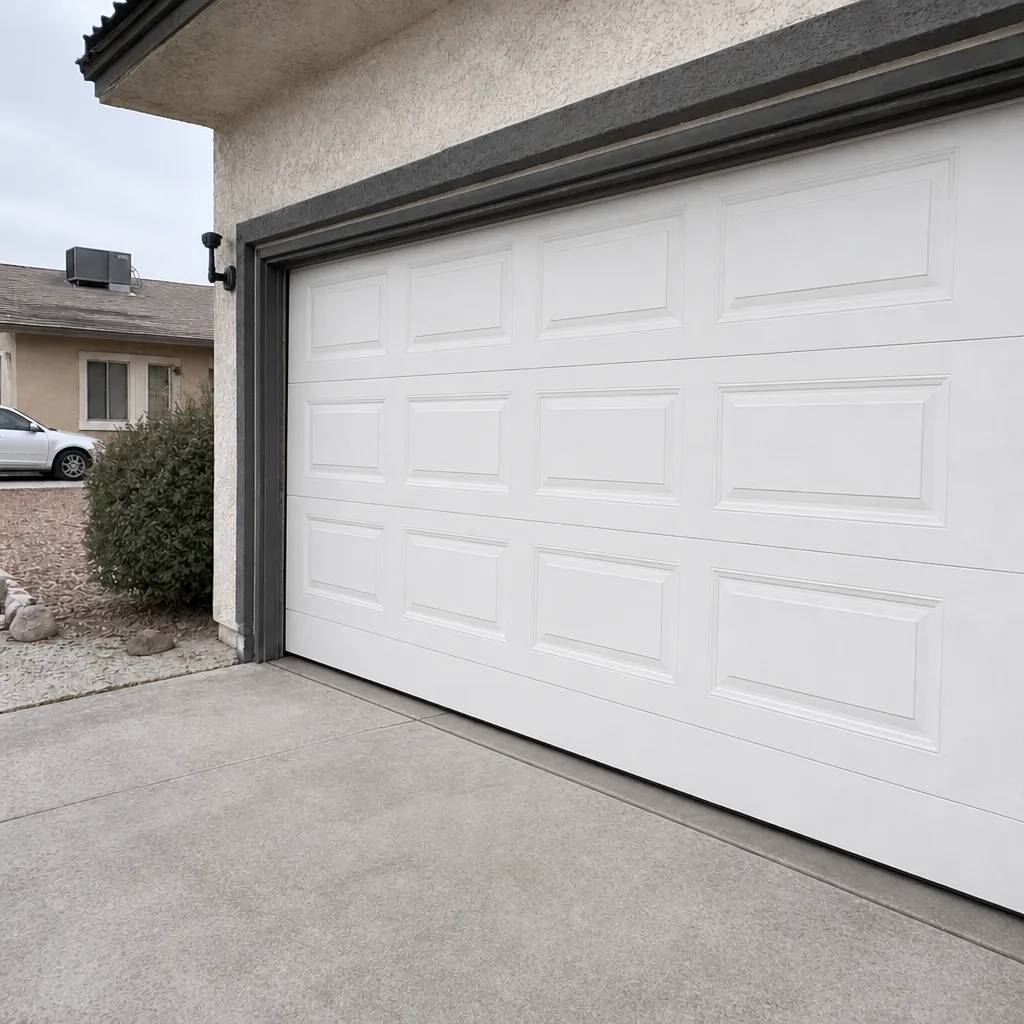 After
Frequently Asked Questions
Rollers, hinges, bottom weather seal, safety sensors, perimeter weather stripping, and wall-mounted opener buttons are safe for most homeowners. These parts hold no stored energy once the door is fully closed and the opener is unplugged. Anything under spring tension or cable load is not safe for the homeowner, regardless of skill level.
No. A wound torsion spring stores roughly 100 foot-pounds of torque, and releasing or re-winding it requires professional winding bars held at depth and at the correct angle. Guessed winding turns cause door imbalance; missed bar depth causes the bar to release mid-wind. There is no safe DIY version of this job. Call (888) 402-1096 for a written quote before you buy a spring.
In our experience, yes. A bottom bracket releases with the full cable tension still riding on it, and that tension pulls the plate and cable in opposite directions. Common DIY guides rate the bracket as moderate difficulty; that rating is wrong. The bracket is professional-only.
Typical ranges in the Whitney market: a clean torsion spring replacement is $180 to $340 installed. A corrected DIY cable job usually lands at $280 to $420 if the drums survived, and $420 to $680 if the drums have to be replaced with the cables. The diagnostic record and photo evidence are included on every visit.
No. We photograph the failed part before quoting, and the flat written price and written scope are agreed before any work starts – Clause 1 of The Haven Standard. If the scope changes because the failed part reveals more damage, we re-document, re-quote, and wait for your yes before the extra work begins.
Yes. The local pro we send is licensed and insured as your state requires, background-checked, and in uniform, and the license number is on the page, not buried in fine print. Our technicians have up to 11 years of experience across all eight major opener and door brands including LiftMaster, Chamberlain, Genie, and Clopay. Every job closes with the 365-Day Done Right Promise and a documented photo record.
The Bottom Line
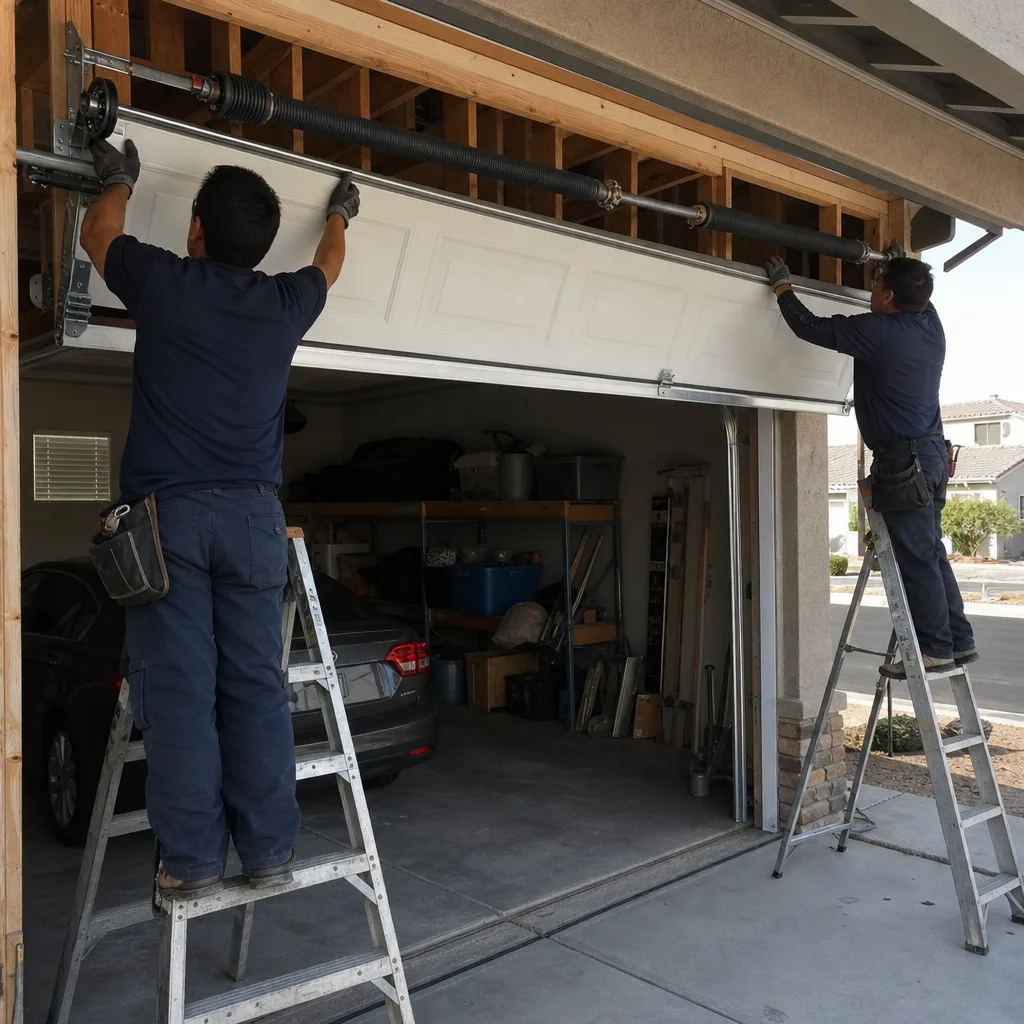
The DIY-or-not question doesn’t sort by difficulty. It sorts by stored energy. Rollers, hinges, weather seals, sensors, and perimeter stripping have none once the opener is unplugged; swap them without hesitation. Torsion springs, extension springs without safety cables, cables, bottom brackets, and the center bearing plate hold energy that discharges in a fraction of a second, and no YouTube tutorial removes that hazard. If you’re in Whitney and the part in your hand sits in that second list, we’d rather you call than guess. We’ve made 18,000+ garage doors right since 2015, every one with a written price before work started and a documented photo record when the technician left.
Ready to hand off the part you’d rather not touch? Call Servo Garage Doors Whitney at (888) 402-1096 for a free estimate, a written price before any work starts, and a photo record of what we found. Live person on the line 24/7, including the weekend the spring breaks. Start with our Servo Garage Doors Whitney home, or jump straight to garage door repair in Whitney, garage door installation in Whitney, and garage door opener repair & installation in Whitney.
Written by the team at Servo Garage Doors Whitney.