
Last updated November 18, 2026
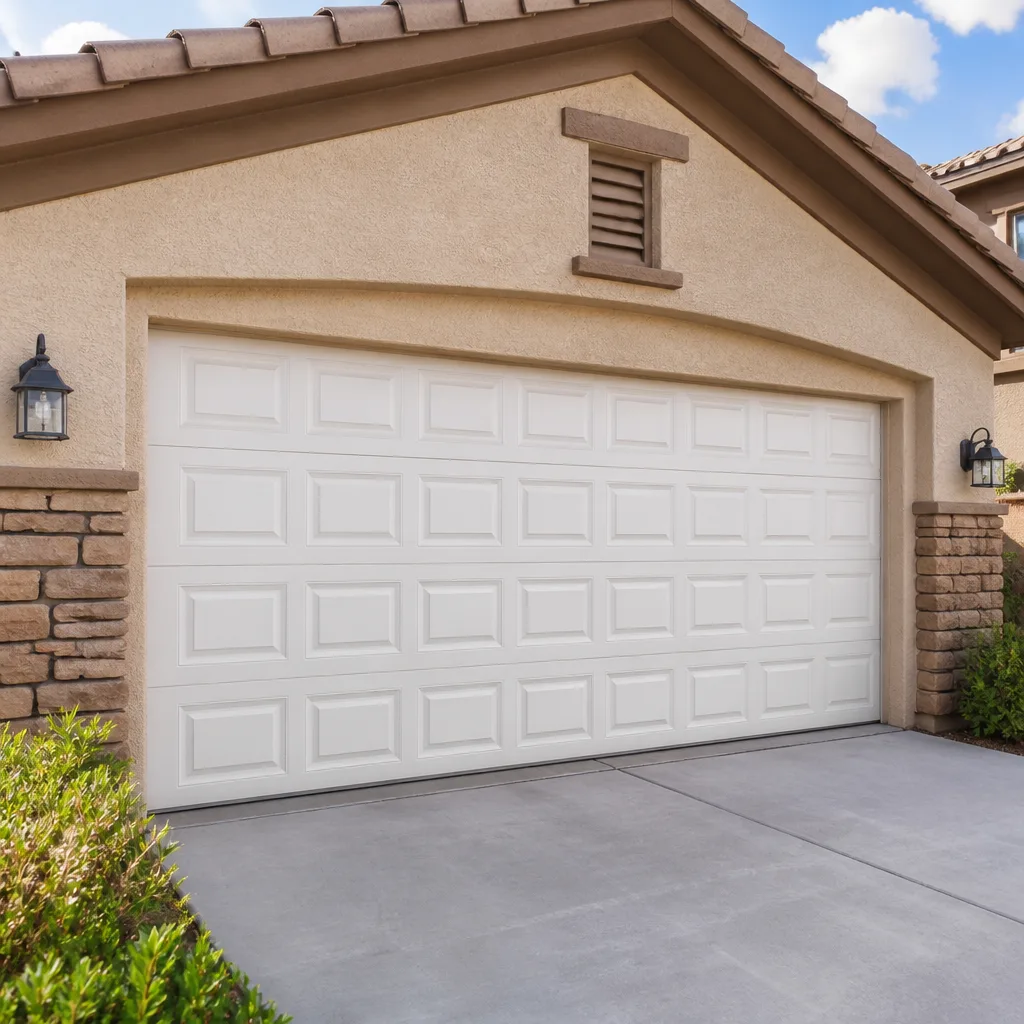 Raised-panel steel
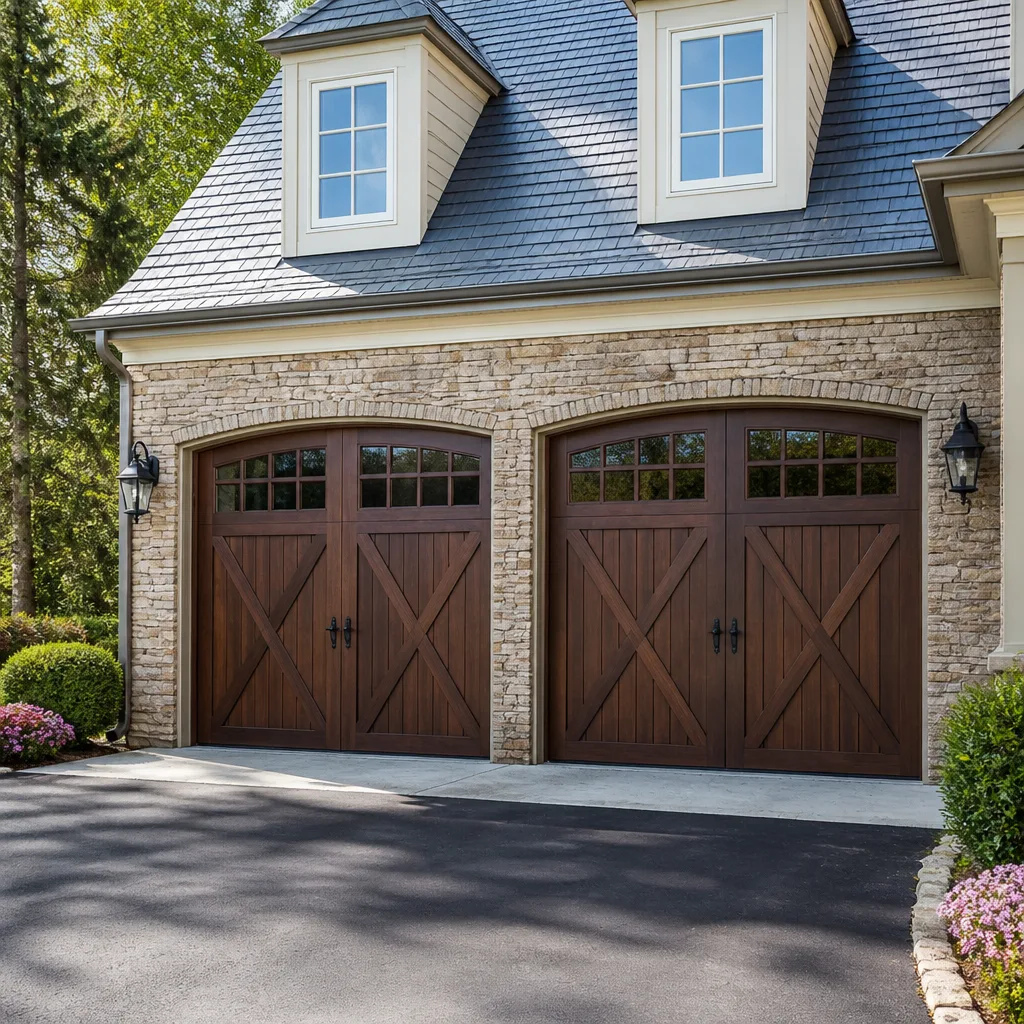 Carriage house
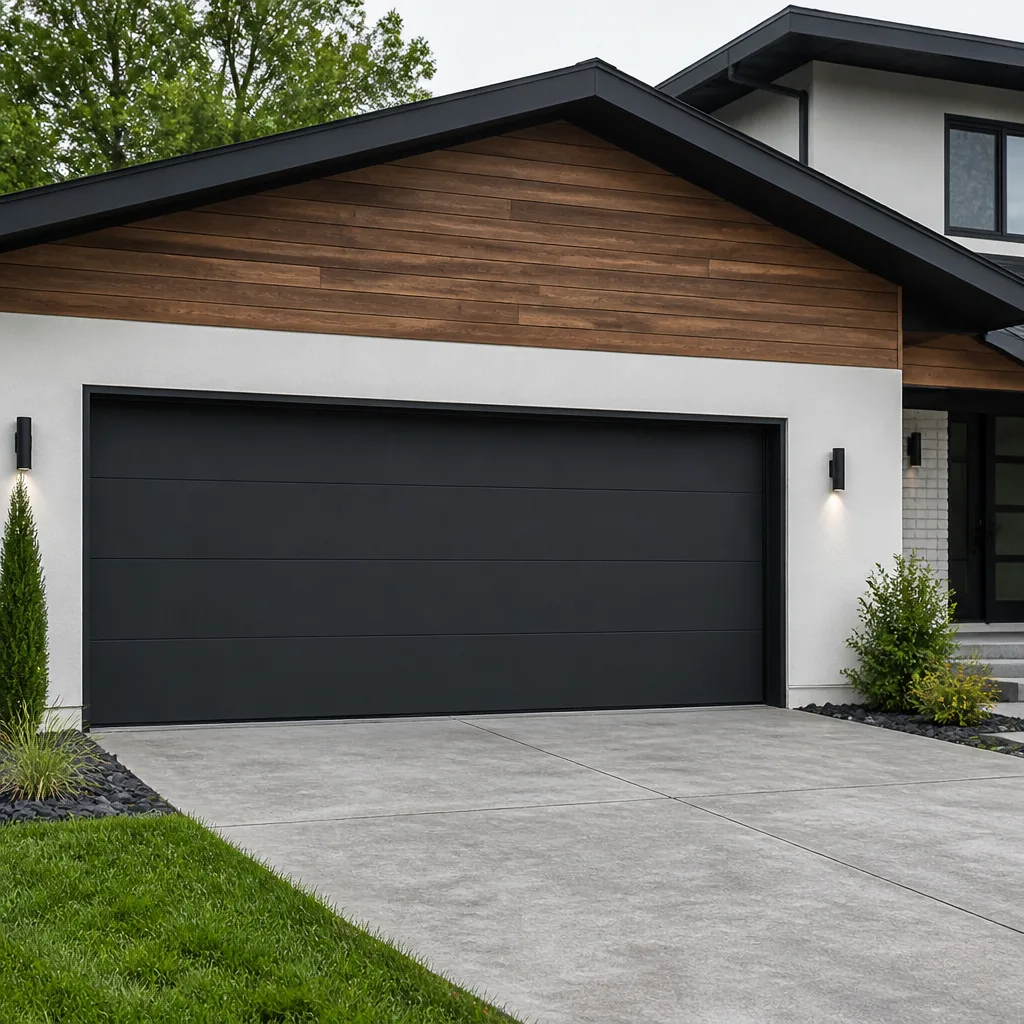 Modern flush
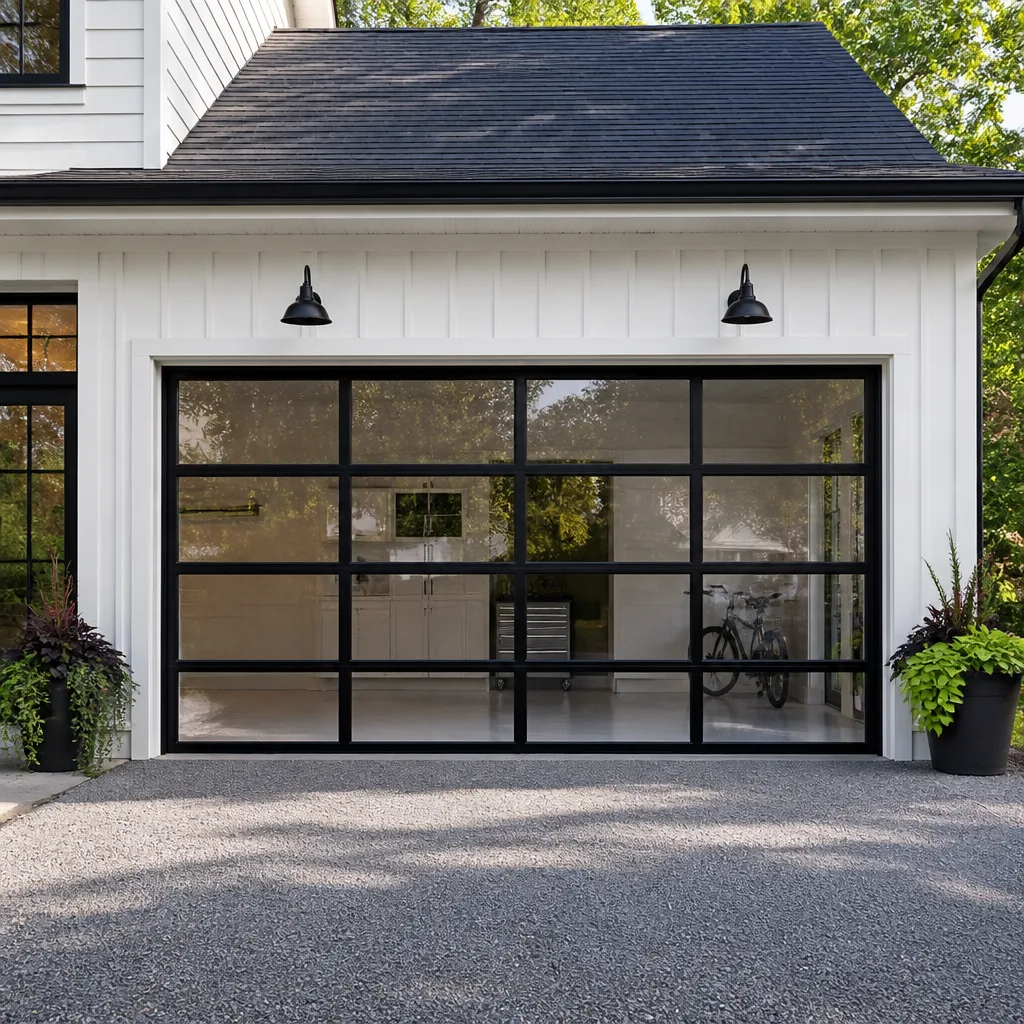 Full-view glass
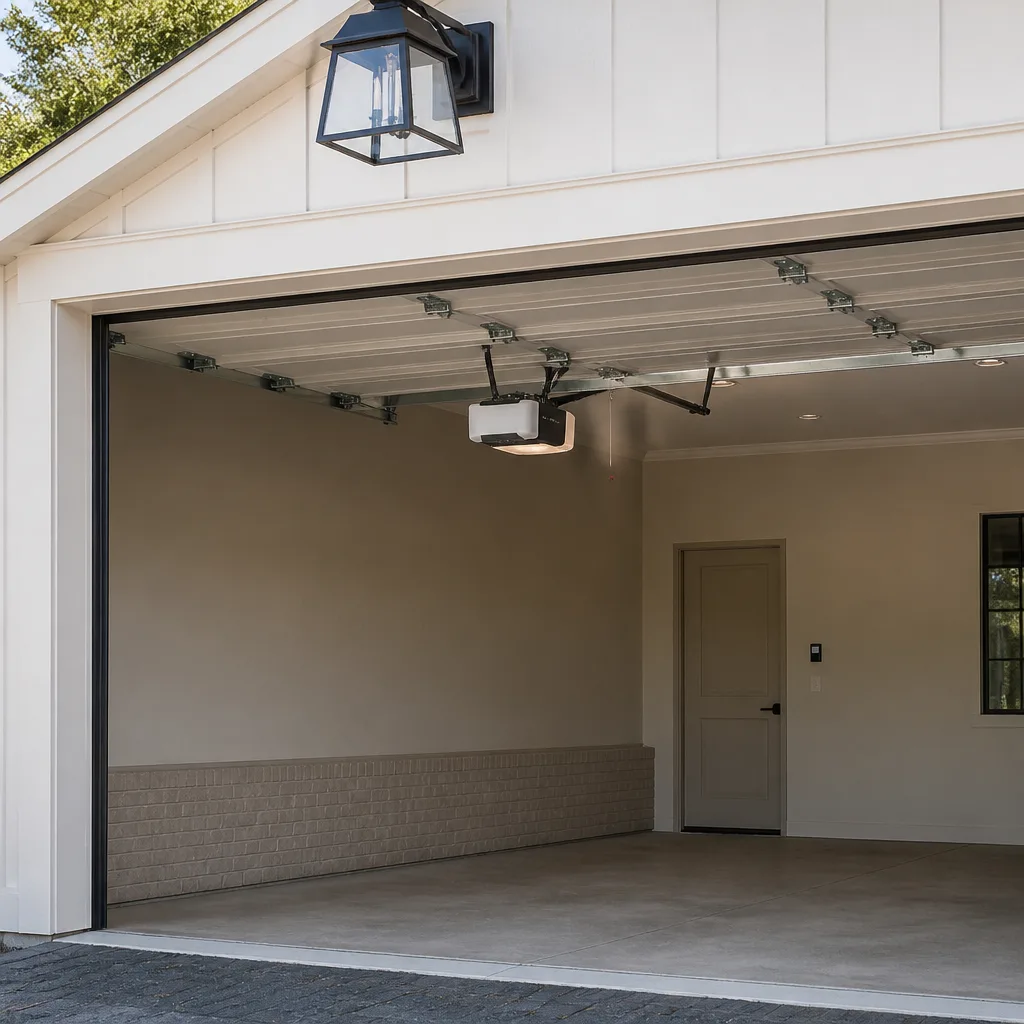 LiftMaster openers
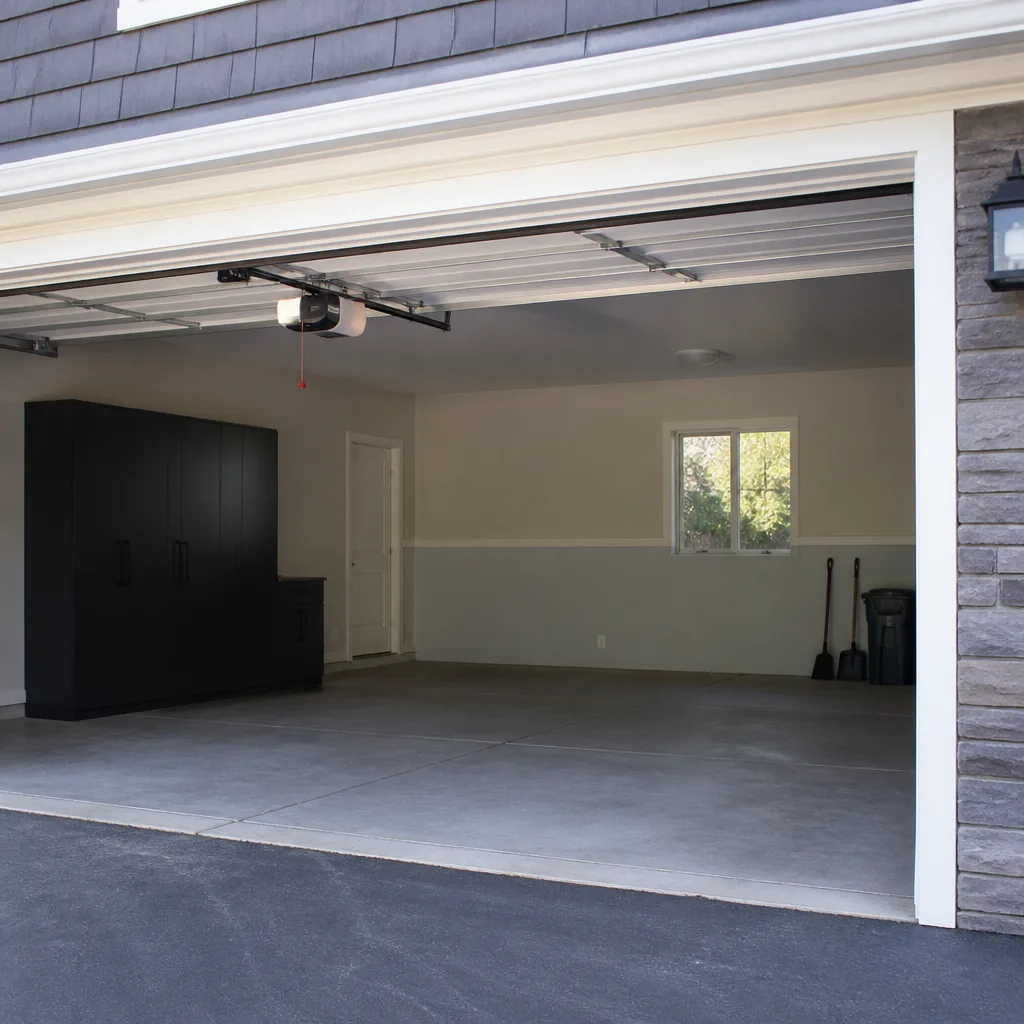 Chamberlain openers
Full 25-point door and opener safety check with every visit - springs, cables, rollers, tracks, and your LiftMaster or Chamberlain opener included
You get a price before we start. It does not change when the pro arrives.
Get your free estimateGarage Door Emergency Preparedness Guide for Whitney Homes
During a Las Vegas Valley summer grid event, your garage door is the largest moving part of your house, and it needs either battery backup or a homeowner who knows the manual release. Not because the power company fails often, but because an eight-minute outage in 110°F heat with your car trapped inside is a real scenario Whitney homeowners run into every July and August. This guide covers what to do before, during, and after a garage door emergency in Whitney: how the manual release actually works, what to do when the power dies, how to reset a dust-choked photo-eye sensor, how to tell cosmetic wind damage from structural damage, and what information to have ready so a technician can show up prepared instead of spending the first twenty minutes diagnosing from scratch.
Quick Answer
In Whitney, garage door emergencies usually fall into four buckets: power outages during summer grid load, dust-jammed photo-eye sensors after a wind event, impact damage to panels or track from wind-carried debris, and spring or cable failures. The first three can often be handled by the homeowner with the manual release cord and a reset. Spring and cable failures cannot, and should never be. Know your manual release sequence, keep a battery backup opener if your door is heavy, and have your door model, opener model, spring type, and rough opening dimensions written down somewhere you can find them at 10 p.m.
Styles & brands we work with
- Raised-panel steel
- Carriage house
- Modern flush
- Full-view glass
- LiftMaster openers
- Chamberlain openers
Table of Contents
- How the Manual Release Cord Works (and How to Re-Engage)
- Power Outage Protocol for Whitney Homes
- Post-Dust-Event Photo-Eye Reset
- Assessing Impact Damage After a Wind Event
- Spring and Cable Failures: Why You Don’t Touch These
- Emergency Contact Documentation: Have This Ready
- Common Mistakes to Avoid
- When to Call a Professional
- Frequently Asked Questions
 Before
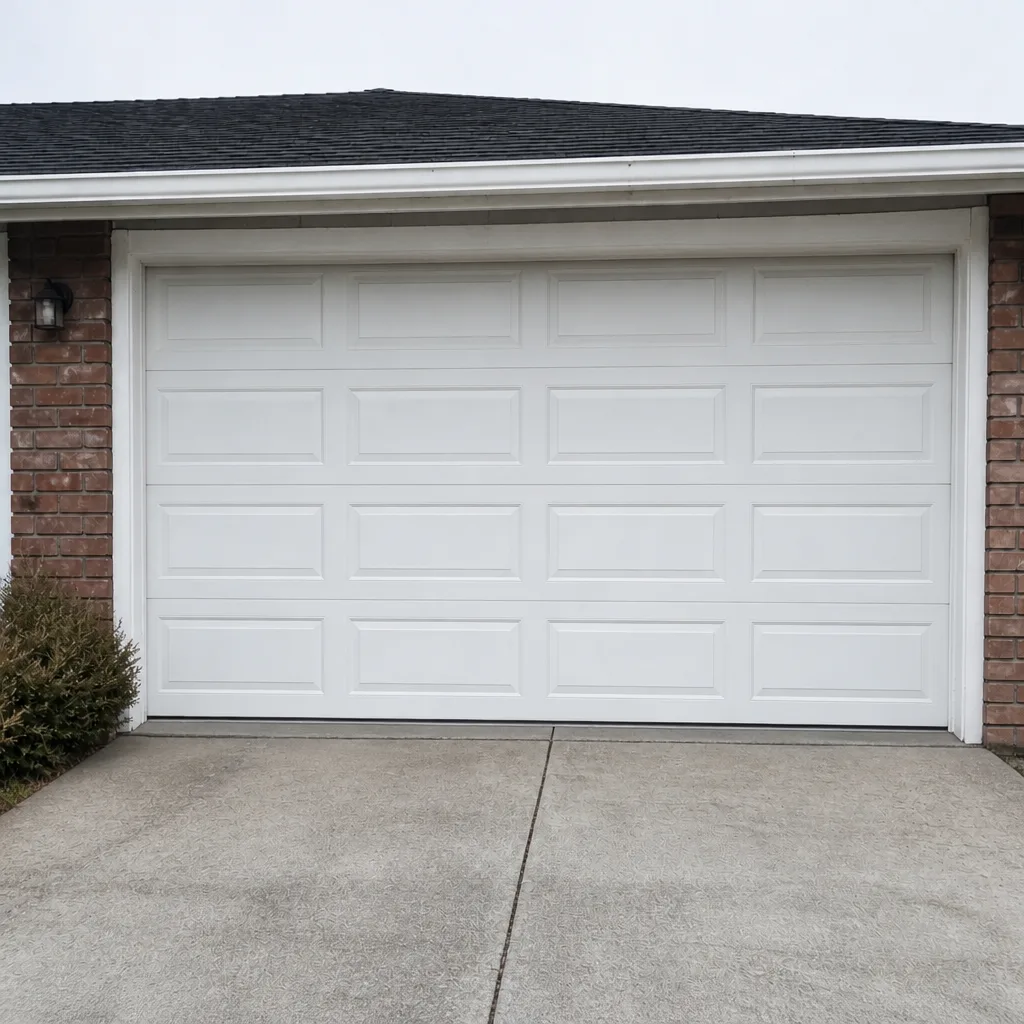 After
How the Manual Release Cord Works (and How to Re-Engage)
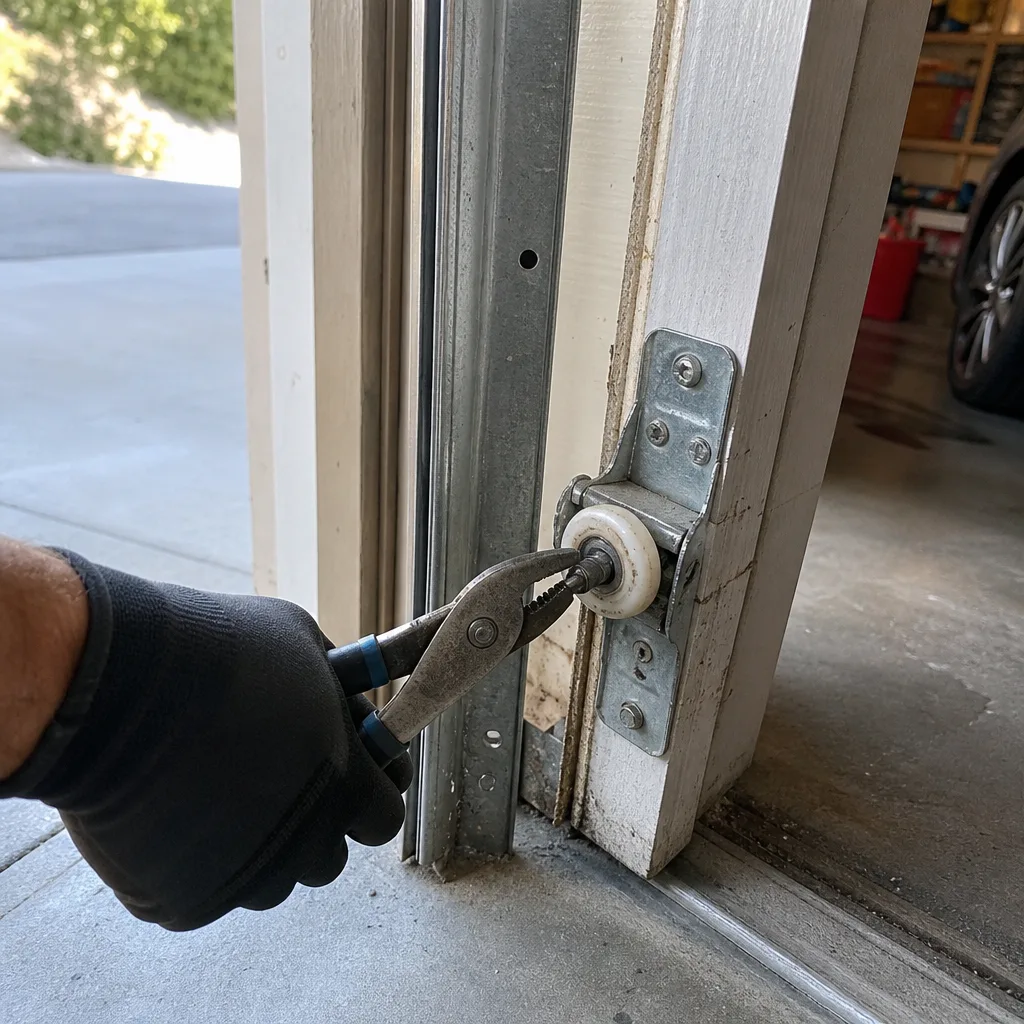
The manual release cord is the red-handled rope hanging from the trolley carriage, the sliding piece on the opener rail that pulls the door. Pulling it disconnects the door from the opener so you can lift it by hand. That part most homeowners know. What catches people is pulling it at the wrong moment: if the door is partway open when you pull, the door can hang in a mid-travel position, and the torsion spring is now holding a load it wasn’t designed for. Pull the cord only when the door is fully closed and the opener has stopped.
Here’s the correct sequence:
- Confirm the opener has stopped moving and the door is fully closed.
- Pull the red release cord straight down with a firm, single motion until you feel the trolley disengage.
- Lift the door by hand, using the lift handle at the bottom panel, straight up. A properly balanced door should lift with roughly 10 to 15 pounds of effort.
- If the door feels much heavier than that, stop. It’s either out of balance or the spring is compromised. Don’t force it.
- To re-engage the trolley after power returns, close the door fully, then run the opener through one cycle. The trolley will catch the carriage on its next pass and lock back in.
In our experience, most Whitney homes with LiftMaster or Chamberlain openers have the release cord on the trolley at the door header. Some older Craftsman units have it hanging further back toward the opener motor housing. Find yours before you need it. It matters during an outage.
Power Outage Protocol for Whitney Homes
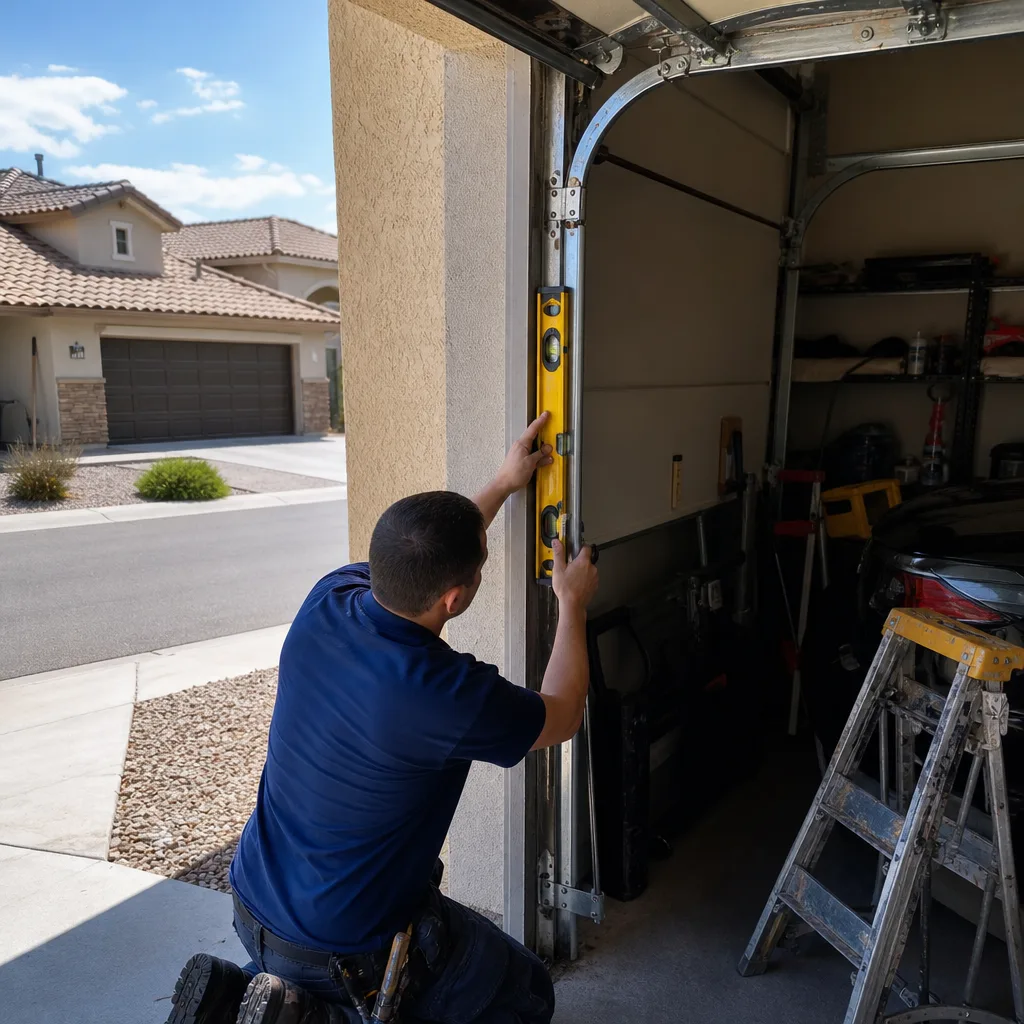
If your opener doesn’t have a battery backup, an outage leaves you with two options: manual release, or a dead door. Whitney’s summer grid load is the honest reason to consider the first. The second tier of the problem is security: once you’ve manually released the door, it’s disconnected from the opener, and anyone else who knows how the release works can lift it from outside with a coat hanger through the top gap. That’s why the manual lock matters.
Battery backup openers solve both. When selecting one, look for:
- Runtime rating: the number of open/close cycles the battery supports on a full charge. Look for at least 20 on paper; a real-world Whitney afternoon outage usually involves two or three.
- Battery chemistry: sealed lead-acid is common and cheap. Lithium is more expensive and longer-lasting.
- Alert signal: a beep or light indicating the opener is running on battery, so you know to expect limited cycles.
- Compatibility with your door weight: a battery backup on a 7-foot single-car door may not lift a 16-foot double-car wood door more than a few inches.
When you’ve manually released the door during an outage, engage the manual slide lock or deadbolt at the track if your door has one. If your door doesn’t have either, don’t leave it released overnight. Re-entry without power means unlocking a side door or using the front door; the garage door is not a re-entry point once it’s disconnected.
Post-Dust-Event Photo-Eye Reset
Whitney sits close enough to the desert edges and open lots that a spring wind event can coat a photo-eye lens in fine dust. The photo-eye is the pair of small sensors mounted on the door track, about six inches off the floor. One sends an infrared beam; the other receives it. When the beam is blocked, the door reverses on the way down. A dust-caked lens can mimic a misalignment.
The reset sequence:
- Wipe both lenses with a dry microfiber cloth. Don’t use glass cleaner; it can leave a residue that attracts more dust.
- Look for an LED indicator on each sensor. Steady on one side and steady or blinking on the other means the beam is intact. No LED means check the wiring or the sensor itself.
- Check alignment: the sending lens should point directly at the receiving lens, and both should be roughly the same height.
- Run the door through a full open and close cycle to confirm it completes without reversing.
If the door still reverses after cleaning and the LEDs are steady, the problem isn’t dust. It’s usually a failing logic board (the circuit board inside the opener housing that handles sensor input and motor control), a damaged sensor, or a sun-glare issue with older LiftMaster units facing west. If you’re seeing dust infiltration reach the photo-eyes regularly, check the weatherstrip along the bottom of the door and the sides. A failed bottom seal lets dust inside the garage on every wind event, and it needs replacing before the next one. That’s straightforward work for a technician and a five-minute check for you.
Assessing Impact Damage After a Wind Event
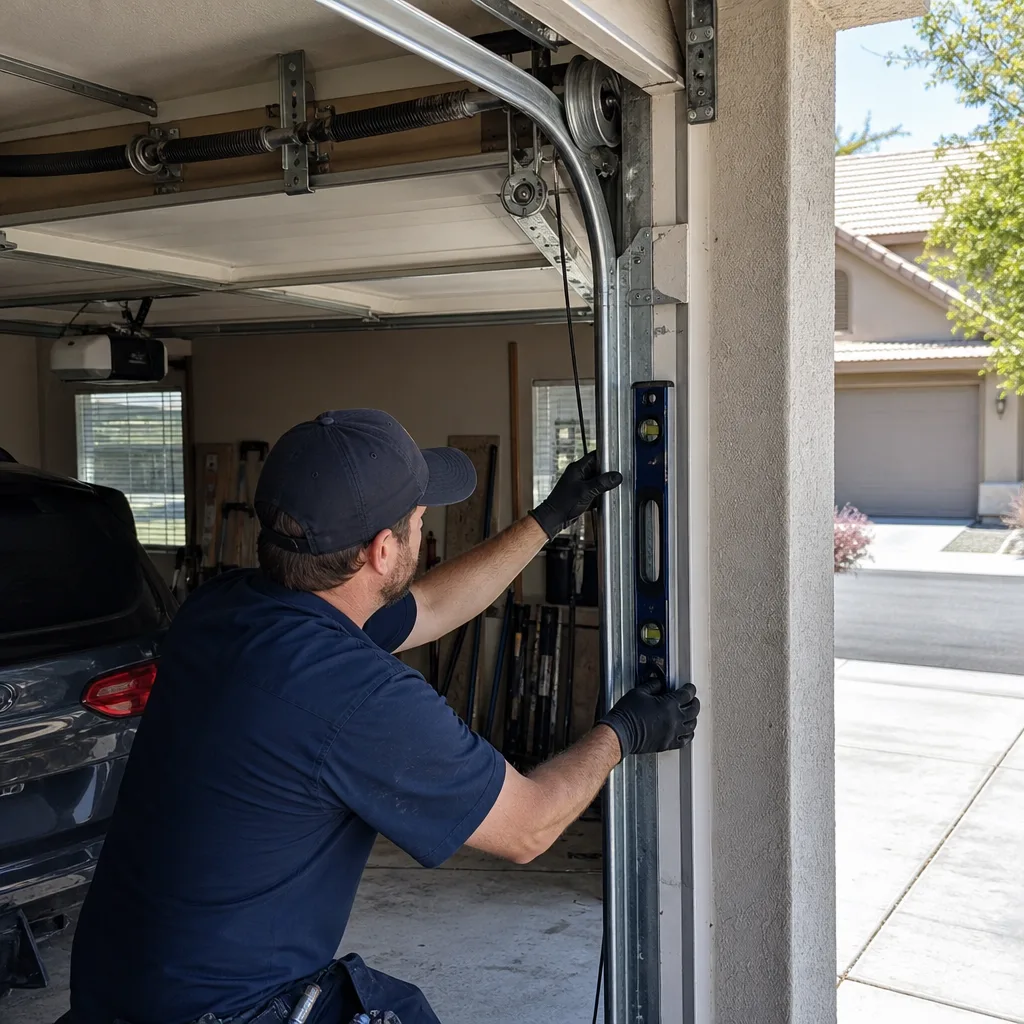
Wind-carried debris hits Whitney garage doors more often than the homeowners expect, especially along streets near open desert or new construction. After a significant wind event, walk out and look at the door before you run it.
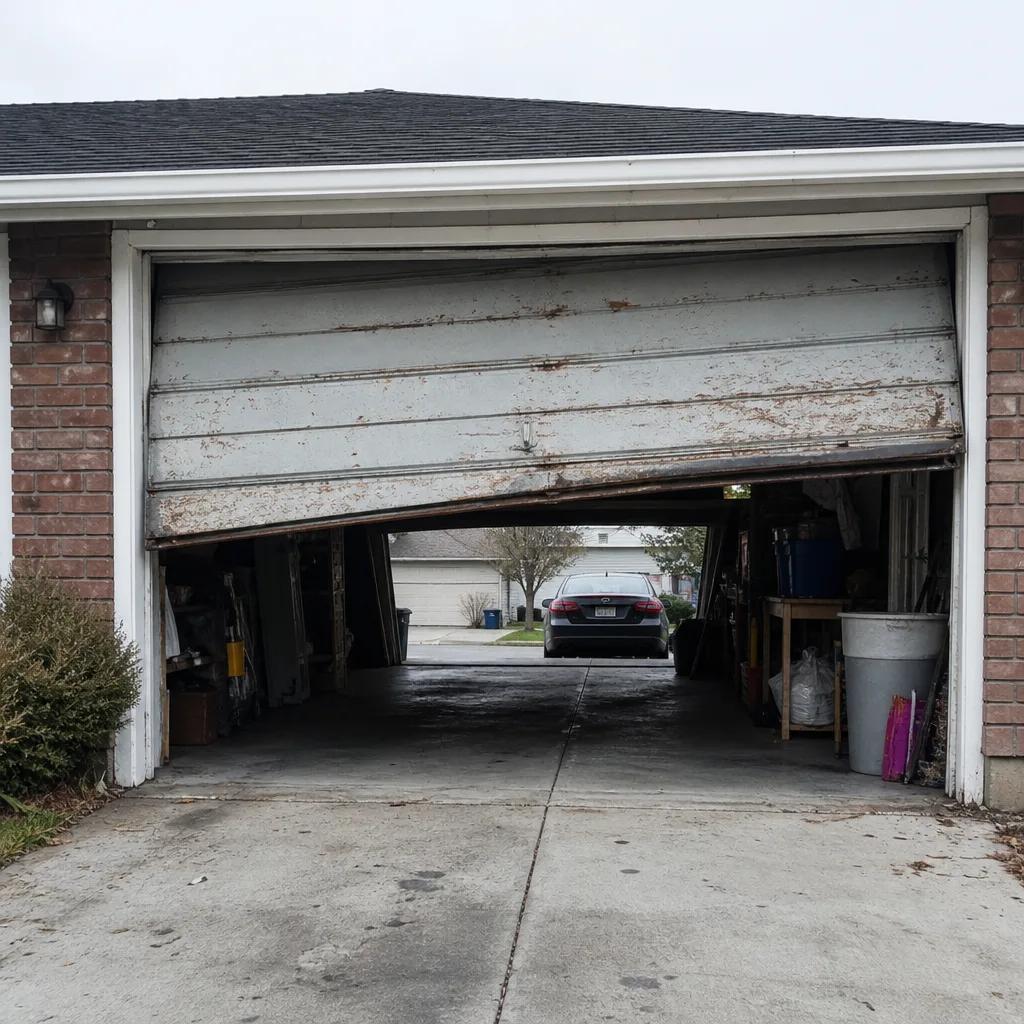
Cosmetic damage is a dented or scuffed panel that still moves smoothly in its track. You can live with it. Structural damage is different, and it looks like one of these:
- A bent horizontal track (the curved metal guide the door rollers ride in) that prevents the door from moving smoothly.
- A top section that has buckled, warped, or pulled away from the hinges.
- A door that doesn’t sit square in the frame when closed, with visible gaps on one side.
- A torsion spring or cable that looks damaged in combination with impact damage.
Do not run the opener if you see any of the four signs above. A door with bent track and a running opener will bind, and the opener’s gear and rail can take damage on top of the door damage. In Whitney homes with 16-foot double-car doors, the top section absorbs most wind debris impact. Wayne Dalton and Raynor doors built on thinner gauge steel show impact damage faster than Amarr or Clopay on heavier gauge. If you’re not sure what you’re looking at, take a photo of the whole door and one of the track from the inside, and text it to us. We can tell you from the photos whether it’s safe to operate.
Spring and Cable Failures: Why You Don’t Touch These
Torsion springs and the cables that run along the sides of the door are under load that will seriously hurt you. Torsion springs hold hundreds of pounds of stored energy. The cable running through them is under continuous tension. When a spring snaps, it makes a sound like a gunshot and the door drops hard. When a cable snaps, the door can drop crooked and twist the track as it goes. Neither scenario belongs in a homeowner repair plan.
What to do after a spring or cable failure in Whitney:
- Stop. Don’t run the opener, don’t try to lift the door by hand, don’t try to pull the door back into position.
- Keep people and pets away from the garage door area, especially children.
- Look at the spring without touching it. If you see a visible gap where the coil should be continuous, the spring is broken.
- Call for service. A technician will come with the right spring gauge, wind it, test the balance, and check the cables and drums at the same time.
A snapped spring on a Whitney door is fixable in a single visit. A homeowner injury from trying to fix that spring is not. That’s why we don’t publish spring replacement procedures in our guides.
Emergency Contact Documentation: Have This Ready
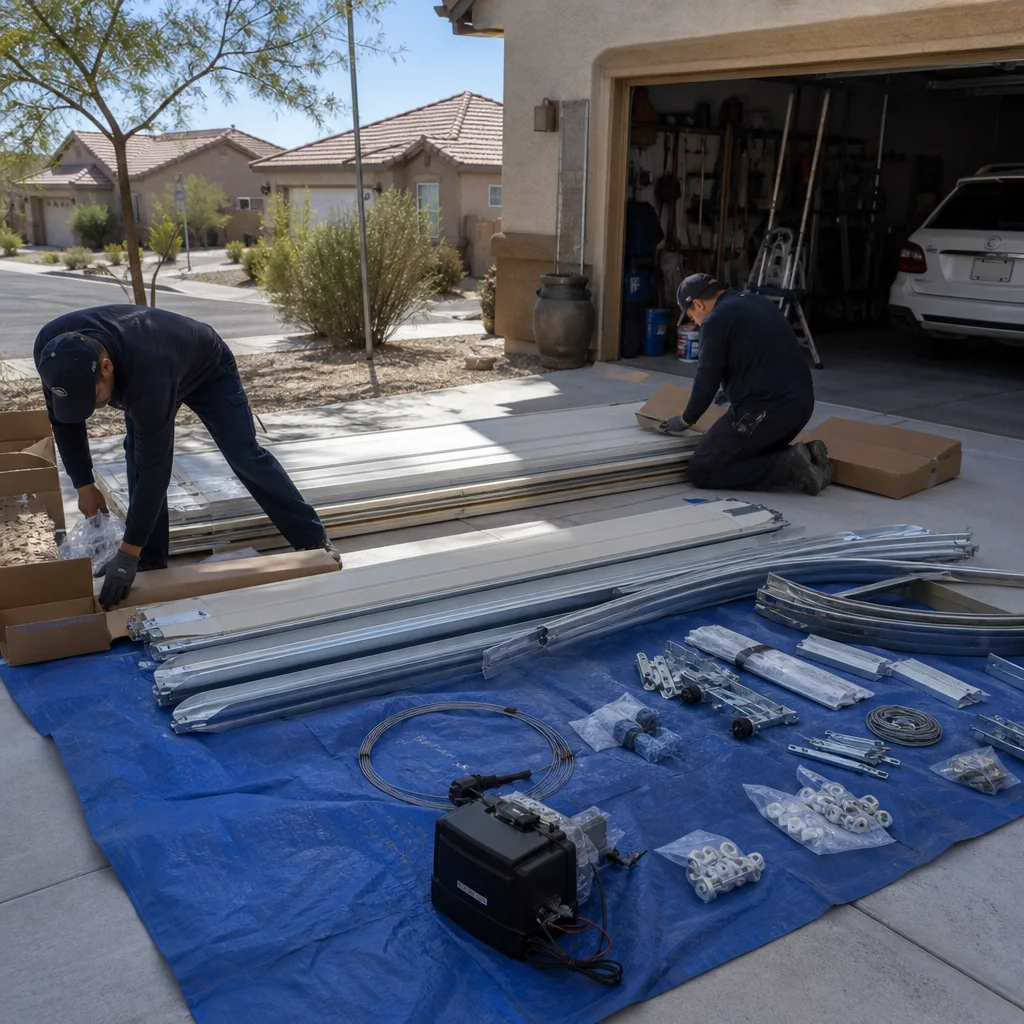
The single best thing you can do to make an emergency call fast is to have your door’s information written down. When a technician has the model, the spring type, and the rough opening dimensions before arrival, the diagnostic time on-site drops significantly, and so does the labor cost.
Write this down now, somewhere you can find it at 11 p.m.:
- Door model and manufacturer: the sticker is usually on the inside of the top section or the back of the door.
- Opener model: the label is on the back panel of the opener housing. Brand matters, but model number matters more.
- Spring type: torsion (the coiled spring running across the header above the door) or extension (two springs running along the track on either side). Note the wire color on the spring end, which is a gauge code.
- Rough opening dimensions: the width and height of the opening, not the door itself. A 16-foot double-car opening is common in Whitney; single-car openings are typically 8 or 9 feet wide.
- Photos: one of the full door closed, one of the opener label, one of the spring, one of the track from inside the garage.
Text that information with your call. It goes straight to the technician before they leave for your address.
Common Mistakes to Avoid
- Pulling the manual release while the door is partway open. This traps the door in a mid-travel state where the springs are under uneven load. If it’s already happened, don’t force it back; call for help.
- Assuming the door still reverses on obstruction after a dust event. Clean the photo-eyes first, then test. A door that doesn’t reverse is a safety hazard, especially with kids or pets in the garage.
- Lifting a door by hand that requires more than 15 pounds of effort. A properly balanced garage door lifts easily. Heavy means the spring is failing or the door is out of balance. Both need professional attention.
- Running the opener after impact damage to the top section or track. The opener will try to force the door through the damaged track and can destroy the gears or the drive chain.
- Skipping the manual lock during an outage. A released door with no deadbolt or slide lock is easy to open from outside. Engage the lock or re-engage the door before nightfall.
- Calling without the door model. Most Whitney emergency calls that take two trips to finish would have been one if the homeowner had the model and photos ready.
- Trying to rewind a torsion spring. The spring stores enough energy to break bones. This isn’t an overstatement. Don’t.
When to Call a Professional
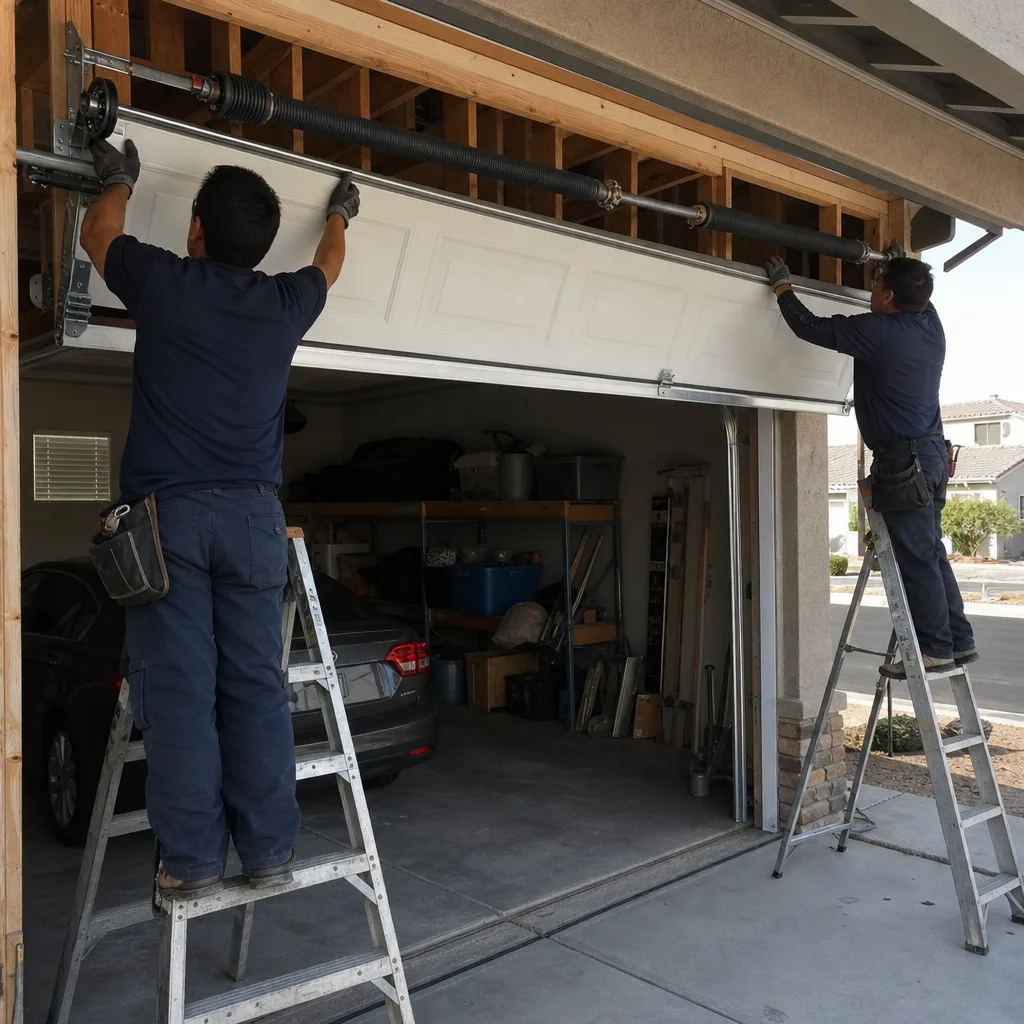
Call for professional service if the door won’t lift by hand with reasonable effort, if a spring or cable is visibly broken, if the door is off its track or uneven when closed, or if you see any structural impact damage from a wind event. Also call if the door stays released after power returns and won’t re-engage with the trolley, if the opener runs but the door doesn’t move, or if you’ve cleaned and re-aligned the photo-eyes and the door still reverses.
At Servo Garage Doors Whitney, we quote a flat written price before any work starts on every job, and we send you a documented photo record after the visit. If you’ve had a written estimate from another company and want a second look, bring it in. Our team has up to 11 years of experience with every major brand, including LiftMaster, Chamberlain, Genie, Clopay, Amarr, Wayne Dalton, Craftsman, and Raynor. We’re an independently owned and operated Whitney business, and our Servo Garage Doors Whitney home page has the details of how quotes and the 365-Day Done Right Promise work.
Frequently Asked Questions
Most emergency repairs in Whitney fall in the $180 to $480 range depending on the part. A spring replacement is typically $180 to $340 per spring, opener logic board replacement runs $230 to $450, photo-eye replacement is $110 to $210, and a horizontal track section repair is $250 to $600 before any panel work. You’ll get a flat written price from us before anything is touched, and it doesn’t change because “we found more.” Call (888) 402-1096 for an exact quote on your door; estimates are free.
Yes. We answer the phone live, 24/7, including weekends and holidays, and we treat emergency calls as emergencies. Spring failures, cables, broken openers, and doors stuck off-track are all cases where we can typically dispatch today. Call (888) 402-1096 and we’ll tell you the arrival window.
First check whether the opener has a battery backup; if it does, cycle the opener and wait for the battery to run the door. If it doesn’t, pull the manual release cord from the trolley carriage with the door fully closed, lift the door by hand using the bottom handle, and engage the manual lock if one is present so the door isn’t left as an open entry point. Do not leave the door released without a lock overnight. Call (888) 402-1096 the same day if the door is too heavy to lift by hand.
Most photo-eye false trips after a Whitney dust event are on the lens itself, not the sensor electronics. Wipe both lenses with a dry cloth, check the LED indicators on each side, and confirm the two sensors are aimed directly at each other. If the door still reverses after cleaning and the LEDs are steady, the problem is usually a failing logic board or a loose wire at the sensor connection. That’s a technician visit. Call (888) 402-1096 for a quote; a free second opinion on any written estimate you already have is available.
A dented panel by itself is cosmetic and safe to operate. The door is not safe if the horizontal track is bent, the top section has buckled or shifted on its hinges, the door doesn’t sit flush when closed, or the spring is visibly damaged. If any of those four are present, stop running the opener and call for service. Call (888) 402-1096 and we’ll tell you over the phone whether it’s safe to cycle the door.
We quote a flat written price for the job before any work starts, and the price you agree to is the price you pay. Emergency timing is part of the schedule, not a surcharge we apply after the fact. Call (888) 402-1096 for an exact quote and an arrival window.
The Bottom Line
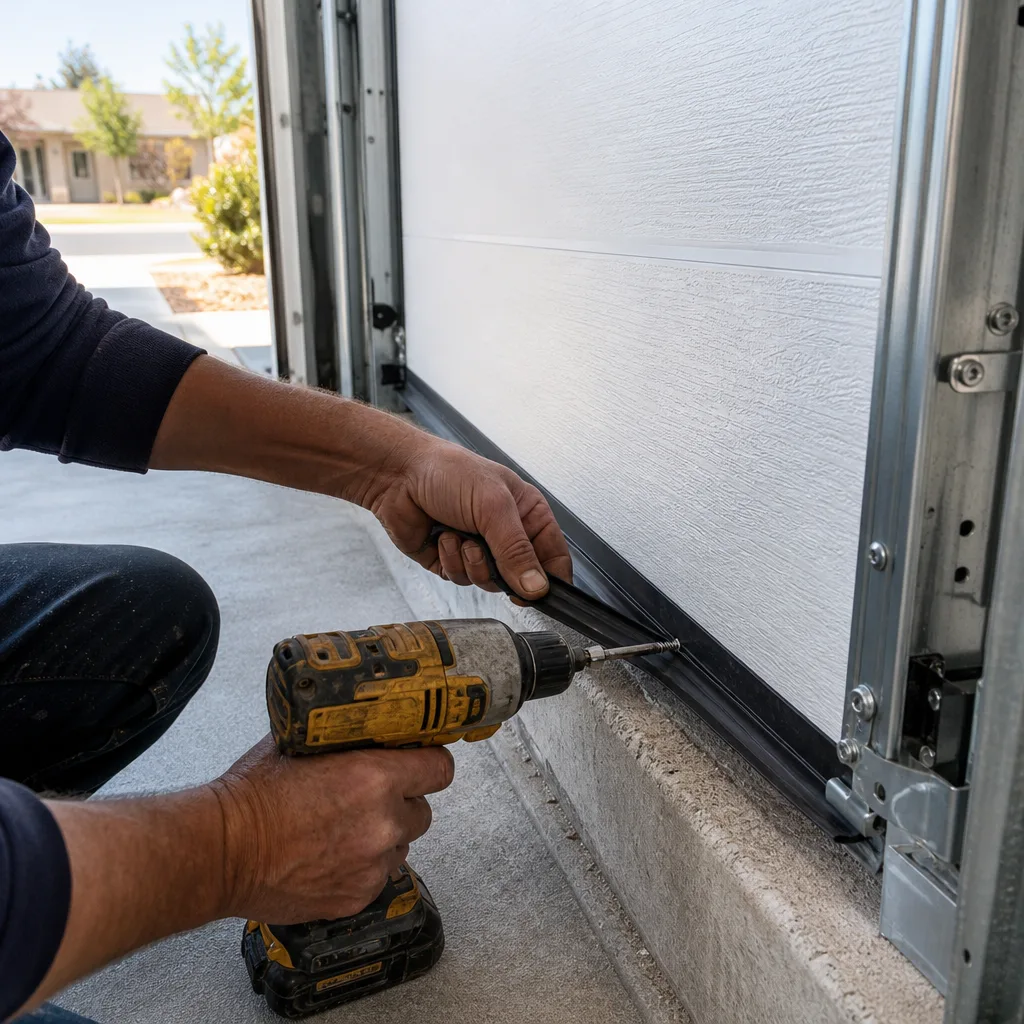
Garage door emergencies in Whitney are, more often than not, foreseeable. The power goes out during a summer grid event; the photo-eyes collect dust after a spring wind; a piece of debris hits the door in a wind gust. You can’t prevent any of those, but you can prepare for them: know your manual release sequence, keep your door and opener model numbers written down, clean the photo-eyes on a schedule during dust season, and never, ever touch a spring or a cable. The remaining variable is who you call. For repair and emergency service, see Garage Door Repair in Whitney; for scheduled replacement work, Garage Door Installation in Whitney; for opener work, Garage Door Opener Repair & Installation in Whitney. Call (888) 402-1096 for a free estimate. We’d rather answer your prep questions now and show up with the right part later.
Written by the team at Servo Garage Doors Whitney.
See the difference
BeforeAfter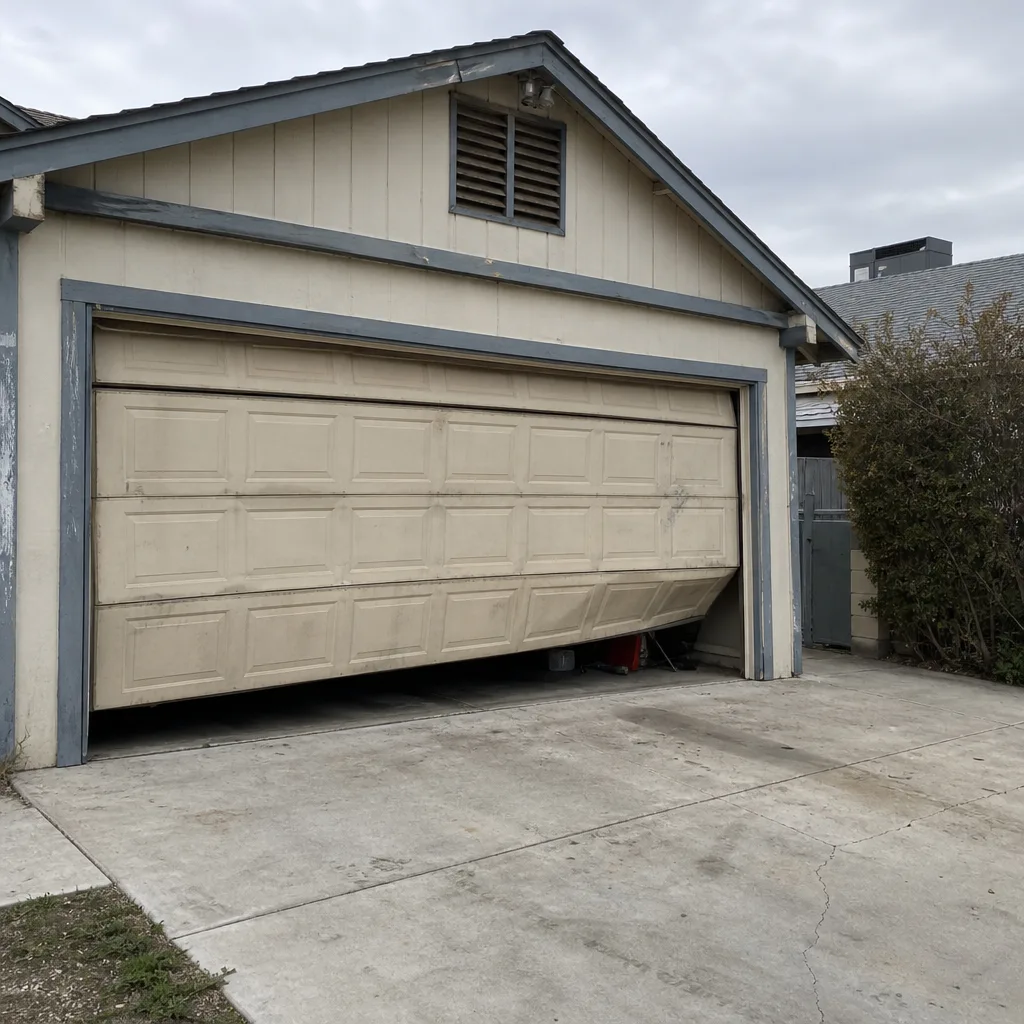 Before
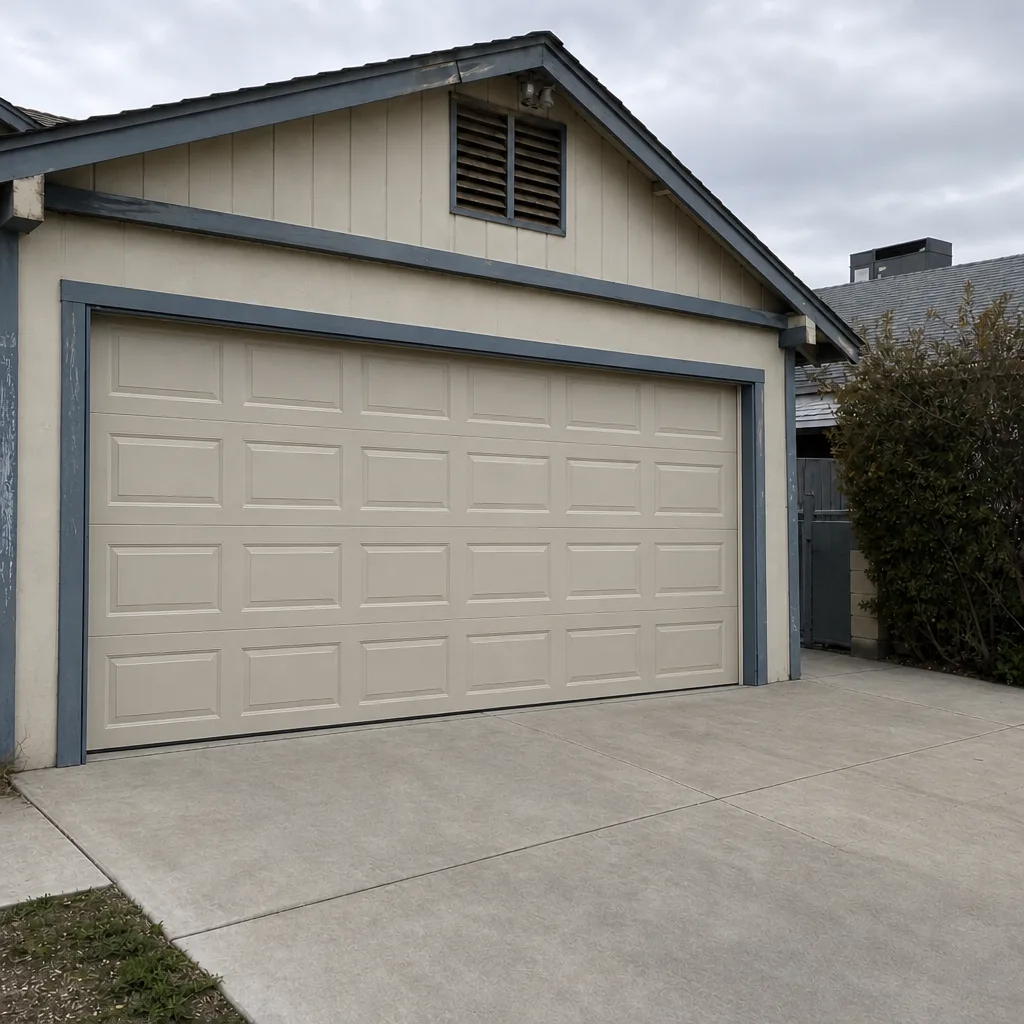 After
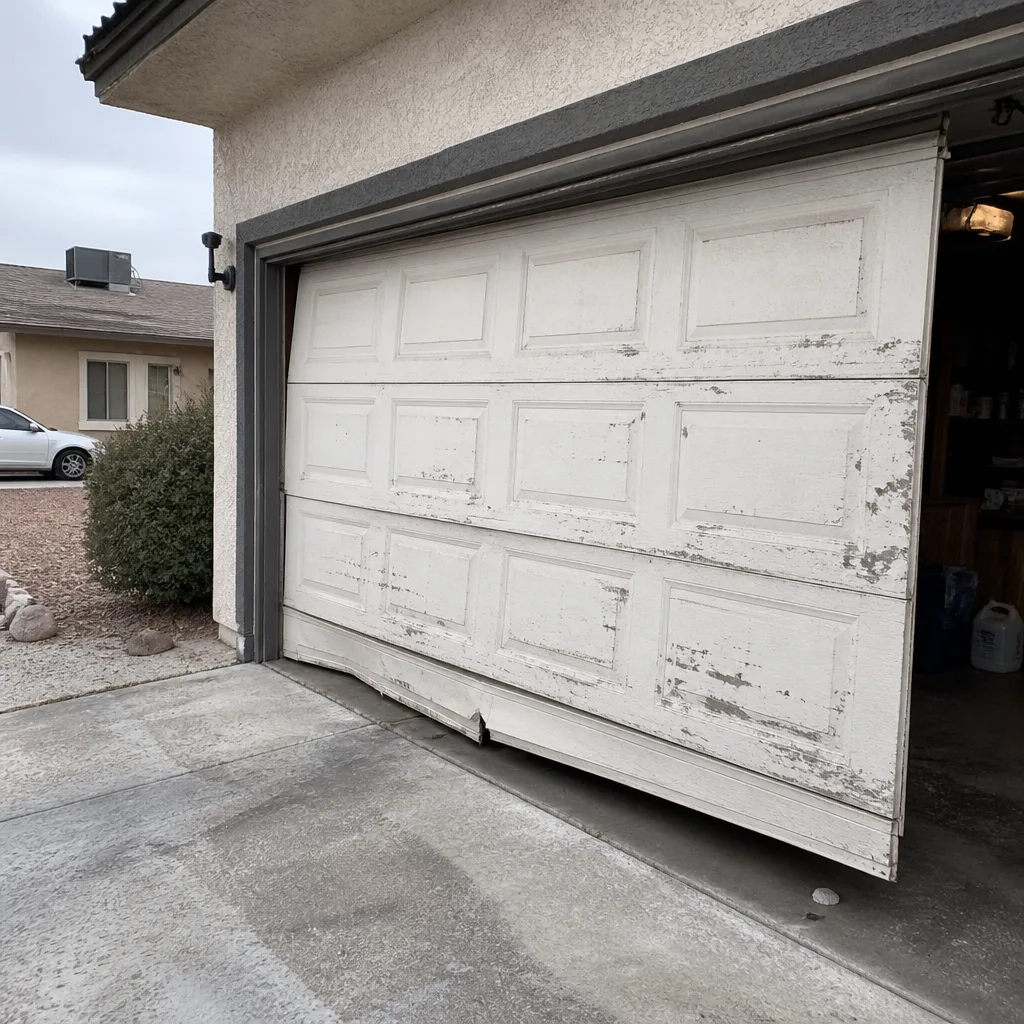 Before
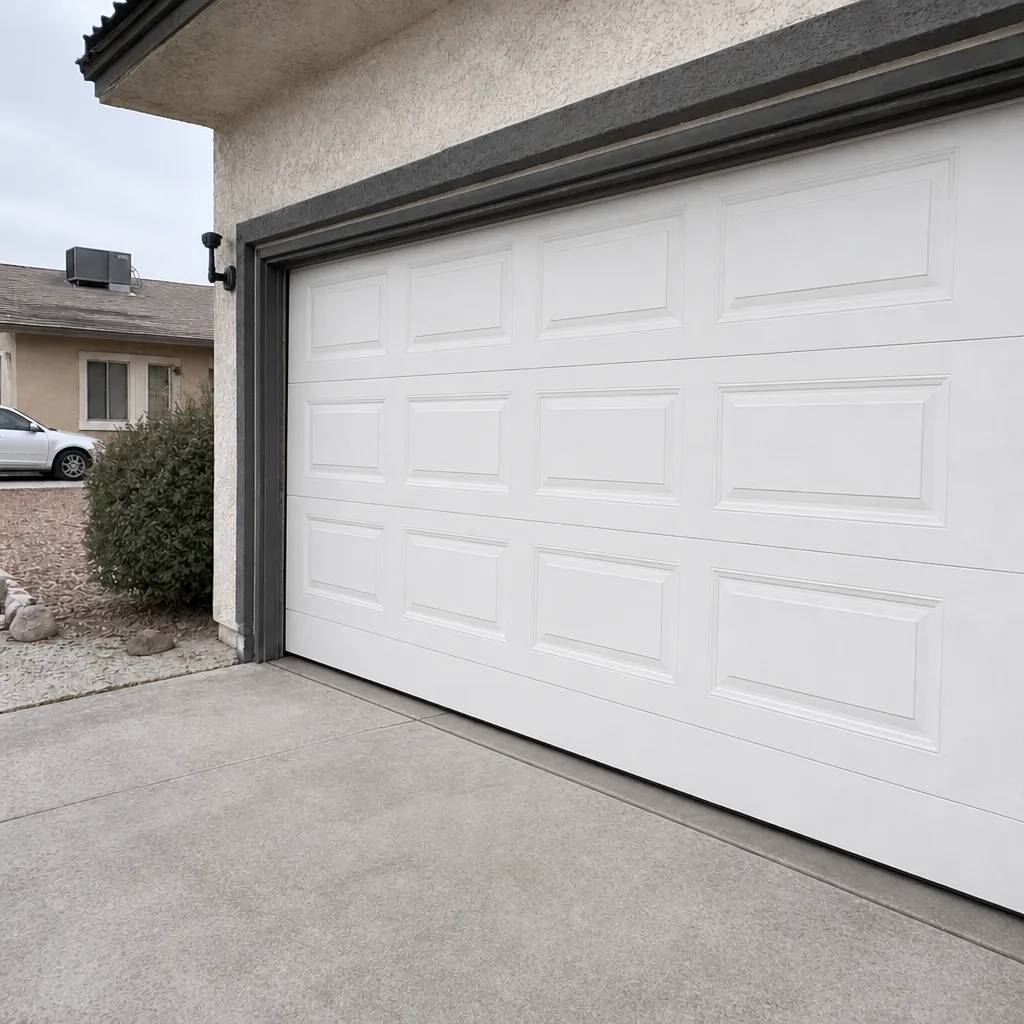 After