
Last updated November 18, 2026
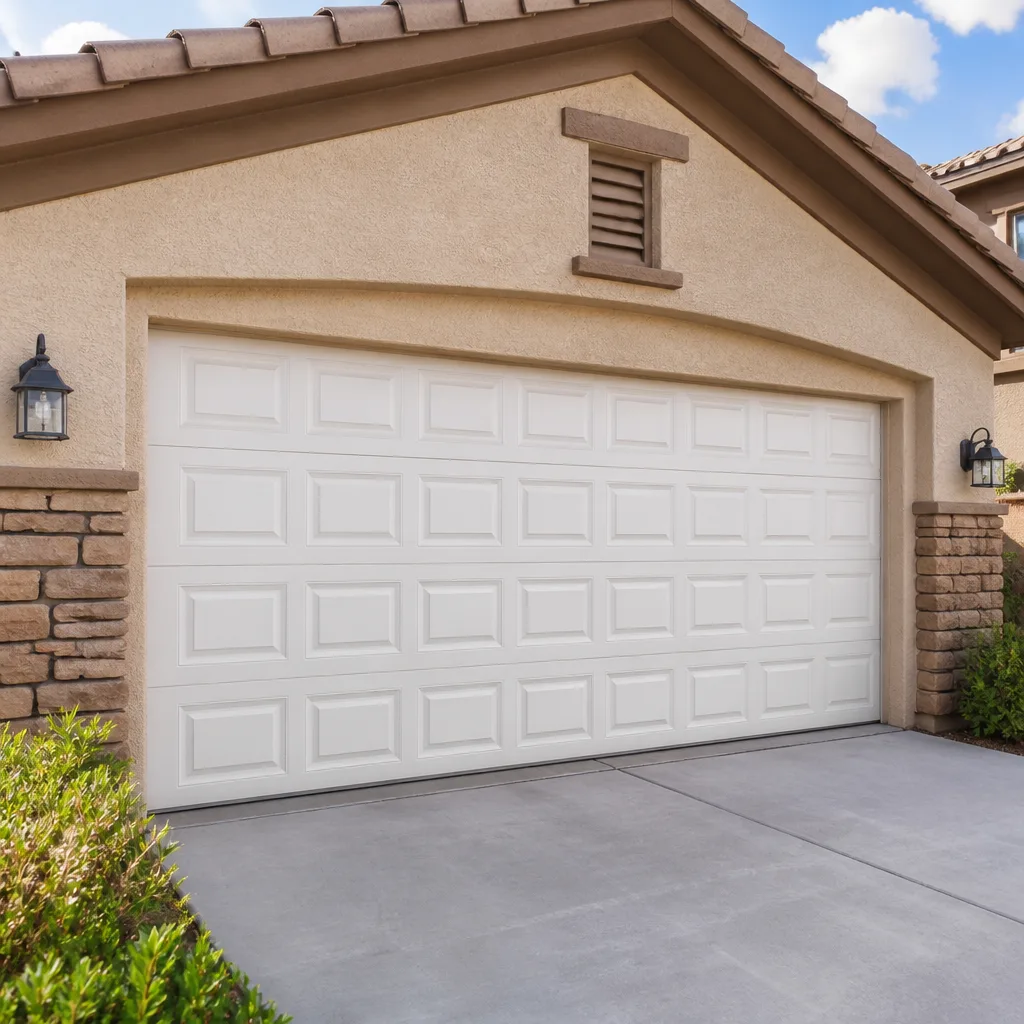 Raised-panel steel
 Carriage house
 Modern flush
 Full-view glass
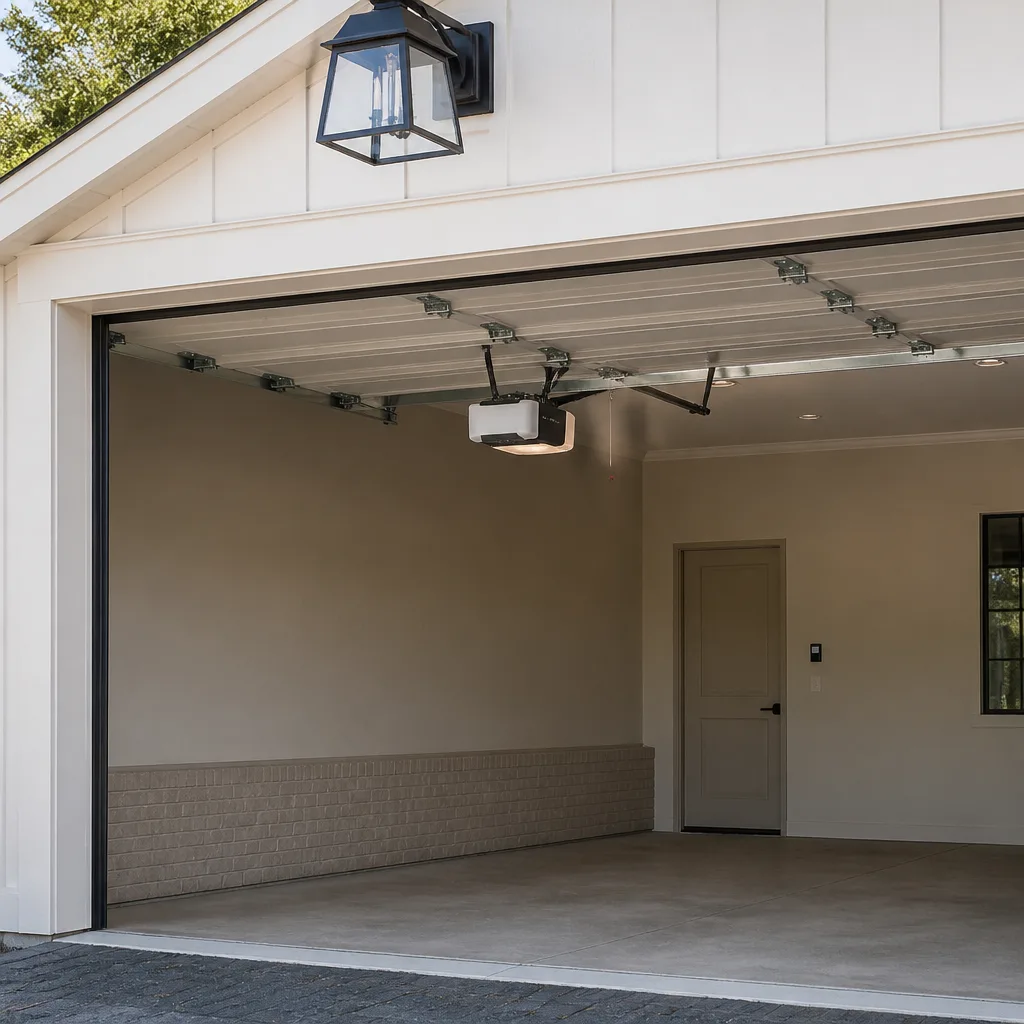 LiftMaster openers
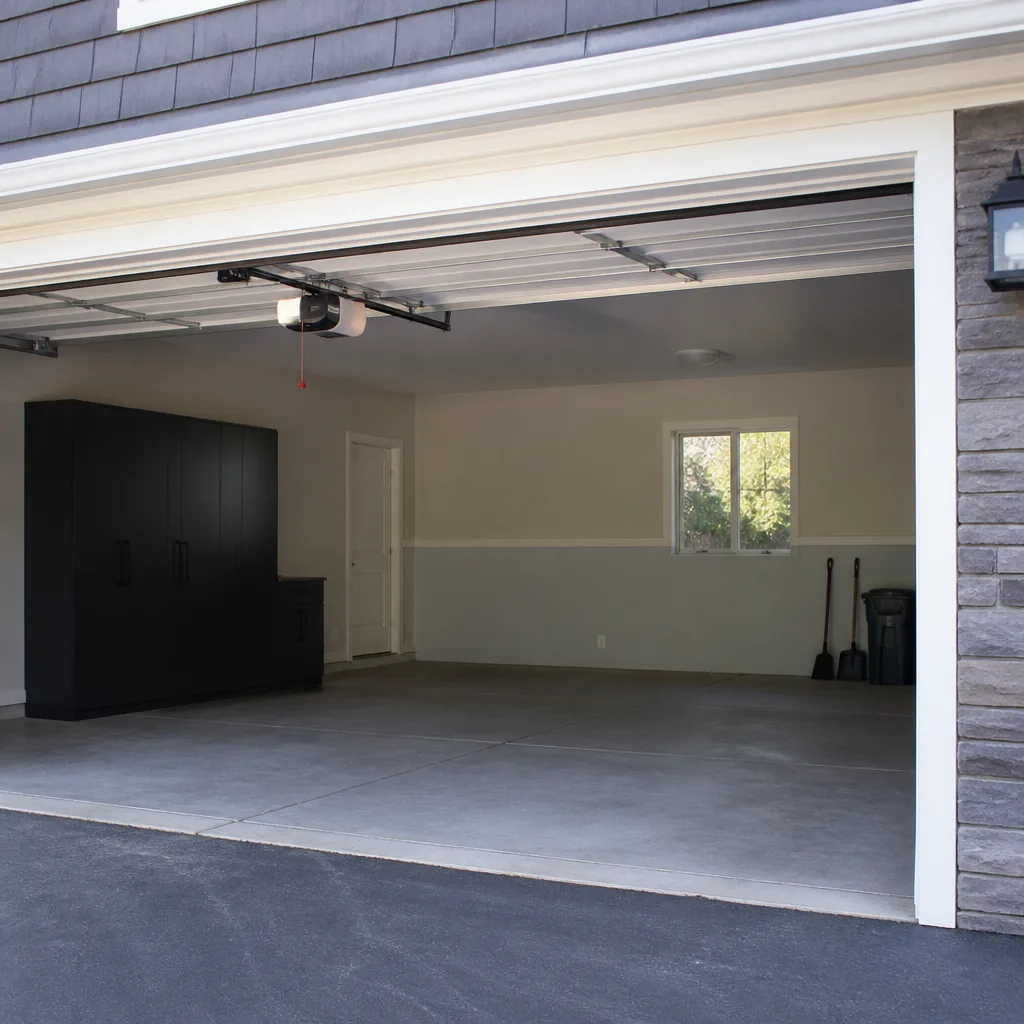 Chamberlain openers
Full 25-point door and opener safety check with every visit - springs, cables, rollers, tracks, and your LiftMaster or Chamberlain opener included
You get a price before we start. It does not change when the pro arrives.
Get your free estimateGarage Door Repair Maintenance Schedule: What to Do and When
Lubricating hinges that don’t need it wastes four minutes. Missing a cable fraying behind the drum costs you a door-down failure on a 95°F Whitney afternoon. The difference is knowing what to look for, not just when to look.
Most maintenance schedules on the internet are calendars: check this in spring, that in fall, call somebody twice a year. A calendar can’t see that your rollers have ground sand into the tracks or that a torsion cable has lost three strands behind the drum. This guide replaces dates with checkpoints. You’ll learn the specific visual and tactile tests that tell you whether a component actually needs attention, how Whitney’s desert climate shifts the schedule, and how to keep a written log that mirrors the photo record a technician leaves behind.
Quick Answer
Inspect your garage door’s five moving systems (springs, cables, rollers, tracks, and hinges) with a visual and hand check every 90 days, lubricate hinges and rollers only when they’re dry or squeaking, and book one professional tune-up per year for spring tension and balance checks you can’t safely do yourself. In Whitney, add a quarterly track-and-roller inspection because wind-blown sand infiltrates on a schedule rain doesn’t. If the door grows stiff, noisy, or slower between checks, that’s your trigger – not the calendar.
Styles & brands we work with
- Raised-panel steel
- Carriage house
- Modern flush
- Full-view glass
- LiftMaster openers
- Chamberlain openers
Table of Contents
- Why Observable Checkpoints Beat Calendar Dates
- The 5-Minute Monthly Walk-Around
- The 90-Second Cable and Drum Protocol
- Lubrication: How to Tell When It’s Actually Needed
- The Whitney Environmental Adjustment
- Building a Maintenance Log That Holds Up
- Maintenance That Protects (or Voids) Your Warranty
- The Annual Professional Tune-Up: What It Covers
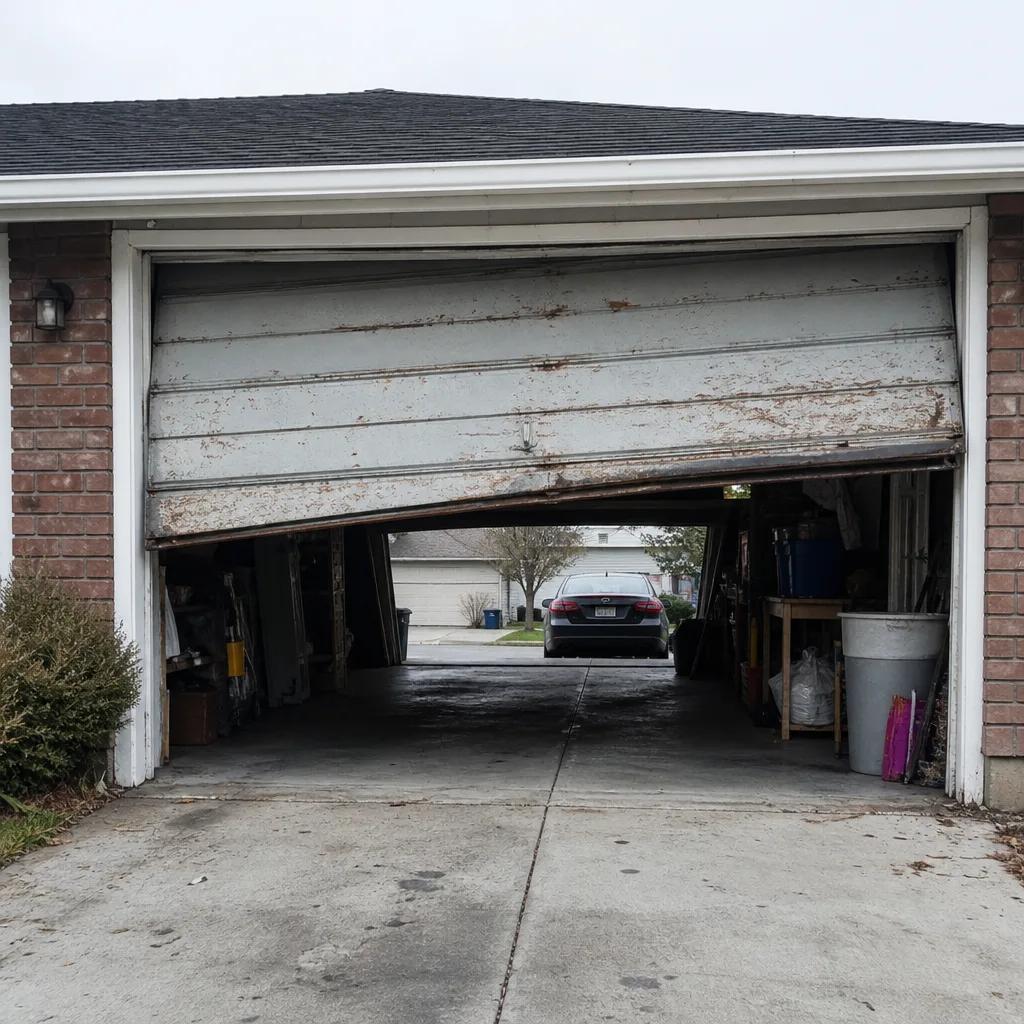 Before
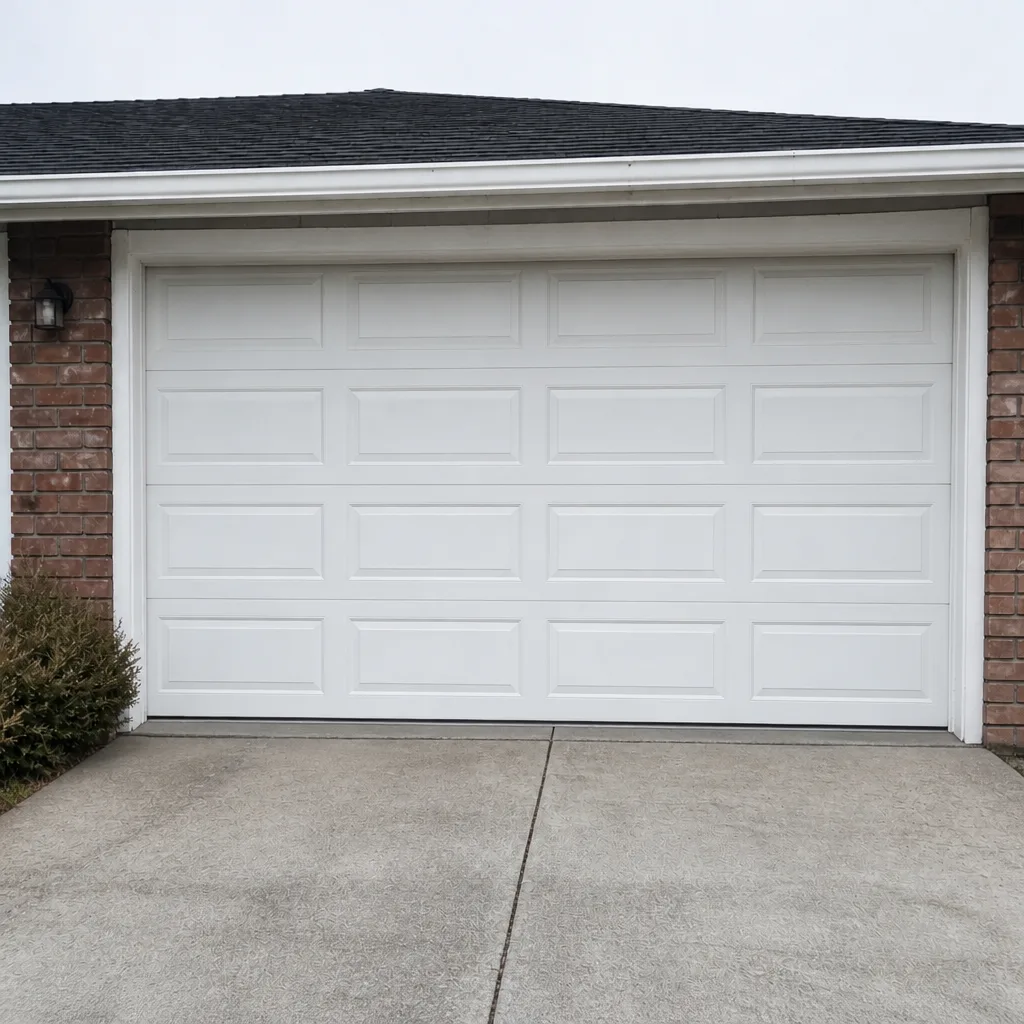 After
Why Observable Checkpoints Beat Calendar Dates
A calendar schedule assumes every door in every climate wears at the same rate. It doesn’t. A door facing afternoon sun on a west-facing Whitney wall bakes its springs hotter and cycles them through wider temperature swings than a shaded door three blocks away. The same six-month interval covers neither door accurately.
Observable checkpoints work because you’re testing the part, not the date. A roller doesn’t fail in October; it fails when its bearings seize or its nylon shell cracks. A hinge doesn’t need grease in the fall; it needs grease when the pin runs dry and the joint starts to groan under load.
Here’s what to actually measure or look at, and how often:
- Balance: Disconnect the opener and lift the door halfway. It should hold there. If it drops or rises on its own, spring tension needs a professional.
- Noise: A grinding or popping noise during travel points to roller or hinge wear, not routine operation.
- Speed: A door that has slowed noticeably is usually telling you the springs have lost tension or a roller has seized.
- Alignment: Look at the gap between door and frame on both sides. An uneven gap means the tracks have shifted.
We’ve found that owners who think in terms of these four signals catch most developing failures weeks before they strand a vehicle. That’s the whole argument for checkpoints: you’re responding to the door, not a reminder app.
If you’re unsure what you’re seeing on your door, our team at Servo Garage Doors Whitney home walks you through it.
The 5-Minute Monthly Walk-Around
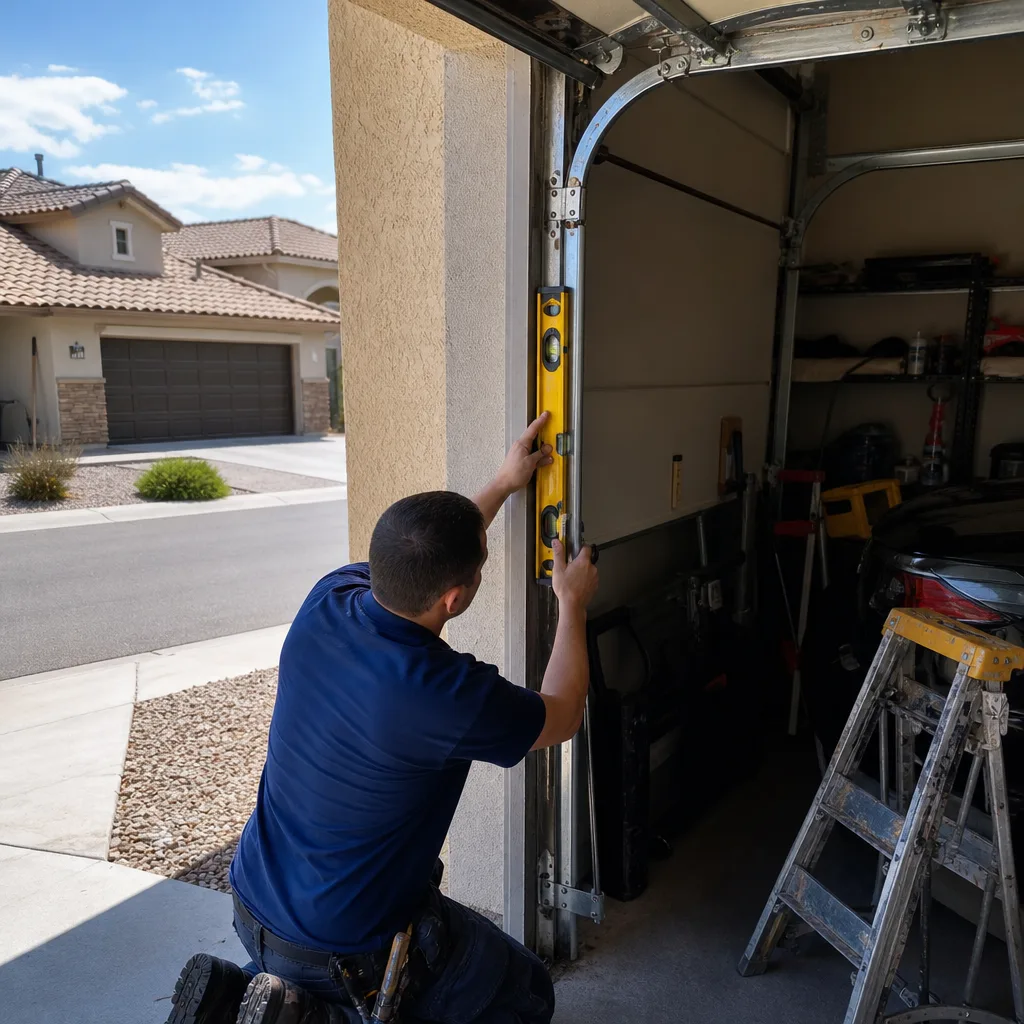
This is the fast pass, done once a month without tools. It won’t catch everything, but it catches the big stuff before it becomes expensive. Do it with the door closed, then repeat one pass with the door open.
- Look at the springs. On a torsion system, that’s the coiled bar above the door. On an extension system, the springs run along the horizontal tracks. You’re looking for gaps in the coil or heavy rust. Do not touch a torsion spring.
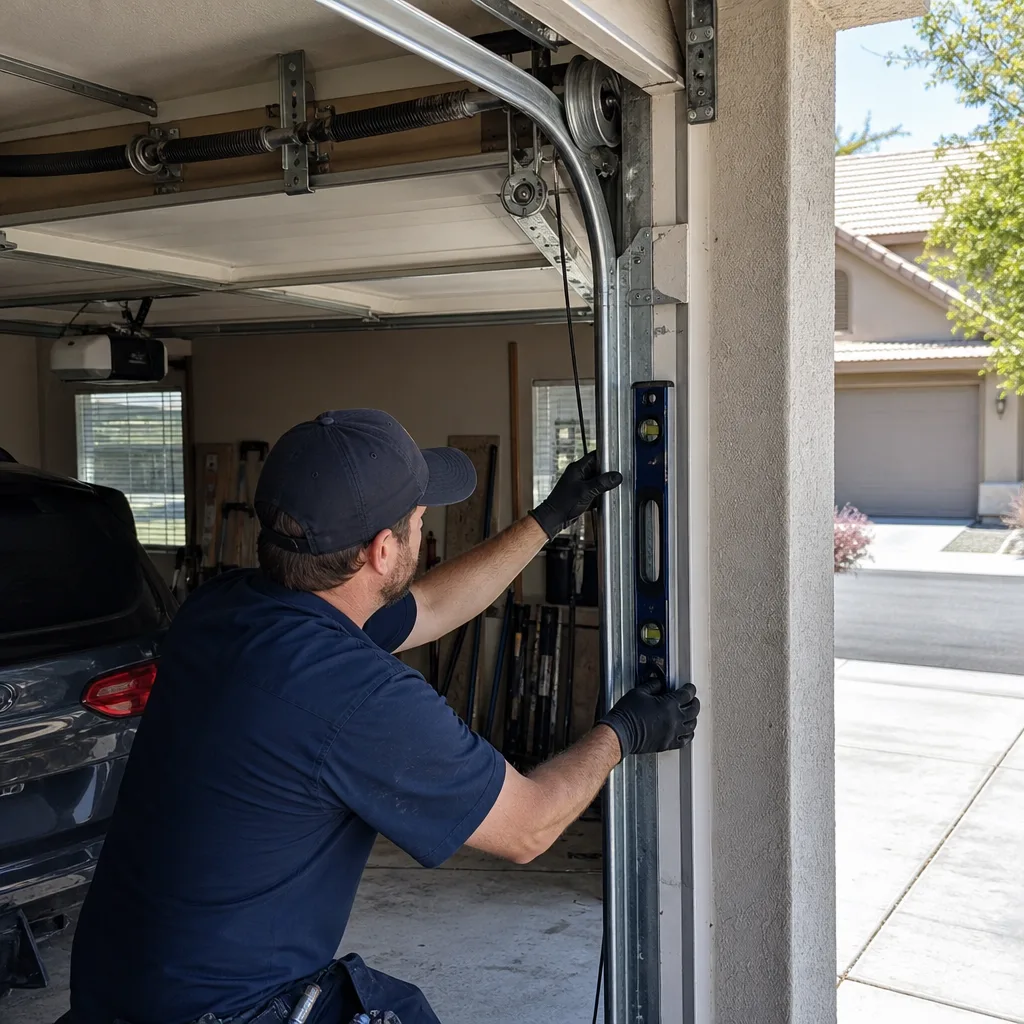
- Look at the cables. These are the steel lines along the sides, running from the bottom bracket up to the drums. Check for fraying, kinks, or slack. More on this below.
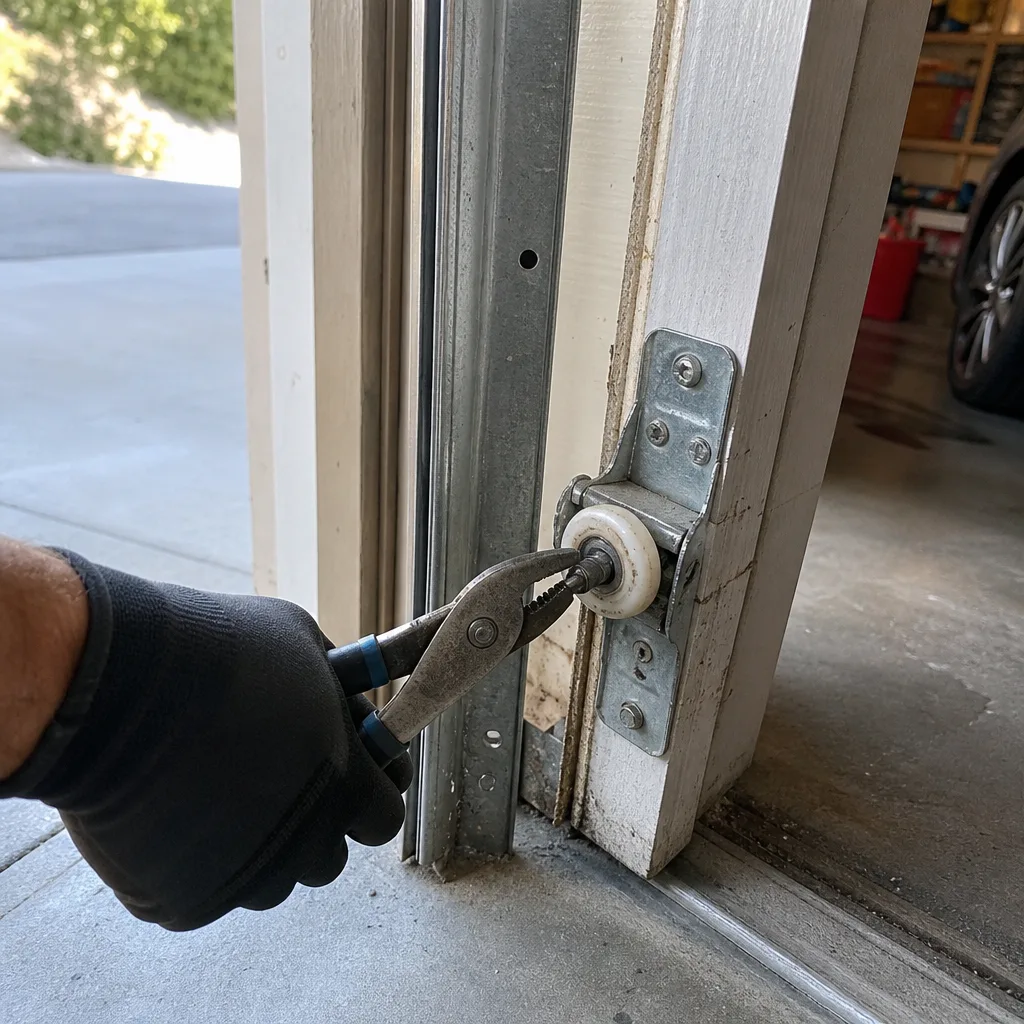
- Look at the rollers. The wheels that ride in the tracks. Check for cracks in the nylon or wobble in the stem.
- Look at the tracks. They should be straight and clean. Look for dents or a bend near the curve.
- Look at the hinges. The joints that connect the panels. Check for loose hardware and rust.
- Listen and watch while it runs. Run the door once. Note any sound that’s new since last month.
That’s it. Five minutes, no ladder, no tools, nothing under tension. If everything looks the same as last month, you’re done. If something has changed, the change is the trigger.
The 90-Second Cable and Drum Protocol
Cable failures are the most common cause of a door that drops suddenly or jams half-open. The good news: most cable failures give warning first. In our experience, a focused 90-second inspection catches the large majority of imminent failures before they strand a car in the garage. Here’s the protocol.
Step 1: Work from the closed-door position. Cables are slack when the door is open, so you want the door down. Never reach near a cable on an open door.
Step 2: Trace each cable with your eyes, not your hands. Start at the bottom bracket on the lower corner of the door and look up to where the cable meets the drum at the top of the track. Move slowly. You’re looking for three specific things:
- Fraying strands. A healthy cable twists like rope with a smooth surface. A failing one has individual wire strands lifting off or a “birdcage” flare where the cable meets the drum.
- Rust-colored streaks. That reddish powder along the cable or drum is oxidized steel, and it usually means the cable has been under stress from a failing spring.
- Slack or a loose wrap. A cable that has jumped its drum groove or is visibly loose means the spring balance has failed and the door is being held by the opener alone.
Step 3: Check the drum for a clean, even wrap. The cable should sit neatly in the groove on the drum with no overlapping or crossing. An uneven wrap stresses the cable edge and leads to fraying.
Step 4: Check the bottom bracket. The bracket at each lower corner holds the cable under the spring’s stored force. Loose hardware here is a serious finding. Do not attempt to tighten it yourself; the cable carries full tension and can release without warning.
Quarterly is the right cadence in Whitney, where dust and heat accelerate both cable wear and spring fatigue. Any finding above means it’s time to call a garage door repair company rather than wait for the next inspection. This is also the single most useful inspection you can do, so if you only do one thing on this whole schedule, make it this one.
Lubrication: How to Tell When It’s Actually Needed
The internet says to lubricate every six months. That advice ignores the obvious: some hinges and rollers haven’t needed it in years, and others go dry in a hot, dusty garage within weeks. Over-greasing is its own problem, because excess lubricant traps dust and turns into a grinding paste inside the roller bearings. So how do you tell?
What a hinge needs lubrication: A dry pin joint sounds faintly when the door travels. The joint surface looks chalky or matte rather than shiny. You hear a small squeak when the door turns. Under the joint you’ll see fine metal dust from friction.
What a hinge looks like after recent service: The pin and joint are shiny and slick. There’s a light, even film, not a heavy clump. There’s no squeak or dust. If it looks like that, leave it alone.
What a roller needs attention: The wheel doesn’t spin freely between your thumb and forefinger. It wobbles on its stem. The nylon shell is cracked or flat-spotted. A sealed-bearing roller in good shape shouldn’t need lubrication at all; if it’s now running rough, replacing it is more reliable than greasing.
What a roller that was just serviced looks like: Spins smoothly, no wobble, no cracks. A door that glides quietly is telling you it’s fine.
When you do lubricate, use a silicone or lithium-based spray on hinges and on the track surfaces the rollers ride on. Never use grease on steel springs as a substitute for inspection, and never use oil that will attract sand. In Whitney, the sand is the problem, so we lean toward dry or silicone lubricants that don’t hold grit.
The Whitney Environmental Adjustment
Most maintenance advice assumes a wet climate. Whitney is the opposite: dry, hot, and windy, with sand and fine dust moving through garages along the eastern edges of the valley. That changes the schedule.
The single biggest Whitney-specific adjustment: inspect the roller tracks and rollers quarterly, not annually. Sand infiltrates the tracks and gets into the roller bearings, where it acts like an abrasive paste. If a roller doesn’t spin freely, it drags against the track, wearing both the roller and the steel rail. Left alone for a year in Whitney, that wear is quietly cumulative. Quarterly is the interval that catches it before replacement is the only option.
Here’s the full Whitney-adjusted schedule as we apply it:
- Monthly: The five-minute walk-around and a single run of the door.
- Quarterly: The cable and drum protocol, plus track and roller inspection for sand infiltration and free spin.
- Quarterly: Spring visual check, particularly looking for the rust that follows a dry season and a hot one.
- Annually: Professional tune-up covering balance, spring tension, opener force adjustment, and safety-reverse testing.
- After any wind event: Unplanned but worthwhile. Blowing dust settles in tracks and rollers.
Heat is the other Whitney factor. Metal expands in afternoon sun, and a door facing west bakes for hours. Door panels warp slightly at the seams, and torsion springs lose tension faster than they would in a cooler climate. That shows up as a door that feels heavier to lift by hand. If lifting your door by hand has gone from easy to a strain, that’s the heat talking through your springs.
Our opener repair and installation page covers how the opener force settings interact with that heat-driven tension loss, since one sags into the other.
Building a Maintenance Log That Holds Up
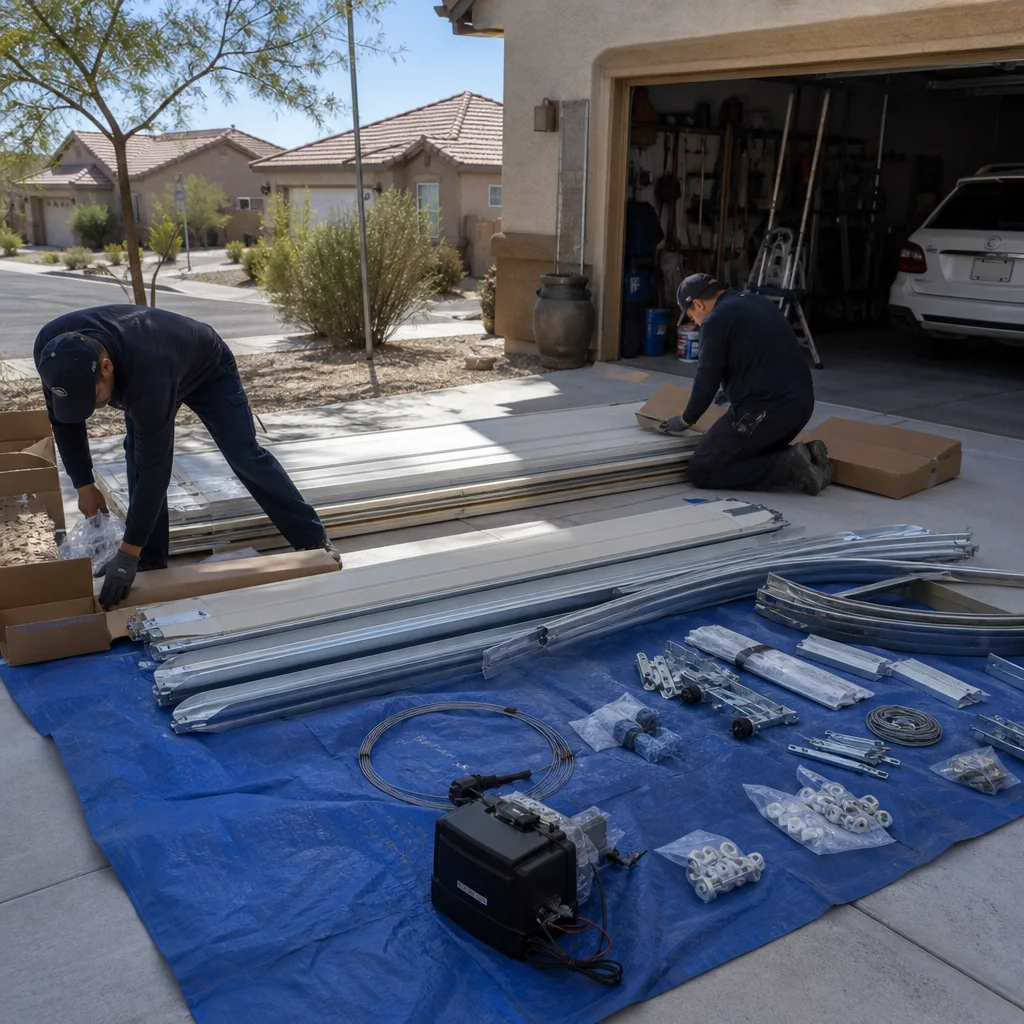
A log doesn’t have to be formal. A single sheet of paper on a clipboard, or a note in your phone, works. What matters is the structure: date, component inspected, condition noted, action taken. That’s exactly the paper-trail logic a technician follows, and you’re applying the same logic to your own maintenance.
Here’s how to fill a row so it’s actually useful later:
- Date: Include the month and day. Season matters for diagnosing heat or dust patterns.
- Component inspected: “Right-side torsion spring,” “left cable and drum,” “all rollers.” Name what you looked at, not just that you looked.
- Condition noted: Say what you saw, not how you felt about it. “Clean, no fraying” beats “looks fine.” “Wobble in two rollers, one with a cracked shell” beats “some rollers are bad.”
- Action taken: “Silicone spray on hinge pins 3 and 4.” “Roller noted, calling for replacement.” “Nothing needed.”
Why does this matter? Two reasons. First, it tells you when a component is trending toward failure versus just normal. A hinge that starts squeaking and resolves after servicing is fine. A hinge that squeaks, gets serviced, and squeaks again three weeks later is a hinge that needs replacing. Second, if you ever call for service, a dated log quickly tells the technician what’s been happening. And a written record of maintenance can matter when you file a warranty claim on a door component. We’ve seen a modest log make a warranty conversation noticeably easier.
This is the same logic behind the documented record our technicians leave after every visit: what we found, what we did, photographed and dated. Our installation team hands a written record to every customer for exactly this reason.
Maintenance That Protects (or Voids) Your Warranty
Garage door and opener warranties often hinge on maintenance, and owners rarely read that part until something fails. Which tasks help and which ones create problems depends on the product category.
What protects your warranty:
- Professional annual tune-ups with documentation. Most manufacturers of doors and openers expect the equipment to be serviced, and a dated record helps if you file a claim. This is where the written log earns its keep.
- Lubrication of the correct surfaces with manufacturer-acceptable products. Silicone and lithium sprays are generally safe on hinges, rollers, and track surfaces.
- Safety-reverse testing on your opener. Most opener warranties on LiftMaster and Chamberlain systems expect the automatic reverse to be functioning. This is a home safety test, not decorative; do it monthly.
What can void a warranty:
- DIY spring replacement. This is the big one. Torsion spring work is the highest-risk task in the entire system, and a home spring replacement typically voids the spring’s warranty and shifts liability. Springs store enormous force. They can and do release without warning, and the injury is often serious. A trained technician with proper tooling is the only safe path here. We don’t recommend anyone work on torsion springs, cables, or the bottom bracket.
- Forcing a door with a jammed operator. Running a LiftMaster or Chamberlain opener against a bound door can burn out the logic board or strip the trolley carriage, and most manufacturers treat that as misuse.
- Improper adjustment of spring tension or opener force. Over-tightening springs to compensate for a heavy door stresses the components and isn’t a covered repair.<
On product categories, the warranty sensitivity varies: springs and openers (LiftMaster, Chamberlain, Genie) care most about proper service records, while door panel and hardware warranties (Clopay, Amarr, Raynor) often care about installation standards and load. A Craftsman opener from an earlier decade, for example, may not have a live warranty at all. Check your specific product manual before assuming.
The Annual Professional Tune-Up: What It Covers
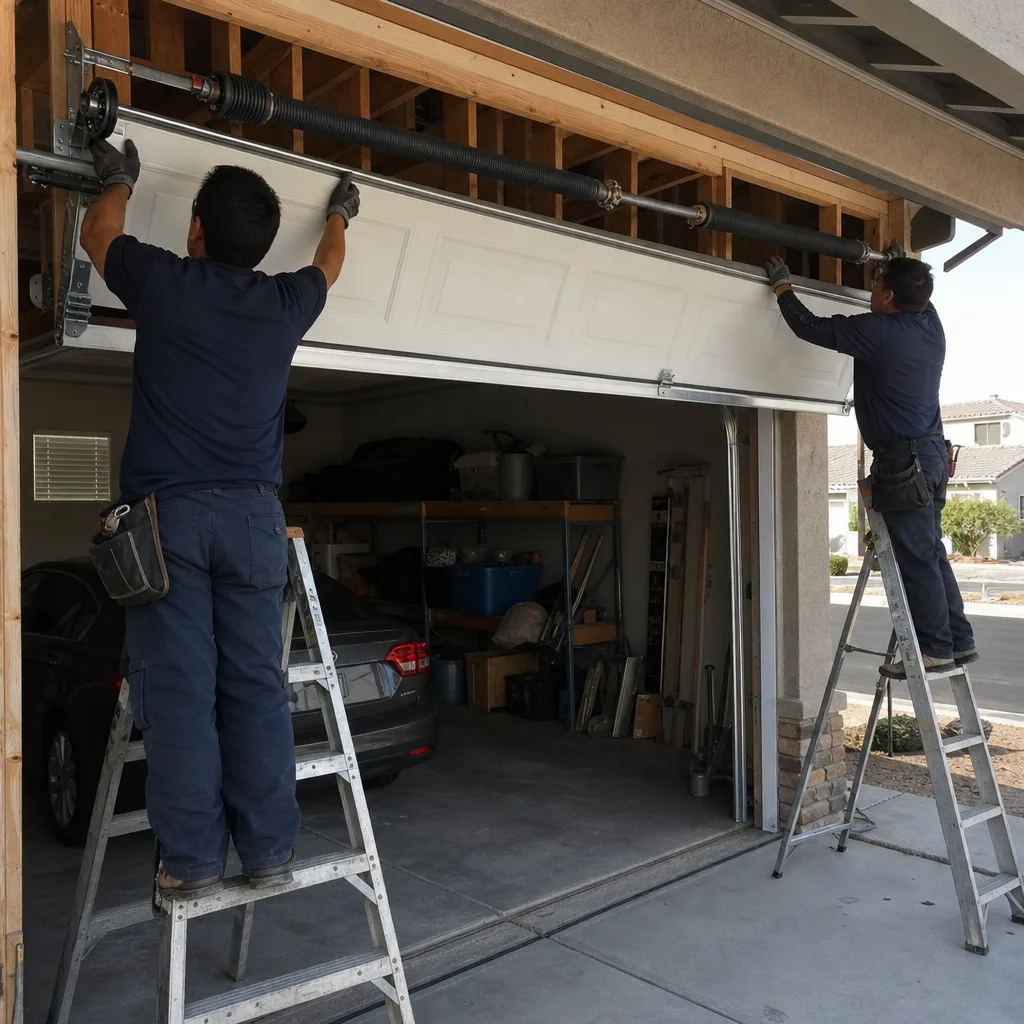
Some tasks you should do yourself. Others you genuinely shouldn’t. The annual professional visit covers the tasks that require trained hands and the right tools, and it saves you from the parts of the schedule that carry real risk.
A proper tune-up typically includes:
- Spring tension check. The technician measures spring wire diameter and coil length, and compares the door’s actual balance to spec. This is what catches a spring that’s silently lost tension before it snaps.
- Cable and drum inspection at the exact points you can check yourself, plus the bottom bracket hardware that isn’t safe for an owner to tighten.
- Roller and hinge assessment to confirm what your inspections have already flagged, and to replace worn rollers if needed.
- Opener force and limit adjustment. Force settings are calibrated to the door’s actual weight. A spring that has lost tension changes the balance, and the opener needs to be reset to match.
- Safety-reverse test. The opener’s automatic reverse must trigger on contact. If it doesn’t, it’s a serious safety issue, especially if there are children or pets in the home.
- Photo documentation naming the components checked and their conditions.
If you have a written estimate from another company and want a second look before committing, our Whitney repair team offers a free second opinion – bring the paperwork. If your door is due for replacement rather than a tune-up, our installation page explains what the measurement and scheduled installation process looks like.
Common Mistakes to Avoid
- Greasing springs and cables. Cables should never be lubricated; the grease traps grit and changes the way the cable sits on the drum. Springs are occasionally lubricated with a specific product, but never oil, and only after inspection.
- Assuming same-day service on a replacement. Replacement, new doors, and openers are measured and scheduled, so a “same day” promise on that job is a red flag. Repair can often be same day; replacement is a plan, not a scramble.
- Ignoring a cable that looks “just a little” frayed. Frayed strands mean failure is in progress, and a Whitney wind event can make the difference between “scheduled service” and “door down tonight.”
- Letting sand build up in the roller tracks through a dry season. Whitney dust is abrasive. If the rollers feel gritty or the door doesn’t glide, the track needs attention before the rollers wear out entirely.
- Running the door with a jammed opener. The opener will fight the resistance until it burns something out. If the door doesn’t move freely by hand, stop and get it looked at.
- Skipping safety-reverse testing. This is a two-second test and the single most important safety check on the whole system. Test it monthly.
- Trusting a calendar over the door’s actual behavior. A schedule is a starting point. If your door sounds wrong, feels wrong, or moves wrong, that beats the calendar every time.
See the difference
BeforeAfter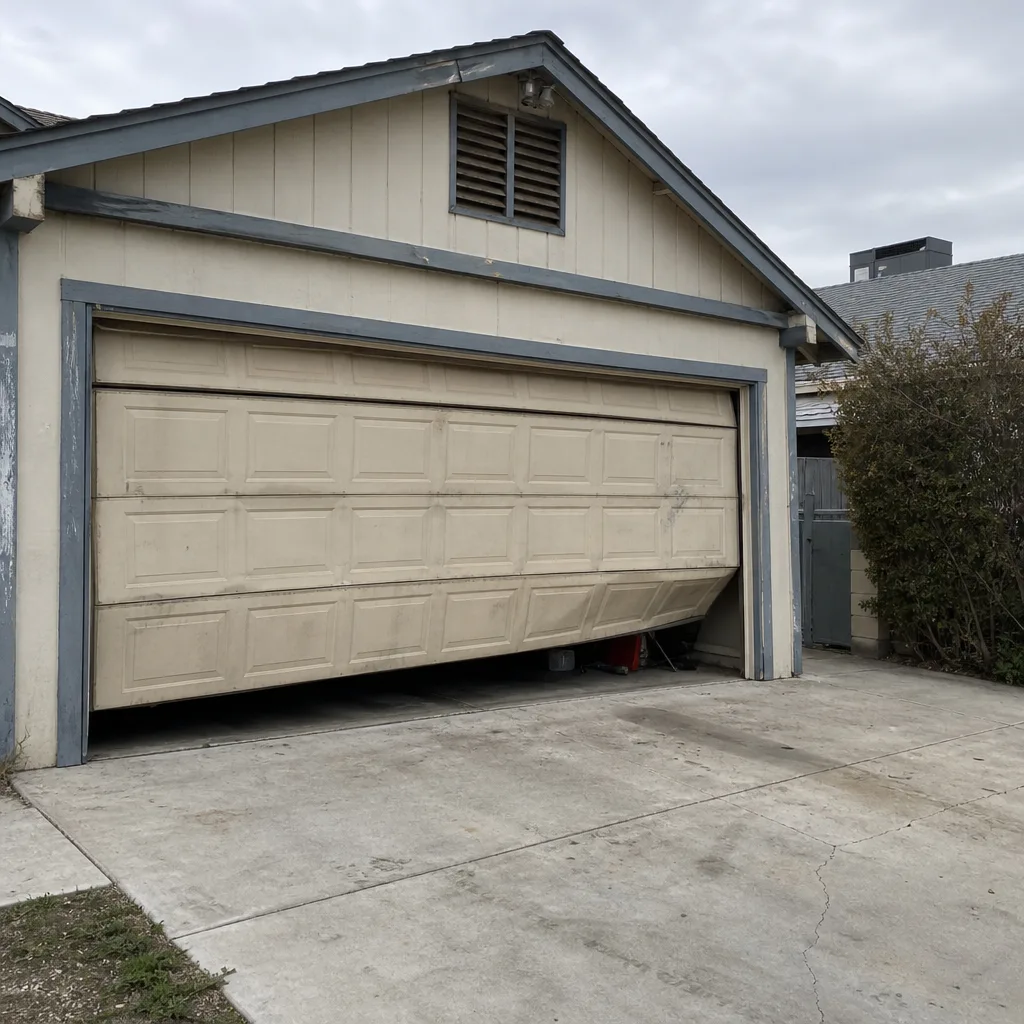 Before
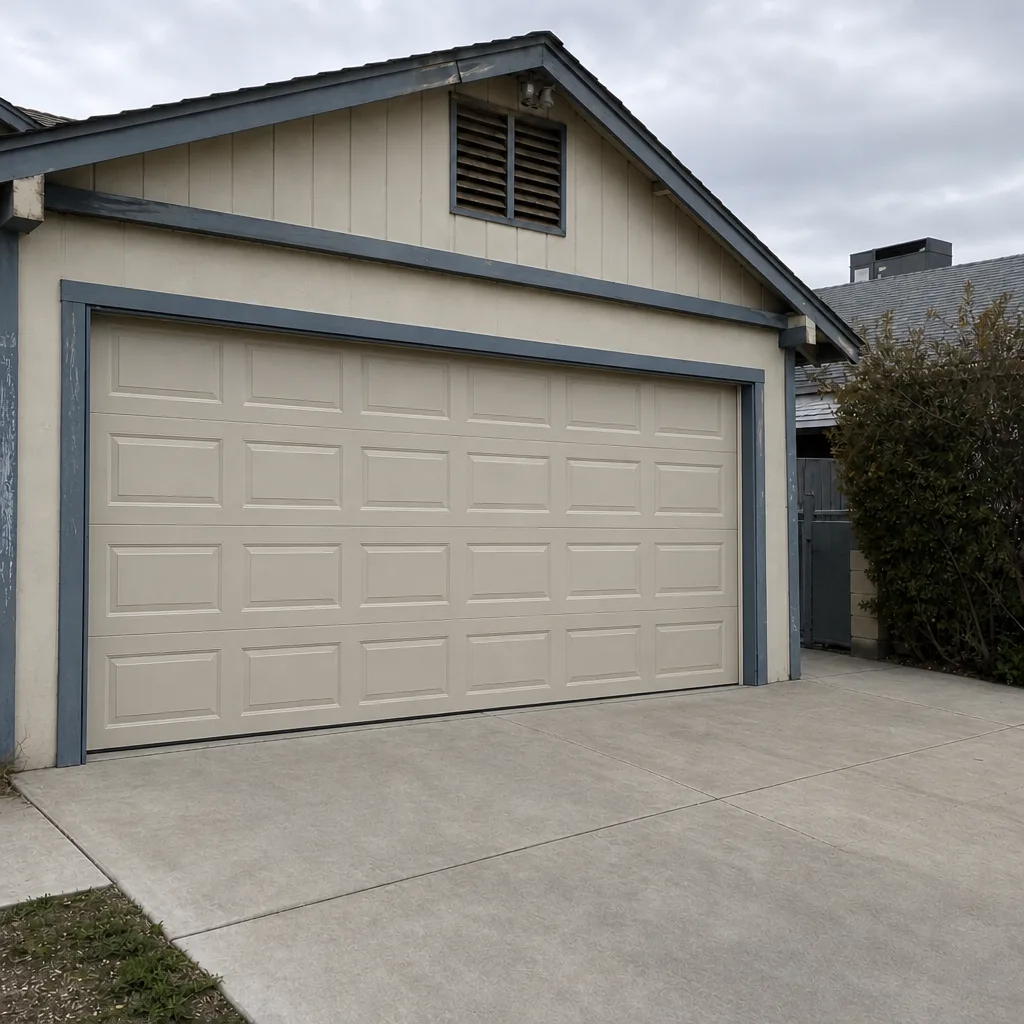 After
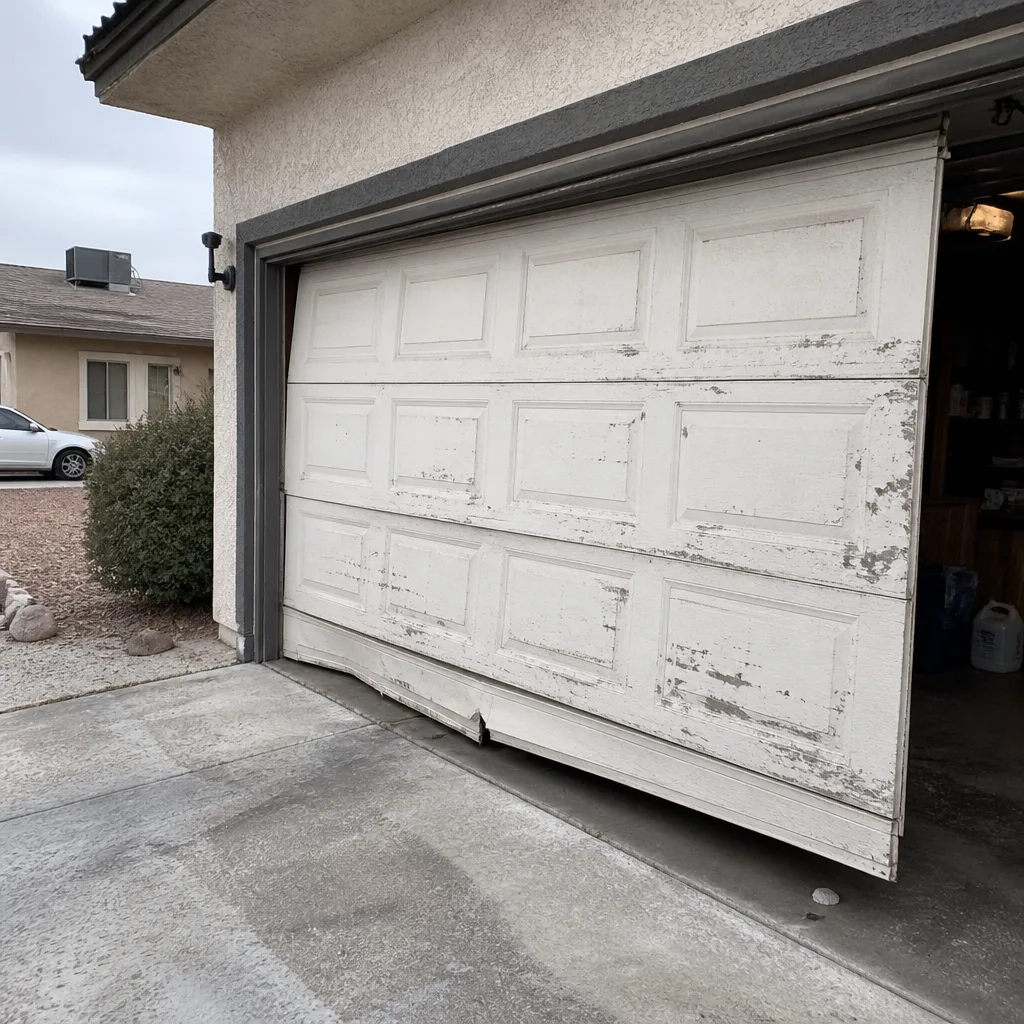 Before
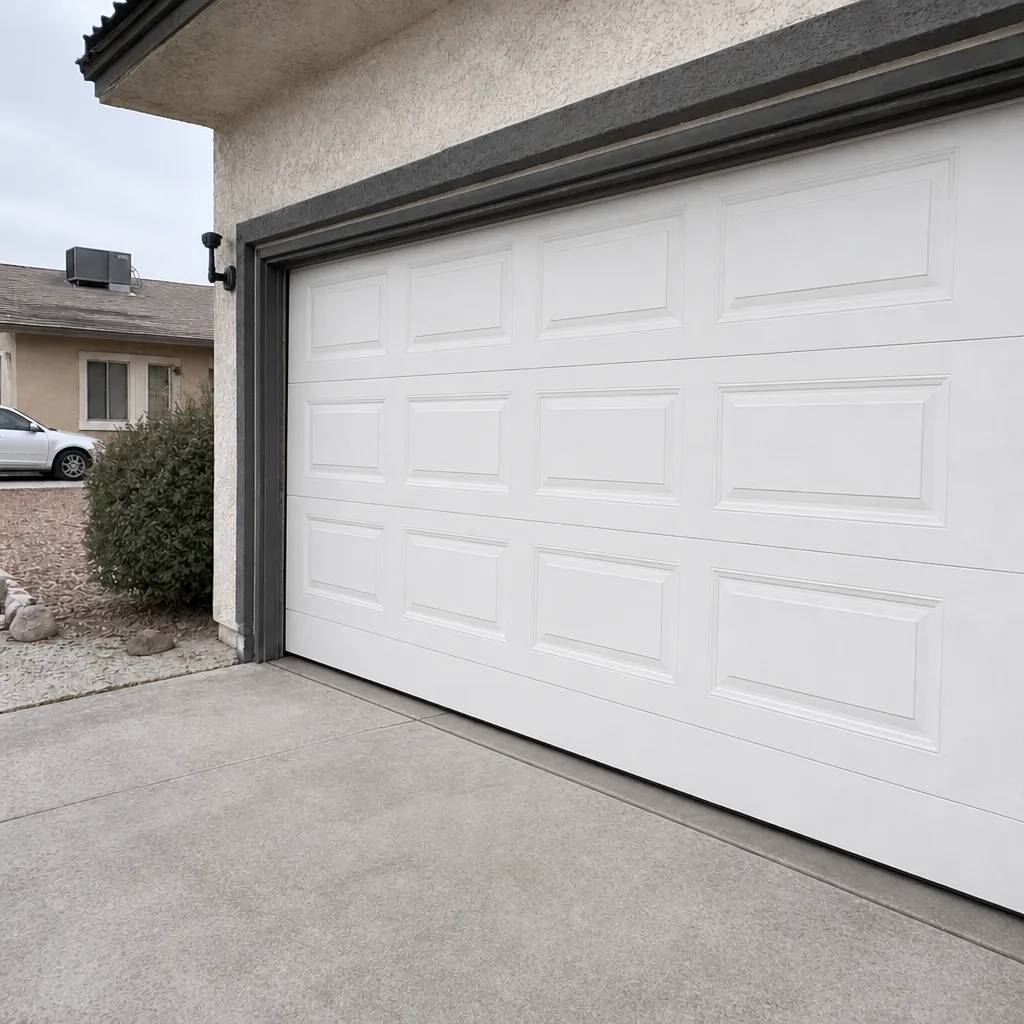 After
When to Call a Professional
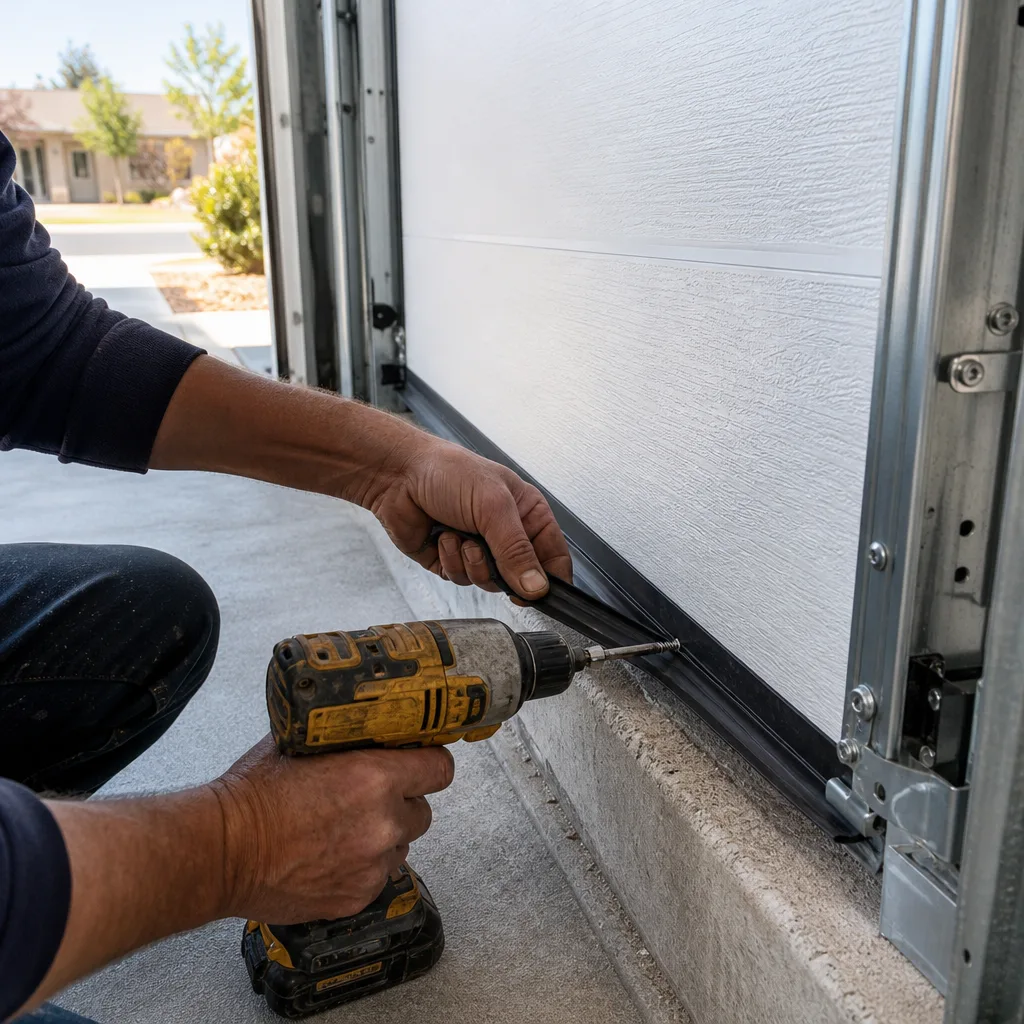
Call for a professional any time the door has a broken spring, a snapped or badly frayed cable, a door that has come off track, a visibly bent section, or an opener that reverses when it shouldn’t. Call when a door that once opened by hand easily now feels heavy. Call when you hear a bang from the garage and the door won’t lift. And call when the door is older and hasn’t had an annual tune-up in some time, because the balance and tension checks catch problems before they escalate. If you’re mid-inspection and unsure what you’re seeing, that’s also a good reason to get an opinion: a short call saves a longer repair.
Our team has up to 11 years of experience on doors and openers from LiftMaster, Chamberlain, Genie, and the major door brands, and every visit comes with a written price and written scope before any work starts, plus a documented photo record when we leave. Servo Garage Doors Whitney offers free estimates in Whitney – call (888) 402-1096.
Frequently Asked Questions
Do a quick visual walk-around monthly, and run the full cable and drum protocol quarterly. Whitney’s dry, windy climate pushes sand into tracks and rollers faster than a wet climate would, so quarterly track checks are the right interval rather than once a year. If the door starts acting differently, inspect immediately regardless of schedule.
Yes, for hinges, rollers, and the track surfaces the rollers ride on, using silicone or lithium spray. Skip the springs and cables. Cables should never be lubricated, and spring lubrication is a professional decision, not routine owner maintenance. If you’re unsure which parts are safe, call (888) 402-1096 for a quick answer.
A tune-up is typically done as a flat, written price before work starts, and the range depends on the door system and what’s found during inspection. We quote it upfront, in writing, with a written scope. Call (888) 402-1096 for an exact estimate; our estimates are free.
No. Torsion springs are under enormous stored force and can release without warning, and the injury is frequently serious. A home spring replacement can also void the spring’s warranty. This is the one task on the whole schedule we recommend against for any homeowner, without exception. Call a technician.
Often, yes. A dated record of inspections, servicing, and observations supports a warranty claim on a door or opener component. It’s the same reasoning behind the written record a professional leaves. Keep a simple sheet with date, component, condition noted, and action taken.
For repair and emergency calls, yes. Our live line answers 24/7, including holidays, with a named technician and an on-the-way text. Call (888) 402-1096 and we’ll quote a flat, written price before any work starts. Same-day availability applies to repair and emergencies; installation and replacement are measured and scheduled by nature.
The Bottom Line
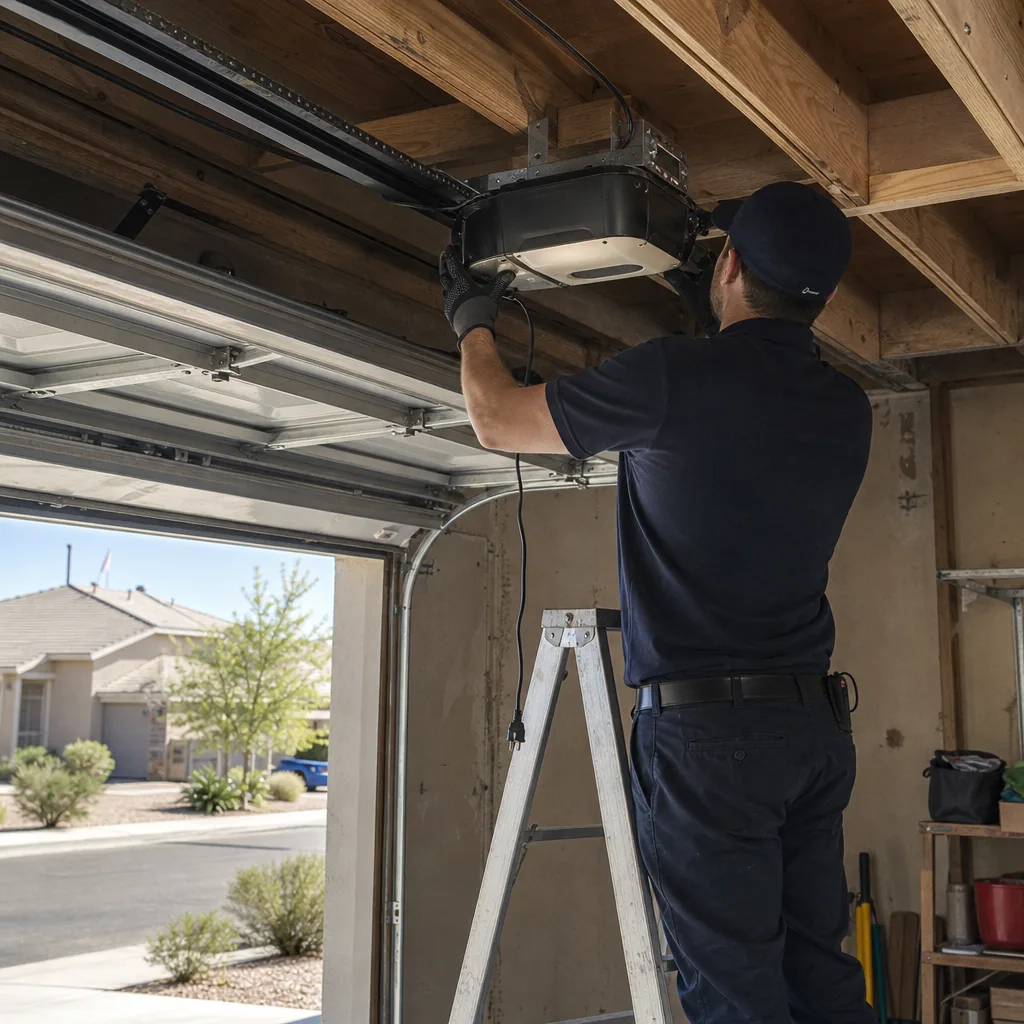
A useful maintenance schedule is built on what the door is telling you, tested on a regular cadence. Inspect monthly, run the cable protocol quarterly, and book one professional tune-up a year. In Whitney, add quarterly track-and-roller checks for sand and heat. Keep a written log with date, component, condition, and action. Reward yourself with a working door and a paper trail. If something looks off, call (888) 402-1096 – estimates are free, and nobody needs the “call for a quote” dance.
Written by the team at Servo Garage Doors Whitney.