
Last updated November 18, 2026
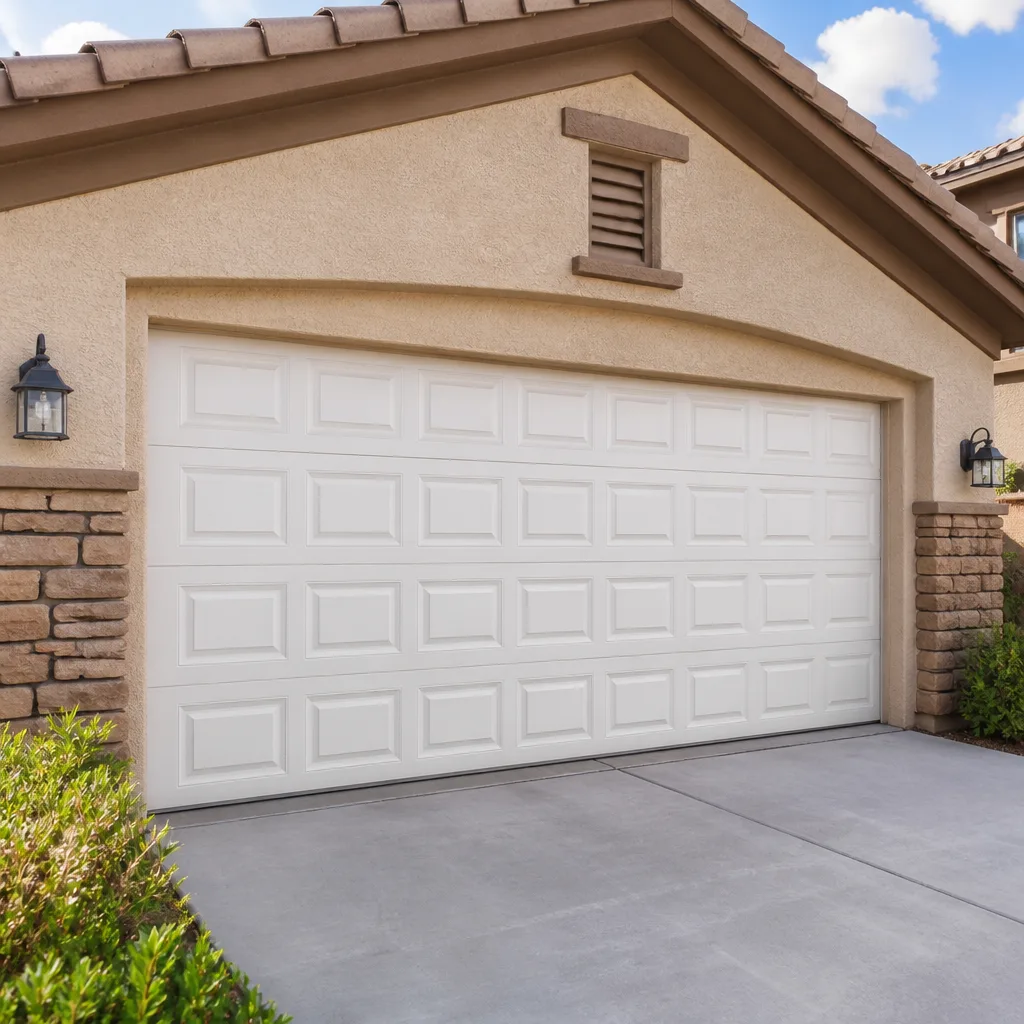 Raised-panel steel
 Carriage house
 Modern flush
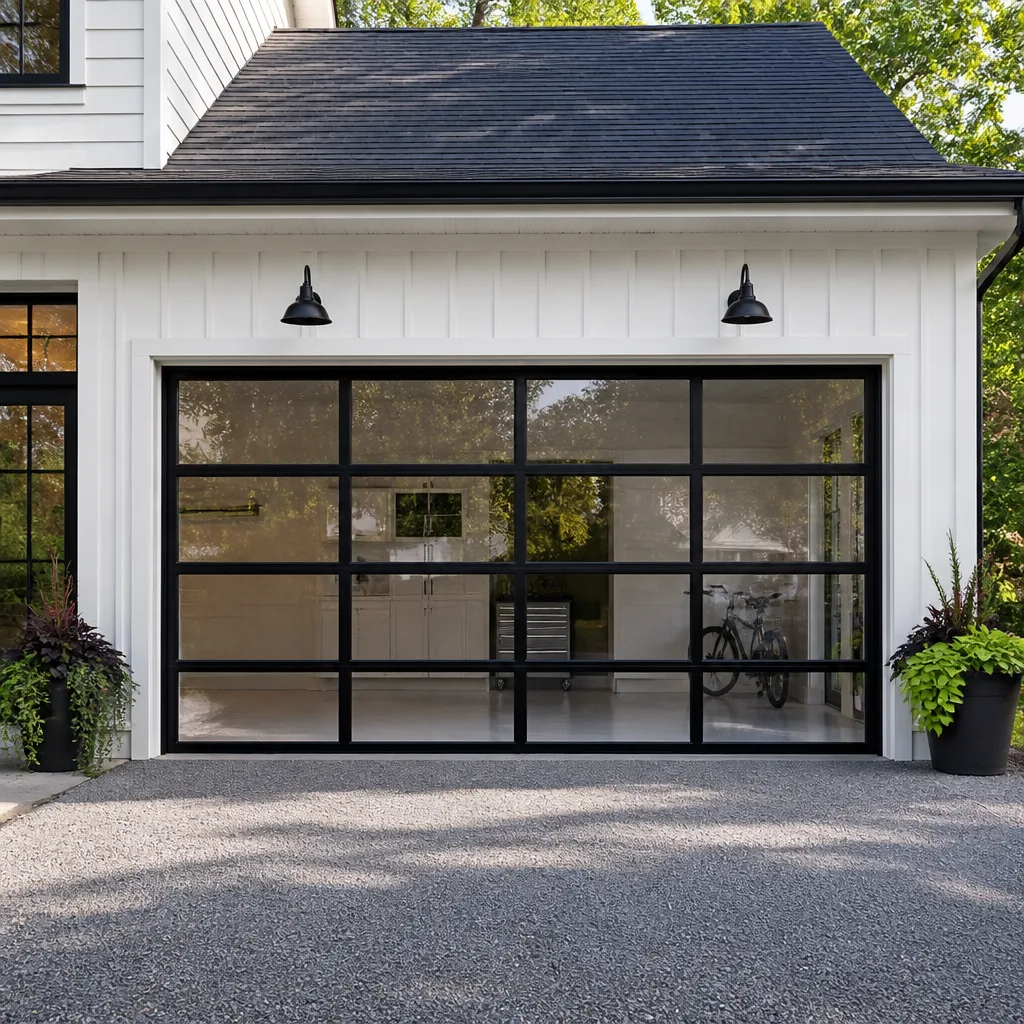 Full-view glass
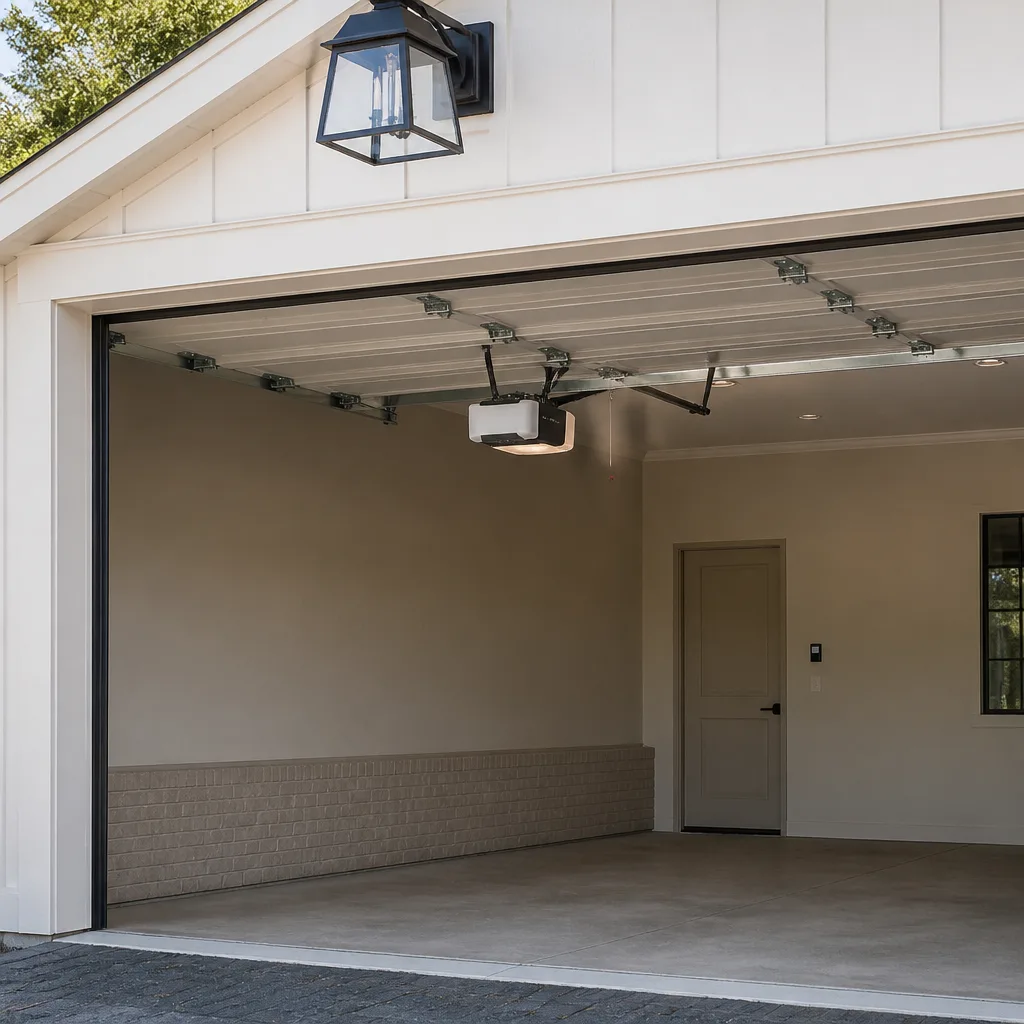 LiftMaster openers
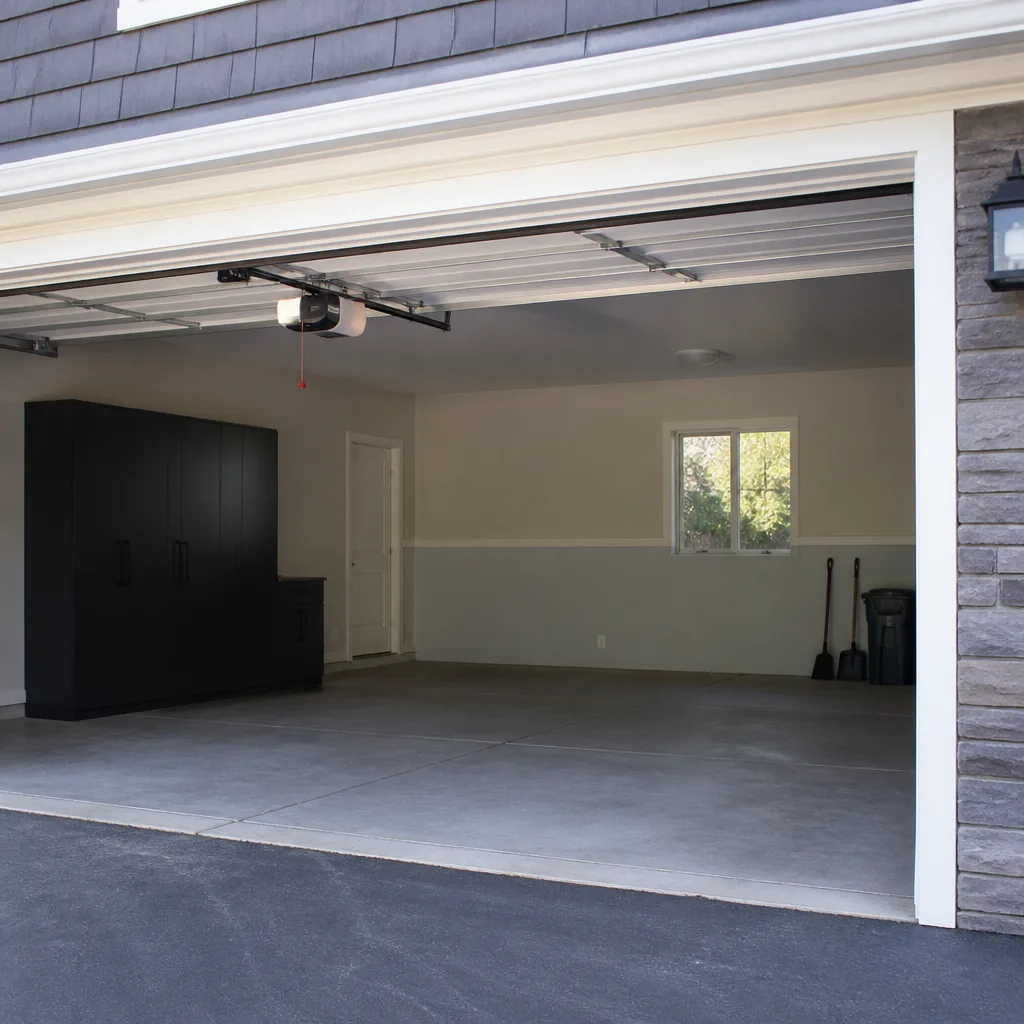 Chamberlain openers
Full 25-point door and opener safety check with every visit - springs, cables, rollers, tracks, and your LiftMaster or Chamberlain opener included
You get a price before we start. It does not change when the pro arrives.
Get your free estimateGarage Door Opener Repair & Installation Maintenance Schedule: What to Do and When
The number-one maintenance failure we see isn’t skipping lubrication. It’s lubricating the wrong parts. Spraying white lithium grease onto a nylon drive gear dissolves it. Using that same product around a logic board terminal invites a short. We’ve walked into Whitney garages where a well-meaning homeowner turned an $80 carriage tune-up into a $240 opener repair with one can of the wrong spray. The schedule matters far less than knowing what gets what. This guide builds a condition-based schedule for garage door opener repair and installation maintenance: what to look at, what normal sounds and looks like, and which reading tells you it’s time to act.
Quick Answer
Opener maintenance should be tied to observable conditions, not arbitrary calendar dates. Check the drive system, safety reversal, force setting, and rail hardware monthly by eye and ear, lubricate only the specific parts that take it (silicone or lithium depending on material), and schedule a professional tune-up when you hear a change in the trolley carriage, see slack in the chain or belt, or the door stops reversing on contact. Door maintenance and opener maintenance are separate schedules with separate parts and separate products.
Styles & brands we work with
- Raised-panel steel
- Carriage house
- Modern flush
- Full-view glass
- LiftMaster openers
- Chamberlain openers
Table of Contents
- Opener Maintenance vs. Door Maintenance: Why They’re Separate Schedules
- The Lubrication Map: What Gets Silicone, What Gets Lithium, What Gets Nothing
- Building the Schedule Around Observable Triggers, Not Months
- The Annual Force and Limit Check (and Why It Drifts)
- Safety Reversal Testing: The Five-Minute Monthly Check
- What Maintenance Can’t Fix: Wear Items vs. Actual Failure
- Whitney Conditions That Change the Schedule
- A Sample Condition-Based Year for a Whitney Opener
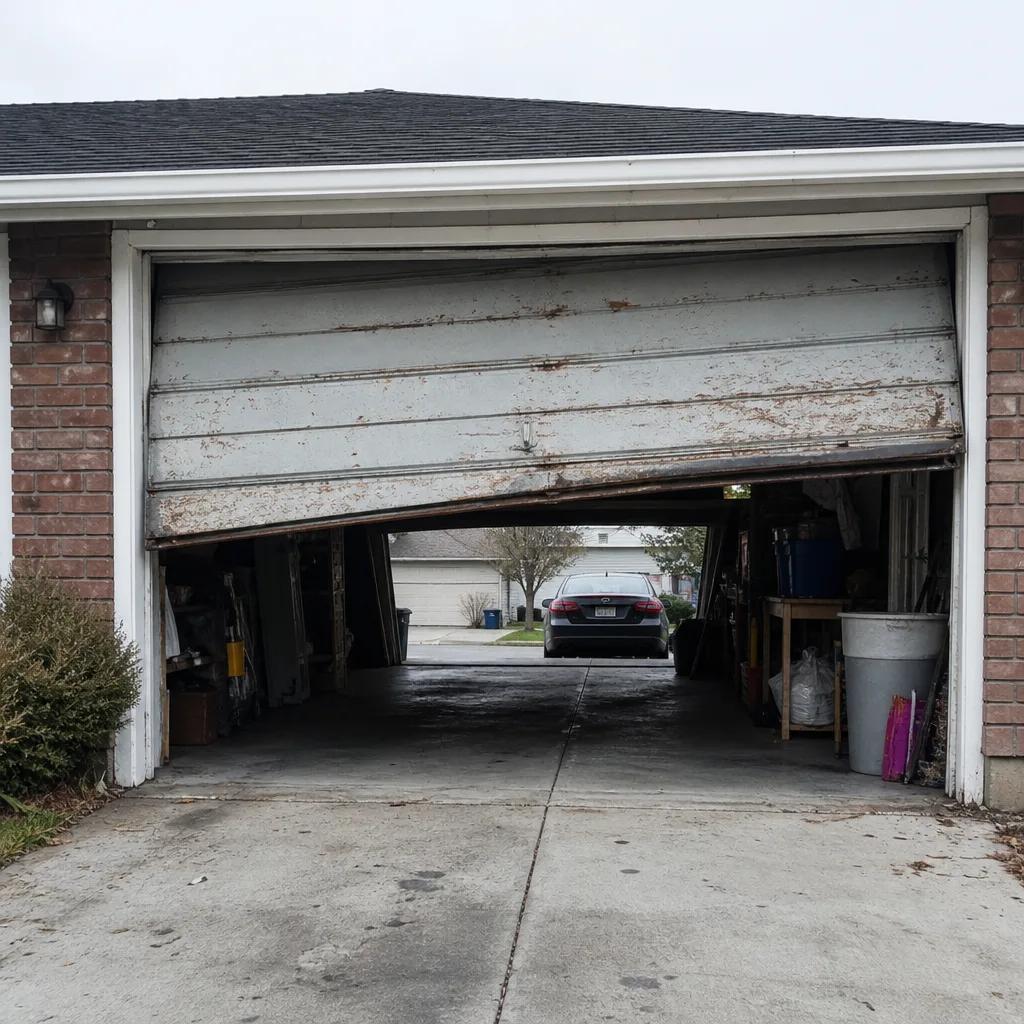 Before
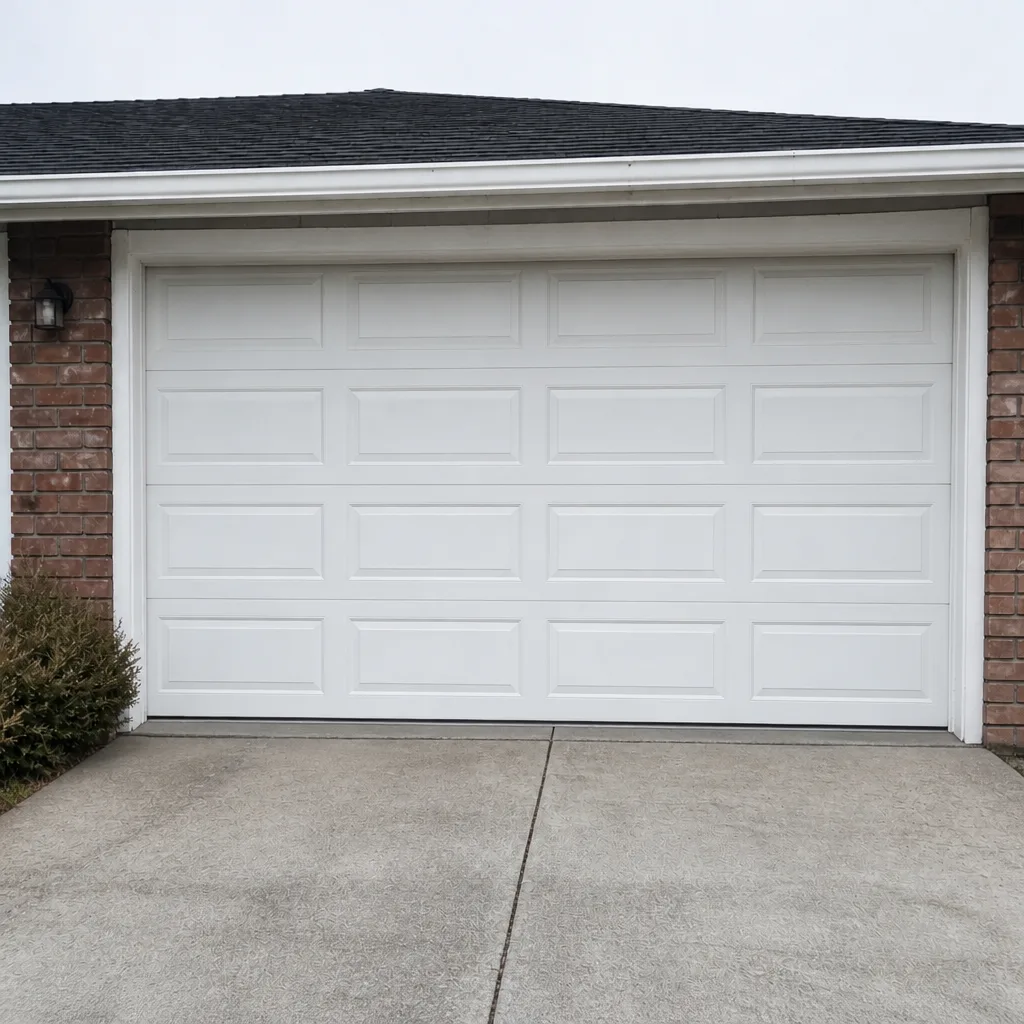 After
Opener Maintenance vs. Door Maintenance: Why They’re Separate Schedules
Most maintenance guides lump the opener and the door into one list. That’s the first mistake. They share a wall bracket and a rail, and after that they diverge fast: different components, different failure modes, different products, different intervals.
The opener is an electromechanical appliance. Its wear parts are the drive gear (the nylon or steel gear that turns the chain or belt), the logic board (the circuit board that runs travel and safety), the trolley carriage (the bracket that rides the rail and pushes the door arm), the limit switch (the physical or optical sensor that tells the motor when to stop), and the safety sensors at the floor. Its dangerous failure is a logic board that keeps the motor running past the limit, or a safety system that stops reversing when it should.
The door is a structural and mechanical system. Its wear parts are the torsion spring, the cables, the rollers, the hinges, and the bottom bracket. Whitney’s dry, dusty summers make hinge and roller lubrication more frequent on the door than on the opener, because dust collects in the roller tracks and grinds against the stem.
Separate them on your calendar. If you call us for a tune-up, the two get inspected on the same visit, but the checklist is written twice. A Clopay steel door with a belt-drive opener and an Amarr carriage door with a chain drive don’t share the same inspection order.
The Lubrication Map: What Gets Silicone, What Gets Lithium, What Gets Nothing
This is the section to bookmark. There is no single “garage door lubricant.” Each component wants a specific product or none at all, and the wrong product damages the part it touches. Here’s the map we use in the field.
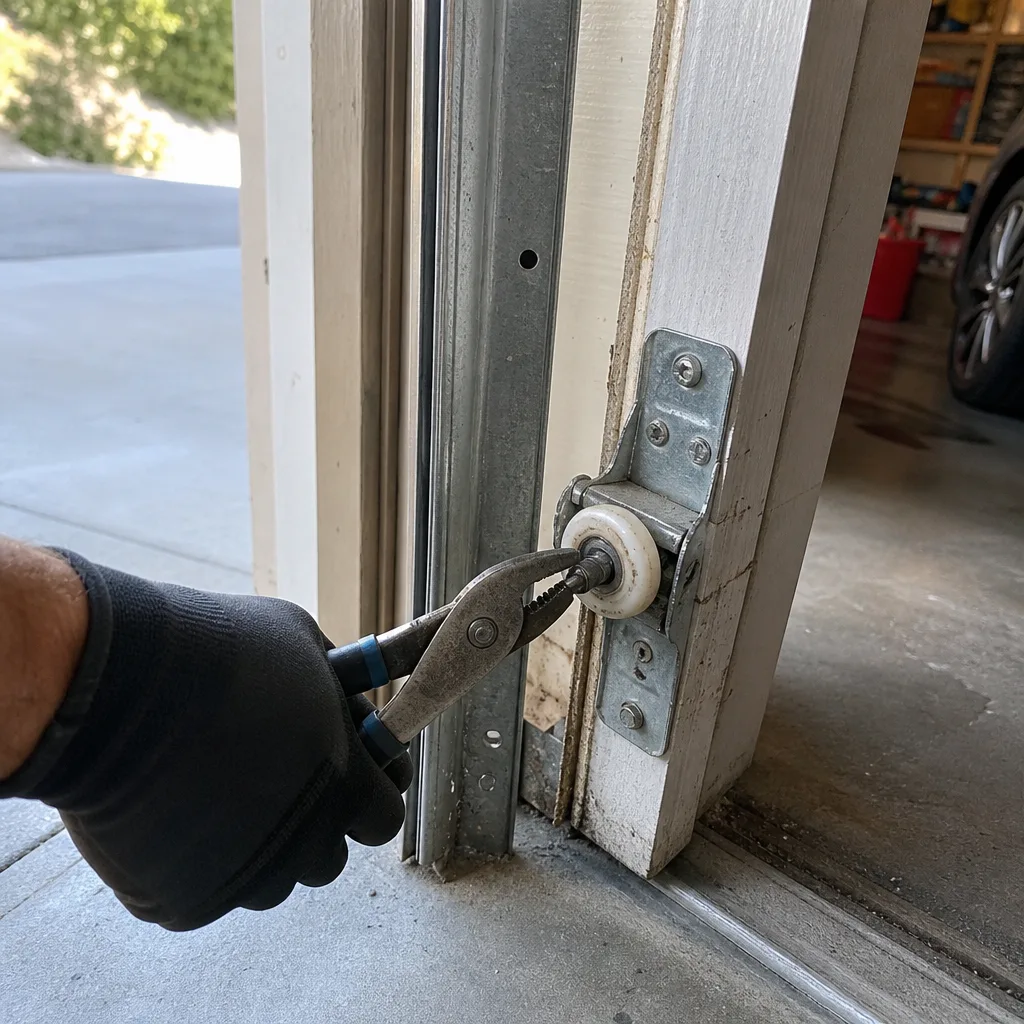
- Rollers and hinges: white lithium grease or a silicone-based hinge spray. Light coat on the hinge pin, never on the roller tire itself if you have nylon rollers.
- Chain-drive chain and rail: chain-and-cable lubricant (a tacky grease designed to stay on a moving chain). Never WD-40 as a substitute. It’s a solvent, not a lubricant, and it washes out the factory lube.
- Belt-drive rail: nothing. Belt rails are self-lubricating and a spray draws grit into the groove. If the belt itself looks dry or cracked, it’s a wear item, not a lubrication problem.
- Torsion spring: nothing. The coils should be dry. Spraying oil on a spring does nothing useful and collects dust in Whitney’s dry air.
- Trolley carriage on the rail: a very light silicone spray on the rail, once, if the carriage sounds rough. Over-spraying is the cause of half the sluggish carriages we look at.
- Logic board and terminals: nothing. Ever. Any spray that reaches a logic board terminal creates a short path, and a short path on a LiftMaster or Chamberlain board means replacement, not cleaning.
- Photo-eye sensors: a dry microfiber cloth only. Spray residue on the lens scatters the infrared beam and mimics a misaligned sensor.
If you remember one rule: petroleum-based sprays eat nylon gears and logic board coatings. A 0.25-inch thick nylon drive gear on a Genie or Craftsman opener will visibly soften and shed teeth within weeks of a petroleum lubricant hitting it. That’s a $200 repair created by a $6 can.
Building the Schedule Around Observable Triggers, Not Months
The generic advice tells you to lubricate every six months. That’s fine as a floor, but the useful question is: what does the opener look and sound like when it’s healthy, and what reading tells you to act? Here’s the condition-based schedule we recommend.
- Monthly, by ear: run the door up and down with the garage empty. Listen for a change in the sound of the trolley carriage on the rail. A new rattle, a scrape, or an uneven hum is the trigger.
- Monthly, by eye: watch the chain or belt for slack and look for grease or dust buildup at the rail guide. If the chain sags more than an inch at the rail midpoint, it needs tension, not more grease.
- Monthly, safety reversal: the physical contact test (see the reversal section below). This is the one check that protects a child or a pet.
- Quarterly, dust pass: brush dust off the rail, photo-eye lenses, and the exterior of the logic board enclosure. Whitney’s dust load is real, and dust in the photo-eye housing is the single most common “opener won’t close” call we take.
- Quarterly or on new noise, lubrication: apply the products from the map only to the parts that need them, and only when a reading says so. If the carriage sound hasn’t changed and nothing is dry, no spray.
- Annually, force and limit: run the force and limit check (next section). This is the drift adjustment that most guides skip.
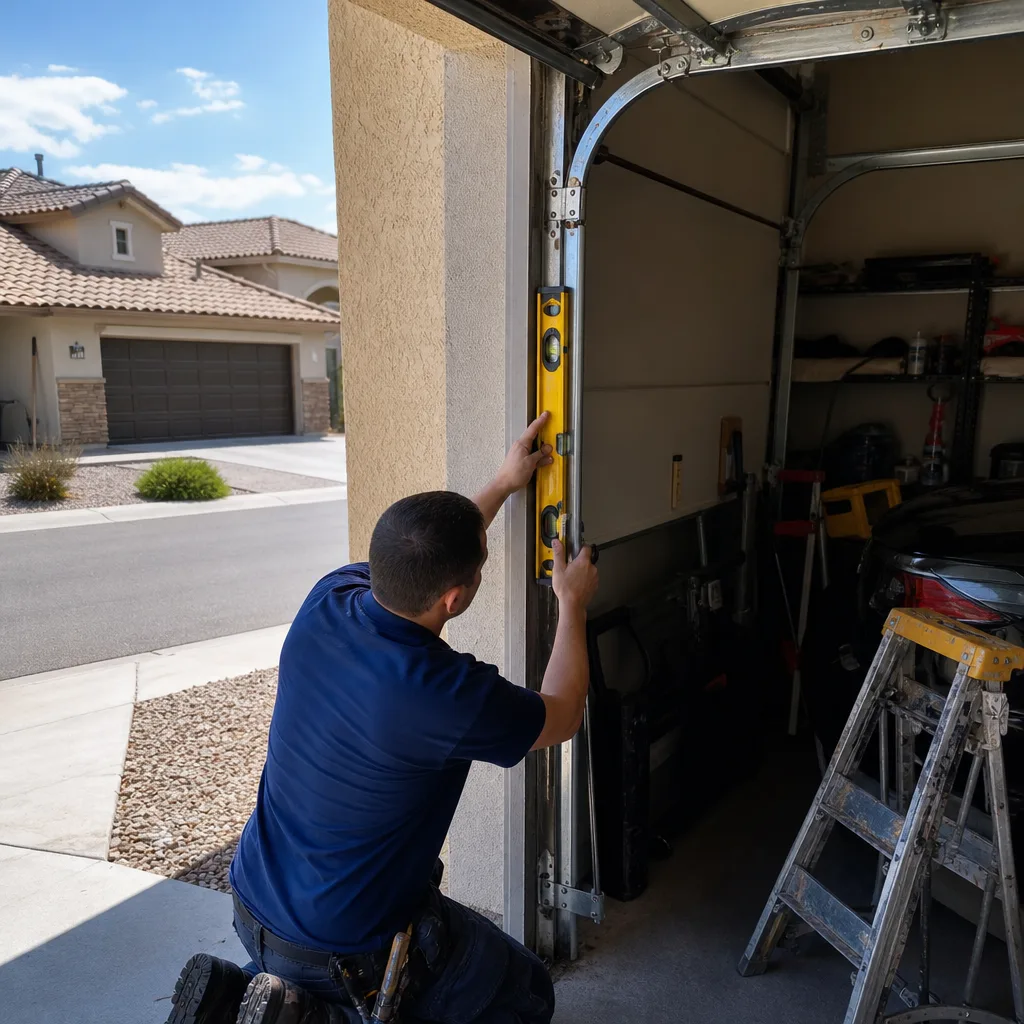
- Annually, professional tune-up: a technician inspects the spring balance, the cable integrity at the drums, the bottom bracket, the trolley arm, and the opener’s internal wear, and delivers a documented photo record of what they found. Balance check by hand: disconnect the opener, lift the door to halfway, and see if it stays. If it drops or rises, the door is out of balance and the opener is fighting it.
In our experience in Whitney, the annual professional visit is best scheduled before the summer heat, because spring balance drifts faster in dry, hot cycles than in coastal climates. For a full walkthrough of the balance and spring side, see our Garage Door Repair in Whitney page and the Garage Door Opener Repair & Installation in Whitney page.
The Annual Force and Limit Check (and Why It Drifts)
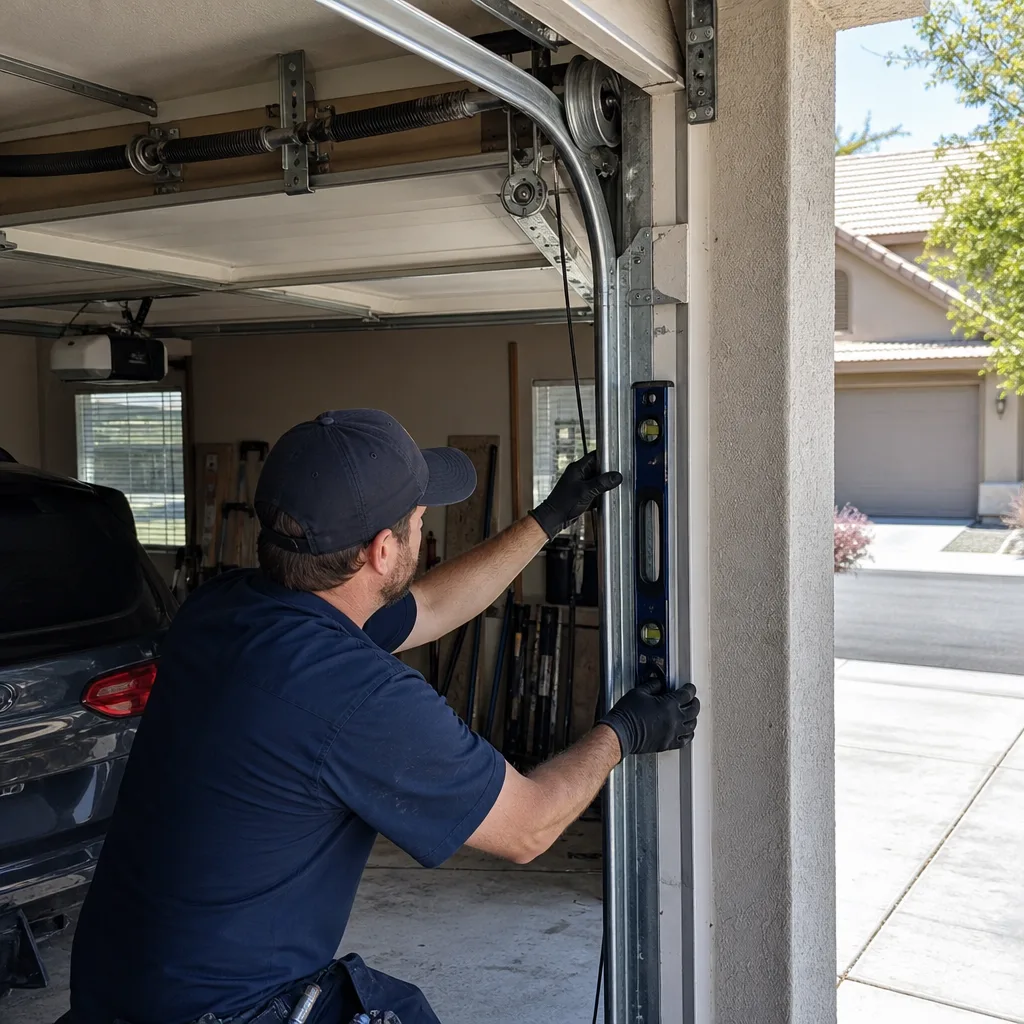
The force setting is how much resistance the opener will push through before it stops. The limit setting is how far the door travels before the motor cuts. Both live on the opener and both drift.
Force drifts because the door’s own resistance changes: a dry roller in Whitney’s summer, a hinge that’s picked up dust, or a spring that’s aged a fraction. The opener still works, so nobody notices, until the force limit quietly climbs and the opener is now pushing hard enough that the safety reversal fails on contact. Limit drifts because the trolley carriage wears and the optical stop point moves a fraction of an inch each season. A door that “bangs” at the top or hesitates at the bottom is a limit issue, not a spring issue.
Here’s the test, done with the door disconnected from the opener and the garage clear:
- Disconnect the opener (pull the red release cord).
- Run the door by hand through the full open and close cycle. It should move with moderate resistance on the way down and the spring should carry it on the way up.
- Reconnect and run the door to close. Place a 2×4 flat on the floor under the door, or press your hand against the closing edge, and watch the door reverse. If it doesn’t, the force setting is too high or the safety system is failing.
- Check the limit: the door should stop at the floor with the bottom seal compressed about a quarter-inch, not slammed, not floating.
If adjustment is needed, do the adjustment per the opener’s manual (LiftMaster, Chamberlain, and Genie each set force and limit slightly differently). If you can’t get the reversal to test clean, don’t run the door. That’s a call-out, not a DIY.
Safety Reversal Testing: The Five-Minute Monthly Check
The safety reversal test is not an annual event. It’s monthly, and it’s five minutes. The photo-eye test first: with the door open, break the beam with your foot and see if the door reverses. Then the physical contact test: close the door and press against the bottom edge at about halfway down. A working opener reverses within two inches of contact. Here’s a 30-second version we use:
- Door closed, then open with the wall control. Does the light blink and the door reverse cleanly if you pass your hand through the beam?
- Door manually blocked at the floor: does it lift and reverse, or grind?
- Beam lights steady, not blinking. A blinking sensor light usually means misalignment or a dirty lens.
- No obstructions within 6 inches of the floor across the doorway.
If any of those fail, the opener should not run unattended. Safety reversal failures are the reason we ask every customer to test monthly, and the reason our Servo Garage Doors Whitney home and the Garage Door Installation in Whitney pages both carry the same warning: the safety system is not optional and not decorative.
What Maintenance Can’t Fix: Wear Items vs. Actual Failure
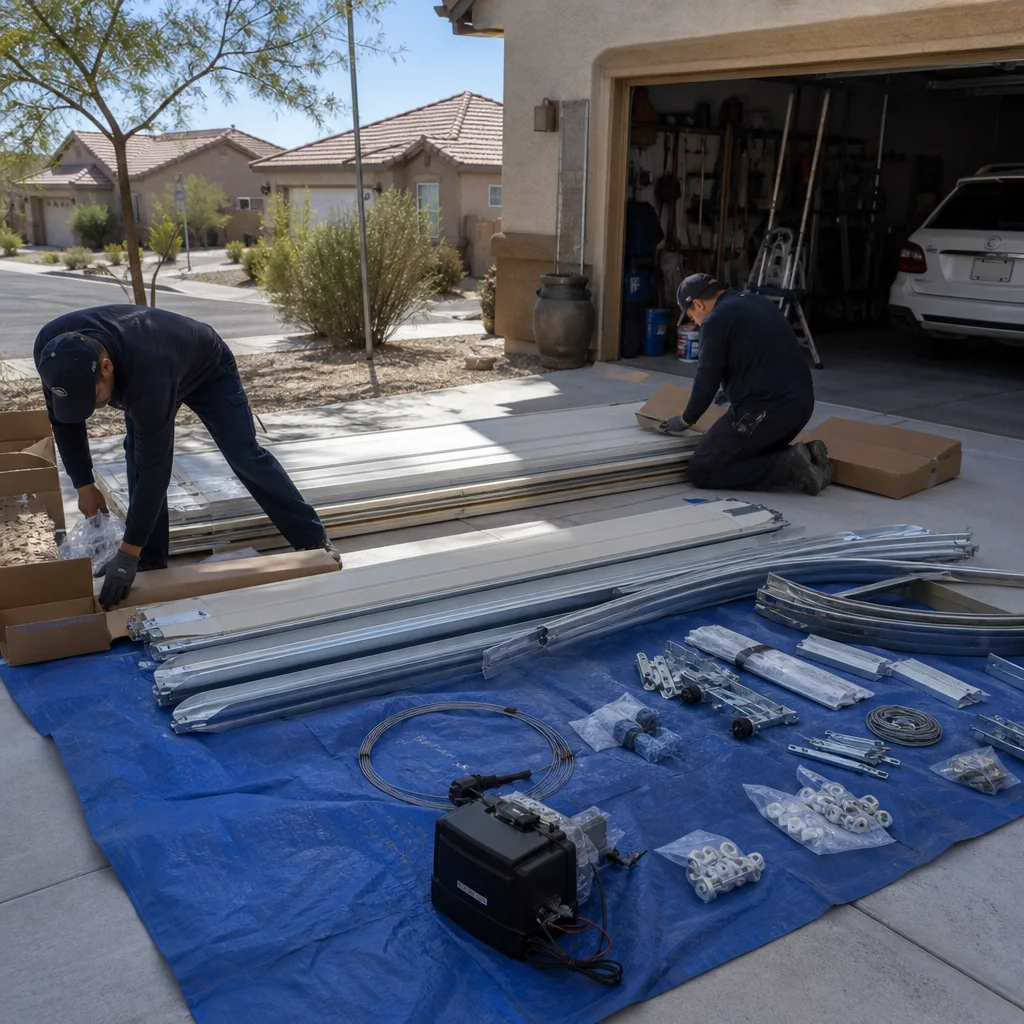
Maintenance extends the life of wear items. It doesn’t rescue a failed part, and the difference matters because the wrong call costs money. Here’s how to read the difference.
- Nylon drive gear: a wear item. It’s the gear that transfers motor power to the chain or belt. It sheds teeth over years of use, and a gear with one missing tooth is starting to fail. Replacement is the next step, not lubrication.
- Logic board: a failure item. If the door runs past the limit or the light logic behaves erratically after a clean limit adjustment, the board is failing. A board doesn’t “wear in”; it dies. Replacement is the fix.
- Trolley carriage: a wear item with a clear replacement point. A carriage that rattles even after cleaning the rail and greasing the guide is worn at the pivot, and only a new carriage fixes it.
- Photo-eye sensors: usually alignment or dust, occasionally a failed sensor. Clean the lens, realign the bracket, and if the light still blinks, test the sensor before replacing it.
- Springs and cables: these are wear items in the door-side schedule and they belong in the dangerous category. Never work on them yourself. A torsion spring under tension can cause serious injury, and a cable under load can whip. If a spring is broken or a cable is frayed, call a professional and don’t run the door.
In our Whitney calls, this distinction drives the written quote. If the diagnosis is a wear item, the written scope says which part and why. If it’s a logic board, the photo record shows the board and the test result. That’s Garage Door Opener Repair & Installation in Whitney territory, and it’s the reason we photograph the failed part before quoting a replacement – Clause 4 of The Haven Standard.
Whitney Conditions That Change the Schedule
Whitney’s climate is dry, hot, and dusty. That changes the schedule in three specific ways. First, dust collects on the photo-eye lenses faster than in coastal climates, so we drop the lens cleaning interval from quarterly to monthly and use a dry cloth only. Second, the dry heat cycles work the torsion spring and the hinge pins harder, so balance checks and hinge lubrication land earlier in the year, before July. Third, Whitney’s dust finds its way into roller tracks and the trolley guide, so the quarterly dust pass is not a cosmetic step; it’s the step that prevents a sluggish carriage from becoming a replacement.
The garage door market in Whitney also includes a lot of homes with Wayne Dalton and Craftsman openers installed during the 1990s and 2000s. Those units are now well past their expected service life and the maintenance schedule has to shift from “lube and adjust” to “evaluate replacement.” A Craftsman chain drive on a door that’s been run four times a day since it was installed is a candidate for a new opener, and on the installation side the schedule changes entirely: the new unit gets a written measure, a written price, and a written scope before installation, not same-day.
The one thing that never changes with Whitney: the flat, written price before any work starts. That’s Clause 1 of The Haven Standard, and it’s what the customer sees before a technician touches anything.
A Sample Condition-Based Year for a Whitney Opener
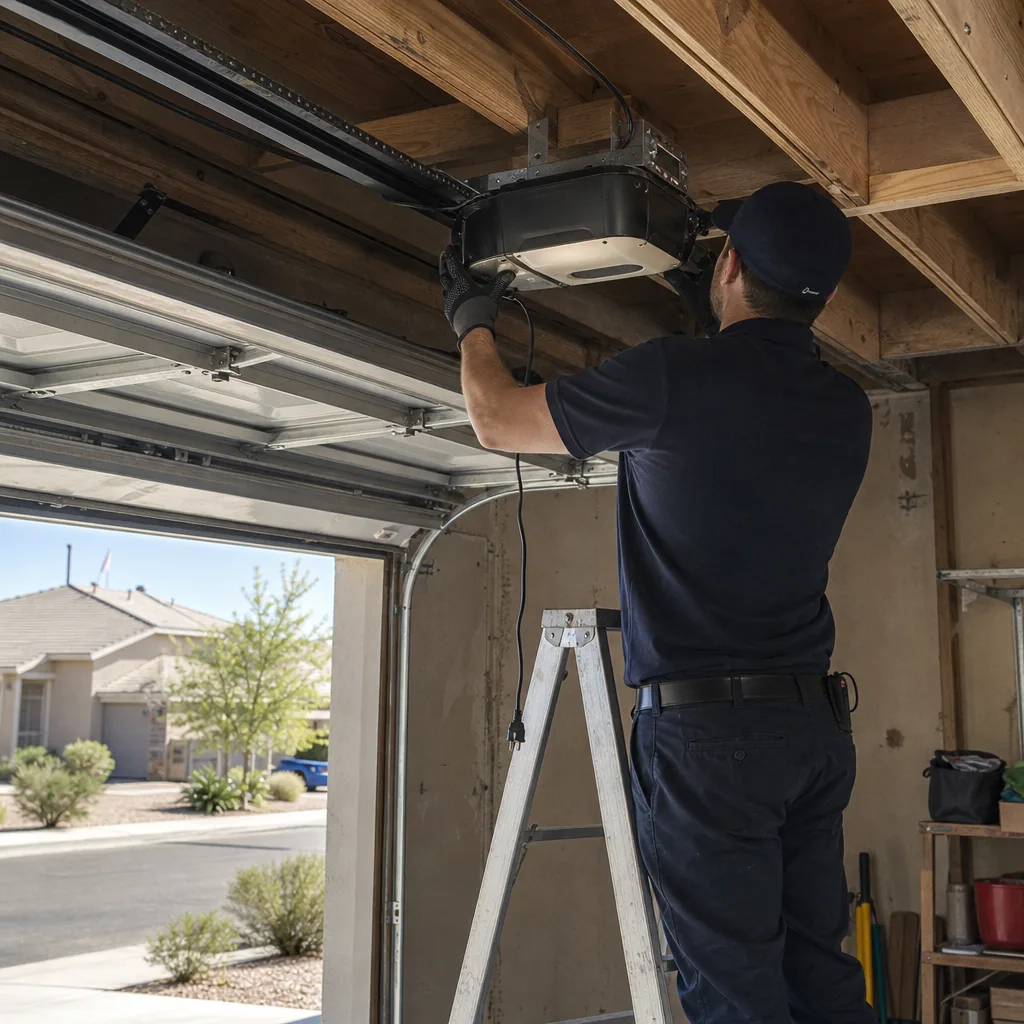
Here’s what a realistic year looks like when the schedule follows the readings instead of the calendar. This is a sample for a mid-2000s chain-drive opener on a steel door in a Whitney garage.
- Early spring: monthly safety reversal test begins. Photo-eye lenses wiped. Rail dusted. Listen for the carriage sound and note any change in the log.
- Late spring: annual professional tune-up, balanced before summer. Written report of spring balance, cable condition, hinge wear, and opener internal wear with photo record.
- Summer: watch for a change in trolley sound and a sluggish close. That’s usually dry rail, not a failing opener. A single light silicone pass on the guide if the sound is rough. No spray if it isn’t.
- Early fall: force and limit check, since summer heat has cycled the door and the force setting has likely drifted. Adjust per manual or call.
- Late fall: hinge and roller lubrication with the correct product. Check the bottom seal for compression and replace if the door slams instead of seating.
- Winter: look for a logic board symptom (erratic light logic, run-past-limit) or drive gear shedding teeth. If either appears, plan the replacement now rather than at the first cold-morning failure.
That’s six touchpoints, not twelve scheduled visits. The year reads like a maintenance log, because it is one – and the log is the reason the phone call about a broken opener happens with evidence in hand instead of guesswork. If you want the door-side work folded in, the Garage Door Repair in Whitney page covers the spring, cable, and hinge side in the same condition-based order.
Common Mistakes to Avoid
- Spraying WD-40 on the chain or the nylon gear. It’s a solvent, not a lubricant, and it strips the factory lube while softening the gear. Use a chain-and-cable grease for the chain, and nothing for the gear.
- Treating the opener and the door as one schedule. The opener wants an annual force and limit check. The door wants a balance check and hinge lubrication. Pick the right checklist, not the one-size list.
- Skipping the safety reversal test because “it worked last month.” In Whitney’s dust, a photo-eye lens can go from clear to clouded in a few weeks and the door will still close – until it doesn’t.
- Greasoaking the torsion spring and cables. The spring and cables should be dry. Grease collects dust and hides a fray, and a frayed cable is a call-out, not a lubrication problem.
- Adjusting the force setting to fix a sluggish door. Raises the reversal risk. If the door is sluggish, find the cause: dry rollers, a worn carriage, a spring out of balance.
- Replacing a logic board before checking the limit switch and the sensors. The board is the expensive guess. Test the cheap parts first.
- Reading a “bang” at the top of travel as a spring problem. It’s almost always a limit drift. One adjustment, five minutes, not a new door.
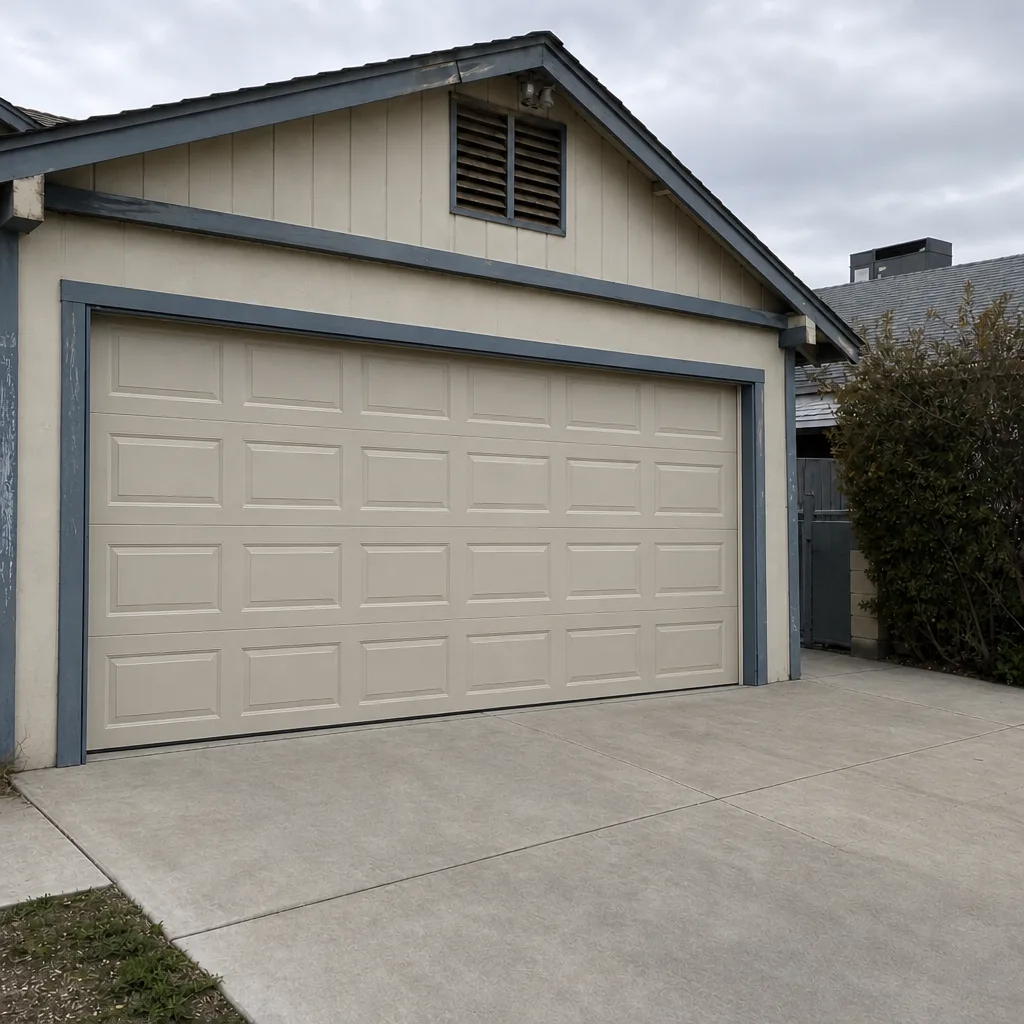
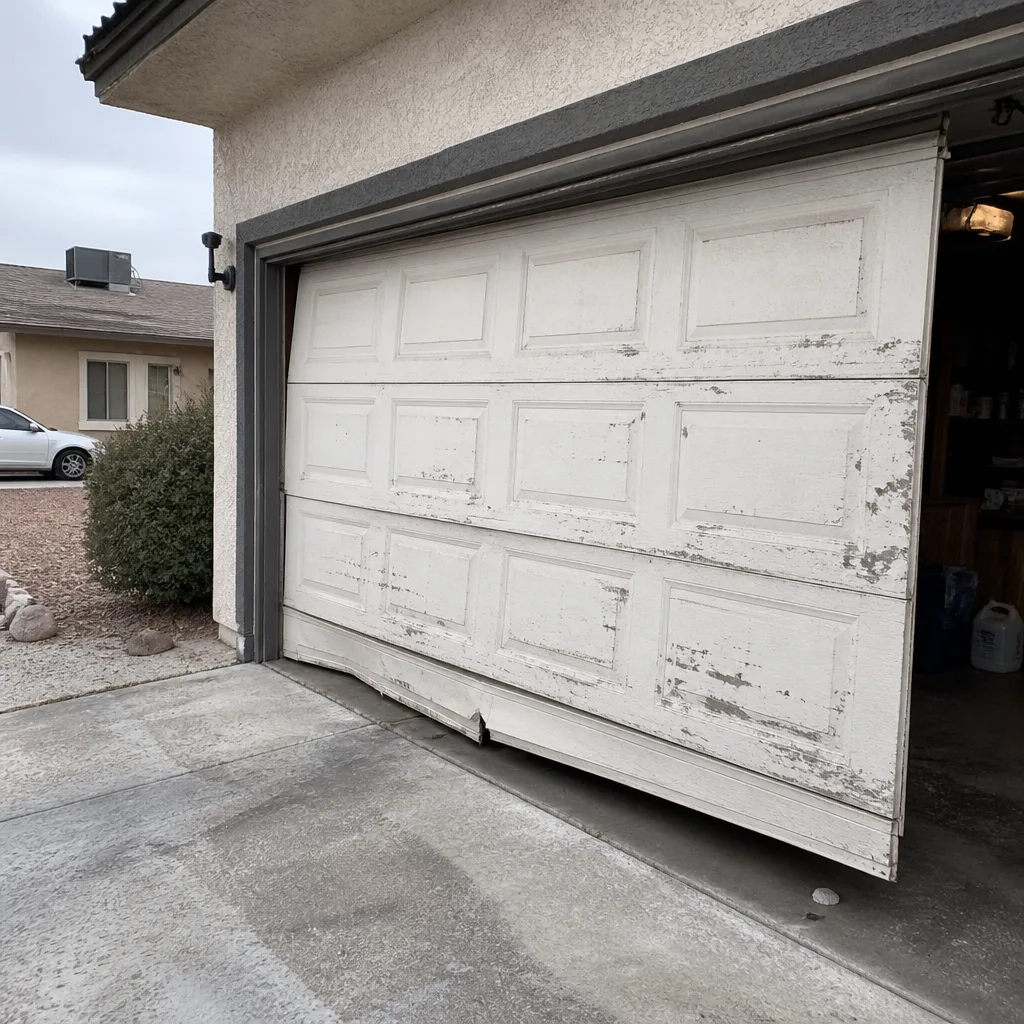
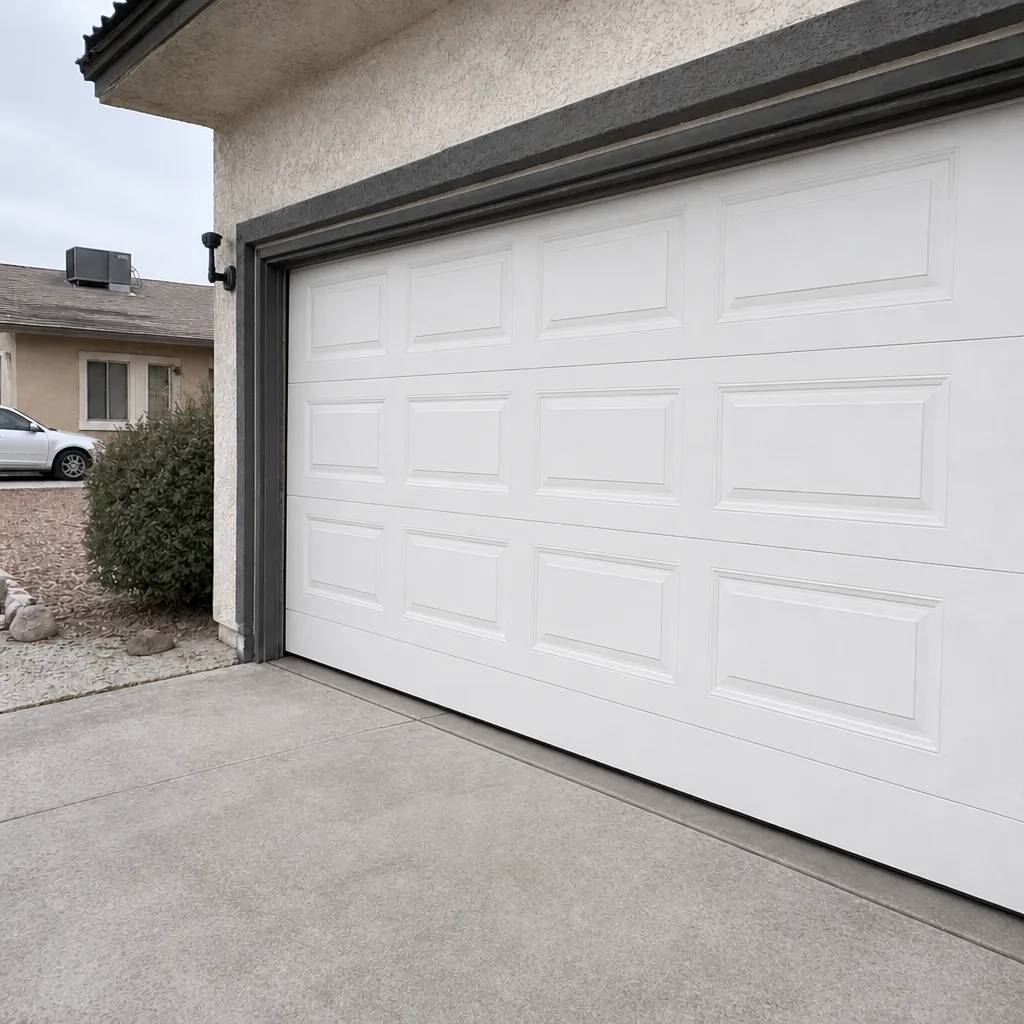
See the difference
BeforeAfter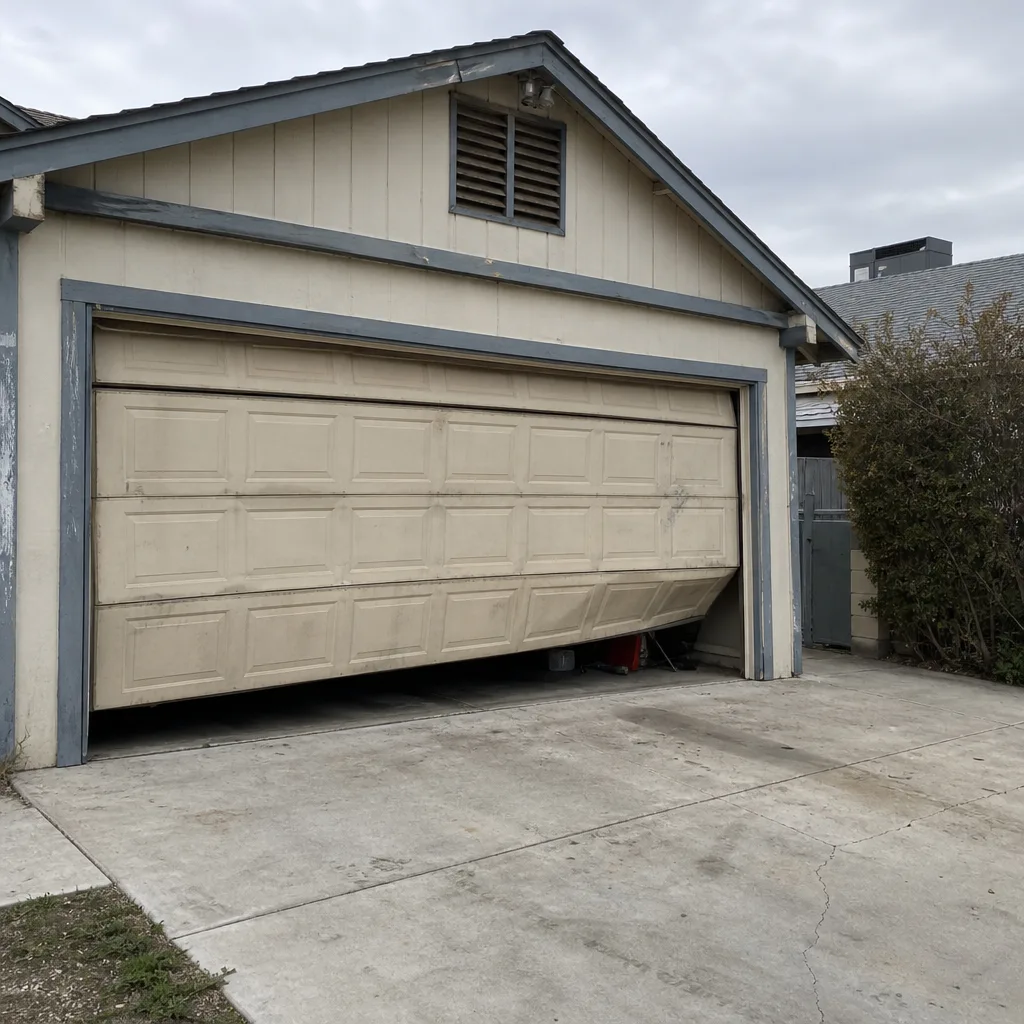 Before
 After
 Before
 After
When to Call a Professional
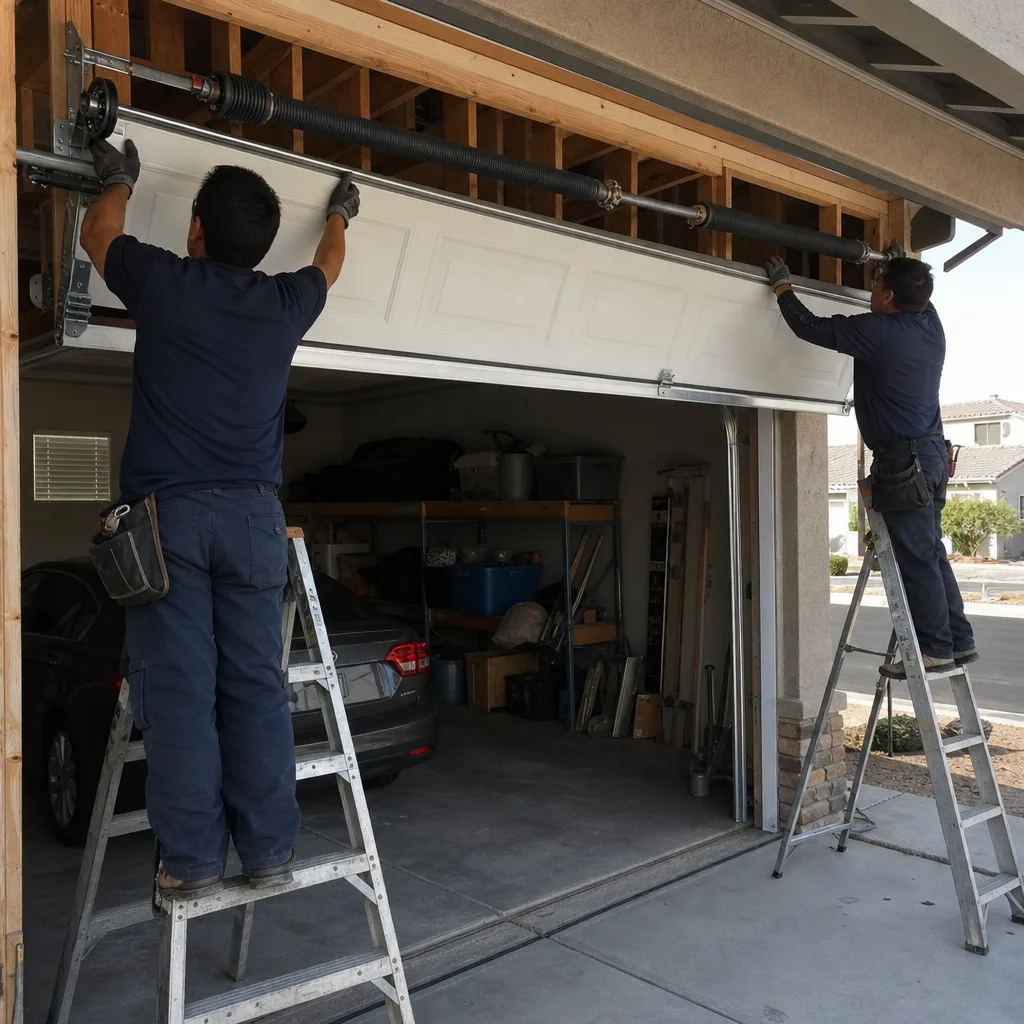
Call a professional if the safety reversal test fails, if you hear a bang, scrape, or grind that wasn’t there last month, if the door stops reversing on contact, if a spring is broken or a cable is frayed, or if the opener runs past the limit. Springs and cables are the two components we never recommend a homeowner adjust: they’re under high tension and the failure mode is injury. The written price is settled before any work starts, and you’ll have a photo record of what was found and what was done. Servo Garage Doors Whitney offers free estimates in Whitney – call (888) 402-1096 for a free estimate. Live coverage answers 24/7, including emergency calls, so you get a person, not a recording.
Frequently Asked Questions
Only when a reading says so. The chain-drive chain takes a chain-and-cable grease a few times a year; the rail guide takes a very light silicone pass only if the trolley carriage sounds rough. The logic board, the torsion spring, and the belt-drive rail get nothing. Lubrication should follow noise and dryness, not the calendar.
White lithium grease is a heavier, tacky lubricant for hinge pins and metal-on-metal contact. Silicone spray is a lighter, dry-film product for the rail guide and for nylon contact points. Using lithium where silicone belongs attracts dust; using a petroleum-based product where silicone belongs damages nylon. If you’re unsure which belongs on your Whitney opener, call (888) 402-1096 and we’ll tell you from the opener model.
Two tests. Break the photo-eye beam with your hand and the door should reverse; press against the bottom edge of a closing door and it should reverse within two inches. Both should be done monthly, and either failing means the door shouldn’t be run unattended. Both are on the free estimate checklist; call (888) 402-1096 if you’d rather we test it.
Visual checks, dusting, and the monthly safety reversal test are homeowner-friendly. Force and limit adjustment, logic board work, drive gear replacement, and anything involving the torsion spring or cables belong to a trained professional. A torsion spring under tension and a loaded cable can cause serious injury, so leave those alone.
The most common causes are a stripped nylon drive gear, a disconnected trolley (often the release cord, pulled and not reset), or a failed logic board. Check the release cord first, then look at the carriage on the rail. If the carriage moves but the door doesn’t, the trolley carriage is disconnected; if the carriage doesn’t move, the drive gear is the likely culprit. Call (888) 402-1096 for a diagnosis.
Once a year, before summer, for a door that’s older or a Whitney door on a dusty slab. Newer openers can go two years between tune-ups if the monthly checks are done. The tune-up should produce a written report and a photo record of the findings, not just a verbal all-clear. Our technicians have up to 11 years of experience, and our written price and scope come before any work starts – Clause 1 of The Haven Standard.
The Bottom Line
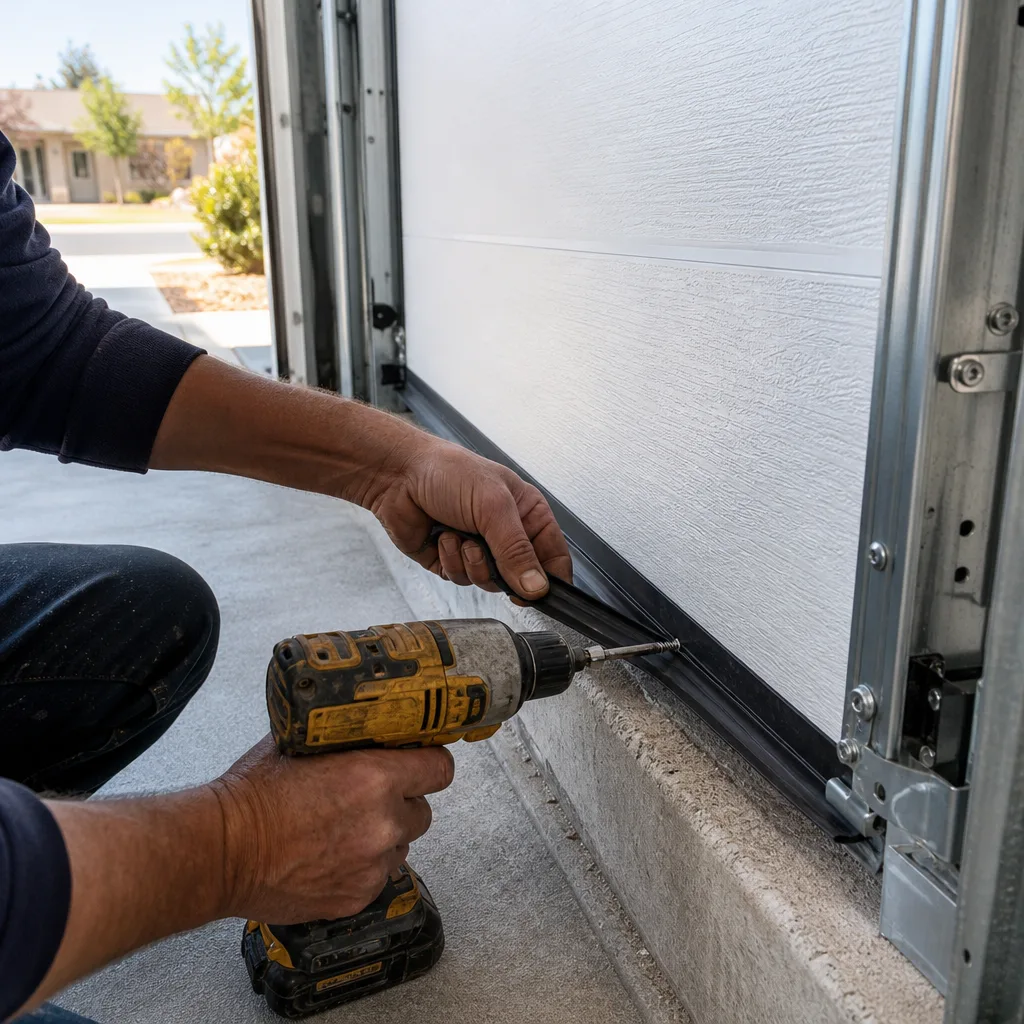
The right schedule ties to readings, not months. Test safety reversal monthly, clean the photo-eye lenses monthly, run the force and limit check annually, and lubricate only the parts that take a specific product – never the logic board, never the spring, never the belt-drive rail. Keep the door and the opener on separate checklists, and treat a change in carriage sound or a limit drift as a trigger, not a nuisance. Whitney’s dry, dusty air moves the lens and dust passes earlier in the year and makes the annual tune-up a pre-summer event. If a reading says the part is failed rather than worn, get a professional on it, with the written price and photo record in hand.
Servo Garage Doors Whitney connects homeowners with local professionals who work under a flat, written price before any work starts and leave a documented photo record on every visit. Call (888) 402-1096 for a free estimate – a real person answers, 24/7.
Written by the team at Servo Garage Doors Whitney.