
Last updated November 18, 2026
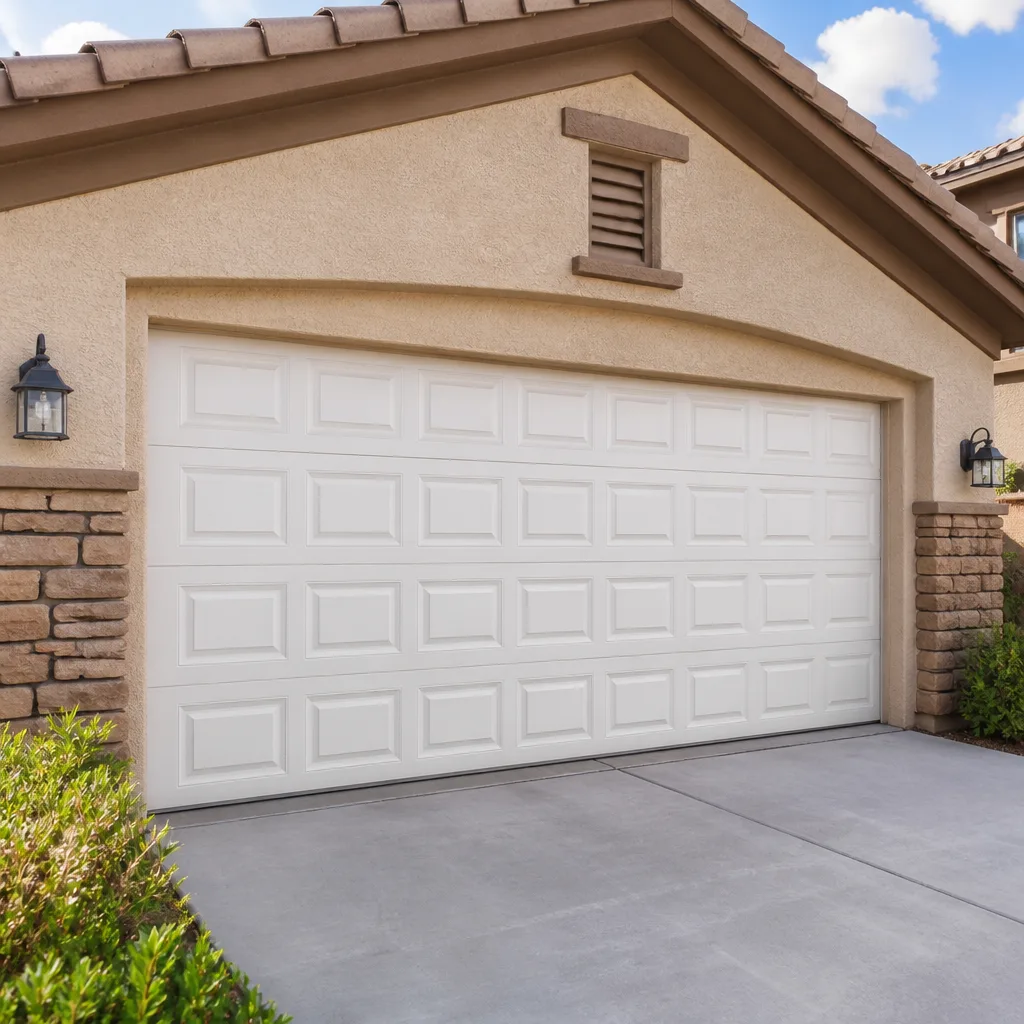 Raised-panel steel
 Carriage house
 Modern flush
 Full-view glass
 LiftMaster openers
 Chamberlain openers
Full 25-point door and opener safety check with every visit - springs, cables, rollers, tracks, and your LiftMaster or Chamberlain opener included
You get a price before we start. It does not change when the pro arrives.
Get your free estimateGarage Door Parts Maintenance Schedule: What to Do and When
The roller bracket that strips a track costs $8 to replace at six months; the cable drum it eventually misaligns costs $140 at eighteen. The schedule determines which bill you pay. Most maintenance schedules hand you a list of tasks and leave the consequences blank, so homeowners skip the ones that seem fussy and pay for the ones that actually failed. This guide works backwards from documented failure sequences: every task is tied to a specific part and to the exact failure that follows when it’s skipped. We’ve logged those sequences across thousands of Whitney doors, and they’re consistent. Read this once and you’ll know what to do, when, and what it protects.
Quick Answer
Lubricate springs, rollers, hinges and the opener rail every six months, check the balance of the door and the tension of cables every six months, test the safety reverse and limit switch monthly, reseat the bottom seal twice a year, and schedule a professional inspection every twelve months. Torsion springs and extension springs need different lubrication intervals and should never be treated the same. Everything on the schedule protects a specific part, and skipping it produces a predictable, more expensive failure.
Styles & brands we work with
- Raised-panel steel
- Carriage house
- Modern flush
- Full-view glass
- LiftMaster openers
- Chamberlain openers
Table of Contents
- Why This Schedule Is Built Backwards From Failure
- The Six-Month Service: What and Why
- Lubrication: Torsion vs. Extension Springs
- The Monthly Five-Minute Checks
- Parts That Degrade Faster in Whitney’s High-Desert Climate
- The Three Tasks Homeowners Mark “Done” Without Doing
- Your Maintenance Log Template (That Reads in Two Minutes)
- Parts That Fail First and When to Replace Them
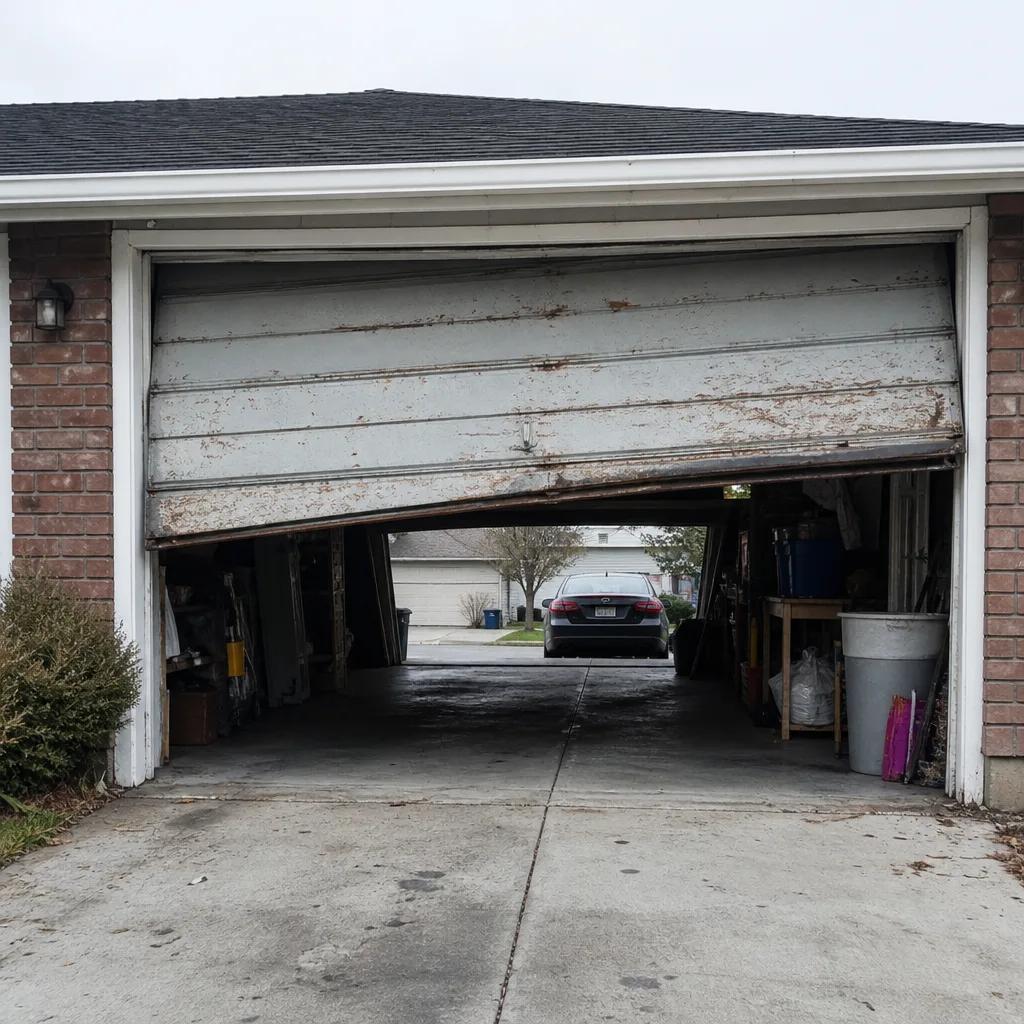 Before
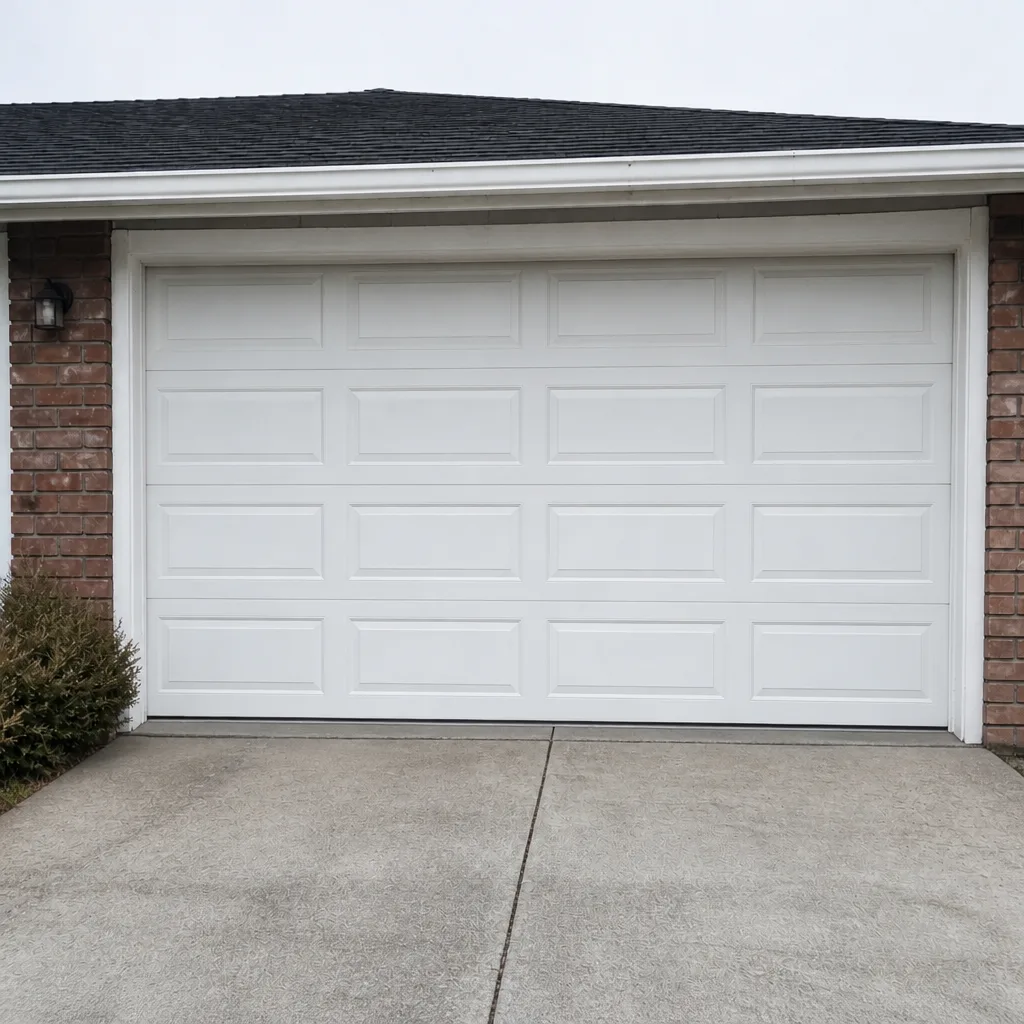 After
Why This Schedule Is Built Backwards From Failure
A generic tune-up list tells you to lube the springs. It doesn’t tell you that a dry torsion spring on a 200-pound door will eventually bind, then snap at the coil during a cold morning cycle, and that the snap is the sound of a $180-$340 repair. When you know that, you lube the spring. When you don’t, you skip it and learn the consequence from the invoice. We build the schedule the second way because it’s the honest way: read the failure, then decide how much the task is worth to you.
Every component on a garage door sits in a chain. The bottom bracket anchors the cable. The cable tension holds the door level. A level door keeps the rollers centered in the track. Centered rollers keep the panels from twisting. One skipped task at the top of the chain protects everything below it. This is where we point homeowners in Whitney when they ask what actually matters: not “how often should I tune up my door,” but “what fails if I don’t.”
We’ve seen the same sequences repeat on doors we service across the valley. That’s the value of a failure-first schedule. It gives you a named reason for every task, which is the difference between a maintenance calendar you finish and one you abandon by March.
The Six-Month Service: What and Why
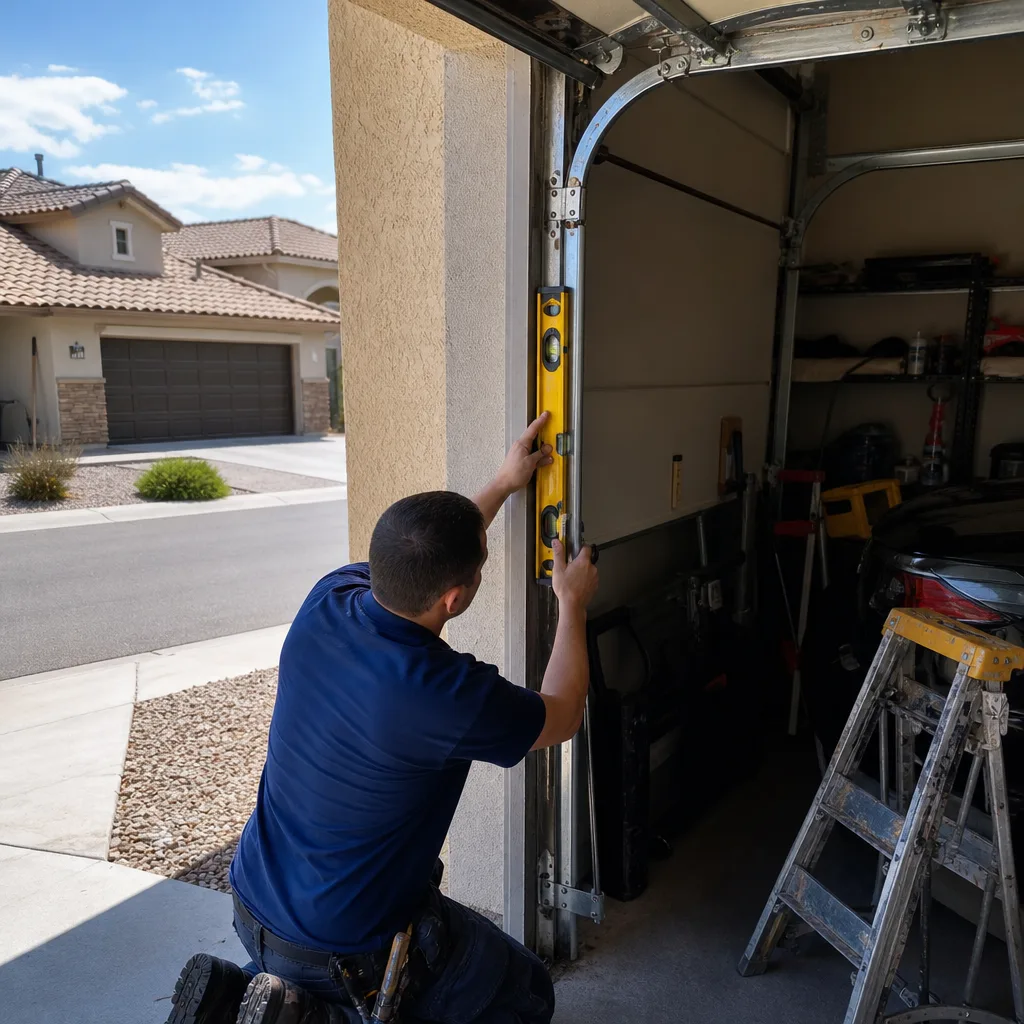
The six-month service is the backbone of garage door care. Twice a year, do these in order. Each task names the part it protects and the failure that follows when you skip it. If the door is heavy or you’re not comfortable with any step, stop and call – the flat written price comes before anyone touches the door, and a free estimate on the six-month service is available in Whitney.
- Lubricate the torsion spring or each extension spring (protects the spring wire; skipping it causes binding and coil failure). Use a silicone or lithium spray, not grease.
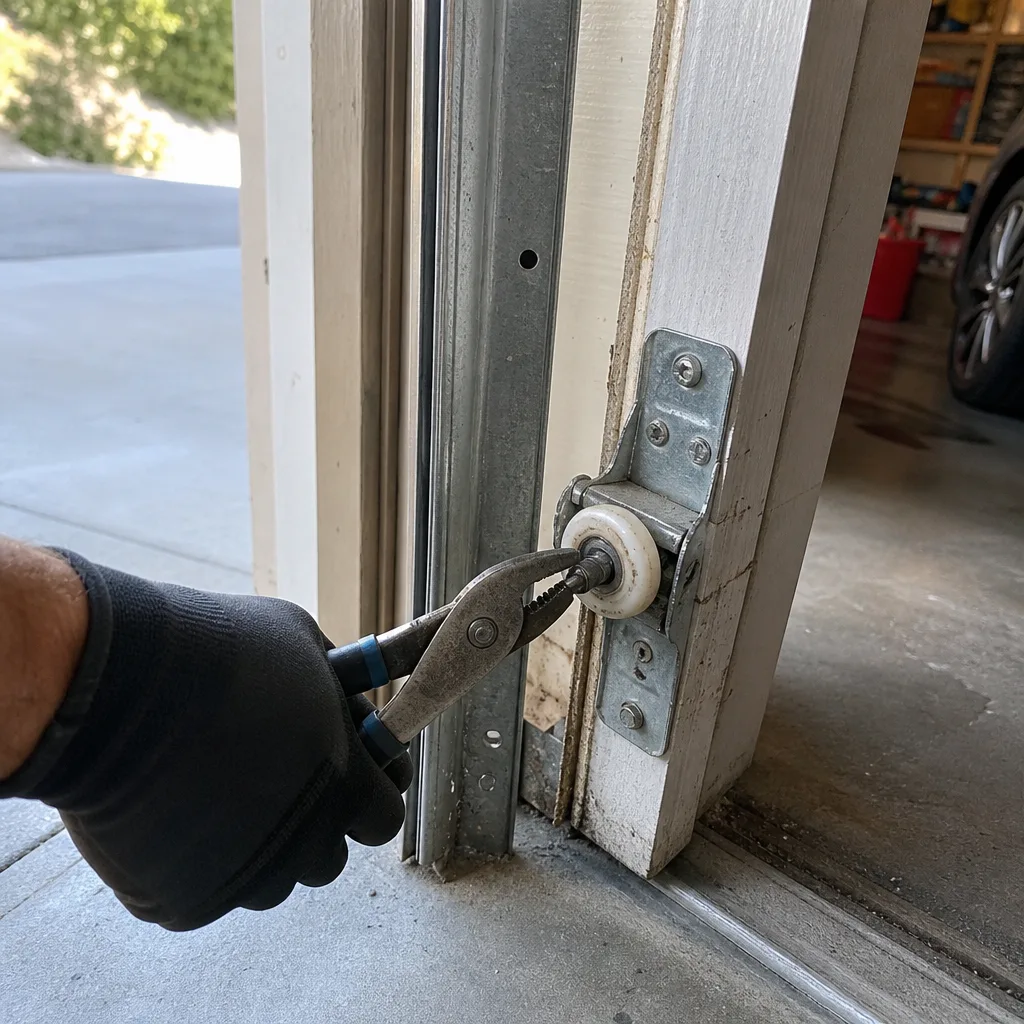
- Lubricate rollers, hinges and bearings (protects the roller stem and hinge pin; skipping it produces a grinding sound and worn stems that misalign the door).
- Check the opener rail and trolley carriage (protects the trolley and drive gear; skipping it causes the opener to strain and strip teeth).
- Test door balance (protects the opener and springs; an unbalanced door overloads both).
- Inspect cables and drums for fraying or slack (protects the cable and drum; a frayed cable can snap and let the door drop).
- Reseat the bottom seal (protects the seal and the door frame; a lifted seal lets dust and weather in and puts stress on the bottom bracket).
Each step takes a few minutes. Together they make up the six-month service that keeps the whole chain intact. If any of these reveals a problem – a frayed cable, a spring that feels loose, a roller that won’t turn – that’s the moment to bring in a technician. The parts are cheap; the failure they trigger is not.
Lubrication: Torsion vs. Extension Springs
Torsion springs and extension springs are not the same part, and lubricating them the same way is a common and costly mistake. A torsion spring is the horizontal coiled spring on the shaft above the door – it twists to store energy. An extension spring is the stretched coil running along the horizontal track on each side – it pulls to store energy. They fail differently, and the failure you’re trying to prevent is different for each.
Torsion springs: Lubricate every six months with a light silicone spray. Apply a thin coat along the coil and work the door up and down a few times to distribute it. Torsion springs are highly loaded and can fail suddenly – never attempt to adjust or remove one, because a torsion spring at rest still holds dangerous force. Lubrication is a homeowner task; adjustment and replacement are for a trained technician. If a torsion spring shows a gap or a clean break at the coil, stop using the door and call.
Extension springs: Lubricate every six months, but check the safety cable that runs through the center of each spring first. If the cable is missing or loose, that’s a red flag – extension springs can fly when they break, and the cable is what contains them. Lubrication interval is the same six months, but the inspection before you lube is the part most people skip. We routinely find extension spring safety cables missing on doors in Whitney, and it’s a quick fix that prevents a serious failure.
Either way, the rule is simple: lube every six months, never adjust or replace a spring yourself, and always look before you lube. And if you’re not sure which spring type your door uses, that’s a fair question to hand to us with a written estimate on the six-month service.
The Monthly Five-Minute Checks
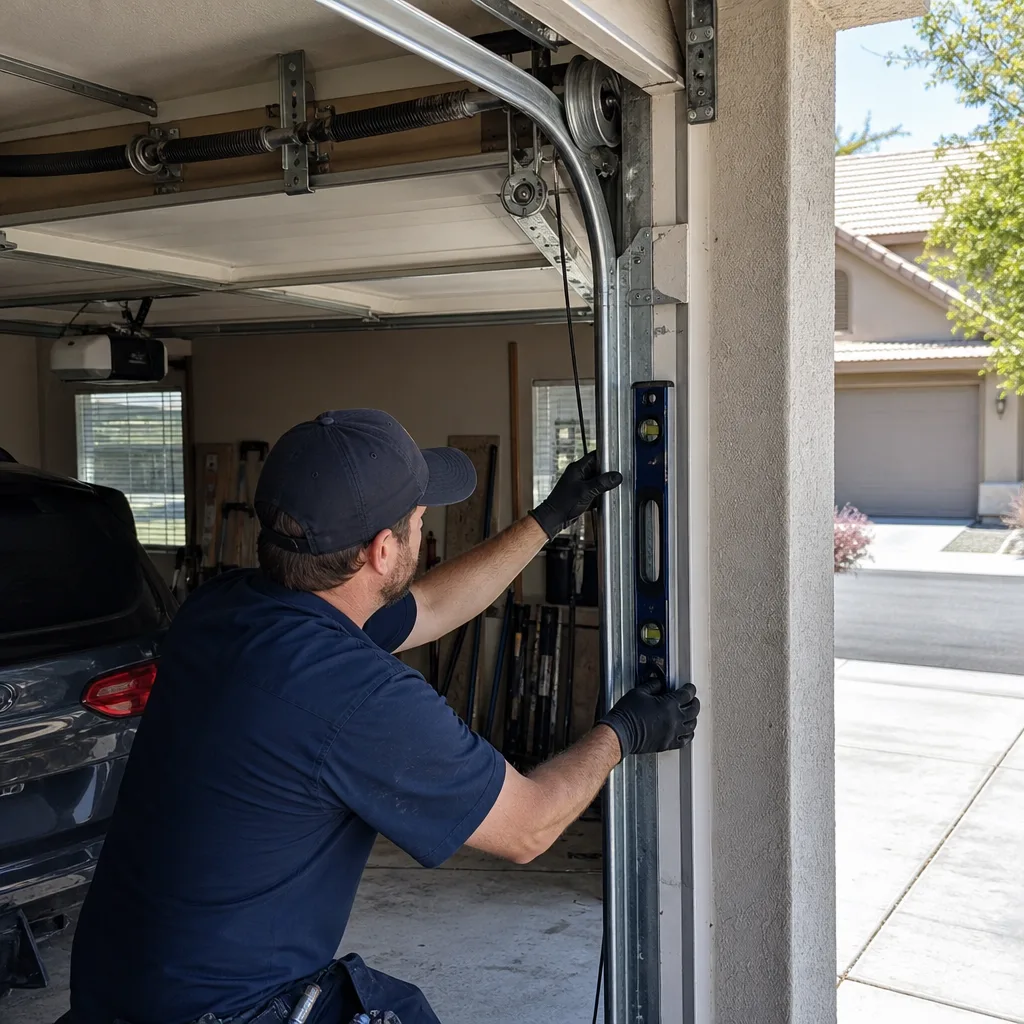
Monthly checks catch failures in the early stage, when the fix is a few dollars and an hour. Do these four in under five minutes, ideally on the same weekend each month so it becomes routine.
- Test the safety reverse. Place a roll of paper towels or a 2×4 flat under the door and close it. The door should reverse on contact. If it doesn’t, the limit switch or sensor is out of adjustment – a common, fixable problem that becomes a safety issue if ignored.
- Test the photo-eye sensors. Wave an object through the invisible beam near the floor. The door should reverse. A dirty or misaligned sensor is the most common emergency call we get in Whitney.
- Listen for new sounds. A squeak, grind or pop that wasn’t there last month points to a specific part before it fails.
- Look at the weather seal and floor line. A gap at the bottom means the seal has lifted or the door is out of level.
Monthly checks protect the opener’s logic board (a failed reverse test can hide a limit switch fault that eventually burns the board), the safety sensors, and the bottom seal. Five minutes a month is the cheapest maintenance you’ll ever do, and it’s the single best way to avoid a weekend emergency. If a test fails, don’t keep cycling the door – call and get it looked at before it leaves you with a door stuck open.
Parts That Degrade Faster in Whitney’s High-Desert Climate
Whitney sits in the high desert, and that shapes which parts wear first. Our temperature swings between night and day are large, and the dry air carries fine dust that works its way into every moving joint. That combination accelerates a few specific components, and it’s why a schedule written for a coastal climate doesn’t match what we see on Whitney doors.
- Weather seals and bottom seals degrade fastest here. Desert sun bakes the rubber, dust works into the seal seat, and a lifted seal develops within a year or two on a door facing south or west. We reseat or replace these more often in Whitney than a generic schedule suggests.
- Rollers and hinges pick up dust in the stems and pins. Arizona and Nevada dust is fine and abrasive, so unlubricated rollers wear faster here than in humid climates. This is the part that fails first if you skip the six-month lube.
- Springs cycle more here because the door runs more – garage doors in Whitney see heavy daily use, and spring life is counted in cycles, not years. The more you use the door, the sooner a torsion spring reaches its cycle limit.
- Cable drums and bearings are affected by the swing between day and night temperatures, which can loosen and tighten tolerances in the shaft and drums.
The practical takeaway for Whitney homeowners: keep the six-month lube on schedule, check the bottom seal twice a year, and treat a grinding roller as urgent because the dust will accelerate the wear. The temperature swing doesn’t just change the weather – it changes the order in which your parts fail.
The Three Tasks Homeowners Mark “Done” Without Doing
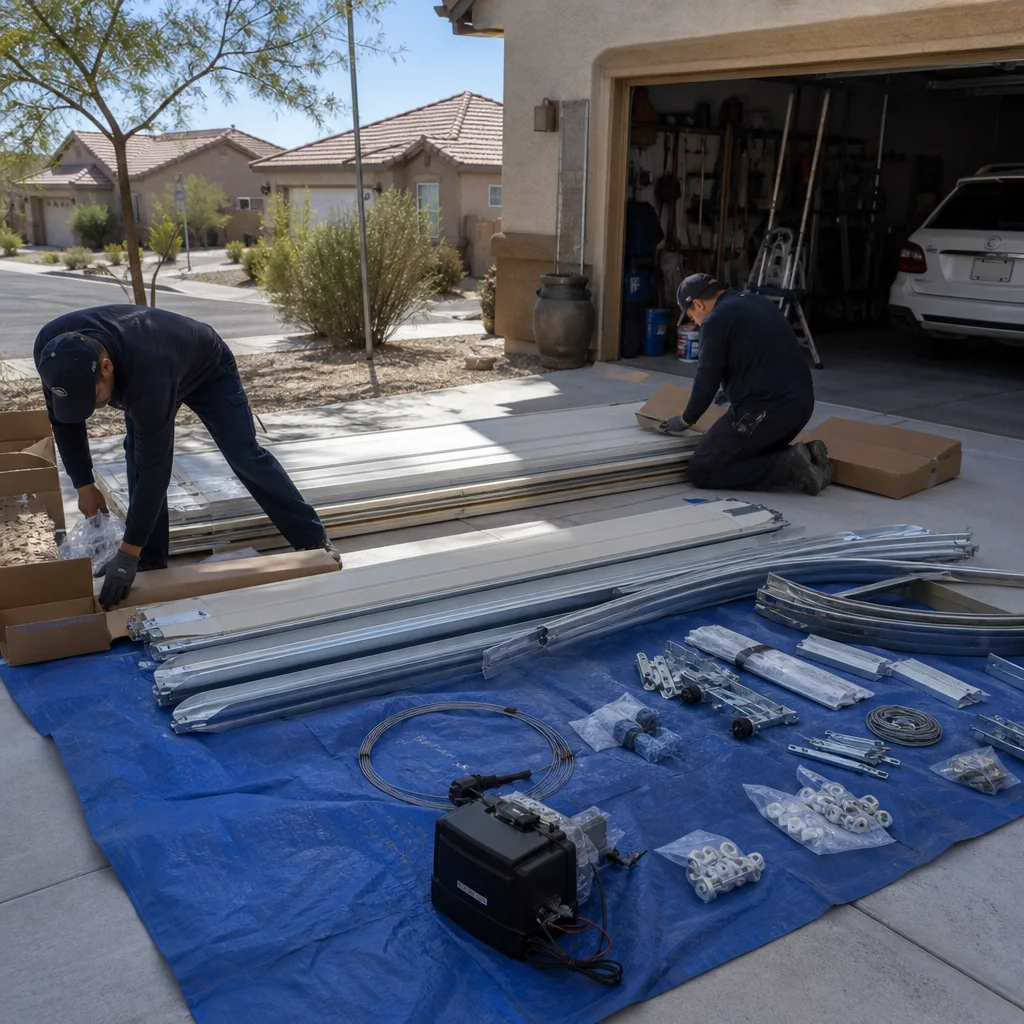
Three tasks show up on almost every homeowner’s maintenance list as “done” when they weren’t actually done. We see the consequences on service calls across Whitney. Each one has a specific way it goes wrong.
- The cable tension check. People glance at the cables and see nothing hanging loose, then check the box. But real tension check means looking for slack where the cable meets the drum and at the bottom bracket, and verifying the door lifts level from both sides. A cable can look fine and be a turn loose. If one side of your door lifts before the other, the tension is off – and a slack cable can jump the drum.
- Reseating the bottom seal. The seal should sit flat against the floor with no gap. Homeowners often push the seal down, call it done, and the seal pops back up within a day because the channel or the door level is off. Seat it, then close the door and check the gap along the full width – and look at the floor line, not just the seal.
- The limit switch test. The limit switch tells the opener when the door has reached fully open or fully closed. The “test” most people do is push the button and see that the door moves. That doesn’t test the switch. You test it by watching whether the door stops in the right place at both ends – if it overshoots, reverses early, or strains in either direction, the limit switch is out of adjustment. A misadjusted limit switch strains the opener and wears the logic board.
All three share the same trap: the task looks done from a distance. The only way to know is to test the actual behavior. If you’d rather have a technician verify all three, a documented check with photos is part of our visit, and you get the record when we leave.
Your Maintenance Log Template (That Reads in Two Minutes)
A maintenance log is only useful if a technician can read it in under two minutes and know exactly where the door stands. Most homeowner logs are a dated list of “lubed door.” That tells a technician nothing. This template is built so the next person who opens it – you, a family member, or the technician on the call – gets the full picture at a glance.
Write one line per service, in this order:
- Date and door (e.g., “3/14 – single-bay door, south-facing”).
- What was done (lubed springs, rollers, hinges, rail; reseated seal; tested reverse).
- What was found (e.g., “torsion spring 0.25-inch wire, no visible break; right roller stem tight; left bottom seal gap 1/4-inch”).
- What was replaced (part name and quantity – “two 2-inch nylon rollers” or “none”).
- What needs attention next time (e.g., “left cable slack 1/4 turn – inspect at six months”).
- Who did it (homeowner or company name).
That’s a two-minute read that tells a technician the door’s whole history: what’s been serviced, what’s worn, and what’s due. The log doubles as a service history that travels with the door, which matters when you sell the house or hand off to a new owner. It’s also the document we read on every service call to see what’s been done and what’s pending. Keep it in a plastic sleeve on the wall near the opener, not in a drawer. The best record is the one you’ll actually fill in.
Parts That Fail First and When to Replace Them
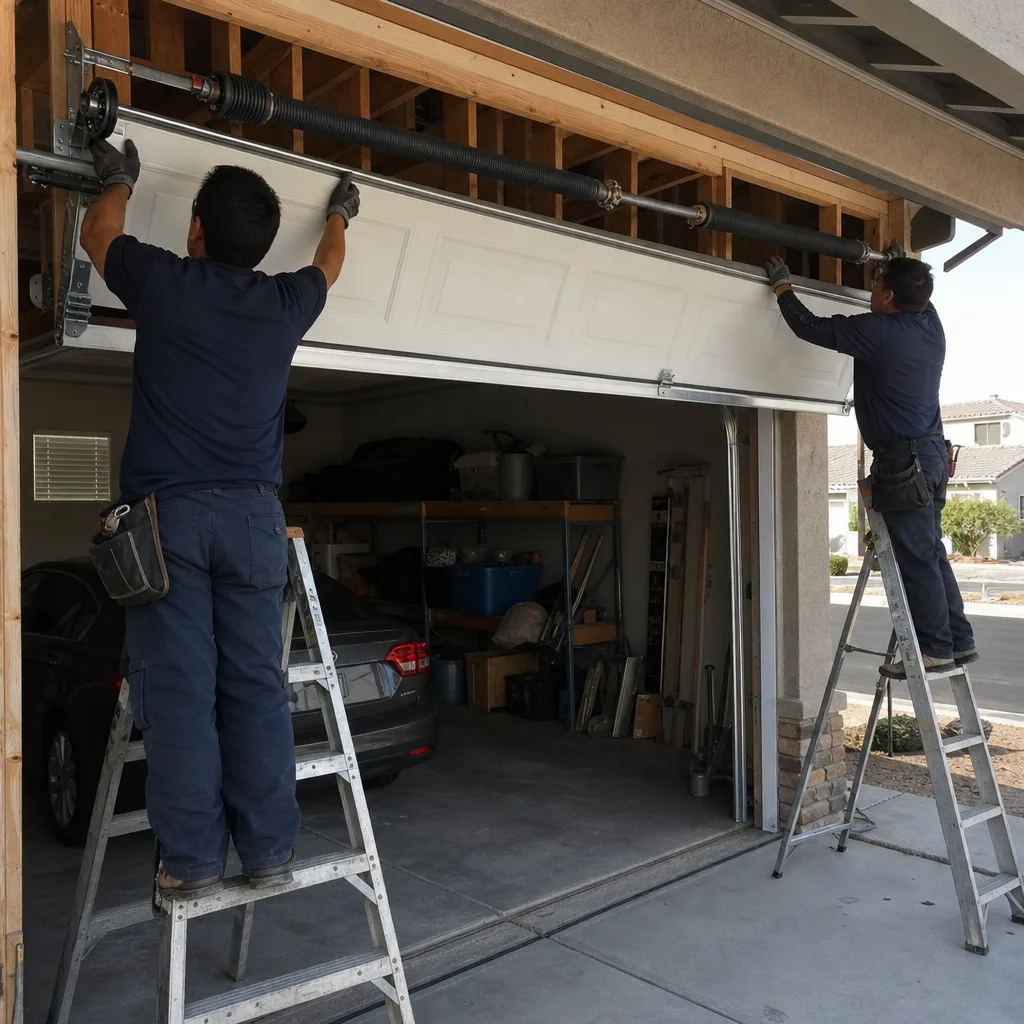
On most doors, the order of failure is predictable. Knowing it lets you replace a part before it takes something else with it. This is the order we see most often on doors across Whitney.
- Rollers – first to wear. Replace nylon rollers when they develop flat spots or a loud rumble, typically within a few years of heavy use.
- Bottom seal – first to degrade in the desert climate. Replace when it cracks or a gap appears at the floor line, usually every 1-3 years.
- Hinges – wear at the pin. Replace when a hinge shows play or starts to squeak after lubrication.
- Cables – inspect every six months. Replace at the first sign of fraying, never run a frayed cable.
- Torsion springs – the big-ticket item. Replace at the end of their cycle life or at the first sign of a gap; never repair or adjust yourself.
Each replacement protects the part below it in the chain. A worn roller that stays in place destroys a track; a bad bottom seal that stays in place lets weather degrade the bottom bracket. When you catch these early, the bill stays in the tens of dollars. When you wait, it climbs. That’s the whole logic of a failure-first schedule: replace the cheap part before it takes the expensive one with it. Parts for major brands – Amarr, Wayne Dalton, Craftsman and Raynor among them – are available, and every job is quoted with a flat, written price and written scope before anyone starts.
Common Mistakes to Avoid
- Greasing torsion springs instead of using a silicone spray. Grease attracts dust, and Whitney’s fine desert dust turns it into an abrasive paste. Use a light silicone or lithium spray and wipe off excess.
- Skipping the safety reverse test. It’s a two-minute test that catches limit switch and sensor faults before they become an emergency. If it fails, don’t keep cycling the door.
- Treating a frayed cable as “still lifting.” A cable that still works can snap without warning. Inspect it every six months and replace at the first sign of fraying.
- Adjusting a torsion spring yourself. Torsion springs are highly loaded and can cause serious injury. Never adjust or replace one – that’s a job for a trained technician.
- Ignoring a bottom seal gap because it “doesn’t affect the door.” A gap lets in dust and weather, which wears the bottom bracket and the seal seat. In Whitney, a south-facing door can develop a gap within a year.
- Marking the limit switch “tested” without testing it. Push the door and watch where it stops at both ends. Overshooting or early reversing means the switch needs adjustment.
- Keeping the maintenance log in a drawer. The log only helps if a technician can read it in two minutes. Keep it on the wall near the opener.
See the difference
BeforeAfter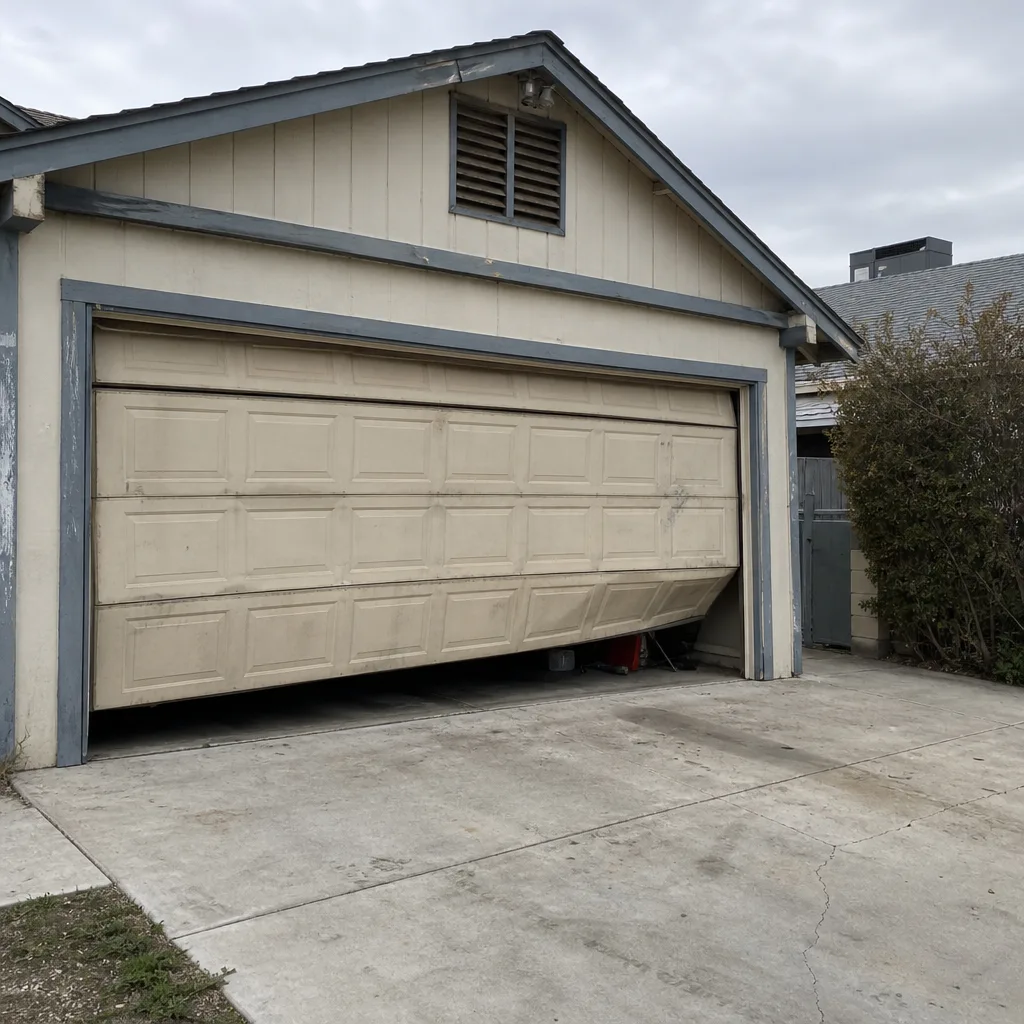 Before
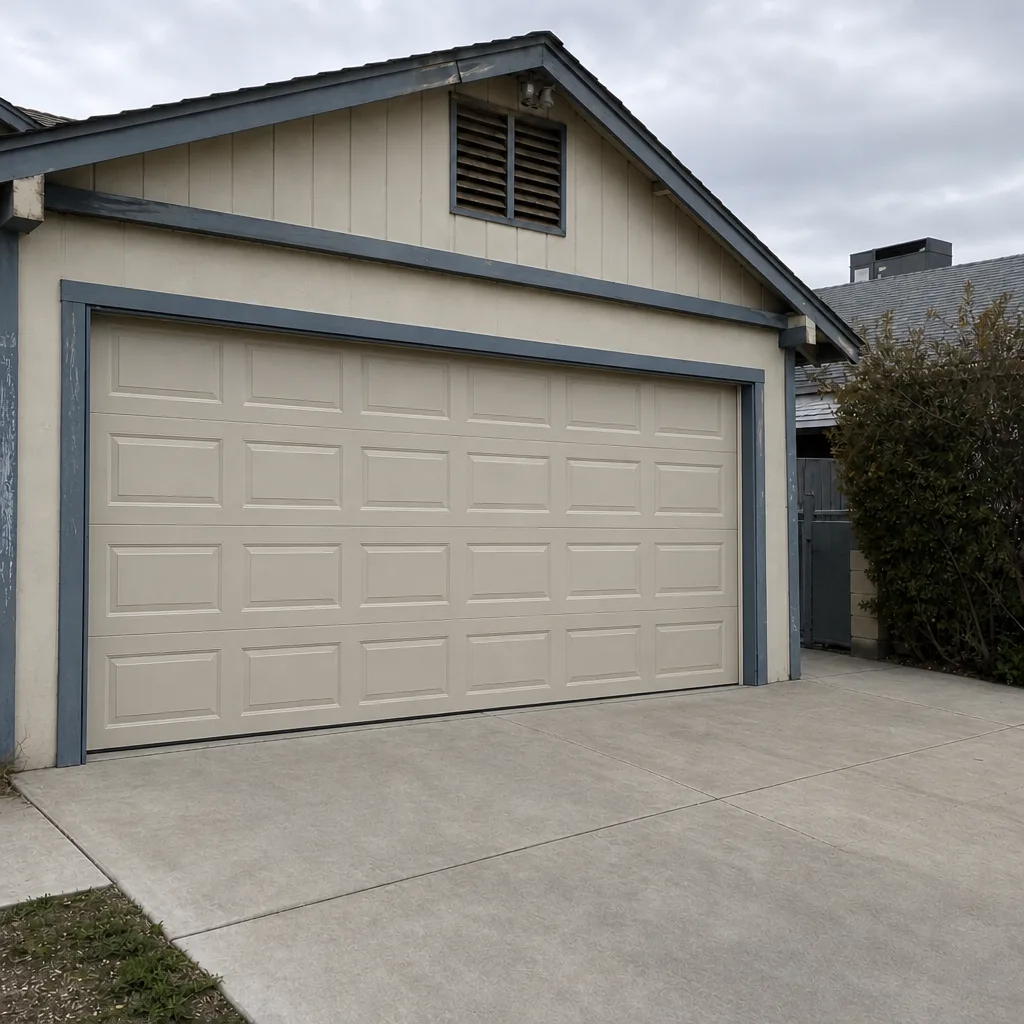 After
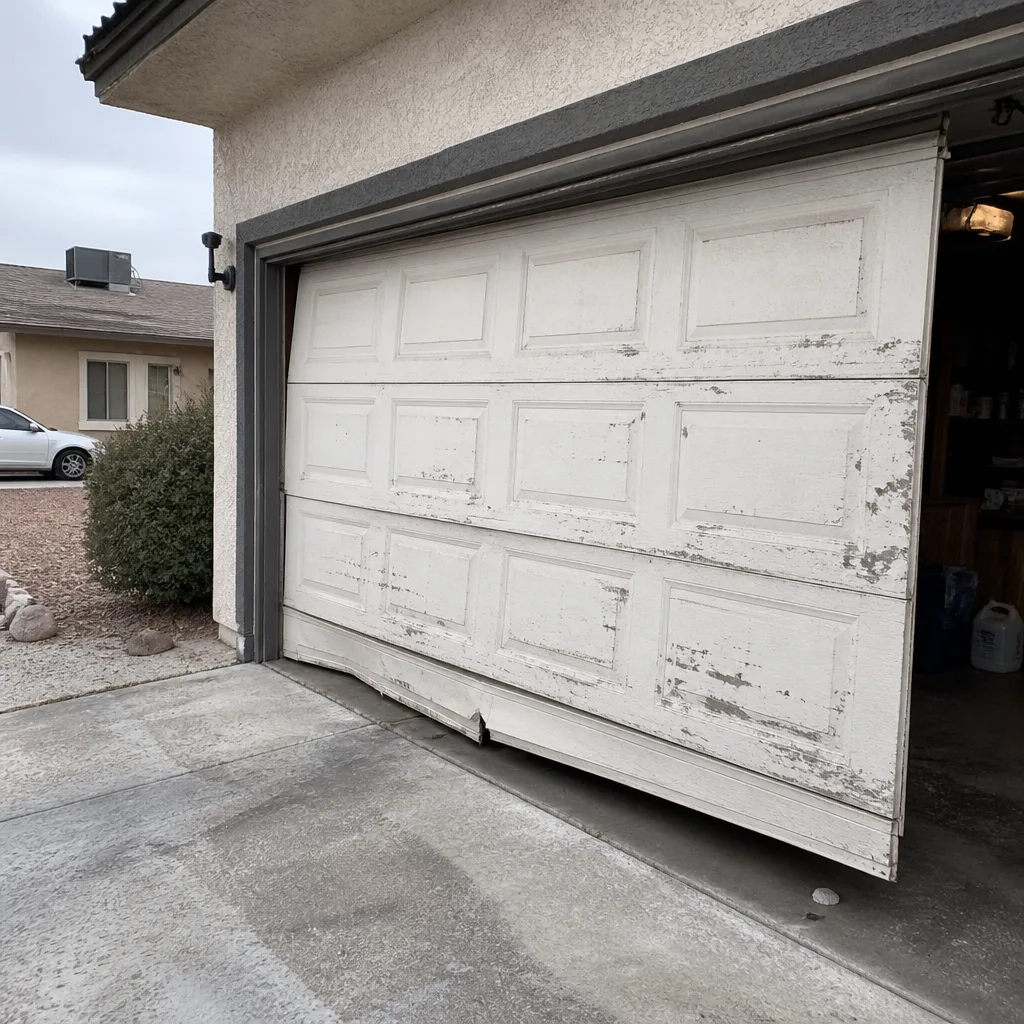 Before
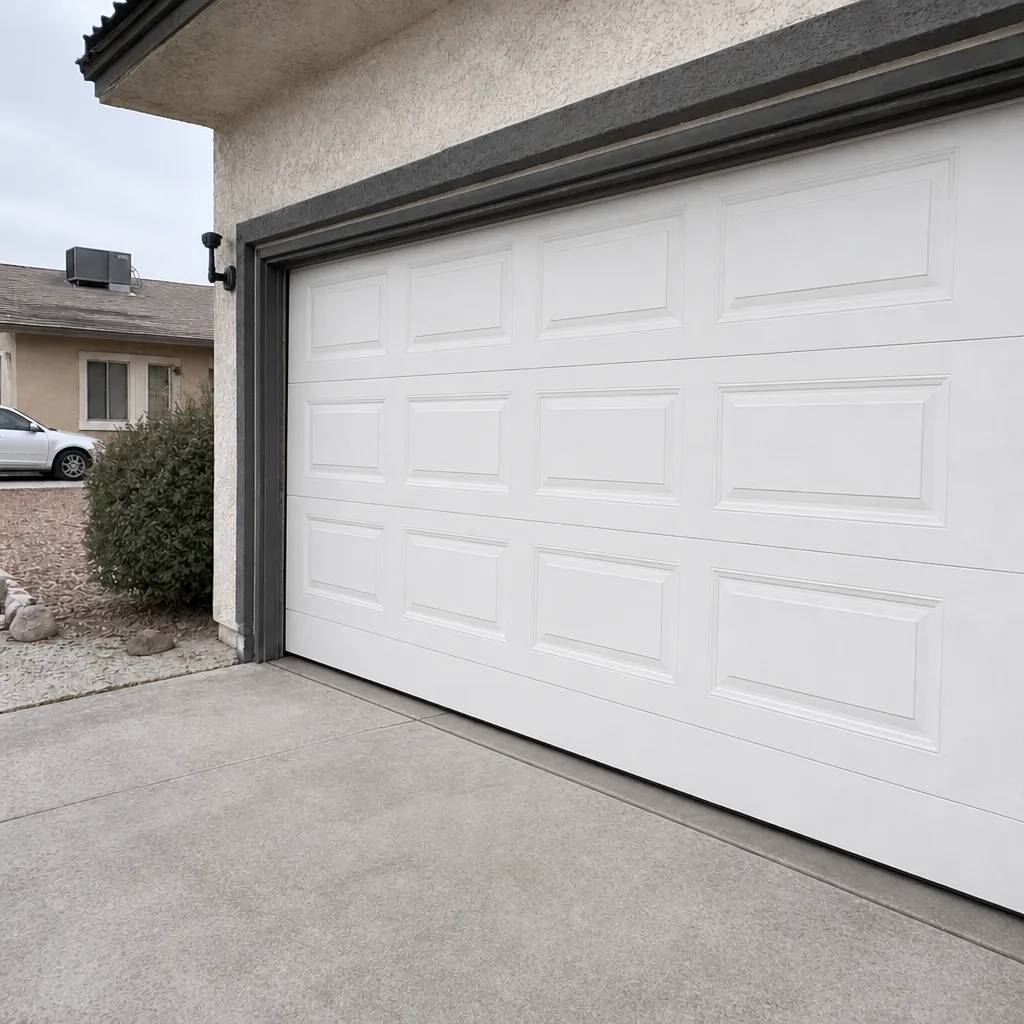 After
When to Call a Professional
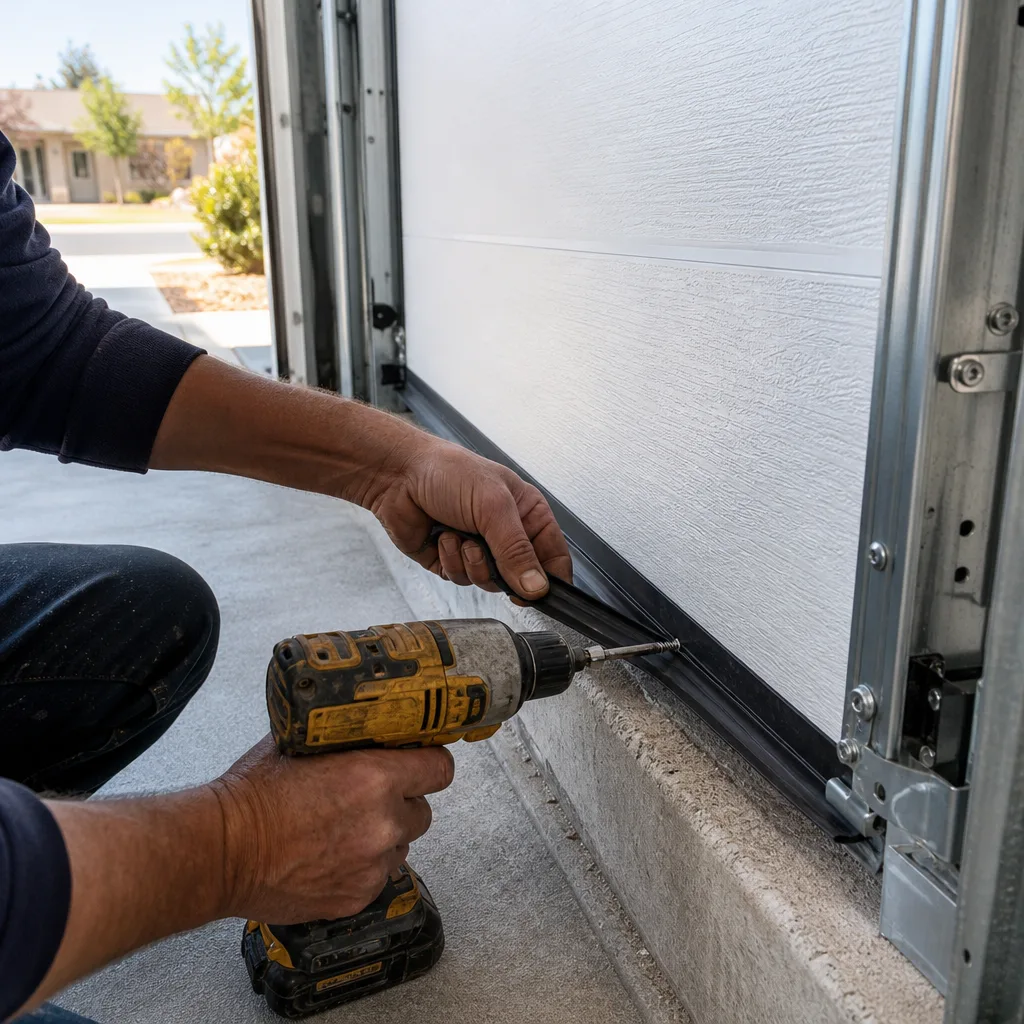
Call a professional for any spring or cable work, for a door that lifts unevenly, for a door that won’t stay closed, for an opener that reverses early or won’t reverse at all, and for any part that looks broken or feels loose. Springs and cables hold dangerous force and should never be adjusted or replaced by a homeowner – the risk of serious injury is real and immediate. For everything else on the schedule, a technician can verify the tasks and hand you the documentation. Servo Garage Doors Whitney offers free estimates in Whitney – call (888) 402-1096. Every estimate is a flat, written price and written scope before any work starts, with a free second opinion on any written estimate from another company. For scheduled installs and replacements, we’ll come measure, order the part, and schedule the work – no same-day promises on that side, just a written price you can read first.
Frequently Asked Questions
Every six months, for both torsion and extension springs, with a light silicone or lithium spray. Torsion springs and extension springs use the same interval but need different inspection before you lubricate – check the safety cable on extension springs first, and never adjust a torsion spring yourself. Call (888) 402-1096 for a written quote if a spring looks damaged – estimates are free.
Rollers are usually the first part to wear on a heavily used door, followed by the bottom seal in Whitney’s high-desert climate. Replacing a worn roller promptly protects the track; leaving it can destroy a track and cost far more. If your rollers rumble or show flat spots, call for a written quote.
Lubricate and inspect every six months, run the monthly checks, and schedule a professional inspection every twelve months. Whitney’s temperature swing and fine desert dust wear rollers, seals and cables faster than a coastal climate, so the six-month service matters more here. Call (888) 402-1096 for a written quote on the six-month service.
You can look for slack at the drum and bottom bracket and verify the door lifts level from both sides, but tightening a cable yourself is not advisable – cables hold dangerous force. If one side lifts before the other, stop and call. A written quote for cable inspection is available for Whitney homeowners at (888) 402-1096.
That’s a limit switch or a sensor issue, and it’s one of the most common reasons we’re called in Whitney. It’s usually a quick adjustment, but keep the door out of service until it’s checked. Call (888) 402-1096 for a written quote – the price is agreed before any work starts.
No, the log isn’t a safety requirement, but it doubles as a service history a technician can read in under two minutes. It tells the next person what was serviced, what’s worn, and what’s due. A written maintenance record also travels with the door if you sell the home.
The Bottom Line
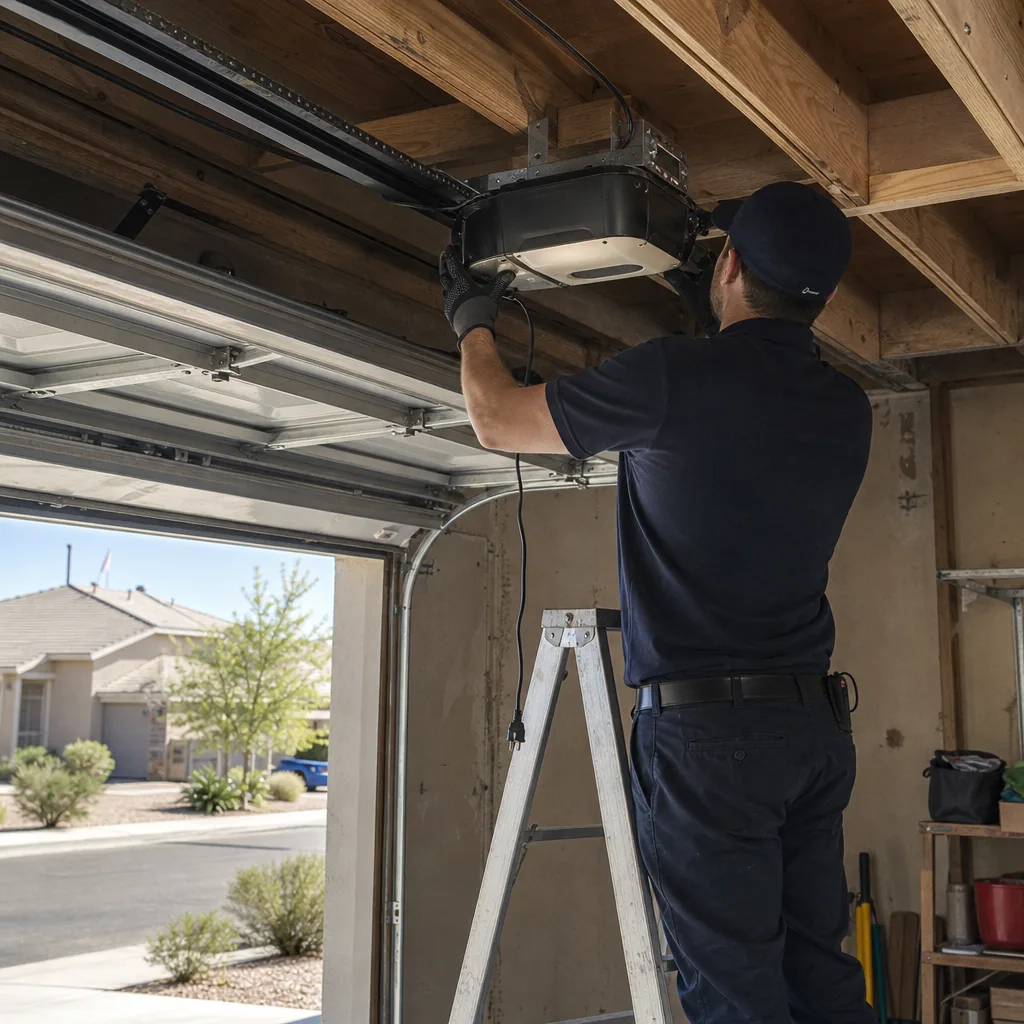
The schedule determines which bill you pay. Every task on this list protects a specific part, and skipping it produces a predictable, more expensive failure – the $8 roller bracket that becomes a $140 drum. In Whitney’s high-desert climate, rollers, seals and cables wear faster than a generic schedule assumes, and the three tasks homeowners mark “done” without doing are the ones most likely to catch you. Keep the log, keep the six-month service, and call for anything involving springs or cables. For repair, an opener that won’t cooperate, or a new installation, Servo Garage Doors Whitney is here to help – call (888) 402-1096 for a free estimate, and read the garage door repair in Whitney guide, the garage door installation in Whitney details, or the garage door opener repair and installation page before you call.
Written by the team at Servo Garage Doors Whitney.