
Last updated November 18, 2026
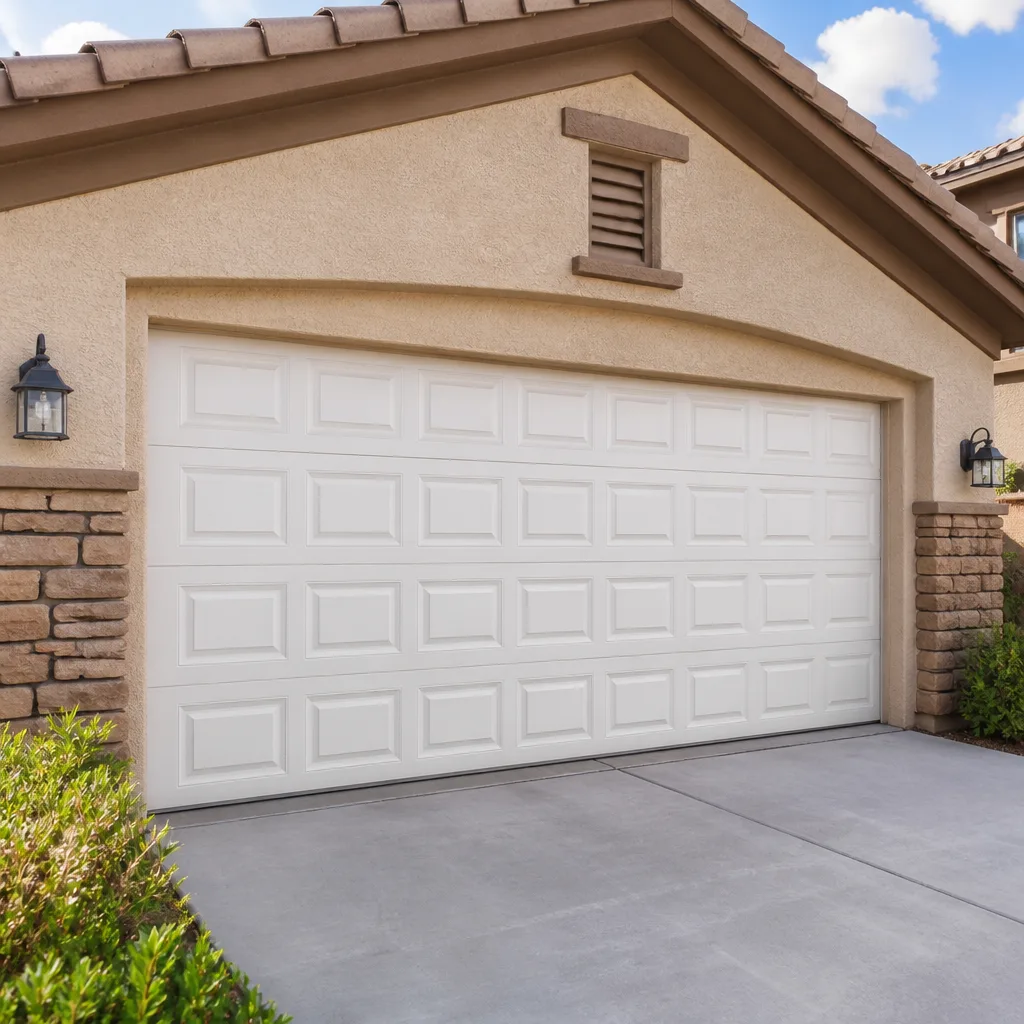 Raised-panel steel
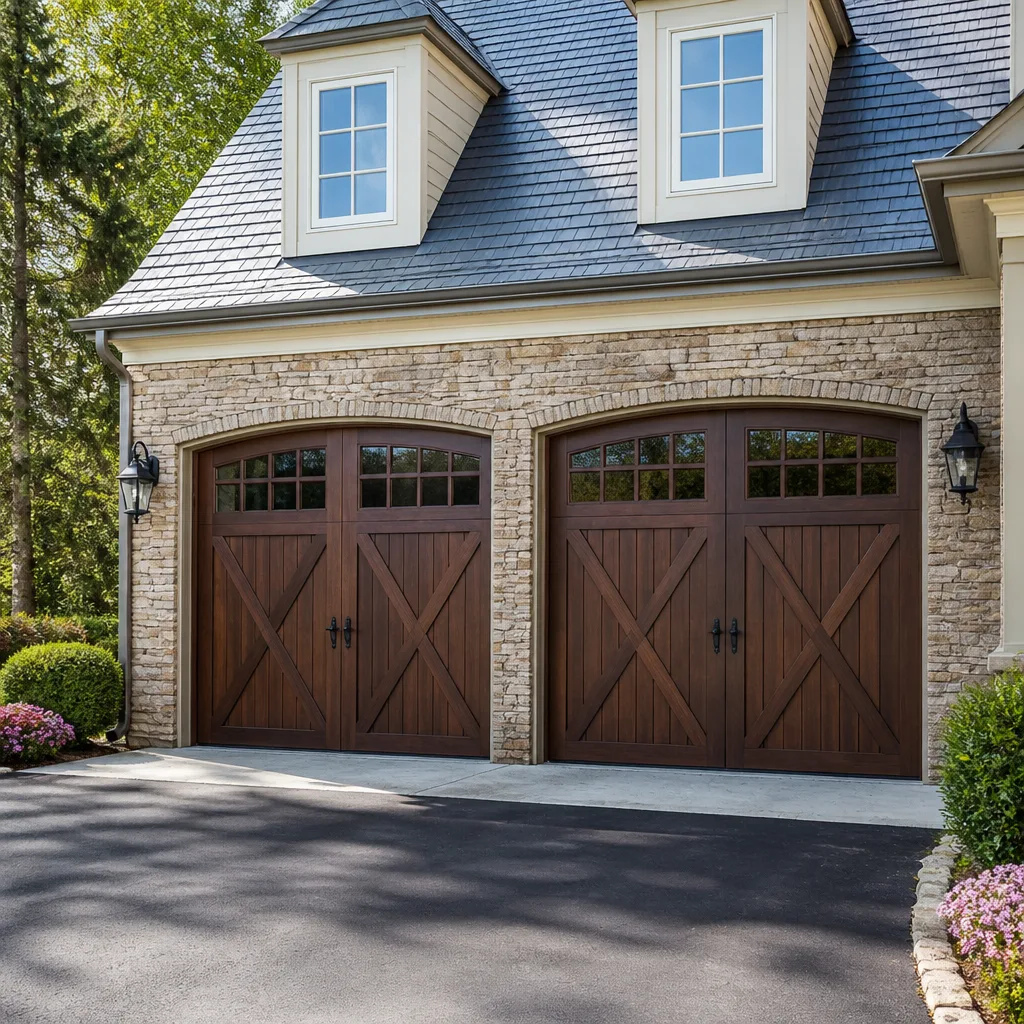 Carriage house
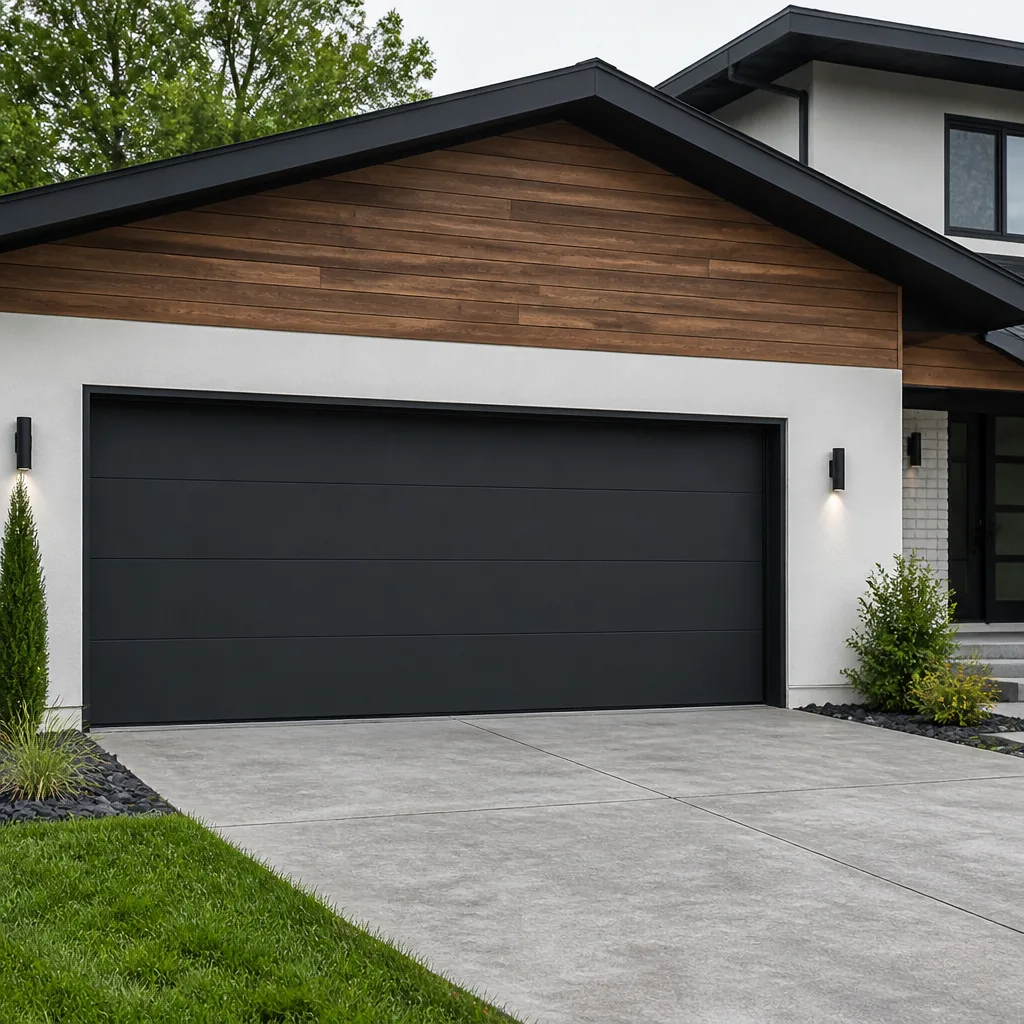 Modern flush
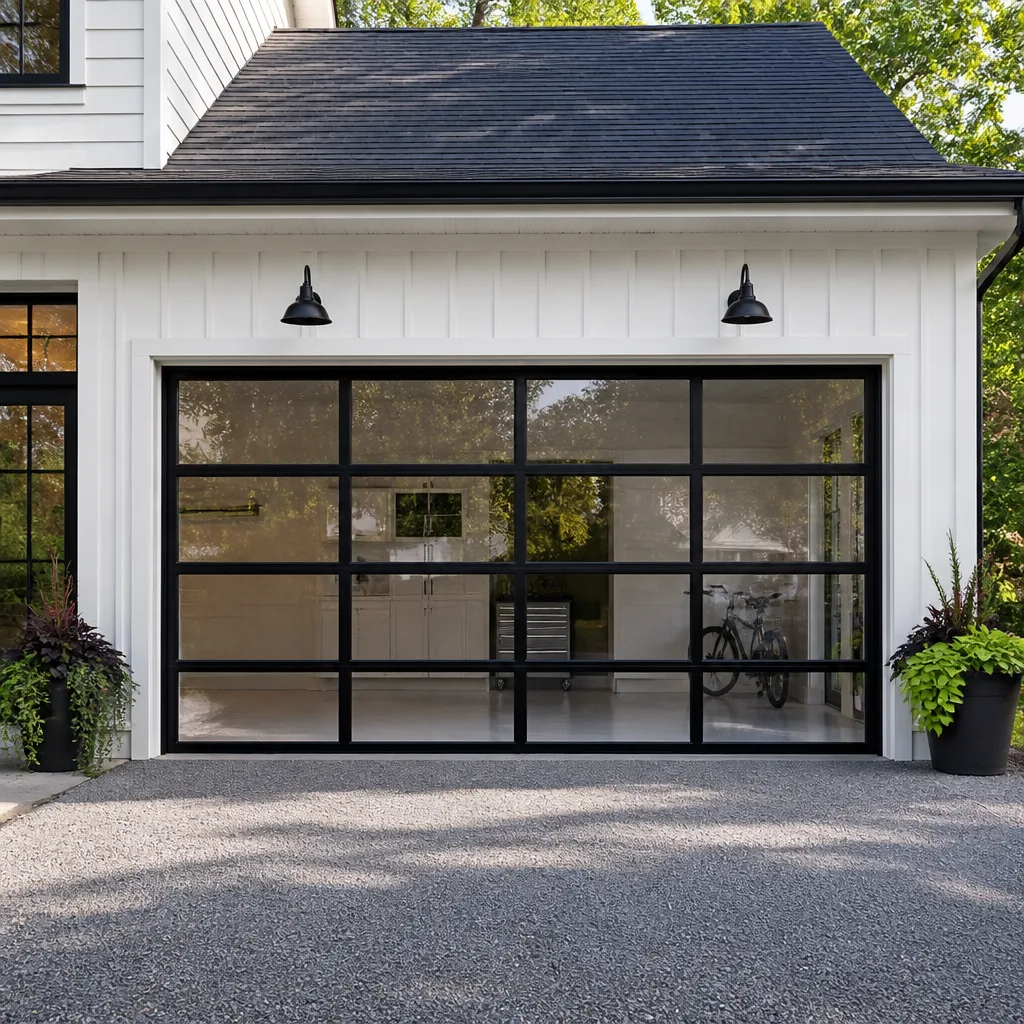 Full-view glass
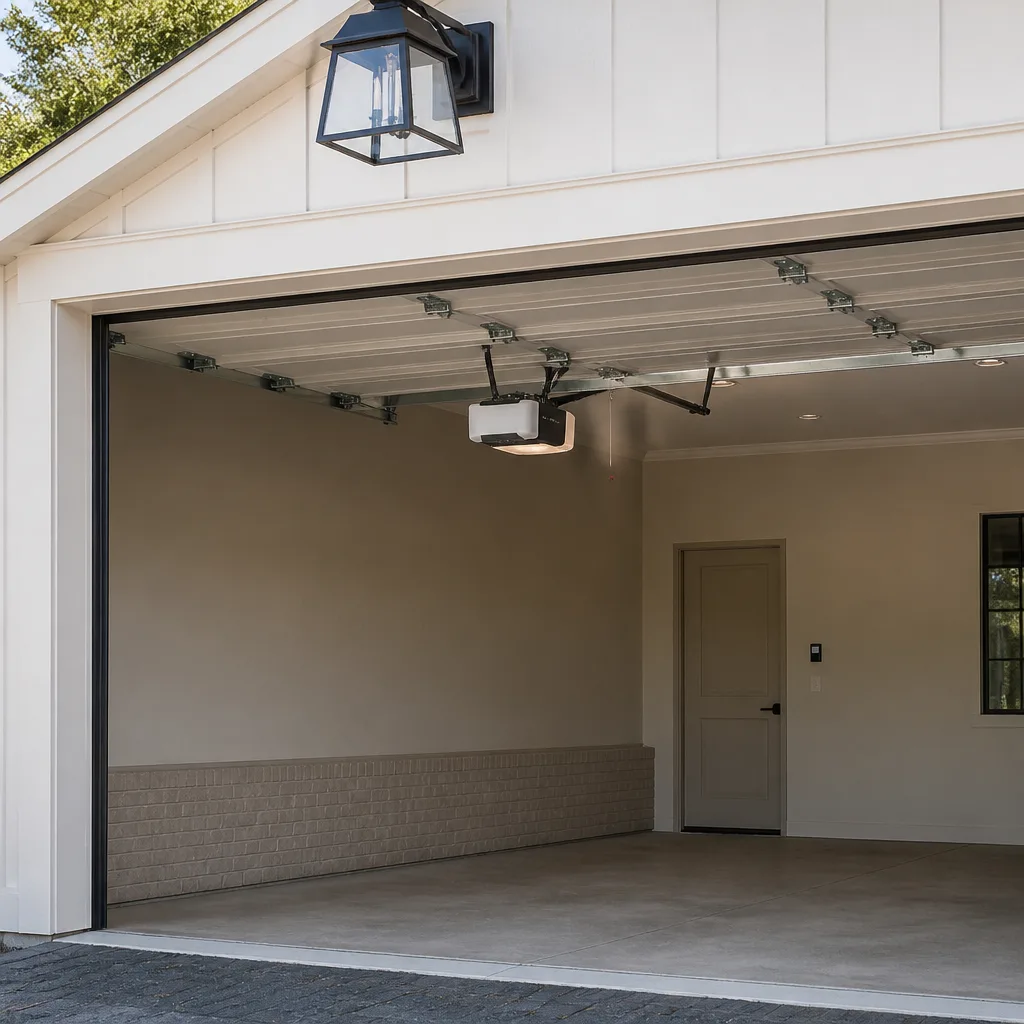 LiftMaster openers
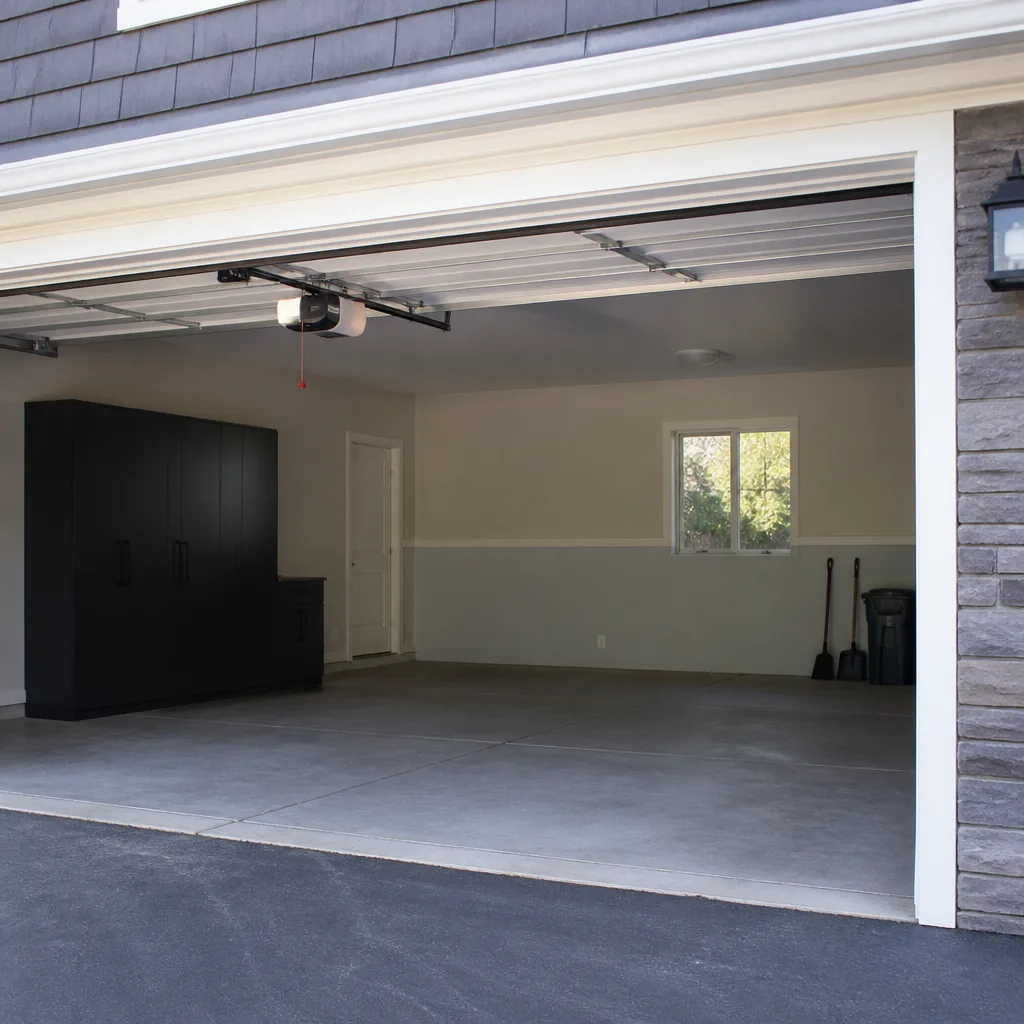 Chamberlain openers
Full 25-point door and opener safety check with every visit - springs, cables, rollers, tracks, and your LiftMaster or Chamberlain opener included
You get a price before we start. It does not change when the pro arrives.
Get your free estimateGarage Door Opener Repair & Installation Warning Signs Every Homeowner Should Know
An opener that takes two seconds longer to reach full speed than it did six months ago is telling you the drive gear is wearing. Most people never notice that change. They notice the morning the door stops halfway up and stays there. The difference between those two moments is a forty-dollar gear replaced on your schedule and a seized drive train replaced under time pressure, usually in the rain, usually when you’re already late. This guide teaches you to read the hardware before it fails, and it comes from what we see on service calls across Whitney every week.
Quick Answer
Garage door opener failure almost always announces itself weeks in advance through four channels: sound, travel behavior, force response, and diagnostic codes. A grinding or rhythmic clicking under the motor cover usually means drive gear wear, inconsistent travel distance points to a limit switch or logic board, and a door that reverses in normal weather signals a photo-eye or force calibration failure. Reading those signs early turns a $180-$340 emergency repair into a routine part replacement. The one line that matters most: an opener that sounds different than it did last season is already giving you the diagnosis. Call (888) 402-1096 for a free estimate and we’ll photograph the failed component before anyone quotes you a replacement.
Styles & brands we work with
- Raised-panel steel
- Carriage house
- Modern flush
- Full-view glass
- LiftMaster openers
- Chamberlain openers
Table of Contents
- The Sounds That Name the Failed Part
- Behavioral Warning Signs and What Component They Point To
- A Warning Sign vs. a Nuisance: Cold Weather Reversals
- What Your Wi-Fi Opener’s Diagnostic Log Is Telling You
- No Photo, No Proof: Why Documentation Matters
- Installation Warning Signs: When a Bad Install Shows Up Later
- What Opener Repair Costs in Whitney
- Common Mistakes to Avoid
- When to Call a Professional
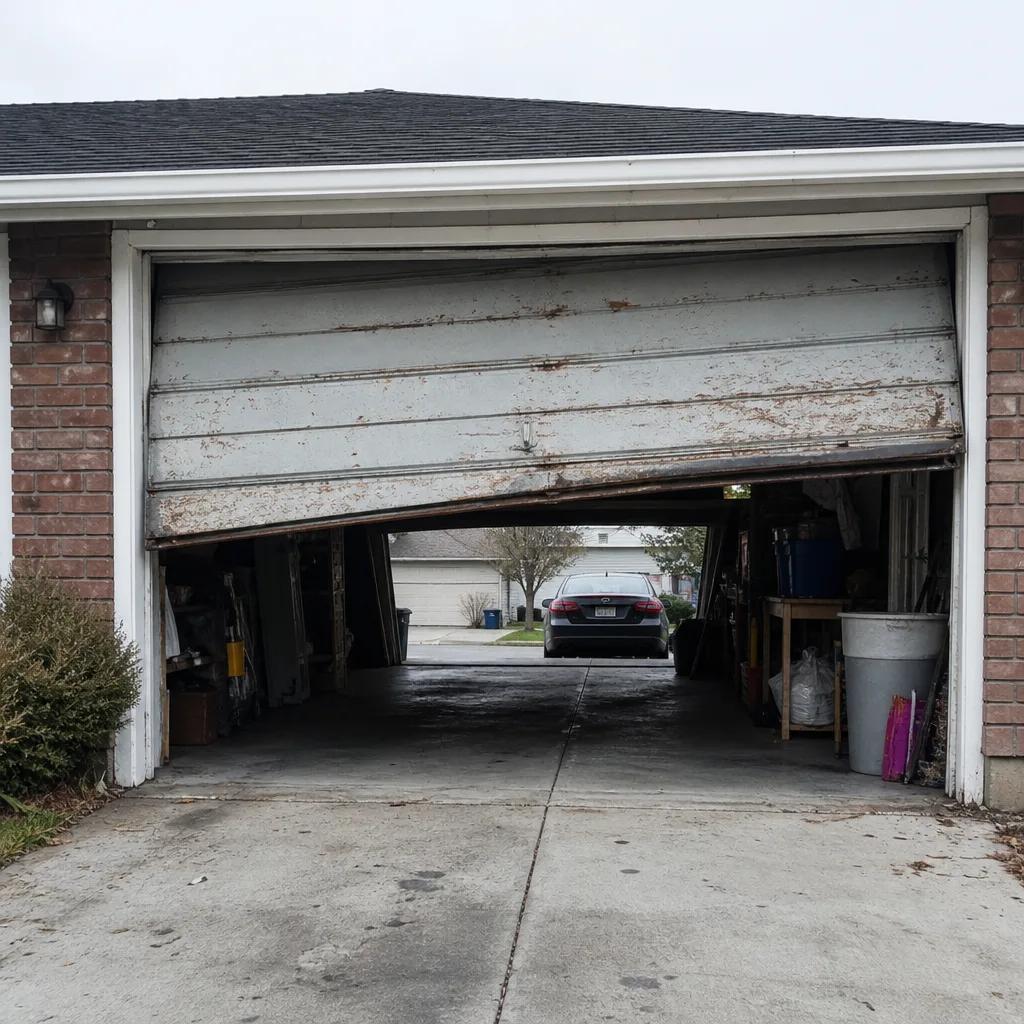 Before
 After
The Sounds That Name the Failed Part
You can diagnose most opener failures with thirty seconds and a quiet garage. Stand inside, close the door behind you, and run a full open and full close cycle with nothing else running. Listen for one of four sounds. Each one maps to a specific component failure, and each one has a different price attached to it. In Whitney, where summer heat inside a closed garage routinely climbs past 110 degrees, these failures show up faster than in cooler markets because the lubricant in the drive train thins out and the motor capacitor works harder.
1. A rhythmic grinding or crunching under the motor cover
This is drive gear wear, and it’s the most common opener failure we see. The gear is a nylon or steel component that transfers motor rotation to the trolley carriage. As the teeth wear down, they skip against the drive shaft. A new gear runs about $40 in parts. Let it run long enough and the teeth shear completely, which takes the motor under load with it. If the noise sounds like a coffee grinder full of gravel on every cycle, the gear is already past the wear stage.
2. A metal-on-metal scrape that moves with the door
Trolley carriage binding. The carriage is the metal shuttle that rides the rail and pulls the door along the track. When it binds, you hear a scrape that travels from one end of the rail to the other in time with the door’s movement. Left alone, binding carriage wear chews up the rail and eventually strips the drive mechanism. A carriage replacement is a modest repair. A rail replacement is not.
3. A rattling knock at the start or end of travel
Rail misalignment. The rail is the horizontal beam the carriage rides on. When the mounting brackets loosen or the rail bows, the carriage strikes it instead of gliding along it. In Whitney, thermal expansion from the daily heat swing loosens ceiling brackets more often than in stable climates. The knock you hear at the very start of travel is the carriage hitting a misaligned section of rail.
4. A chattering click from inside the motor housing
Logic board relay failure. The relay is the switch on the logic board that sends power to the motor. When the relay contacts pit, it chatters rather than closes cleanly. You hear a rapid click-click-click, and the door either doesn’t move or moves in stutters. Logic board replacement runs $150-$320 depending on the brand. Relays on a Chamberlain or Genie board are the most common electrical failure we diagnose.
Behavioral Warning Signs and What Component They Point To
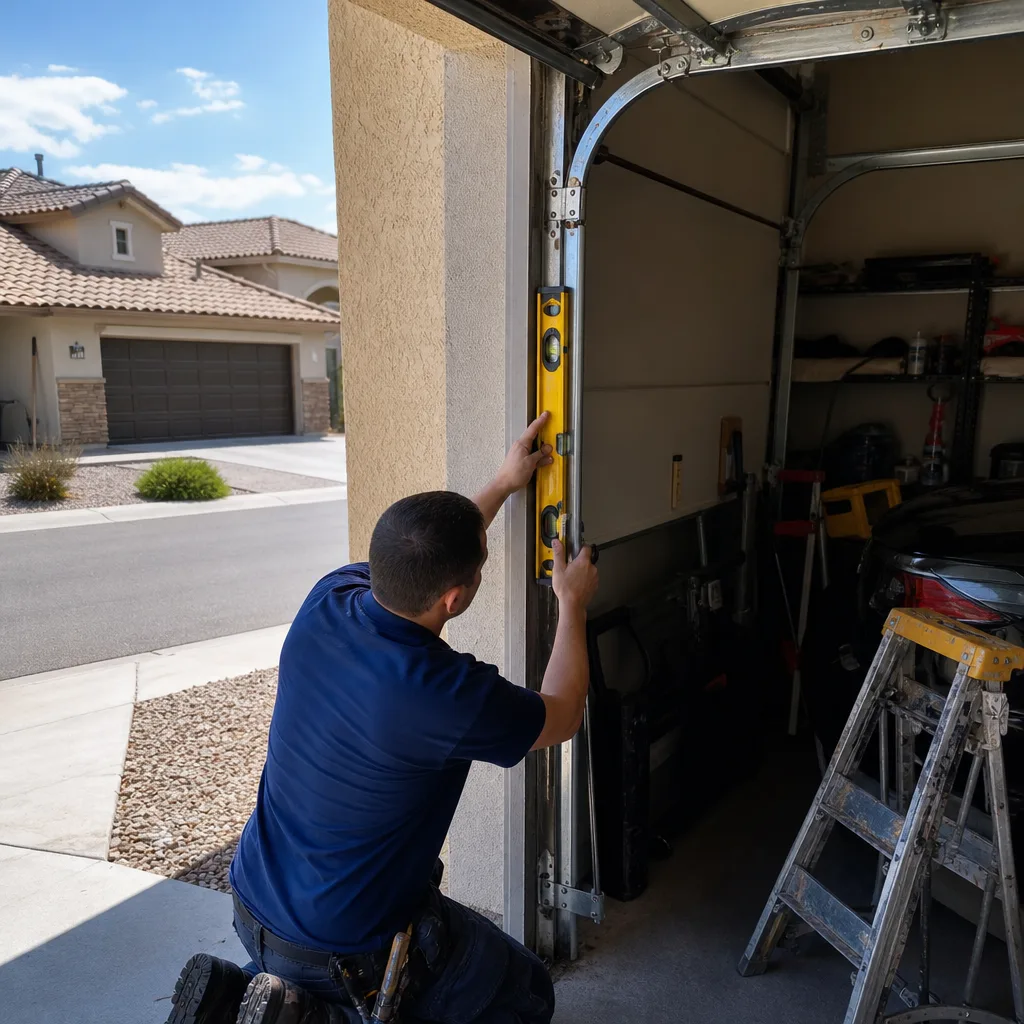
Sound is only one channel. The door’s behavior during a normal cycle tells you just as much, and it does so weeks before the sound starts. Watch for these four patterns. Each one points to a specific component, and each one is something you can observe on a single normal cycle without tools.
- Inconsistent travel distance. The door opens to a different height each time, or closes short of the floor. This points to a limit switch drifting out of adjustment or a logic board losing its memory of the open and close positions. Limit switches tell the motor when to stop. When they drift, the door stops at the wrong place.
- Increasing close-force. The door slams rather than settles at the floor. This is either the opener’s force setting drifting or a physical cause, usually roller or hinge drag. The opener is compensating by pushing harder. Modern openers adjust force automatically when they sense resistance, and a force that climbs week over week is the motor working against friction it shouldn’t have to fight.
- Delayed start. You press the button and the door sits for one or two seconds before moving. This points to a motor capacitor losing its charge. The capacitor stores the energy the motor needs to start. As it weakens, the delay grows until the motor hums without turning at all.
- Partial reversal. The door starts down, stops, and goes back up without reaching the floor. This is the safety reversal system doing its job. It’s either the photo-eye or the force sensor reporting an obstruction that isn’t there. The cause matters here, because this is the failure mode that keeps a door from ever closing.
If you’re seeing any of these alongside a door that also runs unevenly or catches on the track, the problem may not be the opener at all. Track alignment, roller wear, and spring tension all load the opener and make it look like the motor is failing. Our Garage Door Repair in Whitney team checks the door separately from the opener for exactly this reason.
A Warning Sign vs. a Nuisance: Cold Weather Reversals
This is the distinction that saves homeowners the most money in unnecessary service calls. A one-time reversal in cold weather is a force calibration issue. A reversal that repeats in normal conditions is a photo-eye or limit switch failure. They present identically at the door. They have two completely different causes.
When the temperature drops, the rubber weather seal at the floor stiffens and the door closing against it meets more resistance than it did in summer. Modern openers use the force sensor to gauge resistance, and the stiffer seal can trip the threshold. That’s a force calibration adjustment, not a broken part, and it usually means setting the close force one increment higher. Whitney winters are mild by national standards, but the desert nights still drop enough that we get these calls every January. One reversal in a cold snap, followed by weeks of normal operation, is a nuisance. Nothing is failing. Call us, we’ll adjust the calibration and you’ll be done.
A reversal that happens in mild weather, with nothing in the path, is a different animal. That’s a photo-eye problem, a limit switch drifting out, or a logic board reporting a false obstruction. Three or more reversals in normal conditions means stop using the door on the automatic cycle and get it diagnosed. A door that reverses unpredictably on the way down is the one failure mode that can actually damage something or someone, and the safety reversal system that catches it is the same system that’s now misfiring.
What Your Wi-Fi Opener’s Diagnostic Log Is Telling You
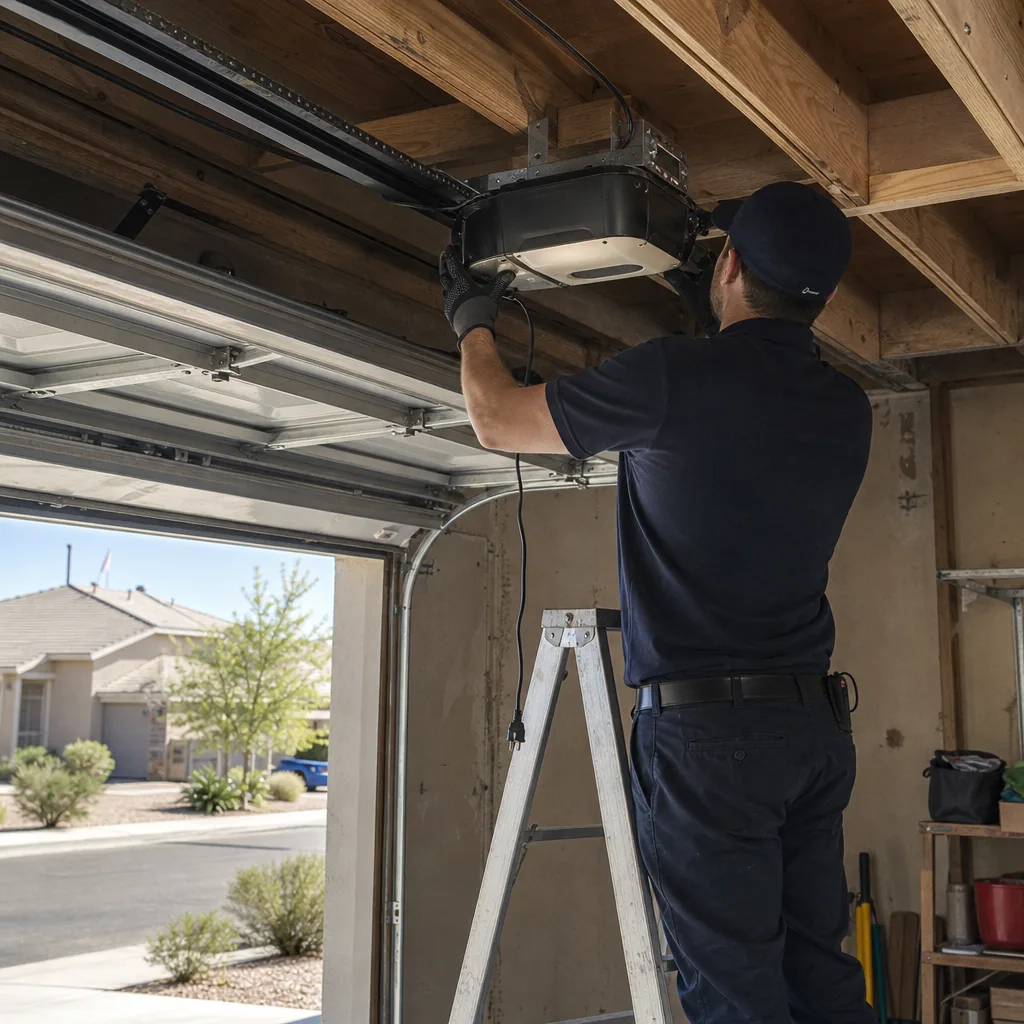
If your opener is a connected model, a Chamberlain or a Genie with Wi-Fi, you already have a diagnostic tool most people never open. The app logs every cycle, every force adjustment, and every error code. It surfaces warning signs you’d otherwise miss because you might not run the door for days at a stretch, and it does it with timestamps.
Here is what the common codes point to. A code indicating a blocked obstruction is a photo-eye fault or a force sensor trip that registered as an obstruction. A code for an open or closed limit means the limit switch has drifted and the opener can’t confirm position. A code reporting motor overcurrent points to drag on the door, which sends you to check rollers and hinges before blaming the motor. A code for a failed self-test usually means the logic board relay or the photo-eye wiring. The log tells you the pattern; a technician confirms the component. What the log does that nothing else can is show you the trend. A force value that’s crept up every week for two months is a graph of a door getting harder to move, and that graph is worth more than any single reading.
No Photo, No Proof: Why Documentation Matters
A technician who photographs the drive gear, the motor capacitor, and the logic board before quoting is giving you the evidence to evaluate the quote yourself. A technician who tells you the board is bad and quotes you a board replacement is asking you to take their word for it. The distance between those two positions is the whole reason we built the way we work.
Our founding rule is simple: the customer sees the failed part before anyone quotes a replacement. That rule is codified as Clause 4 of The Haven Standard, and it’s why every visit closes with a photo record delivered to you. When a technician shows you the sheared teeth on the drive gear and the part number on the replacement, you’re not deciding whether to trust them. You’re looking at the gear. The same applies to the written price: the scope and the flat price are set before any work starts, per Clause 1. If the quote changes once the door is open, it changes in writing, with a photo of what was found. Our technicians have up to 11 years of experience, every one of them background-checked, and the local business holds its own license and insurance. Documentation is the standard we work to, not a courtesy.
Installation Warning Signs: When a Bad Install Shows Up Later
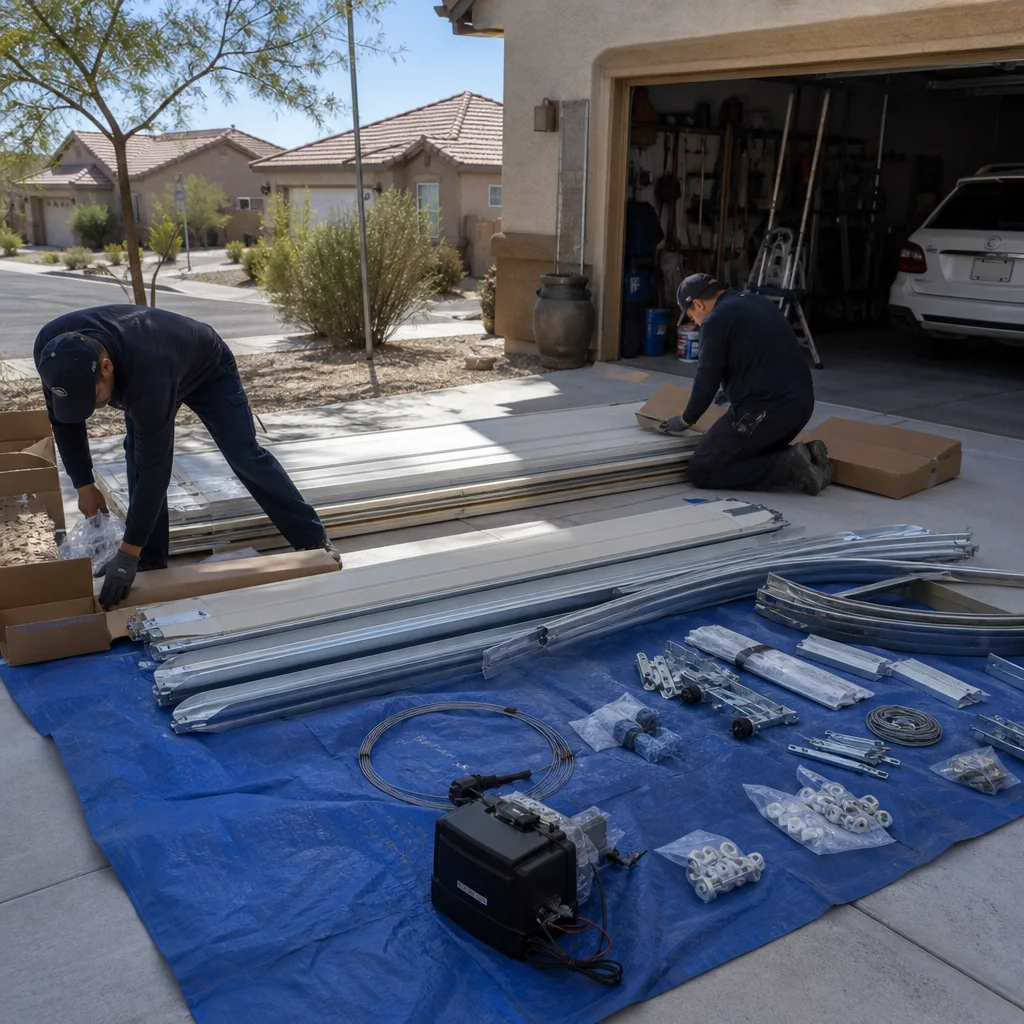
Some opener problems aren’t wear. They’re the result of an install that looked fine on day one and started failing in month eight. We see these most often in the newer builds and remodels around Whitney, where an opener was matched to a door it doesn’t suit or mounted to a ceiling that couldn’t carry it.
- The opener is undersized for the door. A 1/2-horsepower unit on a heavy insulated door works, then stops working. The motor runs hot on every cycle and the capacitor fails early. The fix is the right unit, not another repair.
- The rail isn’t level with the door travel. A rail that runs a half-inch out of line works when new and binds as the brackets settle. This is the source of most of the carriage binding we diagnose in installs under a year old.
- The safety photo-eyes were mounted at the wrong height or facing the wrong way. Mounted above the door travel or angled so they read each other’s reflection, they throw intermittent reversal faults that the homeowner chases as an opener failure. The eyes should sit six inches off the floor, aimed squarely at each other.
- The opener header bracket is mounted into drywall or a weak header. Under the pull load, the bracket works loose and the whole rail knocks with every cycle. That knock sounds like a misaligned rail because it is one, and the cause is the mount, not the part.
If your door is new enough to be under a builder’s warranty, or you’re choosing an opener for a door you’re about to install, our Garage Door Installation in Whitney page covers how the opener gets matched to the door weight and travel before anything goes up. The right match is a large share of the reliability.
What Opener Repair Costs in Whitney
Opener repairs in Whitney run from about $120 for a logic board reset and a safety-system adjustment up to $450 for a full logic board replacement on a premium unit. The flat price is set in writing before any work starts, so the range below is what you’ll actually agree to, not a low estimate that grows once the door is open. Photo-eye replacement is one of the most common items we handle and it usually lands at the lower end.
- Photo-eye replacement and alignment: $120-$190
- Safety reversal / force calibration adjustment: $95-$160
- Drive gear replacement (nylon or steel): $120-$220
- Trolley carriage replacement: $140-$250
- Limit switch adjustment or replacement: $110-$200
- Motor capacitor replacement: $120-$210
- Logic board replacement: $150-$450 depending on brand and unit
- Rail realignment (including bracket tightening or replacement): $150-$280
What drives your number up: the brand. Logic boards on a Chamberlain or a Genie are easier to source than on some older units, and an opener that’s been discontinued can push a board replacement to the top of the range or beyond. What drives it down: if the opener is fine and the door is dragging, you’re paying for door hardware, not an opener repair, and the diagnosis will say so. The free second opinion covers you here. If another company has quoted you a repair, bring the written estimate and we’ll look at it against what we find. No coupon, no code. Call (888) 402-1096 for an exact quote on your opener; estimates are free.
Common Mistakes to Avoid
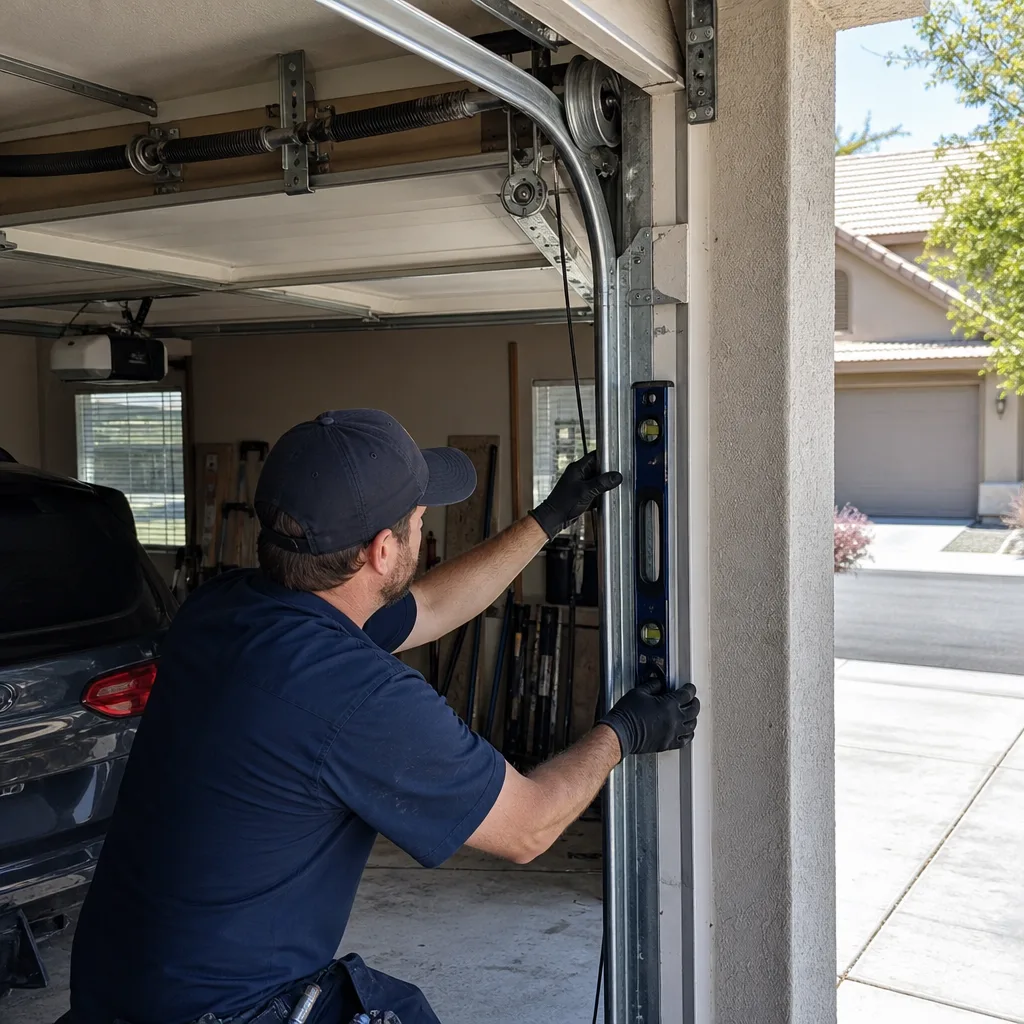
- Replacing the opener when the door is the problem. If the door drags, binds at the hinges, or has a wearing roller set, it’s putting load on an opener that’s working fine. In Whitney we see plenty of these after a summer of heat-thinned lubricant. Fix the door and the opener stops laboring. Selling a new opener here is selling the wrong part.
- Ignoring a sound once and waiting for it to become a failure. The whole premise of this guide is that the sound comes before the failure. A drive gear squeal on Monday is the forty-dollar repair. The same gear sheared on Sunday morning is a seized drive train on an emergency call. The sound is not going to get better.
- Adjusting the close-force setting to “make it stay down.” Cranking up the force so a reversing door stops reversing overrides the one safety system that protects a child or a pet under the door. If the door reverses falsely, the correct response is to fix the photo-eye or the force sensor, not to out-muscle the safety system.
- Not testing the reversal system at all. The safety reversal is the most critical feature on the entire unit, and most homeowners have never tested it. Put a piece of wood or a roll of paper across the threshold and close the door. It should reverse on contact. If it doesn’t, stop using the automatic cycle and get it checked the same day.
- Buying the cheapest opener for a heavy door. Horsepower ratings aren’t bragging. A heavy or insulated door needs the right drive strength. An undersized unit runs hot, its capacitor fails early, and the money you saved buys the correct unit within a few years anyway.
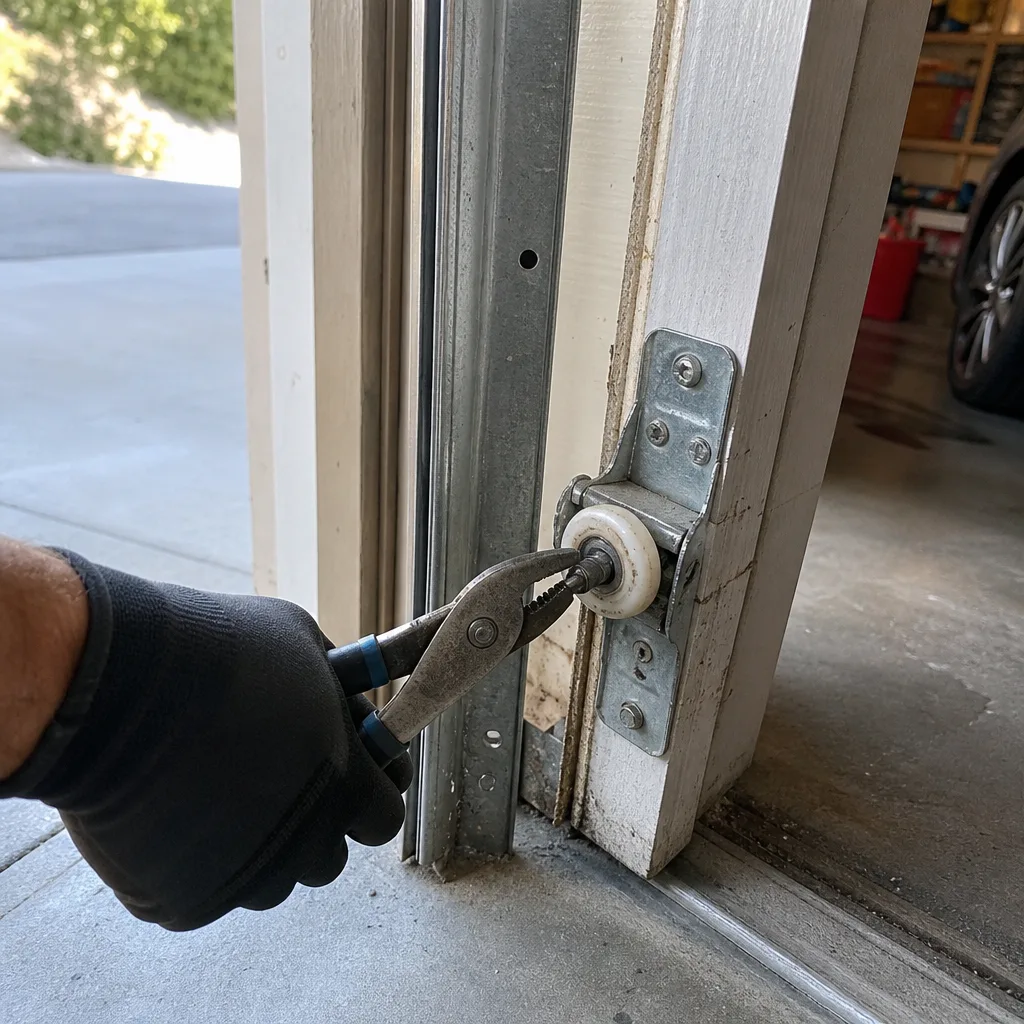
- Doing drive-train work yourself. The opener hardware is manageable in some repairs, but the moment you’re inside the door’s torsion system, springs and cables, you’re in the dangerous component. High-tension springs and cables can injure seriously and without warning. That work belongs to a trained professional with the right tools. We diagnose the opener; we don’t hand you a wrench and send you toward the spring.
- Accepting a repair quote with no photo of the failed part. A quote without evidence is a guess with a price on it. You’re entitled to see what was found, and the reputable operators will show you. If there’s no photo, there’s no proof of what was actually wrong.
When to Call a Professional
Call a professional when the door reverses more than once in normal weather, when the opener chatters or grinds on every cycle, when the door stops short and stays short, or when you press the button and hear only a hum. Those four scenarios are past the reading stage and into the repair stage. Call us when the opener is fine but the door is dragging, since the cause is somewhere in the door hardware and needs a proper look. And call us for any work inside the torsion system: springs and cables are the parts that injure people, and no homeowner should be in there. Servo Garage Doors Whitney offers free estimates in Whitney. Call (888) 402-1096 and a live person picks up, day or night, with a named technician and an on-the-way text. If you’re comparing written estimates, bring the other one in for a free second opinion.
See the difference
BeforeAfter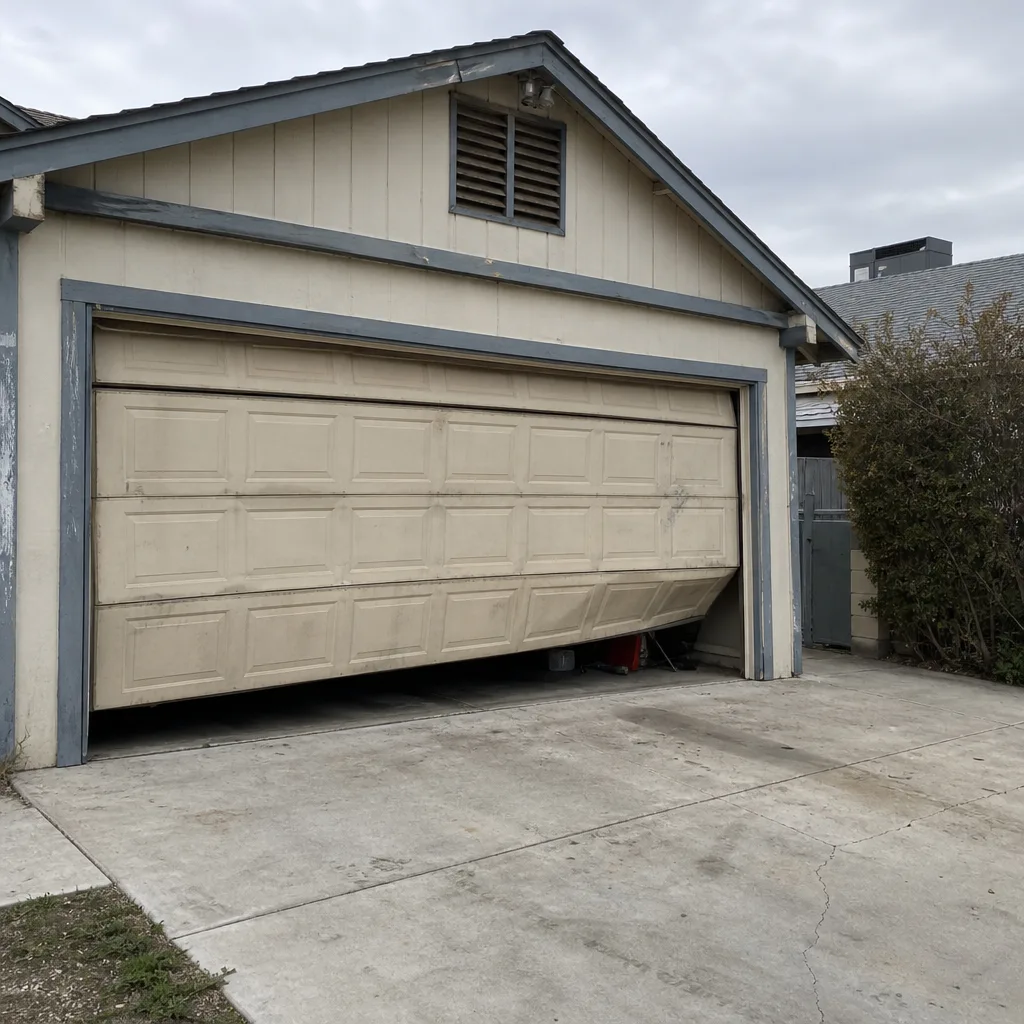 Before
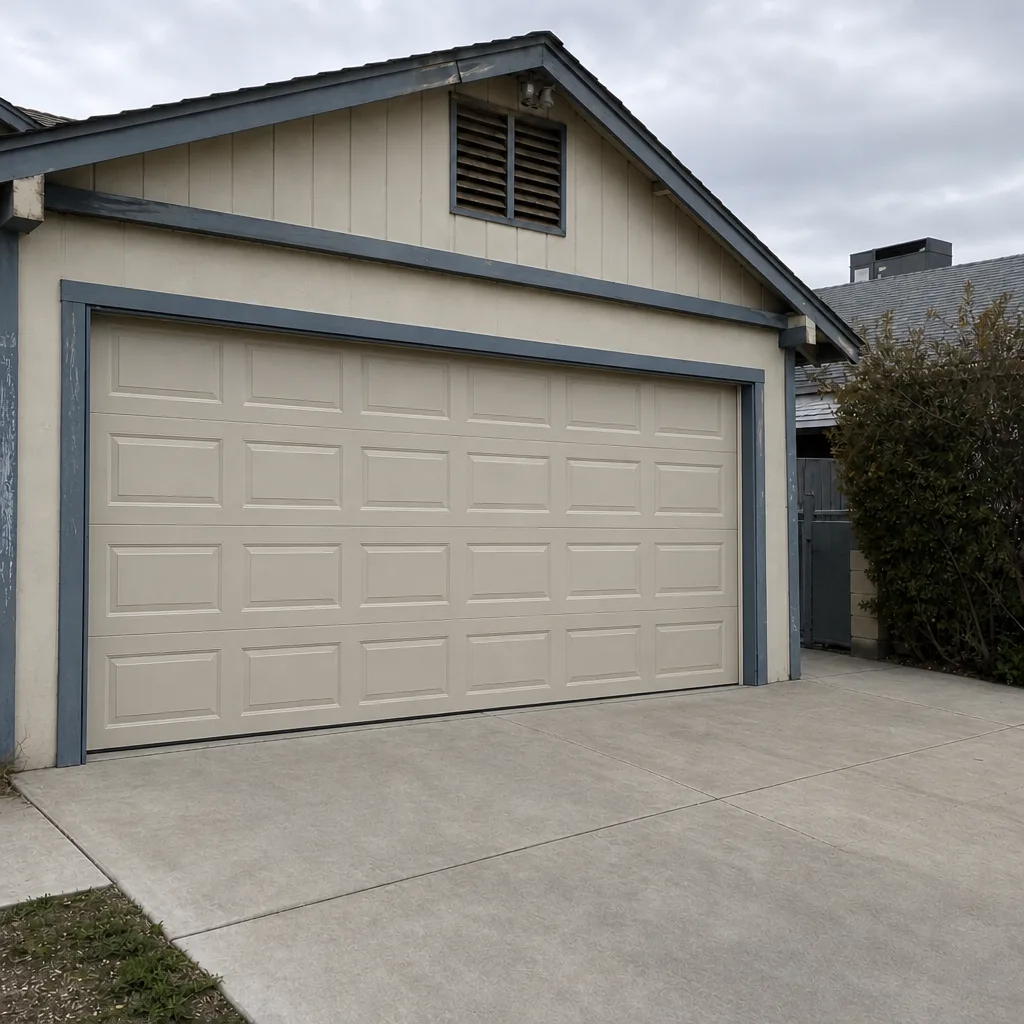 After
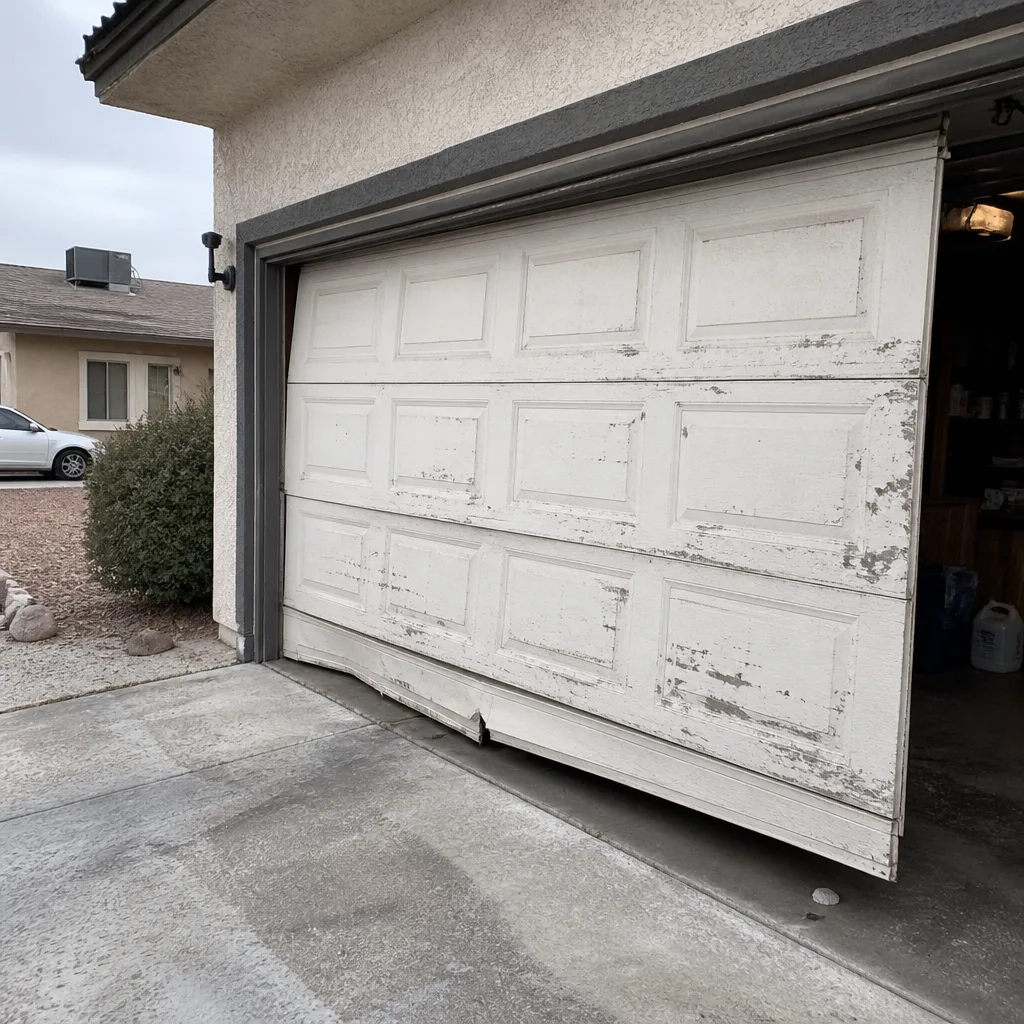 Before
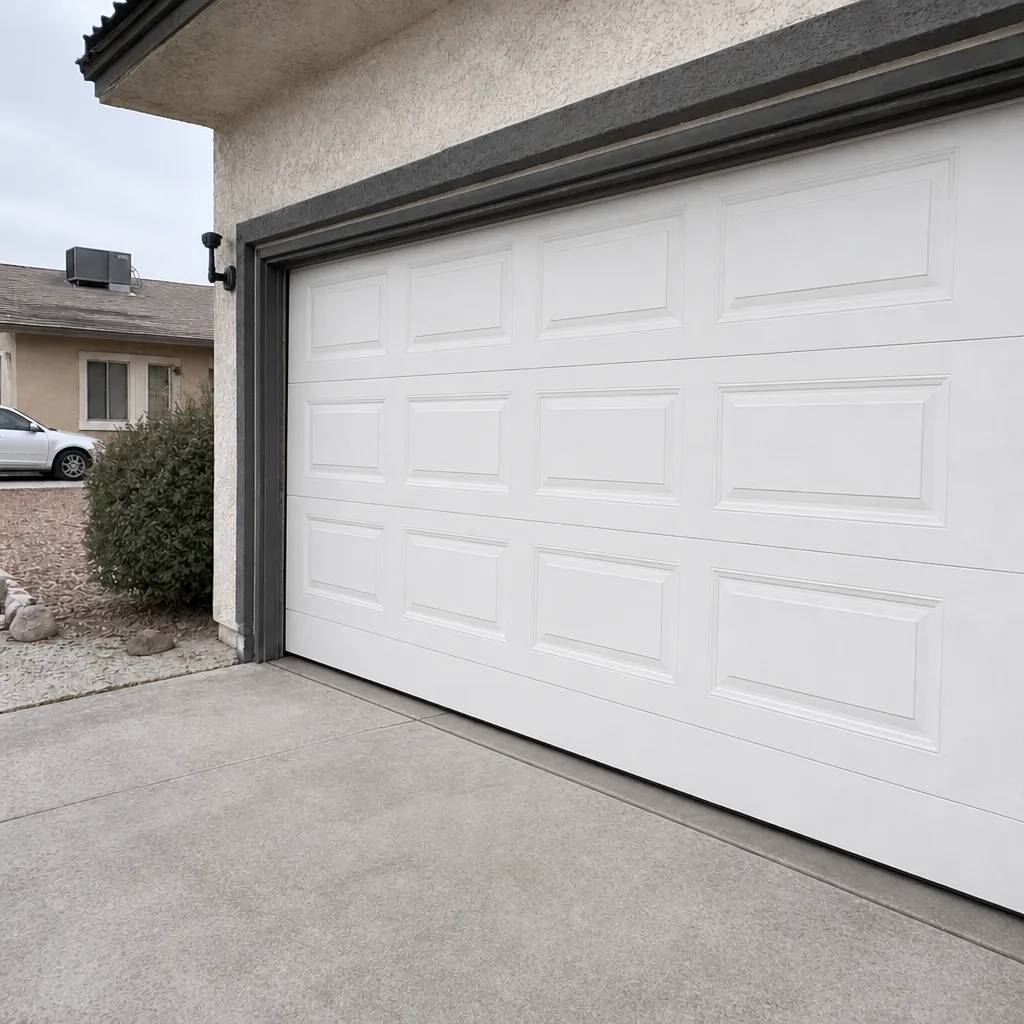 After
Frequently Asked Questions
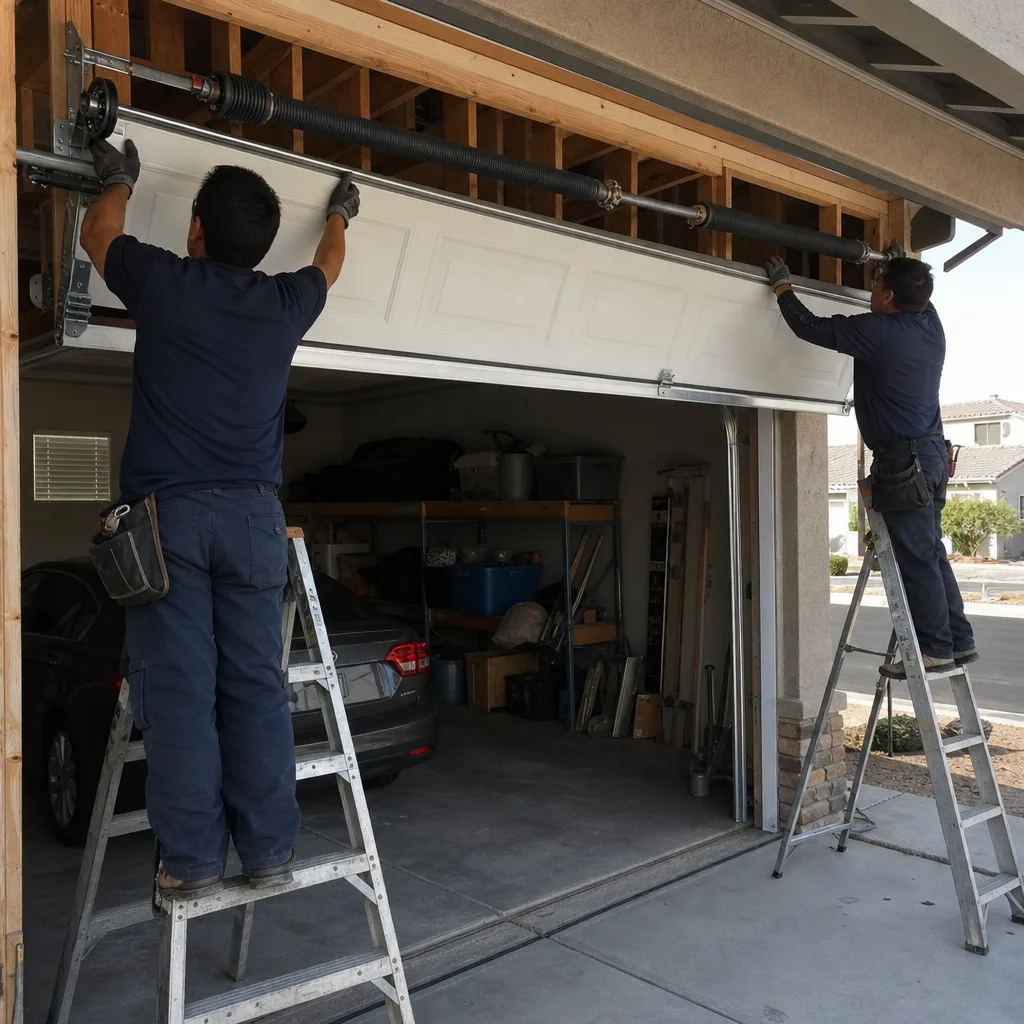
The first warning sign is usually a change in sound: a newly audible grind, a rhythmic click, or a knock at the start of travel that wasn’t there a season ago. If you run a normal cycle in a quiet garage and the opener sounds different than it did six months ago, that’s your earliest signal. The second most common early sign is a longer delay between pressing the button and the door moving, which points to the motor capacitor. Call (888) 402-1096 and estimates are free.
Opener repairs in Whitney typically run $95-$450 depending on the failed component. A safety calibration or photo-eye alignment is at the low end around $95-$190; a drive gear or capacitor replacement runs $120-$220; a logic board replacement is the high-end item at $150-$450. The flat price is set in writing before any work starts, so the number you agree to is the number you pay. Call (888) 402-1096 for an exact quote on your unit; estimates are free.
Most opener repairs are handled the same day. Photo-eye and safety-system faults, gear and capacitor failures, and limit switch adjustments are all routine service calls. A logic board that has to be ordered may take longer depending on the brand, and we’ll tell you that at the quote. Emergency calls are answered 24/7 by a live person, including holidays. Call (888) 402-1096 and a named technician will confirm when they’ll arrive, not a callback window.
A cold-weather reversal that happens once, then stops, is a force calibration issue caused by the stiffened weather seal at the floor; the fix is a small adjustment, not a part replacement. A reversal that happens in mild weather, with nothing in the path, is a photo-eye or limit switch failure and needs diagnosis. The distinction matters: the first is a nuisance, the second is the safety system misfiring. Call (888) 402-1096 and we’ll tell you which one you have.
No. The flat price and the written scope are set before any work starts, per Clause 1 of The Haven Standard. If we open the unit and find something the initial diagnosis didn’t reflect, you get a revised written quote with a photo of the new finding before anyone touches it. You never get an invoice bigger than the agreed price. Call (888) 402-1096 for a free estimate on your opener.
Yes. The local business we connect you with is licensed and insured as the state requires, and every technician on every job is background-checked. We photograph what we found and what we did before we leave, so you have a record of both. Call (888) 402-1096 for a free estimate, and bring any competing written quote for a free second opinion.
The Bottom Line
An opener that’s about to fail gives you weeks of warning through sound, travel behavior, force response, and diagnostic codes. Read them early and the repair is a modest part replacement on your schedule. Ignore them and the same failure becomes an emergency call at the worst possible moment. The pattern that matters is the trend: what changed since last season. A quiet cycle with a stethoscope back to the garage will tell you what your motor, carriage, rail, and photo-eyes are already saying. When the reading points to a repair, get it quoted with a written price and a photo of the failed part before anything happens. That’s the whole method, and it works from the first listen to the last invoice.
Contact
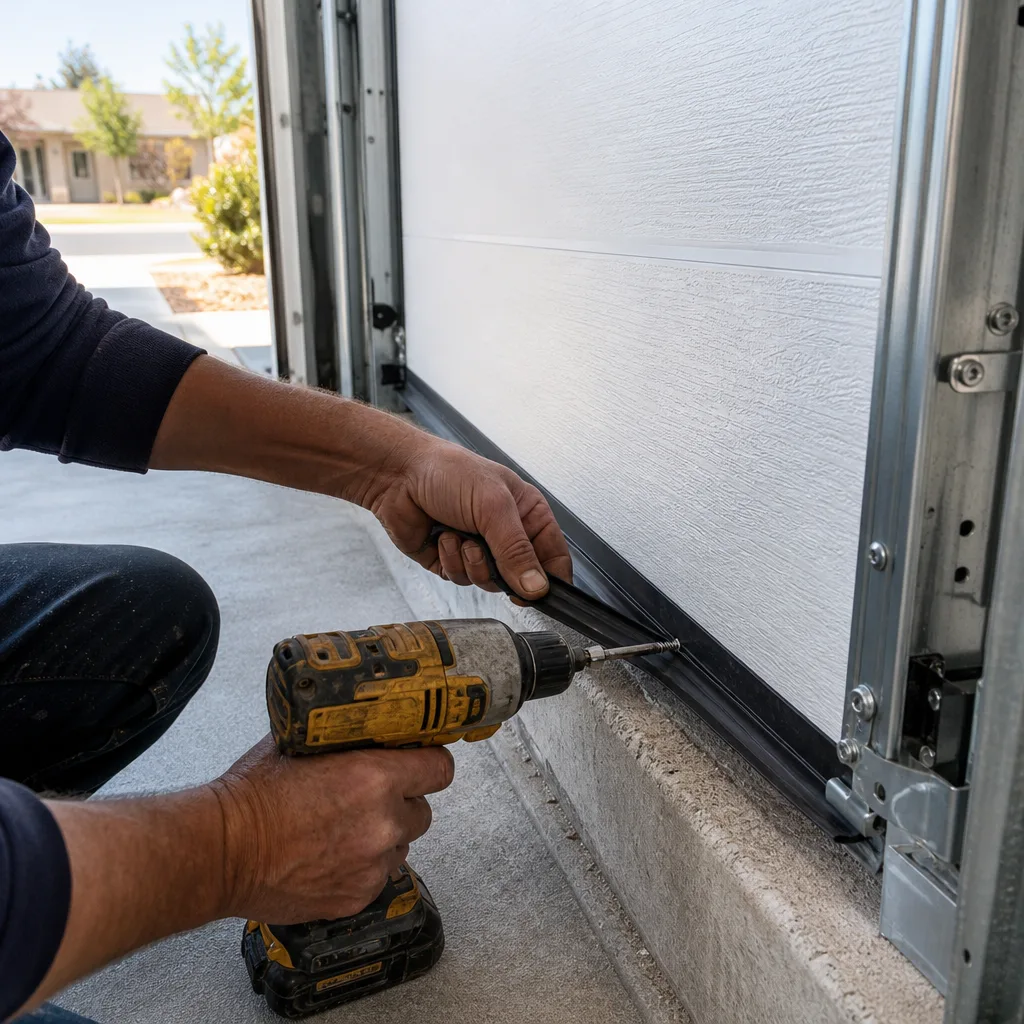
If you’d rather have a technician read the hardware for you, call Servo Garage Doors Whitney at (888) 402-1096. A live person answers around the clock, we schedule with a named technician and an on-the-way text, and every visit ends with a flat written price agreed before work starts and a photo record of what we found. Free estimate on any repair or installation, free second opinion on any competing written quote. Visit the Garage Door Opener Repair & Installation in Whitney page for the full service, or start at the Servo Garage Doors Whitney home page. You can also read our detailed guide to garage door repair in Whitney for door-side failures that load the opener. It’s nice to have the diagnosis before you call.
Written by the team at Servo Garage Doors Whitney.