
Last updated November 18, 2026
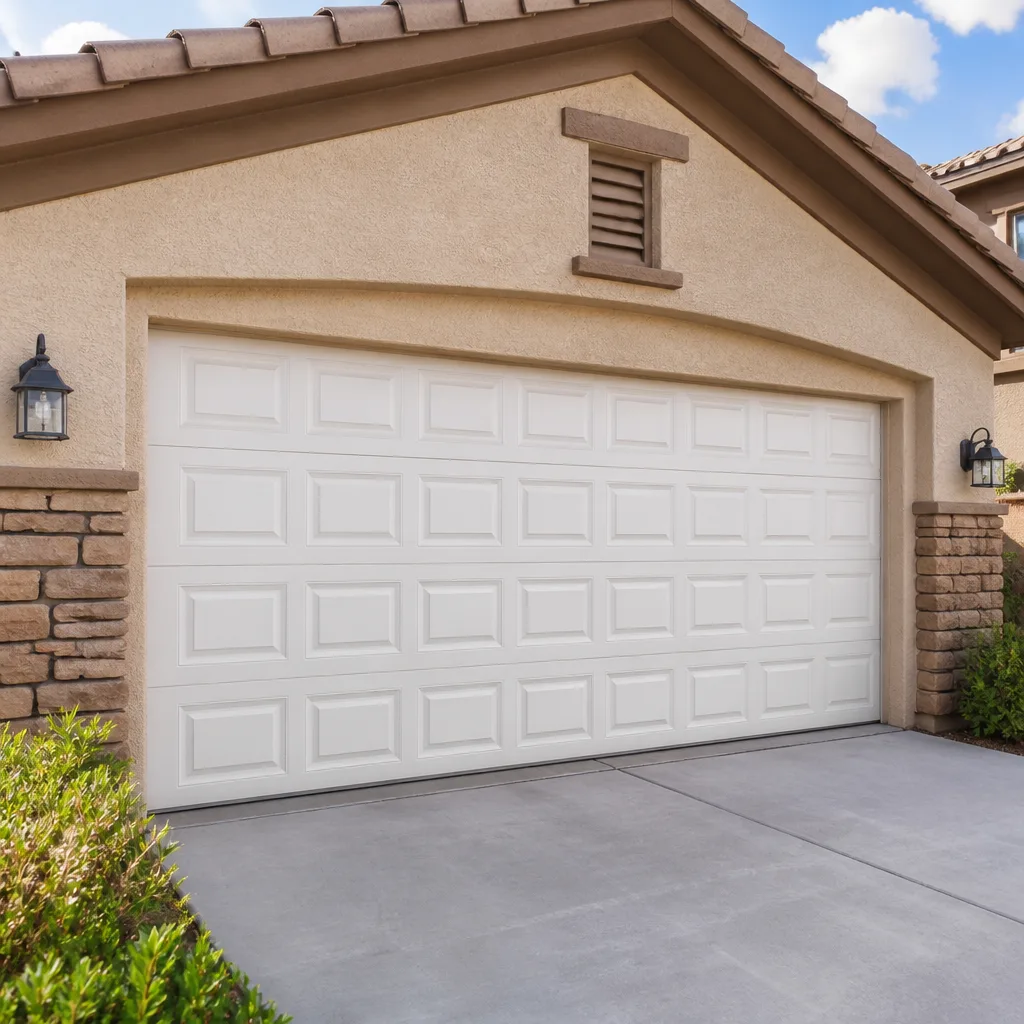 Raised-panel steel
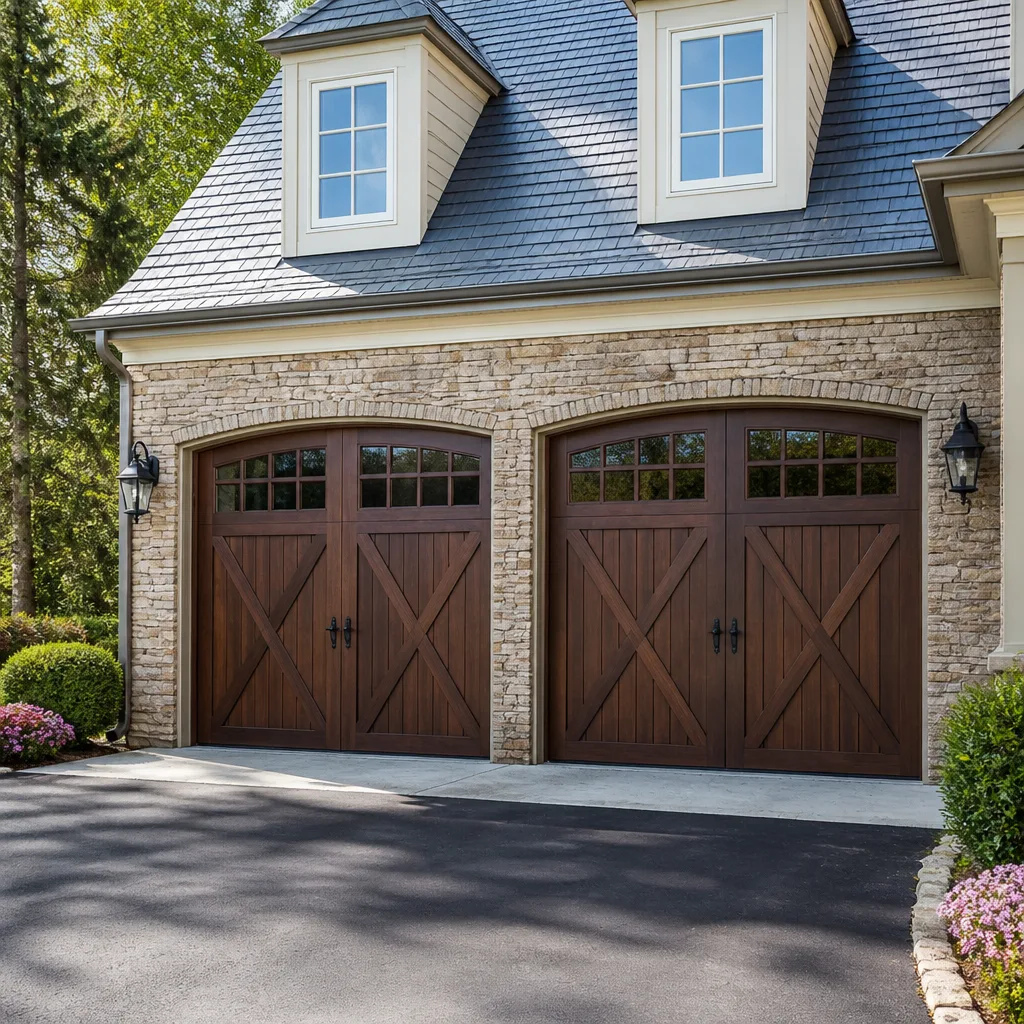 Carriage house
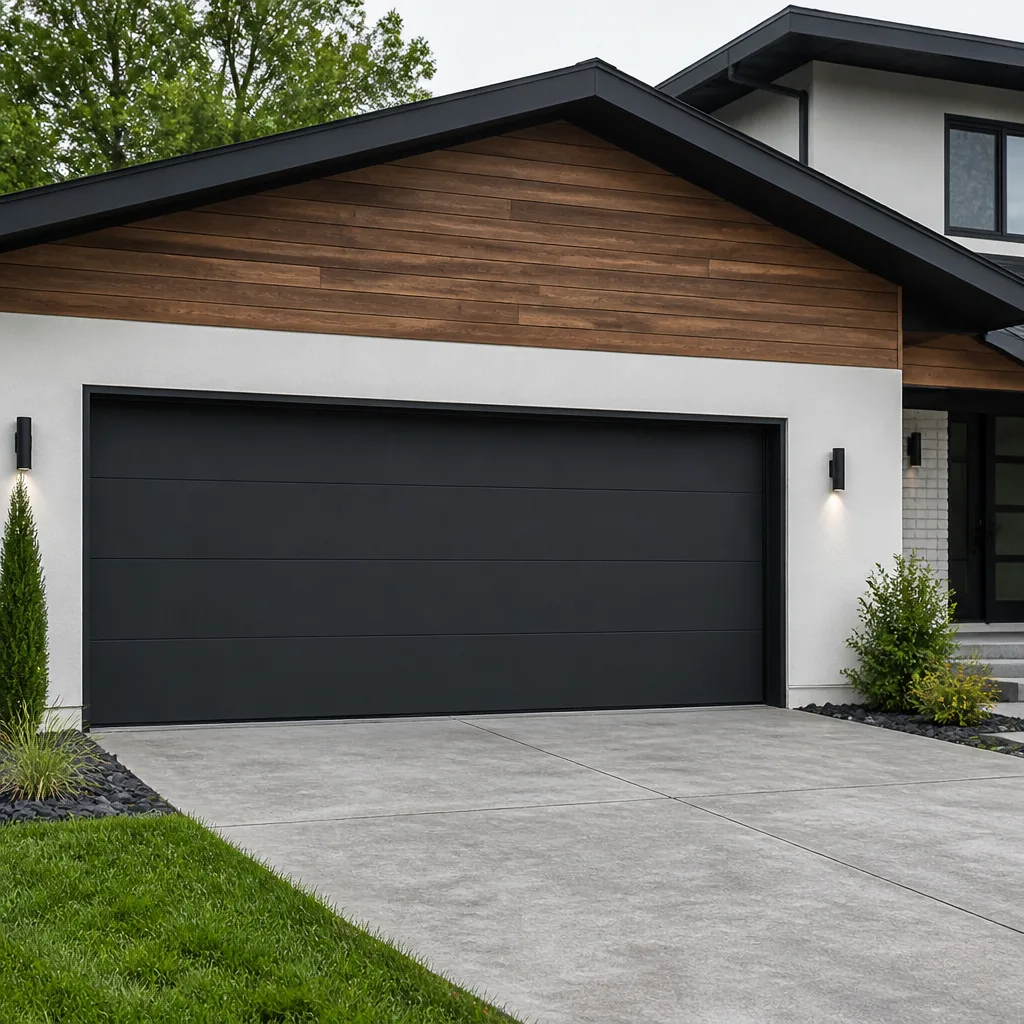 Modern flush
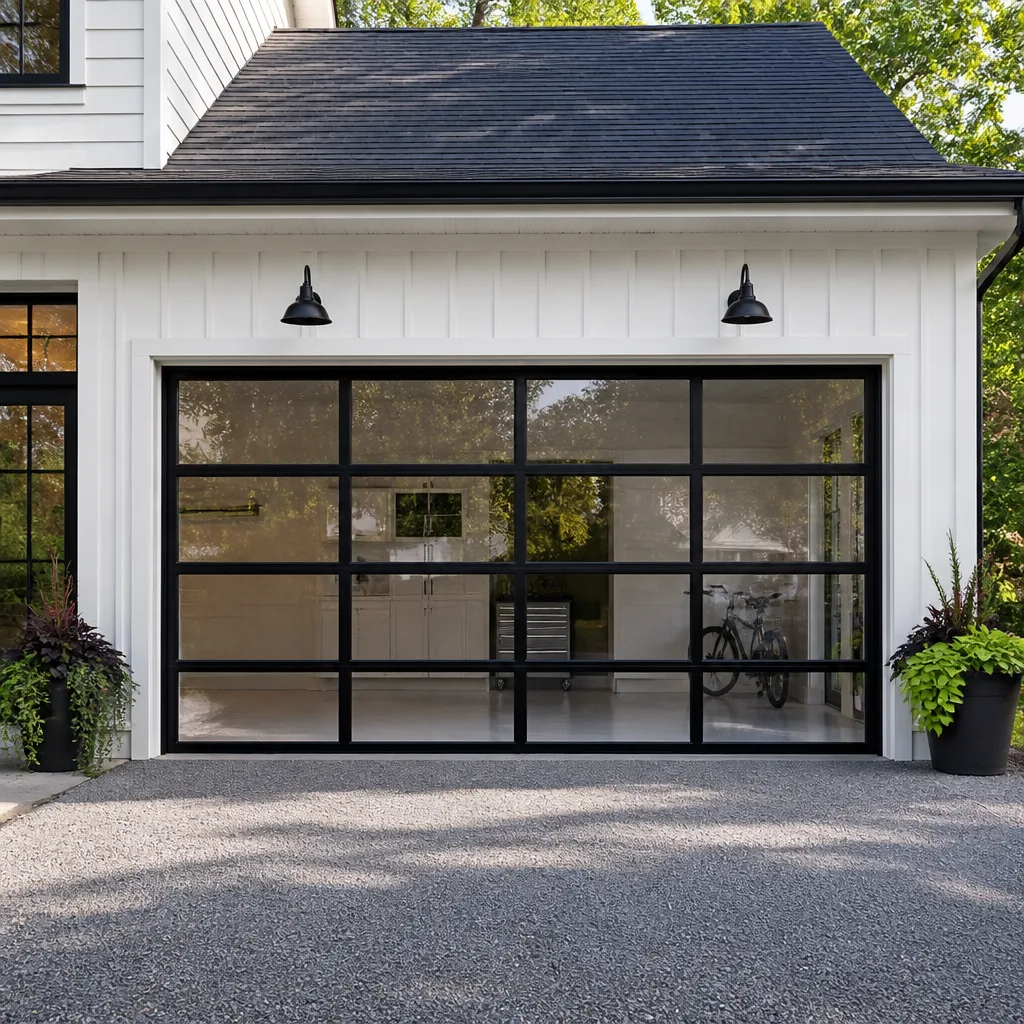 Full-view glass
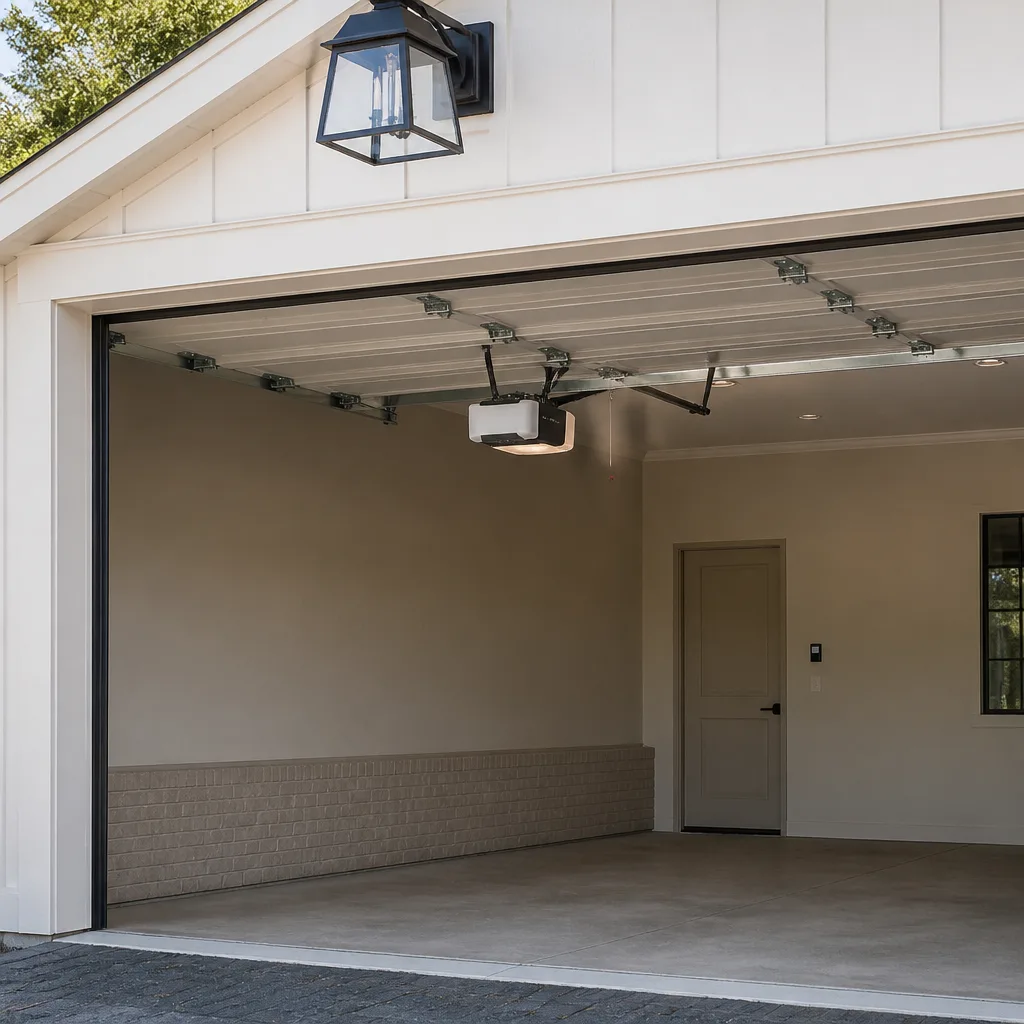 LiftMaster openers
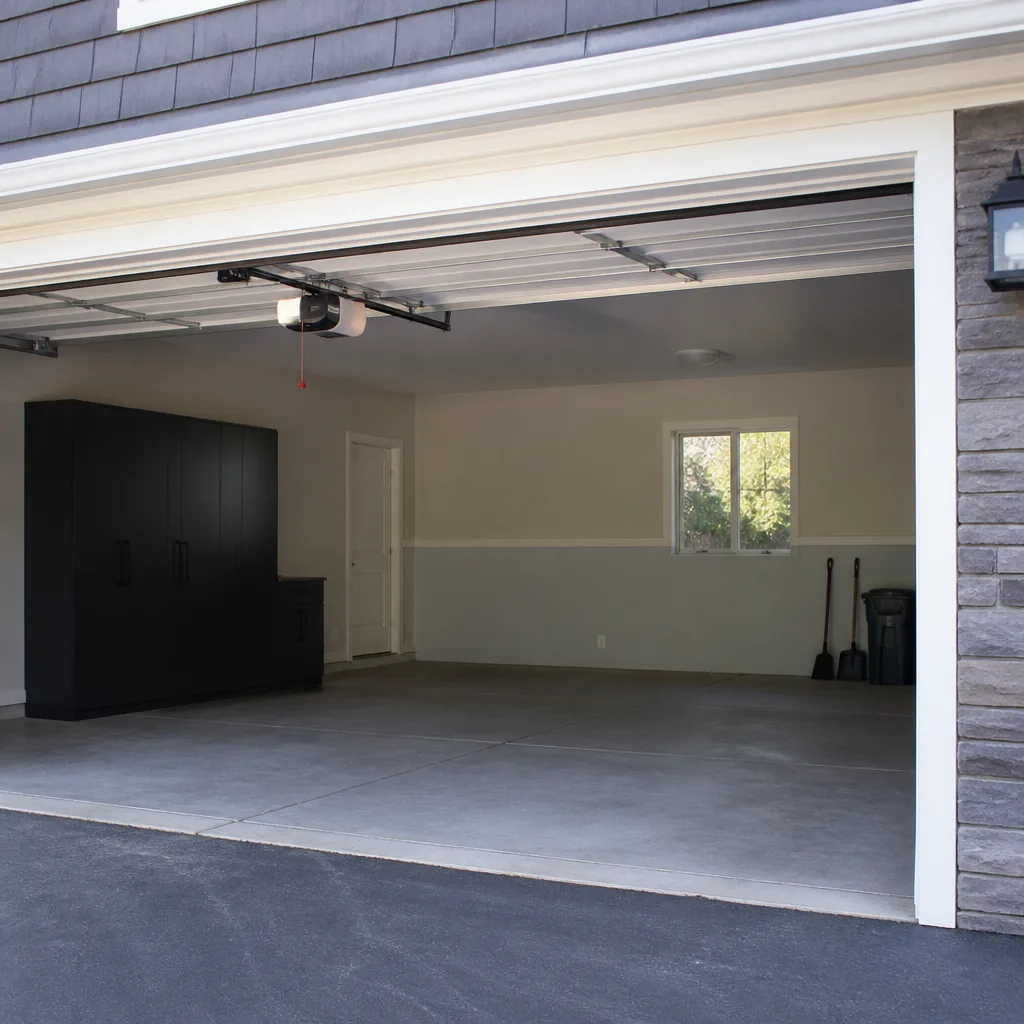 Chamberlain openers
Full 25-point door and opener safety check with every visit - springs, cables, rollers, tracks, and your LiftMaster or Chamberlain opener included
You get a price before we start. It does not change when the pro arrives.
Get your free estimateGarage Door Cost Breakdown: The Whitney Homeowner’s Reference for 2026
The gap between a $900 garage door installation and a $2,800 one isn’t contractor markup. It’s 24-gauge steel versus 27-gauge, a single spring versus a double torsion system, chain drive versus belt drive with battery backup, and a standard rough opening versus one with a non-standard header height. Each variable on that list has a dollar figure attached to it. This guide names those variables for the Whitney market in 2026, shows how each one adds or subtracts from the final invoice, and explains what a written quote should break out before you sign anything. If you’ve been collecting ranges and still can’t build a budget, the problem isn’t you. It’s the ranges.
Quick Answer
A garage door replacement in Whitney in 2026 typically runs $900 to $1,800 for a single-car door with a standard opener, and $1,600 to $2,800 for a double-car door with insulation and a belt-drive opener. The low end means 27-gauge steel, a single spring, and a chain-drive opener. The high end means 24-gauge steel, an insulated door rated R-12 or better, double torsion springs, and a belt drive with battery backup. Labor access and haul-away add $100 to $350 depending on the rough opening and what’s being removed.
Styles & brands we work with
- Raised-panel steel
- Carriage house
- Modern flush
- Full-view glass
- LiftMaster openers
- Chamberlain openers
Table of Contents
- Component-by-Component Costs in Whitney
- How Door Gauge and Insulation Move the Price
- Spring Type and Opener Drive: The Two Big Swings
- Labor Variables: Rough Opening, Anchors, Haul-Away
- How to Read a Written Quote (and What a Lump Sum Hides)
- The ROI Math on Insulation in a Whitney Garage
- Using the Photo Record as a Cost Audit
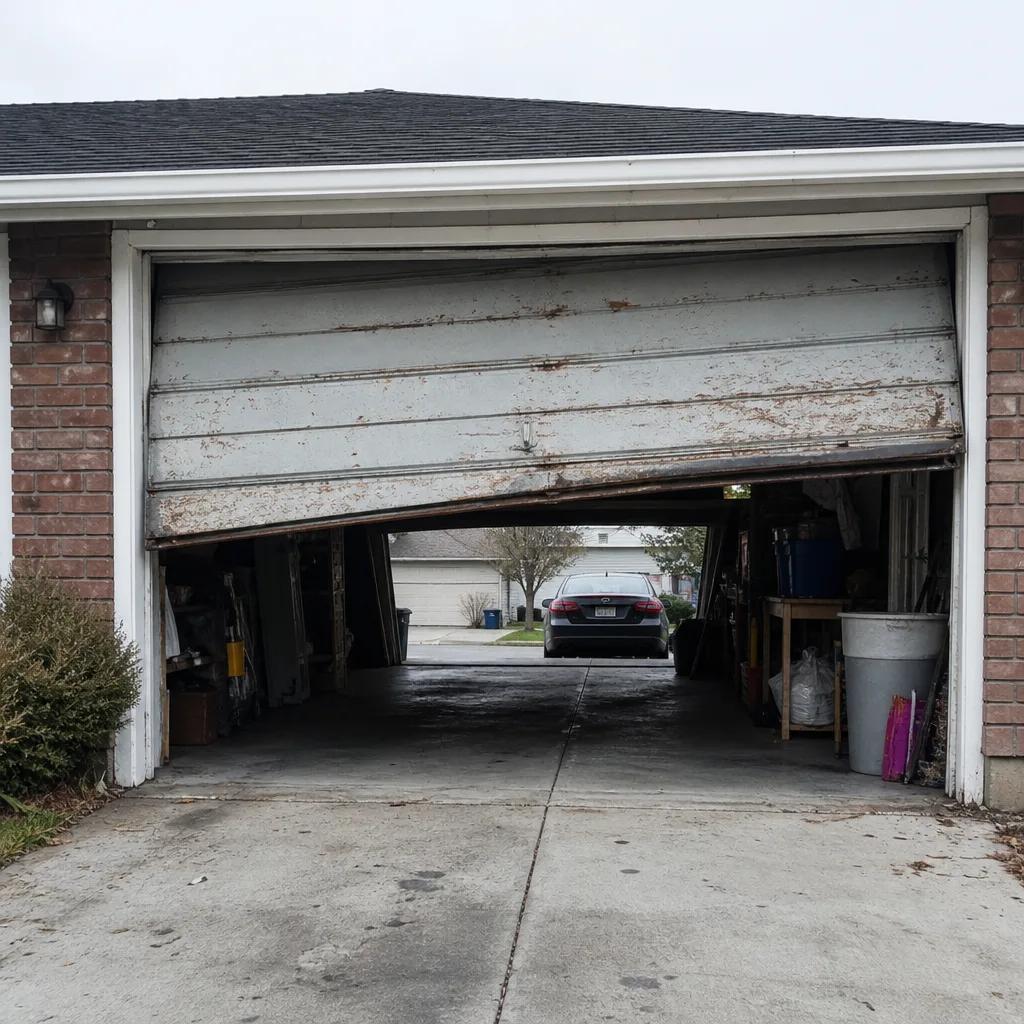 Before
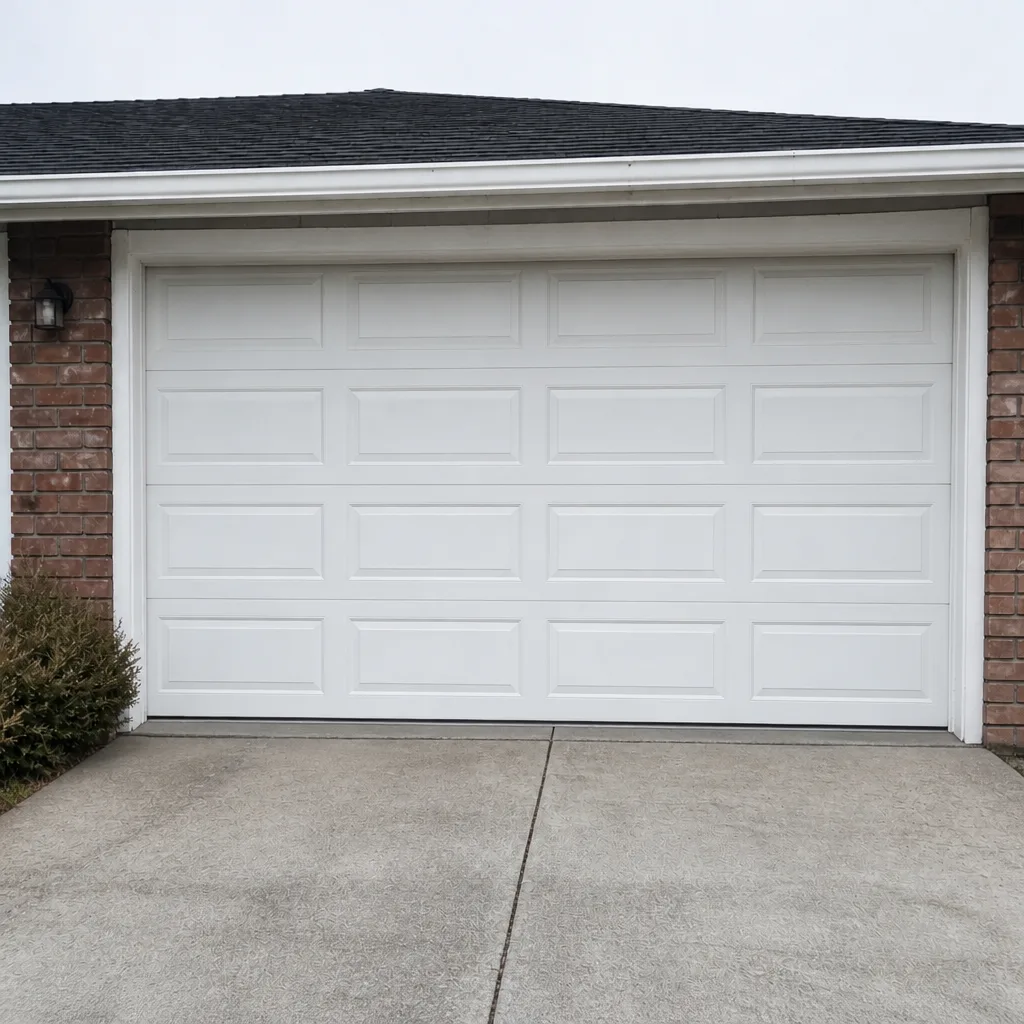 After
Component-by-Component Costs in Whitney
Every installation is a stack of parts plus a stack of labor. When a quote arrives as a single number, you can’t see which stack you’re paying for. Here’s the 2026 breakdown for the Whitney and Henderson market, drawn from the written scopes we deliver on every job.
- Door panel (single-car, 27-gauge steel, uninsulated): $450 – $700. This is the entry point. It works, it’s thin, and it dents easier than most homeowners expect.
- Door panel (single-car, 24-gauge steel, insulated to R-9): $700 – $1,050. The standard upgrade most Whitney buyers land on.
- Door panel (double-car, 24-gauge, R-12+): $1,200 – $1,900. This is where Colpay and Amarr mid-tier lines sit.
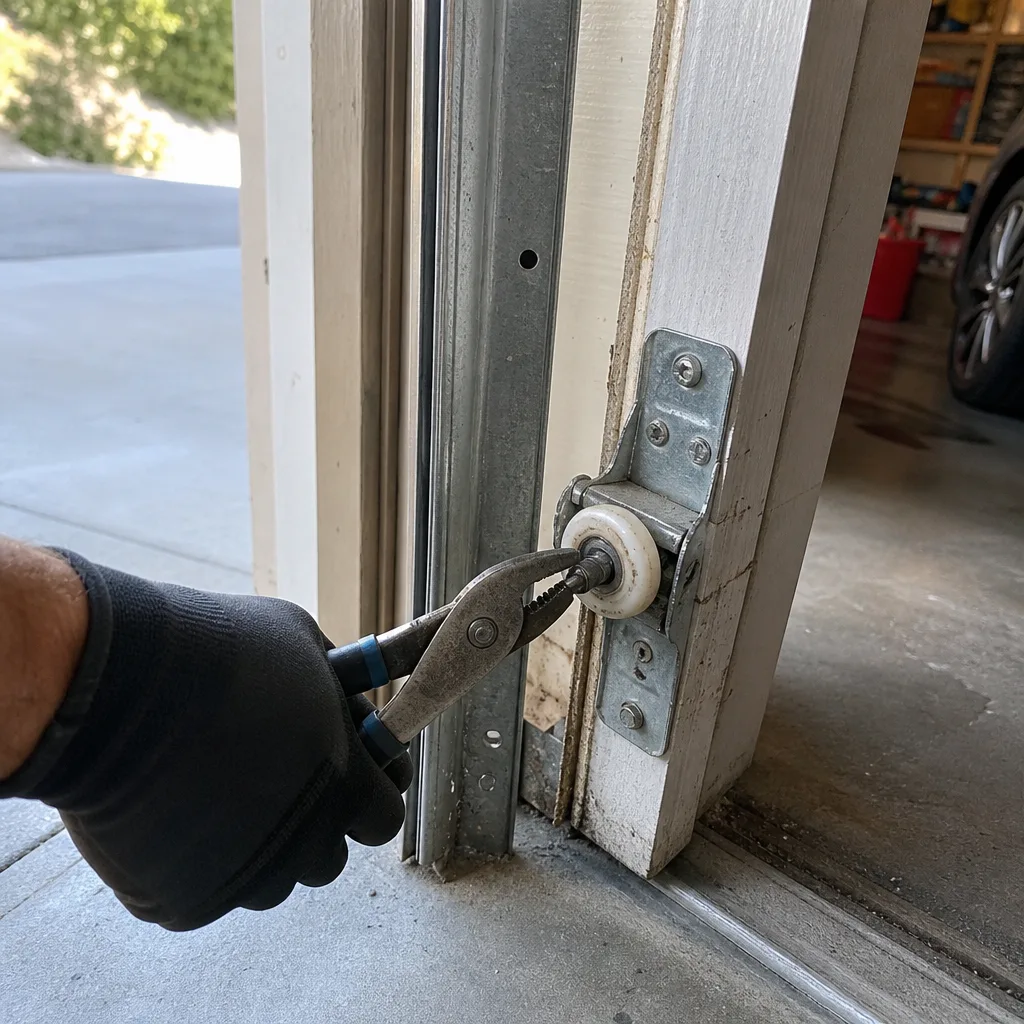
- Hardware kit (hinges, rollers, brackets, track): $80 – $180 including standard track. Nylon rollers run $15 – $30 over steel; they’re worth it for noise alone.
- Torsion spring system (single, standard cycle): $120 – $190. Double torsion with a higher cycle rating (25,000 vs. 10,000 cycles): $200 – $320.
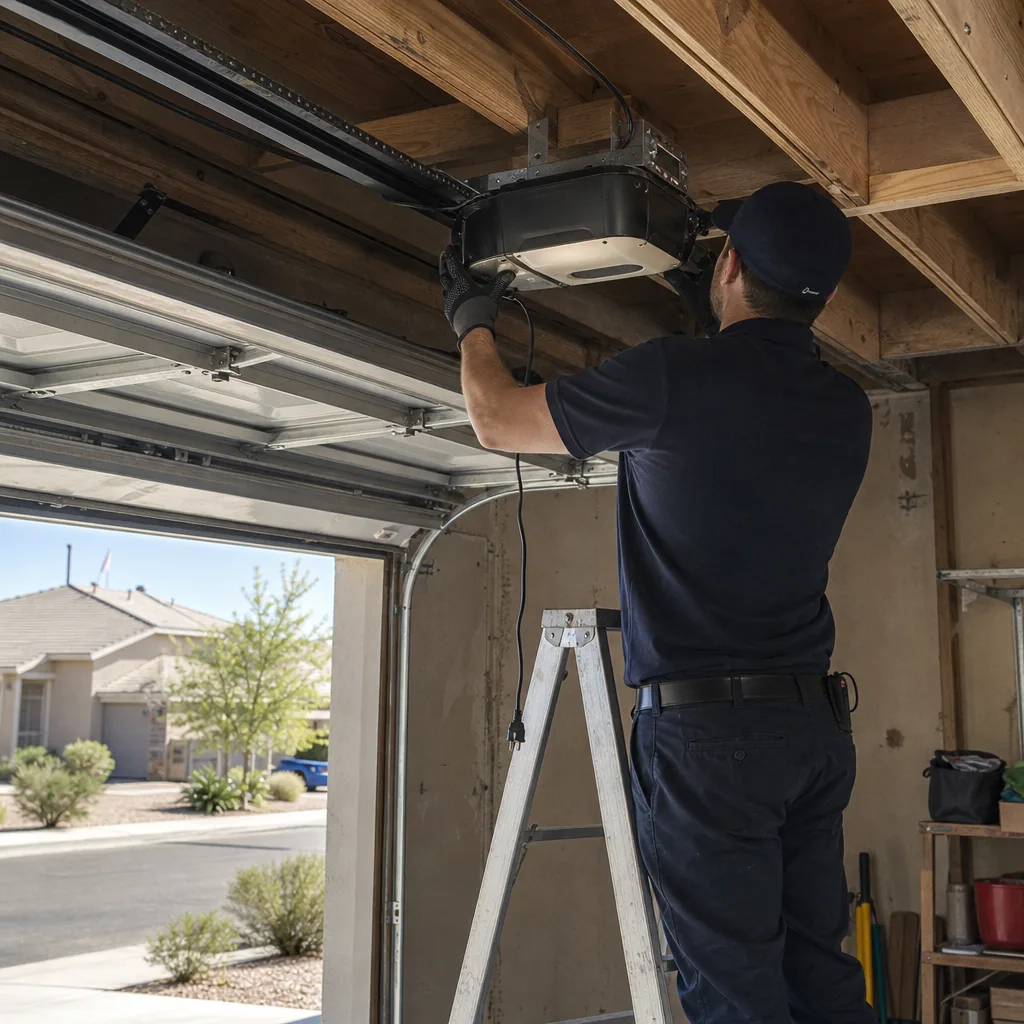
- Opener (chain drive, Chamberlain or Genie): $180 – $280 installed. Belt drive with battery backup: $350 – $550. Wall-mount Jackshaft: $450 – $650.
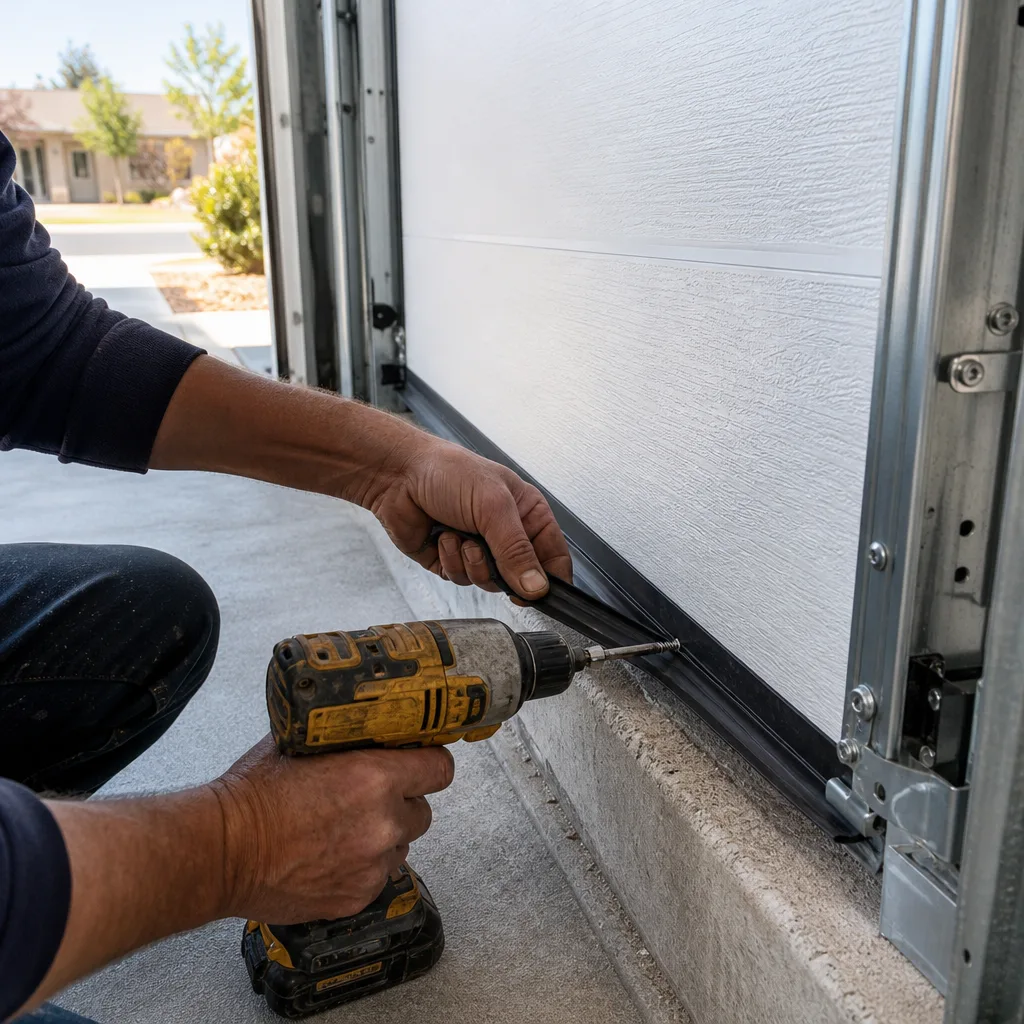
- Weatherstrip and bottom seal: $35 – $90. Whitney’s summer heat bakes cheap vinyl seals hard within two years; a good EPDM bottom seal is worth the extra $20.
Add those up for a single-car install with a standard opener and you land between $1,050 and $1,750. Double-car with insulation and belt drive: $1,900 to $2,850. The spread is real, not padding.
How Door Gauge and Insulation Move the Price
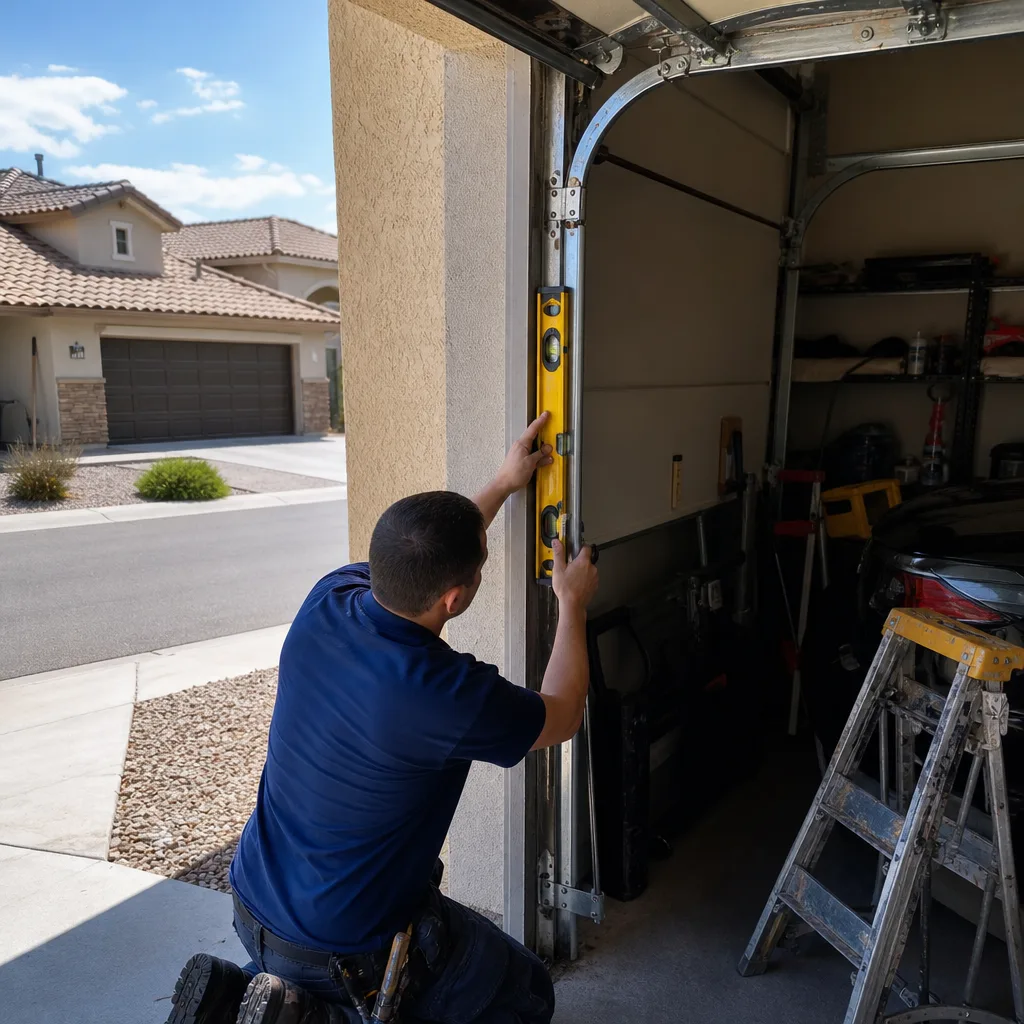
Gauge is measured lower-is-thicker. A 24-gauge steel door is heavier and stiffer than 27-gauge; that difference is roughly $200 to $350 on a single-car panel, and it’s the most common line item that separates an $1,100 job from a $1,400 one. Thicker steel dents less, holds paint longer, and tolerates the wind cycles Whitney sees during spring and monsoon gusts off the McCullough Range.
Insulation R-value is the second lever. An uninsulated door in a Whitney garage that connects directly to living space is a thermal tunnel in July. R-9 polyurethane panels add $150 to $300 over the uninsulated version on a single door; R-12 and above adds $250 to $450. Polystyrene (EPS) is the cheaper foam, $60 to $120 less than polyurethane, but it performs worse in extreme heat and is less common on premium doors.
Two practical notes for this climate. First, an uninsulated metal door in a Whitney garage can hit surface temperatures north of 130°F in mid-afternoon. Second, if your garage faces west toward the Sheep Range, the radiant load is higher than the same door facing east. The insulation pays differently depending on orientation.
Spring Type and Opener Drive: The Two Big Swings
The torsion spring system is the part that actually lifts the door. A single spring on a light door is fine; a double torsion system splits the load and costs $80 to $130 more. If your door weighs over 180 pounds, a double spring isn’t optional. We’ve seen single-spring systems on heavy doors fail within 3 to 4 years in Whitney garages where daily use is high.
Spring cycle rating is the number most quotes skip. A standard 10,000-cycle spring is rated for roughly 7 to 10 years of average use; a 25,000-cycle spring costs $60 to $100 more and roughly doubles that. Ask for the cycle rating in writing. If it’s not on the quote, it’s a 10,000-cycle spring.
Opener drive type is the other swing. Chain drive is loud and cheap. Belt drive is quiet and runs $120 to $250 more. Jackshaft (wall-mount) openers free up ceiling space and cost $450 to $650 installed. The LiftMaster and Chamberlain belt-drive units with battery backup are the most common upgrade in Whitney homes with an attached garage under a bedroom. Battery backup isn’t marketing – it means the garage opens during a Nevada power interrupt without a manual release handle pull.
Labor Variables: Rough Opening, Anchors, Haul-Away
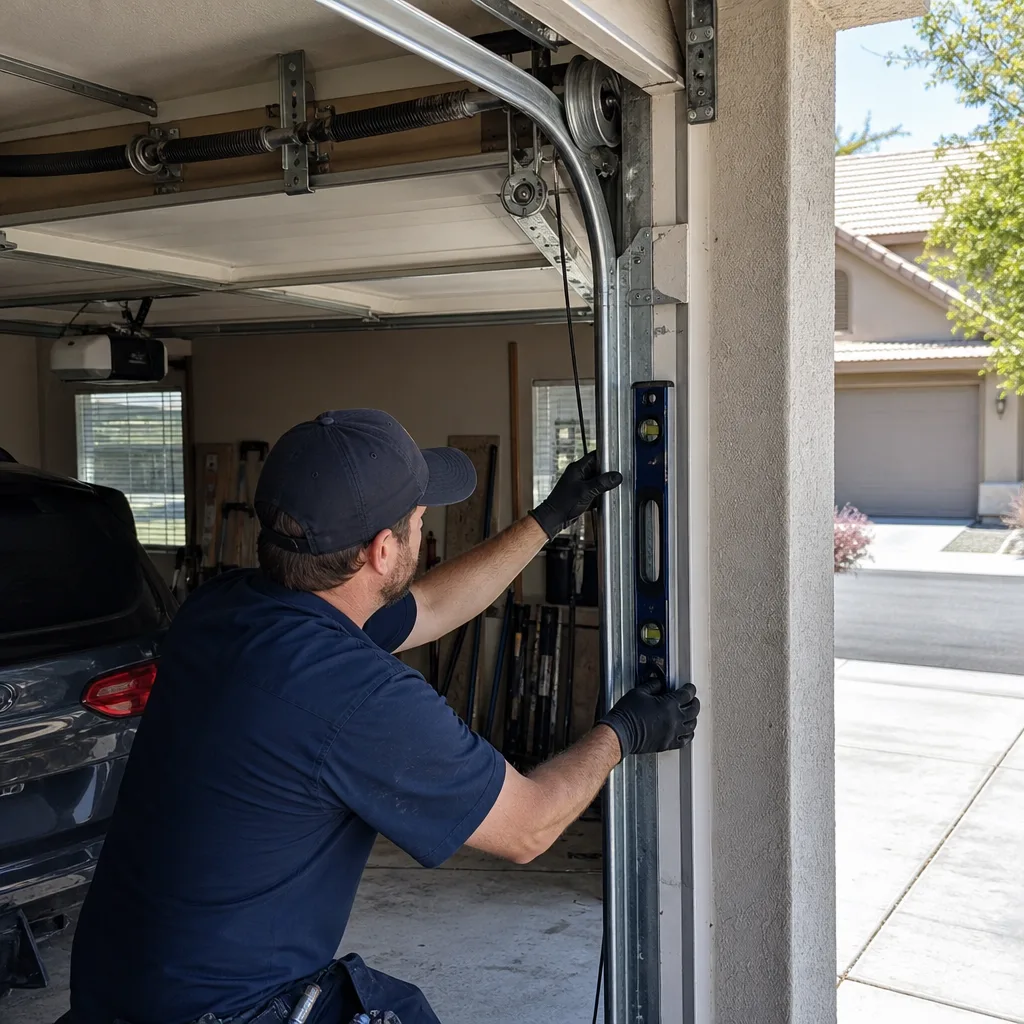
Labor is where quotes diverge most and where a lump-sum number hides the most. These are the four variables that move labor on a Whitney install:
- Non-standard rough opening width or header height. Standard single-car openings are 8 to 9 feet wide. If a Whitney home from the 1970s or early 1980s has a 7-foot opening or a low header, the installer has to modify the tracks, and labor adds $75 to $250.
- Concrete anchor work. Older Whitney garages sometimes have degrading floor slabs at the bottom bracket anchor. Drilling fresh anchors into sound concrete is standard; patching or re-anchoring into bad slab adds $50 to $150.
- Haul-away of the old door. $40 to $120 depending on door weight and whether the panels can be recycled. Some contractors skip this line and let the old door sit against the curb. Ours is always broken out.
- Same-day or emergency installation. Installation itself is a measured, ordered, scheduled job, not same-day work. Emergency repair is different; more on that below. You’ll see same-day premiums on repair calls, not on installations.
If you’re on a tight timeline and want a written scope before committing, our Garage Door Installation in Whitney page spells out what a scheduled install looks like from measure to finish. If your existing door has failed and needs repair rather than replacement, the Garage Door Repair in Whitney service is where same-day work lives.
How to Read a Written Quote (and What a Lump Sum Hides)
A written quote should have five lines. If any of them is missing, that’s the part you’re not seeing.
- Door specification: gauge, insulation R-value, brand, model number. A quote that says “steel door, insulated” is a quote that leaves room to substitute a cheaper panel.
- Hardware and spring: spring count, spring cycle rating, roller type (steel vs. nylon), hinge gauge.
- Opener: brand, drive type, horsepower, whether battery backup and wall control are included.
- Labor and access: rough opening condition, anchor work, any modification to existing track.
- Haul-away: stated separately, not buried in “install.”
A lump-sum quote isn’t automatically a bad quote, but you can’t audit it. If a Whitney contractor hands you a number on a business card and promises to “sort out the details later,” you have no way to verify afterward whether the 24-gauge panel you paid for was the one installed. That’s not a trust issue, it’s a documentation issue. A quote with parts on it is an audit trail.
The Garage Door Opener Repair & Installation in Whitney page has a sample opener spec you can use to check whether your quote is complete.
The ROI Math on Insulation in a Whitney Garage
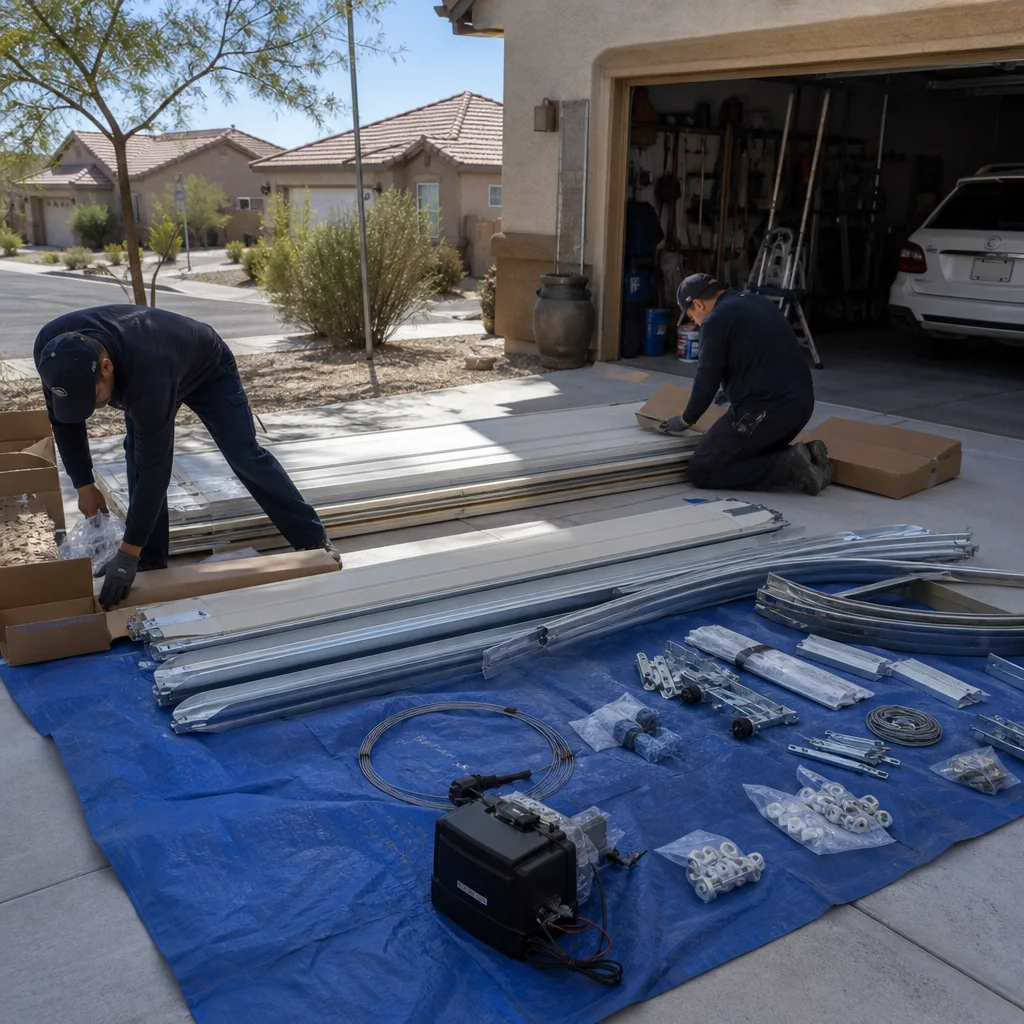
If your Whitney garage is attached and shares a wall or ceiling with the house, insulation is a budget item with a payback, not a luxury. Here’s the arithmetic that’s actually defensible.
An uninsulated single-car door in Whitney has an R-value of roughly 1 to 2 (the steel shell alone). An R-9 door runs 4 to 7 times better; R-12 is 6 to 10 times better. For a garage that shares one wall with an air-conditioned bedroom, that reduces solar-driven heat gain in the garage by dozens of degrees in July, which in turn lowers the load on the house side.
The honest range of savings is $15 to $40 per month in cooling cost during the May-October window, depending on how much of the house is adjacent and how much the garage door is exposed to afternoon sun. Call it $90 to $240 per summer. The upfront delta for R-9 over uninsulated is $150 to $300 on a single door. Payback is 1 to 3 summers, and after that it’s cooling cost you don’t pay.
Two caveats. If your garage is detached or standalone in a Whitney neighborhood like the older blocks off Lake Mead Boulevard, insulation pays mostly in comfort and noise reduction, not energy. And the R-value on the label isn’t the whole door’s R-value; the frame and edges leak. A well-fitted door with proper weatherstrip outperforms a higher-R-value door with a poor seal every time.
Using the Photo Record as a Cost Audit
The single most effective way to verify a garage door invoice is to compare it to the photo of what was there. That’s the reason we photograph the failed or existing component before we quote a replacement – it’s the founding rule Servo was built on, and it’s codified as Clause 4 of The Haven Standard: the customer sees the failed part before anyone quotes a replacement.
What the photo record does for you as a cost audit:
- Proves the existing hardware. If the photo shows a 10,000-cycle single torsion spring and a 25-gauge steel panel, the quote for a 25,000-cycle double-spring system and 24-gauge panel is a real upgrade you can verify.
- Prevents billing for parts that weren’t replaced. If the quote includes a new opener and the after-photo shows the old one still mounted, that’s $300 of dispute resolved in thirty seconds.
- Documents labor conditions. A wide shot of the rough opening and floor slab shows the anchor condition and header height before work starts. Any labor line that shows up later can be checked against it.
- Basis for a second opinion. If a competing written estimate says your door needs full replacement and the photo shows cosmetic wear, that’s a conversation you can have with evidence. We offer a free second opinion on any written estimate from another company – bring the paperwork, and the photo record is what we compare it against.
Every Servo job ends with a documented photo record delivered to you. That’s not a service upgrade you have to ask for. It’s included. It’s the paper trail that makes “trust us” unnecessary.
Common Mistakes to Avoid
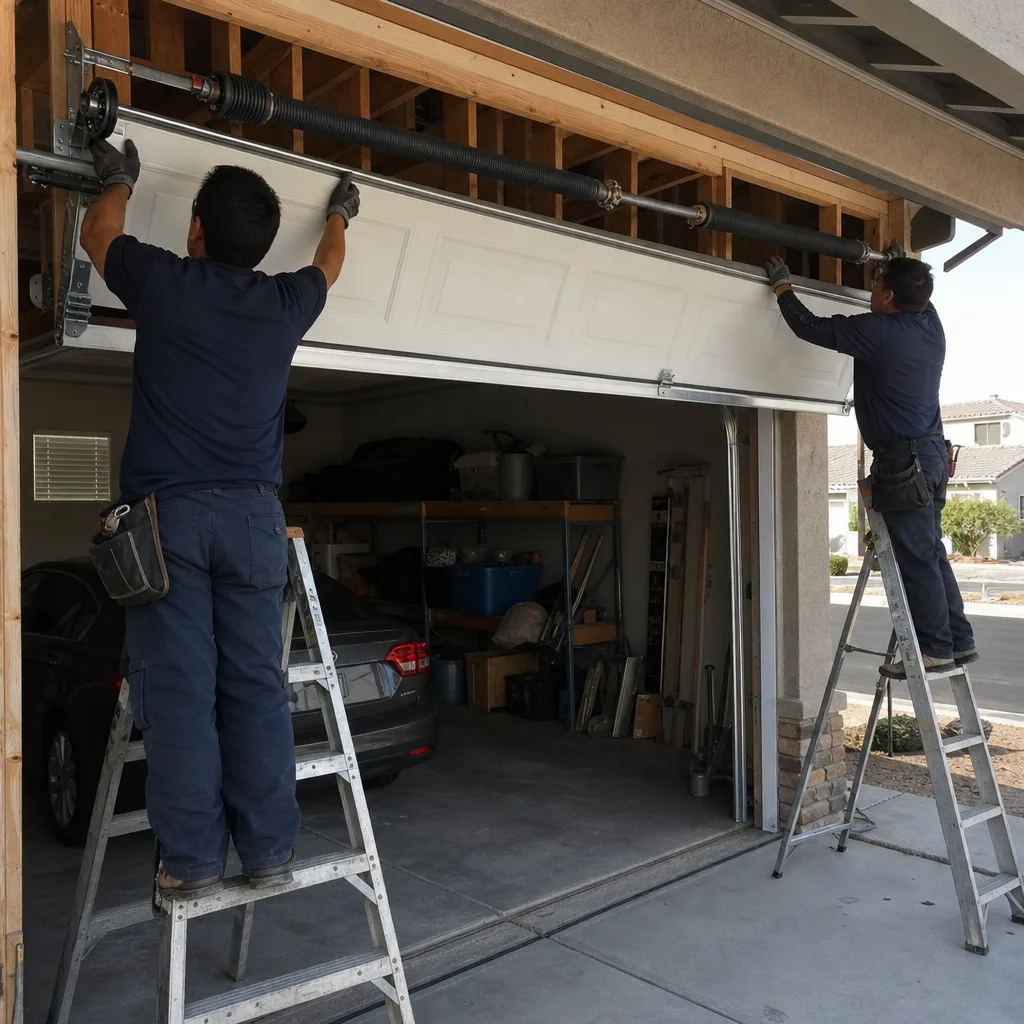
- Accepting a price by phone without a written scope. A phone quote in Whitney is a number without a parts list. You can’t compare it to anything and you can’t audit it after the fact. Clause 1 of The Haven Standard – a written flat price and written scope before any work starts – exists because the alternative is guesswork.
- Assuming same-day installation exists. Repair can be same-day. Installation is measured, ordered, and scheduled. Any Whitney contractor promising same-day installation is either reselling you stock they shouldn’t have or skipping the measure. Both are expensive mistakes for the homeowner.
- Buying the cheapest spring. A 10,000-cycle spring costs $80 less than a 25,000-cycle one and fails twice as often. In Whitney’s heat cycles the difference is 3 to 4 years versus 8 to 10. The cheapest spring is the most expensive one.
- Skipping the insulation line item. A homeowner replacing a door on an attached Whitney garage without insulation is paying for the door twice, once now and again in cooling cost every summer. Get the R-value on the quote.
- Not asking for the cycle rating or gauge in writing. “Stainless spring” and “insulated door” are marketing words, not specifications. Ask for 24-gauge or 27-gauge and 10,000-cycle or 25,000-cycle, in writing, on the quote.
- Letting the old door sit at the curb. Haul-away is $40 to $120 and some contractors quietly omit it. It’s a line item, not a favor. Ask.
- Comparing a lump-sum to a broken-out quote as if they’re the same thing. They’re not. One lets you audit, one doesn’t. You cannot choose between two numbers when one is made of parts and the other isn’t.
When to Call a Professional
Some garage door work is genuinely dangerous. Torsion springs hold the full door weight under tension and can cause serious injury when they fail mid-adjustment – a Whitney garage in 100°F heat sees more spring failures in June and July than any other month, and the failed spring is still under load. Extension springs on older doors fail even more violently. Don’t try to adjust either one. Call.
Beyond springs, call a professional when the door is off its track, when the opener’s trolley carriage or logic board is failing and the door reverses erratically, when the door is binding at the halfway point, when the bottom bracket is separating from the door panel, or when the door won’t open at all and someone is inside. Servo Garage Doors Whitney offers free estimates in Whitney – call (888) 402-1096. Emergency garage door calls are answered by a live person, 24/7, including holidays.
See the difference
BeforeAfter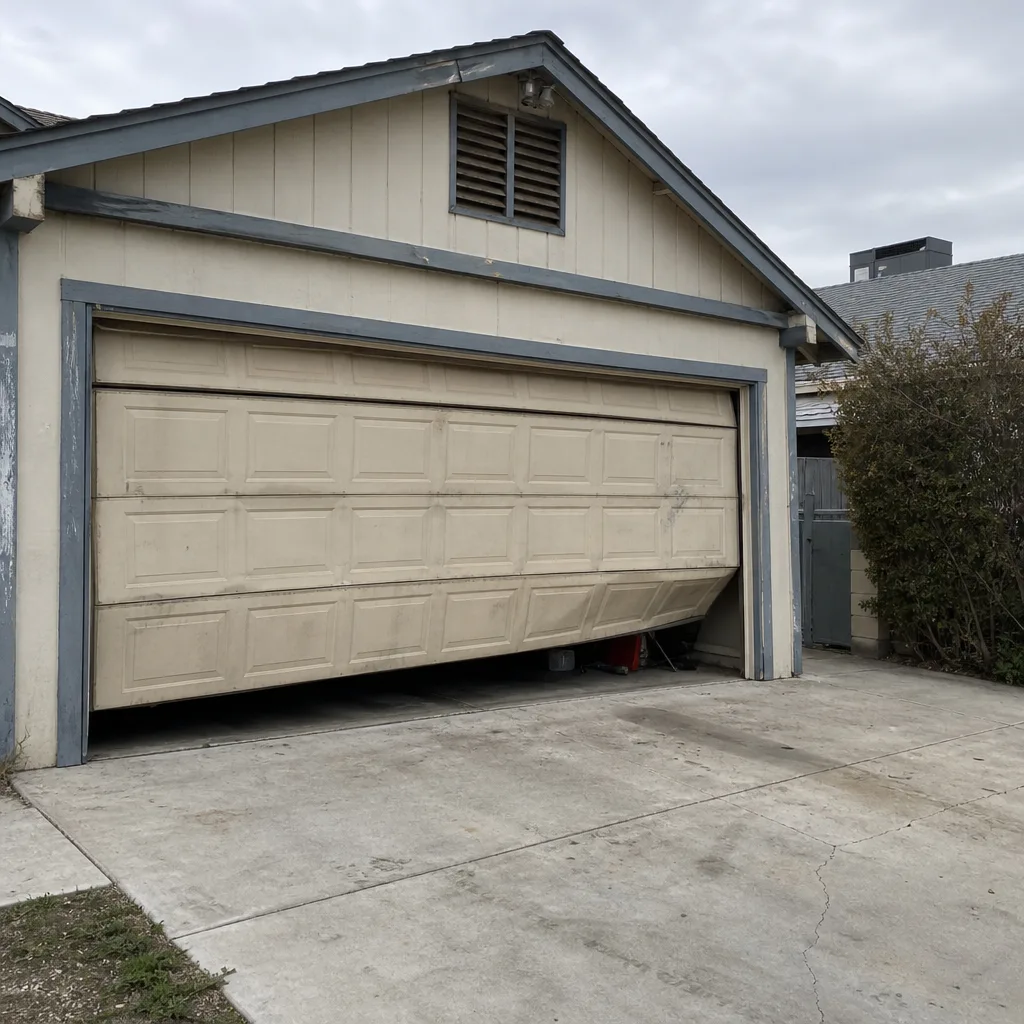 Before
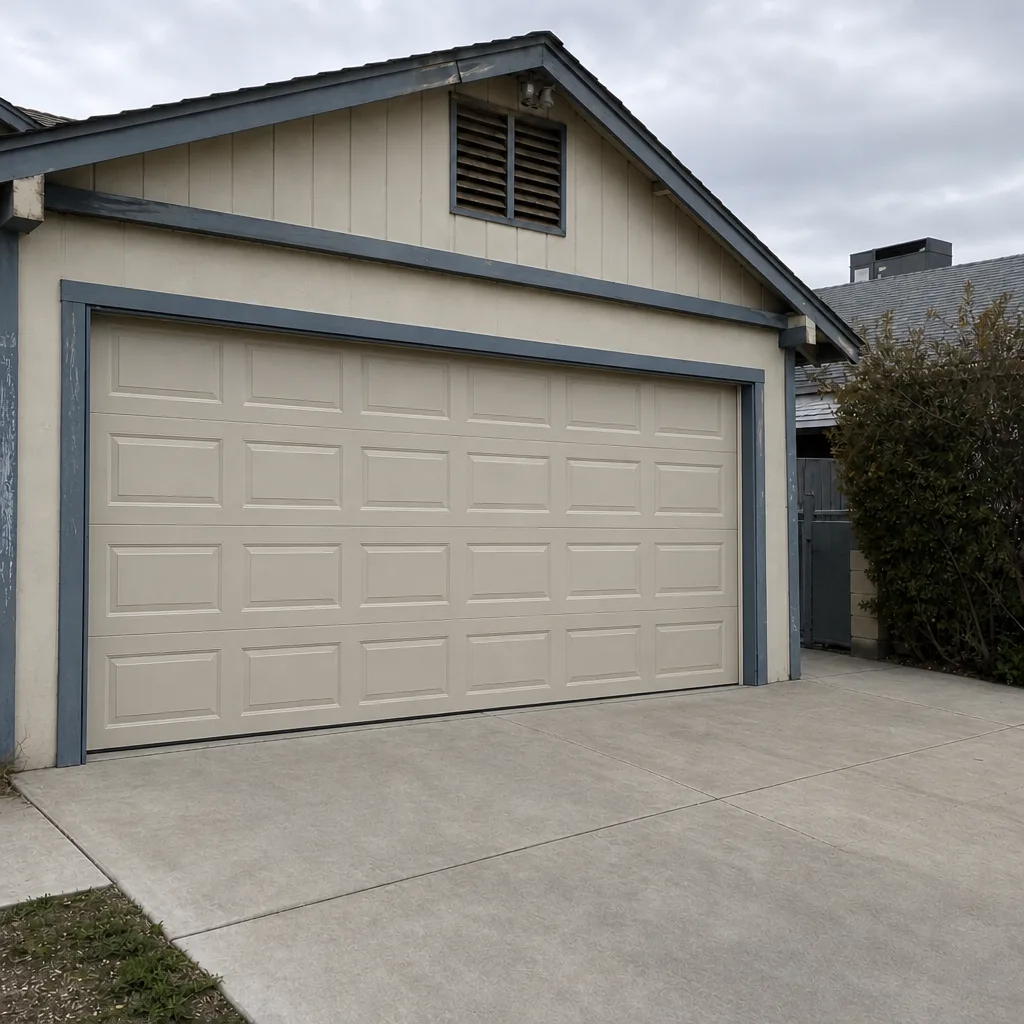 After
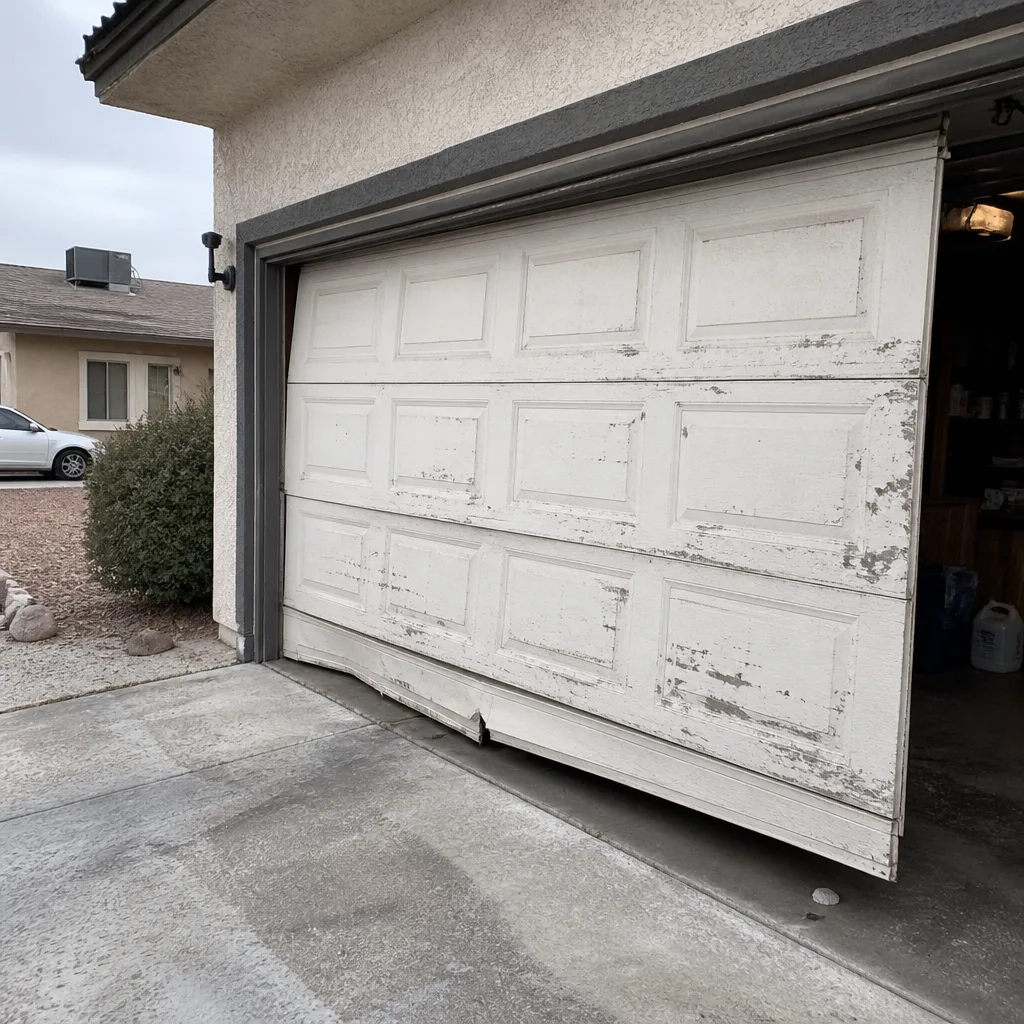 Before
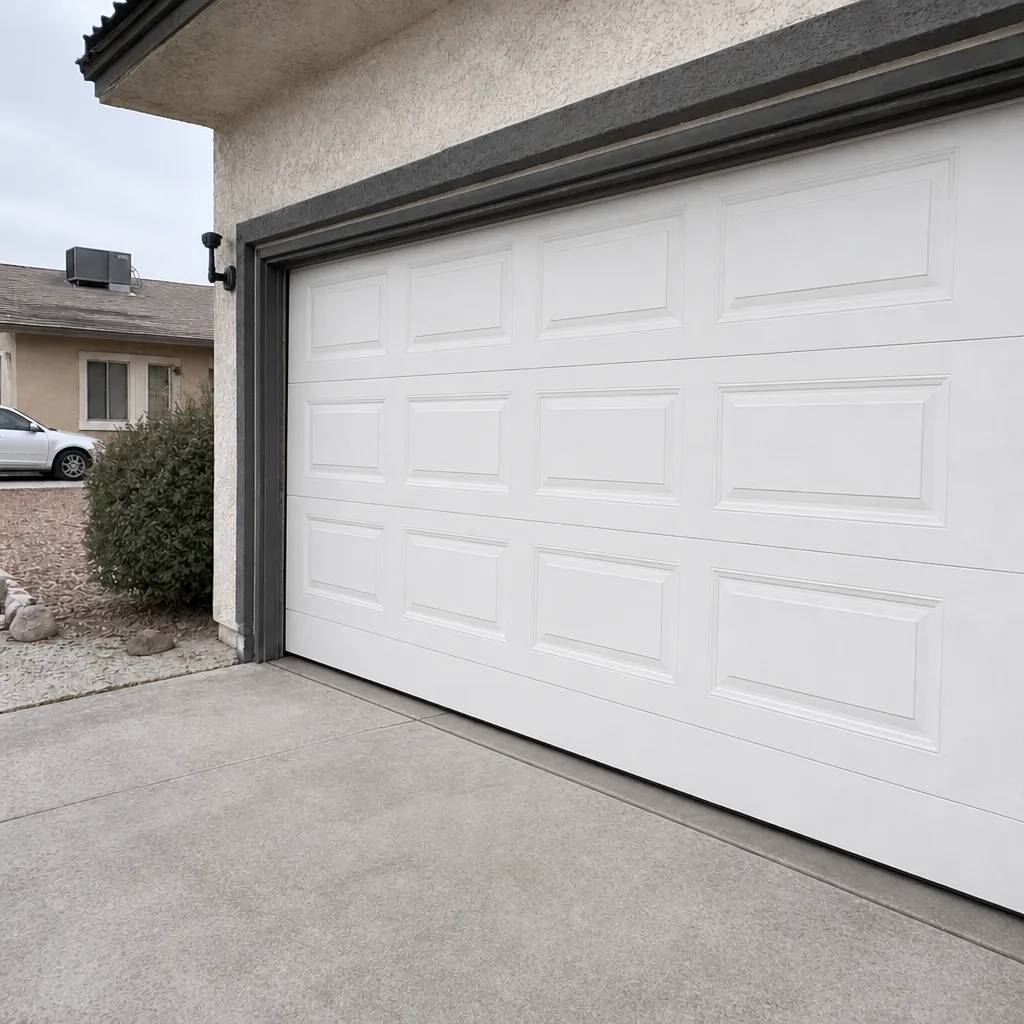 After
Frequently Asked Questions
A single-car replacement in Whitney runs $900 to $1,800 installed; a double-car replacement with insulation and a belt-drive opener runs $1,600 to $2,800. The difference is gauge, insulation, spring type, and opener drive. Every Servo job gets a written, flat price and written scope before any work starts. Call (888) 402-1096 for an exact quote on your door – estimates are free.
No. Our written price and written scope are agreed before any work starts, per Clause 1 of The Haven Standard. If we discover something the photo record missed – a degraded floor slab anchor, a non-standard header – we discuss it with you before doing anything, and we don’t proceed without your approval. What gets billed is what’s on the written scope. Call (888) 402-1096 and we’ll walk you through a quote on your specific door.
We service all eight major brands: Chamberlain, Genie, LiftMaster, Clopay, Amarr, Wayne Dalton, Craftsman, and Raynor. Parts are matched to the door’s specification, not the closest thing available. Call (888) 402-1096 with the model number from the label on the back of the opener or on the door jamb and we’ll quote against it.
For emergency repair, yes – we take same-day and 24/7 calls and answer with a live person, including holidays. Spring replacement is genuinely urgent: a torsion spring under load is dangerous to touch. Call (888) 402-1096 and we’ll get a technician scheduled. Installation and non-emergency replacement are measured and scheduled, not dispatched same-day.
Because they’re quoting different parts. A quote at $900 may be a 27-gauge uninsulated panel with a single 10,000-cycle spring and a chain-drive opener. A quote at $2,400 may be 24-gauge, R-12 insulation, double 25,000-cycle torsion, and a belt drive with battery backup. The spread is the specification, not the labor markup. If you have a written estimate from another company and want a second set of eyes on it, bring it in – our free second opinion applies to any written estimate, no coupon needed. Call (888) 402-1096 to set it up.
The local pro who performs the work is licensed and insured as their state requires; Servo connects you with the vetted independent technician on every job. Beyond that, our technicians carry background checks and arrive uniformed. If a technician arrives without documentation on the truck, that’s a hard stop. Call (888) 402-1096 with any questions about what to expect on the visit.
Key Takeaways
- A Whitney garage door install in 2026 runs $900 to $1,800 single-car, $1,600 to $2,800 double-car.
- The two biggest cost levers are spring cycle rating and opener drive type – not door brand.
- Ask for gauge (24 vs. 27) and cycle rating (10,000 vs. 25,000) in writing, on the quote.
- Insulation on an attached Whitney garage pays back in 1 to 3 summers of cooling cost.
- A written quote should have five lines: door spec, hardware and spring, opener, labor, haul-away.
- The photo record of the existing hardware is your audit trail after the job.
The Bottom Line
Closing this guide with a different number than the one most quotes open with: a Whitney garage door that costs $1,300 to install and is documented correctly will typically cost you $0 to argue about afterward. A $900 installation with a lump-sum invoice and a 10,000-cycle spring will cost you the difference in 3 to 4 years, in a warranty call you can’t substantiate because there’s no photo of what was there. The variables that move a Whitney installation from $900 to $2,800 are gauge, insulation, spring cycle rating, opener drive, and labor access. They’re not secrets. They’re line items. Any written quote that shows them is one you can budget against, and any quote that hides them is a number you’ll be renegotiating later. Start against the Servo Garage Doors Whitney home page for the full picture of how we quote, or call us directly and we’ll build the itemized scope for your door.
Contact
Every estimate is free, and every quote arrives as a written flat price with a written scope before any work starts – no “call for pricing,” no lump sum you can’t audit. Call Servo Garage Doors Whitney at (888) 402-1096 for a free estimate on your garage door installation, repair, or opener. Live person on the line 24/7, including holidays. If you’ve already got a written estimate from another Whitney contractor, bring it in for a free second opinion.
Written by the team at Servo Garage Doors Whitney.