
Last updated November 18, 2026
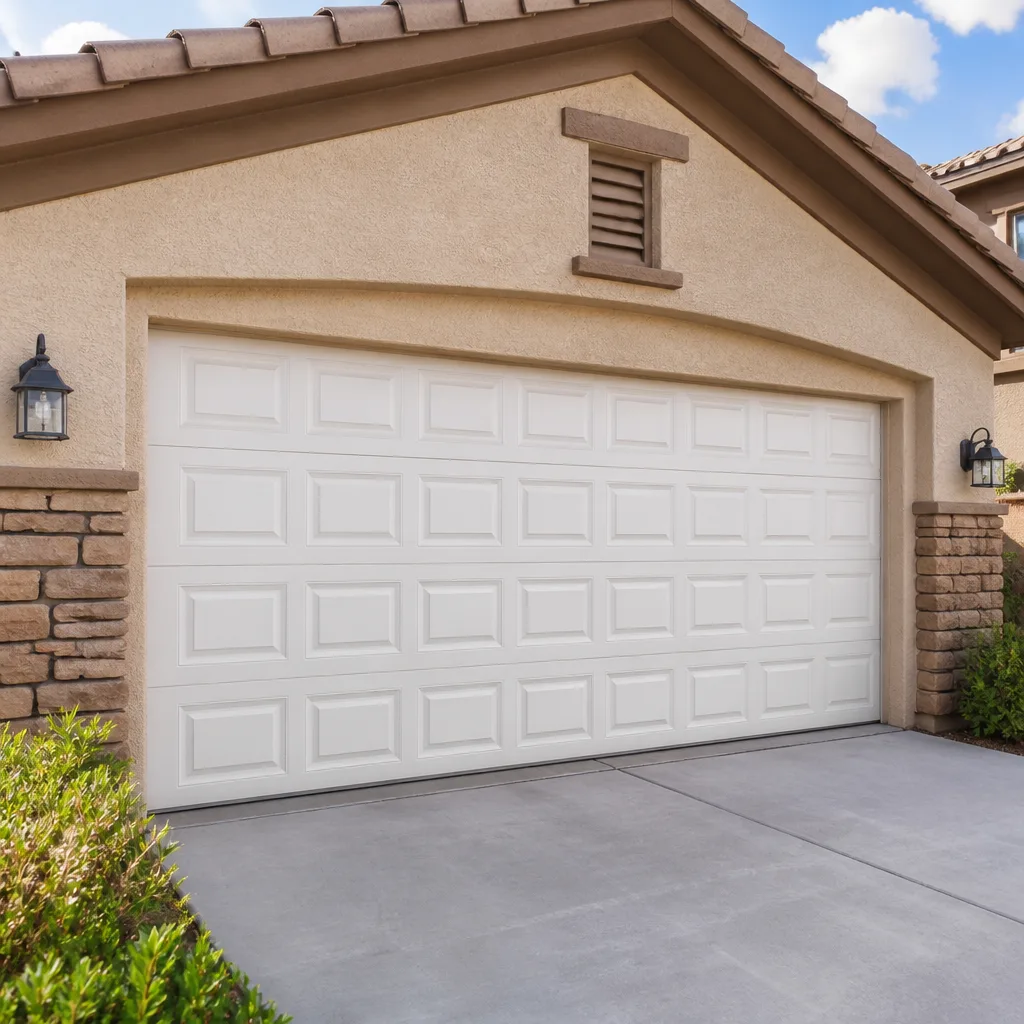 Raised-panel steel
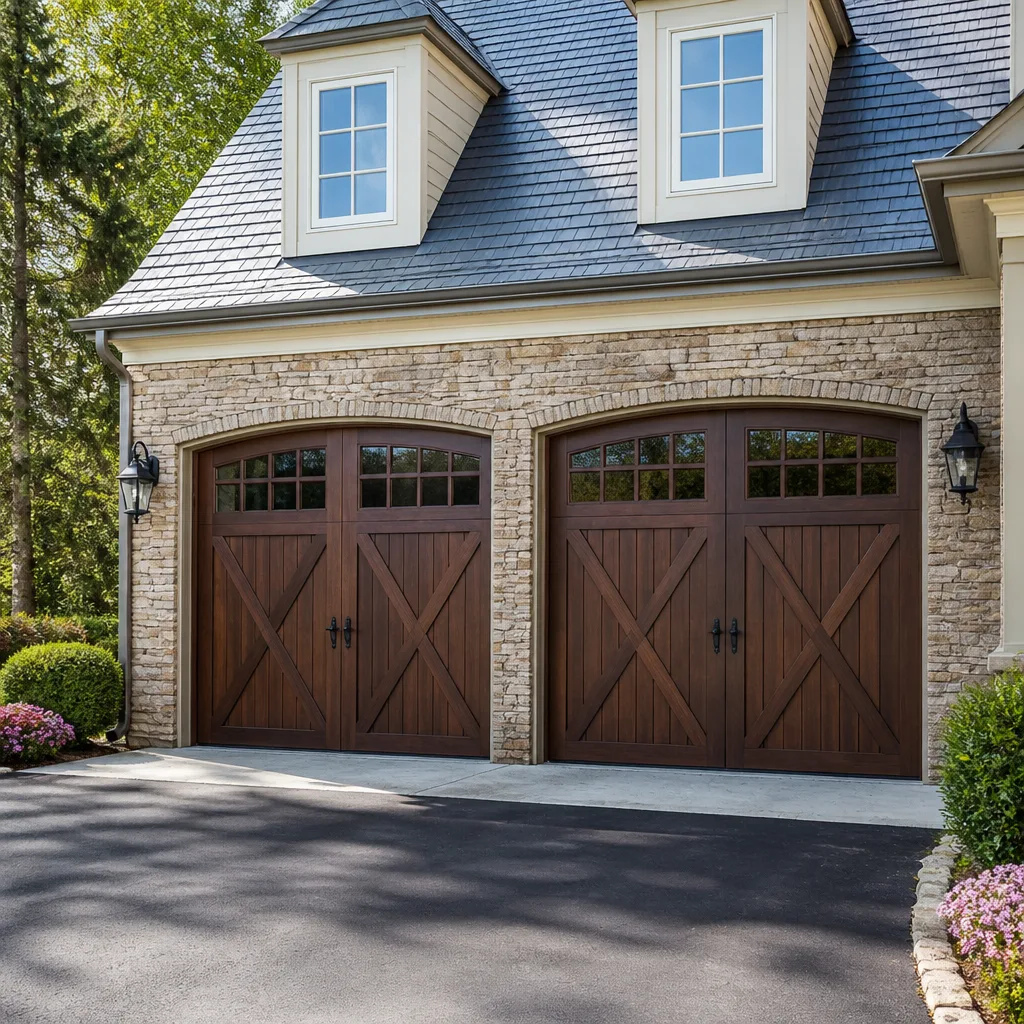 Carriage house
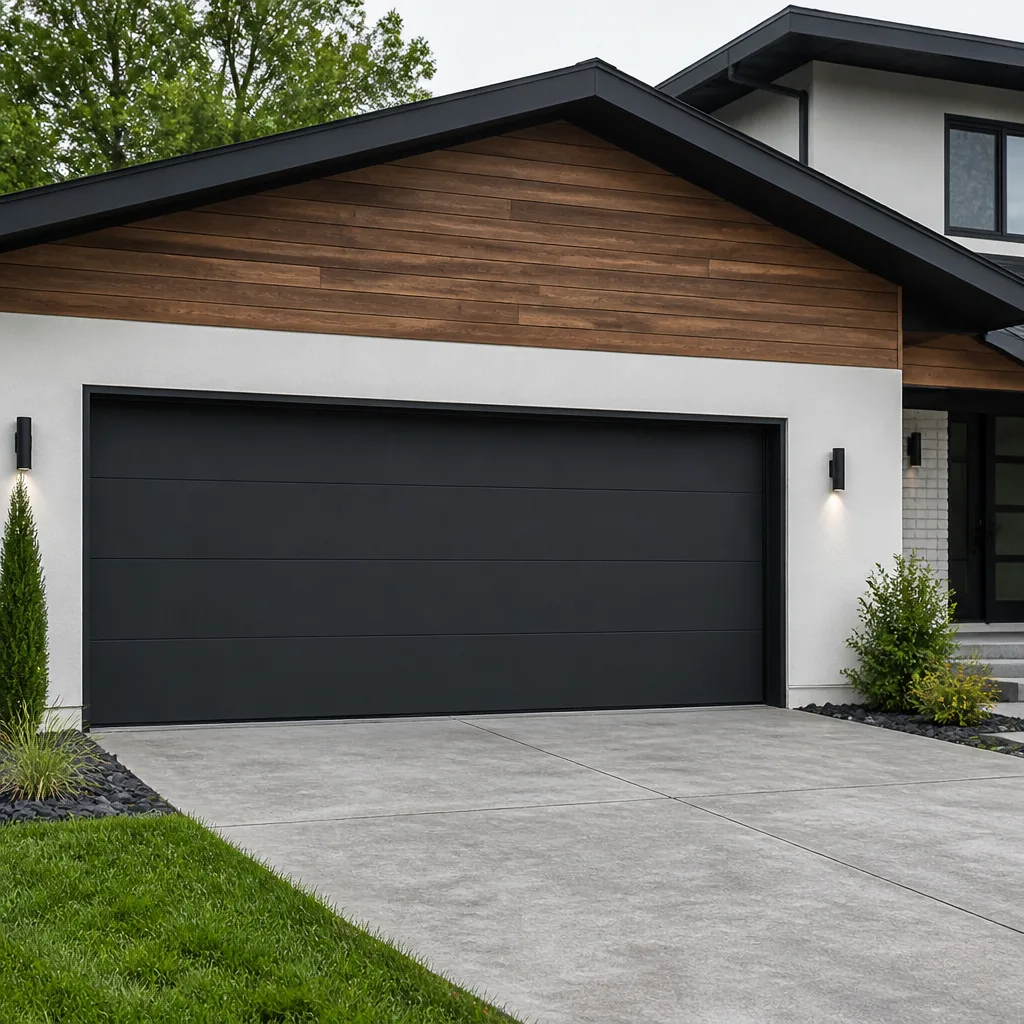 Modern flush
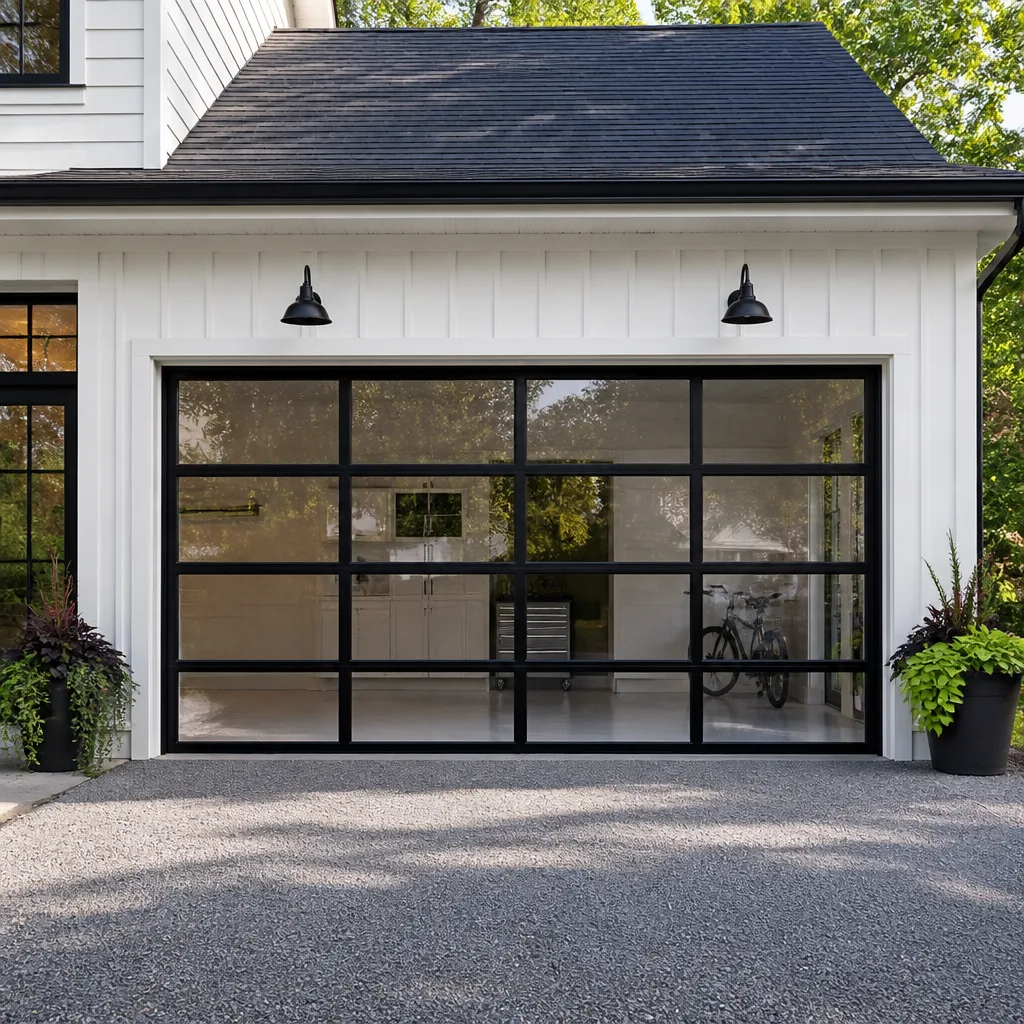 Full-view glass
 LiftMaster openers
 Chamberlain openers
Full 25-point door and opener safety check with every visit - springs, cables, rollers, tracks, and your LiftMaster or Chamberlain opener included
You get a price before we start. It does not change when the pro arrives.
Get your free estimateEmergency Garage Door Warning Signs Every Homeowner Should Know
A spring that is about to break makes a different sound than a spring that has been making noise for three months. One of those sounds means stop using the door today. Most homeowners can’t tell them apart, and that gap is where real damage happens: a snapped torsion spring can drop a 250-pound door in under a second, and a frayed cable can whip free with enough force to break a window or a bone. Learning to read the difference between a part that is wearing and a part that is about to let go is the single most useful repair skill a homeowner can carry. This guide gives you the observable criteria, the thresholds, and the exact moment to call in a professional in Whitney.
Quick Answer
Emergency warning signs are the ones that indicate a failure hours or days away, not months away. The five that matter most are a visible gap in a torsion spring coil, a frayed or kinked lift cable, a door that binds or reverses under load, a crooked or racked door, and any loud bang followed by a door that won’t lift. Any of these means stop operating the door and call a trained technician – garage door springs and cables are under extreme tension and cause serious injuries to homeowners every year.
Styles & brands we work with
- Raised-panel steel
- Carriage house
- Modern flush
- Full-view glass
- LiftMaster openers
- Chamberlain openers
Table of Contents
- The Threshold: “Monitor This” vs. “Stop Using the Door”
- Torsion Spring Failure Signs You Can See With a Flashlight
- Visible Signs of Imminent Cable Failure
- Why a Door That Moves Wrong Is More Urgent Than One That Won’t Move
- Warning Signs That Only Appear Under Load
- The Bang, the Snap, and the Pop: Reading Sounds Correctly
- Whitney Climate Factors That Accelerate Failure
- A 60-Second Emergency Inspection You Can Run Today
 Before
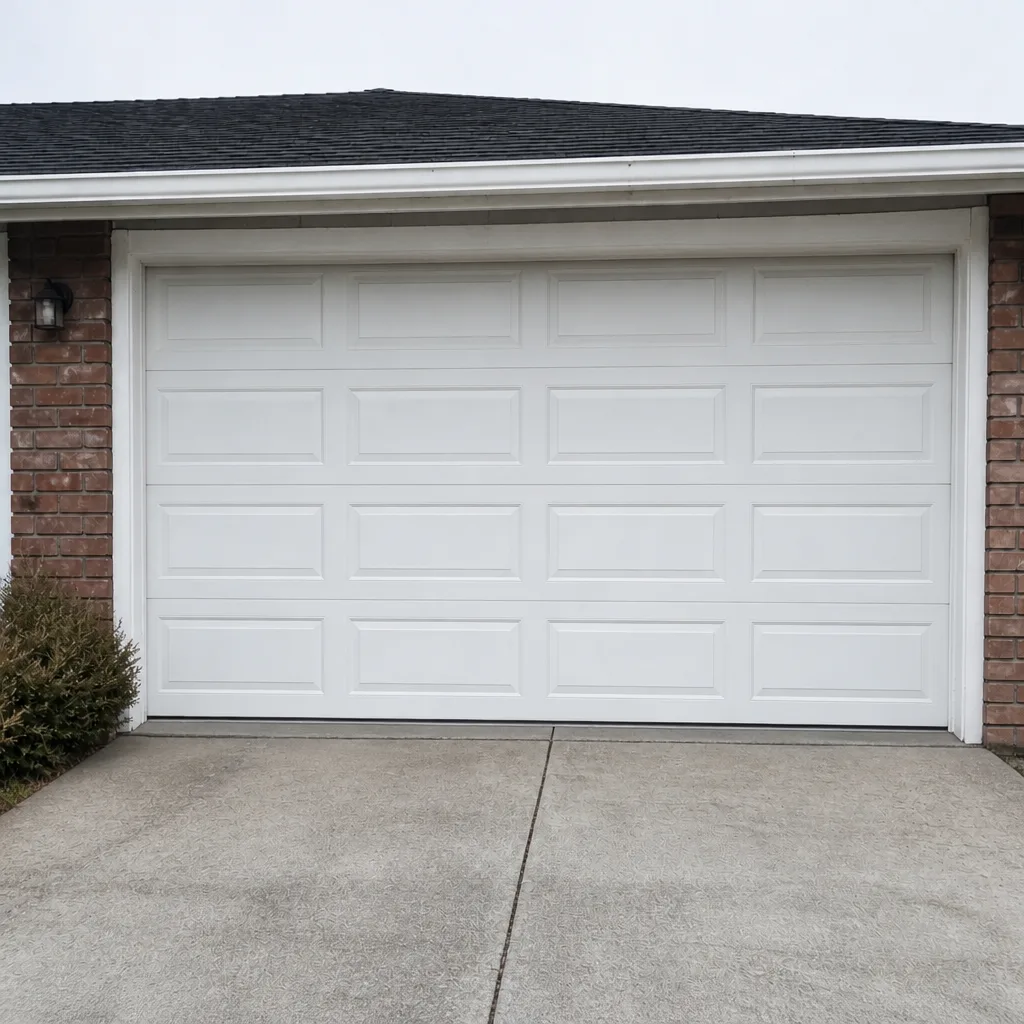 After
The Threshold: “Monitor This” vs. “Stop Using the Door”
Every garage door component ages on its own timeline, and the mistake most homeowners make is treating every odd noise or wobble as the same priority. The distinction that matters is whether the worn part can still carry the load it’s asked to carry. A roller that squeals but still rolls is a monitor item. A cable with three broken strands near the drum is a stop-now item, because those strands are what’s holding the door’s weight.
Here’s how we frame the two categories for homeowners in Whitney:
Monitor this (schedule within a few weeks):
- Rollers that squeak or rumble but roll smoothly
- A single hairline crack on a panel that isn’t spreading
- A photo-eye that gets dusty enough to blink occasionally
- Weatherstripping that has hardened and lets a thin draft through
- A remote that needs a fresh battery every few months
Stop using the door (call today):
- A visible gap in a torsion spring coil, however small
- Frayed, kinked, or rust-stained lift cables
- Any door that reverses on its own during a closing cycle
- A door that binds, jerks, or moves crookedly
- A loud bang from the garage followed by a door that won’t lift
The line between the two is not about how much the part costs to fix. It’s about whether a failure would happen with the door in motion and a person underneath it. Those are the conditions where emergency garage door calls in Whitney turn into injury reports, and they’re the ones worth treating as emergencies even when the door is still technically opening.
Torsion Spring Failure Signs You Can See With a Flashlight
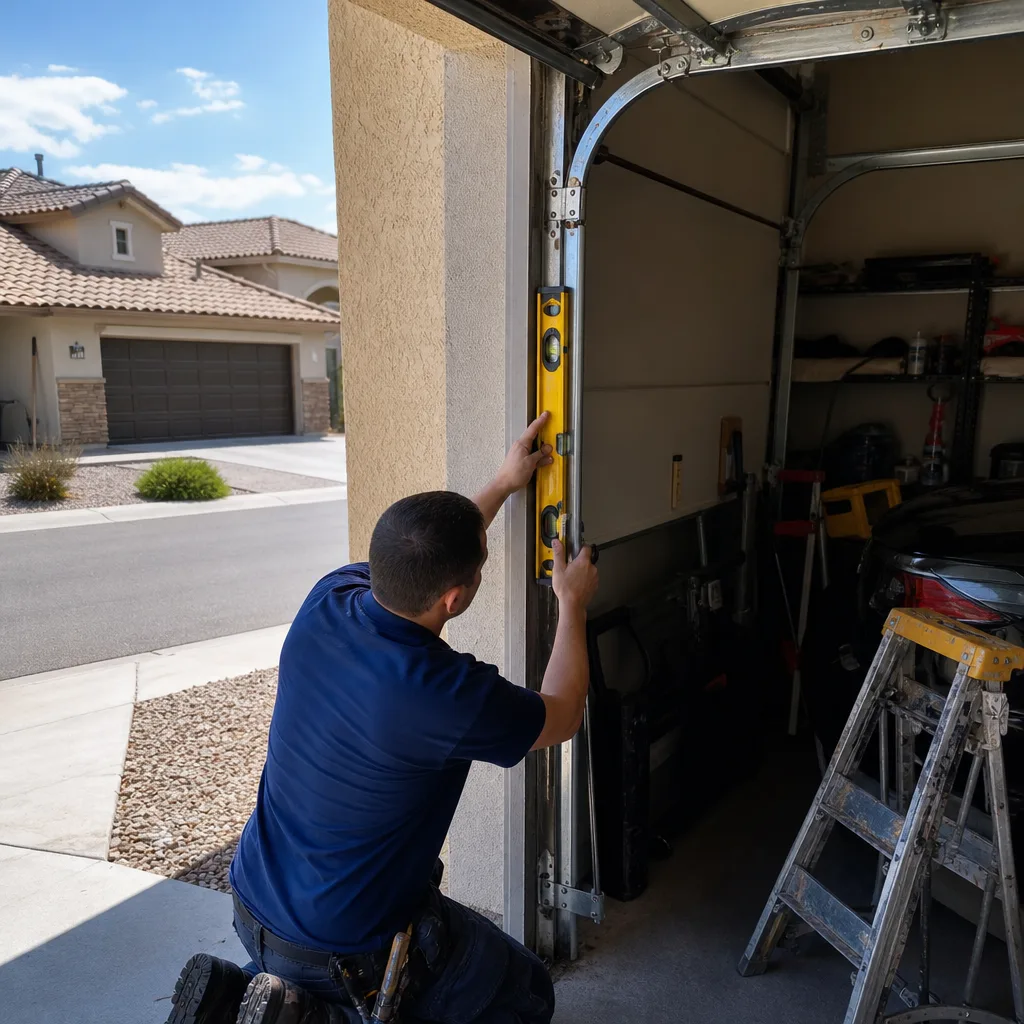
A torsion spring is the coiled steel bar mounted above the door on the header wall. It does the actual lifting; the opener only guides the door. When it fails, it doesn’t warn you with a gradual noise – it usually breaks while the door is in motion, and the door’s full weight drops onto the smaller springs and cables that were never designed to hold it alone. This is why spring inspection is the highest-value 30 seconds a homeowner can spend on the door.
Here’s the inspection, in order:
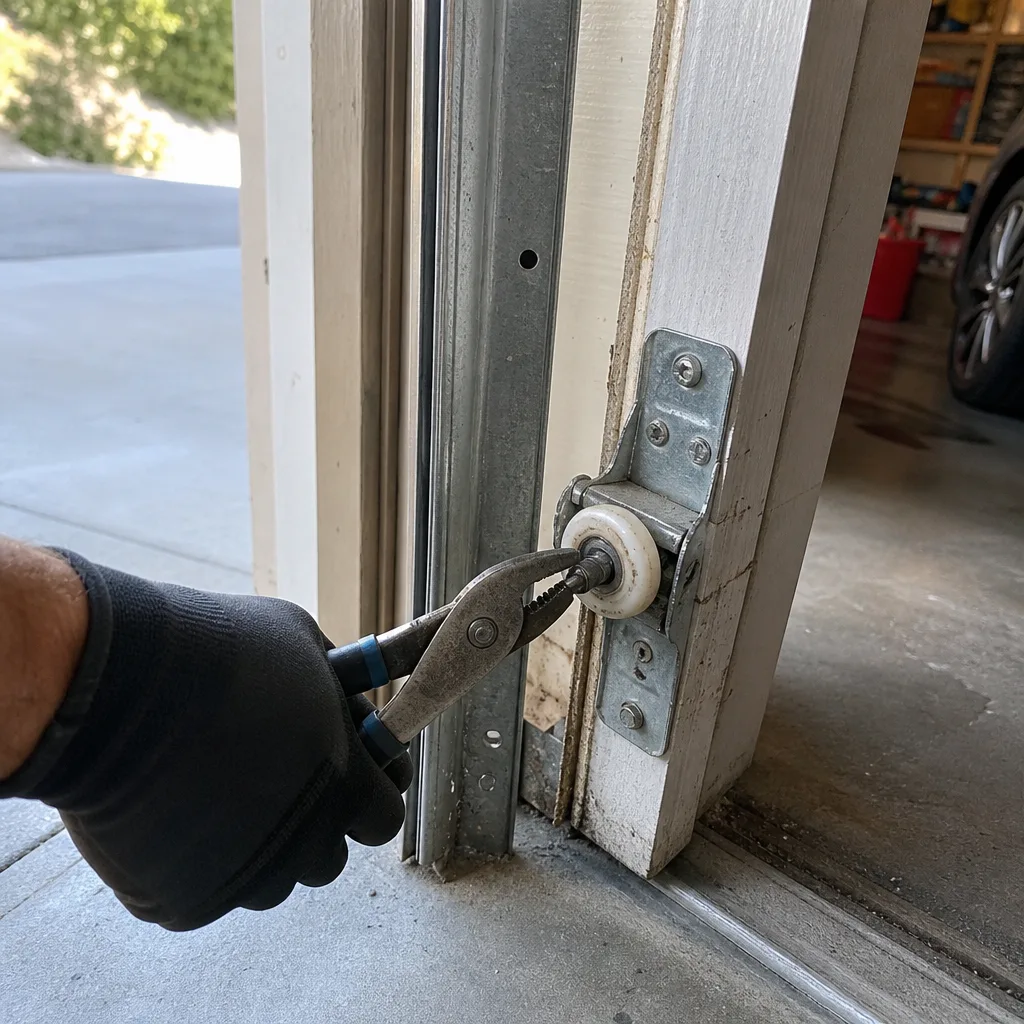
- Kill the opener. Pull the red manual release handle so the door is disconnected and won’t cycle while you’re near the springs.
- Shine a light along the coil. Look for any separation between the individual coil wraps. A healthy spring sits tightly wound with no gap.
- Measure the gap. A gap of even a sixteenth of an inch – about the thickness of a nickel – is stop-now territory. The spring has begun to unwind its stored tension and the remaining coils are carrying more load than they were rated for.
- Look for rust-colored dust or orange staining along the spring. That’s rust bleeding from the inside of the coil, which means the steel is thinning.
- Check that both springs on a two-spring door match. On most Amarr and Wayne Dalton doors we see in Whitney, a mismatched pair – one spring newer or a different gauge – forces the older spring to fail sooner.
One more sign that almost nobody notices: a spring that has begun making a metallic “twang” every time the door opens or closes has usually developed a hairline crack that’s not yet visible. That crack is a days-away sign, not a months-away sign, and it’s worth a call.
Safety caveat: never attempt to adjust, unwind, or replace a torsion spring yourself. The stored energy in a wound spring is enormous, and the tools required to release it safely are specific to the trade. If you see any of the signs above, keep the door closed and call a trained professional.
Visible Signs of Imminent Cable Failure
The lift cables are the two steel ropes that run from the bottom corners of the door up to the drums on the torsion shaft. They carry the door’s weight on each side, and when one fails, the door drops on that side at an angle – which is exactly the scenario that racks the door, bends the track, and can shatter a panel. A cable rarely snaps without warning if you know where to look.
These are the patterns we flag as days-not-months:
- Fraying near the drum. A healthy cable looks like a smooth, tight rope. Broken strands near the drum (the spool at the top of each side) show as fuzzy, splayed wires – a sign the cable has been bending under load in a place it wasn’t designed to bend repeatedly.
- Kinks in the drum wrap. A kink is a sharp bend that doesn’t straighten out when the cable unspools. It means the cable has been overstressed or misrouted, and it concentrates the load on a single point of the wire.
- Rust-colored streaks on the bottom bracket or anchor point. Cables fray from corrosion as often as from fatigue. If the anchor bolts at the bottom corners are showing rust and the cable’s end is stained, the wire is thinning from the inside.
- A cable sitting unevenly against the drum. If one side is spooled tight against the track and the other is loose or crossed over itself, the door is being pulled at different rates on each side, and both the cable and the drum are being damaged.
We regularly see this pattern in Whitney homes built in the 2015-2020 building boom, where the original cables on value-grade doors have already been cycled thousands of times and are at the end of their rated life. If your door is original to the house and you’ve never had the cables inspected, a check costs nothing to schedule and takes minutes to complete.
Why a Door That Moves Wrong Is More Urgent Than One That Won’t Move
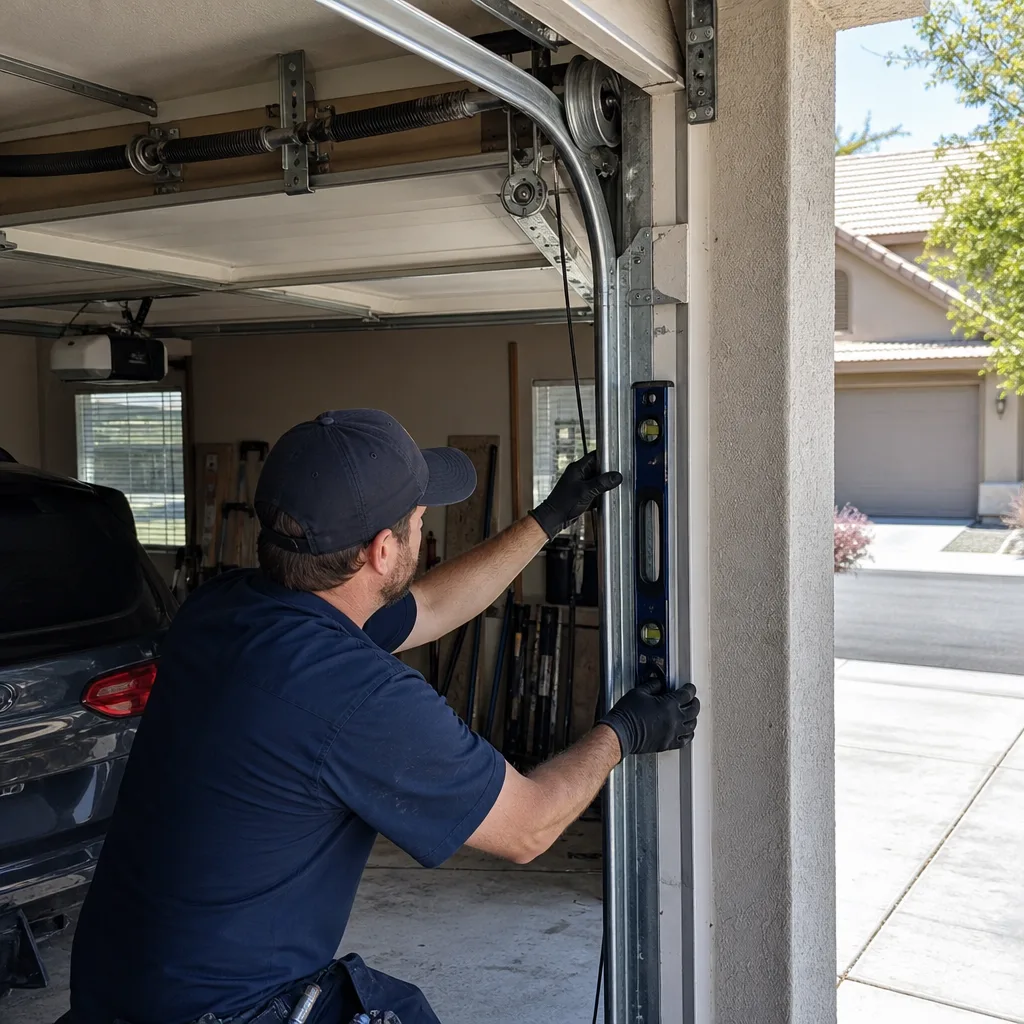
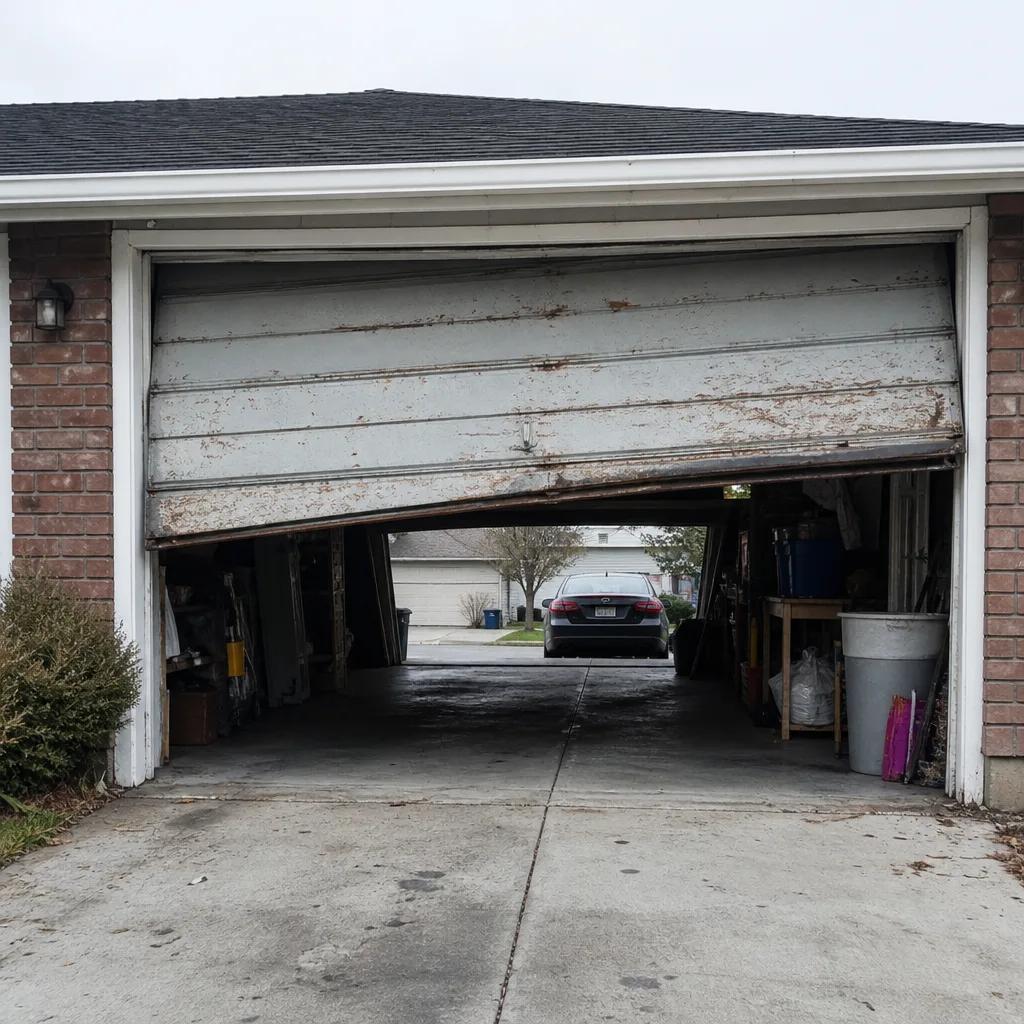
This is the counterintuitive part of garage door emergencies, and it’s the one most homeowners get backwards. A door that won’t move at all is not an emergency – the door is stationary, nothing is under load, and the repair can be scheduled without risk. A door that moves but moves wrong is the dangerous case, because every cycle under a misaligned load pushes a failing component closer to snapping.
A door that moves wrong usually shows one of these symptoms:
- The door rises unevenly, with one side lagging the other by more than an inch
- The door pauses mid-travel and then continues (a binding symptom, usually a failing roller or a bent track)
- The door drifts back down a few inches after the opener releases (a cable or spring tension problem)
- The panels rub against each other during operation (a racked door)
- The safety reverse test fails – the door doesn’t reverse when it meets an object
Any of those means stop using the door today, not “see how it goes for a week.” A misaligned door is putting uneven stress on both cables and the torsion shaft, and one more cycle could be the one that triggers the failure. If you’re in Whitney and notice any of these symptoms, our garage door repair in Whitney service can be scheduled same day, and the technician will document what they find before quoting anything.
Warning Signs That Only Appear Under Load
A garage door can operate perfectly through ten empty-garage test cycles and still fail with a vehicle underneath it. That’s because “under load” changes the physics of the system in three observable ways, and homeowners who only test the door while it’s empty miss all three.
Weight differential. A warm vehicle engine and its exhaust change the air density and temperature in a closed garage within minutes. A cold morning in Whitney – mornings in the 20s aren’t uncommon in January – makes the door track and the door’s metal panels contract slightly, which adds friction. The combination of a cold, contracted track and a warm, expanding air pocket can turn a door that was fine at 7 a.m. into a door that hesitates, reverses, or binds by 7 p.m.
Operating with the car partially in the garage. When a vehicle is halfway in, the door’s safety sensors can be partially blocked, causing the door to reverse mid-travel. That’s the sensor doing its job, but it’s also a test that reveals whether the reverse circuit is working correctly. A door that reverses with a car in the workspace but not when empty is telling you something about the sensor alignment, not about the door itself.
Multiple consecutive cycles. Five or six open-close cycles in quick succession – like when the family is loading up for school drop-off – load the opener’s motor and the springs more than a single cycle does. If the door starts to slow, hesitate, or make a new sound by the third cycle, a component is at its load limit. That’s the failure you’ll otherwise discover the hard way.
Our garage door opener repair and installation in Whitney team tests each door under loaded conditions precisely for this reason – a test cycle in an empty garage tells you less than it seems to.
The Bang, the Snap, and the Pop: Reading Sounds Correctly
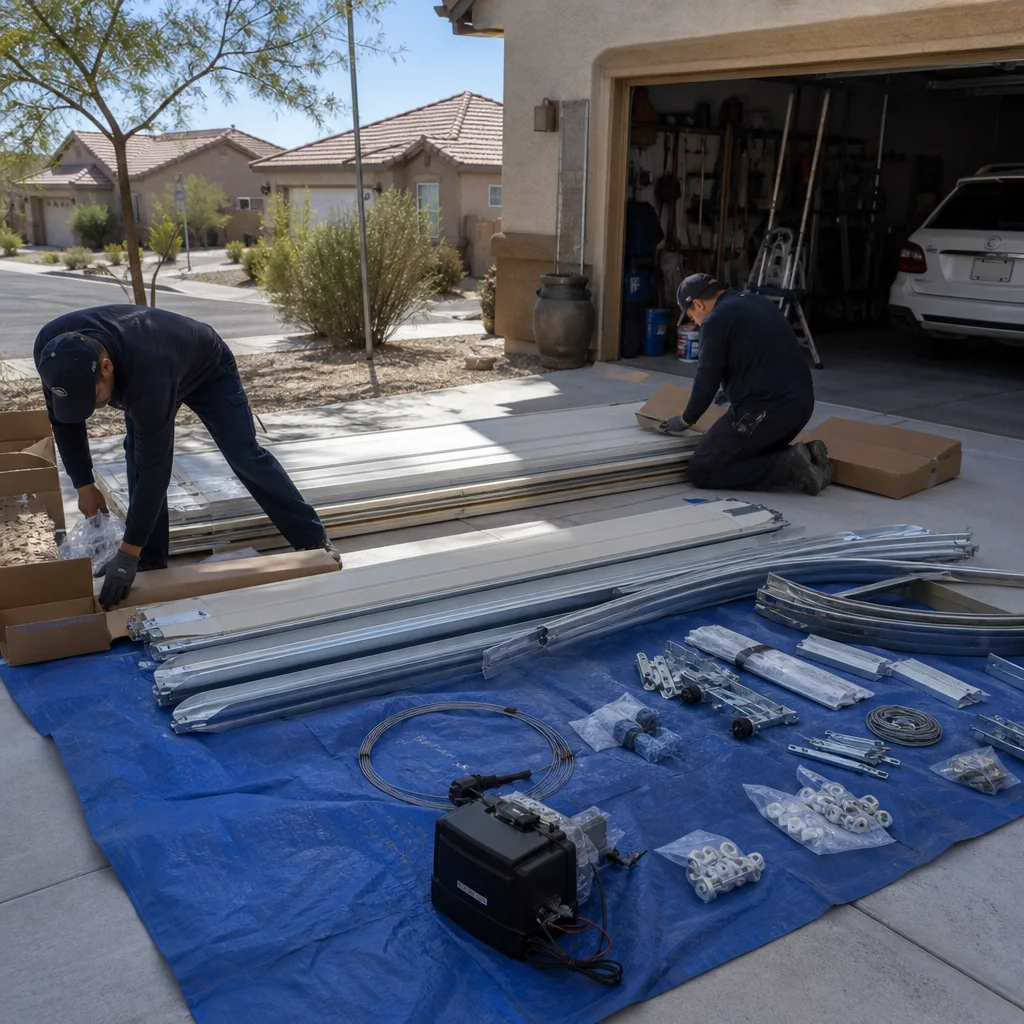
Different failures have different sounds, and homeowners who can describe the sound they heard get faster and more accurate diagnoses. Here’s a plain-language dictionary drawn from what our technicians hear on Whitney service calls:
- A single loud bang, like a gunshot, followed by the door not lifting. Almost always a torsion spring snap. The door is now unsupported and should not be operated.
- A metallic twang repeating on every cycle. A spring with a hairline crack that’s flexing. Days-away territory.
- A grinding or scraping noise along the track. Rollers that have flat-spotted, or a track that has bowed. Usually a monitor item, but if it comes with a smell of hot metal, stop and call.
- A rhythmic clunking over one spot in the travel. A roller with a worn bearing, or a hinge that’s failing. Worth checking before the next full open.
- A sizzling or buzzing from the opener head. A failing logic board, a common issue on older Chamberlain and Craftsman units, and a fire risk if the motor’s thermal cutout has failed.
The sound that should send you to the phone fastest is the single bang followed by a door that won’t lift. That’s the signature of a failed spring, and every cycle you attempt after that point puts the door’s full weight on cables that were never rated to hold it.
Whitney Climate Factors That Accelerate Failure
Whitney’s desert climate compresses the lifespan of garage door components in ways homeowners moving from wetter regions often don’t expect. The specific factors:
- Summer heat. Garage interiors regularly hit 130-140°F in July and August because the roof radiates heat into an unventilated space. That temperature accelerates the grease breakdown in torsion springs, which means a spring rated for 10,000 cycles may fail at 7,000.
- Winter cold snaps. The door track contracts faster than the door itself in a cold snap, and the resulting misalignment is one of the most common causes of a door that binds in December. Cold also thickens the grease on rollers and cables, adding drag.
- Low humidity the rest of the year. Metal doesn’t rust as fast as it does in coastal cities, but the dry air causes wood door panels to shrink and crack, which lets dust work its way into hinges and rollers. That dust turns into grinding grit over a few seasons.
- Monsoon season. When the summer storms hit, the brief humidity spike plus the door’s stored heat creates a condensation cycle that corrodes anchor bolts and bottom brackets faster than a steady wet climate would.
We’ve watched these patterns repeat across the newer Whitney subdivisions, and the practical takeaway is that “rated for 10,000 cycles” in a spec sheet doesn’t mean 10,000 cycles in a Whitney garage. Inspect a little more often than the manufacturer’s schedule suggests, and take any new noise after a heat wave or cold snap seriously.
A 60-Second Emergency Inspection You Can Run Today
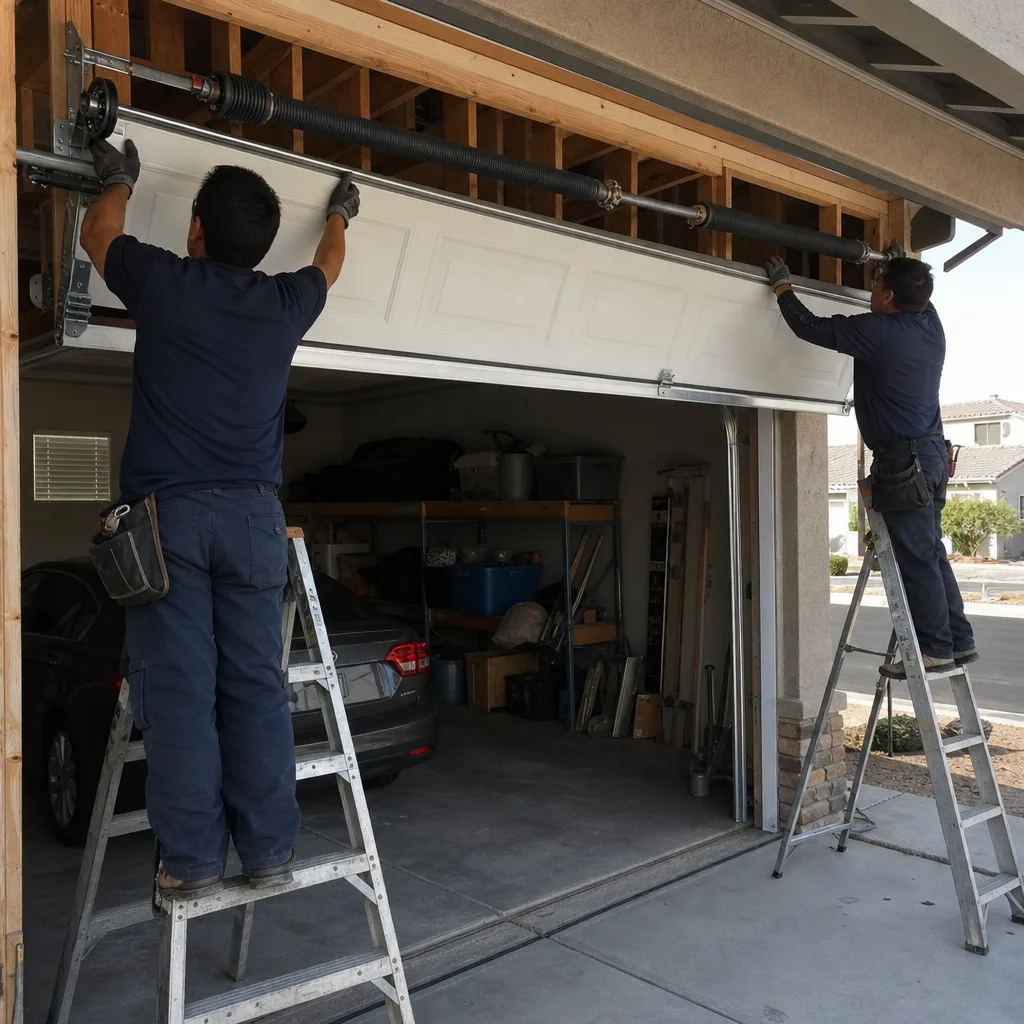
This is the checklist we walk homeowners through on the phone when they’re not sure whether they have an emergency or a routine repair. Run it once a season, and immediately after any new sound or symptom.
- Disconnect the opener. Pull the red release handle so the door is on manual and cannot cycle unexpectedly.
- Look at the torsion spring with a flashlight. Any gap in the coil, any orange staining, any gap of a nickel’s thickness – stop and call.
- Inspect both lift cables at the drum and at the bottom bracket. Fuzzy strands, kinks, or rust at the anchor point are days-not-months signs.
- Lift the door halfway by hand and let it go. A properly balanced door should stay put. If it falls, the spring is failing or out of balance. If it rises on its own, the springs are over-tensioned.
- Reconnect and run one full cycle while watching both sides. Look for uneven travel, hesitation, or a door that reverses without touching anything.
- Run the safety reverse test. Place a two-by-four flat under the closing door. If the door doesn’t reverse on contact, the safety system is failing and the door should not be operated until it’s repaired.
If any step fails, stop and call a professional. Fixing these components yourself isn’t a matter of being handy – the springs and cables under load can cause serious injury, and the tools required to release them safely are specific to the trade. For a full inspection with documented findings, our Servo Garage Doors Whitney home team responds to emergency calls 24/7, and a named technician will be dispatched with confirmation that they’re on the way.
Common Mistakes to Avoid
- Treating every squeak as an emergency and every bang as routine. The reverse is usually true. A squeaking roller can wait a few weeks; a snap from the torsion tube means stop now.
- Testing the door “just one more time” after a bang. Each additional cycle loads cables and springs that already have less support than they were designed for. Don’t do it.
- Assuming a door that opens fine is safe because it opens fine. Doors fail most often at the end of a cycle, not the beginning. The only reliable test for many issues is a full-travel inspection while watching both sides of the door.
- Greasing a failing spring to quiet it. Grease on a cracking torsion spring hides the visual sign of the crack without addressing the crack itself. If you’re quieting a symptom rather than fixing a cause, call a technician.
- Calling an out-of-area company for a Whitney emergency. Response time is a real factor in Whitney because the valley’s traffic patterns on the 95 can add 20 minutes to a call. Local companies with technicians already in the valley consistently get there faster.
- Accepting a verbal quote over the phone without a written price. On any emergency call, you should get a flat written price and written scope before work begins. If a company won’t put it in writing before turning a wrench, the price can change after the fact.
- Ignoring the photo-eye sensors because they’re “just safety.” A sensor that’s misaligned is the number-one cause of a door that reverses in the middle of a close. It’s also the number-one cause of a door that closes on a pet or a child. Test it monthly.
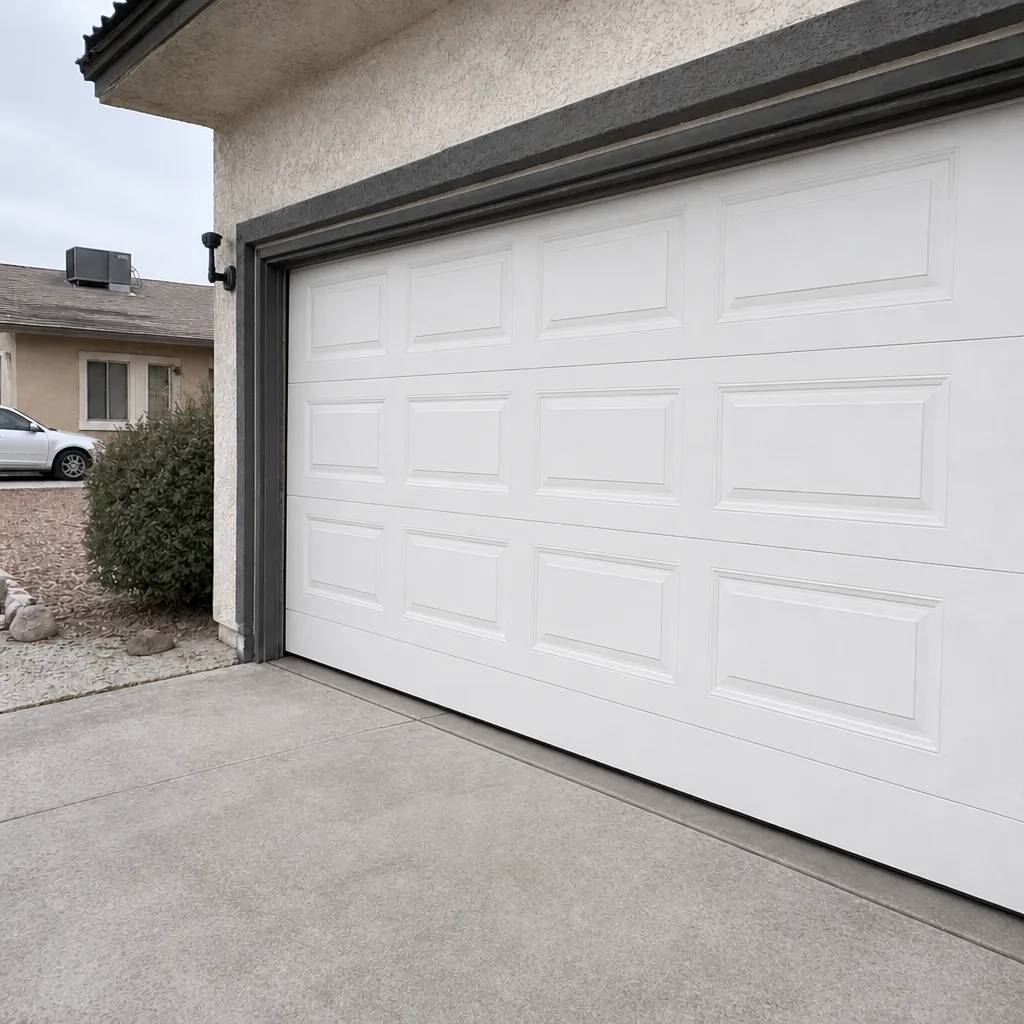
See the difference
BeforeAfter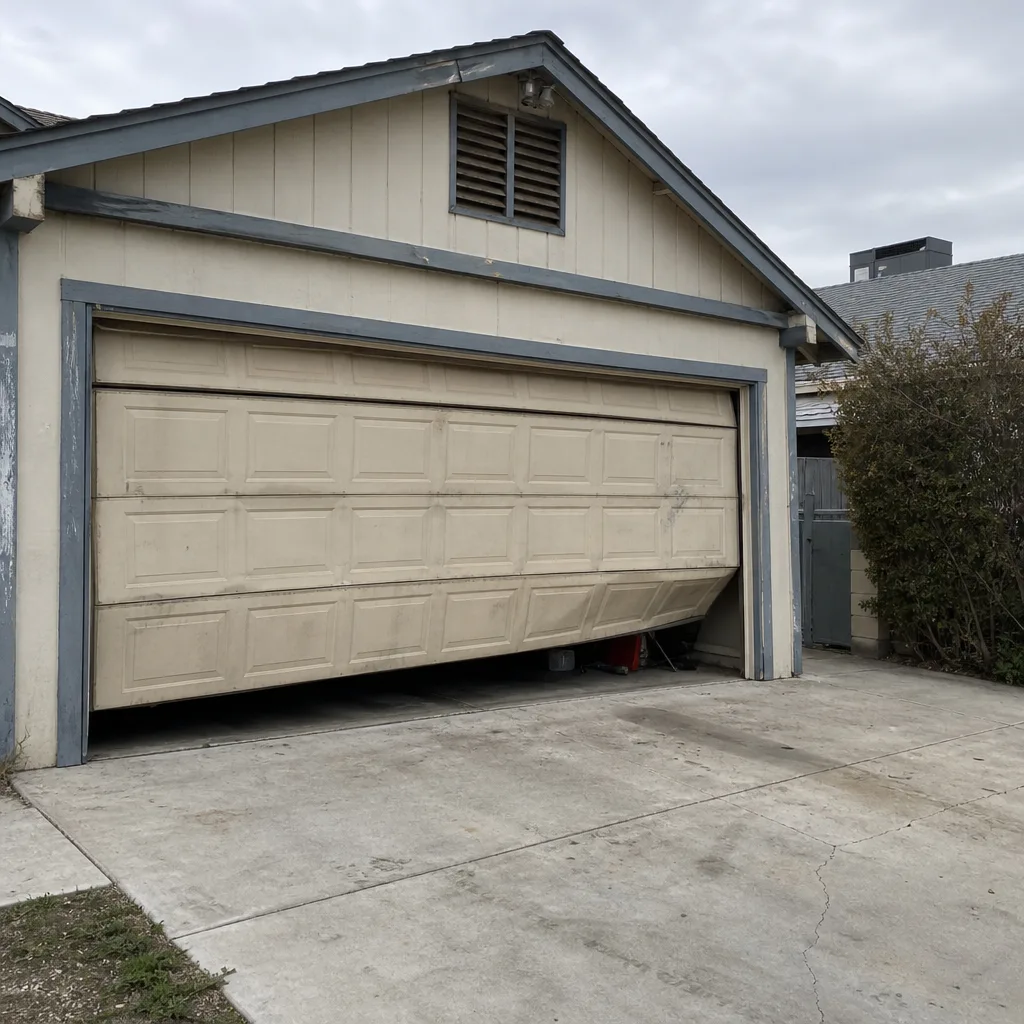 Before
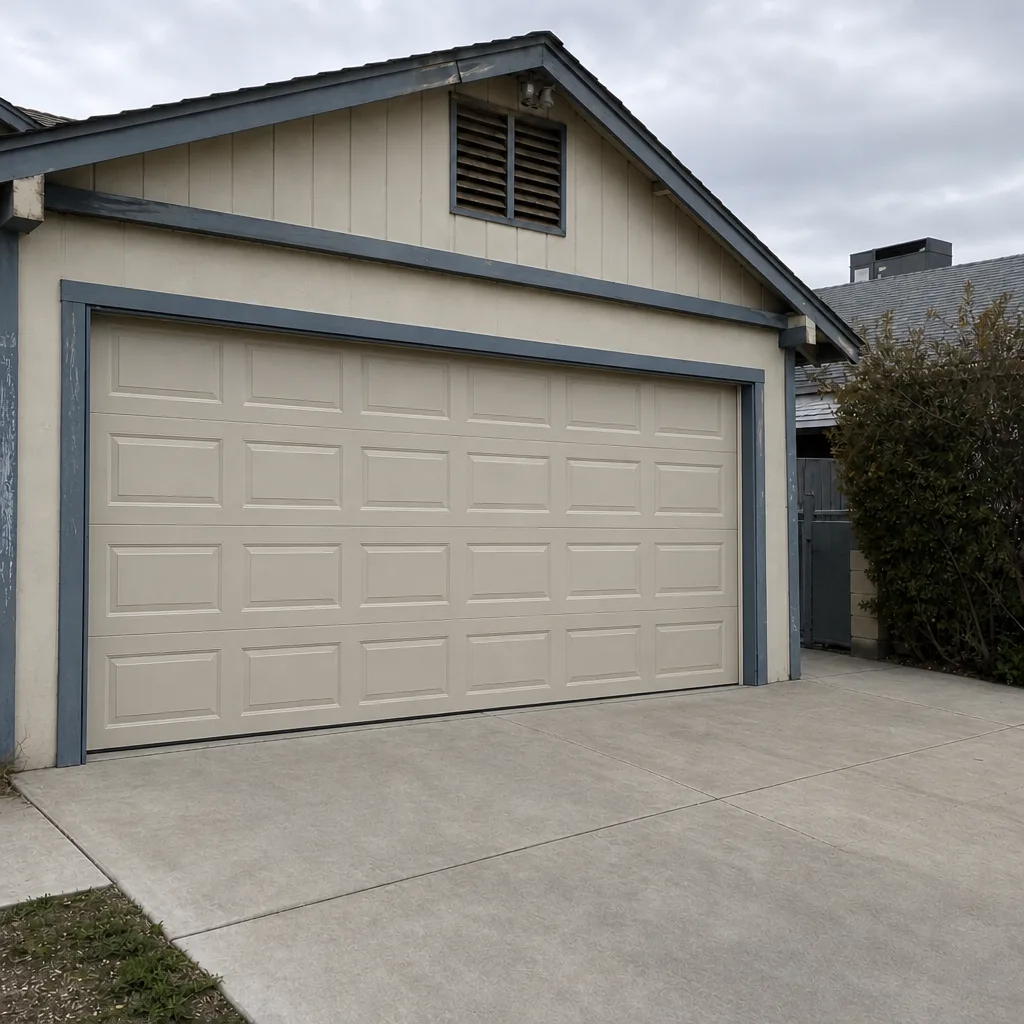 After
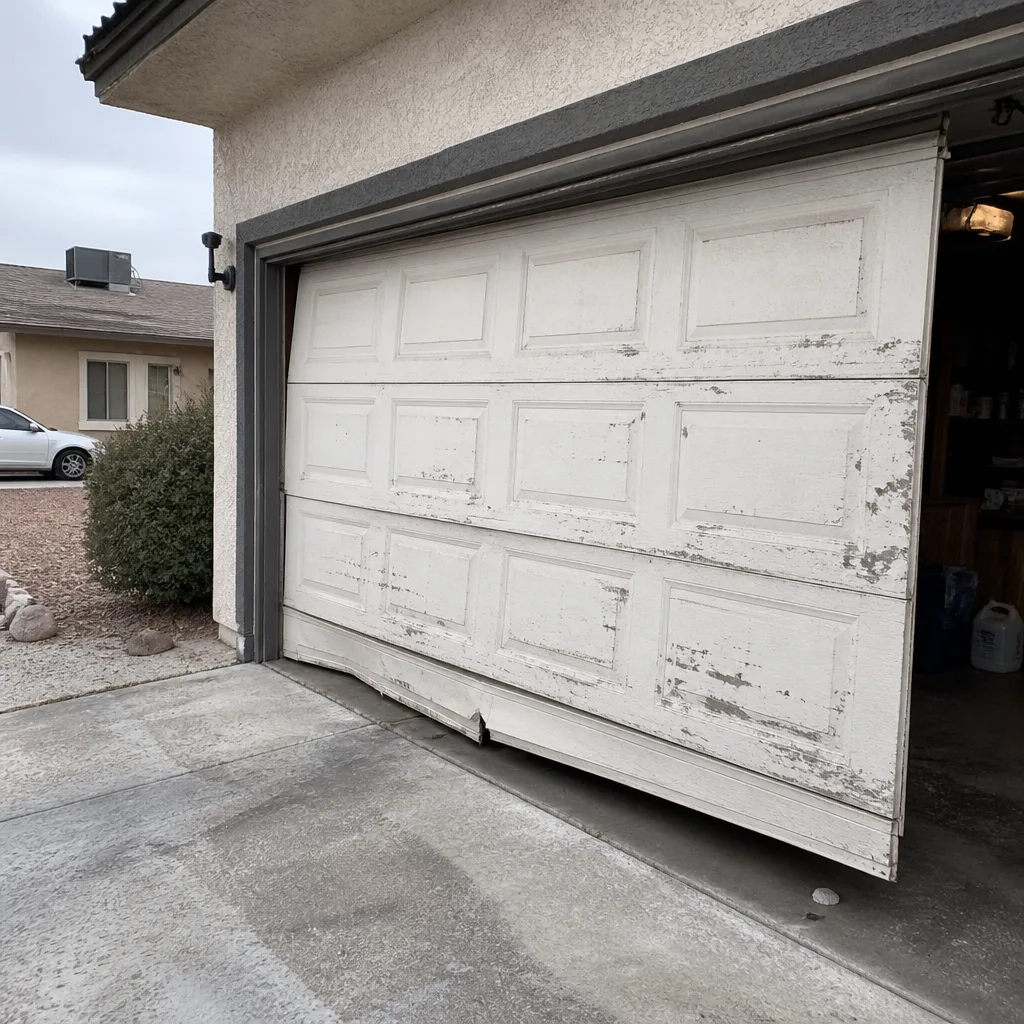 Before
 After
When to Call a Professional
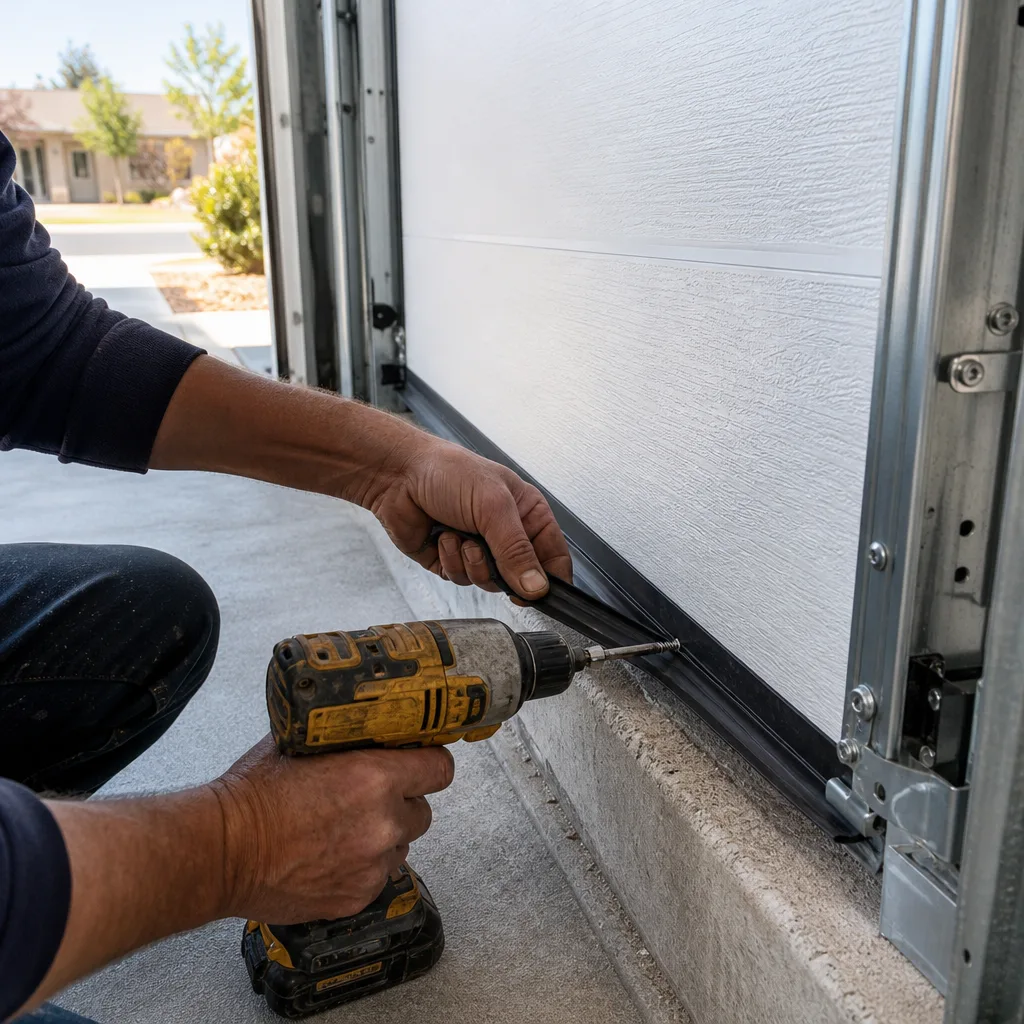
Call a professional immediately if you’ve seen any of these in the last 24 hours: a visible gap in a torsion spring, a frayed or kinked lift cable, a door that drops unevenly or reverses without contact, a loud bang from the garage followed by a door that won’t lift, or a door that binds at the same point on every cycle. Those are stop-using-the-door situations, not next-week appointments. For anything where two or more of the monitor-level signs appear at once – especially a squeaking roller plus a drifting door – it’s worth scheduling a professional inspection rather than waiting for the sound to change into a bang. Servo Garage Doors Whitney offers free estimates in Whitney – call (888) 402-1096 for a same-day visit, a written price before any work starts, and a documented photo record of what we find and what we fix.
Frequently Asked Questions
A visible gap in the torsion spring coil is the most urgent sign because it means the spring has begun to unwind and the remaining coils are carrying more load than they were rated for. Any gap of about a nickel’s thickness is stop-now territory. Call (888) 402-1096 for a same-day inspection – the spring cannot be safely adjusted by a homeowner.
No. A door with a broken torsion spring has no safe way to carry its own weight, and the opener alone cannot lift it. If you continue to cycle the door, the full load falls onto the cables and the door’s panels, which can bend the track, shatter a panel, or drop the door sideways. Keep the door closed until a technician inspects it.
A wearing spring looks intact but sounds different – it may twang or have a slight new vibration on every cycle. A spring that’s about to break usually shows a visible gap in the coil, orange rust staining along the spring, or a hairline crack. A wearing spring is a monitor-and-schedule issue; a about-to-break spring is a stop-today issue.
Frayed lift cables near the drum or bottom anchor are days-not-months signs, because broken strands concentrate the load on the remaining wires and can cause the cable to snap without further warning. If you see fuzzy, splayed wires or a kink in the drum wrap, treat it as an emergency and don’t operate the door. Call for a same-day inspection.
Most emergency repairs in Whitney fall in a range of roughly $180 to $420 depending on the component – a torsion spring replacement typically runs $180 to $340, a cable replacement $150 to $280, and an opener logic board replacement $220 to $420. The exact price depends on the door’s size, the number of springs, and whether the door has sustained secondary damage. Every job is quoted with a flat, written price and written scope before any work begins – no surprise invoices after the technician arrives.
No. Servo delivers a written price and a written scope before any work starts, and that’s the price you pay. If the technician finds a related issue that changes the scope, they’ll quote the new work in writing and wait for your approval – they won’t just add it to the bill. If you have a competing written estimate from another company, bring it in and our team will give you a free second opinion.
Yes – the local independent professional we connect you with holds its own state license and insurance, as required by Nevada, and the license number is on every page of our site rather than buried in fine print. Technicians are background-checked, uniformed, and have up to 11 years of experience. Every visit closes with a documented photo record of what was found and what was done, delivered to you before the technician leaves.
The Bottom Line
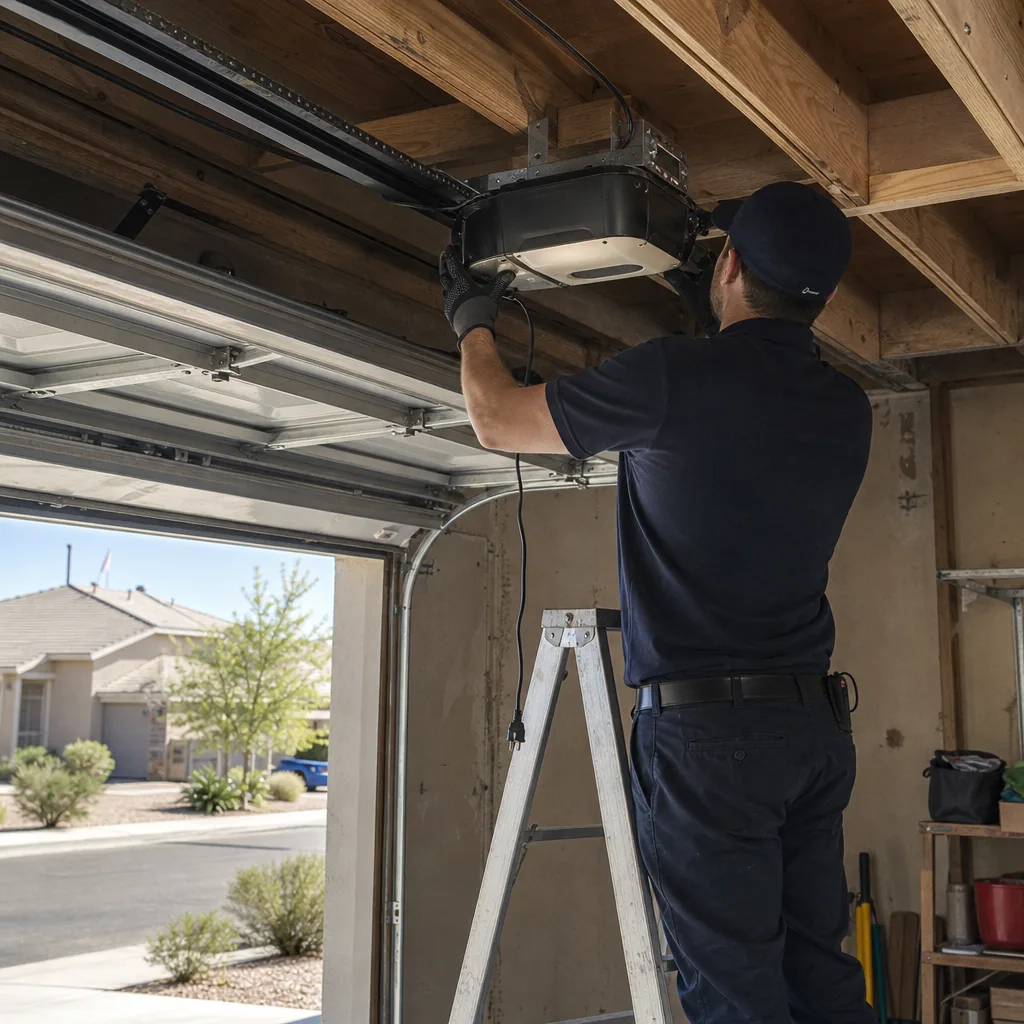
The difference between a warning and an emergency is timing, and timing comes down to observable criteria: a gap in a torsion spring coil, a frayed cable at the drum, a door that moves wrong during a cycle, or a bang followed by a door that won’t lift. Those are stop-using-the-door situations. A squeaky roller or a hardened weather seal is a monitor-and-schedule item. When in doubt, run the 60-second inspection and pay attention to what you hear. If you’re in Whitney and something has changed, our team answers live 24/7 including holidays and will tell you whether it’s a same-day call or a scheduled visit. Written price before any work starts. Free second opinion on any other company’s written estimate. And a 365-Day Done Right Promise on the repair – if it’s not right, we make it right. Call (888) 402-1096 for a free estimate in Whitney.
Written by the team at Servo Garage Doors Whitney.