
Last updated November 18, 2026
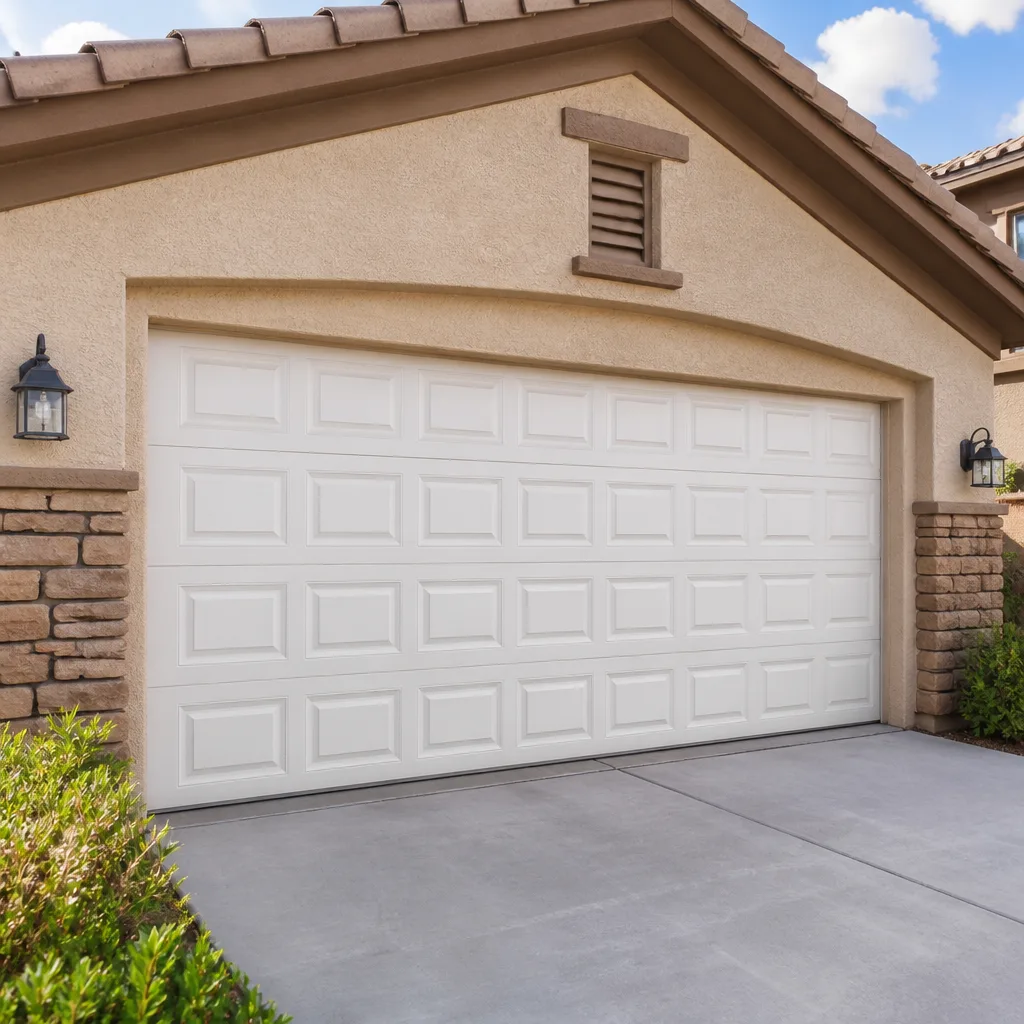 Raised-panel steel
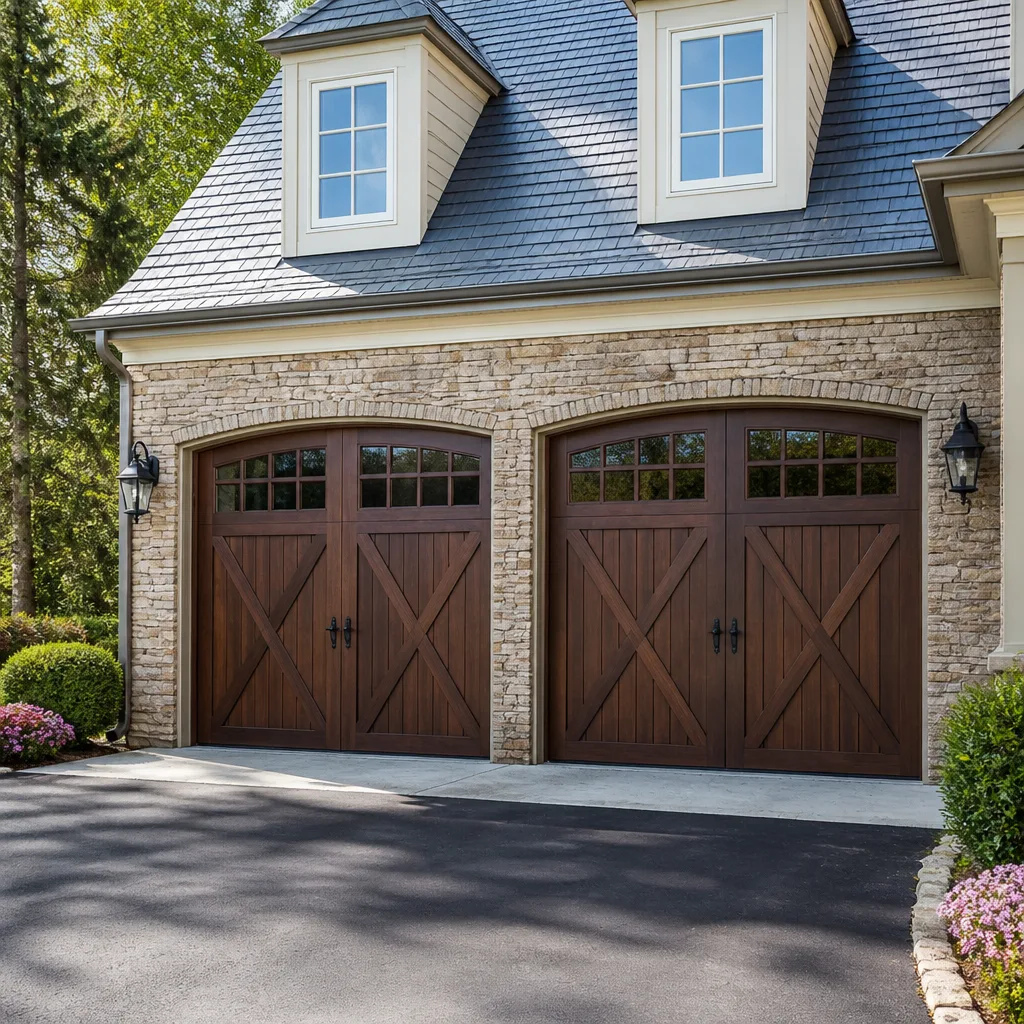 Carriage house
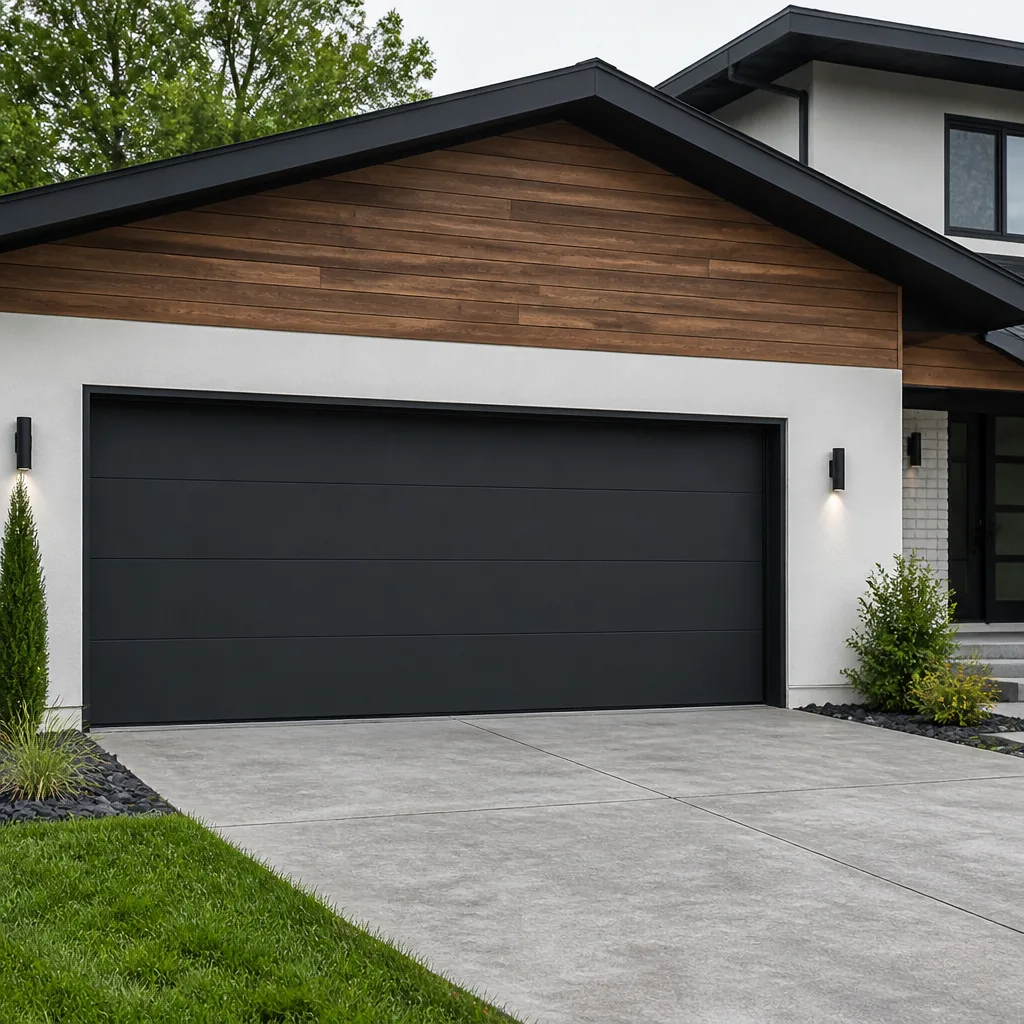 Modern flush
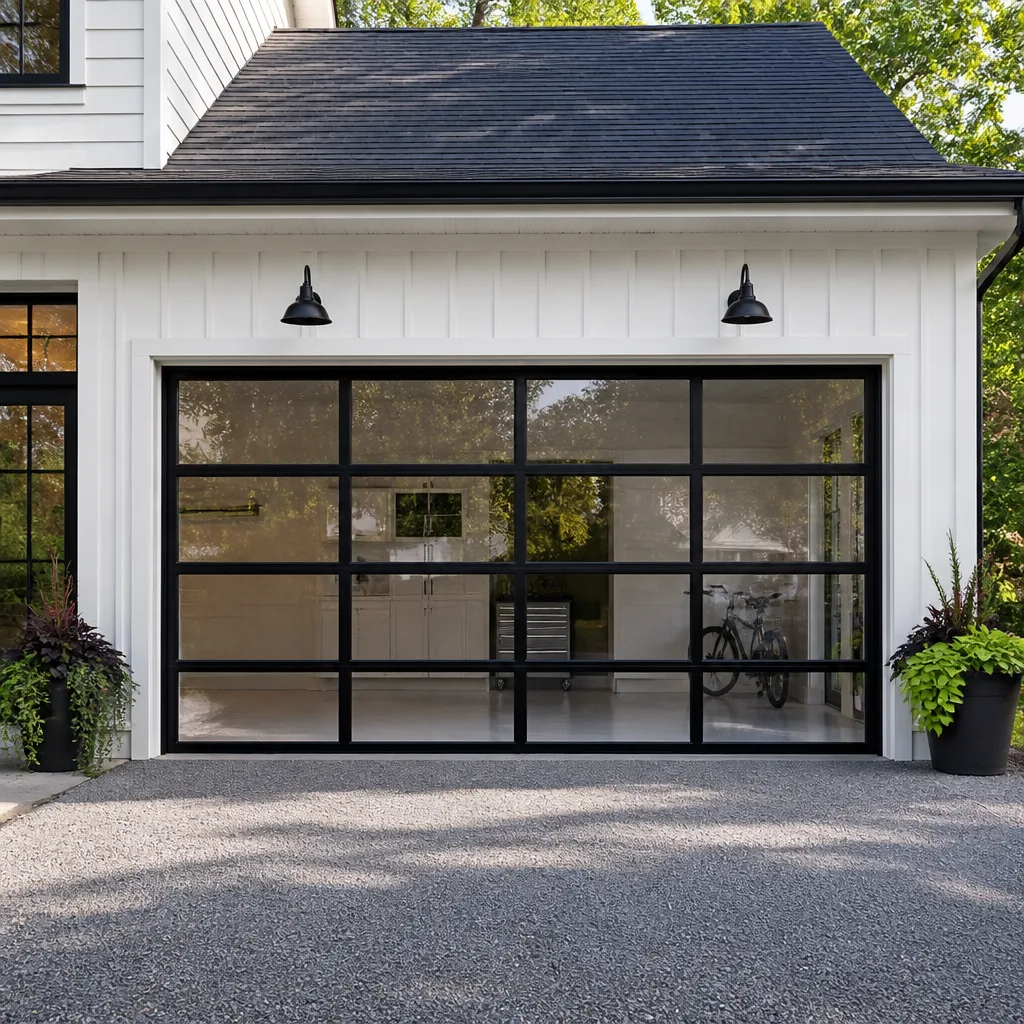 Full-view glass
 LiftMaster openers
 Chamberlain openers
Full 25-point door and opener safety check with every visit - springs, cables, rollers, tracks, and your LiftMaster or Chamberlain opener included
You get a price before we start. It does not change when the pro arrives.
Get your free estimateGarage Door Parts Troubleshooting: Common Problems and How to Fix Them
Most garage door failures aren’t mysteries. They’re one of five parts giving up in a predictable way, and the symptom tells you which one before anyone touches the door. A door that opens six inches and stops is almost always a broken torsion spring, and you can confirm it in about thirty seconds by looking at the coiled spring above the door header. In our experience across Whitney, homeowners have never been shown where to look, so they describe the problem in feelings (“it’s acting weird”) instead of facts. This guide teaches the diagnostic logic so you can name the part, describe the failure, and know what to expect when a technician arrives.
Quick Answer
Garage door problems usually trace back to one of five components: the torsion spring, the cables, the rollers, the hinges, or the opener’s logic board. To isolate the cause, first release the door from the opener with the manual pull cord and try lifting it by hand. If the door still sticks, binds, or won’t stay up, the problem is in the door hardware, not the opener. If the door moves easily by hand but the motor fails to raise it, the fault is in the opener.
Styles & brands we work with
- Raised-panel steel
- Carriage house
- Modern flush
- Full-view glass
- LiftMaster openers
- Chamberlain openers
Table of Contents
- The Symptom Tree: What Each Failure Mode Points To
- First, Isolate: Door Problem or Opener Problem?
- Visible Failure Indicators for Every Major Part
- Parts That Fail Silently Until They Don’t
- Springs and Cables: The Parts You Should Never Touch
- Why the Photo Record Matters Before You Pay
- What We See Specifically in Whitney
- What Parts and Repairs Typically Cost
 Before
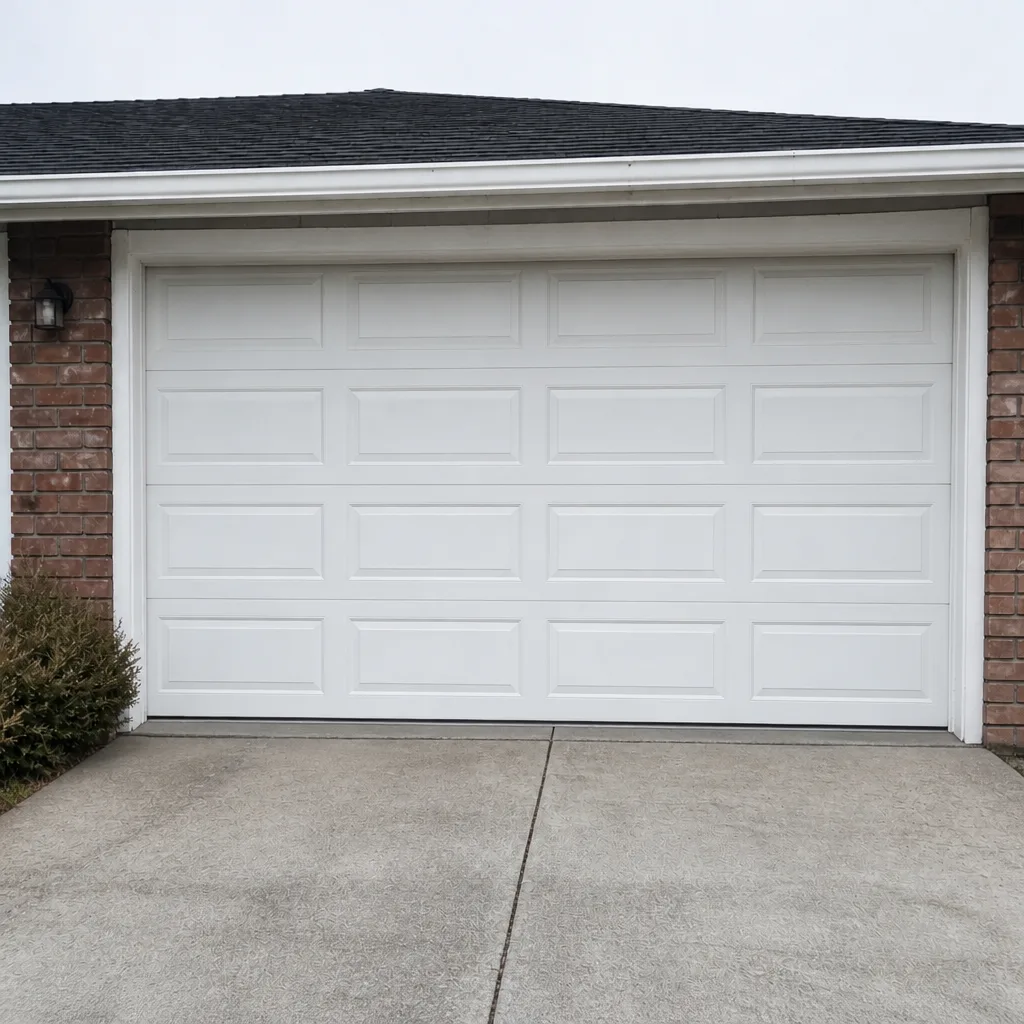 After
The Symptom Tree: What Each Failure Mode Points To
Symptoms cluster. A door that won’t move at all behaves differently from one that moves unevenly, and those patterns point to different parts. Learn these four buckets and you’ll describe your failure accurately when you call.
- Door won’t move at all. Either the torsion spring has snapped or a cable has come off the drum. If you look at the spring above the header and see a gap in the coil, that’s the answer.
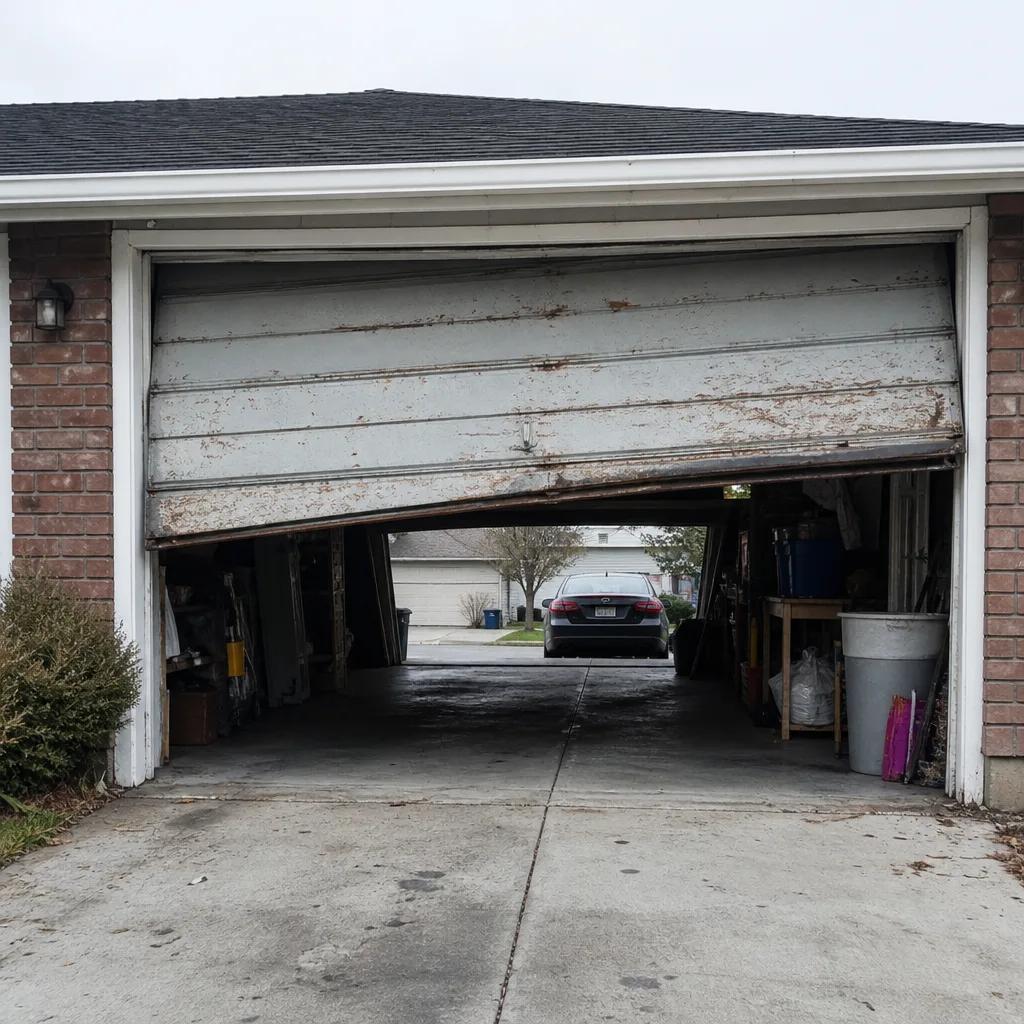
- Door opens unevenly, one side lagging. Usually a cable that has slipped off the drum on one side, or a seized roller on that side. The door is being pulled crooked because one corner isn’t tracking.
- Door falls faster than it rises. Spring tension is insufficient for the door’s weight. A torsion spring that has lost preload, or a door that was re-sprung with the wrong wire gauge, will drop hard and feel heavy on the way up.
- Door binds mid-travel. Track misalignment or a failing hinge. The door catches at the same point every cycle because the roller on that hinge is no longer rolling true.
Each of these has a visible signature if you know where to look, and each repair involves different parts and different dollars. A broken spring is a spring replacement. A seized roller is a roller swap. Calling them the same thing wastes a service visit.
First, Isolate: Door Problem or Opener Problem?
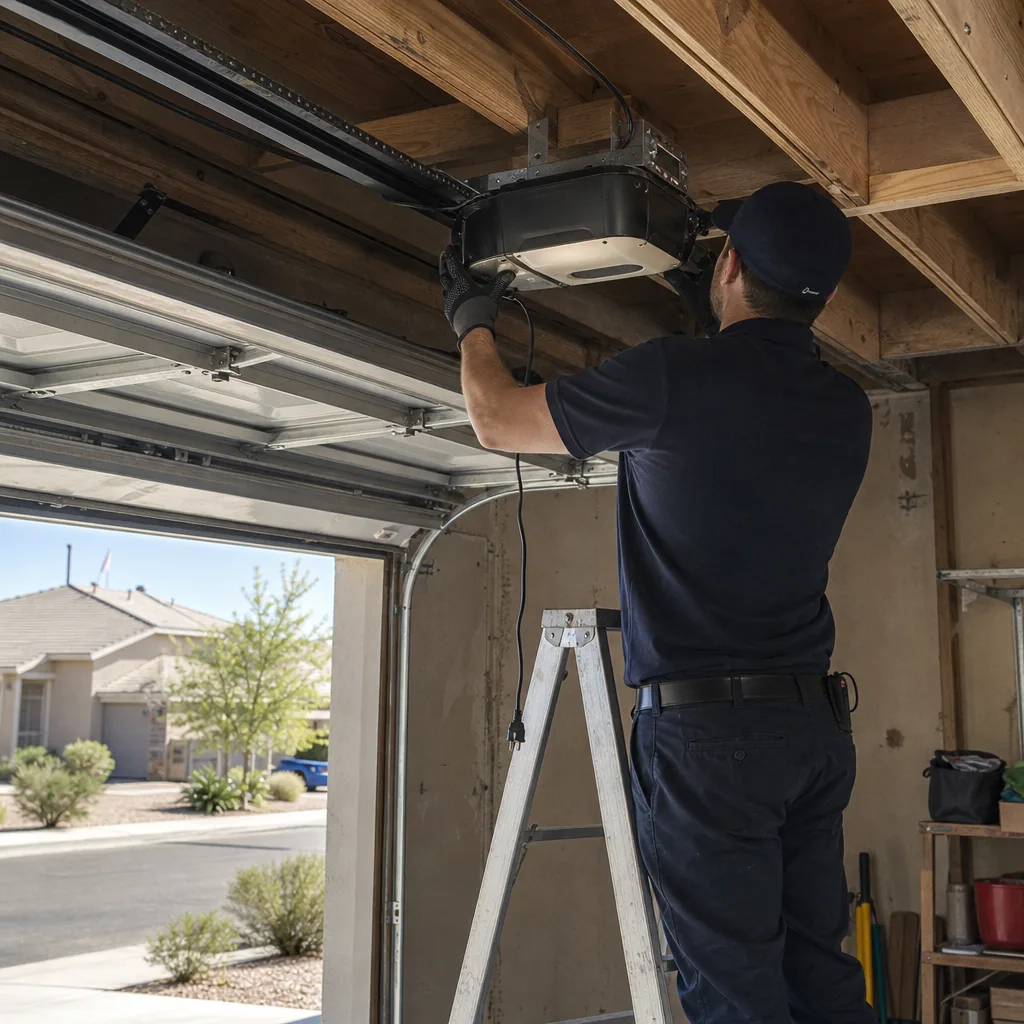
Before you diagnose anything, decide whether the door itself is at fault or the motor driving it. The manual release is the tool for this. It’s the pull cord hanging from the trolley carriage, the sliding bracket that connects the opener’s arm to the door.
- Pull the manual release cord. This disconnects the door from the opener so you can operate it by hand.
- Lift the door by hand. A properly balanced door should rise with modest effort and stay put at the halfway point when you let go. If it takes both arms, or it slams down, the door is out of balance and the problem is in the springs or cables.
- Push the door down by hand. If it binds, catches, or won’t travel smoothly, the track, rollers, or hinges are suspect.
- Try the opener with the door disconnected. If the trolley travels along the rail but the door doesn’t move, the opener is fine and the problem is mechanical. If the trolley doesn’t move at all, the opener or its logic board is the fault.
This single test saves time and money. In Whitney, we frequently find homeowners replacing a perfectly functional garage door opener when a seized roller was the actual problem. The opener was doing exactly what it was told; the door just wasn’t cooperating.
Visible Failure Indicators for Every Major Part
Most failed parts look different from healthy ones. You don’t need to disassemble anything; you need to know what a worn part looks like. Here’s what we photograph on every call.
- Broken torsion spring. A gap in the continuous coil above the door header, usually accompanied by a two-inch separation. The spring will be in two pieces, and the door feels weightless by hand.
- Frayed cable. Stranding visible at the drum wrap. The cable is made of woven steel wire, and when it starts to fail, individual strands snap and curl away from the bundle like a frayed rope.
- Cracked bottom bracket. A stress fracture at the lag hole where the cable attaches to the bottom corner of the door. This bracket carries the full tension of the cable and is a known failure point.
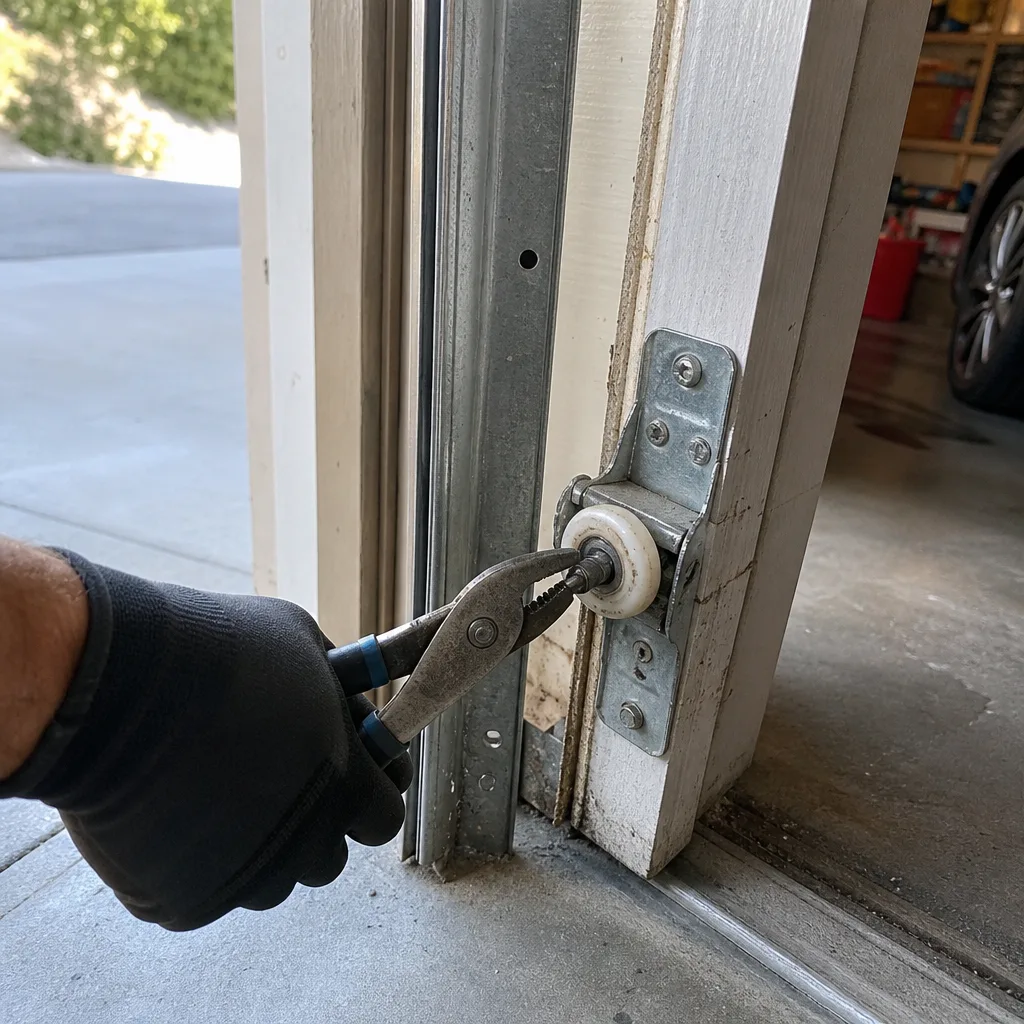
- Worn rollers. A nylon roller that has worn flat on one side, or a steel roller with a seized bearing. Roll flat spots are visible as a shiny patch on an otherwise dull wheel.
- Cracked hinges. The hinge leaf will show a hairline crack radiating from the screw hole. This is different from a stripped screw hole, where the fastener spins freely because the threads have torn out of the wood or metal.
Two of those failures look almost the same from the outside: a cracked hinge plate and a stripped hinge screw hole. Both cause a hinge to separate under load, but the repair is different. A cracked hinge needs the hinge replaced. A stripped screw hole needs the hole filled and re-tapped, or the hinge relocated to fresh material. That distinction matters, and it’s why we photograph the failed component before quoting.
Parts That Fail Silently Until They Don’t
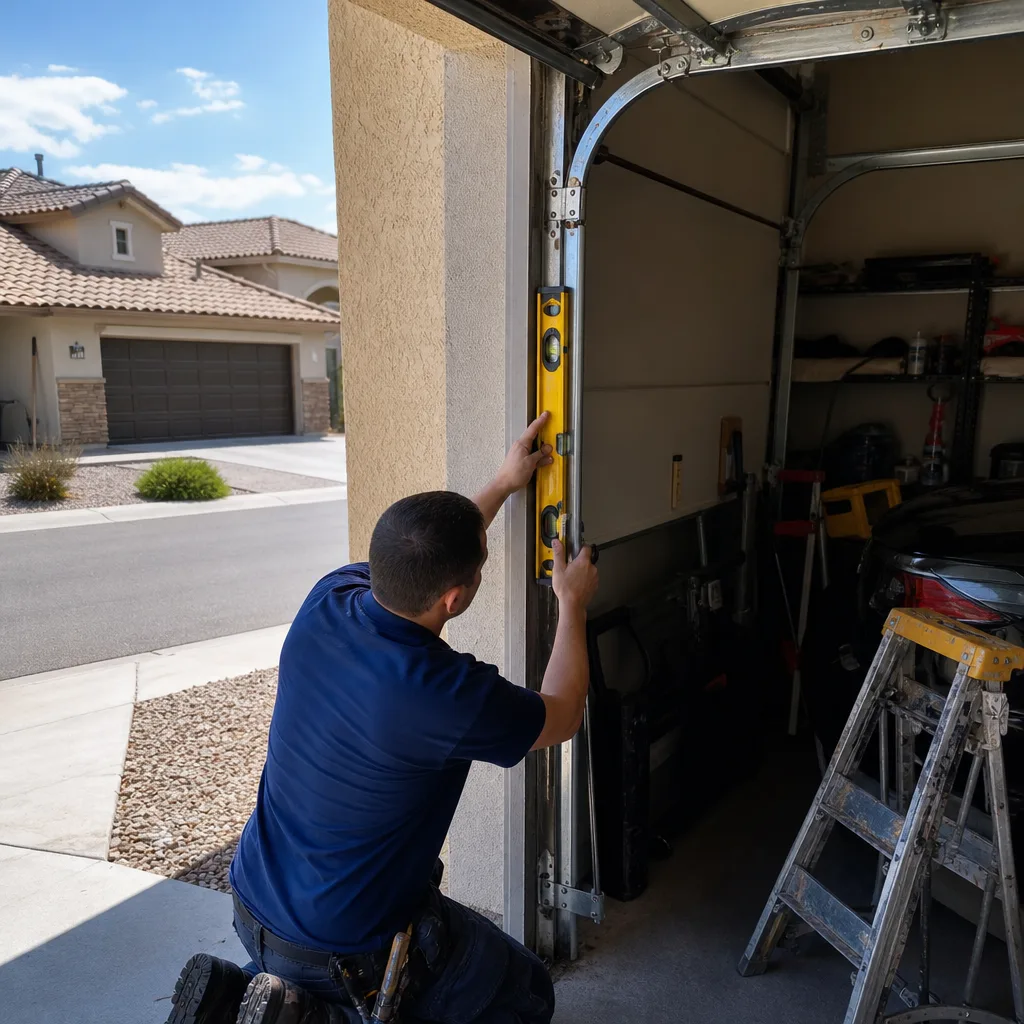
Some parts degrade gradually and give no warning. A roller that’s been wearing flat for six months doesn’t announce itself until it finally locks up and the door jumps the track. These are the parts worth inspecting on a routine basis.
- Nylon roller wheels. They wear flat before they seize. A flat-spotted roller adds vibration and noise that most homeowners dismiss as “the door getting old.” By the time it seizes, the door is off track.
- Bottom weatherseal. The rubber strip at the base of the door cracks before it separates. Once the seal tears free, you get water intrusion and a gap that lets in air and pests.
- Center bearing plates. The metal plate at the center of the torsion shaft wears oval before the shaft walks out of alignment. A slightly oval bearing plate lets the shaft wobble, which accelerates wear on the springs and cables.
These are the parts a trained eye catches during a tune-up and a homeowner misses until something breaks. A spring can be fine while a $6 roller is about to fail and jump the track, and the resulting repair is far more expensive than the roller would have been.
Springs and Cables: The Parts You Should Never Touch
Torsion springs and cables store enormous energy. A torsion spring on a standard residential door can be under hundreds of pounds of tension, and a cable under equal load. If you release that tension without the right winding bars and the right technique, it can snap with enough force to break bones. This is genuinely dangerous work, and it is not a DIY repair.
What you should do is look, not touch. Confirm the spring is broken by looking for the gap. Confirm the cable is off the drum by looking at the drum wrap. Then stop and call a trained technician. The repair involves winding the spring to a specific number of turns (which varies with door height and spring wire diameter), balancing the door, and testing every cycle. On a Whitney door, we document the spring wire diameter, the number of turns, and the door weight before we quote the replacement, so the new spring is matched to the door, not guessed at.
The same applies to cables. A cable replacement requires the correct drum, the correct cable length, and correct tension. The wrong length will either leave slack or preload the door unevenly, and either failure mode can damage the door or the opener. If you’re unsure, we handle garage door repair in Whitney and will tell you plainly whether a part needs replacing or just adjusting.
Why the Photo Record Matters Before You Pay
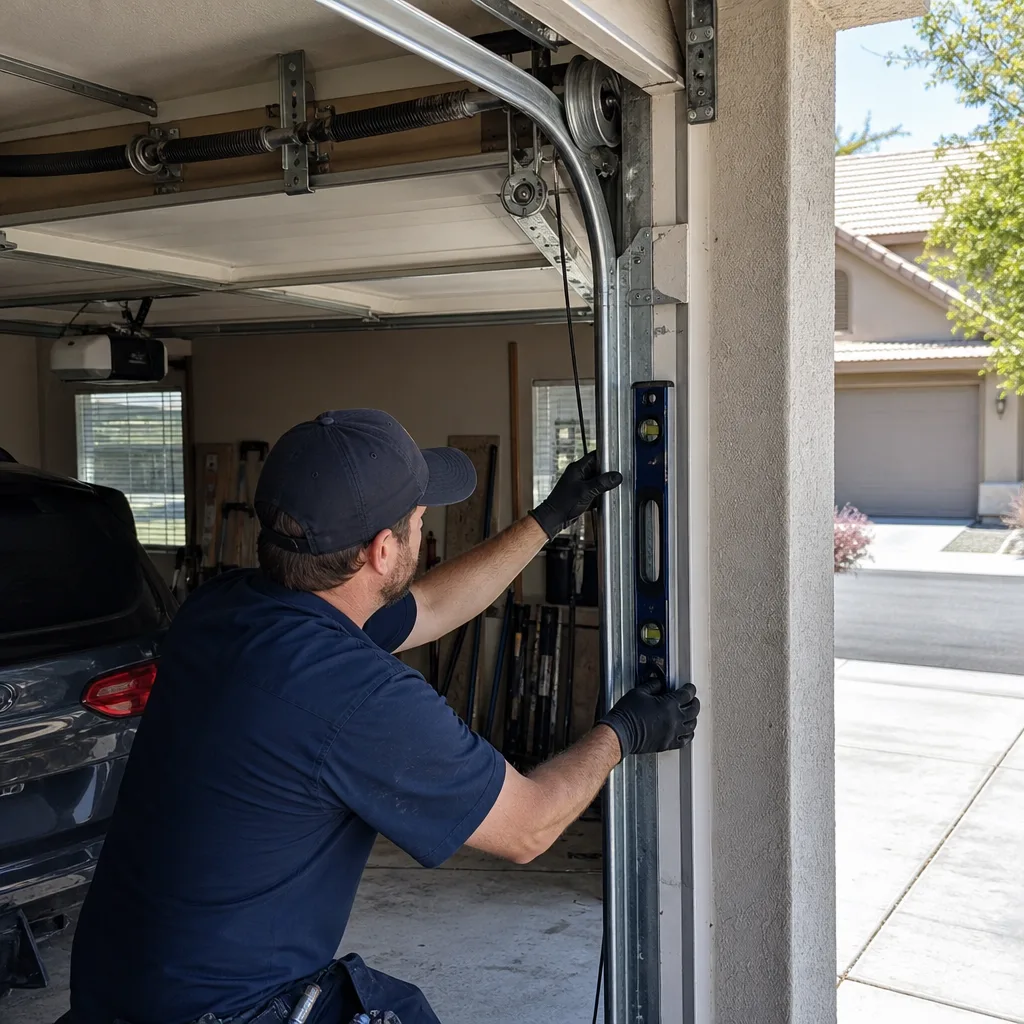
Here’s the part most homeowners never think to ask for: a photo of the failed component, taken before anyone quotes a replacement. The reason is simple. A cracked hinge looks different from a stripped hinge screw hole, and the repair for each is different. A worn roller looks different from a seized one, and so does a spring that has lost preload versus one that has snapped. Without a photo, you can’t verify which failure you’re paying to fix.
This is what Clause 4 of The Haven Standard codifies: the technician photographs the failed part before quoting the replacement. It’s not an upsell tool, it’s a documentation tool. Every job closes with a photo record delivered to the customer, showing what was found and what was done. When a technician tells you “your spring is bad,” you should be able to see the spring in the photo and see what made it bad.
The same standard applies to pricing. Clause 1 means a flat, written price and a written scope before any work starts. Not a verbal estimate. Not “call for a quote.” A written number on paper, with the scope spelled out, so you know what’s being replaced and what isn’t. You can read more about the standard on our Servo Garage Doors Whitney home page.
What We See Specifically in Whitney
Whitney’s climate does particular things to garage door parts. The summer heat bakes the rubber bottom seal until it cracks, which is why we replace more weatherseal here in July and August than in any other two months. The dry air also dries out the lubrication on rollers and hinges, so mid-summer is when we see the most seized rollers and binding doors.
Whitney homes also tend to have doors installed by production builders in the 2000s and 2010s, which means many of them are still running on original springs and rollers that are now on the far side of their expected life. A torsion spring is typically rated for about 10,000 cycles, and a door that cycles four times a day hits that number in roughly seven years. When we’re called out to a home built in 2012, we expect to find at least one part that’s already well past its rated cycle count. That’s not a sales line, it’s arithmetic.
In Whitney specifically, we also pay attention to the door’s southern exposure. A door that faces the afternoon sun runs hotter than one in shade, and the spring and seal on that door will fail faster than a neighbor’s door that faces north. When you’re pricing a repair, it helps to know which side of the house your door is on.
What Parts and Repairs Typically Cost
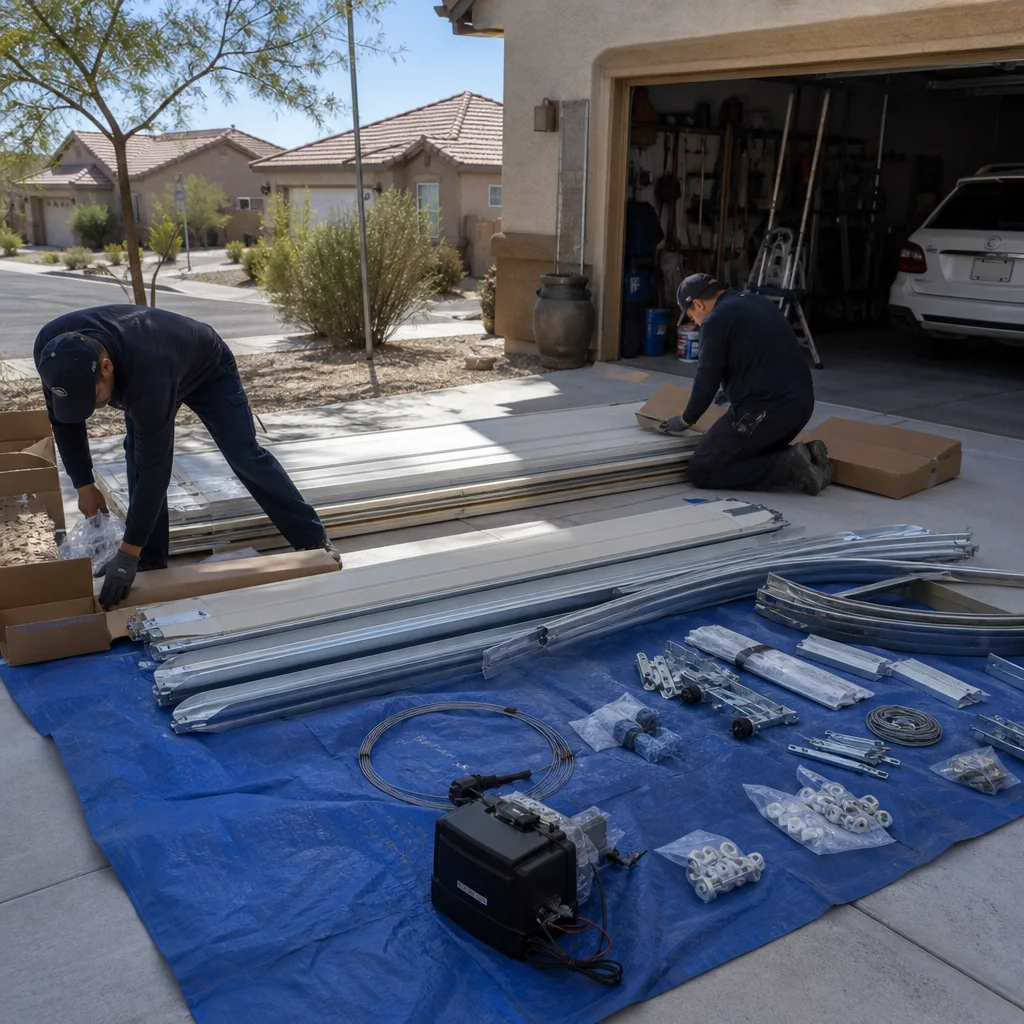
Prices vary with door size, brand, and spring wire diameter, but these ranges reflect what we see on typical Whitney residential jobs. Every number is given as a written price before work starts.
| Part or Repair | Typical Range |
|---|---|
| Torsion spring replacement (per spring) | $180 – $340 |
| Cable replacement (per side) | $90 – $180 |
| Roller replacement (per roller) | $12 – $30 |
| Hinge replacement (per hinge) | $15 – $40 |
| Bottom weatherseal replacement | $90 – $200 |
| Center bearing plate replacement | $120 – $250 |
| Full tune-up with roller and hinge service | $90 – $160 |
These are ranges, not quotes. The written price you receive will reflect your door’s actual size, spring wire gauge, and condition. If a technician quotes you a number before looking at the door, be skeptical. If they quote you after looking but won’t put it in writing, be more skeptical. For an exact number, call (888) 402-1096 for a free estimate; we’ll measure the door and give you the flat price in writing before anything is touched.
Common Mistakes to Avoid
- Replacing the opener when the door is the problem. If the door binds by hand, a new motor won’t fix it. Test the door with the manual release before spending a dollar on electronics.
- Using WD-40 as a lubricant. It’s a solvent, not a lubricant, and it dries out the rollers faster than leaving them alone. Use a proper garage door lubricant on rollers, hinges, and the spring.
- Adjusting spring tension yourself. A torsion spring is under dangerous force. This is the one repair you should never attempt without training, and no amount of YouTube makes it safe.
- Ignoring a noisy door. Grinding, popping, or squealing is the door telling you a part is wearing. A $6 roller caught early is cheaper than a track repair after the roller seizes. In Whitney’s dry air, noises tend to appear in mid-summer when lubrication has dried out.
- Repairing a hinge crack with a longer screw. A cracked hinge is cracked. A longer screw won’t fix the crack, and a stripped hole needs a different repair than a cracked plate. Photograph the part and match the repair to the failure.
- Buying replacement parts by sight alone. Two springs can look identical and carry different tension ratings. Match the wire diameter and number of turns, not the color of the spring.
- Accepting a verbal quote. Get the price in writing, with the scope spelled out, before work starts. If a contractor won’t document the price and the part, keep calling.
See the difference
BeforeAfter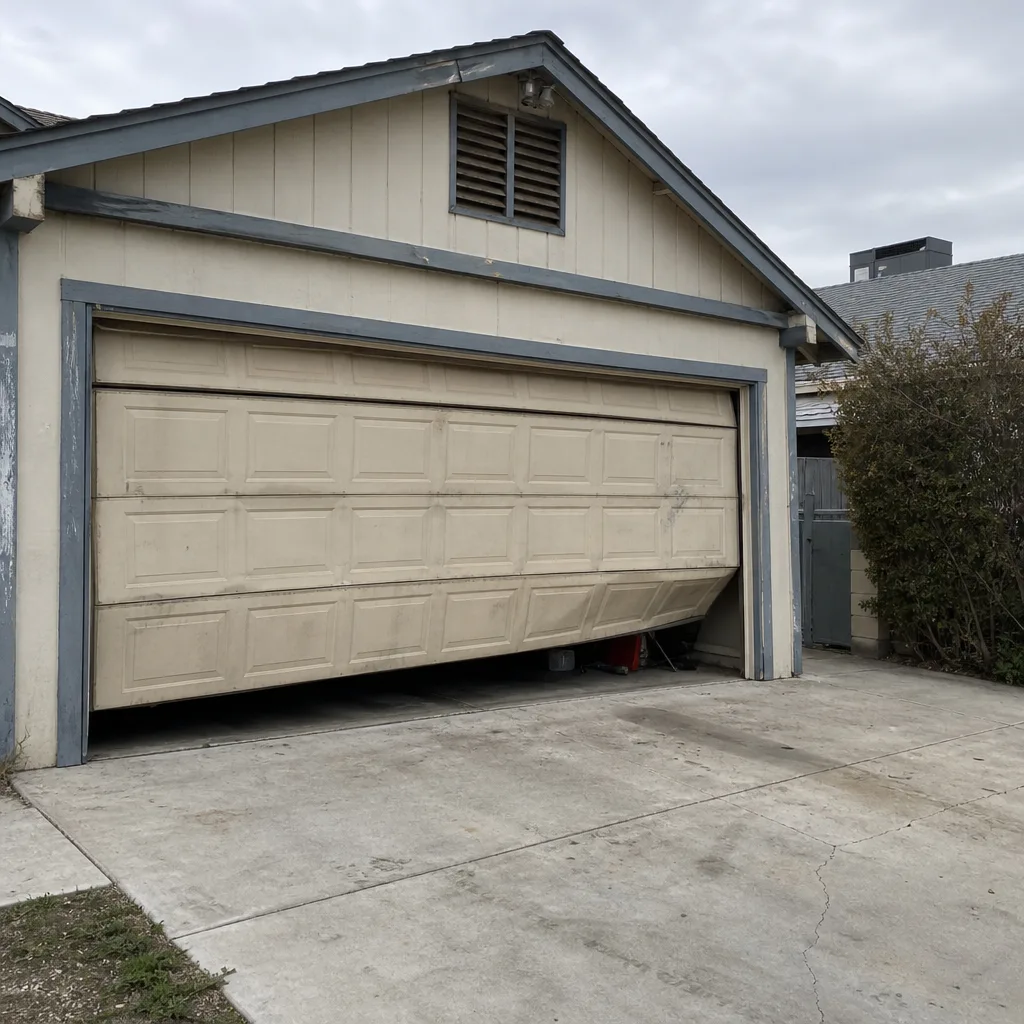 Before
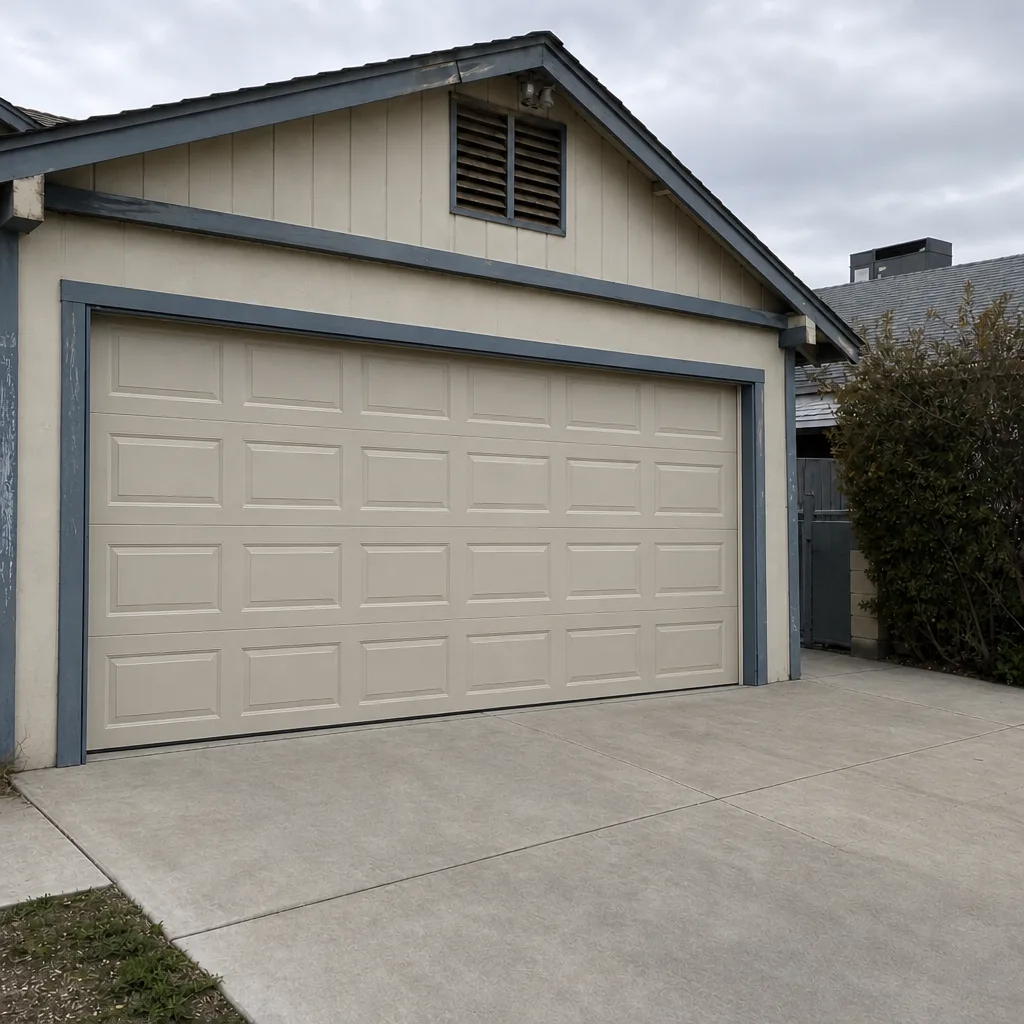 After
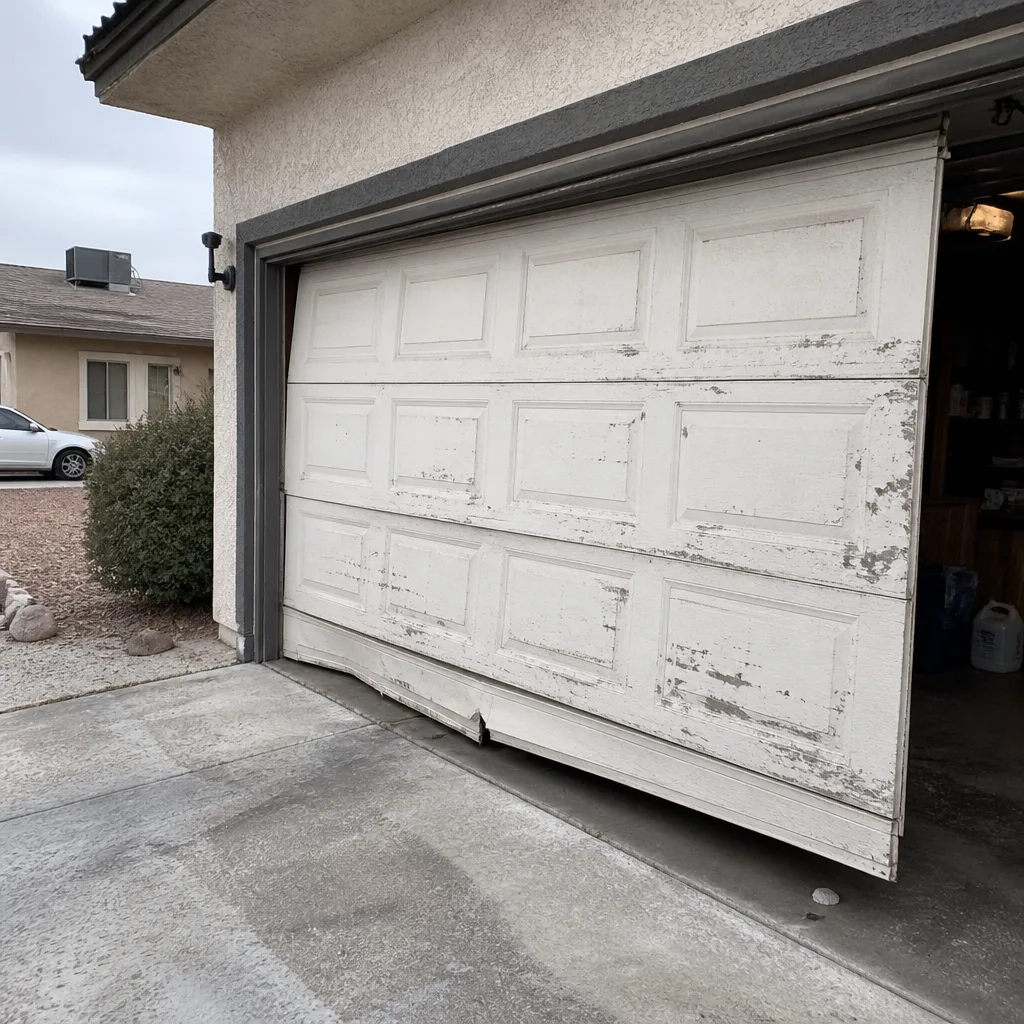 Before
 After
When to Call a Professional
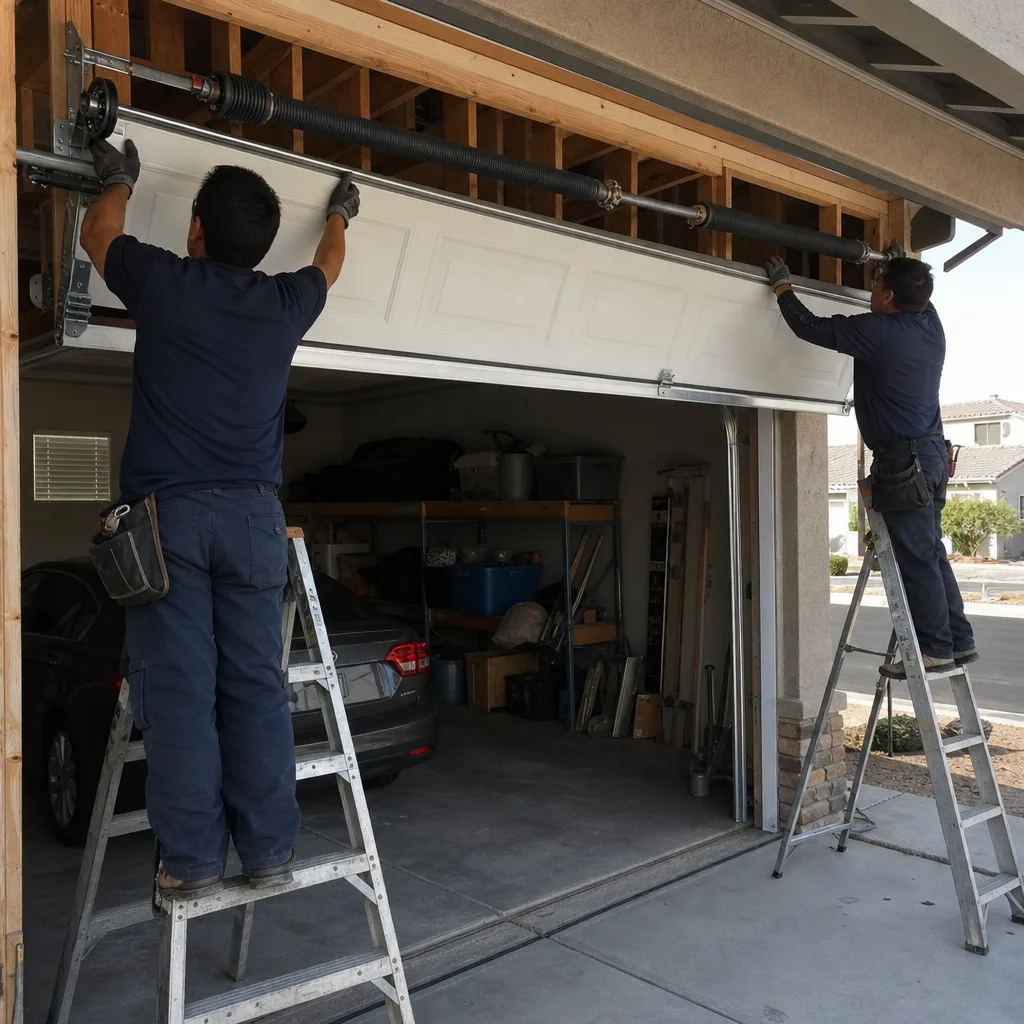
Call a professional if the door won’t move at all, if a cable is visibly off the drum, or if the door drops hard when released by hand. Call immediately if the door is stuck open and you can’t secure the house, or if a spring is broken and the door is hanging. These are safety issues, not convenience issues. For less urgent problems (a noisy roller, a cracked weatherseal, a door that binds slightly at one point), a scheduled service visit is fine and usually cheaper. Servo Garage Doors Whitney offers free estimates in Whitney with a flat, written price before any work starts. Our technicians have up to 11 years of experience and service all major brands, including LiftMaster, Chamberlain, Genie, and Clopay. Call (888) 402-1096 and a live person will answer, day or night.
Frequently Asked Questions
Torsion spring replacement in Whitney typically runs $180 – $340 per spring, depending on the door’s size and the spring wire diameter. Cables are usually replaced at the same time on doors older than ten years. Call (888) 402-1096 for an exact quote; estimates are free and the written price is agreed before any work starts.
Pull the manual release cord to disconnect the door from the opener, then lift the door by hand. If the door is extremely heavy, drops hard, or won’t stay up at the halfway point, the problem is the spring or cables. If the door moves easily by hand but the opener won’t raise it, the fault is in the opener or its logic board.
For emergency calls in Whitney, we answer the phone 24/7 with a live person and can often dispatch the same day. Broken springs, doors off-track, and doors stuck open are the highest priority. Call (888) 402-1096 and we’ll tell you honestly what’s available today.
No. Our written price is agreed before any work starts, per Clause 1 of The Haven Standard. If the technician finds an additional problem during the repair, they’ll show you the photo, explain the scope, and quote the additional work separately before touching it. You’re never surprised by a line item you didn’t approve.
Yes. The local independent business that performs the work holds its own garage door license and carries insurance, as required in Nevada. The license number is provided on the paperwork, not buried in fine print. Every technician is background-checked and uniformed.
Whitney’s summer heat and dry air accelerate wear on rubber seals, roller lubrication, and springs. Doors facing south or west run hotter and fail sooner than doors in shade. A door cycling four times a day hits its spring’s rated 10,000 cycles in about seven years, which is why we see a lot of spring failures on Whitney homes built in the 2010s.
The Bottom Line
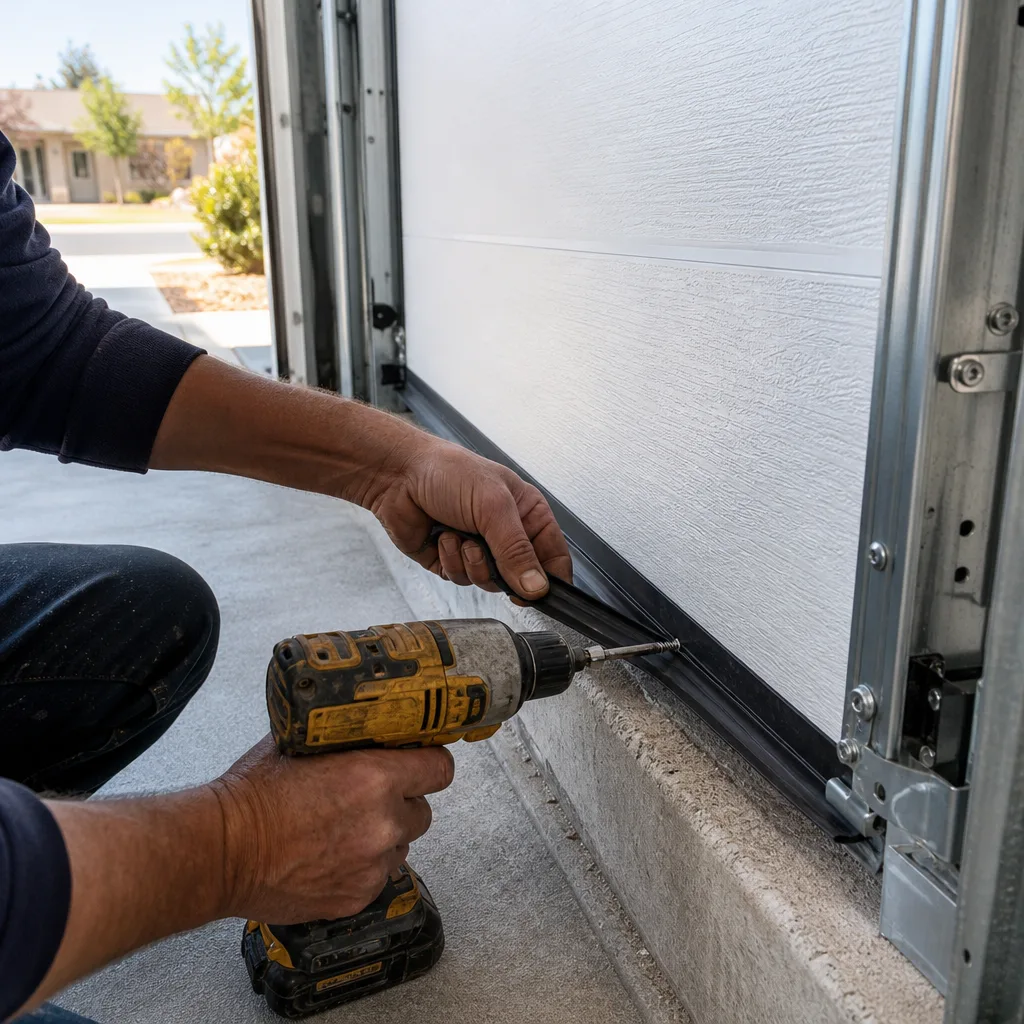
Garage door failures almost always come from one of five parts: the torsion spring, cables, rollers, hinges, or the opener. The symptom tells you which. A door that opens six inches and stops is a broken spring; an uneven door is a cable or roller; a door that binds mid-travel is a track or hinge. Isolate the door from the opener with the manual release, then narrow from there. And insist on the photo record before you pay. A cracked hinge, a stripped screw hole, and a seized roller all look similar from across the garage, but the repairs are different, and a written price with a photo is how you know what you’re paying for. If you’re in Whitney and the door won’t cooperate, call (888) 402-1096 for a free estimate with a written price before any work starts.
Written by the team at Servo Garage Doors Whitney.