
Last updated November 18, 2026
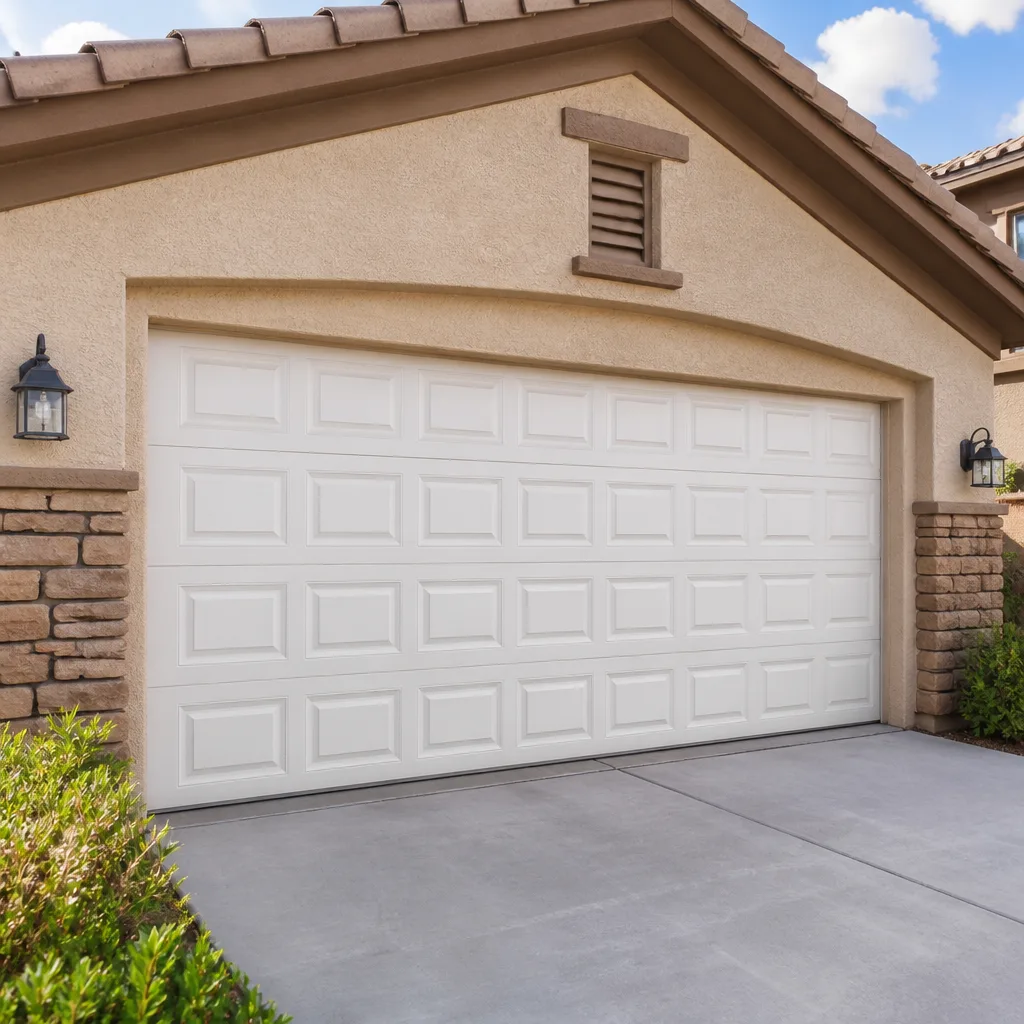 Raised-panel steel
 Carriage house
 Modern flush
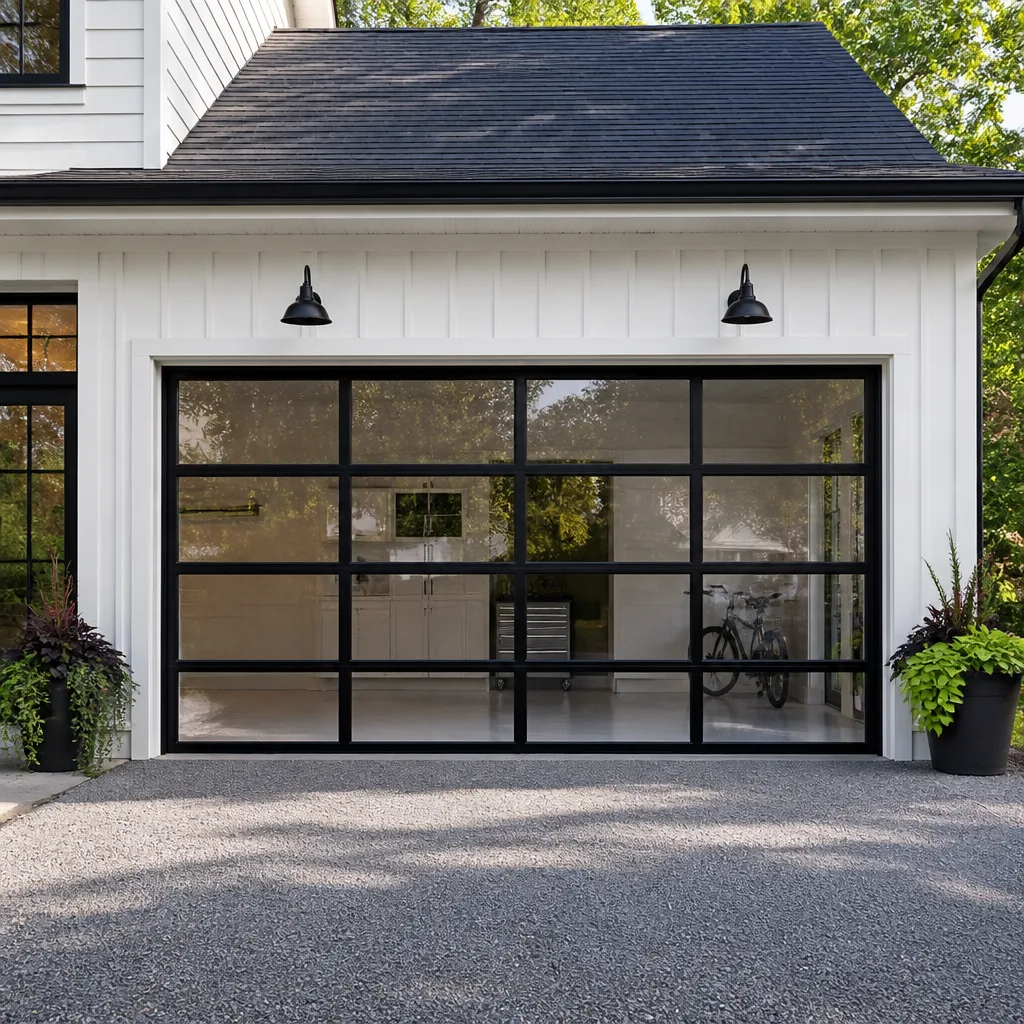 Full-view glass
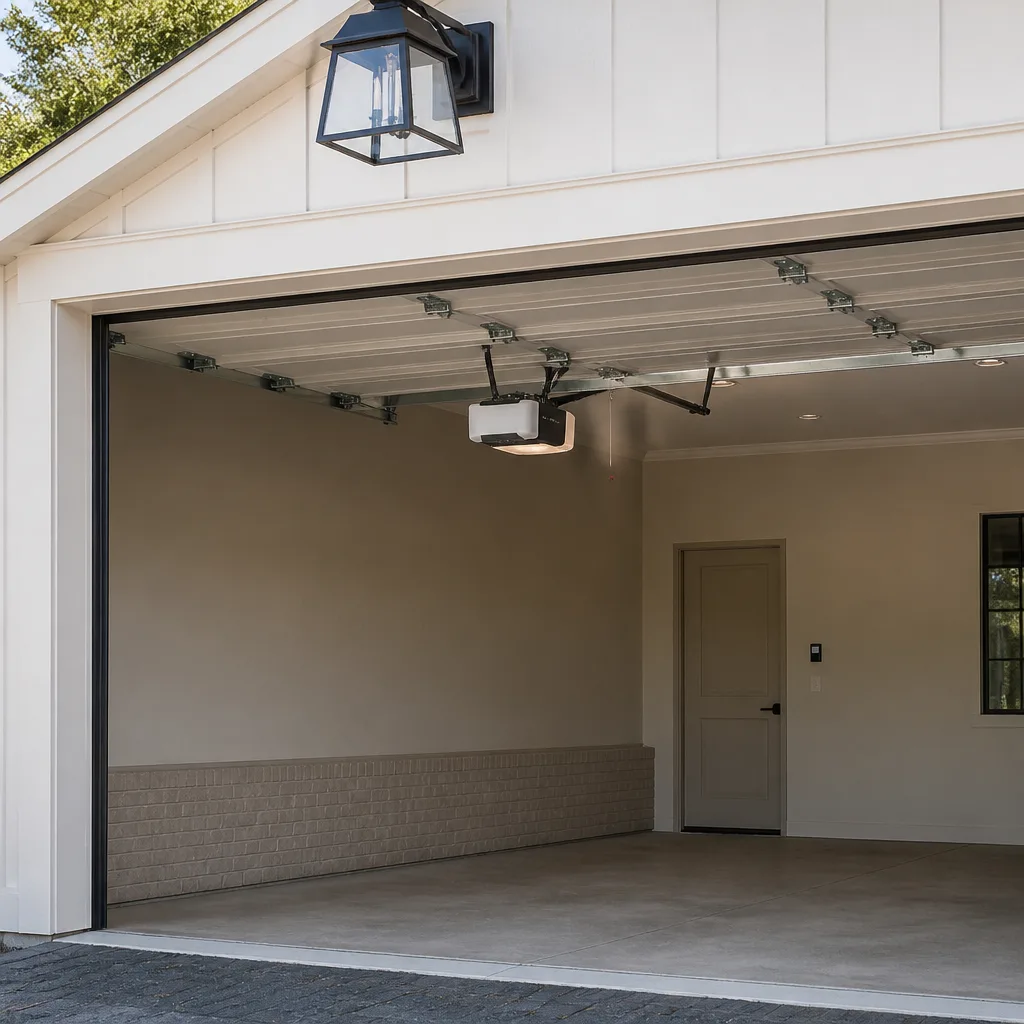 LiftMaster openers
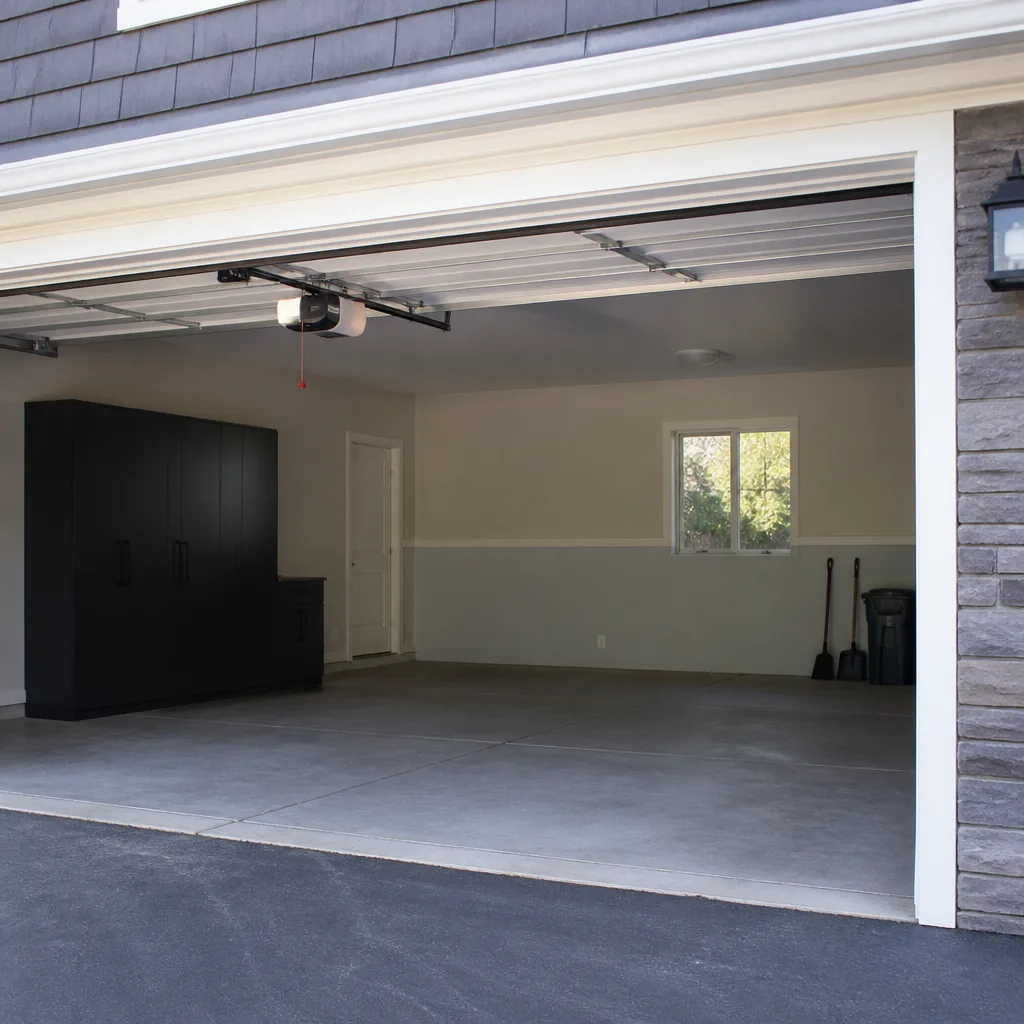 Chamberlain openers
Full 25-point door and opener safety check with every visit - springs, cables, rollers, tracks, and your LiftMaster or Chamberlain opener included
You get a price before we start. It does not change when the pro arrives.
Get your free estimateDIY vs Professional Garage Door Repair: What’s Safe to Do Yourself
A wound torsion spring on a standard residential door holds roughly 100 foot-pounds of torque. The most-watched tutorial for replacing one has passed 400,000 views. Its comment section carries at least seven disclosures of injury from people who tried it. That gap between views and injuries is the whole conversation. The DIY-versus-professional question isn’t really about skill. It’s about stored energy, and which components hold it. We’ll draw the line by component, put real dollar figures next to both sides, and show you the parts of a garage door system in Whitney you genuinely can handle yourself.
Quick Answer
You can safely handle weather seals, photo-eye alignment, lubrication, and limit-switch adjustments yourself. You should not touch torsion springs, extension springs, cables, or bottom brackets. Those parts store enough energy to break bones or worse when they fail, and they fail suddenly. Everything else sits somewhere in between and usually needs a professional anyway.
Styles & brands we work with
- Raised-panel steel
- Carriage house
- Modern flush
- Full-view glass
- LiftMaster openers
- Chamberlain openers
Table of Contents
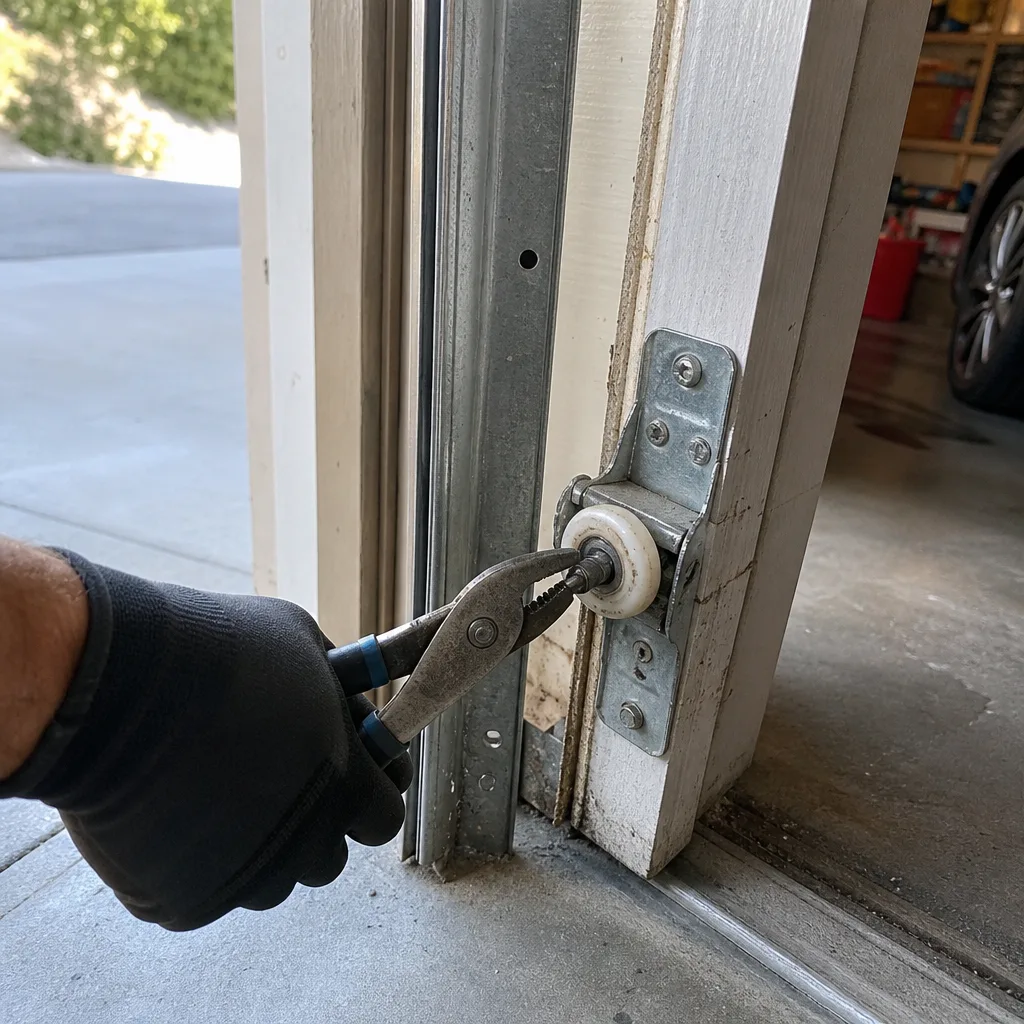
- The Real Variable: Stored Energy, Not Skill
- The Safe List: Repairs You Can Do Yourself
- The Not-Safe List: Repairs That Require a Professional
- Why Torsion vs Extension Spring Changes the Conversation
- What Professional Repair Costs vs the Medical Bill
- How to Pre-Inspect Your Door Before Calling
- What Documentation to Request From a Professional
- Common Mistakes to Avoid
- When to Call a Professional
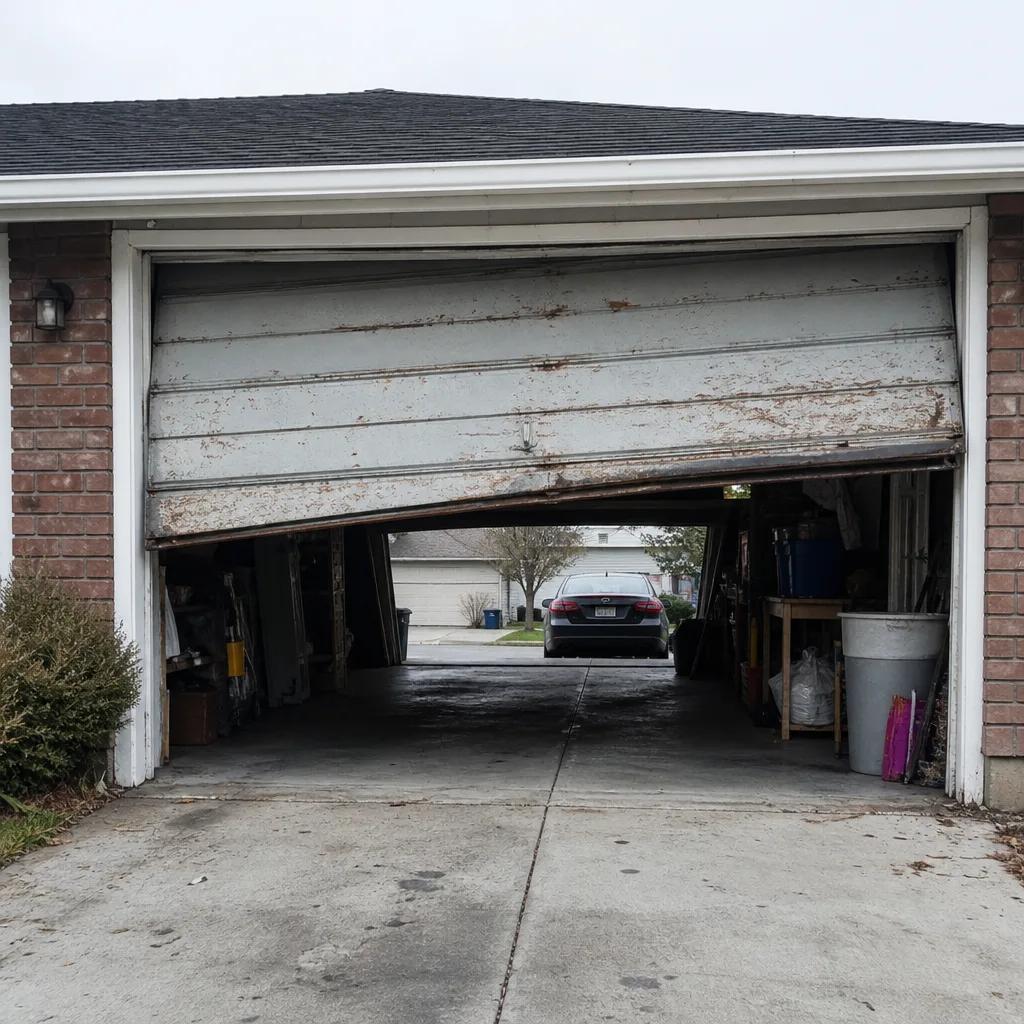 Before
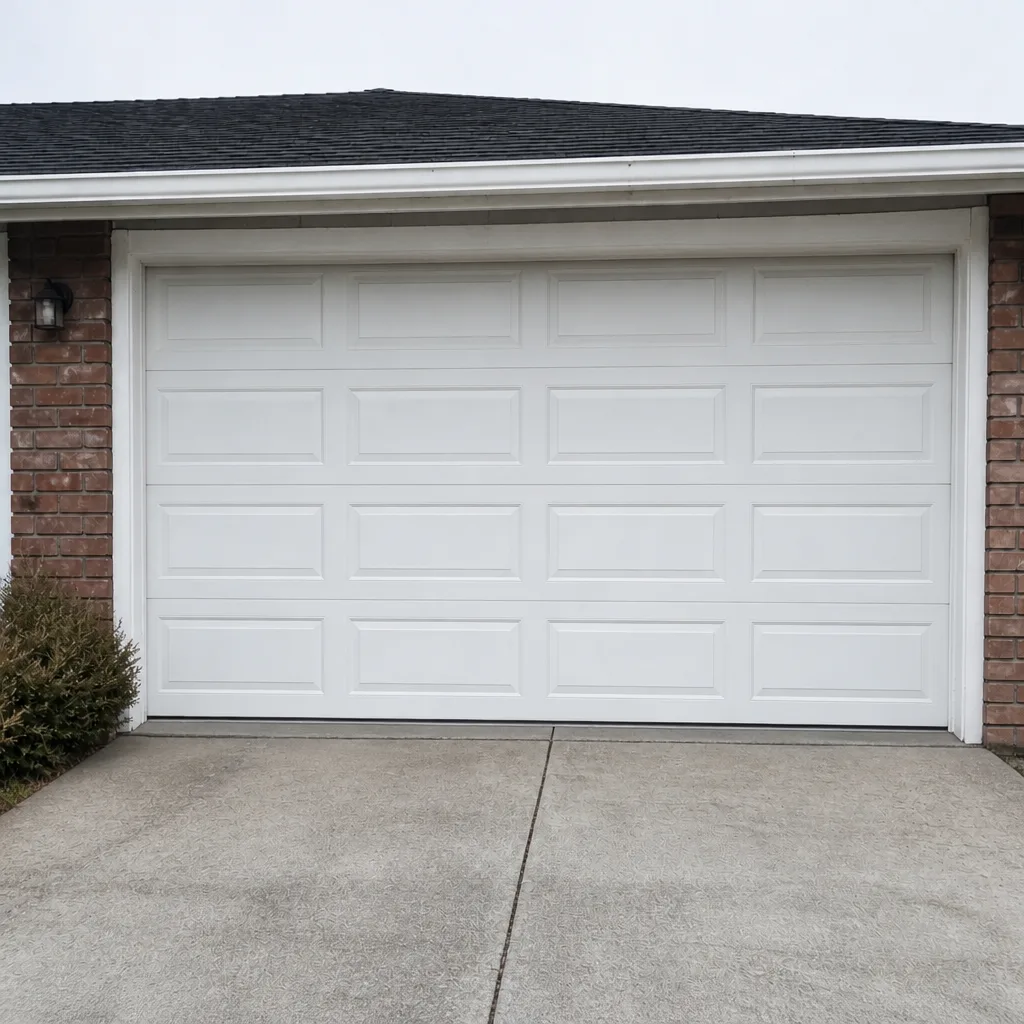 After
The Real Variable: Stored Energy, Not Skill
Most DIY guidance frames garage door repair as a difficulty ladder: easy at the bottom, hard at the top. That framing is wrong, and it’s why people get hurt. A bottom bracket on a cable-tensioned door is not “hard,” mechanically speaking. It’s a few bolts. But it holds the entire cable load, and when it releases under tension, the cable whips. Difficulty measures how much technique a job requires. Stored energy measures what the job does to you when something slips.
Here’s how we think about it, and it applies whether you’re in Whitney or anywhere else. Every garage door system has two energy zones. The safe zone includes anything that doesn’t hold spring or cable tension: tracks, rollers, seals, sensors, the opener unit itself. The danger zone includes anything that does hold tension: springs, cables, brackets, drums, and the shafts they sit on. There’s almost no overlap.
That one distinction draws a cleaner line than any certification requirement. It also explains why a homeowner who’s rebuilt an engine can still be badly hurt by a torsion spring. The spring doesn’t care about your mechanical experience. It only cares whether you released its tension in the right order.
Whitney’s climate adds a wrinkle. The desert heat and dry air we get here accelerate spring fatigue and dry out seals faster than in milder regions, so springs in Whitney tend to fail after fewer cycles than homeowners expect. That means more Whitney doors reach the danger zone during their service life, not fewer.
The Safe List: Repairs You Can Do Yourself
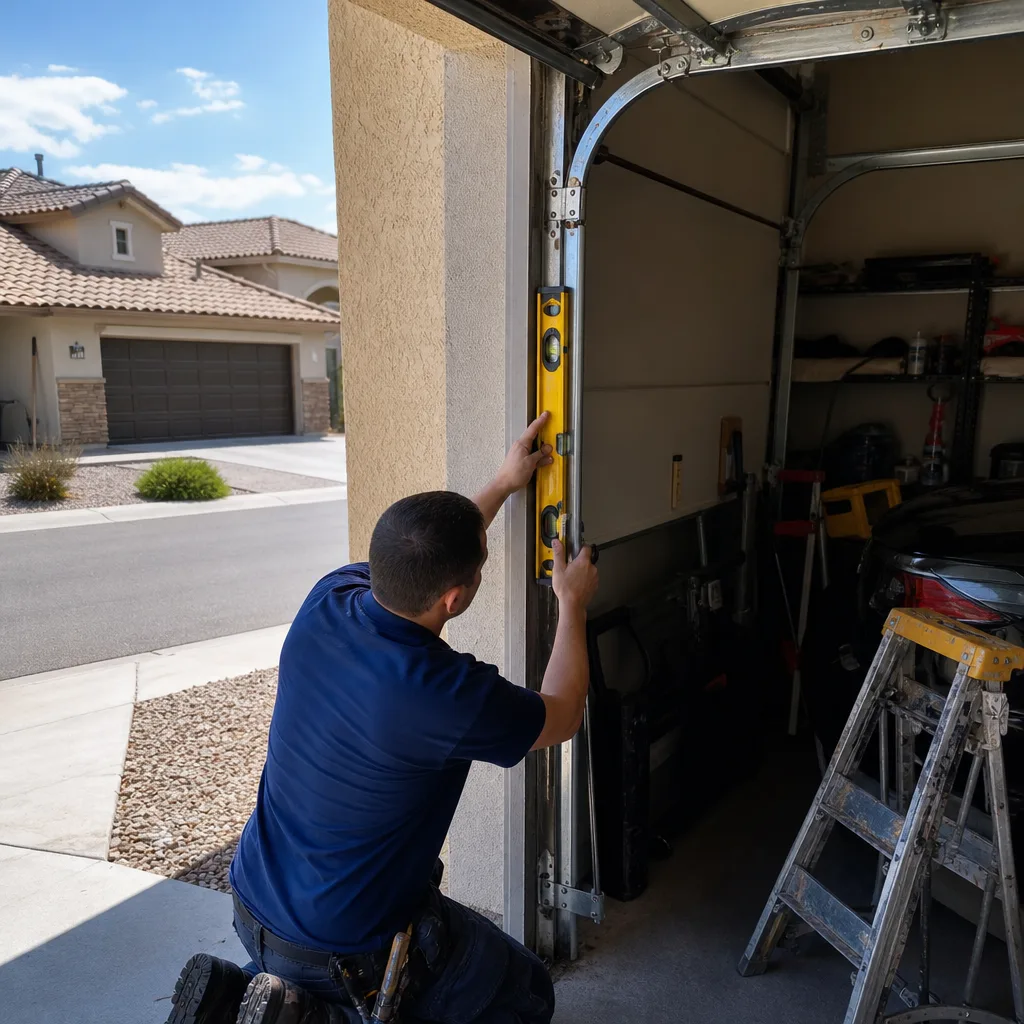
These jobs carry no stored-energy risk and are genuinely worth doing yourself. None of them require special tools. All of them are cheap enough that even if you get it wrong, the downside is a small repair bill rather than an emergency room visit.
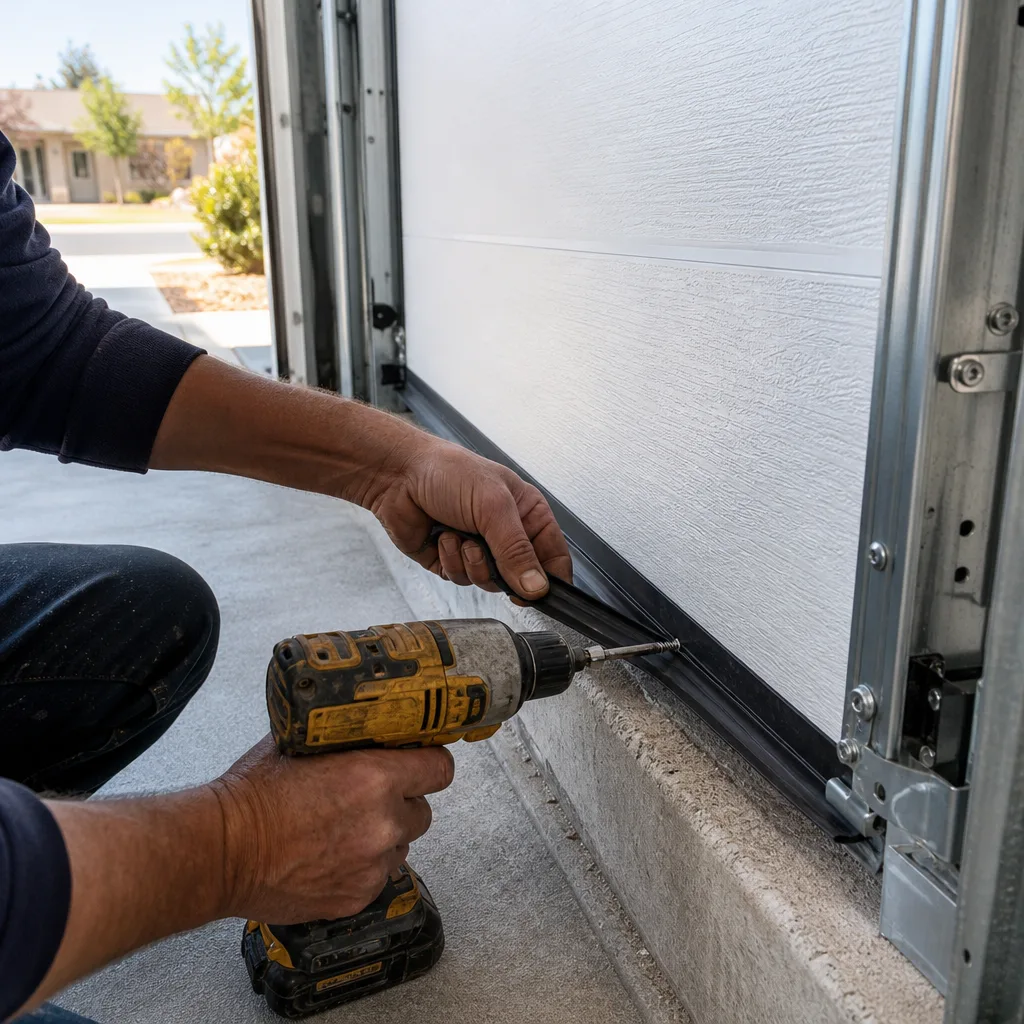
- Weather seal replacement. The rubber strip along the bottom of the door, and the brush or vinyl seals on the sides, pull out of their retainers and push back in by hand. A universal bottom seal runs $15 – $40 at any hardware store. It’s the single most rewarding DIY repair on a garage door.
- Photo-eye alignment. The two small sensors near the floor need to face each other. If the door won’t close and the opener light flashes, wipe the lenses and nudge the brackets until both indicator lights are solid. No tools needed beyond a screwdriver.
- Limit-switch adjustment. If the door doesn’t quite reach the floor or reverses too early at the top, the travel limits on your opener need a small tweak. On LiftMaster and Chamberlain units, this is a screw or a pair of buttons. Check the manual first, change it in small increments, and test the auto-reverse afterward.
- Roller lubrication. A few drops of white lithium grease or a silicone spray on the rollers, hinges, and track curves every six months quiets a noisy door and slows wear. Don’t use WD-40 on the tracks; it attracts dust, which is a bigger problem in Whitney’s dry, dusty air than you’d think.
- Track wiping and debris removal. Wipe the tracks with a damp cloth to clear grit and inspect for dents. Don’t try to bend a track back into shape yourself; that’s a professional job.
- Replacing the opener’s remote battery or re-pairing a remote. Pure electronics, zero risk. If a Genie remote stops working, a fresh battery or a re-pair usually fixes it.
For the electrical side of opener troubleshooting, see our guide to Garage Door Opener Repair & Installation in Whitney. Opener logic boards and wiring carry their own hazards and are worth a professional look.
The Not-Safe List: Repairs That Require a Professional
These are the jobs where stored energy is the whole story. We’re not going to describe the steps. That’s deliberate.
- Torsion spring replacement. The horizontal spring above the door. Winding it requires two proper winding bars, precise knowledge of the number of quarter-turns for that specific spring, and a secure hold on a shaft under load. There is no safe way to do it without the right tools and training.
- Extension spring replacement. The springs that run along the horizontal tracks. These are more visible than torsion springs, which makes them seem approachable. They aren’t. See below.
- Cable re-threading or replacement. Cables sit under hundreds of pounds of tension. When a cable slips off its drum, it can cut through a hand. Never attempt this yourself.
- Bottom bracket work. Bottom brackets anchor the cables at the base of the door. The bolts look ordinary. The tension behind them is not.
- Track realignment after impact. A car has hit the door. The door and its springs are in an unpredictable state. Stop, don’t operate it, and call someone.
- Spring shaft and drum service. Anything on the torsion shaft assembly. Same hazard.
If any of these is failing, the correct move is to close the door if it’s already closed, keep it closed, and call a professional. Our team handles Garage Door Repair in Whitney and can talk through the situation while you wait.
Why Torsion vs Extension Spring Changes the Conversation
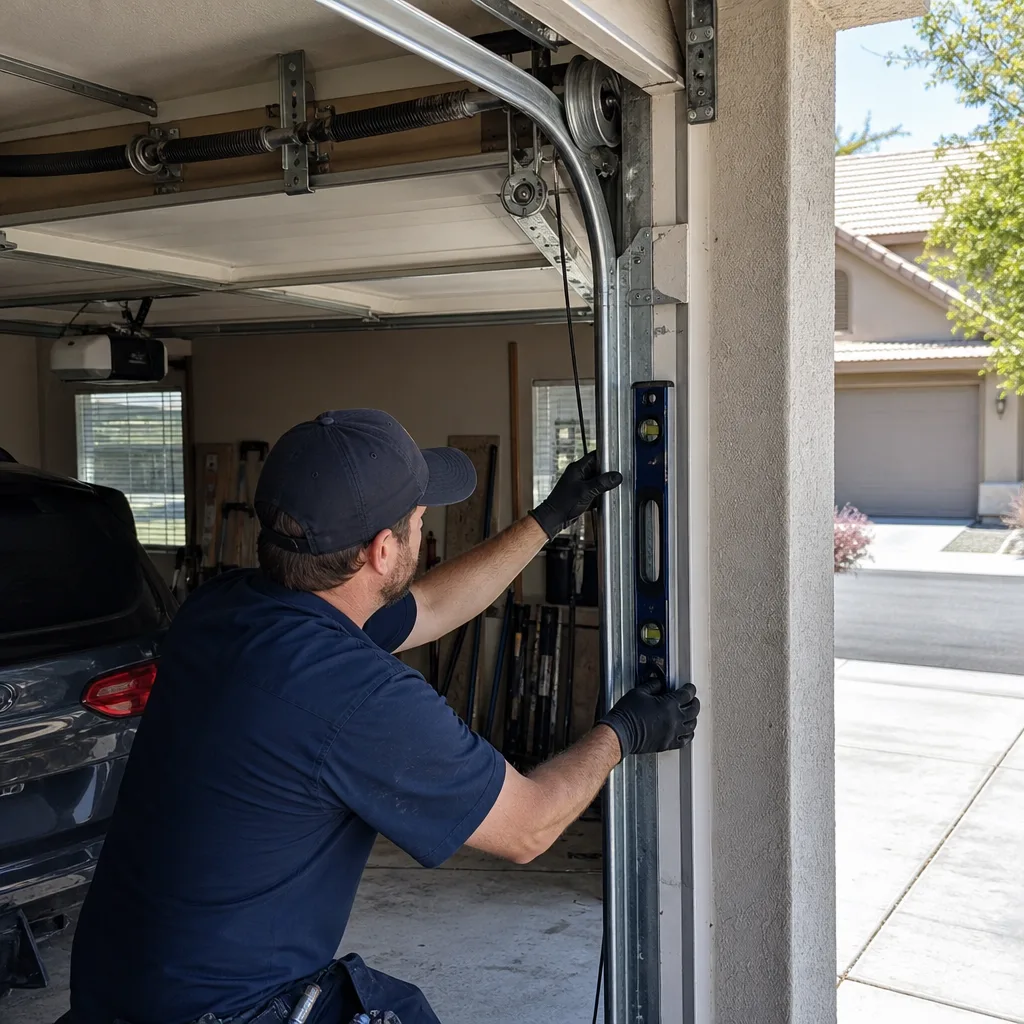
Extension springs are the ones along the horizontal tracks. They’re visible, they look like big versions of the springs you’ve seen on a screen door, and because of that they’re the repair homeowners most often think they can manage. That’s the trap.
Extension springs are under tension across their entire length at all times. When one fails, it doesn’t fold up or drop. It releases its energy in a direction, and the failure mode is projectile, not collapse. A tired extension spring in a Whitney garage can send its own housing or an unreinforced section across the room. Professional installs use containment cables threaded through the spring specifically to catch that release. If you’re looking at a door with extension springs and no containment cables, that’s a safety issue before it’s ever a DIY question.
Torsion springs sit above the door on a shaft. They look less approachable, which is helpful, because they’re treated with more respect. But when a torsion spring breaks, it usually stays on the shaft; the door simply becomes unsupported. The injury risk in torsion spring work comes from the winding process, not the break itself. Either way, both spring types sit firmly on the not-safe list. The difference is just where the danger comes from. If you’re not sure which type you have, look up: torsion springs are above the door, extension springs run alongside the tracks.
What Professional Repair Costs vs the Medical Bill
This is the part that usually settles the debate. Put real figures next to both sides.
- Professional torsion spring replacement (both springs): typically $250 – $500 in the Whitney market, depending on door size, spring gauge, and cycle rating. A single-spring replacement runs less.
- Professional extension spring replacement: typically $150 – $350 for a pair. Containment cables are often included.
- Cable replacement: typically $120 – $280 per cable.
- Torsion spring winding bars, the tool alone: $30 – $60. Buying the tool is the cheap part.
- Emergency room visit for a hand laceration from a cable: easily $1,200 and up before specialist care.
- Hand surgery for a damaged tendon or finger: $8,000 to $20,000 or more, before lost wages.
- Time to recovery from a hand injury: months of lost grip strength, lost work, and physical therapy.
The comparison isn’t close. A professional spring replacement costs less than the deductible on a single ER visit. And in Whitney, where springs fail faster than average, the math is even more slanted toward professional work.
How to Pre-Inspect Your Door Before Calling
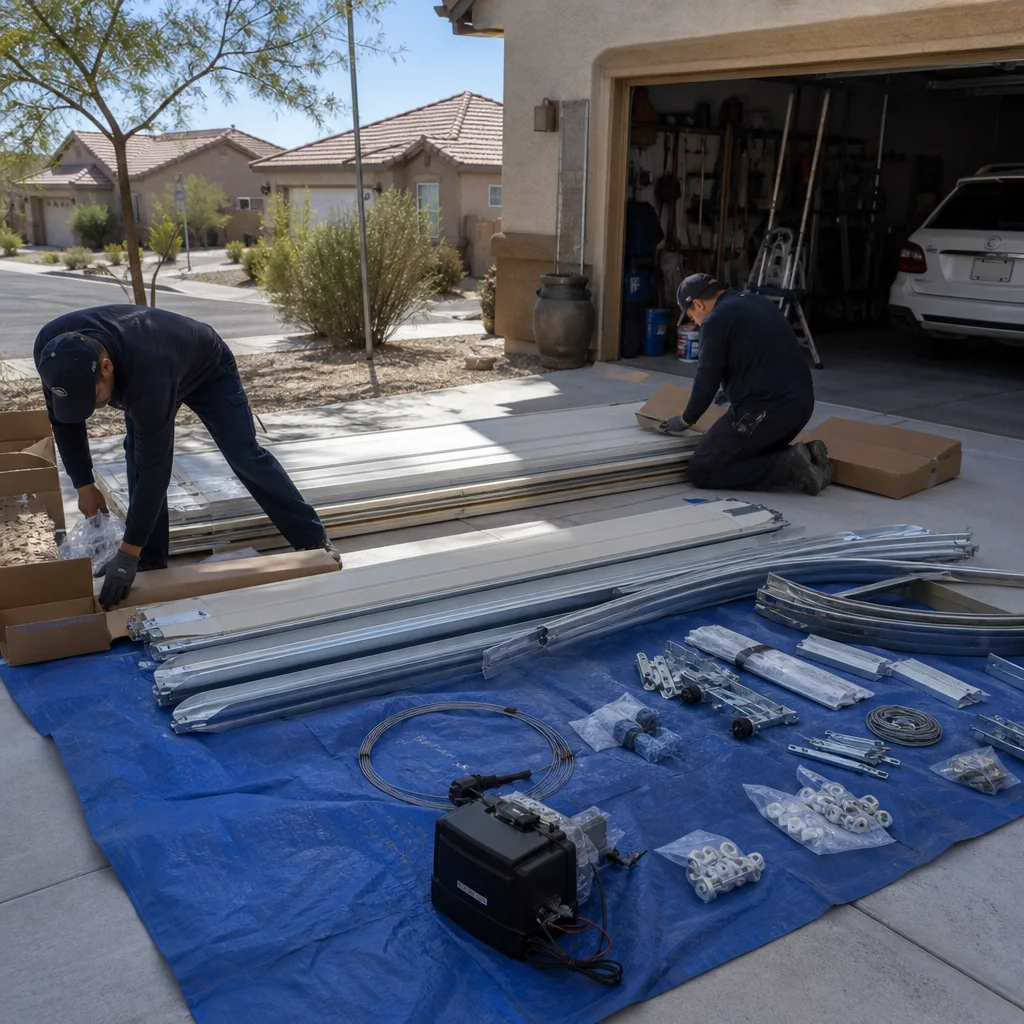
You can do a legitimate DIY contribution to a professional repair without touching anything dangerous. A good pre-inspection gives the technician everything they need to diagnose before arriving, and it shortens the billable time on-site by around 15 minutes. Here’s how to do one correctly, with the door closed and the opener unplugged.
- Check the springs visually. Look for a gap in the coil. A clean break shows a visible separation that may or may not have a dangling piece. Note where the gap is. A broken spring is the most common reason a door won’t lift.
- Test the balance by hand. Disconnect the opener (pull the release cord), lift the door about four feet, and let it go. If it drifts up or down, the springs are out of balance. It shouldn’t fall fast; if it does, stop and let it settle.
- Listen to the opener. A grinding or humming sound with no movement means the motor is getting power but the door isn’t moving. That’s often a logic board or gear issue on a LiftMaster or Chamberlain unit.
- Check the photo eyes. Both indicator lights should be solid. If one is blinking, note the LED color, since that tells the technician which failure mode it’s in.
- Try the remote and the wall switch separately. If the wall switch works and the remote doesn’t, it’s a remote or receiver issue. If neither works, it’s the opener or the power.
- Photograph everything. Take pictures of the full door, the springs, the opener label (model and serial), and the track. Note which side of the door the opener is mounted on.
When you call, those six pieces of information let the technician set the right appointment length and arrive with the right parts on the first visit.
What Documentation to Request From a Professional
After the repair is done, the question changes from “what happened” to “was it done correctly.” You can’t verify a spring’s winding by looking at it. You can verify that the company can show you what it found, what it replaced, and what it charged. Ask for these in writing:
- A photo of the failed component before the repair. Not the whole door, the specific part. The technician should be able to point to the break.
- A flat written price before work starts. A range isn’t enough. The scope and the price should be fixed before the technician opens a toolbox.
- Model and cycle rating of any spring replaced. This matters in Whitney’s heat. A spring rated to a higher cycle count is worth the small extra cost.
- A written warranty document. Not just the word “warranty,” the actual terms in writing.
- A photo of the finished work. The installed part, in place, so you have a record if something fails later.
A company that photographs the failed part before quoting a replacement is showing you its work rather than asking you to trust it. That’s the standard you should expect.
Common Mistakes to Avoid
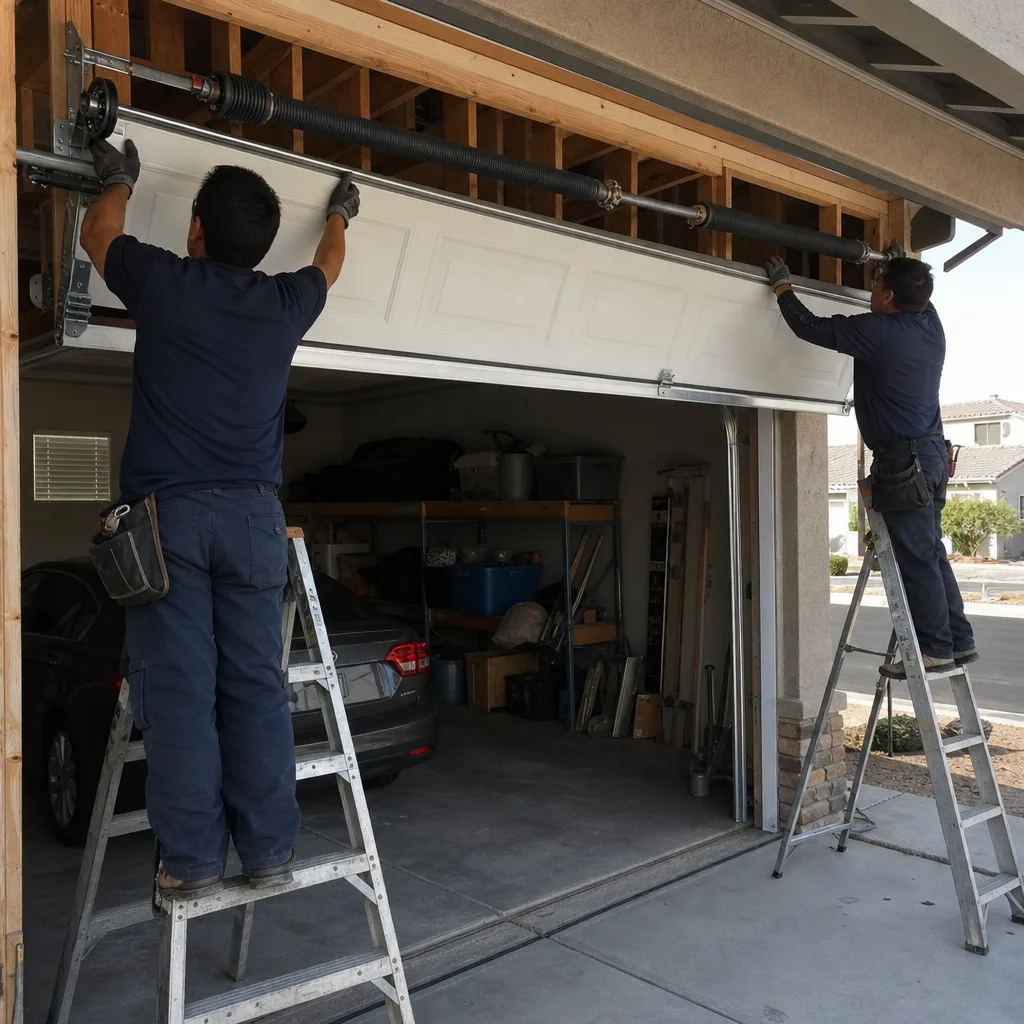
- Treating “extension spring” as easier than “torsion spring.” Extension springs fail with projectile force. Their visibility is a trap, not an invitation.
- Assuming a quiet door needs no service. Springs in Whitney’s heat can fatigue and break without warning. A silent door can still be one cycle from failure, especially if it’s more than 10 years old.
- Using WD-40 on the tracks. It attracts dust, and in Whitney’s dry, windy air that grit wears down rollers faster than the noise you were trying to fix.
- Replacing one torsion spring when both are the same age. The second spring will usually fail within months. Have both replaced at the same time; it’s cheaper than two service calls.
- Retracting the opener when the door is partly open. Pulling the release cord under load lets the door drop. Only disconnect the opener with the door fully closed and the springs balanced.
- Ignoring the auto-reverse test. Place a roll of paper towels in the door’s path and close it. The door should reverse on contact. If it doesn’t, the safety system needs adjustment before it’s used again.
- Hiring the first company to quote without a written estimate. A price on the phone isn’t a quote. Ask for a flat written scope and price before any work begins, even if that means waiting an extra day.
When to Call a Professional
Call a professional any time a spring, cable, bottom bracket, or drum is involved. Call if the door has hit something, if it won’t lift, if it comes down faster than it should, or if you can see a spring break. If you’re in Whitney and unsure whether your issue falls on the safe or not-safe list, a quick call is the fastest way to find out. We’ll estimate over the phone in plain terms, and we’ll tell you if what you’re describing is a repair you can handle yourself. Servo Garage Doors Whitney offers free estimates in Whitney. Call (888) 402-1096. For a full replacement instead of a repair, see our guide to Garage Door Installation in Whitney.
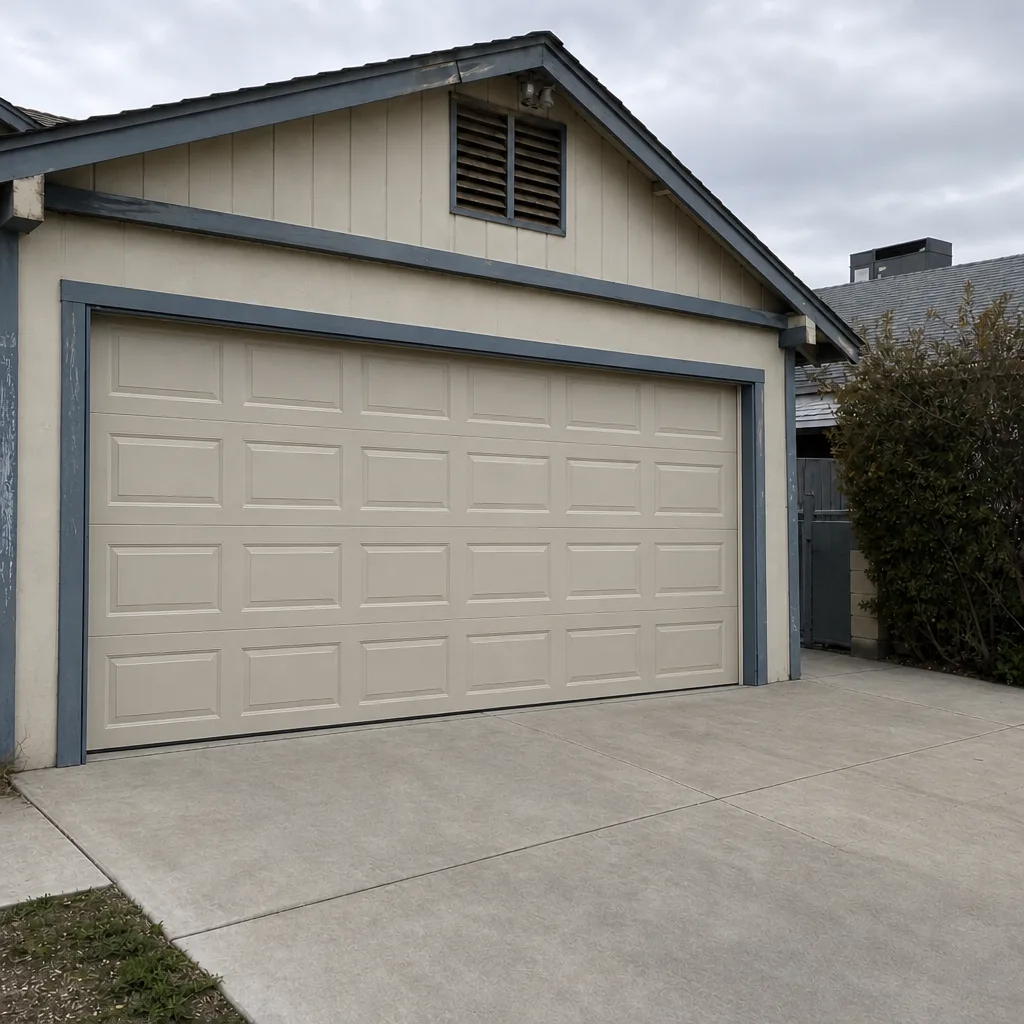
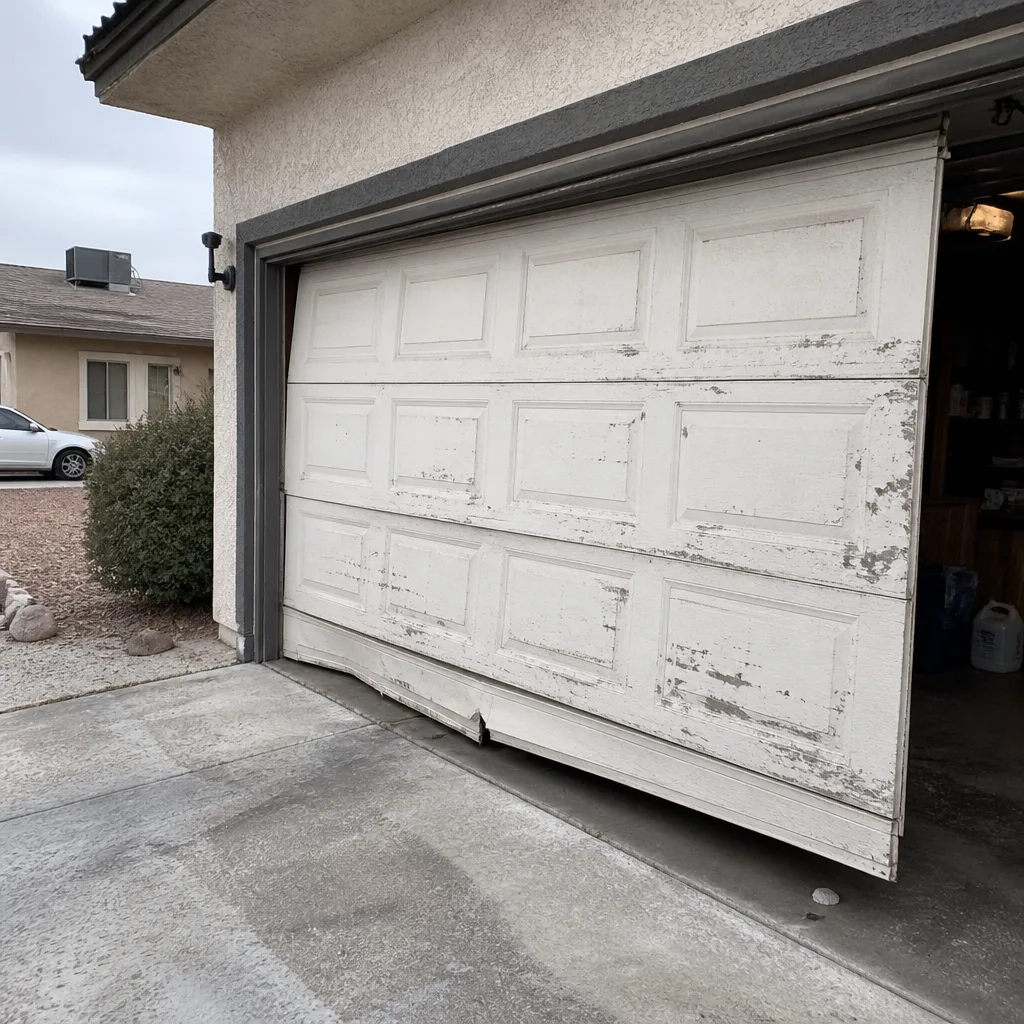
See the difference
BeforeAfter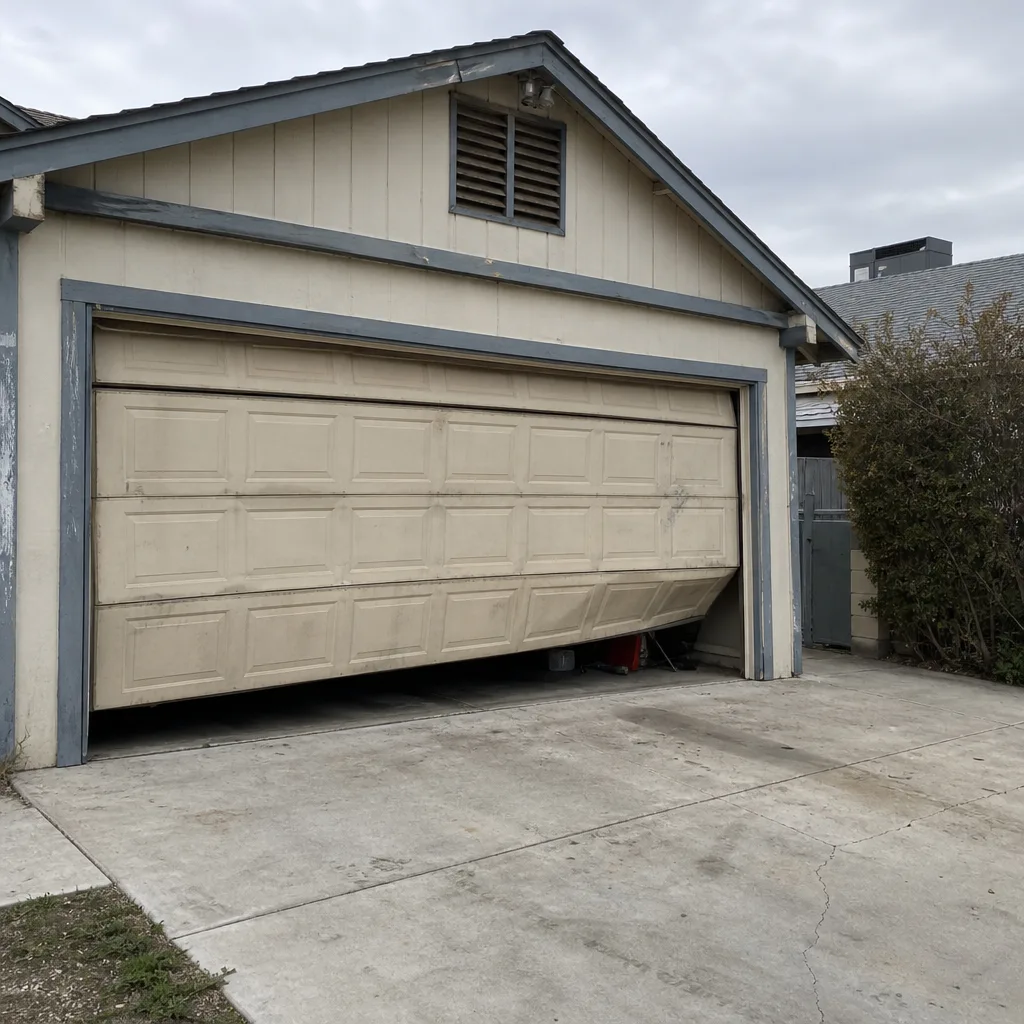 Before
 After
 Before
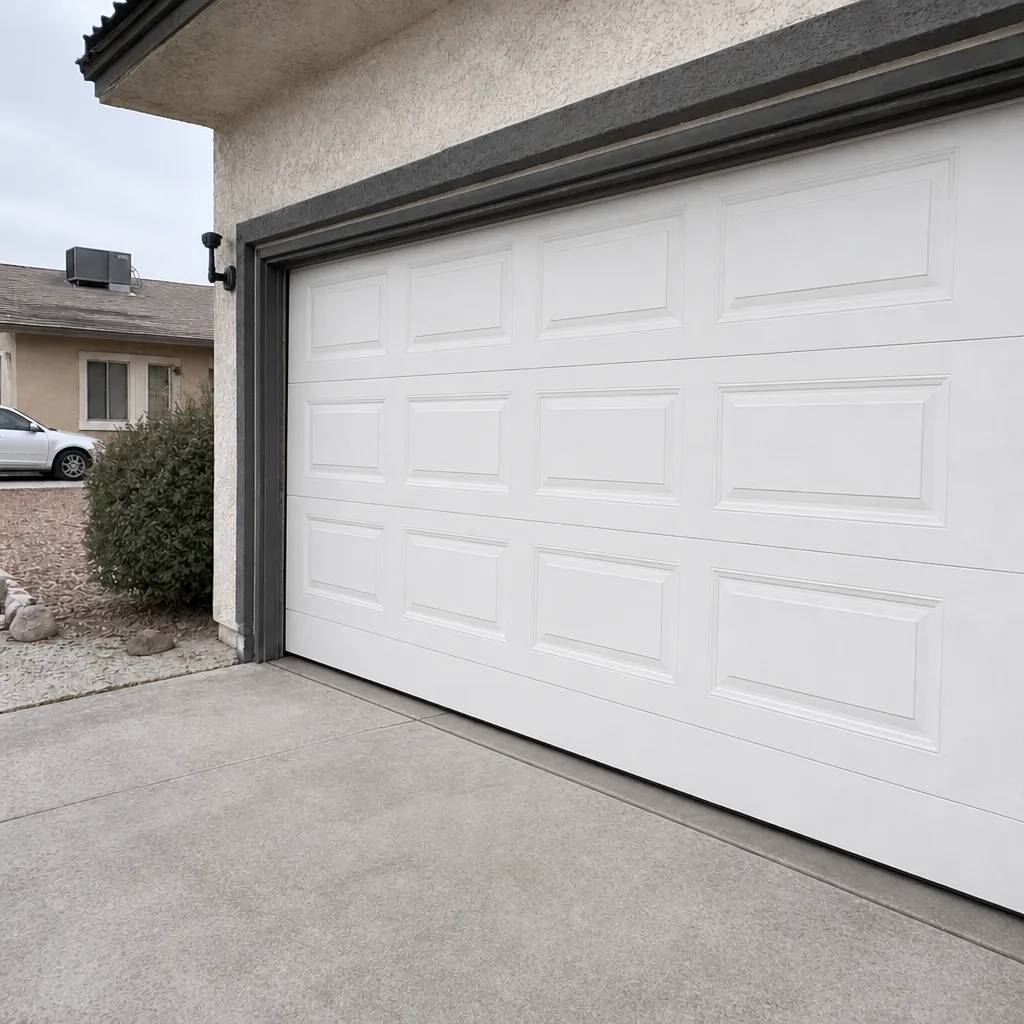 After
Frequently Asked Questions
No. A torsion or extension spring is wound under tension that will release with bone-breaking force if the winding or removal goes wrong, and the correct winding sequence depends on the specific spring gauge and turns. A professional spring replacement costs $250 – $500 in Whitney. A hand injury from a DIY attempt costs far more. Call (888) 402-1096 for a written price before anything is touched.
You can handle weather seals, photo-eye alignment, limit-switch adjustment, roller lubrication, and track debris removal. None of these involve stored energy. Anything touching springs, cables, or bottom brackets belongs to a professional. If you’ve checked everything on the safe list and the door still isn’t working, call us. Estimating the problem is free, and you’ll get the price in writing before work starts.
Most common repairs fall between $150 and $500 in this market, depending on the part. A torsion spring pair runs $250 – $500, extension springs $150 – $350, and cable replacement $120 – $280. The price you agree before work starts is the price you pay; no invoice arrives bigger than the quote. Call (888) 402-1096 for an exact estimate.
Yes, for emergency and repair calls. We answer live, 24/7, including holidays. A named technician is assigned and you get an on-the-way text rather than a callback window. Keep the door closed and don’t try to force it.
No. The quote is a flat written price and written scope agreed before any work begins. If the scope changes because the diagnosis turns up something the phone estimate couldn’t account for, we stop and re-quote before continuing. You always approve a new price before more work happens.
Servo Garage Doors Whitney is independently owned and operated, and the business holds its own license and insurance. We work to The Haven Standard, which means background-checked technicians, a documentated photo record on every visit, and the 365-Day Done Right Promise. Call (888) 402-1096 for details and a free estimate.
The Bottom Line
The DIY-versus-professional line runs through stored energy, not skill. Weather seals, photo sensors, limit switches, and lubrication are yours to handle. Springs, cables, bottom brackets, and anything on the torsion shaft are not, and the dollar comparison makes the case on its own: a professional spring replacement in Whitney costs less than one emergency room visit. Your best DIY contribution is the pre-inspection, which shortens the on-site work and lets a technician arrive prepared. Your best protection after the repair is a documented photo record and a flat written price. Start at the Servo Garage Doors Whitney home page and call (888) 402-1096 for a free estimate on any repair, replacement, or second opinion.
Written by the team at Servo Garage Doors Whitney.