
Last updated November 18, 2026
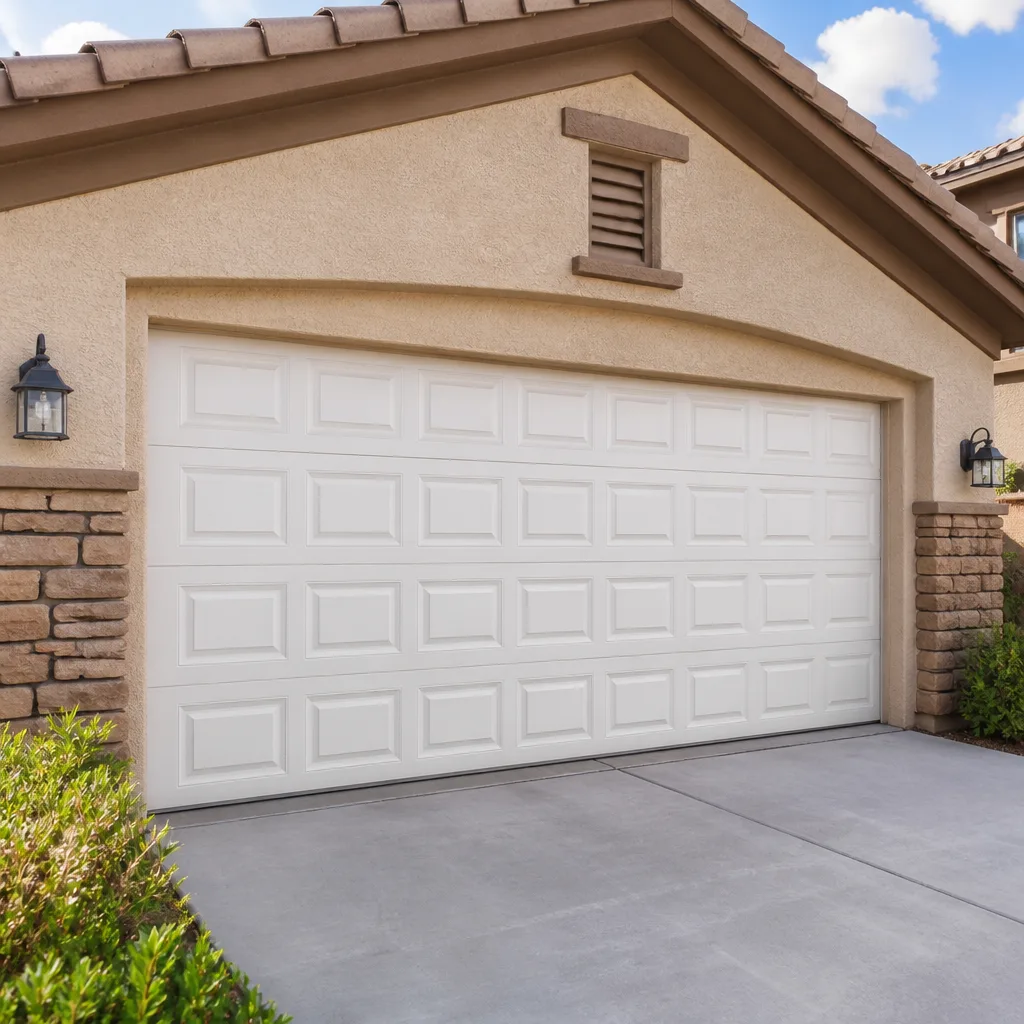 Raised-panel steel
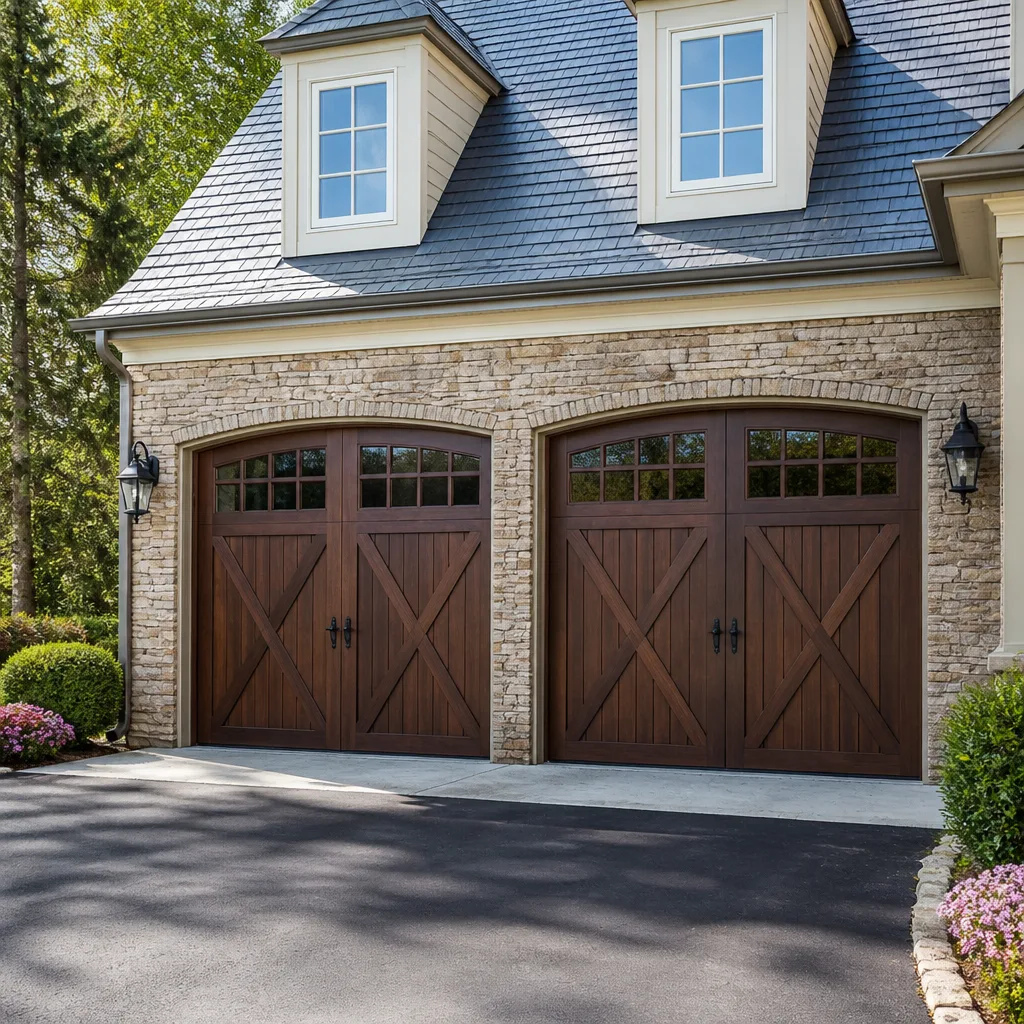 Carriage house
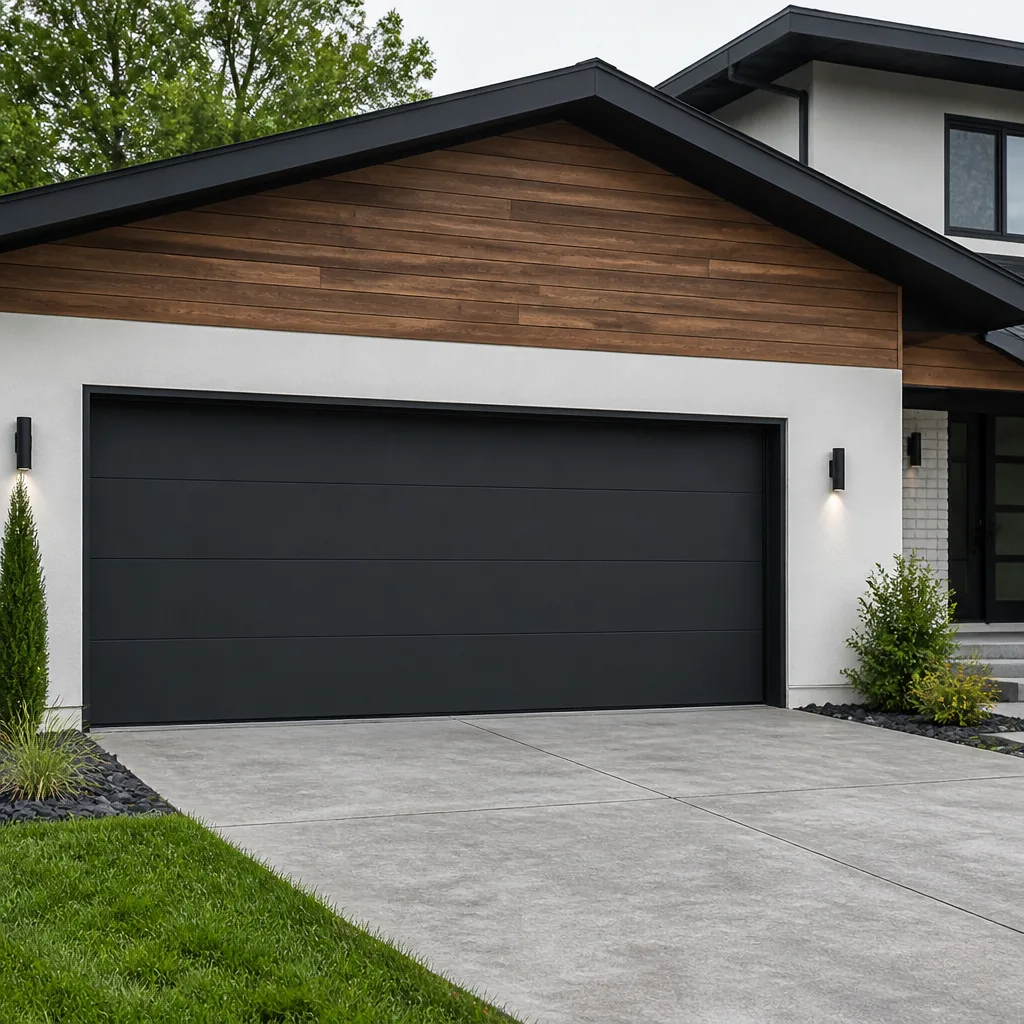 Modern flush
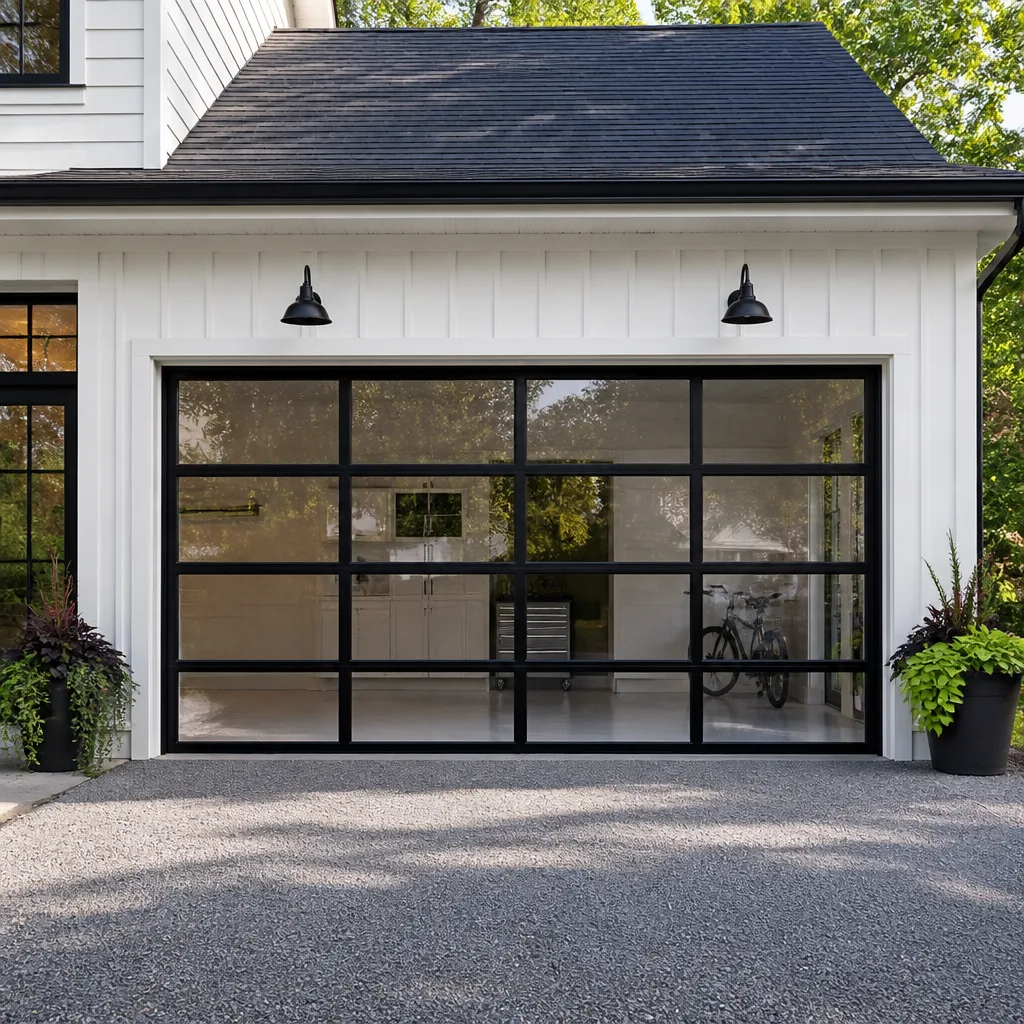 Full-view glass
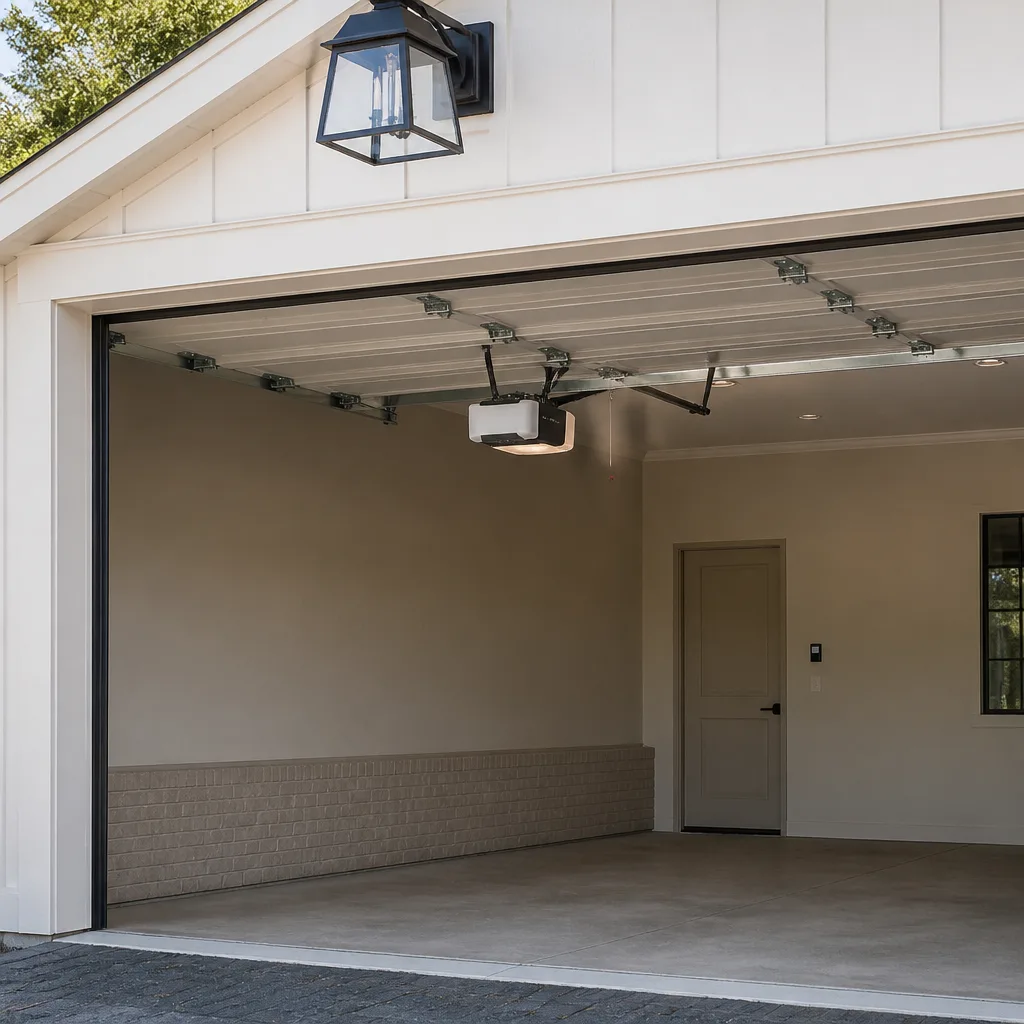 LiftMaster openers
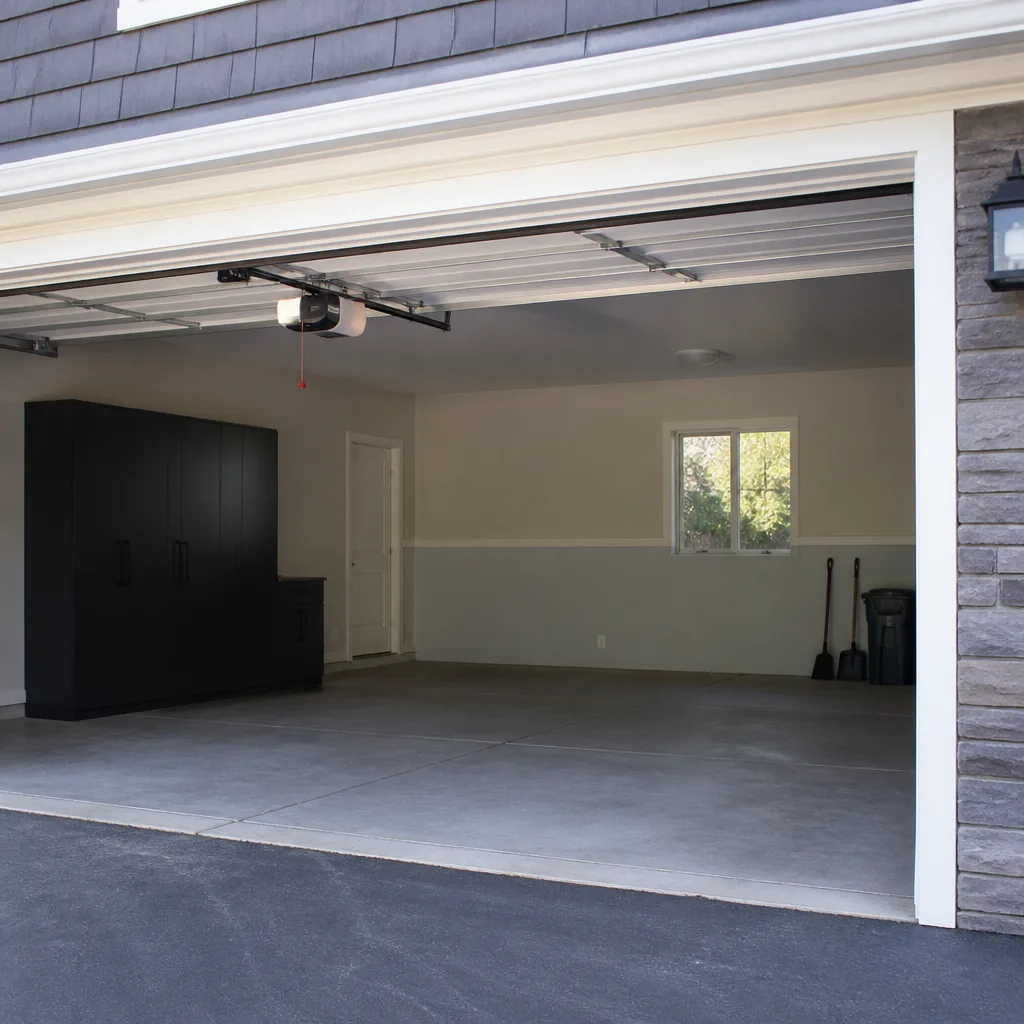 Chamberlain openers
Full 25-point door and opener safety check with every visit - springs, cables, rollers, tracks, and your LiftMaster or Chamberlain opener included
You get a price before we start. It does not change when the pro arrives.
Get your free estimateThe Complete Guide to Garage Door in Whitney
Whitney sits at roughly 2,000 feet on the eastern edge of the Las Vegas Valley, and that elevation changes how a garage door ages. Daily swings of 40°F in spring and fall work steel hardware harder than most manufacturer warranties anticipate, and the high-desert sun on a west-facing door does the rest. It’s a different set of failure patterns than the ones generic buying guides describe, and it calls for a different set of decisions. This guide maps Whitney’s specific variables – heat cycling, caliche soil, HOA palette rules, wind corridor exposure – onto the real choices you’ll make: repairing, replacing, or installing new. You’ll finish knowing which symptoms point to which path, what the work should cost, and what documentation you should demand before anyone touches your door.
Quick Answer
Most garage door problems in Whitney come down to three things: torsion spring fatigue from extreme heat cycling, bottom-seal and photo-eye failures from dust and sun, and slab settling from the caliche soil under many valley subdivisions. Repair typically runs $180-$450 for common failures, full replacement $1,200-$3,800 installed, and the right path depends on the door’s age, the plumb of the tracks, and whether your HOA restricts the color and material you can install.
Styles & brands we work with
- Raised-panel steel
- Carriage house
- Modern flush
- Full-view glass
- LiftMaster openers
- Chamberlain openers
Table of Contents
- Why a Garage Door in Whitney Ages Differently
- Caliche Soil, Slab Settling, and the Gap-and-Plumb Sequence
- HOA Color and Material Restrictions in Whitney Communities
- The Failure Modes We See Most in Whitney
- City-Core Spec vs. Whitney Spec: Altitude and Wind Corridor
- Repair, Replace, or Install New: A Decision Map
- What Garage Door Work Costs in Whitney
- The Paperwork You Should Demand Before Work Starts
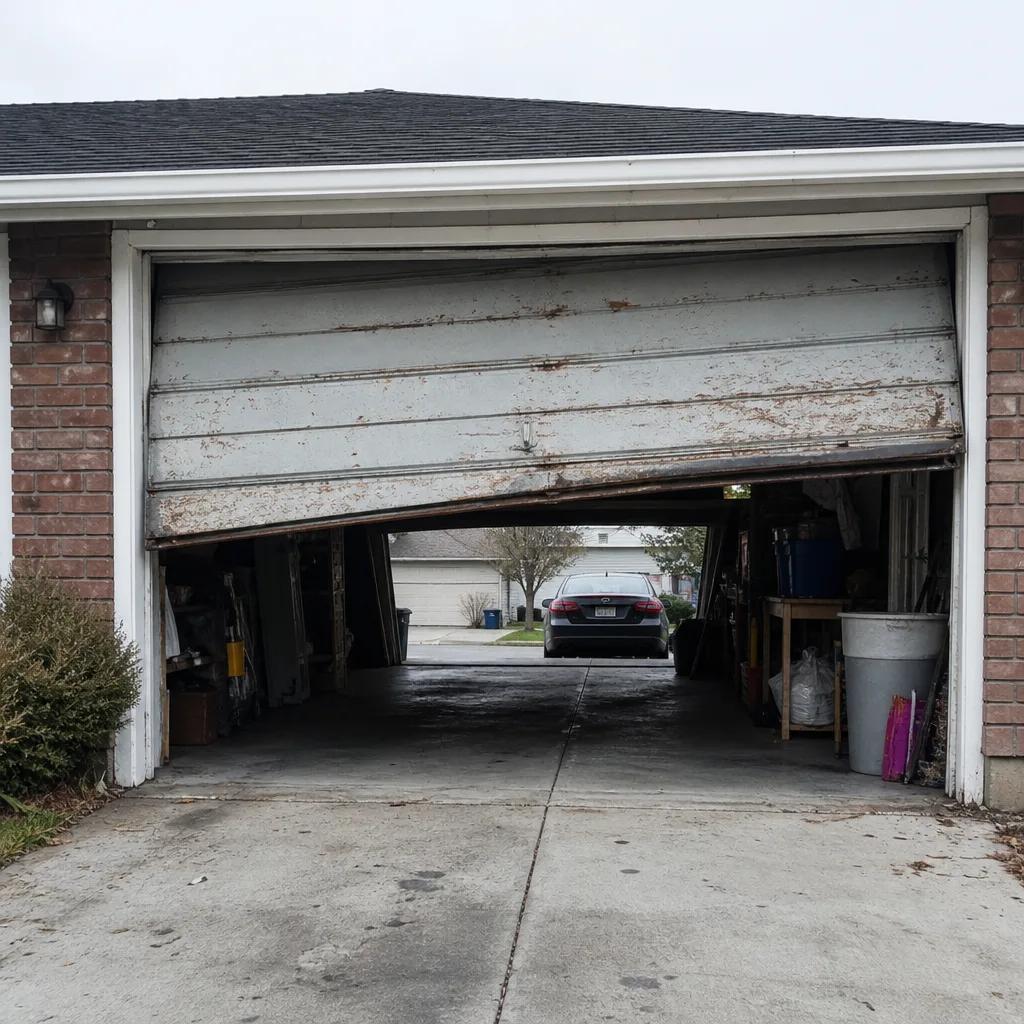 Before
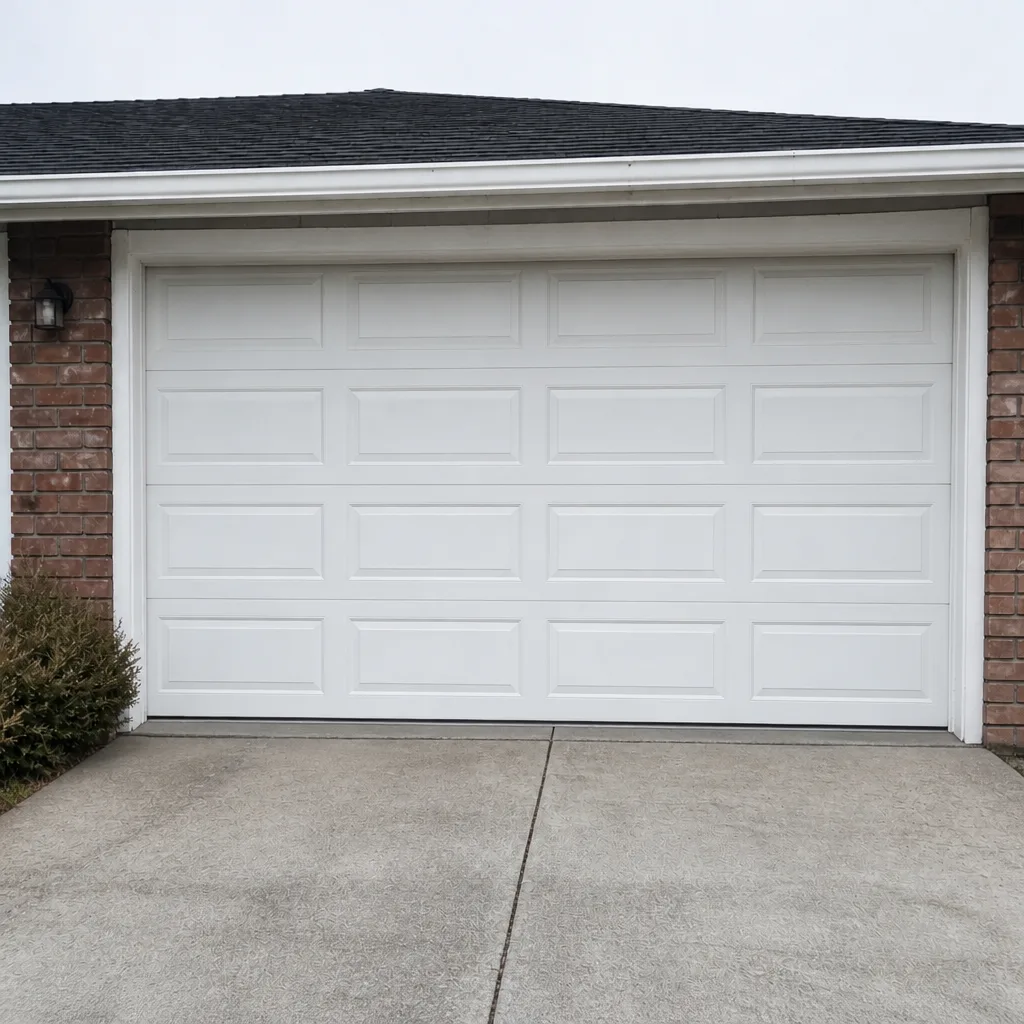 After
Why a Garage Door in Whitney Ages Differently
Manufacturer test cycles are run at a nominal temperature. Whitney doesn’t have a nominal temperature. A door on a west- or south-facing wall can hit 140°F on the surface of the steel in July afternoon sun, then cool to 80°F overnight in the same 24-hour period. That expansion and contraction loosens fasteners, stresses the torsion spring, and puts cyclical load on every hinge and roller.
We’ve seen this pattern repeat across neighborhoods off Lake Mead Boulevard and up toward the foothills. A door that would run 10,000 cycles comfortably in a coastal climate can start showing spring fatigue and roller flat-spotting well before that in Whitney. It’s not a defect; it’s the environment.
The second factor is dust. The Mojave wind corridor that funnels through the eastern valley carries fine particulate that works into the bottom seal, the photo-eye lenses, and the roller tracks. Left alone, it accelerates wear. Inspected and cleaned twice a year, most of it doesn’t.
What follows from all this is a simple rule: how the door ages here depends less on the brand on the label than on two things – whether the door was spec’d for this climate, and whether anyone is inspecting it on a schedule.
Caliche Soil, Slab Settling, and the Gap-and-Plumb Sequence
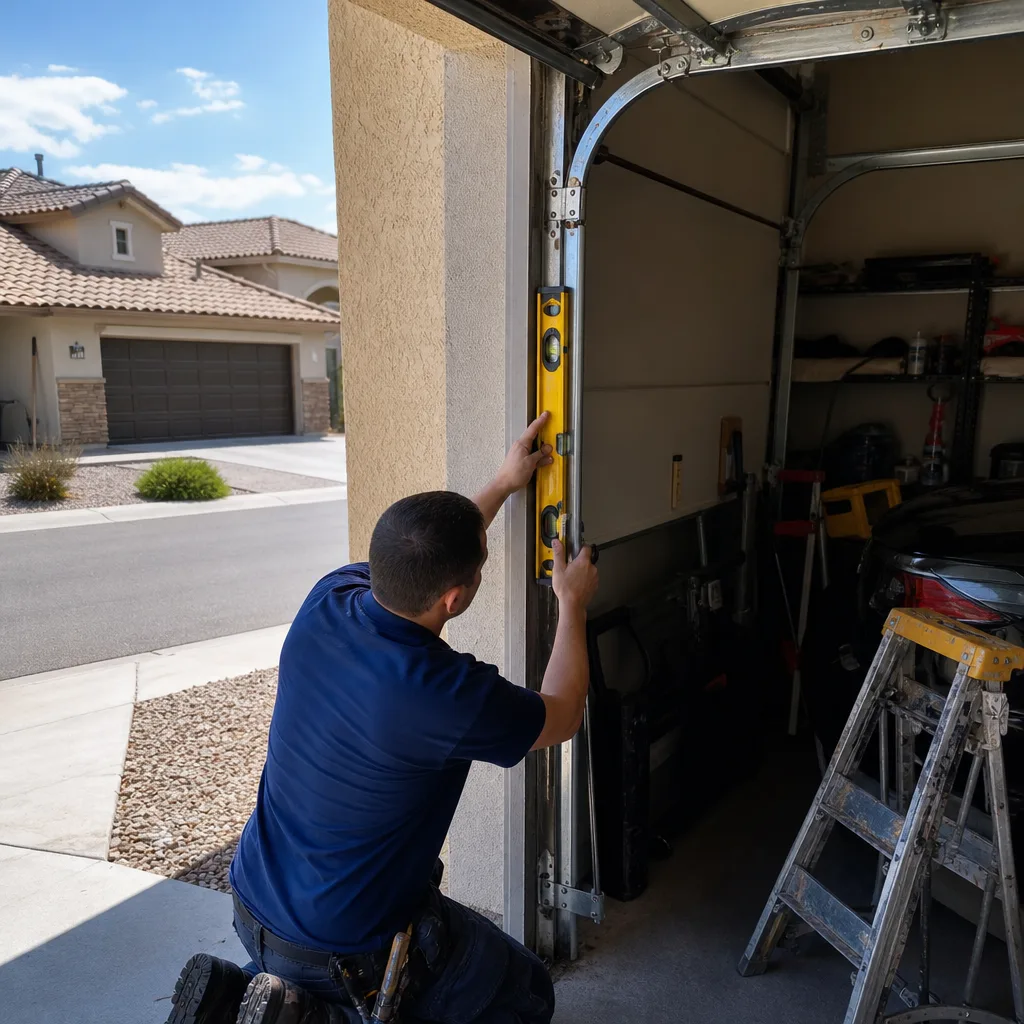
Clark County has areas of caliche – a calcium-carbonate-cemented soil layer that, once cracked by grading or long drought cycles, can settle unevenly under a garage slab. When the slab moves a fraction of an inch, the door’s steel tracks can shift out of plumb even though nothing about the door itself failed.
The symptom is a door that starts rubbing on one side, hesitates when it lifts, or binds halfway up. The wrong response is to adjust the opener’s force setting and keep going. The right response is to check the foundation first:
- Open the door fully and inspect the gap between the door panel and each vertical track along its full height.
- Check the plumb of each vertical track with a level at three points: top, middle, and bottom.
- Inspect the baseplate for cracks radiating outward, and the floor for a visible dip near the door threshold.
- Check that the horizontal track maintains a slight back-tilt; if it’s level or forward-tilted, the door will drift down on its own.
- Only after all four checks are done should anyone adjust the opener’s force or travel limits.
The reason the sequence matters: if the slab has moved, no amount of opener adjustment fixes it. A track that’s out of plumb will strip a trolley carriage or snap a cable, and that’s a repair that could have been avoided with a $150 track realignment. If you’re seeing binding after a monsoon-season ground shift, our Garage Door Repair in Whitney page covers the specific diagnostic order.
HOA Color and Material Restrictions in Whitney Communities
Many master-planned neighborhoods in Whitney enforce HOA architectural standards on garage doors. The rules usually cover three things: color palette, panel style, and whether the surface finish must be factory-applied rather than field-painted.
Common compliant finishes in this market:
- Earth tones on the tan-to-brown spectrum (the palette that dominates most Whitney subdivisions)
- Neutral grays that anchor to stucco and stone facades
- Factory powder-coat or baked-enamel finishes on steel doors, which hold color longer than field paint under UV load
- White or almond on select communities with Mediterranean palettes
Which door lines ship in compliant finishes matters. Amarr’s steel door lines offer factory finishes across the neutral palette most Whitney HOAs require. Wayne Dalton’s steel and composite lines cover similar ground. When you’re choosing a new door, ask the supplier for the color chips that match your HOA’s approved list, and get the HOA approval in writing before the door is ordered.
For more on selecting a door that meets both climate and HOA requirements, our Garage Door Installation in Whitney page walks through the process from measure to install.
The Failure Modes We See Most in Whitney
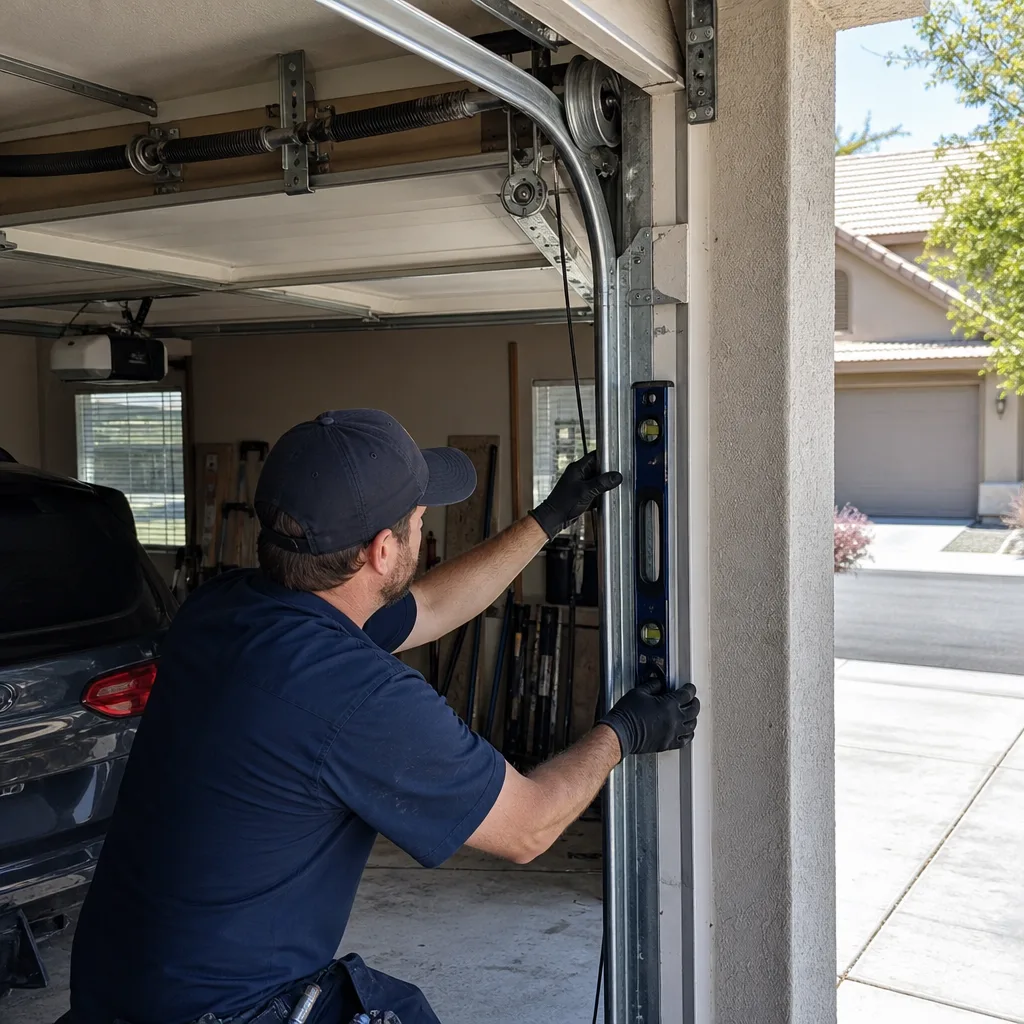
Not every garage door failure rate is equal. In this climate, three categories account for most service calls:
- Torsion spring fatigue. The torsion spring carries the door’s weight – the counterbalance that lets a 150-pound door lift with one hand. In Whitney heat cycles, springs that would last 10,000 cycles in a mild climate can fail closer to 6,000-7,000 cycles. In our experience, doors on west- and south-facing walls are the first to go.
- Bottom-seal cracking. The rubber seal at the bottom of the door takes direct UV exposure and expands against the concrete threshold in summer. Cracking, curling, and hardening are inevitable on any seal installed more than 5-7 years ago in Whitney.
- Photo-eye drift. The safety sensors at the base of the tracks align within a fraction of an inch. Thermal expansion of the mounting brackets drifts them out of alignment through the day, so the door works in the morning and won’t close in the afternoon. Wind-blown dust on the lenses makes it worse.
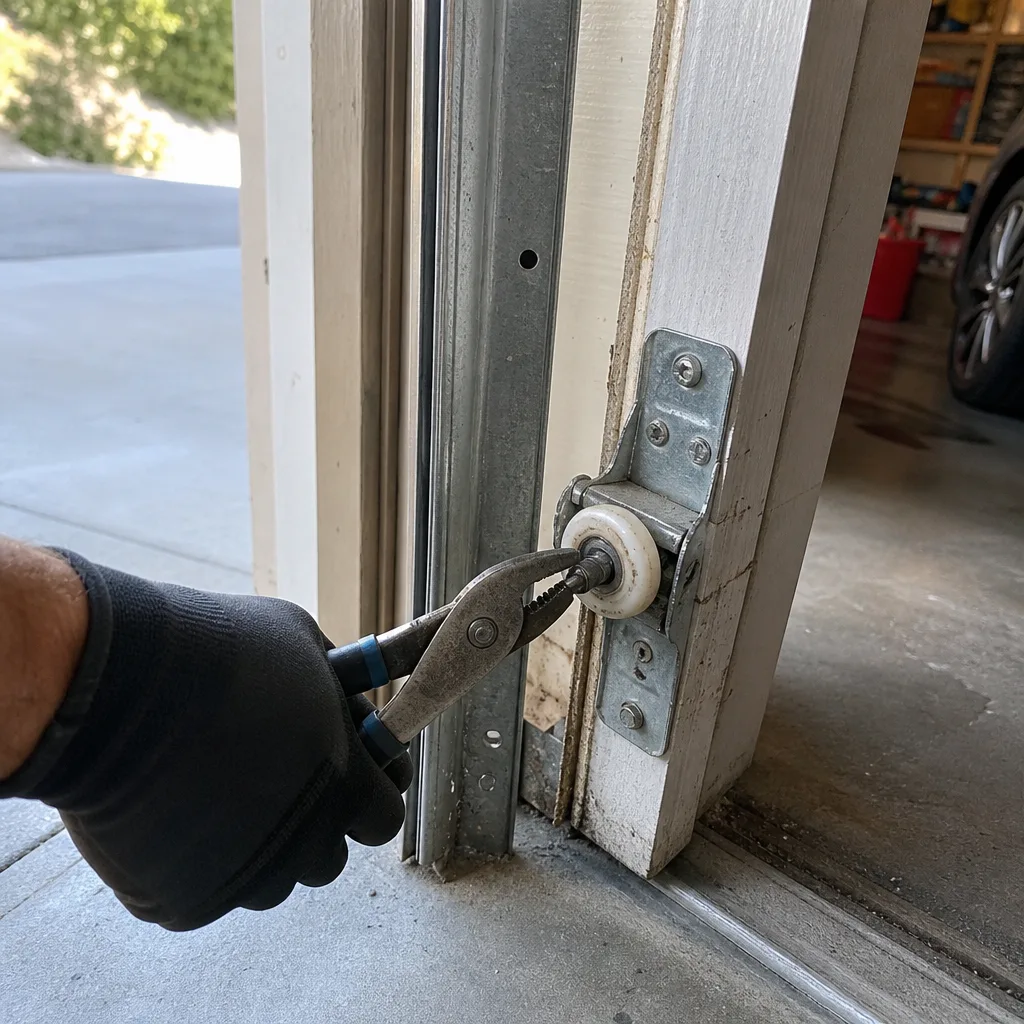
- Opener logic board and limit-switch failures. The logic board is the opener’s control board; the limit switch tells it how far to travel. Heat and dust cause both to fail over time. Mounting an opener in an unventilated garage without periodic cleaning accelerates this.
If you’re seeing any of these symptoms, the Garage Door Opener Repair & Installation in Whitney page covers opener-specific diagnostics.
City-Core Spec vs. Whitney Spec: Altitude and Wind Corridor
Doors installed in the Las Vegas core and doors installed in Whitney are usually the same model on paper. They shouldn’t always be. Two variables shift the recommendation:
Altitude and heat cycling. Whitney’s slightly higher elevation means marginally cooler nightly lows, but the net effect on hardware is harder, not easier: bigger swings, not fewer. We spec doors and springs rated for cycle counts that account for larger daily delta-T, not the same nominal spec that works in a milder climate.
Wind corridor exposure. The eastern valley gets the same Mojave wind events that the rest of the metro does, sometimes more directly. Doors on exposed walls need a bottom seal that’s rated against wind-driven dust, and the tracks benefit from a slightly heavier-gauge roller and a hinge set with reinforced plate thickness. It’s a small upgrade; it makes a multi-year difference.
What actually matters in the spec:
- Torsion spring cycle rating matched to expected cycles per year at this altitude
- Door panel insulation R-value: higher for west- and south-facing doors, since solar load on the door interior affects the adjacent kitchen or utility room
- Bottom seal material rated for UV and thermal cycling
- Rollers and hinges that hold tolerance through temperature swings
- Opener mounted with a vibration-isolating bracket, which cuts wear on the logic board
None of this is exotic. It’s just spec’d correctly for the environment. Raynor’s insulated steel lines and Amarr’s Thermacore series both ship options that address these variables in this climate.
Repair, Replace, or Install New: A Decision Map
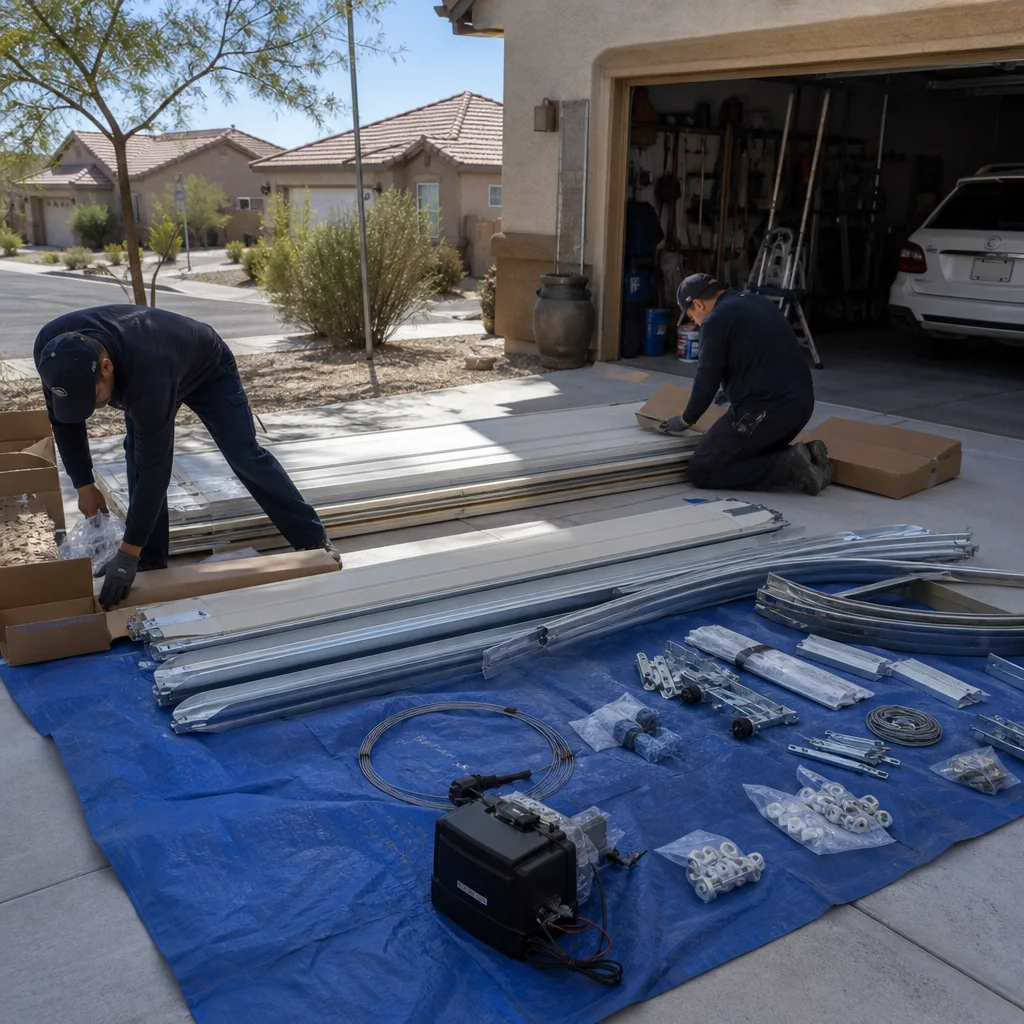
Most Whitney homeowners face one of three decisions. The physical symptoms usually point to which is right.
Repair makes sense when the door structure is sound and a single component failed:
- One broken torsion spring (not both)
- Snapped lift cable on one side
- Opener that won’t reverse or won’t close due to photo-eye drift
- Bottom seal replacement
- Roller or hinge replacement
- Track realignment after a vehicle strike
Replace is the right call when several components wear together, or the door itself has aged past the point of repair economics:
- Both springs failed within a year of each other
- Door panels have dents or rust that compromise structure
- Track is bent beyond realignment tolerance
- Opener is more than 12-15 years old and the logic board has failed once
- Insulation has degraded (door feels warm to the touch, interior room overheats)
- HOA requires a style or color change
Install new applies to new construction, an addition, or a door that was never right for the space – mismatched size, insufficient R-value, or a design that fights the HOA palette. Here the process runs measure, spec, order, install, with a written quote and scope before ordering.
The safe rule: if the door can be safety-tested by hand and the tracks stay plumb through a full cycle, repair is usually viable. If either test fails, replacement is almost always cheaper over a 5-year window.
What Garage Door Work Costs in Whitney
Prices vary with door size, brand, and condition, but the ranges below reflect the Whitney market for typical residential single and double doors. Every one of these is quoted in writing, with scope, before any work starts – Clause 1 of The Haven Standard is not a slogan, it’s a rule.
- Torsion spring replacement (one spring): $180-$340
- Torsion spring replacement (both springs, paired): $320-$520
- Lift cable replacement: $150-$280
- Bottom seal replacement: $90-$180
- Roller and hinge refresh (full set): $140-$260
- Track realignment: $150-$300
- Photo-eye sensor replacement / realignment: $120-$220
- Opener repair (logic board, limit switch, or trolley): $180-$420
- New opener installed (belt or chain drive, major brand): $380-$750
- Single-car door replacement (steel, insulated, installed): $1,200-$2,400
- Double-car door replacement (steel, insulated, installed): $1,800-$3,800
- Custom or carriage-house style, installed: $2,800-$6,500+
These are ranges, not quotes. The exact written price is set after a measure and inspection, and it’s the price on the page before any tool comes out of the truck. If a competing written estimate is on the table, we’ll review it free of charge – no code, no coupon, just bring the paperwork.
The Paperwork You Should Demand Before Work Starts
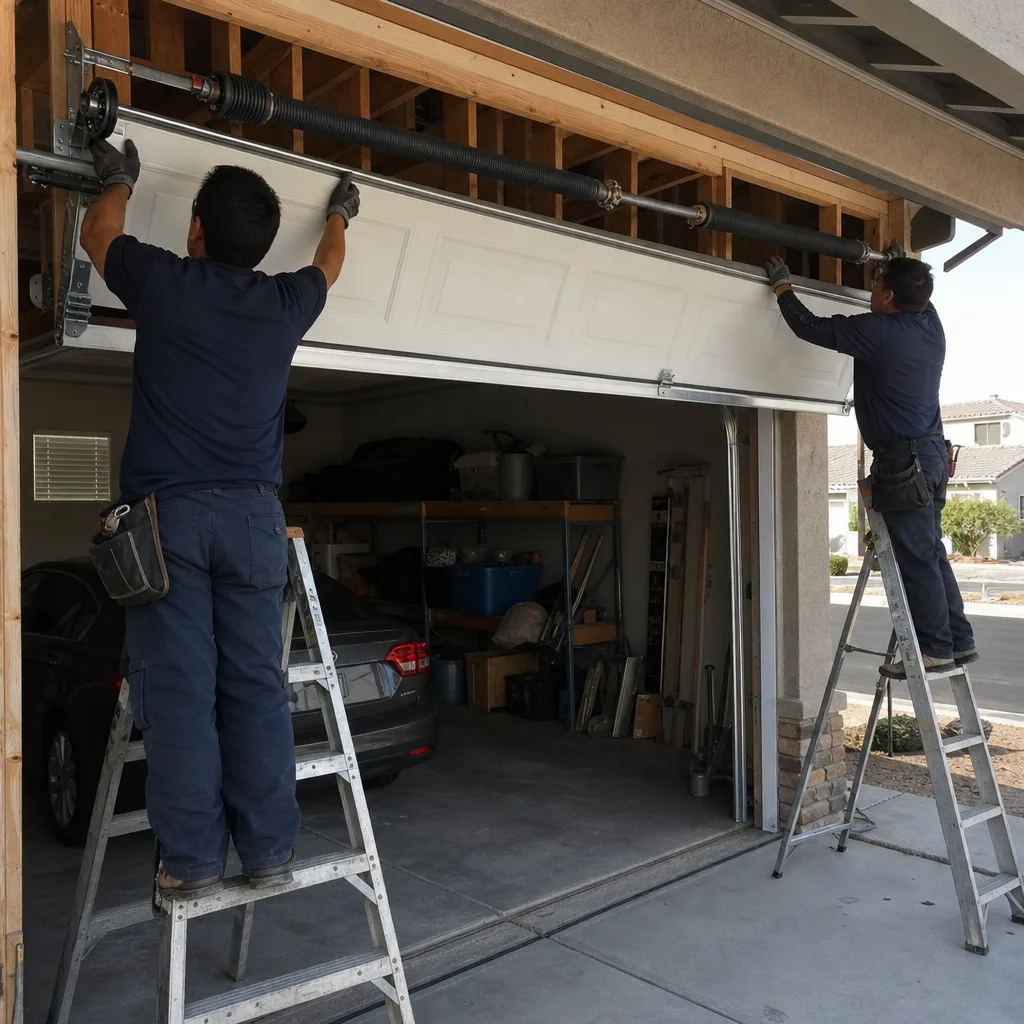
Garage door work is one of the trades where “trust us” is often the entire service model. It shouldn’t be. Any contractor working on your door should be able to hand you four things before anyone starts:
- A written, flat price and a written scope describing what’s being replaced or repaired, with part numbers where applicable.
- A photo of the failed component before the replacement is quoted. Clause 4 of The Haven Standard is why a photo of the broken coil, the cracked seal, or the out-of-plumb track is standard on every visit, not an optional add-on.
- The license number printed on the paperwork, not buried in fine print on the back page. The local pro performing the work is licensed and insured as Nevada requires.
- A documented photo record delivered at completion showing what was found and what was done. It should include the failed part, the new part in place, and any related components inspected.
If any of those four is missing, that’s the signal to pause. The 365-Day Done Right Promise is backed by the same documentation: if a repair we made isn’t right, we make it right, and the paperwork from the original visit is what makes that claim traceable.
Common Mistakes to Avoid
- Adjusting the opener’s force setting to compensate for a binding door. A binding door has a physical cause – usually a track that’s out of plumb or a slab that’s settled. Turning up the force setting forces the opener to push through a mechanical problem and burns out the logic board within a season or two.
- Replacing one spring when both are the same age. In Whitney heat cycles, the second spring is usually a few months behind the first. Replacing one is cheaper short-term and more expensive over 18 months.
- Skipping HOA approval before ordering a new door. In Whitney subdivisions, an unapproved color or panel style means the door comes back off. Get the approval letter before the deposit, not after.
- Field-painting a factory-finished steel door. The factory powder-coat will hold color through 15+ years of UV load. Field paint on top of it often peels within 3-4 years in this climate, and most HOAs won’t approve the repaint anyway.
- Ignoring the bottom seal because the door “still works.” A hardened seal lets in dust, wind-driven grit, and small pests, and it puts disproportionate load on the bottom bracket. Replacing a $90-$180 seal is cheaper than replacing the bracket that fails next.
- Letting a door bind “until it gets worse.” Binding doors fail abruptly – a snapped cable or a broken spring mid-cycle, with the door stuck in the down position. That’s an emergency call, not a scheduled one.
- Trusting a verbal estimate. Written price, written scope, before any work. If the number only exists in the conversation, it’s not a number you can hold anyone to.
See the difference
BeforeAfter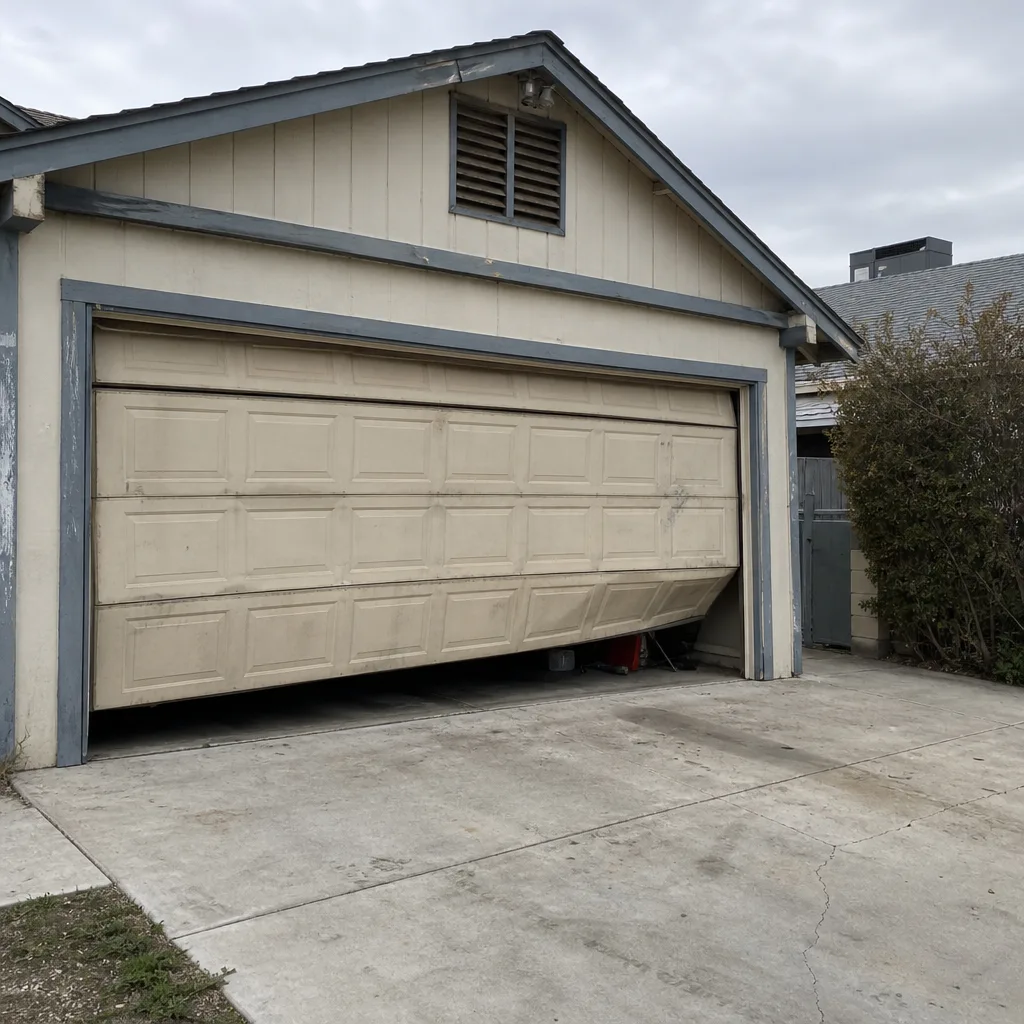 Before
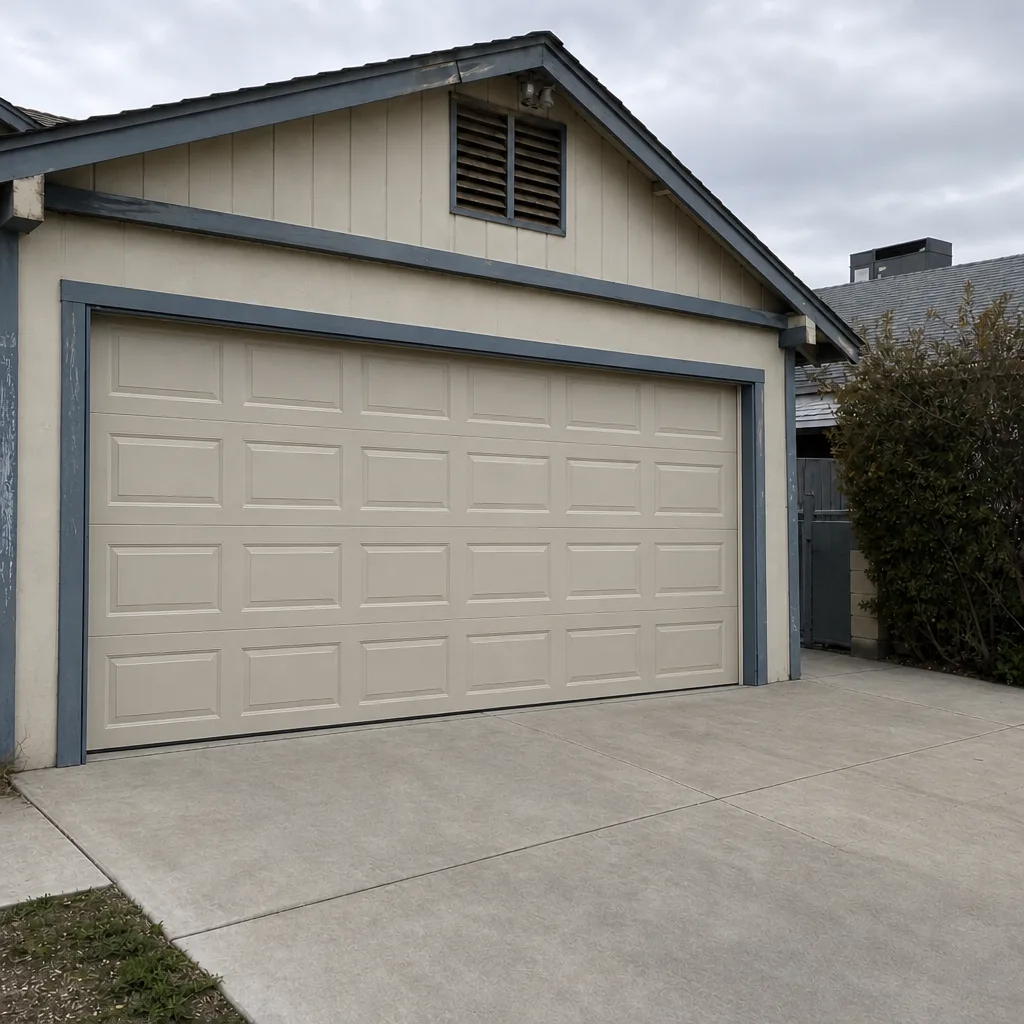 After
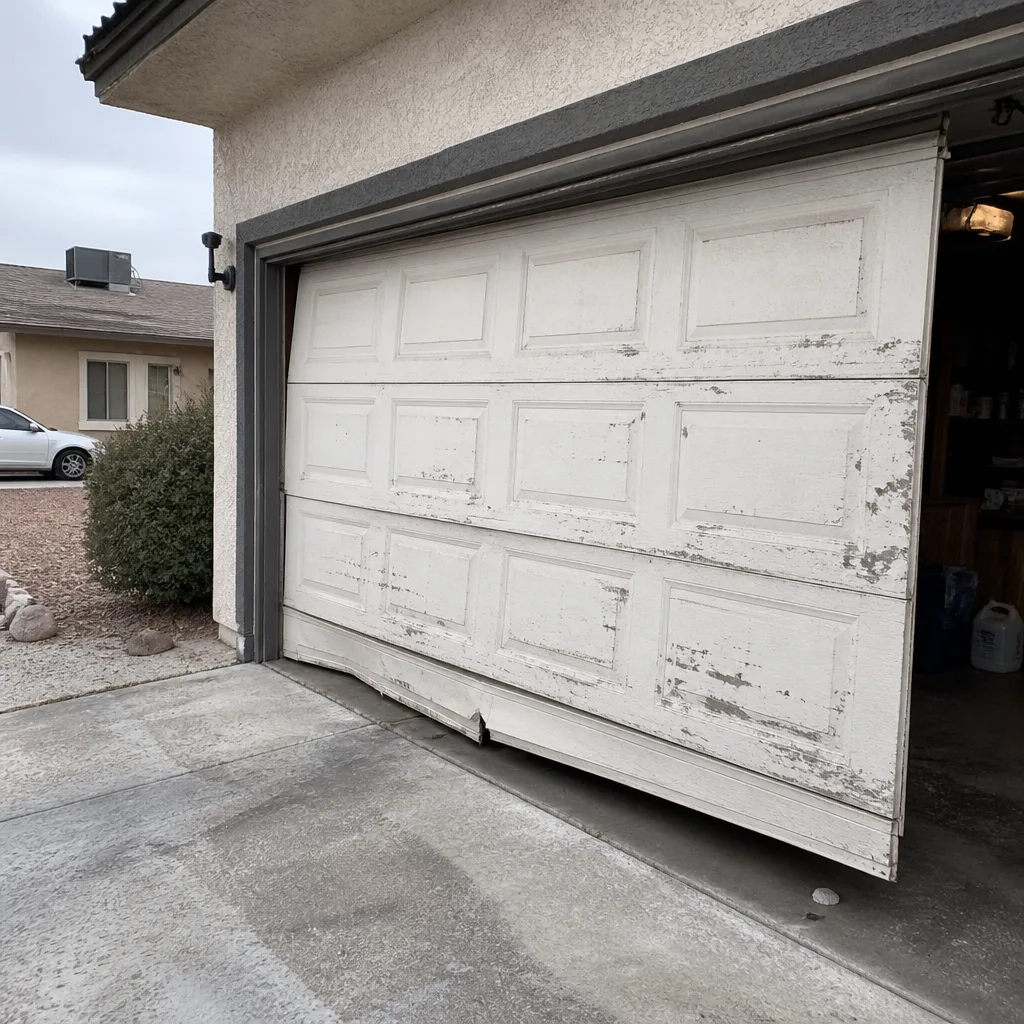 Before
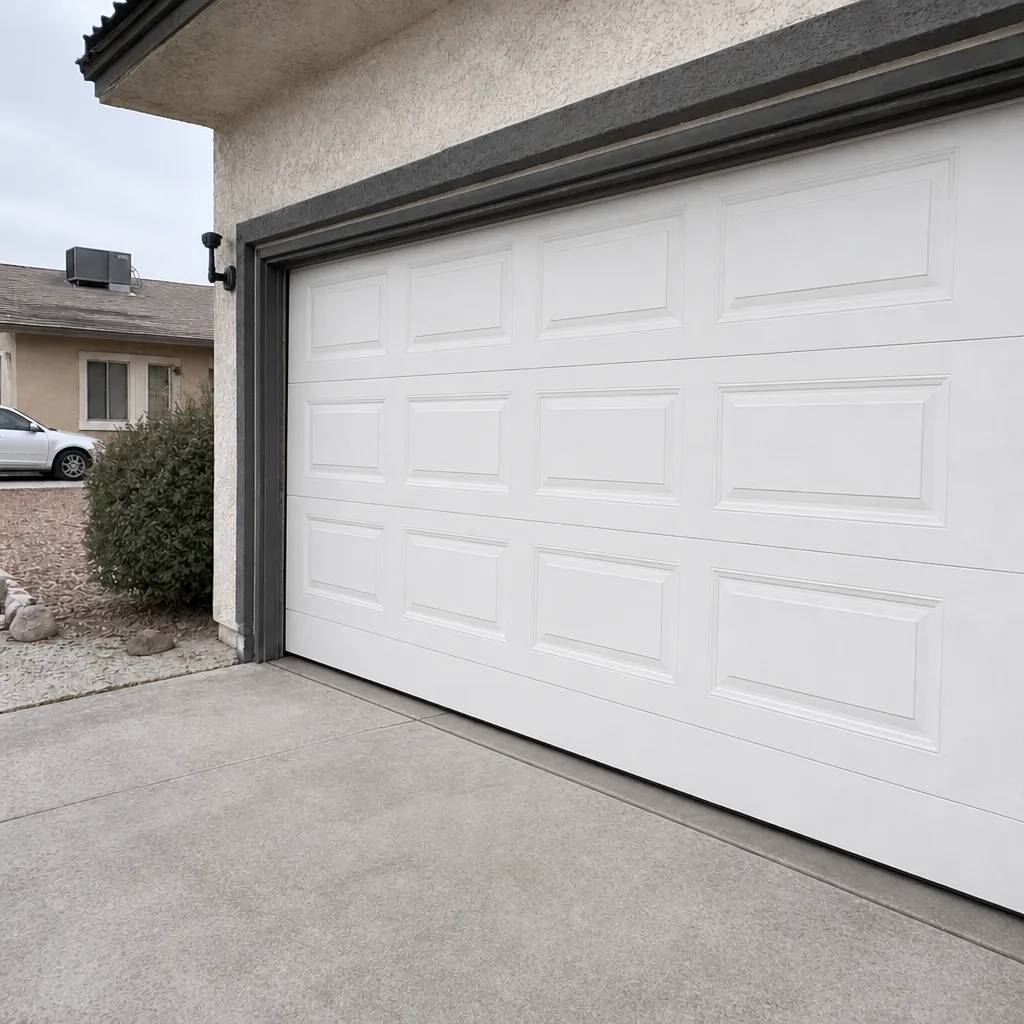 After
When to Call a Professional
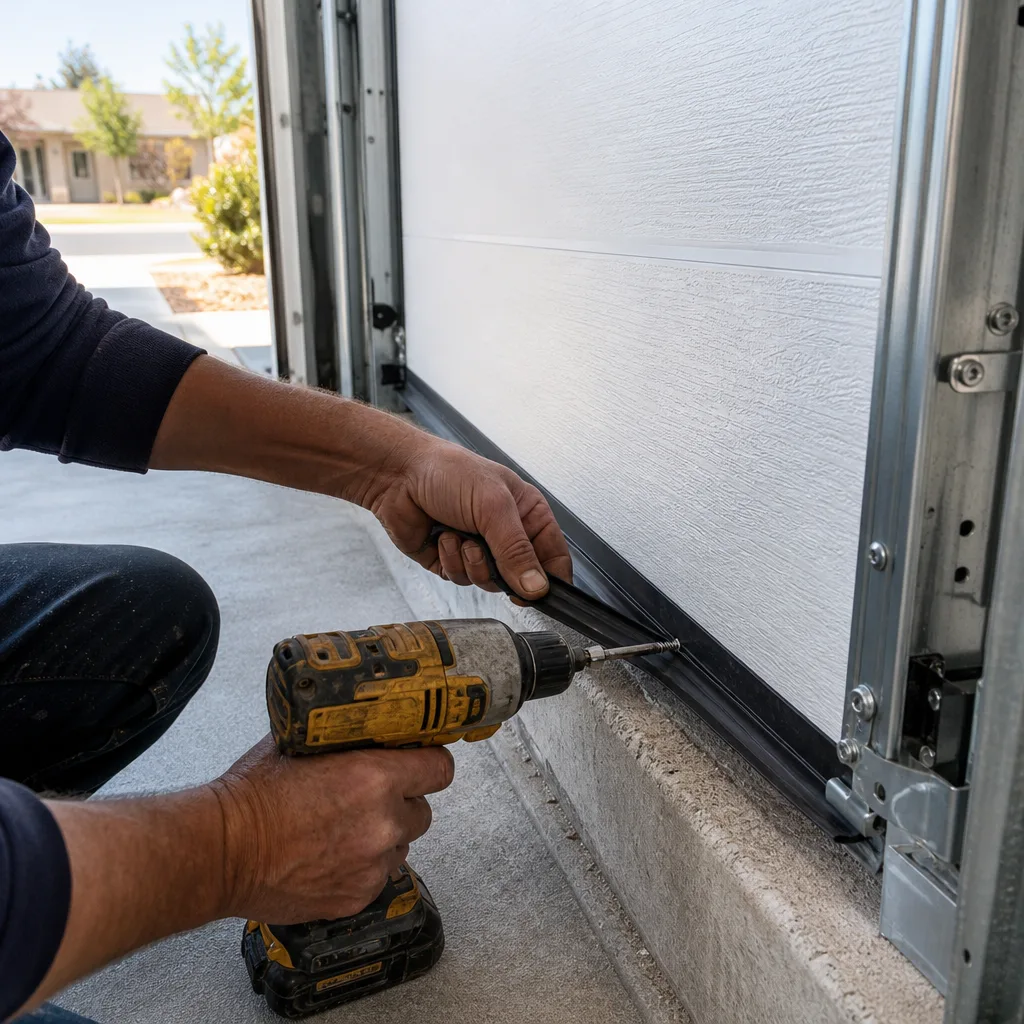
Anyone can safely reset a photo-eye sensor by hand or replace a bottom seal with a few hand tools. Everything else on a garage door carries stored energy that can hurt. The torsion spring at the top of the door holds enough tension to break a wrist if it releases unexpectedly, and the lift cables are under hundreds of pounds of tension. If a spring looks broken, a cable is snapped, the door won’t lift balanced, a panel is off-track, or the door has come off its rollers entirely, that’s a call for a trained technician – not a homeowner project. Same for any diagnostic that requires opening the opener housing or testing electrical continuity. Servo Garage Doors Whitney offers free estimates in Whitney – call (888) 402-1096 and a live person answers, day or night.
Frequently Asked Questions
Most Whitney spring replacements run $180-$340 for a single torsion spring and $320-$520 for a paired replacement. Both springs should typically be replaced together because they wear on the same cycle, and replacing one usually means the second fails within a year. The written price is set before any work starts. Call (888) 402-1096 for an exact quote – estimates are free.
Yes. Emergency garage door calls in Whitney are answered by a live person 24 hours a day, including holidays. A stuck door – spring broken, cable snapped, door off its track – is a same-day emergency call, and the technician will text an on-the-way update once dispatched. Call (888) 402-1096 and we’ll get you scheduled.
No. The price is quoted and agreed in writing before any work starts – Clause 1 of The Haven Standard. What gets inspected is documented, and if something unexpected turns up (a secondary crack, a bent track behind the door), the technician discusses it with you before adding scope. Nothing is added to the invoice that wasn’t on the written scope. Call (888) 402-1096 for a free estimate.
The local pro performing the work is licensed and insured as Nevada requires, and the license number is printed on the paperwork, not buried in fine print. Technicians are background-checked and uniformed on every job. If you’d like to see license and insurance documentation before work starts, ask – it’s provided. Call (888) 402-1096 to schedule.
Photo-eye drift from thermal expansion. The safety sensors at the base of the tracks need to align within a fraction of an inch, and the mounting brackets expand through the day as the garage heats up. Dust on the lenses makes it worse. It’s a common Whitney failure and usually a $120-$220 fix. Call (888) 402-1096 for a same-day diagnostic.
Get the color palette and material restrictions in writing from your HOA before ordering. Most Whitney HOA communities require factory-finished steel in neutral earth tones or grays. Bring the approved color chip list to the measure, and get the HOA approval letter in hand before the deposit. A door that doesn’t meet the palette comes back off. Call (888) 402-1096 to schedule a free measure.
The Bottom Line
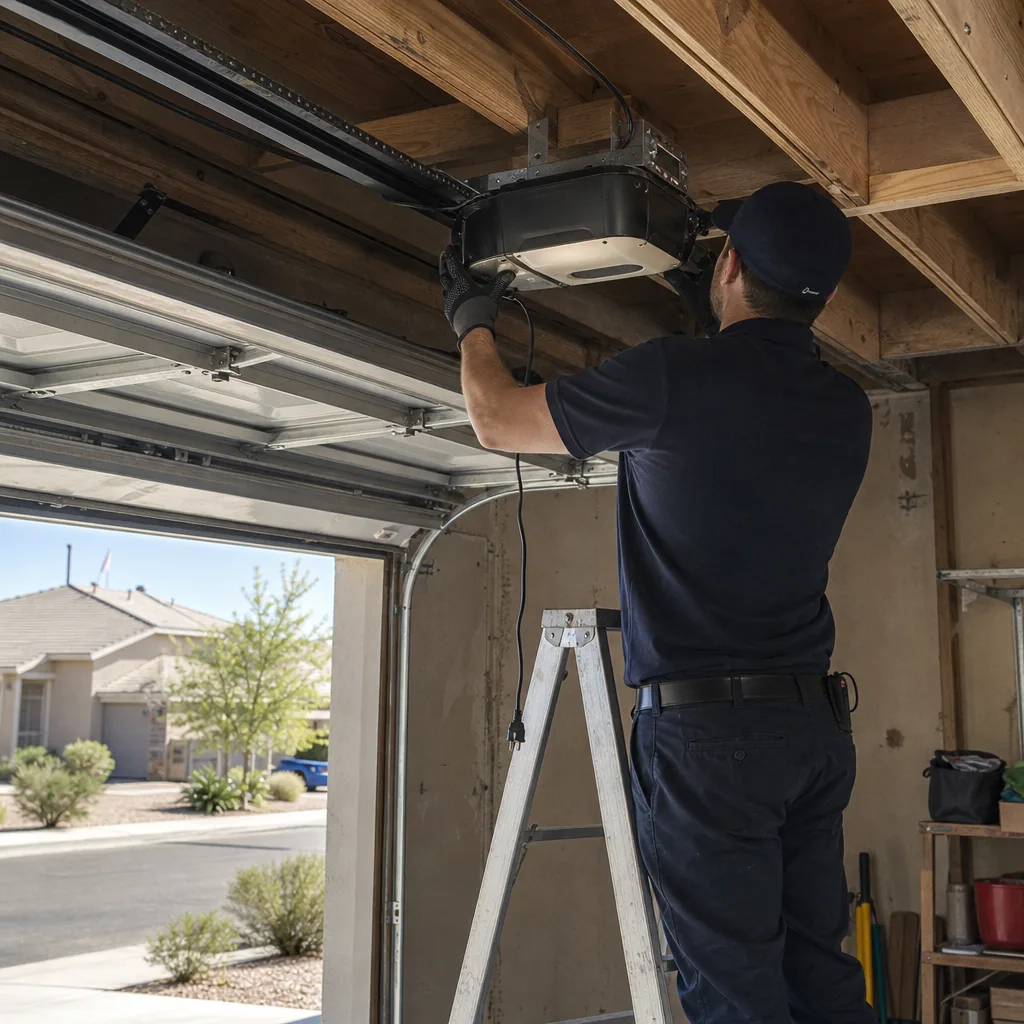
A garage door in Whitney doesn’t fail the way the national buying guides describe. It fails on the calendar the high desert sets: springs fatiguing faster from heat cycling, seals cracking under UV load, photo-eyes drifting through the day, tracks pushed out of plumb by caliche soil settling beneath the slab. The right decisions come down to reading those local symptoms correctly – repair when the door structure is sound, replace when components age together, install new when the door was never spec’d for this environment. Every repair, replacement, and install should come with a written price, a photo of the failed part, and a documented record when the technician leaves. That’s the standard whitney homeowners should expect from any garage door company, and it’s the one Servo Garage Doors Whitney operates under on every job.
Call (888) 402-1096 for a free estimate. A live person answers, and a written price comes before any work starts.
Written by the team at Servo Garage Doors Whitney.