
Last updated November 18, 2026
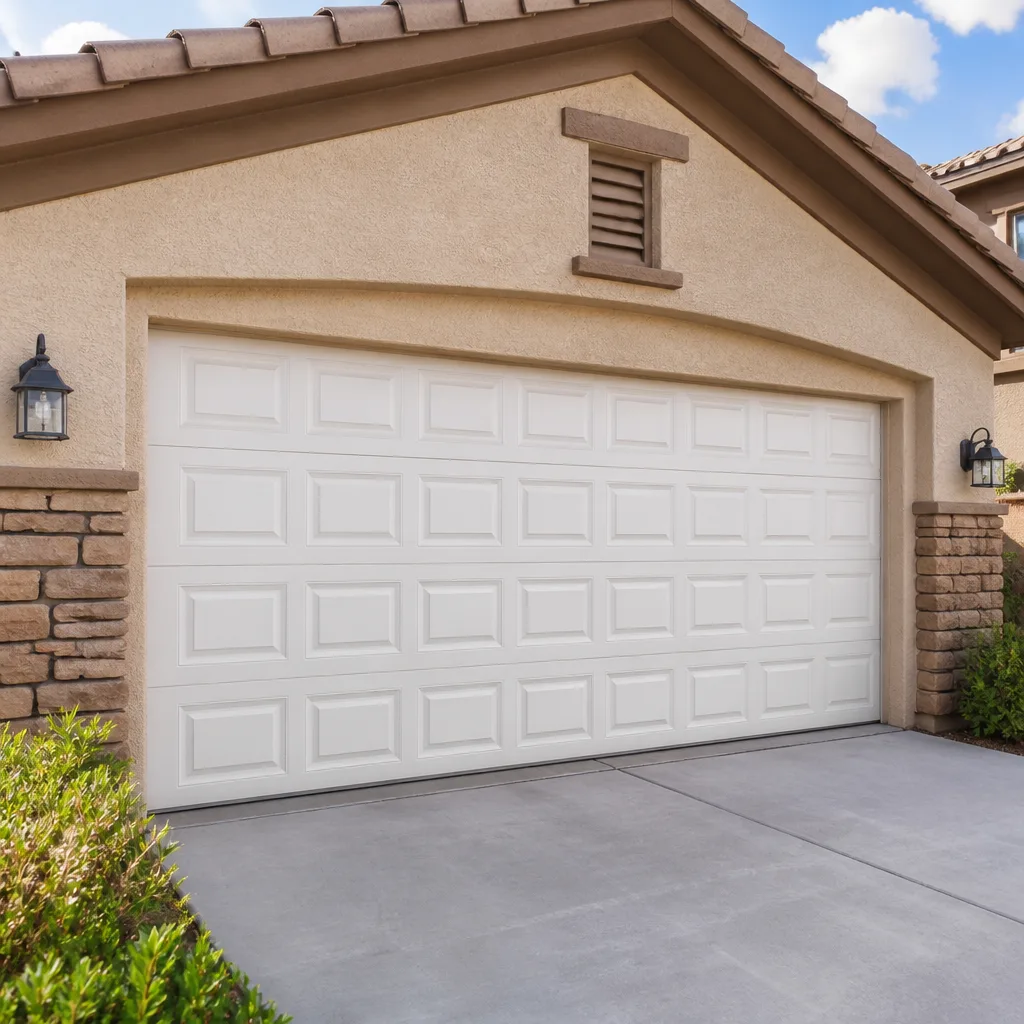 Raised-panel steel
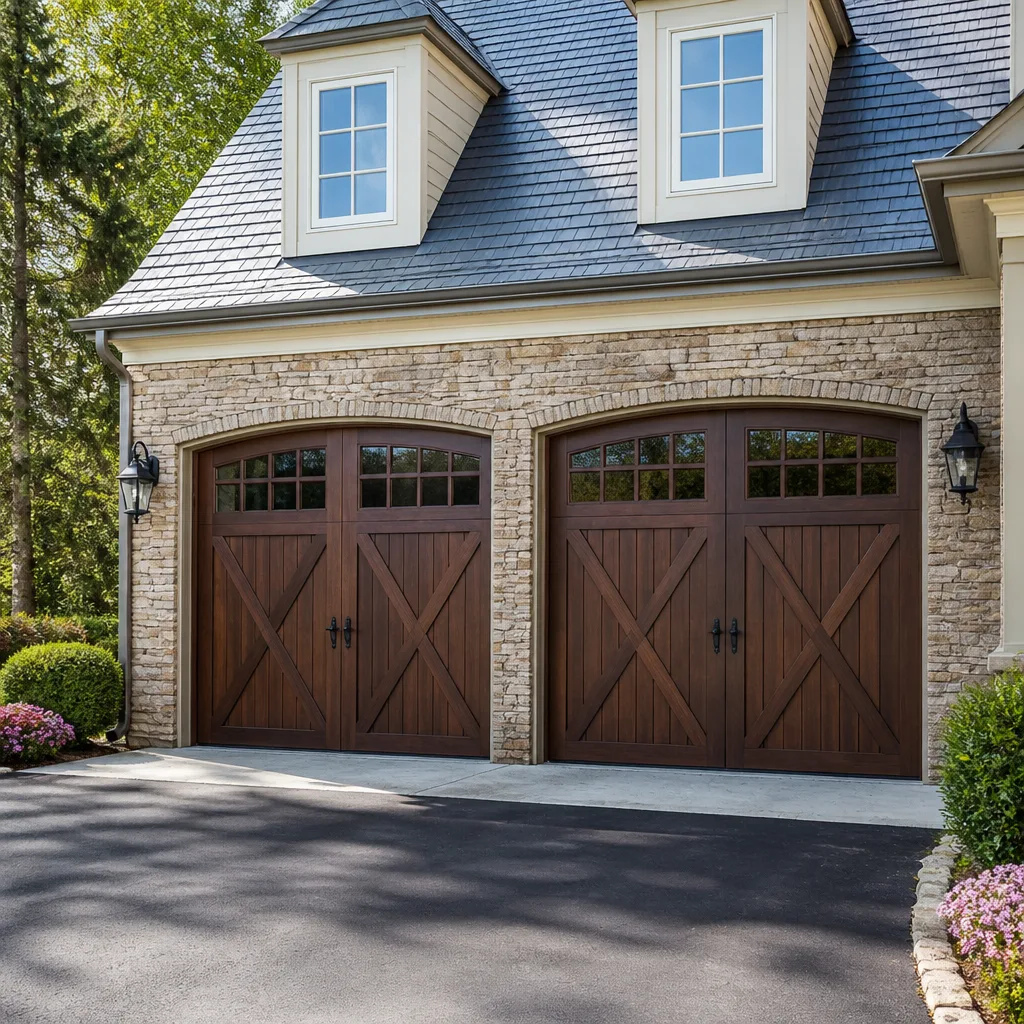 Carriage house
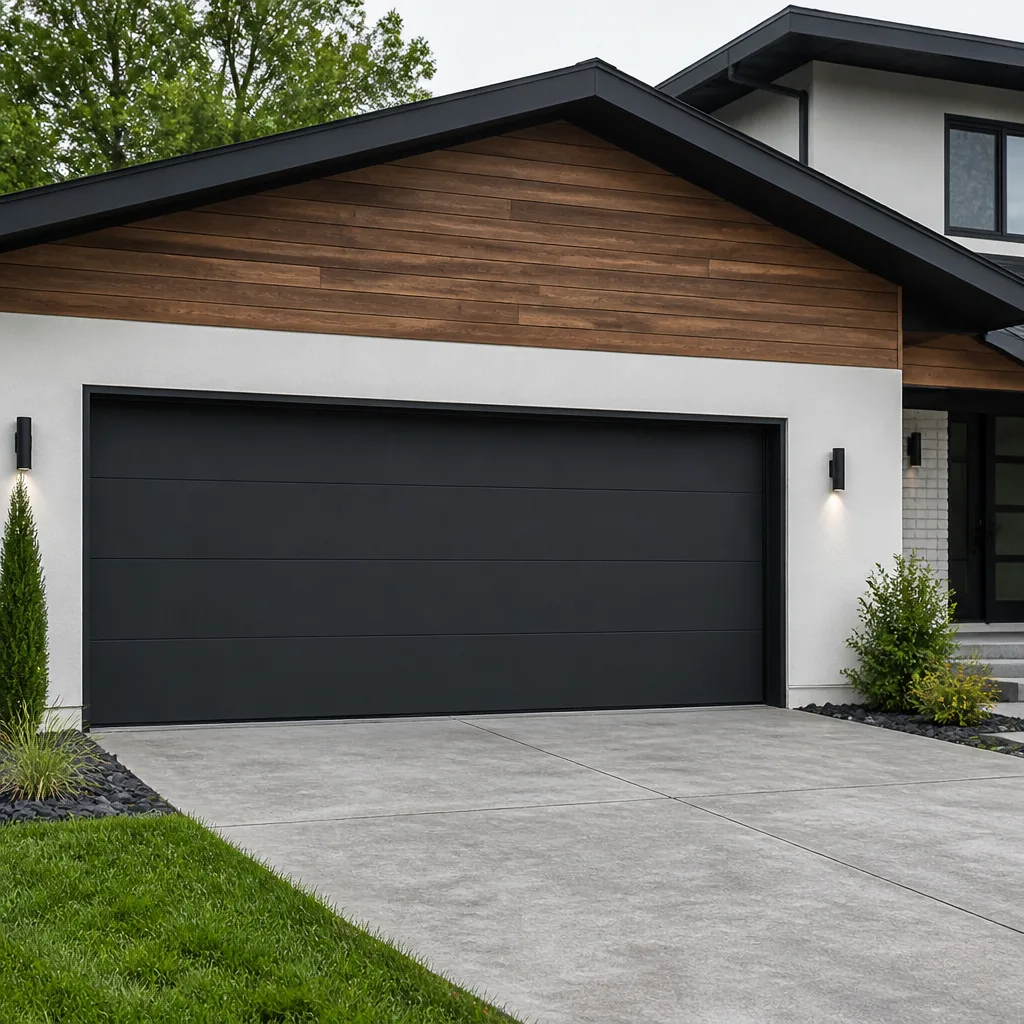 Modern flush
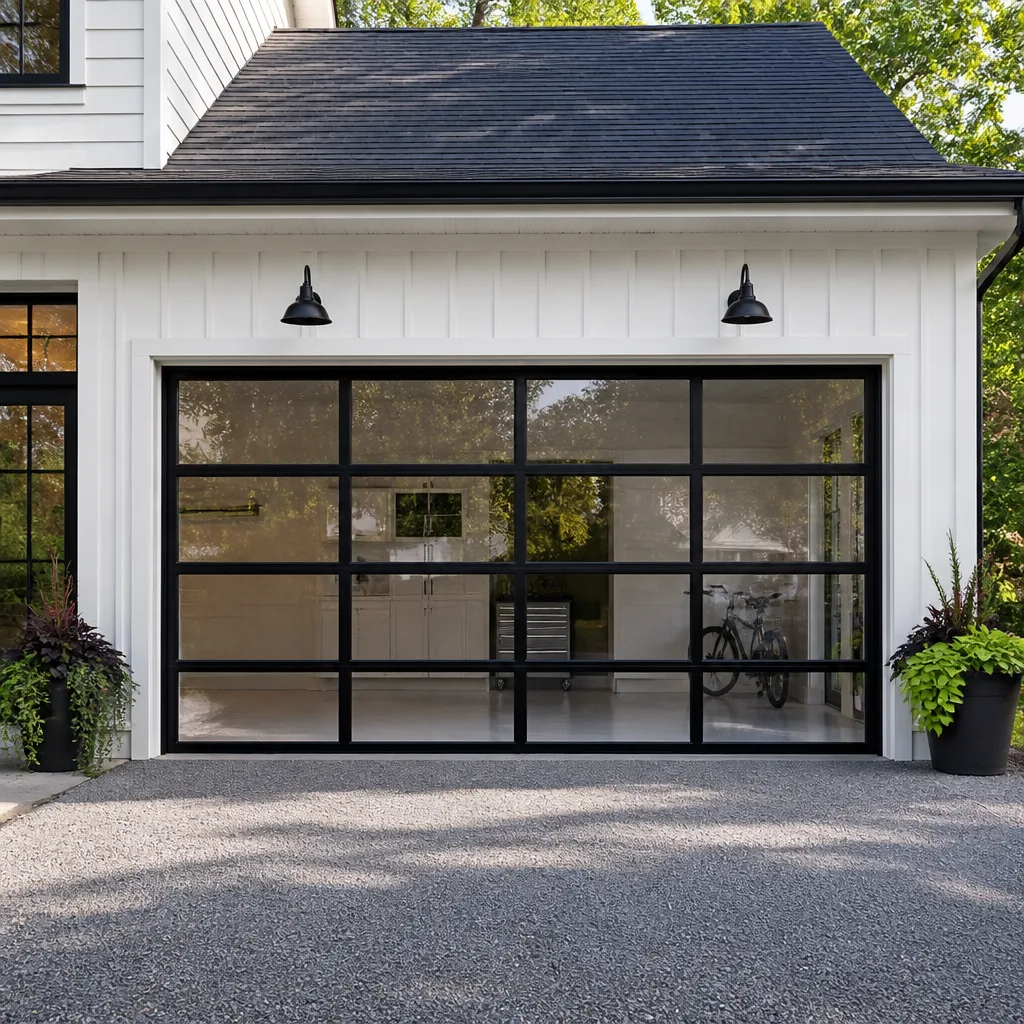 Full-view glass
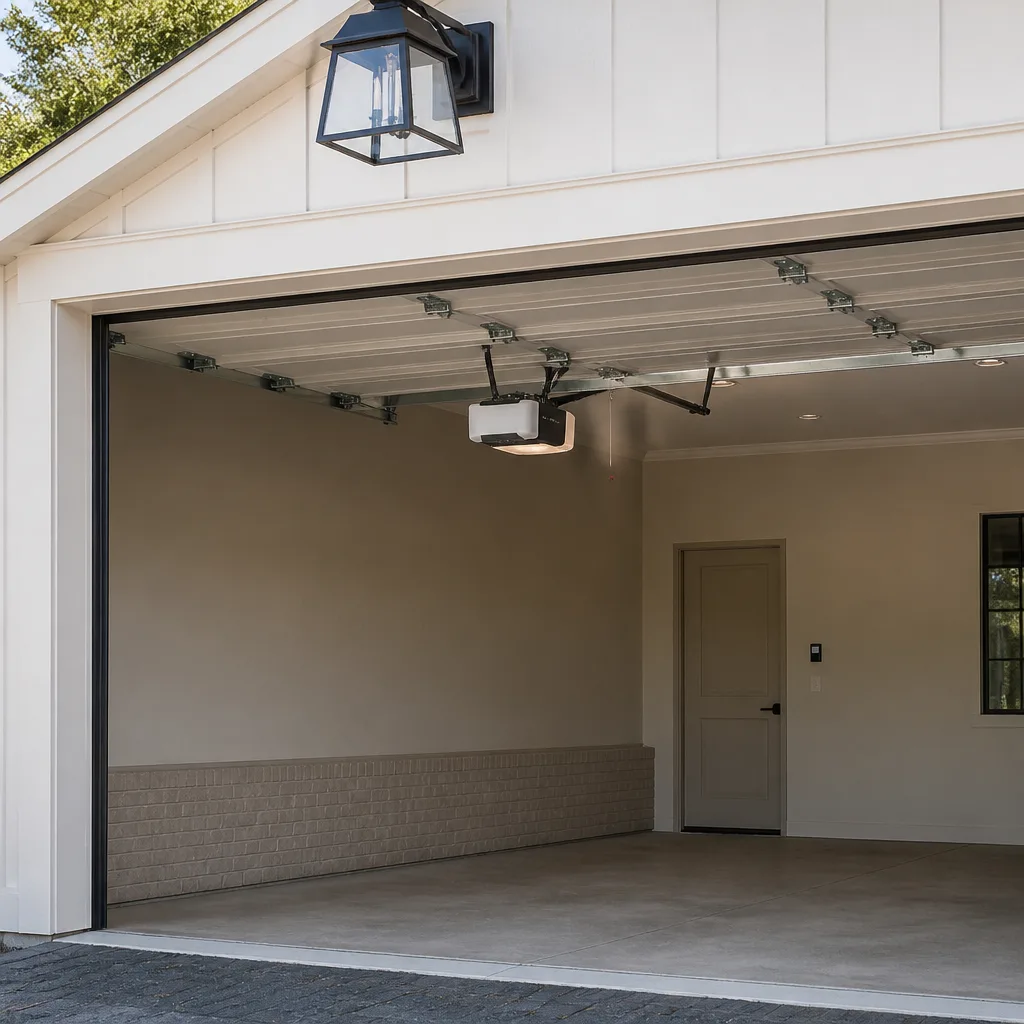 LiftMaster openers
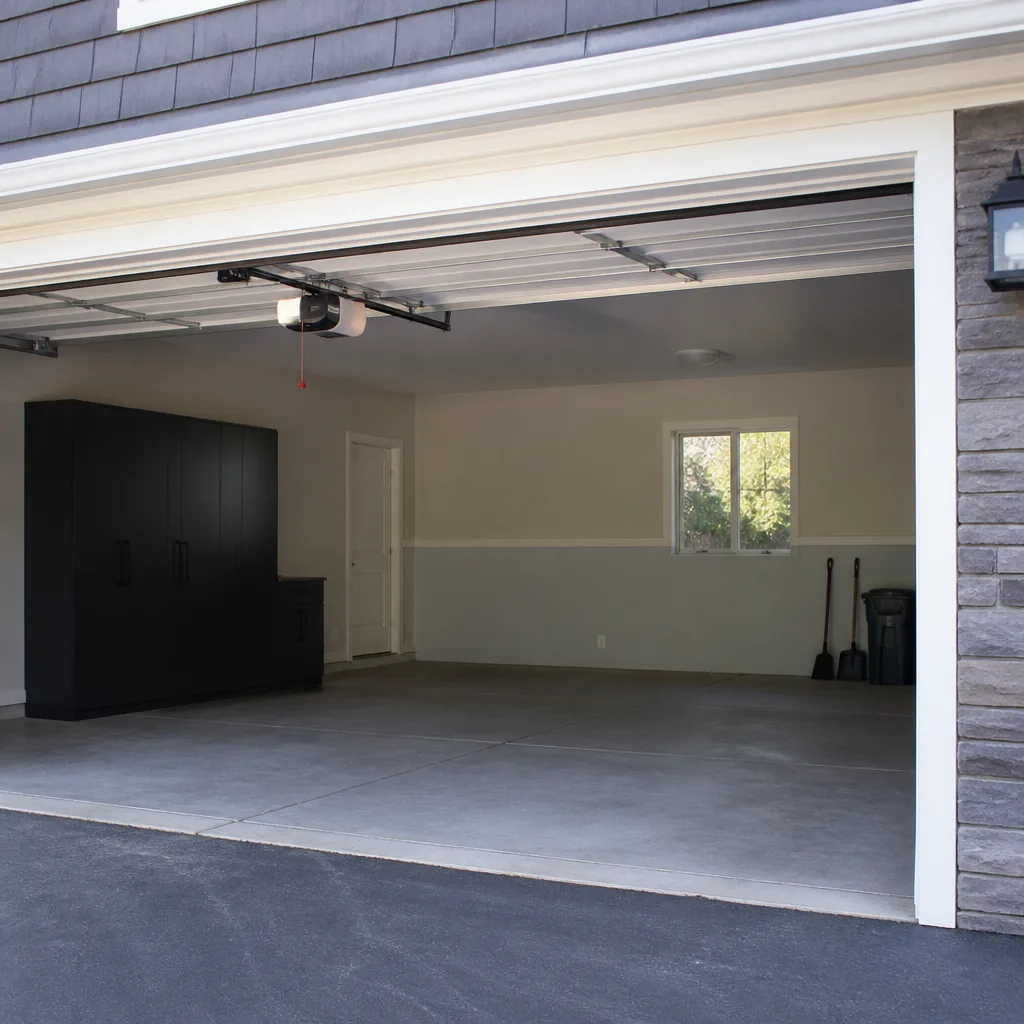 Chamberlain openers
Full 25-point door and opener safety check with every visit - springs, cables, rollers, tracks, and your LiftMaster or Chamberlain opener included
You get a price before we start. It does not change when the pro arrives.
Get your free estimateThe Complete Garage Door Opener Repair & Installation Guide for Whitney Homeowners
A belt-drive opener spec’d for a mid-Atlantic suburb will run louder and wear faster in Whitney. The motor works harder at elevation, the logic board cycles differently across a temperature range that swings from hard January freezes to triple-digit July afternoons, and the lubricant that’s fine at sea level turns viscous when the cold settles in. Whitney sits in high desert, and desert hardware has its own failure clock. This guide covers what actually breaks here, how the three drive types really compare in this climate, the full installation sequence most DIY videos skip, and how a written-price-first process works when you’re comparing bids.
Quick Answer
Garage door opener installation in Whitney typically runs $450 to $900 installed for a standard belt or chain unit, and repair of a single failed component usually lands between $150 and $400 depending on the part. High-desert conditions – dust, elevation, and a wide temperature swing – mean the opener’s drive mechanism and logic board take more punishment here than the spec sheet assumes. Get a flat written price and a written scope before any work starts, and ask the technician to photograph the failed part before quoting a replacement.
Styles & brands we work with
- Raised-panel steel
- Carriage house
- Modern flush
- Full-view glass
- LiftMaster openers
- Chamberlain openers
Table of Contents
- How Whitney’s Climate and Elevation Wear Your Opener
- Chain, Belt, or Screw: Drive Types Compared for High Desert
- The Full Installation Sequence, Step by Step
- What Opener Repair Costs in Whitney
- What We Photograph Before We Quote
- Local Parts, Lead Times, and Repair vs. Replace
- Safety: What You Should Never Touch Yourself
- Common Mistakes to Avoid
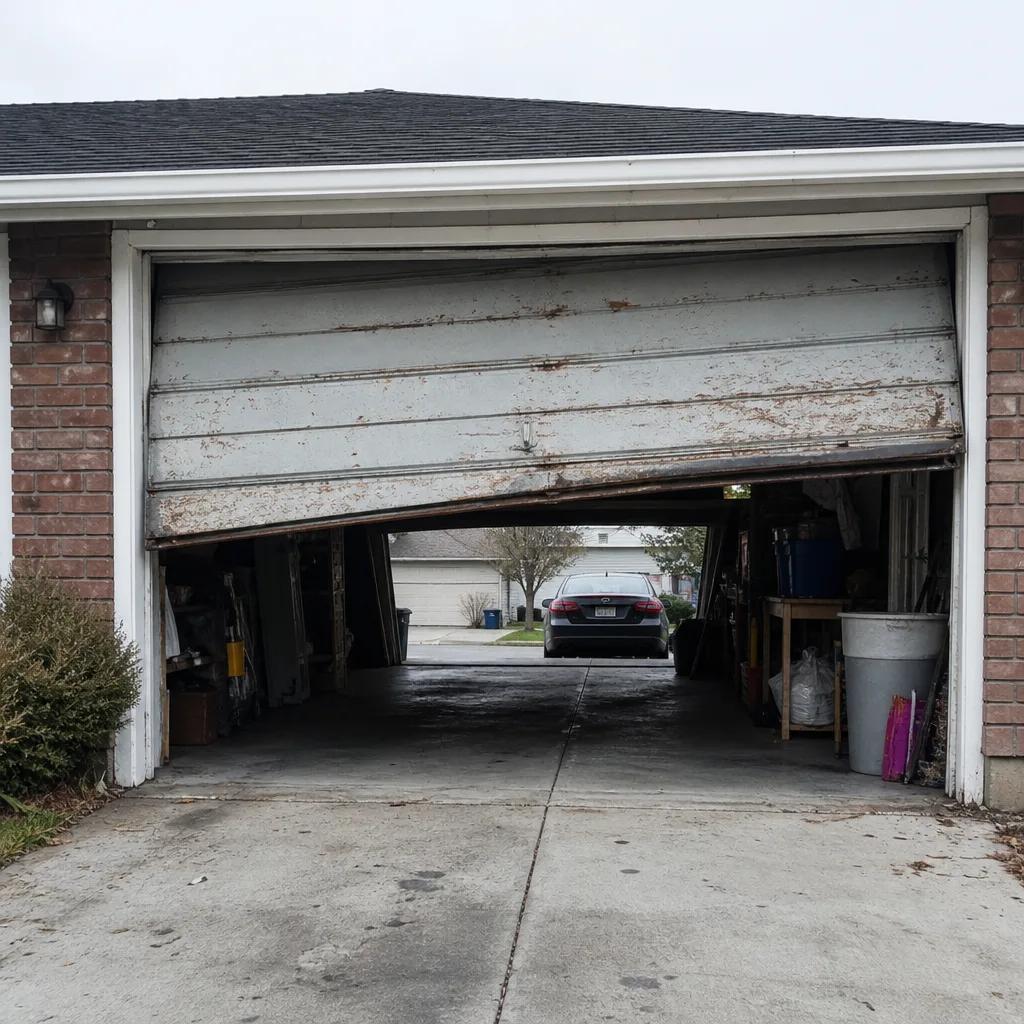 Before
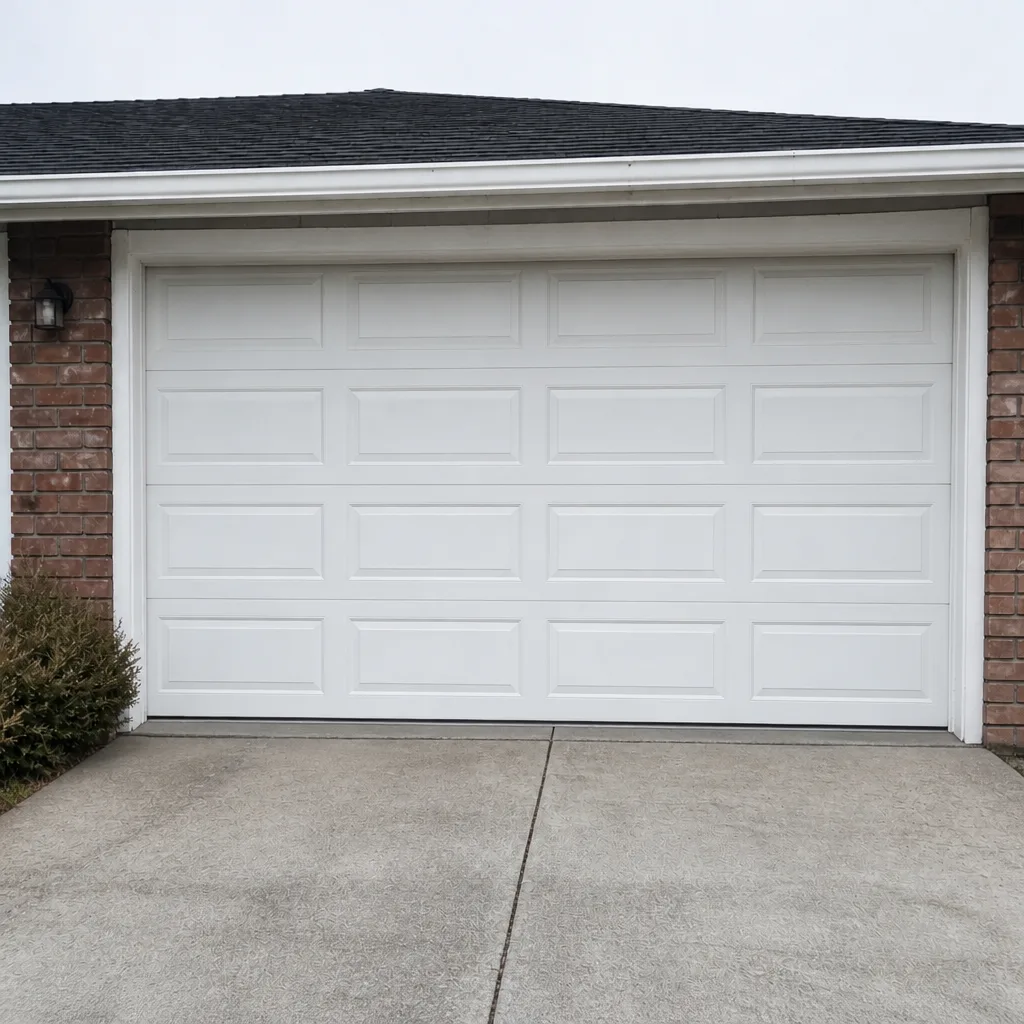 After
How Whitney’s Climate and Elevation Wear Your Opener
Whitney sits at roughly 1,900 feet, which doesn’t sound dramatic until you understand what it does to a motor’s duty cycle. An opener rated at a given lifting force at sea level has to work harder to move the same door here, because the motor has less work capacity in thinner air and the door’s balance is more critical. When the torsion spring is a little tired, the opener absorbs the slack. That shows up as a motor that runs hotter and louder, and a logic board that cycles more frequently than the manufacturer expected.
The temperature swing matters just as much. Whitney regularly sees January lows in the 20s and July highs above 100, and that range hits the drive mechanism two ways: lubricant viscosity changes with the cold, and the rail expands and contracts with the heat. A chain or screw drive that’s slightly over-tensioned in July will sag in January. A belt drive with the wrong belt material gets stiff enough in the cold to slip one tooth at a time on the sprocket – enough to throw off the travel limits without a full failure.
Then there’s dust. Whitney’s winter and spring winds carry fine particulate that works its way into the trolley carriage, the rail channel, and the drive gear. It acts like sandpaper over hundreds of cycles. In our experience, openers at Whitney properties out in the wind-exposed neighborhoods see trolley wear noticeably sooner than units shielded by trees or a deep setback. Cleaning and re-lubricating the drive mechanism on a schedule – and choosing the right lubricant for the temperature range, not the generic tube from the big-box shelf – stretches the life of the unit materially.
- Elevation effect: the motor works harder for the same lift, so a balanced door and healthy springs matter more here.
- Temperature swing: lubricant viscosity and rail expansion change the way the drive behaves season to season.
- Dust infiltration: fine grit accelerates wear on the trolley carriage and drive gear.
- Detached garages: common in Whitney’s housing stock, and unheated, which widens the temperature swing the unit sees.
Chain, Belt, or Screw: Drive Types Compared for High Desert
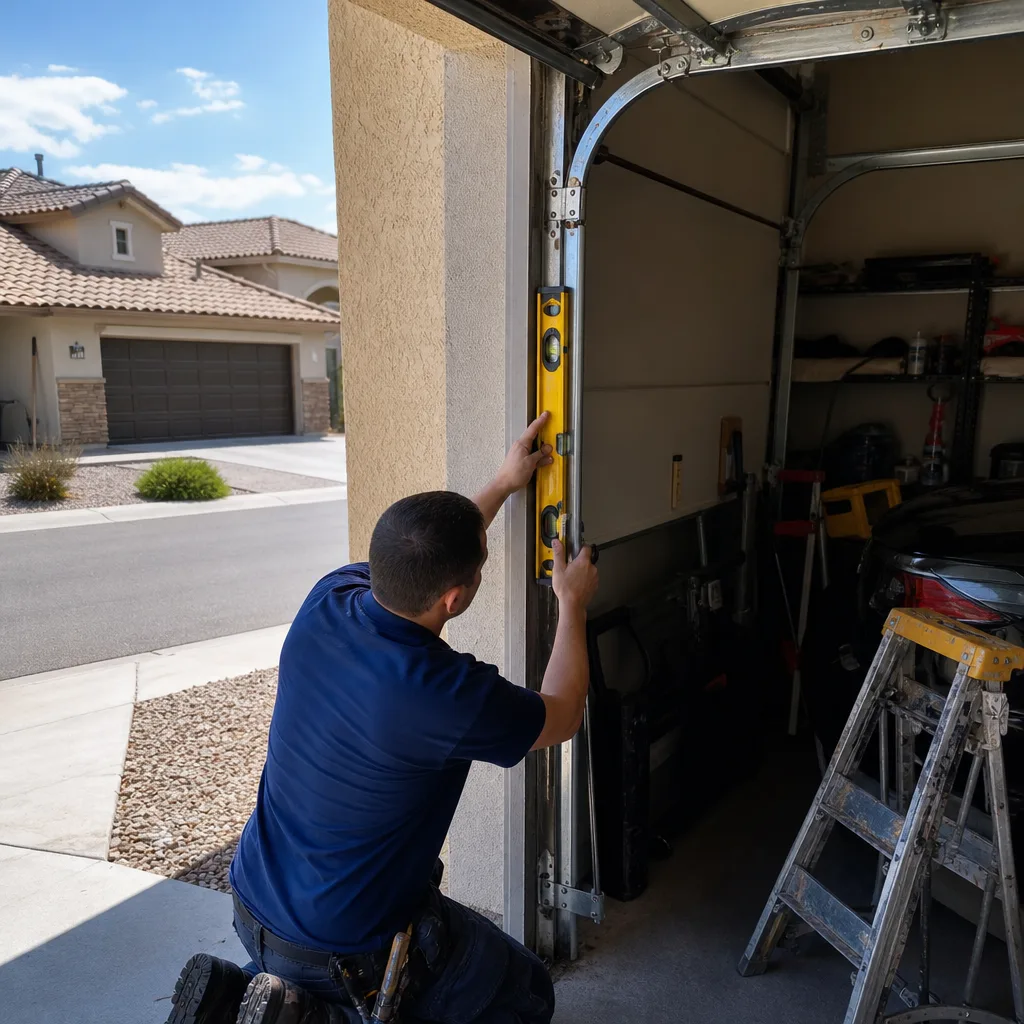
The three drive types aren’t equally suited to Whitney conditions, and the honest trade-offs are worth spelling out rather than reduced to a pros-and-cons graphic.
Chain drive
Chain drive is the workhorse. It’s the loudest of the three, and in a detached Whitney garage that noise matters less than it would in a bedroom-adjacent garage. Chain handles the dust reasonably well because the chain is open and self-clearing, but it needs periodic lubrication and it stretches over time, which shows up as the door creeping out of adjustment. For a heavy or older door, chain is a solid, serviceable choice. Genie and Chamberlain both make chain units that hold up fine here.
Belt drive
Belt drive is the quiet choice and the one most homeowners ask about first. The trade-off in high desert is real: the belt material has to be tolerant of both cold stiffening and heat, and a low-quality belt will slip at the sprocket when temperatures drop. A properly specced belt from a brand that knows cold climates runs well, and the noise reduction is genuine. If your garage shares a wall with living space, belt earns its price premium. If it’s detached, the quietness is a nice-to-have, not a necessity.
Screw drive
Screw drive has the fewest moving parts and no chain or belt to stretch, which makes it a durable pick in dusty conditions. The caveat is that the screw itself needs the right lubricant and the wrong grease in cold weather makes the drive bind. Screw drive is a good match for a Whitney garage that sees heavy use and a homeowner who wants minimal maintenance, provided the lubricant question is handled correctly at install.
| Drive type | Noise | Dust tolerance | Cold-weather behavior | Best fit in Whitney |
|---|---|---|---|---|
| Chain | Loudest | Good | Stretches, needs re-tension | Detached garages, heavy doors |
| Belt | Quietest | Fair | Belt can stiffen; spec matters | Attached garages, bedroom walls |
| Screw | Moderate | Best | Binds if wrong lubricant | High-use, low-maintenance setups |
Whichever drive you choose, the opener is only half the system. If the door itself is out of balance or the springs are tired, no drive type saves you – the motor just works harder. That’s why any honest opener conversation in Whitney starts with the door’s balance, not the motor. If the door is the problem, our Garage Door Repair in Whitney team can assess the springs and rollers before you spend on a new opener you don’t need.
The Full Installation Sequence, Step by Step
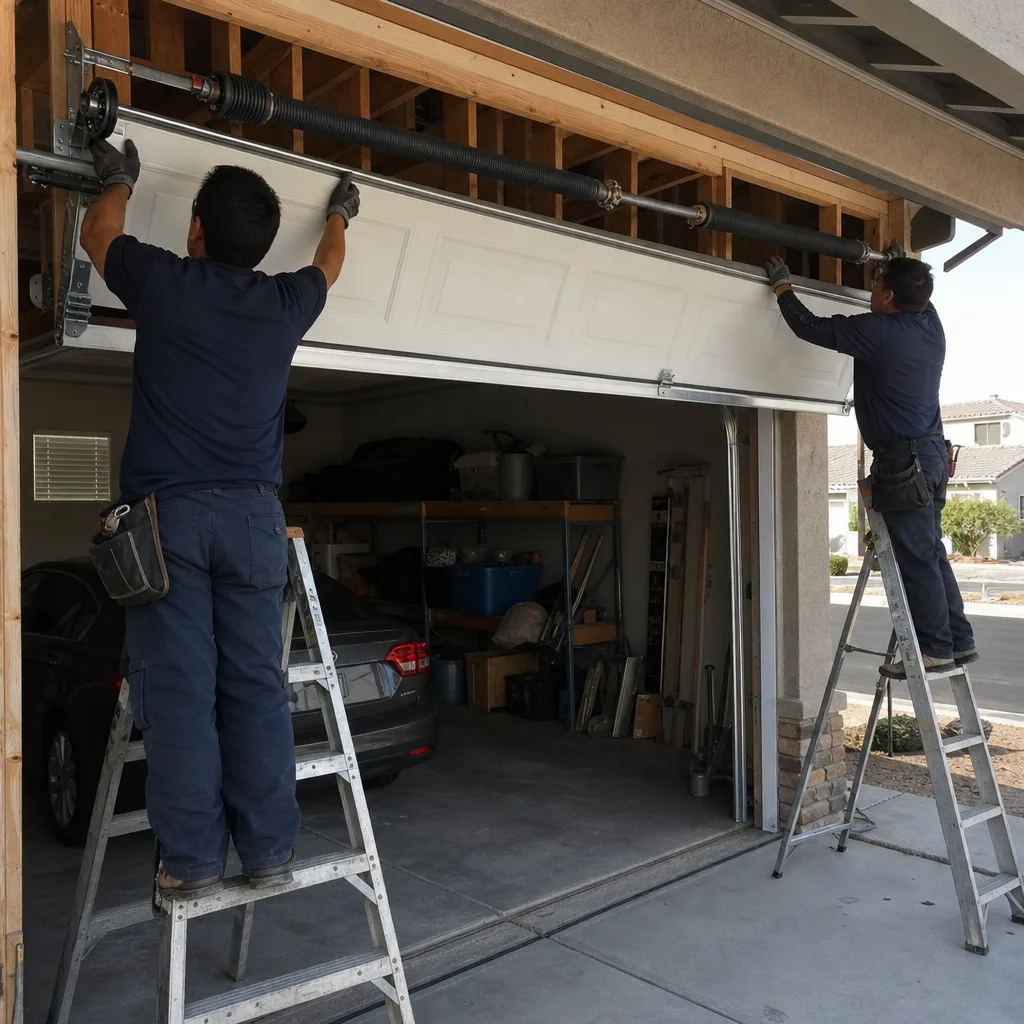
Most DIY videos abbreviate the parts that decide whether the opener runs quietly for ten years or starts throwing travel limits in six months. Here’s the sequence a careful install follows, in order.
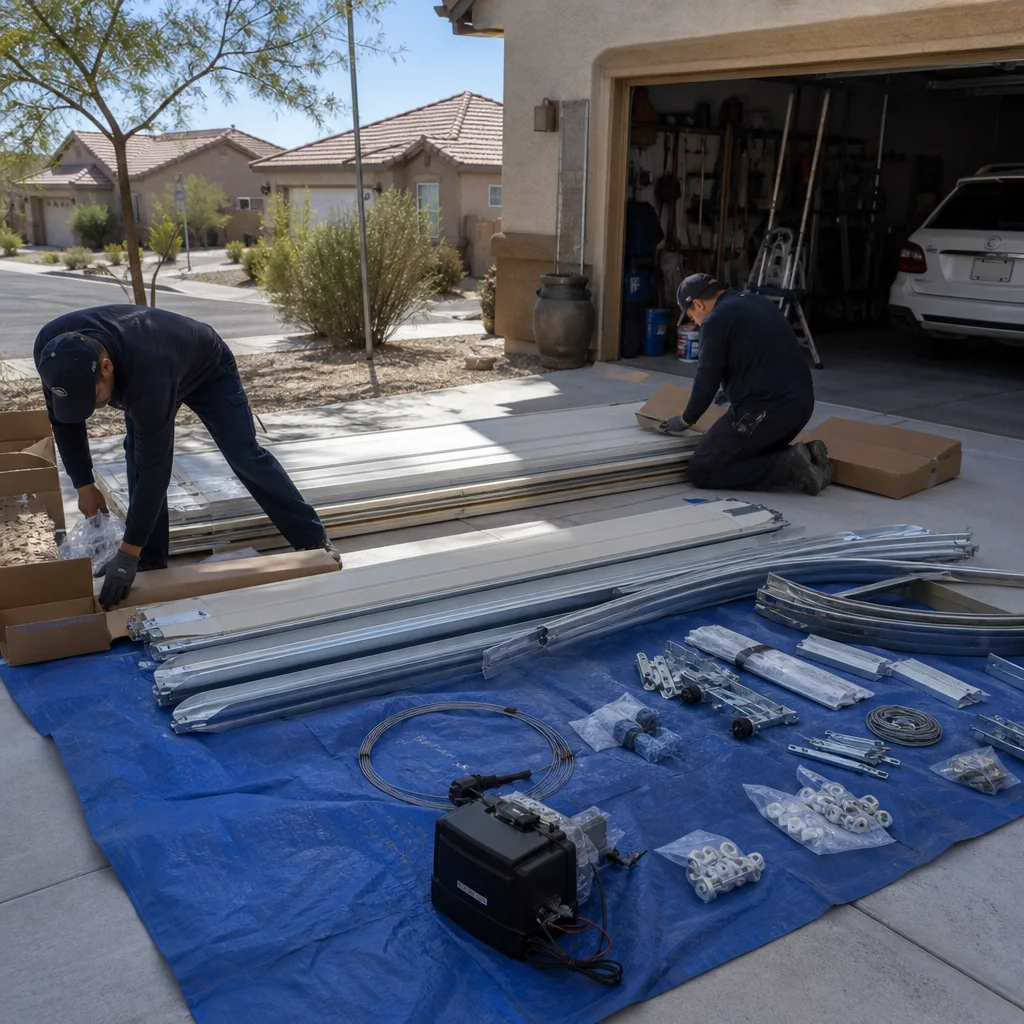
- Assess the door and balance first. Disconnect any existing opener and check the door’s balance by hand. A door that won’t hold position halfway up needs spring work before any new opener goes on. This is the step that saves the most money long-term.
- Locate and mount the header bracket. The header bracket (the anchor above the door) sets the rail’s height and alignment. It has to be centered on the door’s travel, mounted into structural framing – not drywall – and at the height the manufacturer specifies for your door’s top section and spring type. Misalignment here is the root cause of most noisy installs.
- Assemble and hang the rail. The rail has to be level and supported at the correct interval, with the hang brackets set so the rail doesn’t sag under its own weight in summer heat or bind in January cold. This is where temperature-driven rail movement gets designed out.
- Attach the trolley and door arm. The trolley carriage (the shuttle that rides the rail) connects to the door via the arm. The arm’s angle and the door bracket’s position affect how the door follows the rail – get this wrong and the door binds halfway through its travel.
- Wire the safety reversing sensors. The photo-eye sensors at the door’s base must be aligned, mounted at the correct height, and wired so the opener won’t close the door if the beam is broken. This is a code and safety matter, not a convenience.
- Set the travel limits. The open and close limits tell the motor where the door stops. Set with the door in the actual installed position, not a guess. In Whitney, recheck the limits after the first hard cold snap, because rail contraction can shift them.
- Adjust the force settings. The force adjustment controls how hard the opener pushes before reversing. Set it to the minimum that reliably moves the door. Too high a force setting defeats the safety reversal; too low and the door won’t close in cold weather.
- Test every safety function and document the install. Test the photo-eye reversal, the force reversal (with a test object), and the manual release. Then photograph the finished state – rail, brackets, wiring, sensors – and hand the record to the homeowner.
That last step is Clause 1 of The Haven Standard in practice: a flat written price and written scope before work starts, and a documented photo record when the technician leaves. For a new door and opener together, our Garage Door Installation in Whitney page covers how the door and opener get measured and scheduled as one job.
What Opener Repair Costs in Whitney
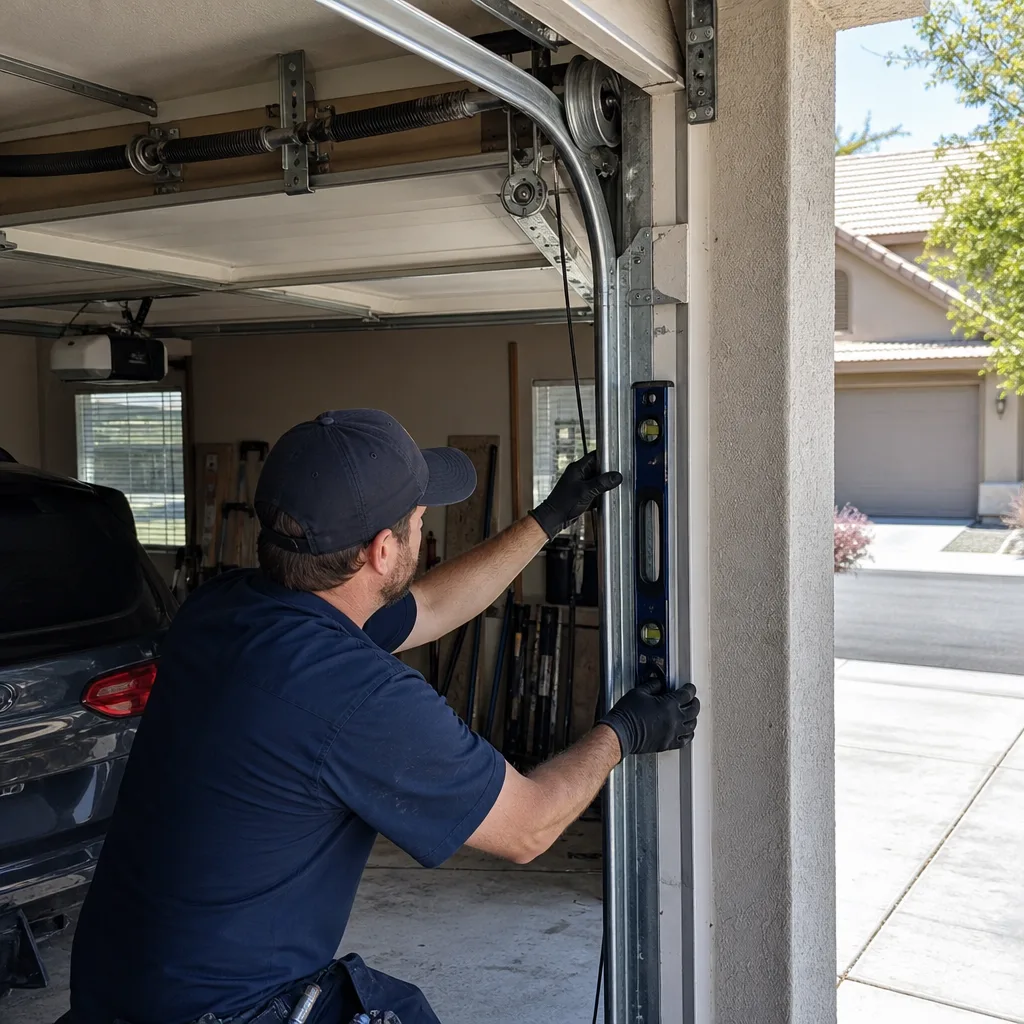
Opener repairs in Whitney typically fall between $150 and $400 for a single failed component, with the price driven by the part and whether it’s a stocked item. Installation of a new unit runs $450 to $900 installed, depending on drive type and door weight. Here’s how the line items break down in this market.
| Job | Typical Whitney range |
|---|---|
| Logic board replacement | $180 – $350 |
| Gear and sprocket kit | $150 – $300 |
| Trolley carriage / door arm | $120 – $250 |
| Safety sensor replacement | $100 – $200 |
| Travel limit / force adjustment service | $95 – $175 |
| Full opener replacement, belt or chain, installed | $450 – $900 |
Those ranges are the whole reason we put a number on the page. A written price before work starts is Clause 1, and it’s the answer to the second fear every homeowner has after the breakdown itself: will the invoice come in higher than the quote? It won’t, because the quote is flat and the scope is written before a tool comes out of the bag. If the technician finds a second failed component, that’s a new written scope and a new written price, agreed before that work begins.
The other side of the repair-vs-replace decision is the door. A door that’s out of balance or has tired springs will kill a new opener just as fast as the old one. Check the whole system before committing to a motor. If you’ve already got a written estimate from another company, our free second opinion applies to any competing written estimate – bring the paperwork and we’ll tell you what we see, no coupon or code needed.
What We Photograph Before We Quote
Servo was built on one rule: the customer sees the failed part before anyone quotes a replacement. That’s now codified as Clause 4 of The Haven Standard, and it changes how a quote happens. Here’s what the process looks like on a Whitney opener job.
- The failed component, close up. The logic board with the burned trace visible. The drive gear with the missing teeth. The trolley carriage with the worn shuttle.
- The surrounding system. The springs, the rollers, the door’s balance point. A failed opener is sometimes a symptom, not the cause.
- The installed condition. Rail alignment, header bracket mounting, sensor height, wiring. If the previous install caused the failure, the photo shows it before we quote a fix.
- The written scope and flat price. What’s being replaced, what’s being reused, what the price covers, and the warranty on the part and labor.
- The completed work. When we leave, you get a documented photo record of what was found and what was done.
That record matters most when you’re comparing bids. Two quotes for the same job can mean very different things if neither shows you the failed part. Ours does. If you want to see the full scope of what we service beyond openers, our Garage Door Opener Repair & Installation in Whitney page lays it out, and the Servo Garage Doors Whitney home page has the full picture of how The Haven Standard works across every job.
Local Parts, Lead Times, and Repair vs. Replace
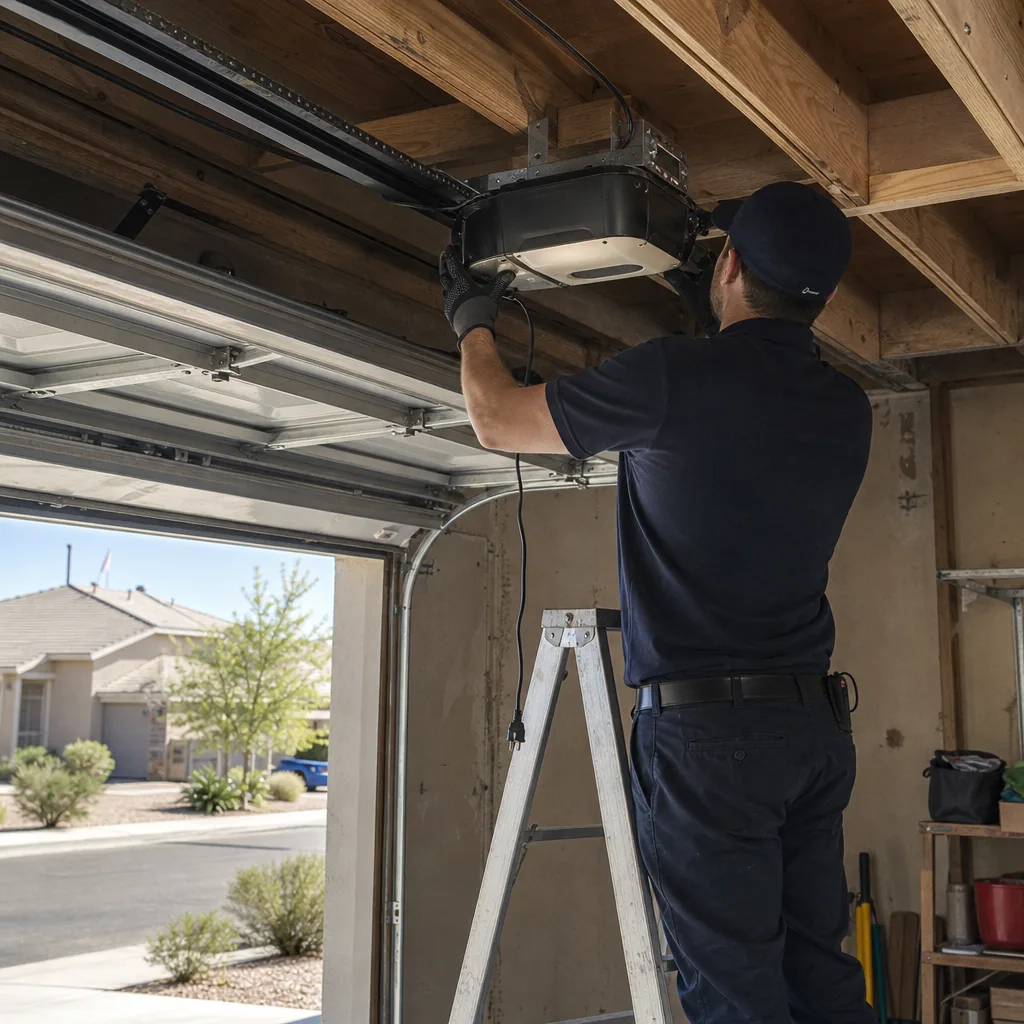
Parts availability shapes the repair-vs-replace call more than most homeowners realize. Whitney is close enough to Reno that stocked parts come quickly – logic boards, gear kits, trolley carriages, sensors – but not every manufacturer holds every part locally. Here’s the practical picture.
- Common failure parts are stocked regionally. Logic boards, gear and sprocket kits, and sensors for the major brands move fast enough that same-week repair is normal in Whitney.
- Discontinued units change the math. If your opener is old enough that the manufacturer no longer makes the logic board, a repair can mean waiting on a specialty supplier. At that point, a $400 repair on a $500 opener is a poor bet, and replacement is the honest recommendation.
- Brand coverage matters. We service LiftMaster, Chamberlain, Genie, Clopay, Amarr, Wayne Dalton, Craftsman, and Raynor, so brand isn’t usually the obstacle – age is.
- Doors and openers together. If the door itself is at the end of its life, replacing the opener alone pushes the same wear onto the new motor. Clopay and Amarr both make doors that pair well with a modern belt drive for a Whitney attached garage.
The rule of thumb: if a repair costs more than roughly half the price of a new installed unit, and the existing opener is past its service life, replacement is usually the better use of the money. If the unit is recent and the failure is one part, repair wins. The written price and the photo record make that decision concrete instead of a guess. And because install work is measured and scheduled rather than dispatched, the promise there is a free measure and a written price, not same-day service.
Safety: What You Should Never Touch Yourself
Garage door systems store enormous energy in their springs, and that energy is unforgiving. The torsion spring above the door and the lift cables at the sides are under high tension – a spring that lets go while you’re near it can cause serious injury, and adjusting or replacing one is a job for a trained technician with the right winding bars and the right procedure. The same goes for any electrical work inside the opener or at the wall control if it involves line voltage.
What you can safely do is check and observe: test the safety reversal by placing an object in the door’s path, watch the photo-eye sensors for alignment, listen for unusual noise, and note when the door starts reversing on its own or stopping short. Those observations are exactly what a technician needs to diagnose the problem fast. For anything that involves the springs, cables, or opening the opener housing, call a trained professional – the local pro is licensed and insured as their state requires, and the risk isn’t worth the savings.
Common Mistakes to Avoid
- Choosing an opener spec’d for a mild climate. A unit rated for a mid-Atlantic suburb will run louder and wear faster at Whitney’s elevation and temperature range. Check the unit’s cold-weather and elevation specs, not just the lifting force.
- Skipping the balance check before installing. A door that’s out of balance or has tired springs will wear out a new opener prematurely. Balance the door first, then size the motor.
- Running the wrong lubricant. The generic grease that works at sea level turns viscous in a Whitney January. Use a lubricant rated for the temperature range the unit actually sees, especially on screw and chain drives.
- Setting the force adjustment too high. Cranking the force up to stop nuisance reversals defeats the safety reversal itself. Set force to the minimum that reliably moves the door, and fix the underlying cause instead.
- Ignoring the travel limits after a cold snap. Rail contraction in January can shift the door’s stopping points. Recheck the limits after the first hard freeze or the door will start stopping short.
- Skipping the documentation. A quote without a photo of the failed part is a quote you can’t compare. Ask for the record, and keep it.
- Accepting a verbal price. “Call for a quote” is not a price. A flat written price and written scope before work starts is the standard, and it’s the thing that protects you from an invoice bigger than the estimate.
See the difference
BeforeAfter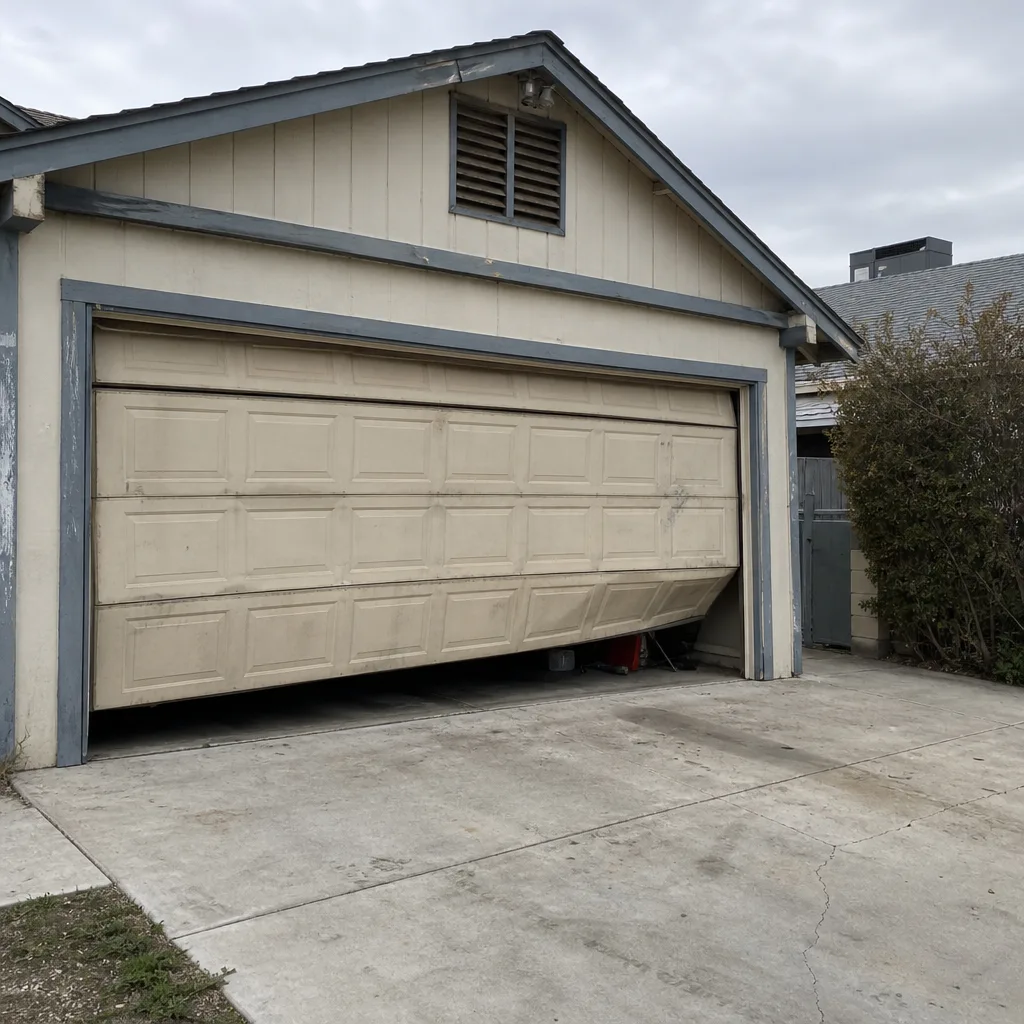 Before
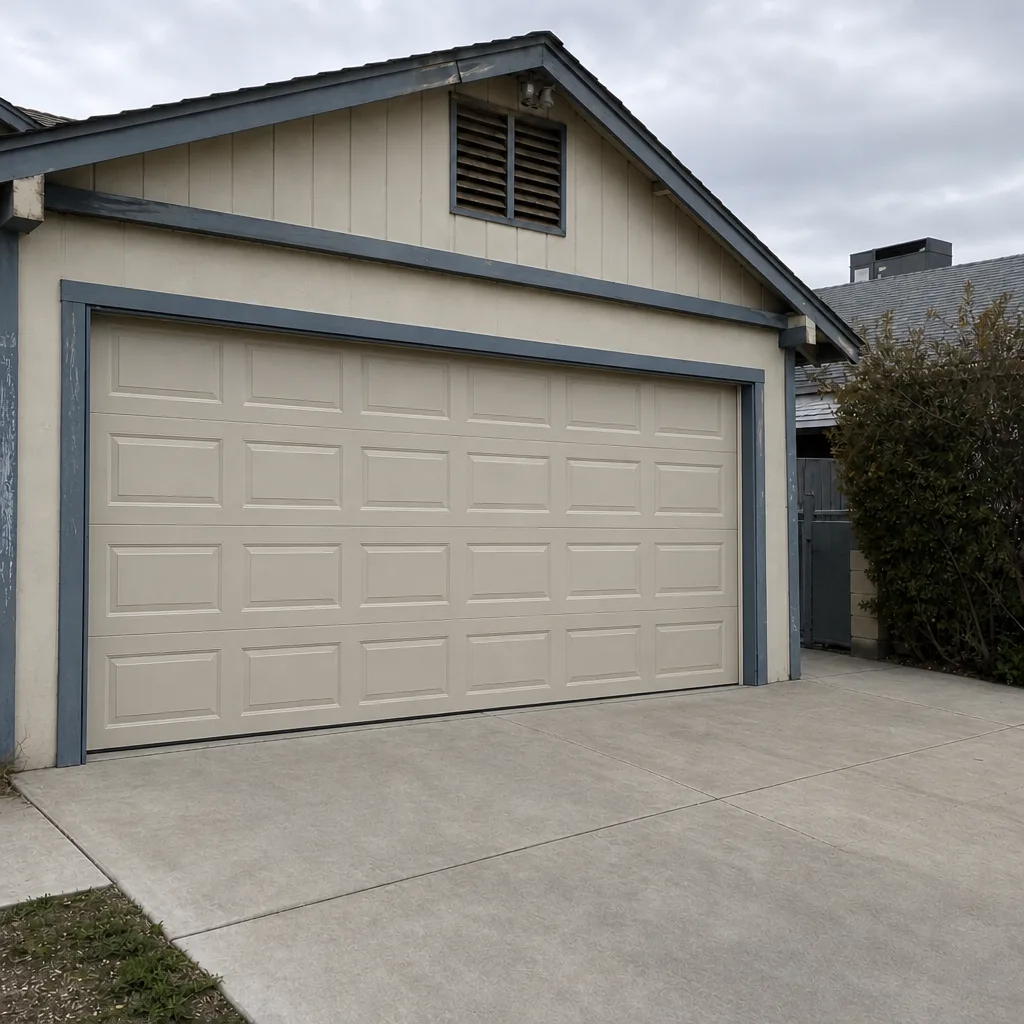 After
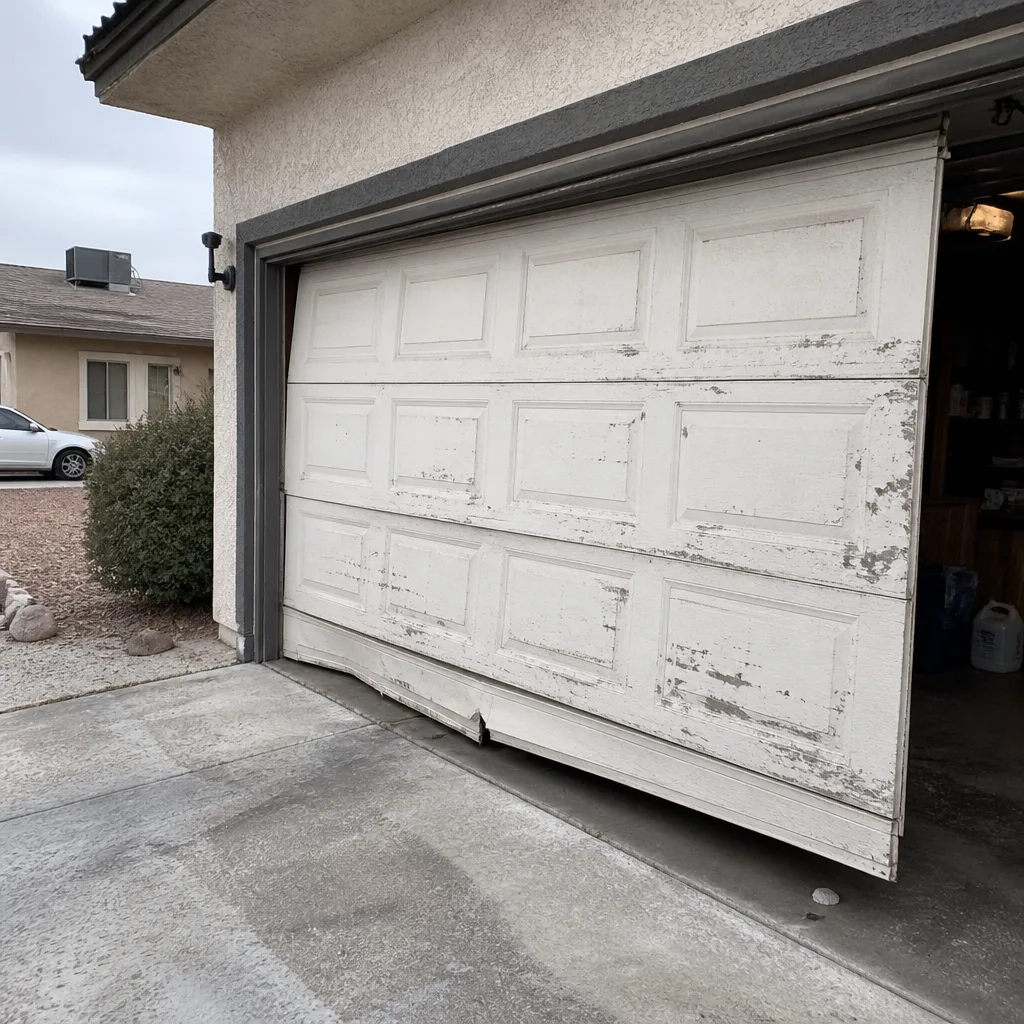 Before
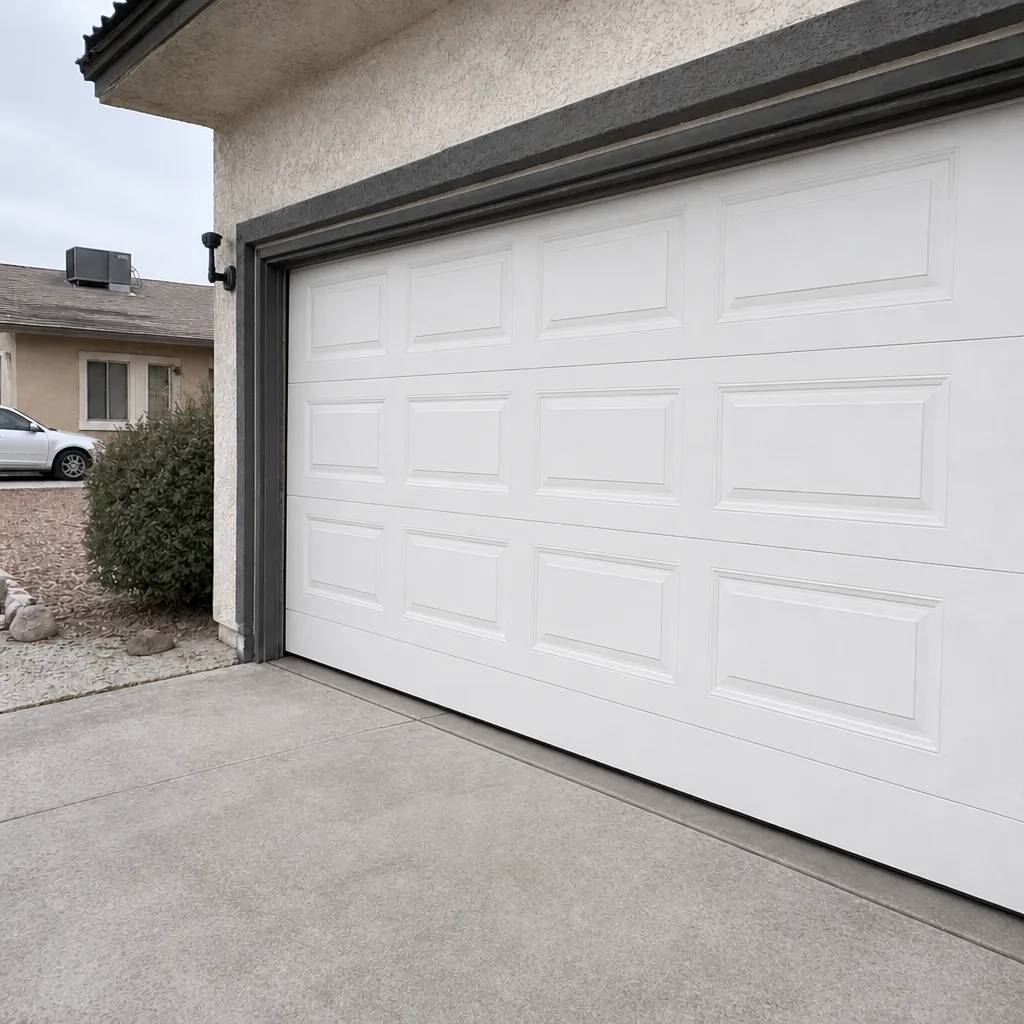 After
When to Call a Professional
Call a professional when the door starts reversing on its own, when it stops short of fully closing, when the opener runs but the door doesn’t move, or when you hear grinding from the drive gear. Call immediately if a spring or cable has visibly failed – that’s a safety situation, not a repair project. Live phone coverage is available around the clock, including emergencies, and an emergency call is answered by a real person, not a recording. Our technicians have up to 11 years of experience, are background-checked, and every visit closes with a documented photo record. Servo Garage Doors Whitney offers free estimates in Whitney – call (888) 402-1096.
Frequently Asked Questions
Garage door opener installation in Whitney typically runs $450 to $900 installed, depending on drive type and door weight. The price is flat and written before any work starts, per Clause 1 of The Haven Standard, so the quote is the invoice. Call (888) 402-1096 for an exact quote – estimates are free.
Opener repairs are often handled same-day or next-day in Whitney, and emergency calls are answered live around the clock. When a technician is assigned, you get a name and an on-the-way text, not a callback window. Call (888) 402-1096 to check availability.
No. The written price and written scope are agreed before work starts, and if the technician finds a second failed component, that’s a new written scope agreed before that work begins. You see the failed part photographed before any replacement is quoted. Call (888) 402-1096 for an exact quote – estimates are free.
Yes. The local pro who performs the work is licensed and insured as their state requires, and technicians are background-checked. Servo is independently owned and operated under The Haven Standard, and license details are on the page rather than buried in fine print. Call (888) 402-1096 to confirm details for your job.
The temperature swing and elevation mean a unit spec’d for a mild climate works harder and wears faster here. Belt drives run quieter but need a belt rated for cold; chain handles dust well but needs re-tensioning; screw is durable but depends on the right lubricant in winter. The right choice depends on whether the garage is attached or detached. Call (888) 402-1096 for a recommendation based on your setup.
Most openers last 10 to 15 years, but Whitney’s dust and temperature swing can shorten that if the drive mechanism isn’t cleaned and lubricated on schedule, and if the door is left out of balance. Keeping the door balanced and the drive mechanism serviced is the single biggest factor in getting the full life from the unit. Call (888) 402-1096 for a free assessment.
The Bottom Line
Opener problems in Whitney are rarely just about the motor. Elevation makes the unit work harder, the temperature swing changes how the drive behaves, and dust wears the mechanism faster than the spec sheet expects. Pick the drive type for your garage’s actual use – belt for attached garages, chain or screw for detached and heavy doors – balance the door before installing anything, set the force and travel limits carefully, and use the right lubricant for the temperature range. Insist on a flat written price and a written scope before work starts, and ask for the photo record of the failed part. That documentation is what makes a quote comparable and an invoice predictable. For a free measure and a written price on a new install, or a repair estimate you can hold us to, call Servo Garage Doors Whitney at (888) 402-1096.
Written by the team at Servo Garage Doors Whitney.