
Last updated November 18, 2026
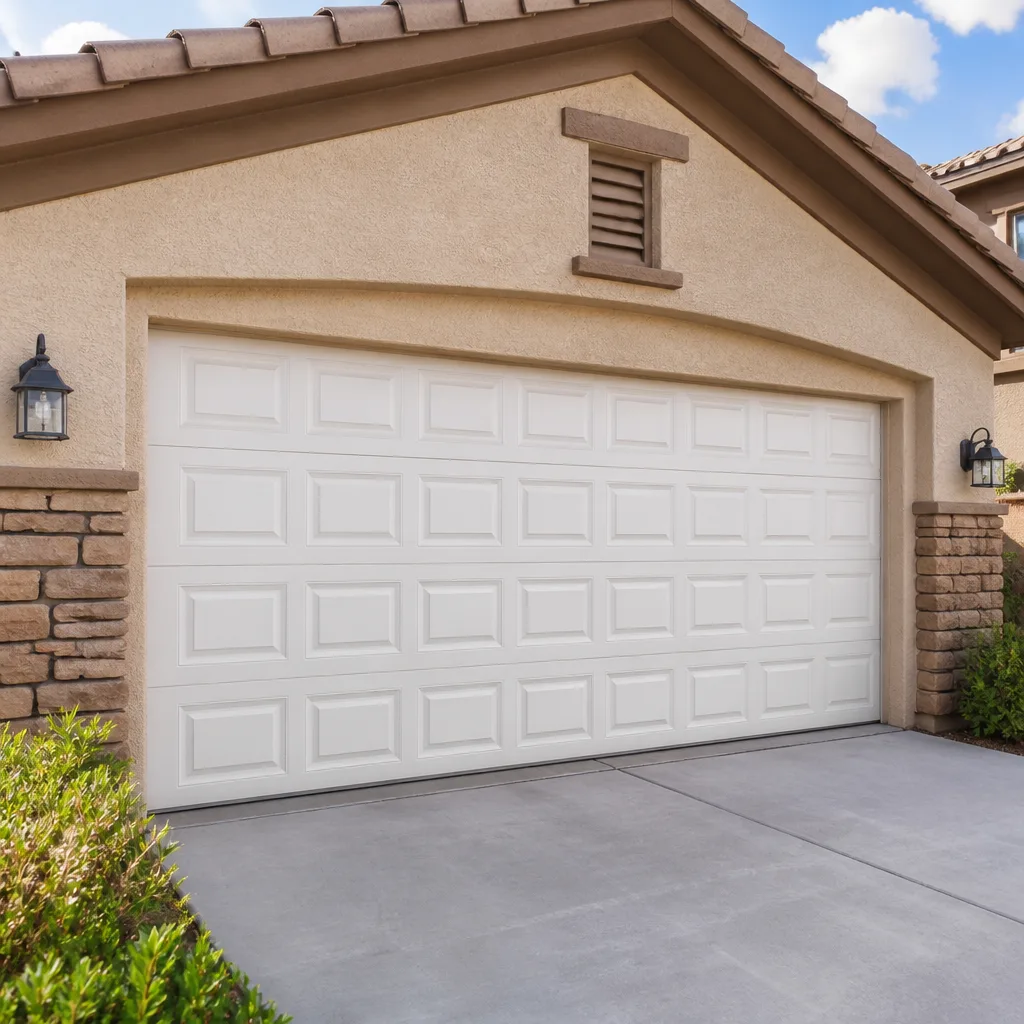 Raised-panel steel
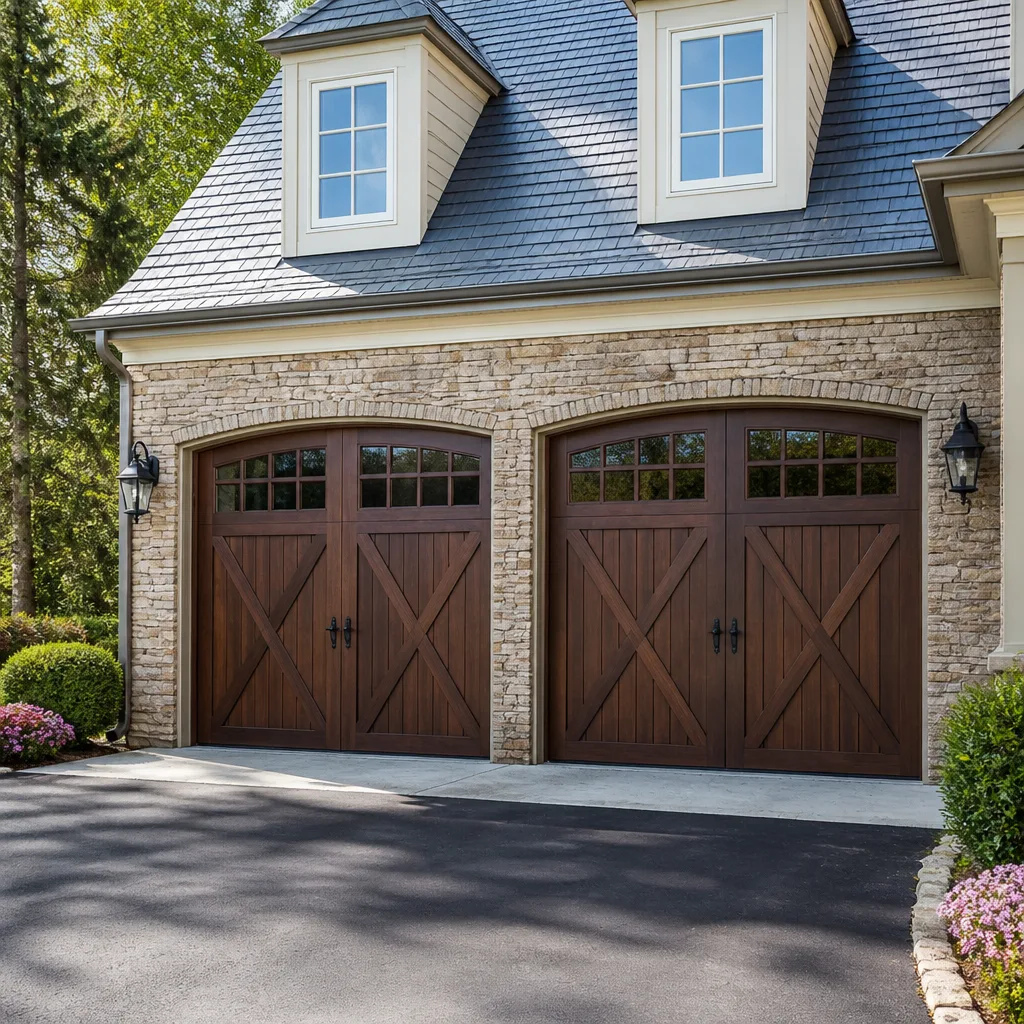 Carriage house
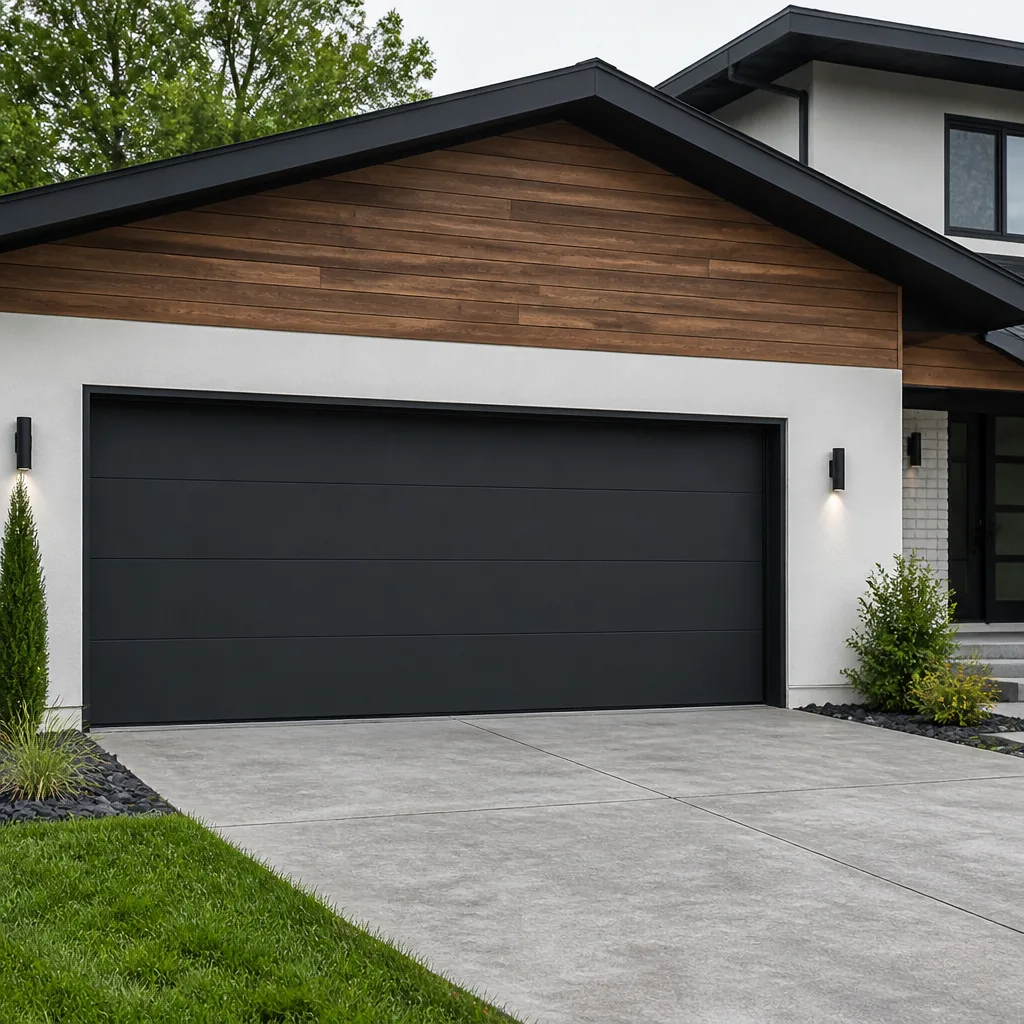 Modern flush
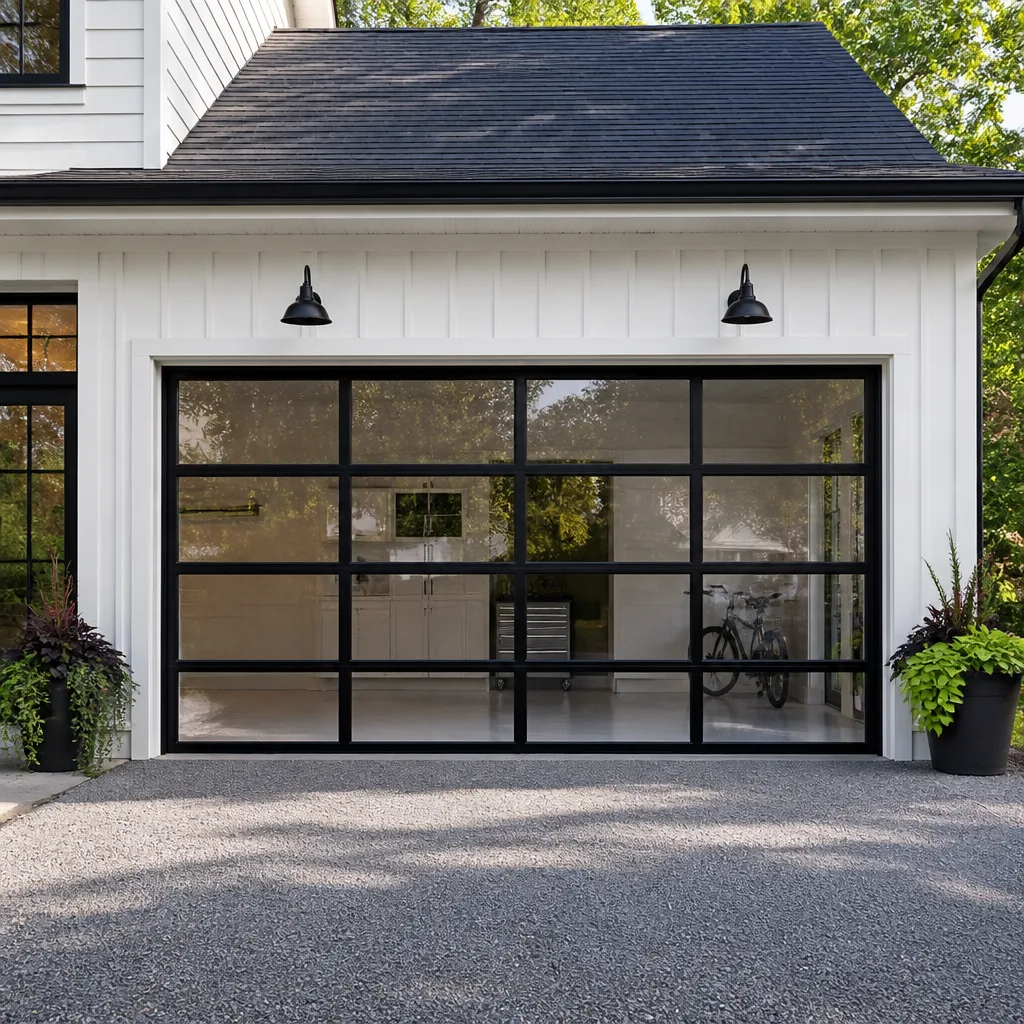 Full-view glass
 LiftMaster openers
 Chamberlain openers
Full 25-point door and opener safety check with every visit - springs, cables, rollers, tracks, and your LiftMaster or Chamberlain opener included
You get a price before we start. It does not change when the pro arrives.
Get your free estimateThe Complete Garage Door Parts Guide for Whitney Homeowners
A technician who says “your spring is worn” and a technician who says “your torsion spring has lost cycle life and the coil pitch is visibly collapsed” are describing the same part. Only one of those quotes gives you enough to verify the diagnosis, compare a second bid, or understand why the replacement costs what it does. Most homeowners can name maybe three parts of the door they walk under twice a day, so the vocabulary gap is where bad quotes live. This guide names and explains every load-bearing and functional component of a sectional garage door, so that when something fails in Whitney, you can identify it, understand its job, and read a quote without trusting the technician’s words alone.
Quick Answer
A residential garage door is built from a few core systems: the spring assembly (torsion or extension) that counterbalances the door’s weight, the lift cables and cable drums that transfer spring tension to the door, the track and brackets that guide it, the rollers and hinges that let panels move, the bottom bracket that anchors the cable, the center bearing plate that holds the torsion shaft, and the weatherseal that seals the opening. Each part has one function and a predictable failure mode. Knowing the names is what lets you tell a real quote from a padded one. In Whitney, we’ve found the most common repair is a broken torsion spring, with roller and hinge wear close behind on doors that have gone a decade without service.
Styles & brands we work with
- Raised-panel steel
- Carriage house
- Modern flush
- Full-view glass
- LiftMaster openers
- Chamberlain openers
Table of Contents
- Spring Assemblies: Torsion and Extension
- Lift Cables and Cable Drums
- Track Sections and Angle Brackets
- Rollers and Hinges
- Bottom Bracket and Center Bearing Plate
- Weatherseal and the Door Panels
- Parts Availability in Whitney: What’s Stocked and What’s Ordered
- How to Read an Itemized Garage Door Quote
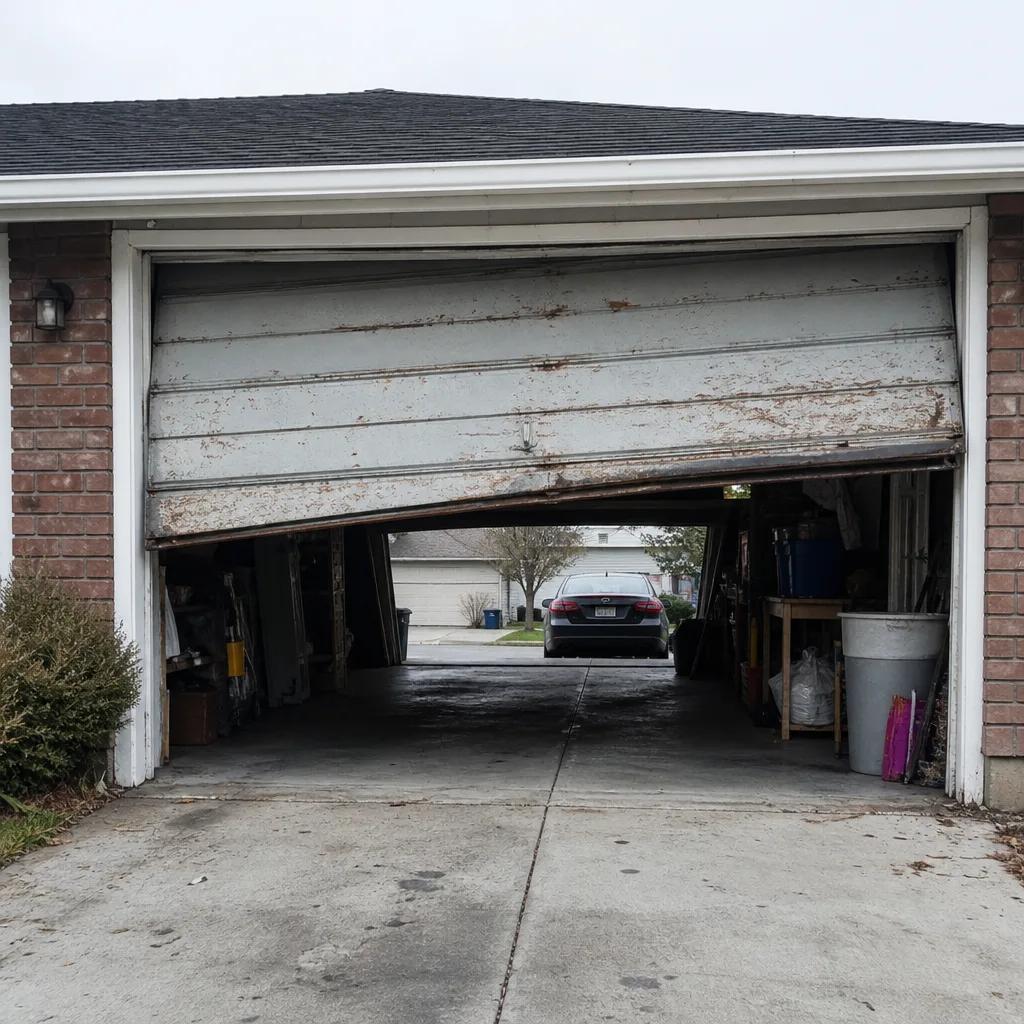 Before
 After
Spring Assemblies: Torsion and Extension
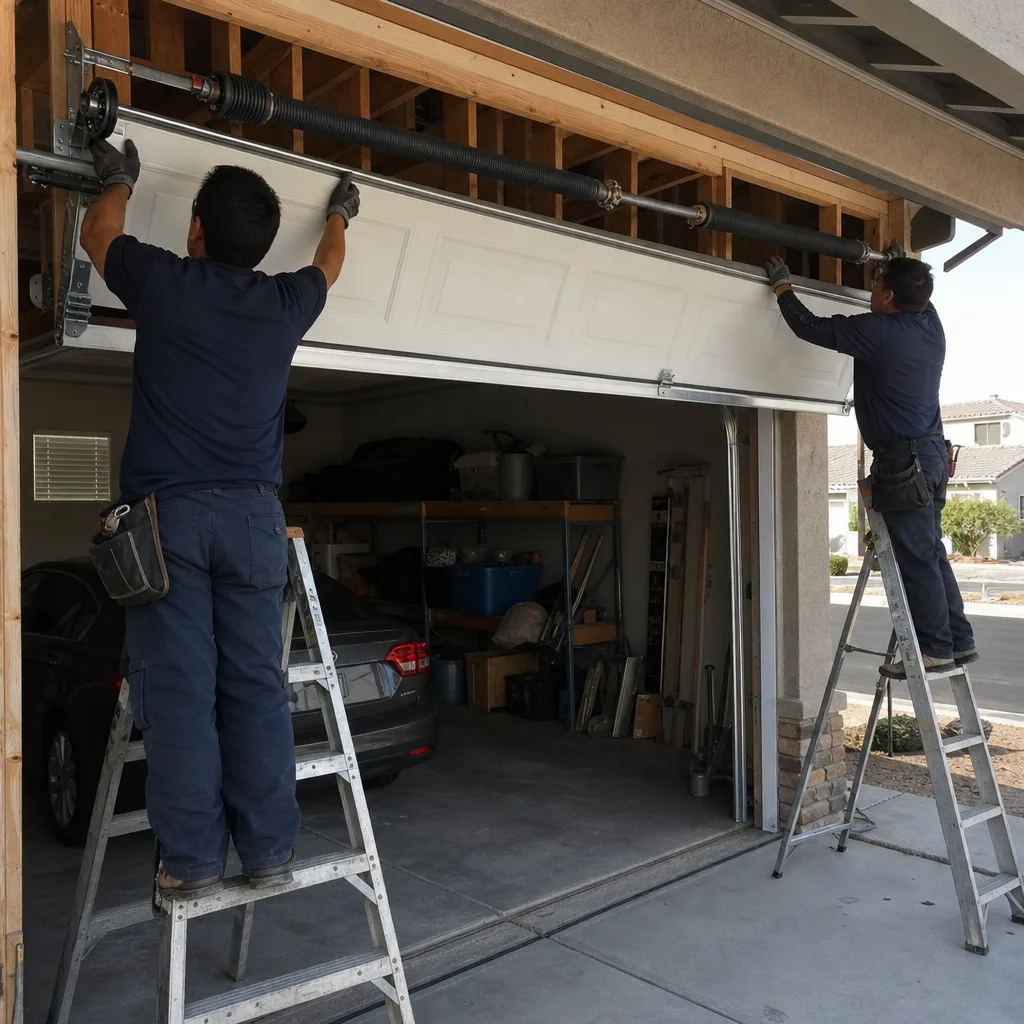
The spring is what makes a 150-pound door feel like it weighs nothing. There are two designs. A torsion spring is a horizontal coil mounted on a steel shaft above the door opening; it stores energy by twisting. An extension spring runs along the horizontal track on each side and stretches instead of twisting. Both counterbalance the same weight, and both are the part most likely to fail on any door in the Whitney Valley.
Function, in one sentence: the spring offsets the door’s weight so a human or opener can lift it. Failure mode, in one: the coil fatigues over a set number of cycles and breaks, usually with a loud snap, and after that the door will not stay up and should not be operated.
What matters to a homeowner reading a quote:
- Springs are sold as a set. A two-spring system replaces both springs, not just the broken one, because the surviving spring has the same cycle life used up. A quote for “one spring” on a standard two-spring door is a red flag.
- Cycle life is the number to ask for. Standard oil-tempered springs are rated around 10,000 cycles; a higher-cycle spring runs to 15,000 or 25,000. A cycle is one full open-and-close. If a quote doesn’t name the cycle rating, ask.
- Wire diameter identifies the spring. A torsion spring is matched to door weight by its inside diameter, wire size, and length. The right spring is not a guess.
- Extension vs. torsion is not interchangeable. A torsion door converts to extension only with a full hardware change, and rarely makes sense.
Torsion springs under load hold serious force. This is not a part to test, adjust, or replace yourself; a released torsion spring can cause a severe injury in an instant. When a spring breaks in Whitney, the right move is to leave the door down and call for garage door repair in Whitney, where a technician can measure the failed spring and match the replacement to the door’s actual weight before quoting.
Lift Cables and Cable Drums
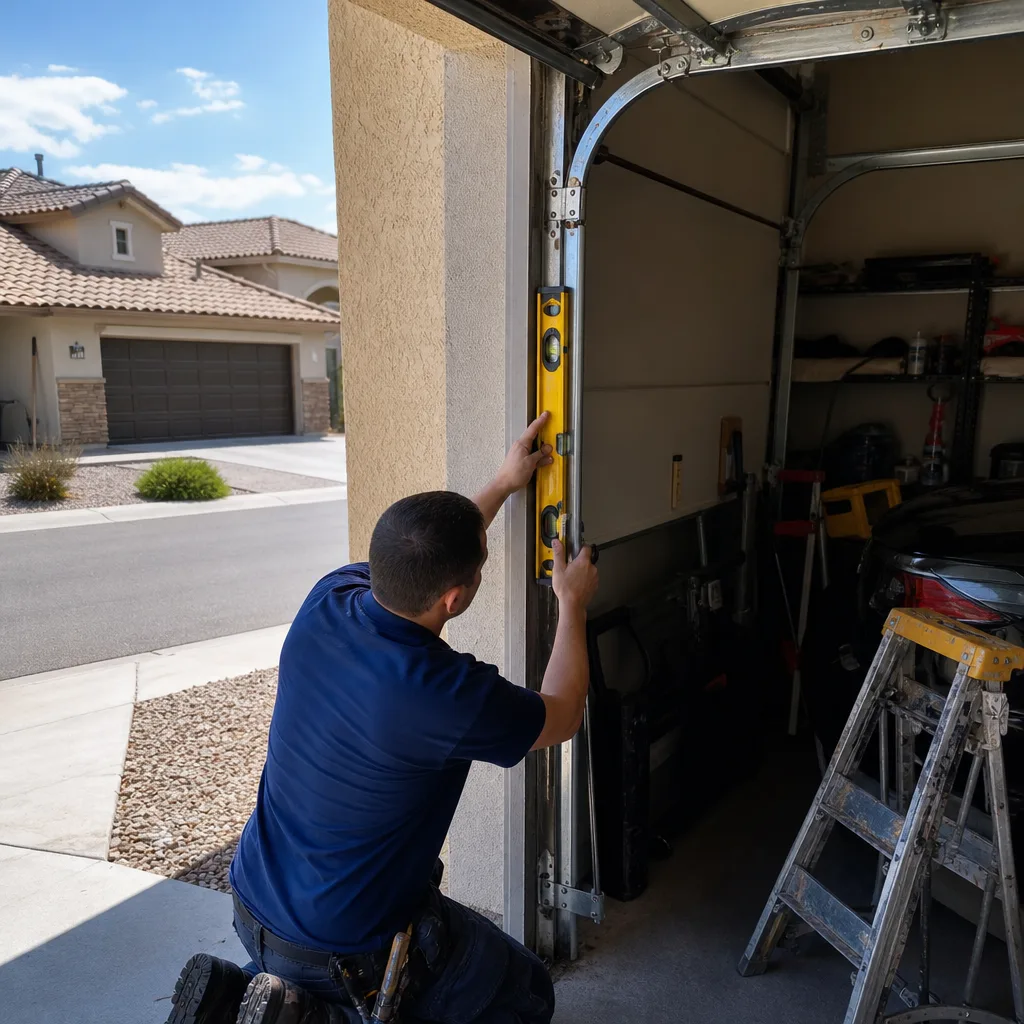
If the spring is the muscle, the cables are the tendons. Two steel cables run from the bottom corners of the door up to cable drums at the ends of the torsion shaft (or over pulleys on an extension system). The cables tighten under spring tension and pull the door up evenly.
Function: transfer the spring’s stored force to the bottom corners of the door so it lifts level. Failure mode: a cable frays, kinks, or snaps, the door drops on one side, and the door comes up crooked or jams. Cables are a high-tension component and fail with little warning.
Cable drums are the spools the cables wind around, mounted on each end of the torsion shaft. They have a specific wind direction (left-hand and right-hand) matched to the spring. This is where misquotes happen: a technician who fits the wrong drum or mixes sides gets a door that lifts unevenly or a cable that jumps the spool.
- Replace cables in pairs when both are worn. One frayed cable usually means the other has the same mileage.
- Drums must match the spring wind direction. A mixed set is a symptom of a rushed job, not a saving.
- Cable and drum work is high-tension. The spring must be de-tensioned before either is touched. It is professional work, full stop.
- A crooked door points here. If the door lifts higher on one side, suspect a cable, drum, or spring balance issue, not the opener.
We see frayed cables most often on Whitney doors that have run a decade or more without service, and it’s usually caught during a garage door opener repair and installation visit when the door won’t close level. Cable fraying is a visual inspection item, not something to test by hand.
Track Sections and Angle Brackets
The track is the steel rail system the door runs on. It’s made of two vertical sections at the sides of the opening (the vertical track) and two horizontal sections that reach back toward the opener (the horizontal track). The two meet at a curved transition, and the whole assembly is held to the framing with angle brackets and lag bolts.
Function: keep the door panels aligned and guide them from vertical to overhead as they open. Failure mode: the track bends or goes out of plumb from a bump, a sagging header, or the slab settling, and the door binds, scrapes, or comes off the rollers.
Why this matters in Whitney: a lot of the housing stock here sits on expansive clay soils, and garage slabs and headers move over the years. A door that has started rubbing one side is often a track that has slipped out of plumb, not a door panel problem. A technician should check track alignment with a level, not by eye.
- Vertical track plumb keeps the door square in the opening.
- Horizontal track pitch needs the slight backward slope the opener and balance require.
- Angle brackets and lag bolts anchor it all to the framing; loose bolts are a common, quiet cause of noise and drift.
Track straightening is sometimes possible, but a bent or rusted track section is usually replaced. Ask whether the quote is for straightening or replacement, because the two carry very different prices.
Rollers and Hinges
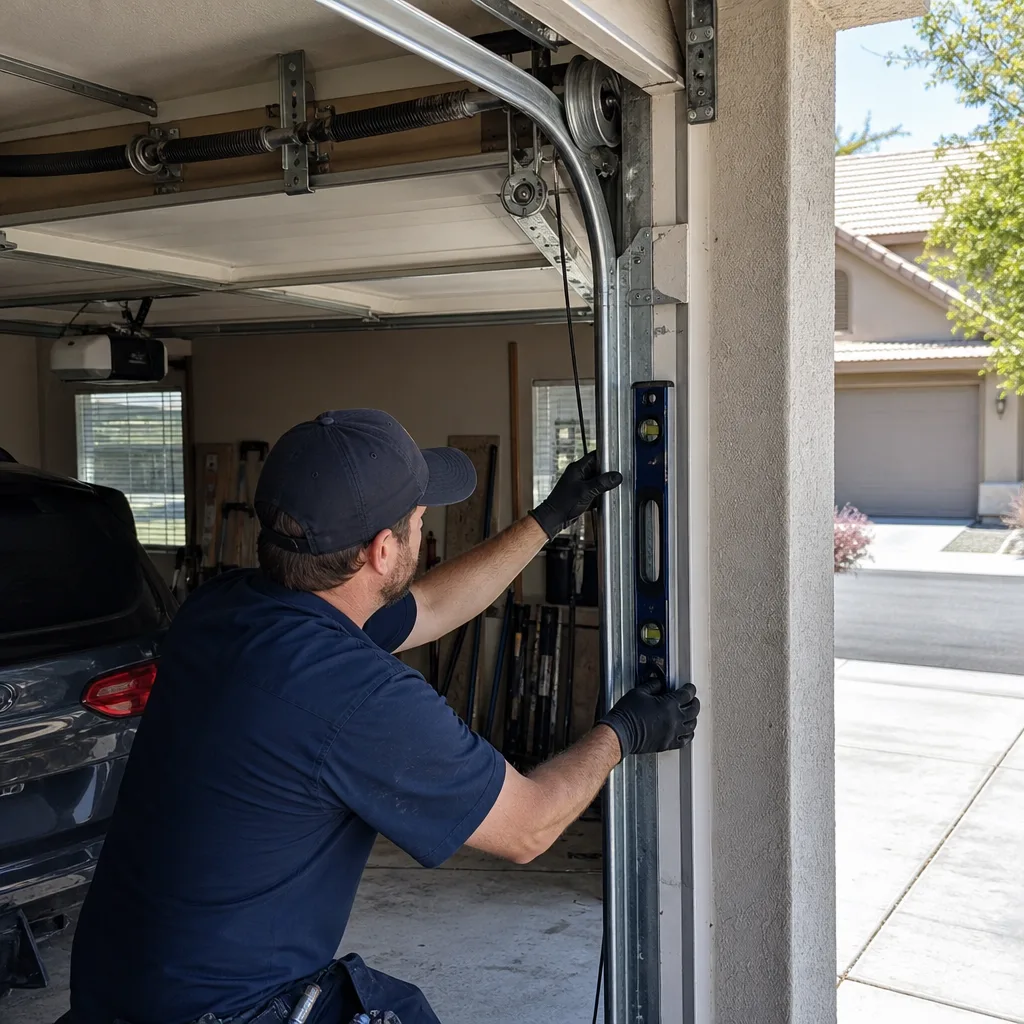
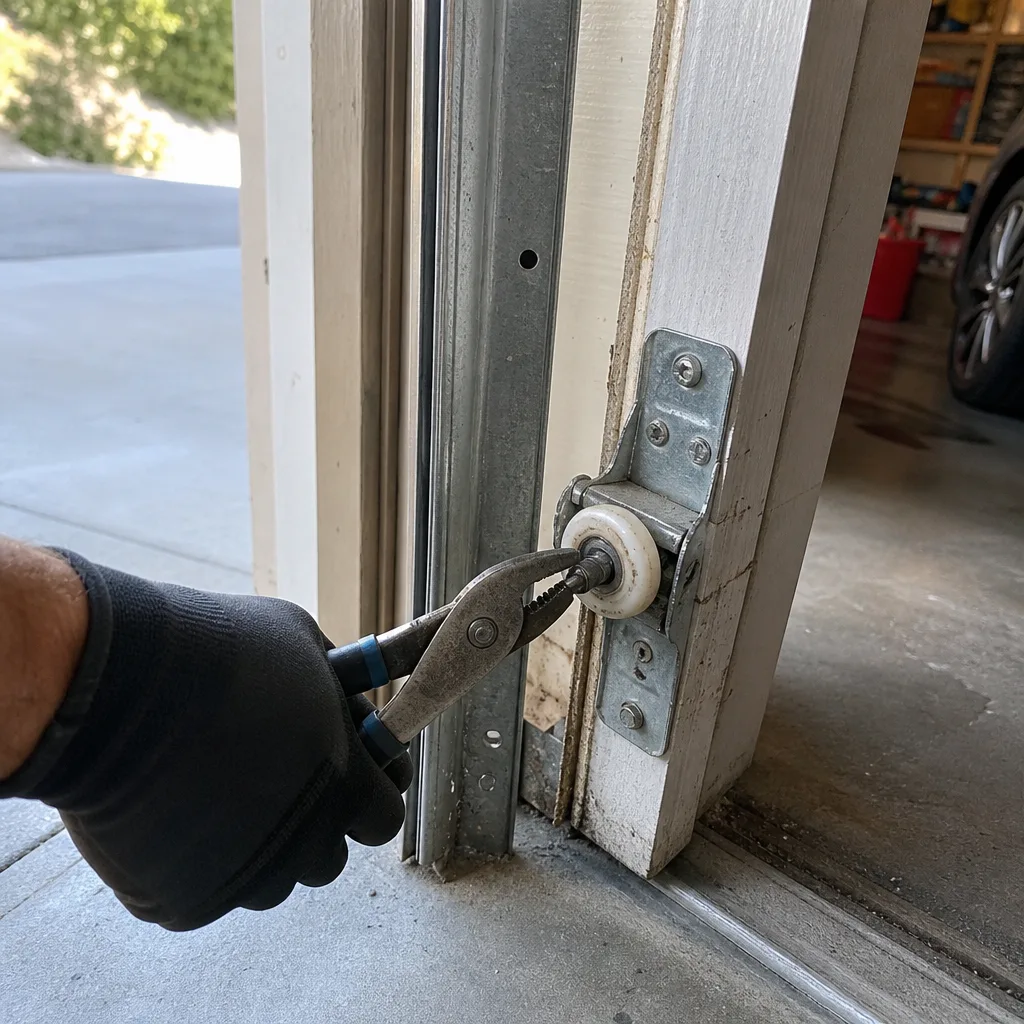
Rollers are the small wheels on stems that ride inside the track, and hinges are the brackets that pin each door panel to the next. A standard two-car door uses a set of rollers and a set of hinges that work together so the panels flex through the curved track section.
Function: rollers let the door glide, and hinges let the panels articulate through the curve. Failure mode: rollers wear flat or the bearings seize (the door gets loud and stiff), and hinges crack or loosen (the door sags and the gap between panels widens).
This is one of the most frequently misquoted areas. The difference between a cheap 13-cycle steel roller and a quieter 2-inch nylon roller is roughly $6 per roller, and a standard door carries ten. That’s around $60 across a set, which is a real price difference but not a $300 one. If a quote inflates roller cost, the line item is where you look.
- Nylon rollers run quieter and smoother than basic steel, worth it on a bedroom-adjacent door.
- Hinges come in numbered positions. The gauges differ by panel location; swapping the wrong hinge in a set causes binding.
- Rollers and hinges wear together. Replacing one and not the other usually brings back the noise.
On doors that have gone years without service in Whitney, we’ve seen hinges crack and rollers go flat in the same season. A quick visual inspection of the rollers and hinge line tells you a lot before anyone quotes anything.
Bottom Bracket and Center Bearing Plate
Two small parts carry more risk than their size suggests. The bottom bracket is the steel fitting at the bottom corner of each door panel where the lift cable attaches. The center bearing plate is the bracket at the middle of the torsion shaft that holds it steady.
Function: the bottom bracket anchors the cable so cable tension lifts the door; the center bearing plate keeps the torsion shaft spinning true. Failure mode: the bottom bracket cracks or the cable attachment point gives way (the door drops), and the center bearing plate’s bearing wears, letting the shaft wobble and rattle.
Both sit under live spring tension. The bottom bracket in particular is one of the most dangerous parts on the door to work near; a failing bottom bracket under load can release stored energy without warning. This is a component to replace with the spring de-tensioned, by someone who does it routinely. It is not homeowner work.
- Say “bottom bracket,” not “corner thing.” Naming it correctly tells a technician you understand the risk.
- Center bearing wear shows up as a rattle during the open and close cycle that doesn’t respond to greasing.
- Ask for the photo. A cracked bottom bracket or worn bearing is easy to photograph and hard to argue with.
Our rule is simple: the failed component gets photographed before anyone quotes a replacement. That is a founding practice we codified as Clause 4 of The Haven Standard, and it exists precisely for parts like these that a homeowner can’t easily inspect from the driveway.
Weatherseal and the Door Panels
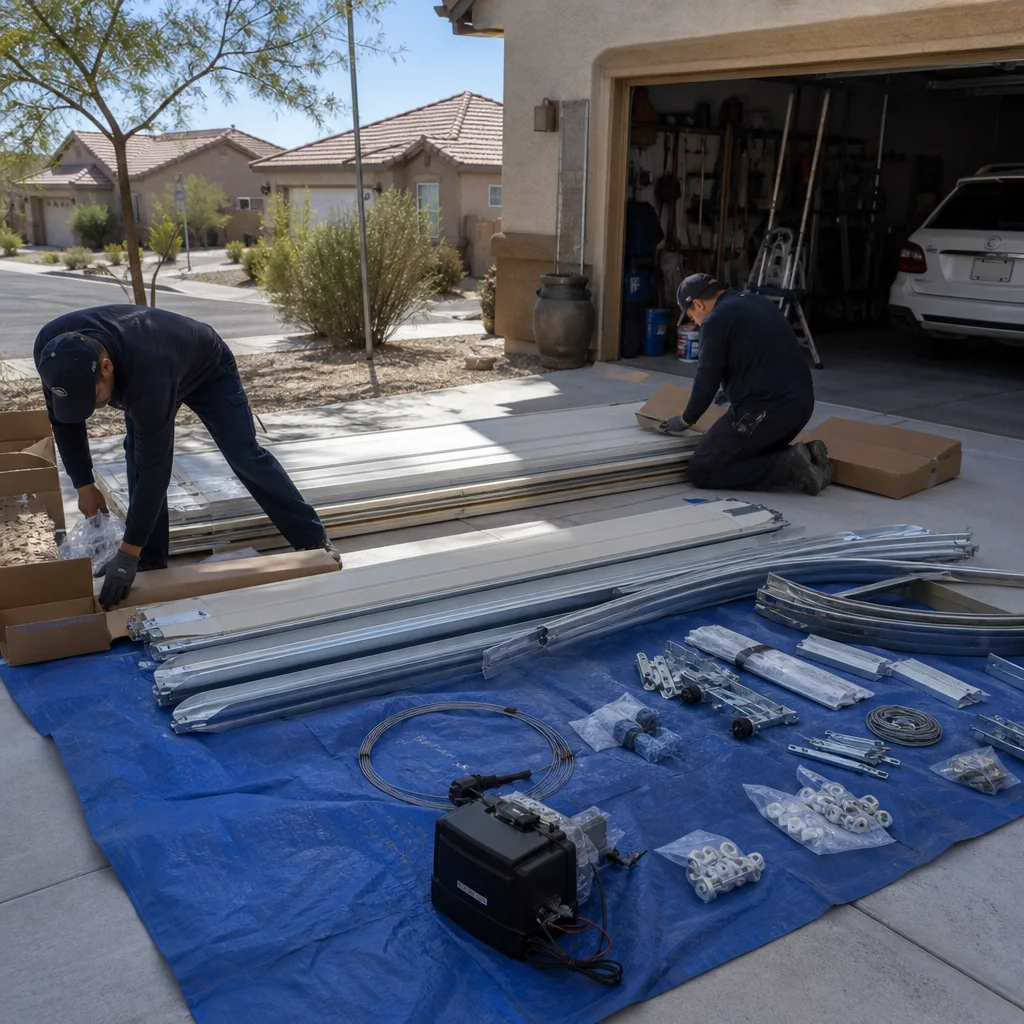
The weatherseal (also called the bottom seal or astragal) is the flexible strip along the bottom edge of the door, plus side and top seals around the opening. The door panels themselves are the insulated or non-insulated sections you see.
Function: the weatherseal keeps out wind, dust, and water, and closes the gap at the slab; the panels are the door’s body. Failure mode: the seal dries, flattens, or tears (leaving a light gap at the floor), and the panels dent, crack, or delaminate (hurting insulation and letting water in).
Whitney drives this harder than most cities. The desert swing here runs from cold nights to hot afternoons and back, and a rubber bottom seal that’s fine in spring will dry and tear within a couple of seasons. The same dry heat deteriorates side seals and can split a seal at a panel joint. Add the wind-driven dust, and a worn seal also lets grit into the track, which accelerates roller and hinge wear.
- Check the floor gap with a flashlight. Light under a closed door means air and dust are getting in.
- Weatherseal is a low-cost, high-payoff part. Replacement is quick and cheap compared to anything else on this list.
- Dented panels can sometimes be repaired rather than replaced, but a cracked or delaminated panel usually needs a new section.
If a seal or panel is beyond saving, the answer is often a fresh door and a correct measurement of the opening, which is where garage door installation in Whitney comes in: a free measure and a written price, scheduled, not rushed.
Parts Availability in Whitney: What’s Stocked and What’s Ordered
Whitney sits in the middle of a supply chain, not at the end of one. Some parts are common enough that a local technician carries them; others are ordered, and the difference changes how fast a repair happens.
Generally stocked or quickly available locally:
- Torsion and extension springs to common wire sizes (most residential doors)
- Nylon and steel rollers, and standard hinges
- Bottom seals and side weatherseal
- Standard bottom brackets and center bearing plates
- Common opener logic boards, remotes, and safety sensors (Genie and LiftMaster in particular)
Usually ordered, with a short wait:
- Non-standard spring sizes for heavier or custom-weight doors
- Specific cable drums matched to a non-standard wind direction
- Manufacturer-specific parts for Clopay, Amarr, or Wayne Dalton panels and their proprietary hardware
- New door panels or a full replacement door, which is measured, ordered, and scheduled
What this means for a Whitney homeowner: a broken spring or worn rollers can often be done the same day, while a specific drum or a specialty panel is a few days out from a regional supplier. If a quote promises an unusual part same-day without saying it’s stocked, ask where it’s coming from. The parts schedule is part of the quote.
How to Read an Itemized Garage Door Quote
A real quote names the parts, the quantity, and the price of each. A padded quote buries the parts in a lump sum or a vague “hardware kit.” Here is what to look for:
- The part is named by its trade term. “Two torsion springs, matched set, 15,000-cycle” beats “springs.”
- The quantity is stated. Two springs, ten rollers, one bottom bracket per side. Quantity is where padding hides.
- The price is per line, not a single number. You should be able to see what the rollers cost versus the labor.
- Labor is separate from parts. Flat written price plus written scope, per Clause 1 of The Haven Standard; one number covering everything tells you nothing.
- “Hardware kit” as a line item is a warning. It usually hides a mixed bag of hinges, rollers, and brackets with no individual prices, which makes it impossible to compare against a second bid.
- The cycle rating on springs and the type on rollers are specified. If either is missing, the quote can’t be verified.
If a quote is a single lump sum, ask for an itemized version before you decide, and ask what specific part failed and what the cycle rating on the replacement is. A technician who has photographed the failure can answer both on the spot. If you already hold a written estimate from another company, we’ll give you a free second opinion on it, no coupon or code needed. You bring the paperwork; we’ll read it with you. That’s part of how we keep Servo Garage Doors Whitney accountable to the standard the written price is supposed to meet.
Common Mistakes to Avoid
- Replacing one spring on a two-spring door. The surviving spring has the same cycle life used up, so the second one fails soon after and you’re quoted again.
- Choosing the cheapest roller quote. A 13-cycle steel roller at a few dollars versus a nylon roller at a few dollars more is a real difference across ten rollers; a quote that overcharges for rollers is padding, and one that undercharges is cutting the part.
- Fitting mismatched cable drums. Left-hand and right-hand drums are matched to the spring wind direction; a mixed set lifts the door unevenly and wears the cables.
- Greasing a worn bearing or roller instead of replacing it. Grease doesn’t restore a flat roller or a loose hinge, it just quiets the symptom.
- Ignoring a floor gap through the dry spring season in Whitney. A flattened weatherseal lets the wind-driven dust into the track and wears the rollers faster.
- Accepting a lump-sum “hardware kit” line. You can’t compare what you can’t see itemized.
- Working near a bottom bracket or spring without de-tensioning. Both hold live spring force; this is where serious injuries happen.
See the difference
BeforeAfter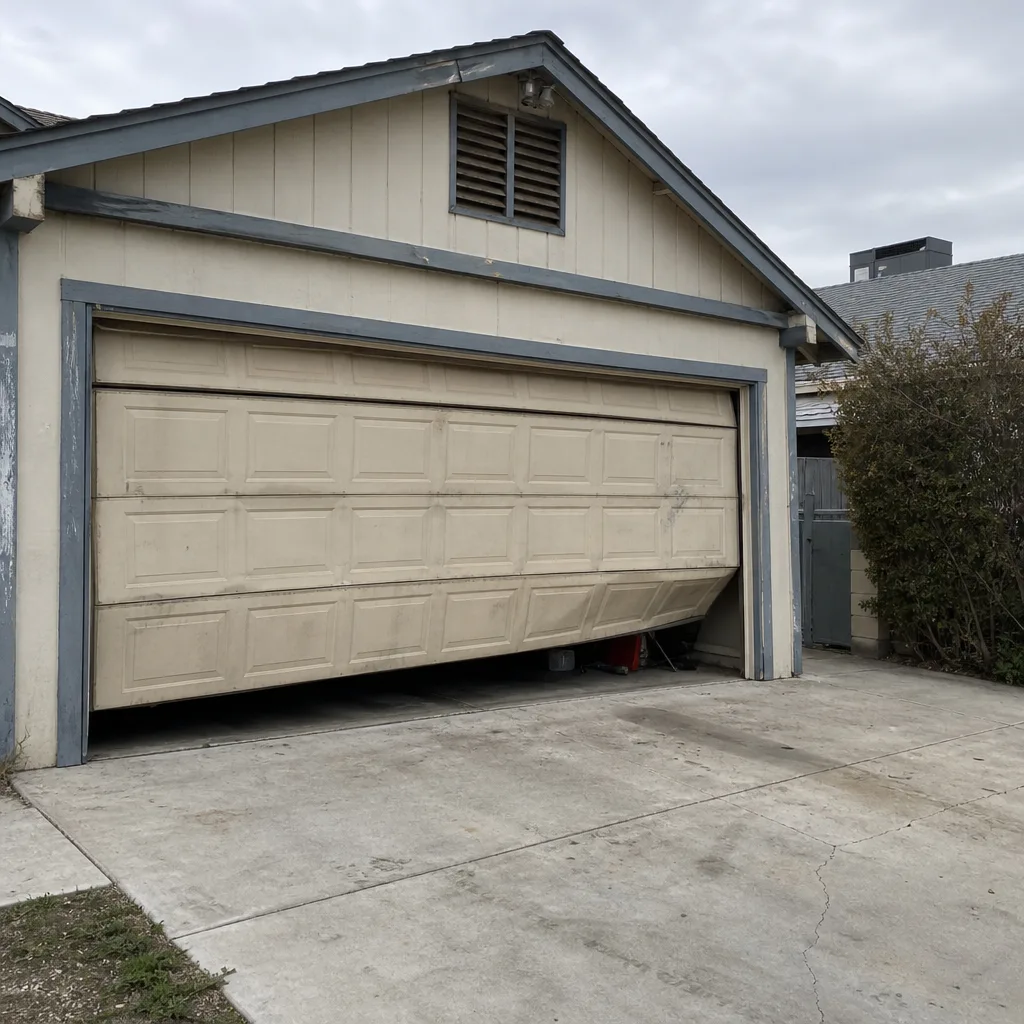 Before
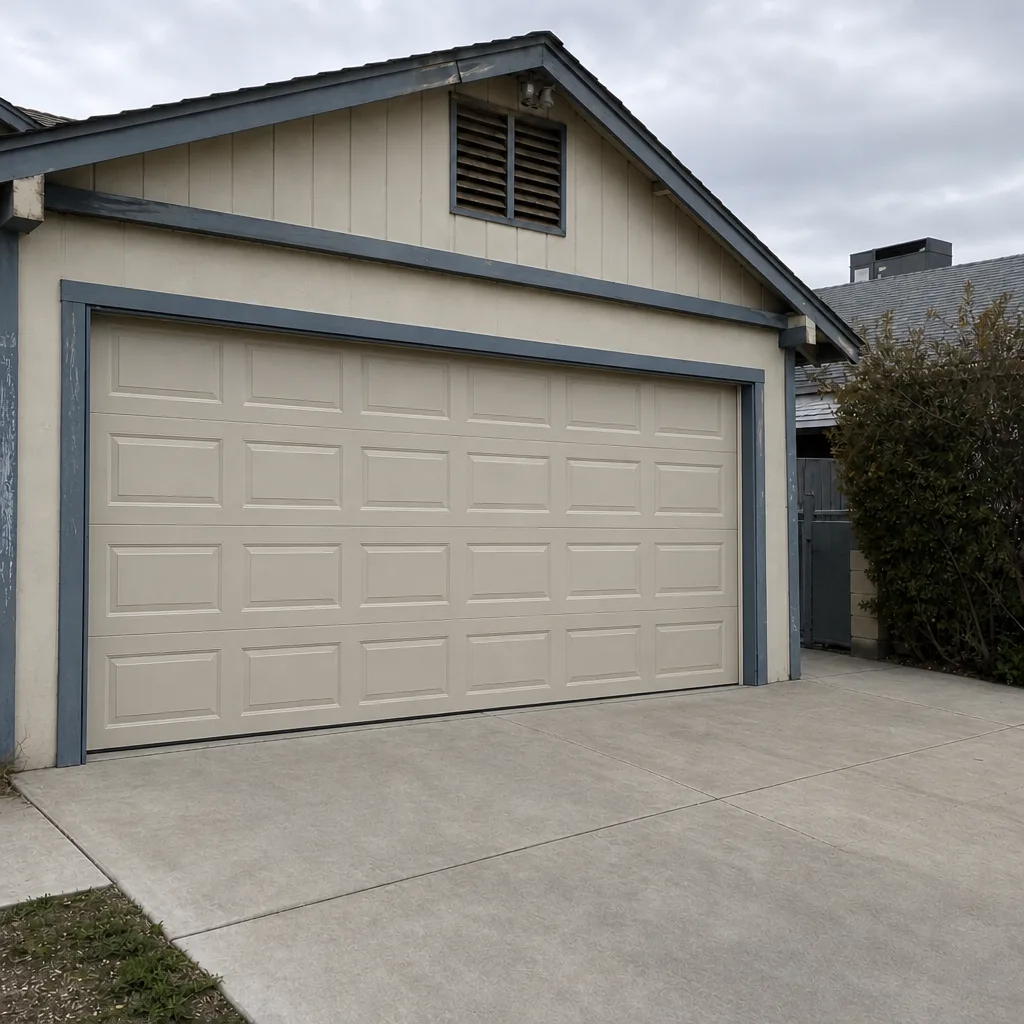 After
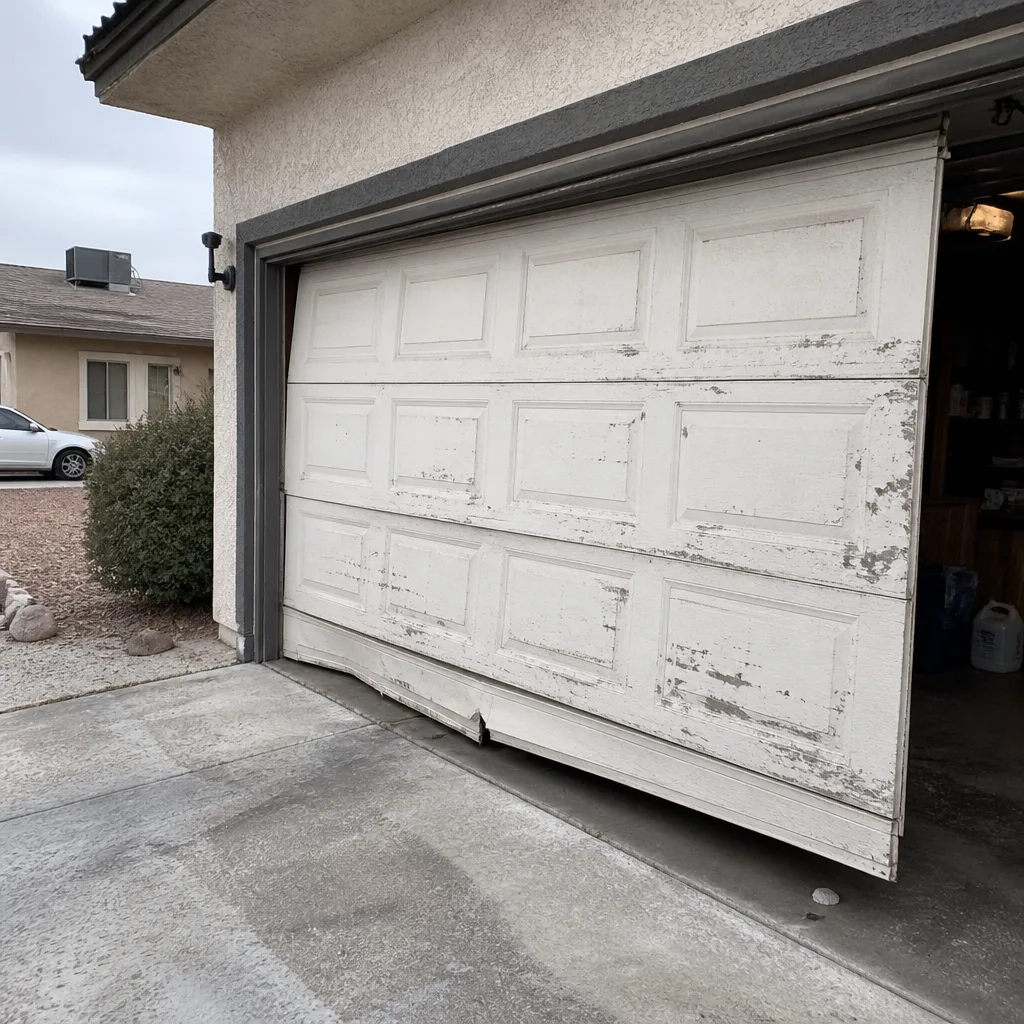 Before
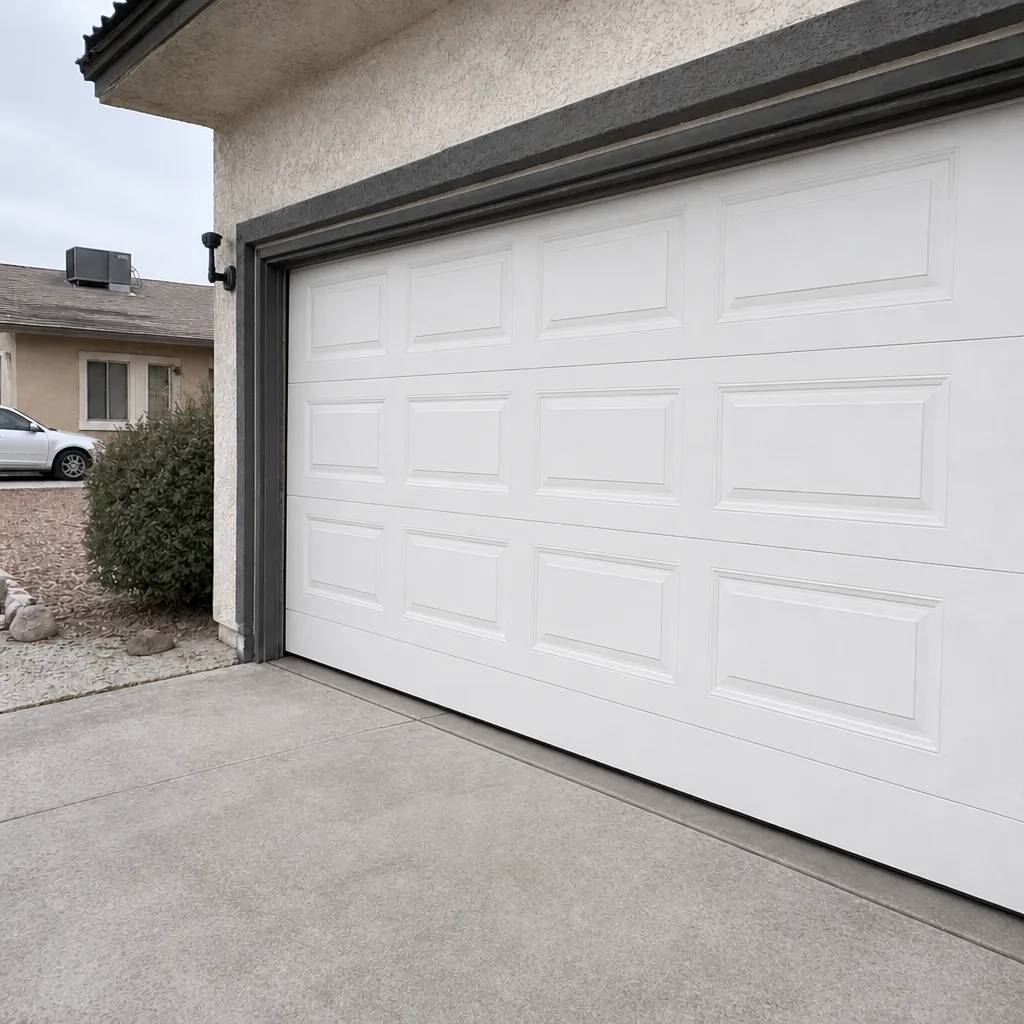 After
When to Call a Professional
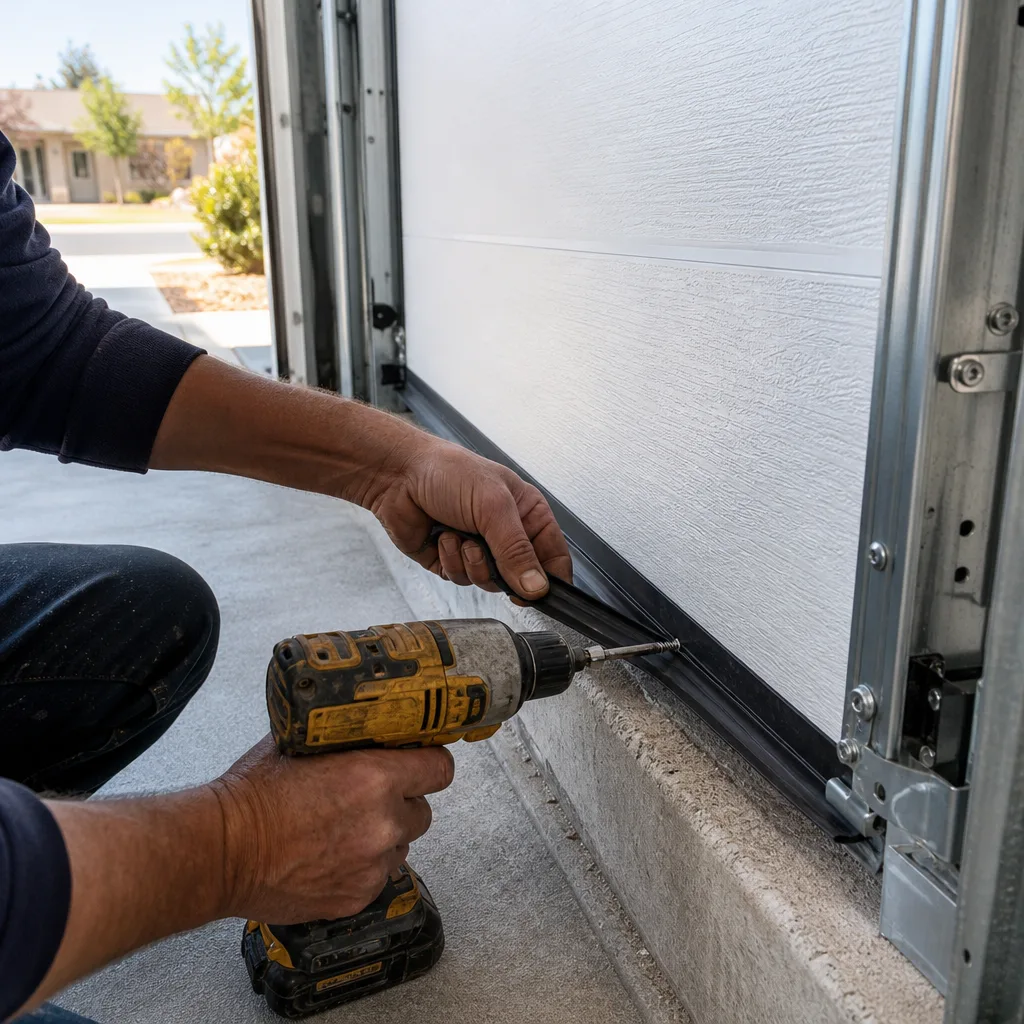
Some failures are fine to identify yourself and quick to book. Others need a trained technician, now. Call for a professional when a spring has snapped and the door won’t stay up, when a cable has frayed or the door dropped on one side, when the door comes off its track, when a bottom bracket or cable drum shows damage, or when a new opener won’t lift a door that now feels heavy. Those involve live spring tension and should be handled by someone bonded to the safety procedure, not attempted by a homeowner.
We quote a flat, written price and written scope before any work starts, so you know the cost before anyone touches the door. Servo Garage Doors Whitney offers free estimates in Whitney and answers the phone live, day or night. Call (888) 402-1096.
Frequently Asked Questions
The main parts are the spring assembly (torsion or extension), the lift cables and cable drums, the vertical and horizontal track and angle brackets, the rollers and hinges, the bottom brackets, the center bearing plate, and the weatherseal. The door panels are the body; the spring and cables are the lifting system; the track, rollers, and hinges are the guide system.
A torsion spring is a horizontal coil mounted on a shaft above the door opening; an extension spring runs along the horizontal track on each side and stretches instead of twisting. Look up and to the sides. If you see one long coil over the door, it’s torsion. If you see a spring along each side track, it’s extension. Either way, leave the diagnosis to a technician; both hold serious tension.
That’s a sign to ask a question. On a standard two-spring door, both springs share the same cycle life, so a proper replacement is a matched set. A quote for a single spring leaves you likely to pay again soon when the second one fails. Ask for both springs and the cycle rating on the set.
Common parts like springs, rollers, seals, and standard hinges are usually stocked or quick to source. Manufacturer-specific Clopay or Wayne Dalton panel hardware and panel sections are typically ordered and take a few days. A technician should tell you which parts are stocked and which are ordered before quoting, since it affects the timeline.
A worn bottom seal or a few visible rollers are among the few parts a careful homeowner can sometimes swap safely, because they don’t sit under live spring tension. Springs, cables, cable drums, bottom brackets, and the center bearing plate are different; those hold stored force and should only be handled by a trained technician with the spring de-tensioned.
A written quote should name the failed part by its trade term, state the quantity and the cycle rating where relevant, price each part line separately from labor, and describe the scope. If it’s a single lump sum or a vague “hardware kit,” ask for the itemized version. Call (888) 402-1096 for an exact quote, and we’ll give a free second opinion on any written estimate you bring.
The Bottom Line
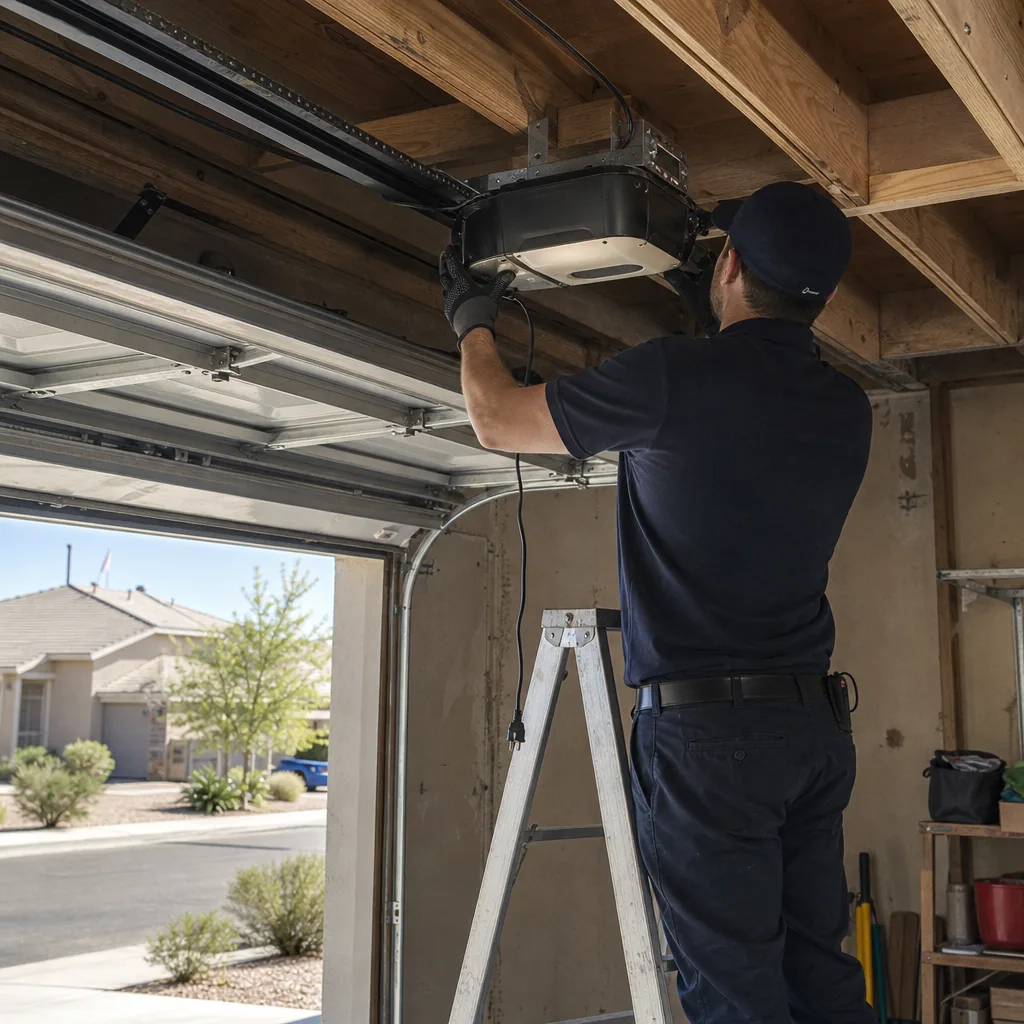
Naming the part is the first step to a fair quote. Know your spring type and its cycle rating, know that springs come as a set and cables as a pair, know the difference between a roller that costs a few dollars and one that costs a bit more, and know that the bottom bracket, center bearing plate, and cable drums sit under live tension and belong to a trained technician. In Whitney, dry heat and settling clay make springs, seals, and track the usual suspects. With the vocabulary in hand, you can read an itemized quote, compare a second bid, and ask for the photo of the failed part. That’s a better place to start than trusting a word.
Have a part that failed, or a written estimate you’d like a second opinion on? Servo Garage Doors Whitney gives you a flat, written price before any work starts and a documented photo record when we leave. Call (888) 402-1096 for a free estimate. For the surrounding services, start at the Servo Garage Doors Whitney home, or go straight to garage door repair if the door is down.
Written by the team at Servo Garage Doors Whitney.