
Last updated November 18, 2026
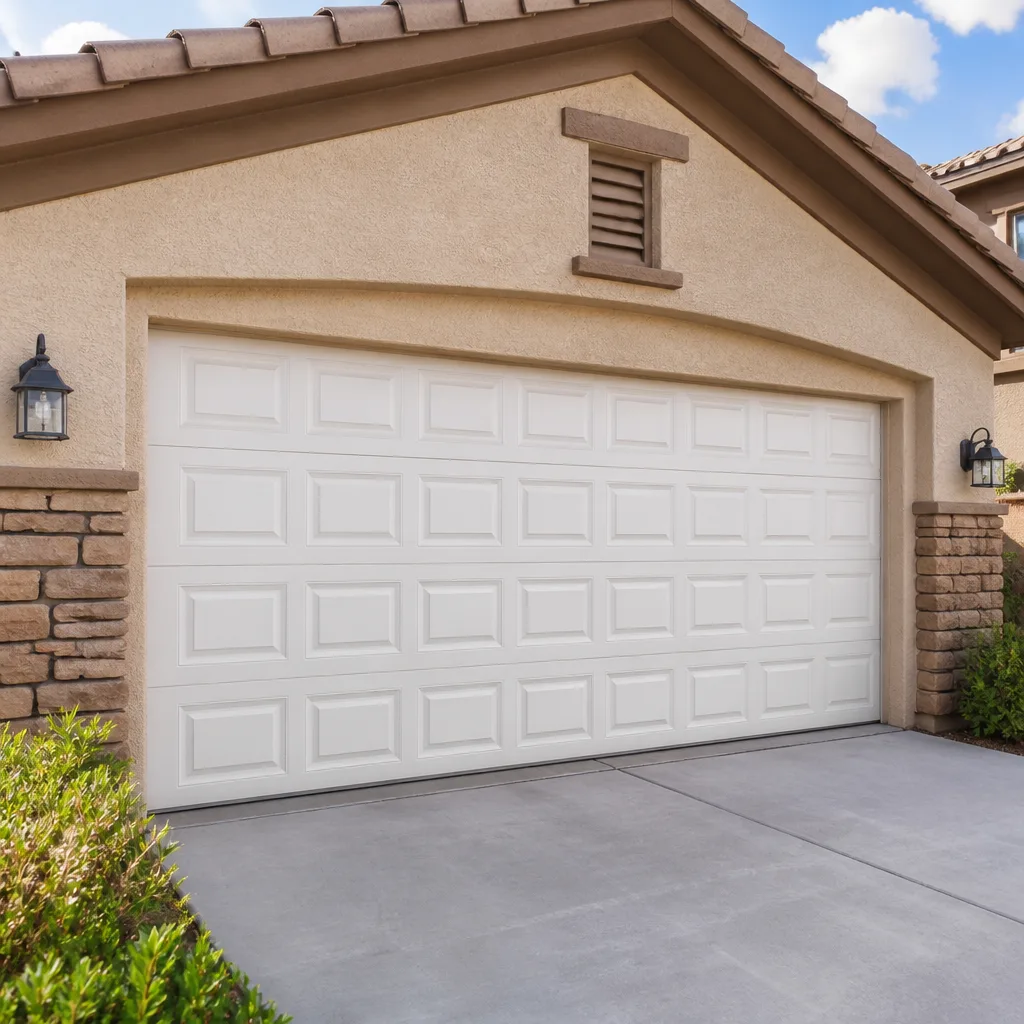 Raised-panel steel
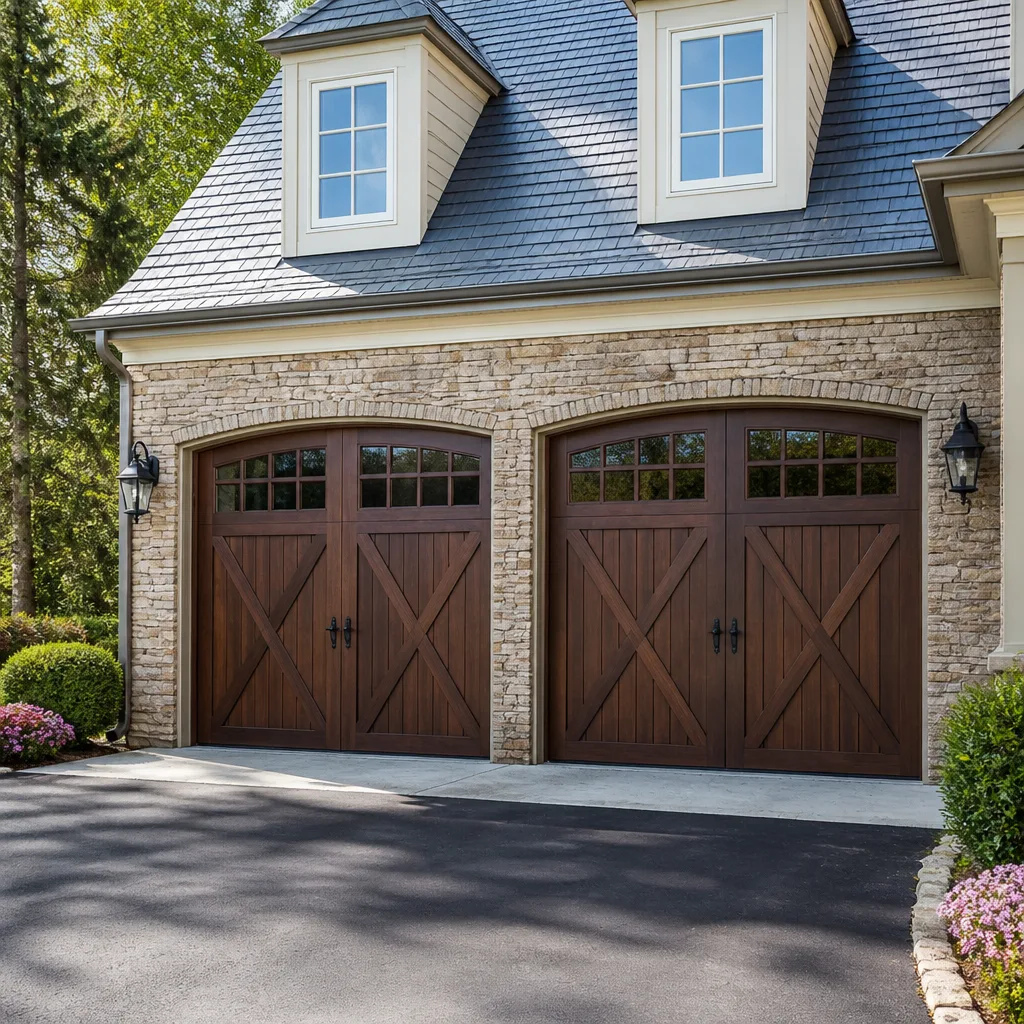 Carriage house
 Modern flush
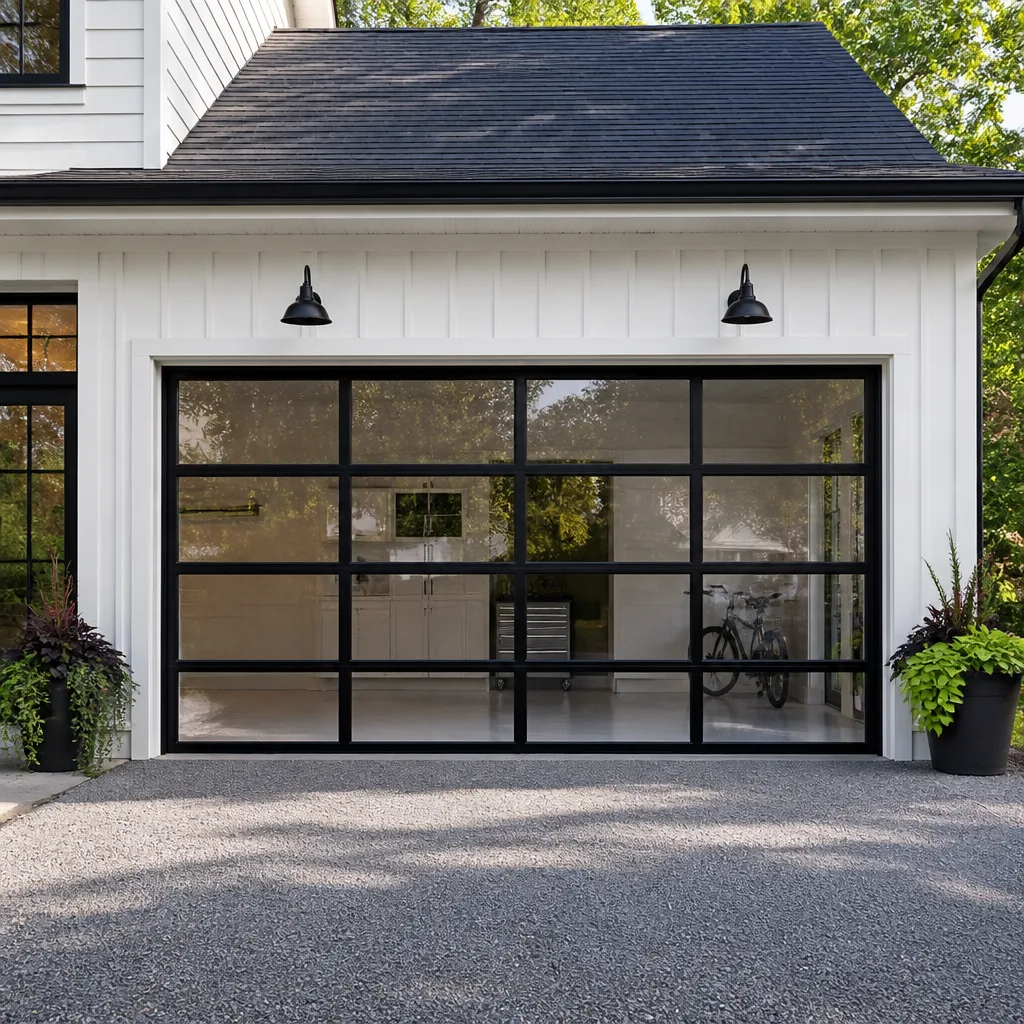 Full-view glass
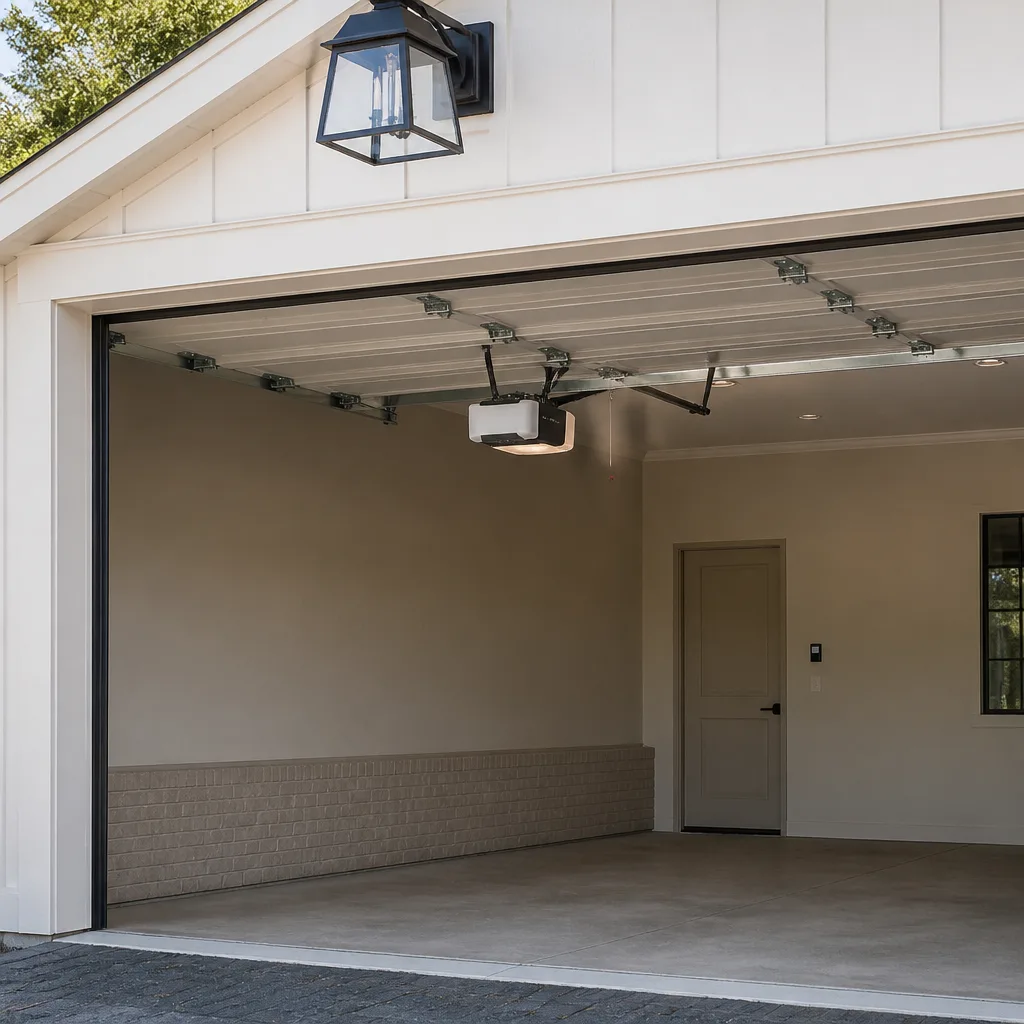 LiftMaster openers
 Chamberlain openers
Full 25-point door and opener safety check with every visit - springs, cables, rollers, tracks, and your LiftMaster or Chamberlain opener included
You get a price before we start. It does not change when the pro arrives.
Get your free estimateSeasonal Garage Door Care for Whitney: Year-Round Homeowner’s Guide
Most seasonal garage door guides assume four equal seasons. Whitney doesn’t have them. What we have is two hardware stress periods – summer heat and winter overnight cold – one high-wind corridor season in spring, and one genuinely calm window in fall. That changes the maintenance calendar. A generic “winterize your door in October” checklist has you lubricating cables during Whitney’s best-performing month for most door hardware. The real lubrication deadline is April, before the grease cooks off in 110°F June heat. This guide maps garage door care to Whitney’s actual climate: what fails, when it fails, and the twelve-month log that catches slow degradation before it becomes a Sunday night emergency.
Quick Answer
Garage door care in Whitney runs on two stress periods, not four seasons: summer heat (June through September) that degrades lubricant and overheats opener motors, and winter overnight cold (December through February) that makes torsion springs brittle. Spring brings wind load and dust on the photo-eye lenses; fall is the low-stress window to schedule non-urgent repairs. Lubricate in April, inspect springs in November, clean photo eyes after every dust event.
Styles & brands we work with
- Raised-panel steel
- Carriage house
- Modern flush
- Full-view glass
- LiftMaster openers
- Chamberlain openers
Table of Contents
- Why Whitney’s Climate Breaks the Generic Calendar
- Spring (March-May): Wind Load and Dust
- Summer (June-September): Heat and Lubricant Breakdown
- Fall (October-November): The Calm Window
- Winter (December-February): Cold and Spring Brittleness
- Building Your Rolling 12-Month Hardware Log
- Common Mistakes to Avoid
- When to Call a Professional
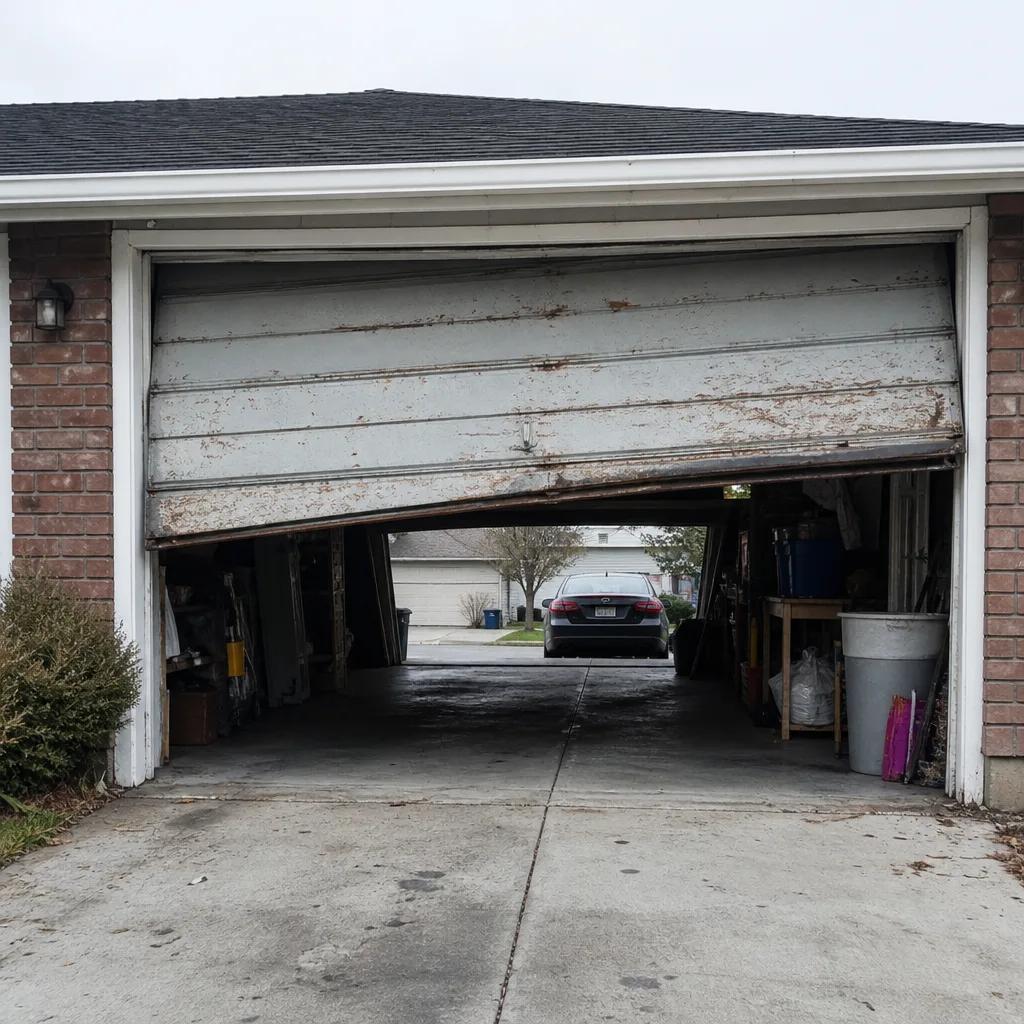 Before
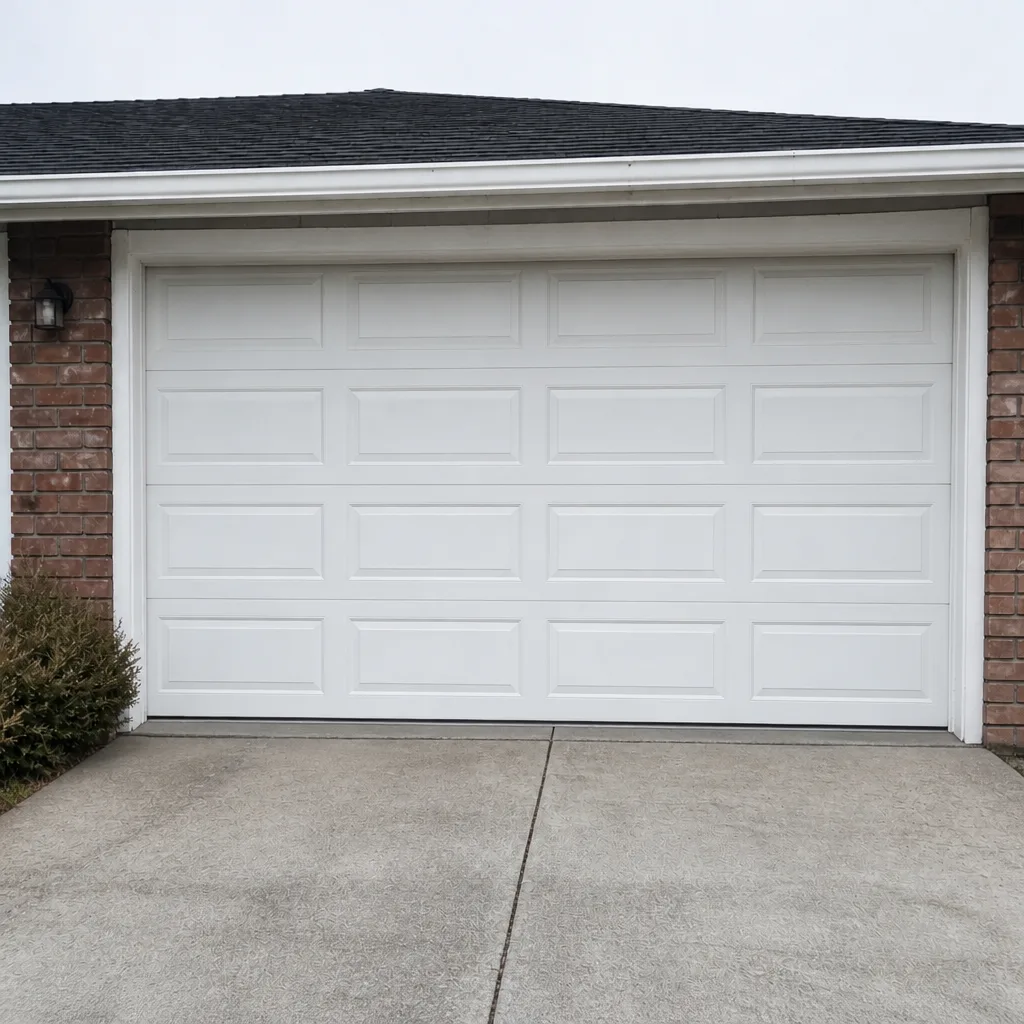 After
Why Whitney’s Climate Breaks the Generic Calendar
Whitney sits in the Las Vegas Valley’s southern reach, which means the door on your house faces a very particular set of conditions. Summer afternoons push past 105°F on a regular basis. Winter overnight lows dip near or below freezing in the coldest weeks. Spring funnels wind down the valley corridors, and summer dust events coat every horizontal surface, including the two photo-eye lenses sitting eight inches off your garage floor.
Here’s what that does to hardware. Garage door lubricant is formulated to a temperature band. Grease rated for household use turns thin and migrates off the torsion spring coils when the metal regularly exceeds 100°F – and the springs, which live under tension in a closed box, get hotter than the ambient air. Once the lubricant leaves, the coils rub metal on metal and wear faster than they would in a milder climate.
Cold does the opposite. Torsion springs are steel under constant load, and at 40°F and below the metal loses some of its give. A spring that’s already down on cycles – most run 10,000 to 15,000 open-and-close cycles before failure – can snap on the first genuinely cold morning of the season. We see this cluster in December and January, and it’s almost never a surprise on a door that gets inspected in November.
So the calendar that works in Whitney isn’t spring-summer-fall-winter chore rotation. It’s: April (lubricate before the heat arrives), June through September (manage heat and dust), October through November (the calm window – inspect, repair, prepare), December through February (cold watch), March through May (wind and dust recovery).
Spring (March-May): Wind Load and Dust Events
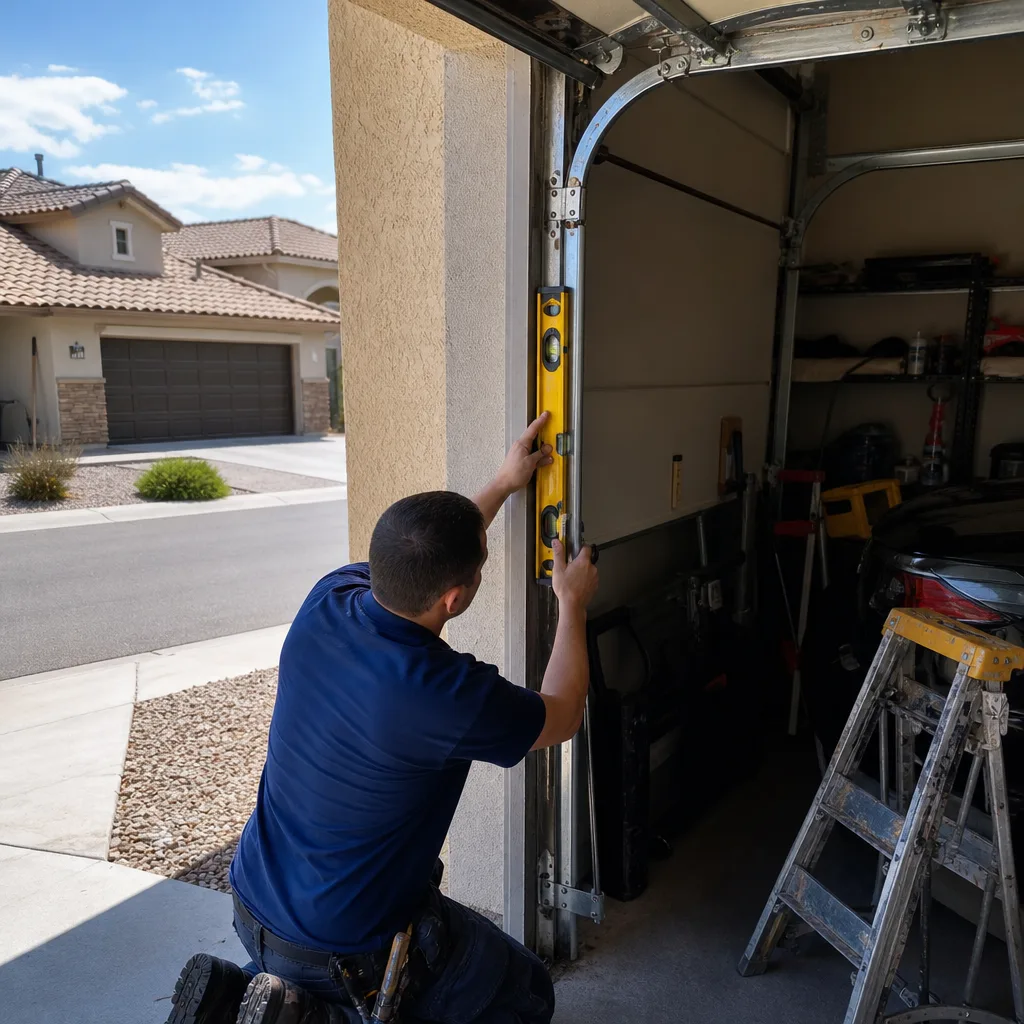
Spring is Whitney’s wind corridor season, and the garage door is a large flat sail facing whatever the valley throws at it. Wind load stresses two components more than anything else: the panel hinges (the brackets that connect each door section) and the horizontal track (the run above the door where the rollers ride).
A door that’s been slammed by wind for weeks develops play you can feel. With the door closed, grab the handle and shake gently. Some movement is normal. Sloppy side-to-side rock, or a rattle when the door opens, usually means a hinge bracket has loosened or a track has shifted slightly out of plumb.
- Walk the door and look at the hinge brackets. Loose bolts, rust streaks, or a hinge that sits off the panel are worth flagging.
- Check horizontal track alignment by eye. The two track runs should sit parallel. A track that’s been pushed out of alignment by wind will show as a gap or a kink at the curve.
- Clean the photo-eye lenses after every dust event. The two small lenses near the floor are what tell the opener “nothing’s in the way.” Dust cakes them, the opener gets a phantom “obstruction” signal, and the door reverses halfway down. A dry microfiber cloth on each lens, no water required.
- Test the safety reverse. Put a two-by-four on the ground under the door and close it. The door should reverse within the first couple of seconds of contact. If it doesn’t, the opener’s force or travel adjustment is off.
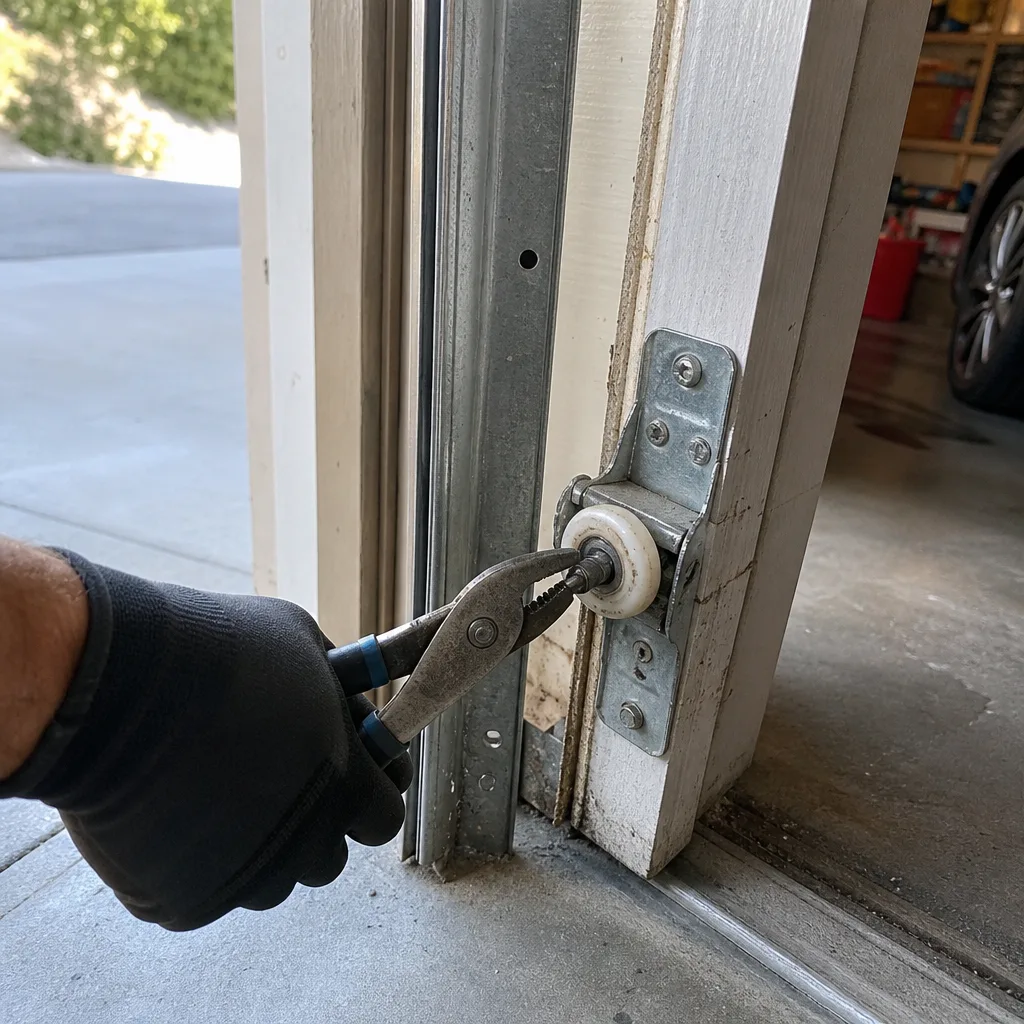
Wind season is also when we get calls about doors that “sound loud.” A rattle on a windy door is usually a loose roller or a hinge bracket that’s backed off a turn. Tightening it is a five-minute job at the right torque – over-tightening strips the panel hole.
If the wind has thrown the track out of line, or a panel has been creased, that’s beyond a wrench and a Saturday. Garage door repair in Whitney comes out for a free written estimate before anything is touched.
Summer (June-September): Heat, Lubricant, and Opener Motors
Whitney summer is the season that eats garage door lubricant alive. Three things deserve attention in June through September.
1. Lubricant selection rated above 100°F. The grease sitting in a tube at the hardware store is formulated for a milder climate. Look for a garage door lubricant rated for high-temperature service – lithium-complex or synthetic blends that hold viscosity above 120°F are what the trade uses on Whitney doors. Apply it to the torsion spring coils, the hinge pivot points, the roller bearings (not the roller tracks – tracks stay dry), and the opener’s trolley rail. April is the right window because it gives you before the worst heat, not after.
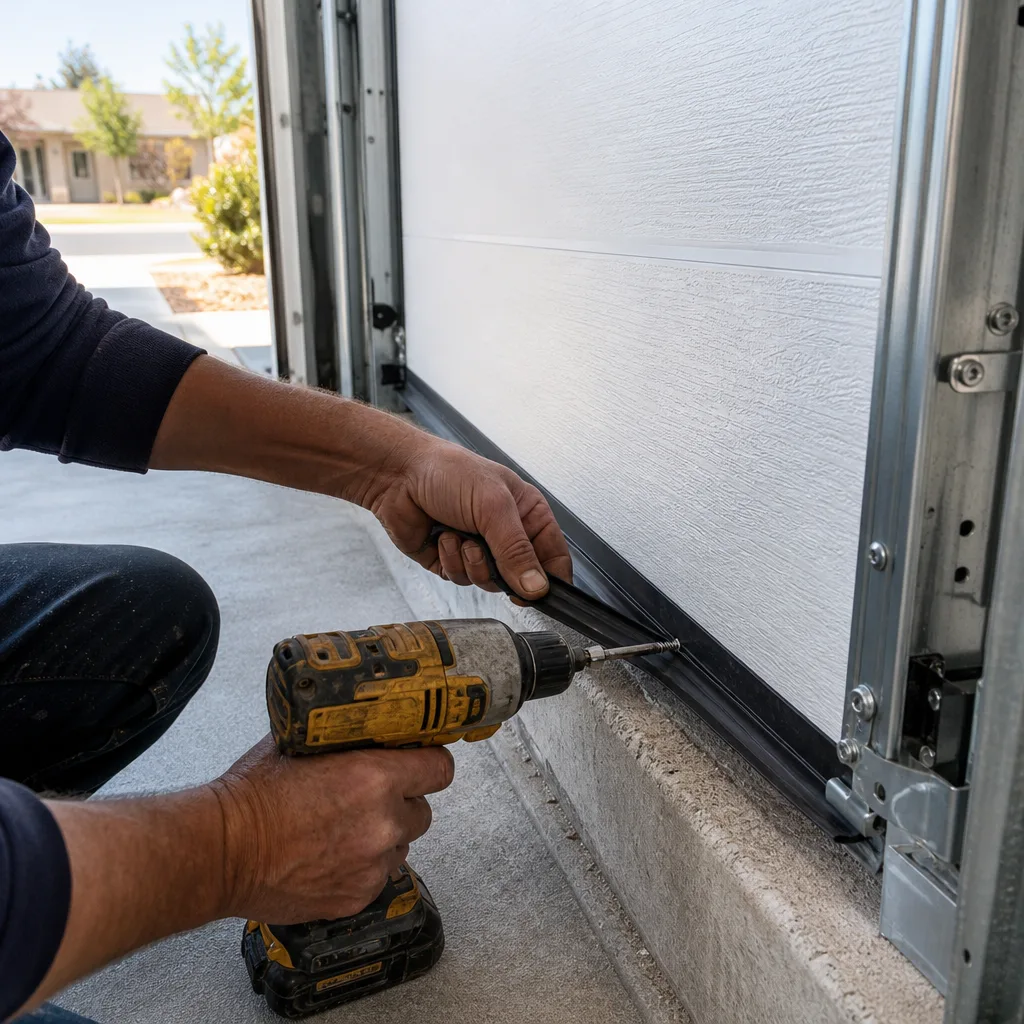
2. Thermal expansion at the door bottom. The rubber weatherstrip along the bottom of the door expands and contracts with heat. In summer, a gap opens at the corners as the seal stretches. Run your hand along the bottom edge on a hot afternoon. If you can slip a finger under one corner, the seal has lost its contact and needs adjusting or replacing.
3. Opener motor heat management. A garage in Whitney in July can hit 120°F inside. The opener motor is working against that plus the door’s load. Signs the motor is running hot include:
- Frequent thermal-shutdown cycling (the opener cuts out, comes back a few minutes later)
- An opener that strains audibly on the lift, especially with a LiftMaster or Chamberlain unit
- The remote that used to work from the driveway now needing you to be right in front of the door (a symptom of logic board degradation, not remote failure)
- Gritty noise on the rail, meaning the trolley carriage needs lubrication
If you run a Genie or a Chamberlain with a DC motor, don’t run the door up and down repeatedly during hot afternoons. Let the motor cool between cycles when you can. And if the door reverses on its own during a hot afternoon, suspect the photo eyes first, then the logic board. Garage door opener repair and installation in Whitney handles both.
Fall (October-November): The Calm Window
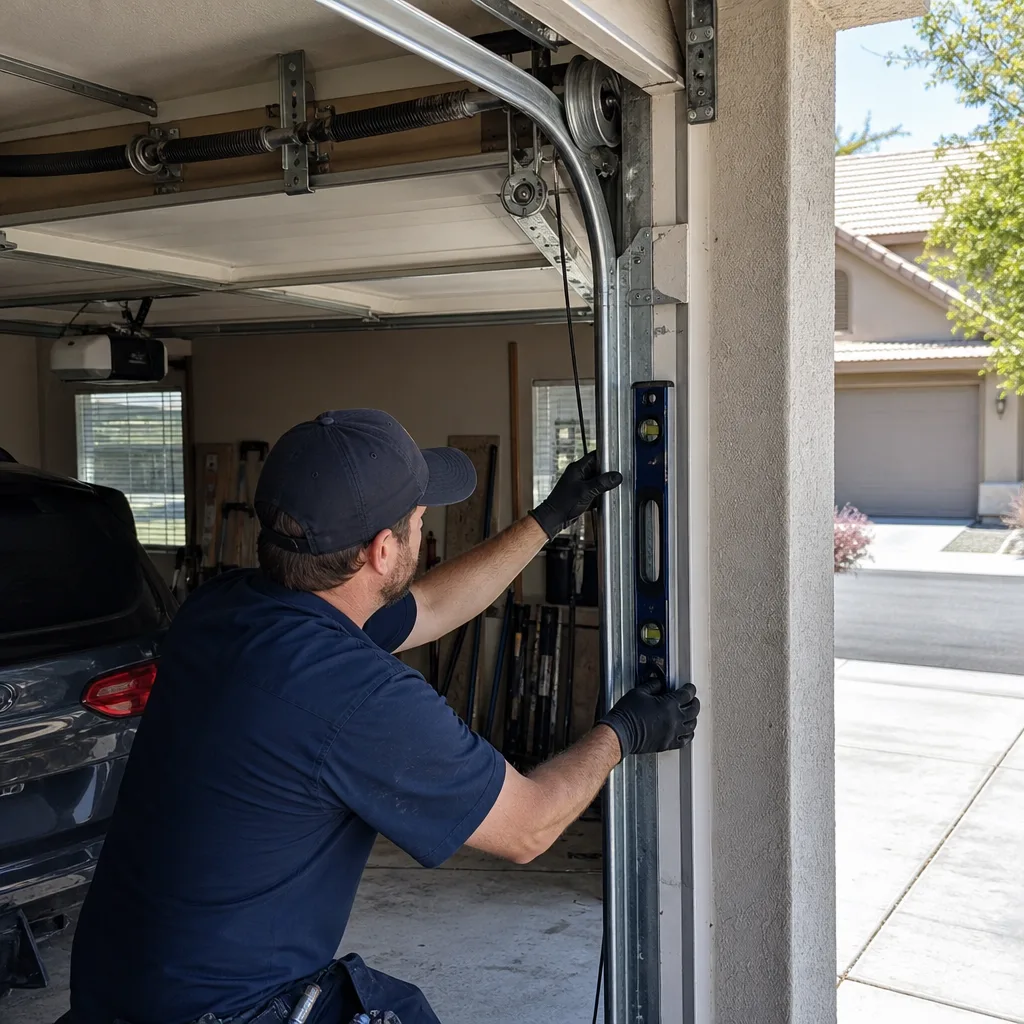
This is the honest truth about Whitney: October is the best-performing month for most garage door hardware. Overnight lows are mild, days aren’t extreme, wind dies back, and dust events are less frequent. There’s no maintenance urgency in October, which is exactly why it’s the right month to handle anything non-urgent.
Fall is when to do the following, all scheduled, none of it an emergency:
- Replace a noisy roller set. Nylon rollers with worn bearings grind. In October the grind is a nuisance, in July it’s a nuisance plus a motor working harder than it should.
- Address a door that’s begun to sag or bind. A door that binds in one spot puts uneven load on the opener and will fail harder in the cold. Fix in fall, not winter.
- Have the springs checked. We measure torsion spring wire diameter (typically 0.207, 0.225, 0.234, 0.243, or 0.25 inches for residential doors) and look for clean breaks or fatigue striations. Catching a spring on its last thousand cycles in November beats a broken spring on a January morning.
- Replace weatherstrip that’s showing cracks. The bottom seal sees less heat stress in October, and a fresh seal holds through winter when you need it.
- Book a full tune-up. Adjustments, lubrication with summer-rated grease, balance check, safety reverse test, and a written record. Scheduled work, quoted in writing first.
If you’re considering a new door because the old one has hit its cycle limit or the panels have seen too many wind seasons, this is the window to plan it. Measured, ordered, and scheduled – not a same-day job. Garage door installation in Whitney quotes the flat, written price before anything is ordered.
Winter (December-February): Cold, Brittleness, and Opener Force
Winter in Whitney is not Chicago, but the overnight cold is real enough to matter. Two things happen when temperatures drop into the 30s and below:
1. Torsion spring brittleness. Steel under constant tension loses ductility as it cools. A spring that’s been running toward the end of its cycle count – say 12,000 cycles on a 10,000-cycle rated spring – can snap on the first cold morning the door gets used. This is why we recommend a November inspection. A clean break on a torsion spring is a door-down situation, and the spring is under enough tension to injure anyone who tries to unwind it without the right winding bars and the training to use them. Do not attempt this. Call a trained technician.
2. Weatherstrip seal performance below 40°F. Rubber seal compound stiffens in the cold. A seal that’s been good all year can lose contact at a corner, which lets cold air, dust, and the occasional insect through. Check the corners in December. Also check the threshold seal where the door meets the floor – a bottom seal that’s hardened with age won’t seat against the slab in the cold.
3. Opener force adjustment. The opener’s force setting dictates how much resistance it tolerates before reversing. Cold weather increases resistance – the door and the grease and the spring all want to work against the opener more. If your opener has a force trim pot on the back of the housing (most LiftMaster and Chamberlain units do), check the owner’s manual before adjusting anything. Too much force and the safety reverse stops working. Too little and the door won’t close in cold weather. This is a place where a lot of well-intentioned DIY ends up with a door that reverses on the smallest obstruction – or worse, a door that doesn’t.
Winter is also the season we field the most emergency calls. A live person answers, day or night, including holidays. Servo Garage Doors Whitney takes emergency calls, sends a named technician, and texts you the on-the-way update.
Building Your Rolling 12-Month Hardware Log
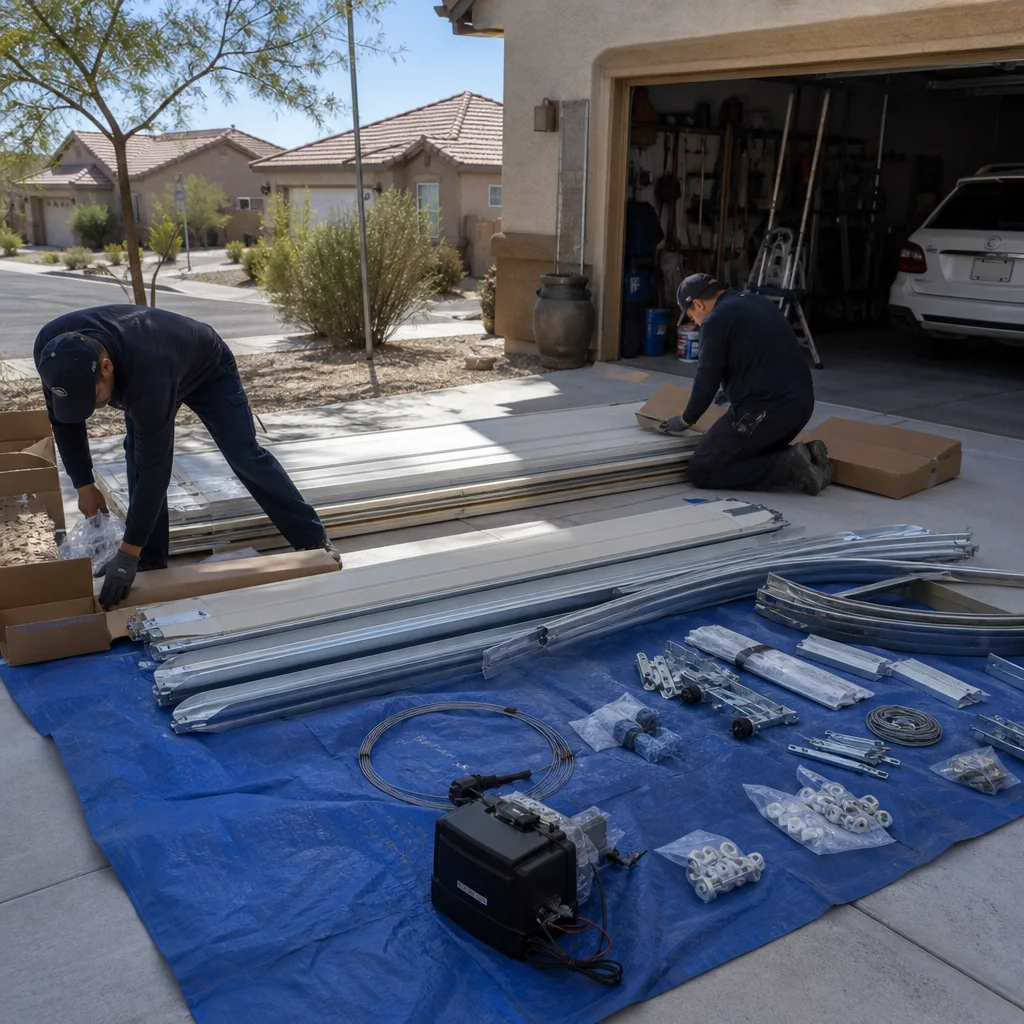
The single best thing you can do for a Whitney garage door is keep a written log. Not because the door reads it, but because you do. A log lets you compare hardware behavior year over year and spot slow degradation before it becomes a failure.
Here’s the format that works:
- Month and year at the top. One row per month.
- Lubrication date and product used. Note the lubricant’s rated temperature band. If you used a high-temp blend in April, next April you’ll know.
- Door noise rating (1-5). 1 is quiet, 5 is loud enough to hear from the kitchen. Noise trends up before failures.
- Speed of travel. Count seconds from fully closed to fully open, or use a stopwatch once a month. A door that starts taking a second longer than it used to is telling you about a spring or opener issue.
- Balance check result. Disconnect the opener (pull the emergency release), lift the door halfway, let go. A balanced door stays put. A door that sags or rises means the spring tension is wrong.
- Photo-eye test result. Once a month, perform the two-by-four test and write down pass/fail.
- Weatherstrip condition. Rate the bottom seal 1-5. Note cracks, gaps, or stiff corners.
- Any observations. A rattle after a wind event. A run of opener hiccups during a heat wave. A note of what you heard, not what you felt about it.
After twelve months you’ll have a document that shows the door warming up in July, quieting in October, and straining in January. That’s diagnostic gold – for you and for any technician you call. If you’ve been thinking about a new opener or door, the log turns a “what should I get” conversation into a “here’s what my door has actually done” conversation. Opener repair and installation quotes better when the log comes out first.
Common Mistakes to Avoid
- Following a generic four-season checklist. October is not a lubrication month in Whitney – April is. A national calendar has you lubricating when the grease won’t hold and skipping when it would. Build the year around Whitney’s two stress periods and one calm window.
- Using household grease or WD-40 on the torsion spring. Household grease migrates off the coils at 100°F. WD-40 is a solvent, not a lubricant; it strips what’s there and leaves nothing. Use a garage-door specific lubricant rated for high-temperature service.
- Adjusting opener force without checking the safety reverse. Every force adjustment needs a two-by-four test afterward. Skip the test and you’ve traded a door that won’t close for a door that won’t stop.
- Ignoring a noise change after a wind event. Wind-season rattles are usually a loose hinge or roller. Left alone, a loose hinge wears the panel hole – and a stripped panel hole can’t take a bolt until you’ve got a new panel.
- Skipping the November spring inspection. Catching a spring at 12,000 cycles in November costs a fraction of catching it snapped on a cold January morning, when the door is down and your car is trapped.
- Washing the photo eyes with water. Water spots worse than dust. A dry cloth on each lens is enough. Soapy film from a pressure washer will hold dust and give you a phantom obstruction.
- Never recording what you found. A garage door is a slow-failing machine. The owner who keeps the log sees the acceleration. The owner who doesn’t learns about it on the coldest morning of the year.
When to Call a Professional
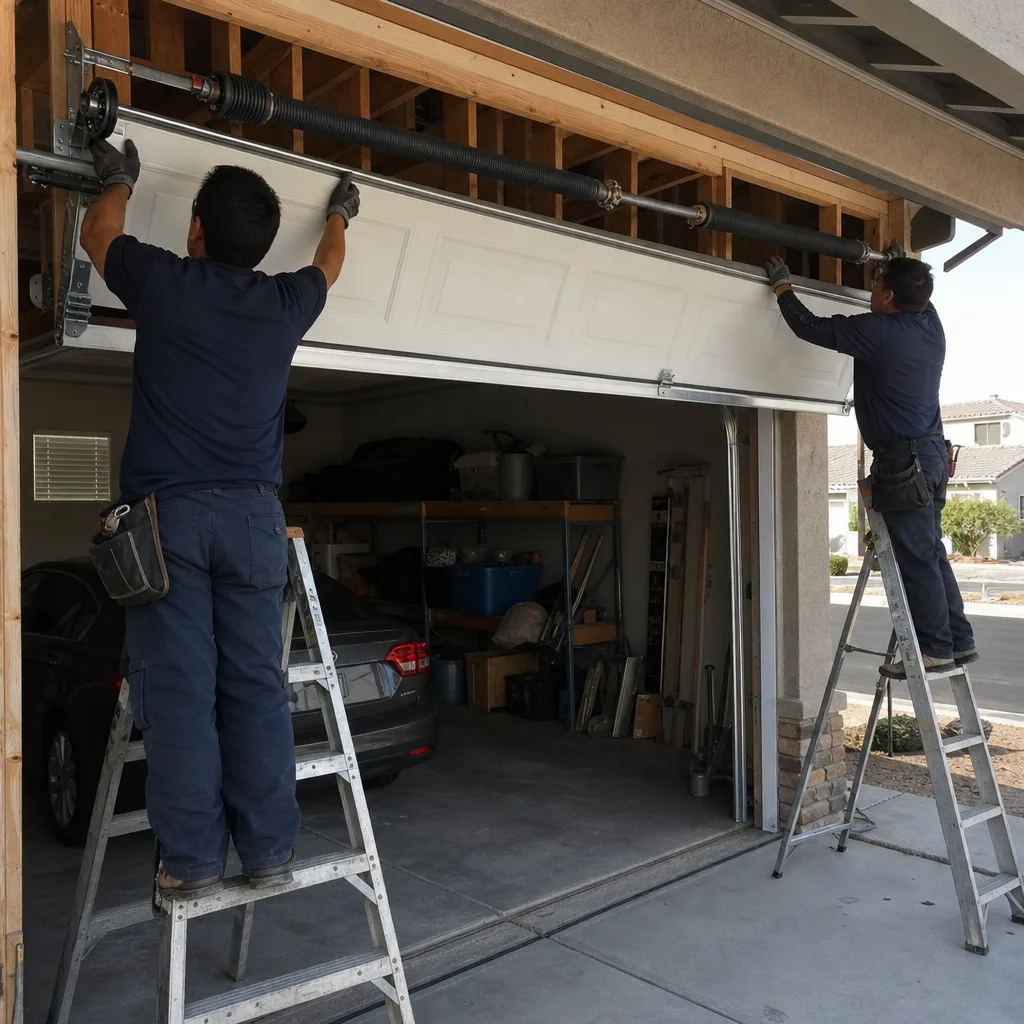
Some jobs are wrench-and-Saturday. Some aren’t. Call a professional for: any broken torsion spring or cable (the tension is enough to injure), a door that’s come off the track (panels and tracks are heavy and awkward), a door that’s binding or sagging in the middle (the spring tension is wrong and adjusting it wrong is dangerous), opener logic board or motor failures, a door that reverses or stops partway and won’t stay fixed after the photo eyes are cleaned, and any replacement or new-door work – measured, ordered, and scheduled, not a same-day job. The technicians we connect you with have up to 11 years of experience, are background-checked, and are licensed and insured as Nevada requires. Servo Garage Doors Whitney offers free estimates in Whitney – call (888) 402-1096.
See the difference
BeforeAfter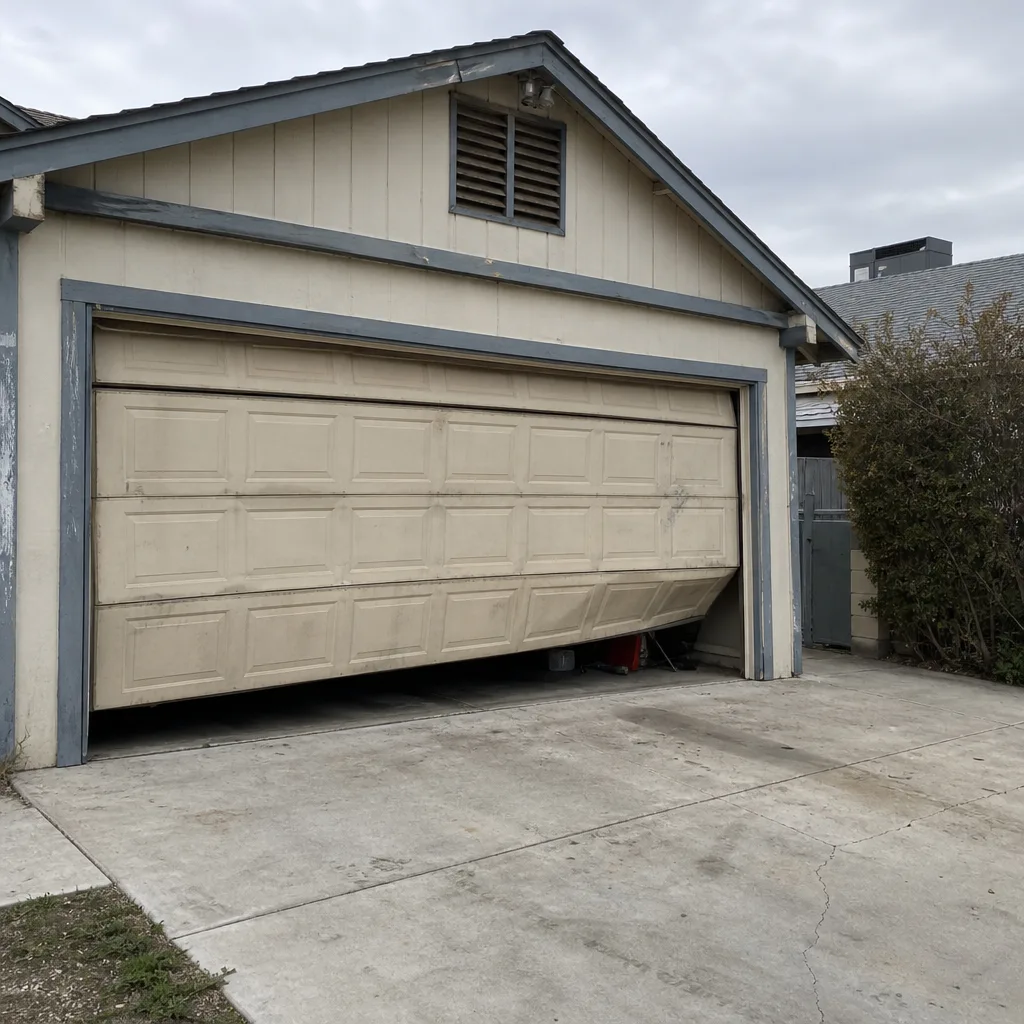 Before
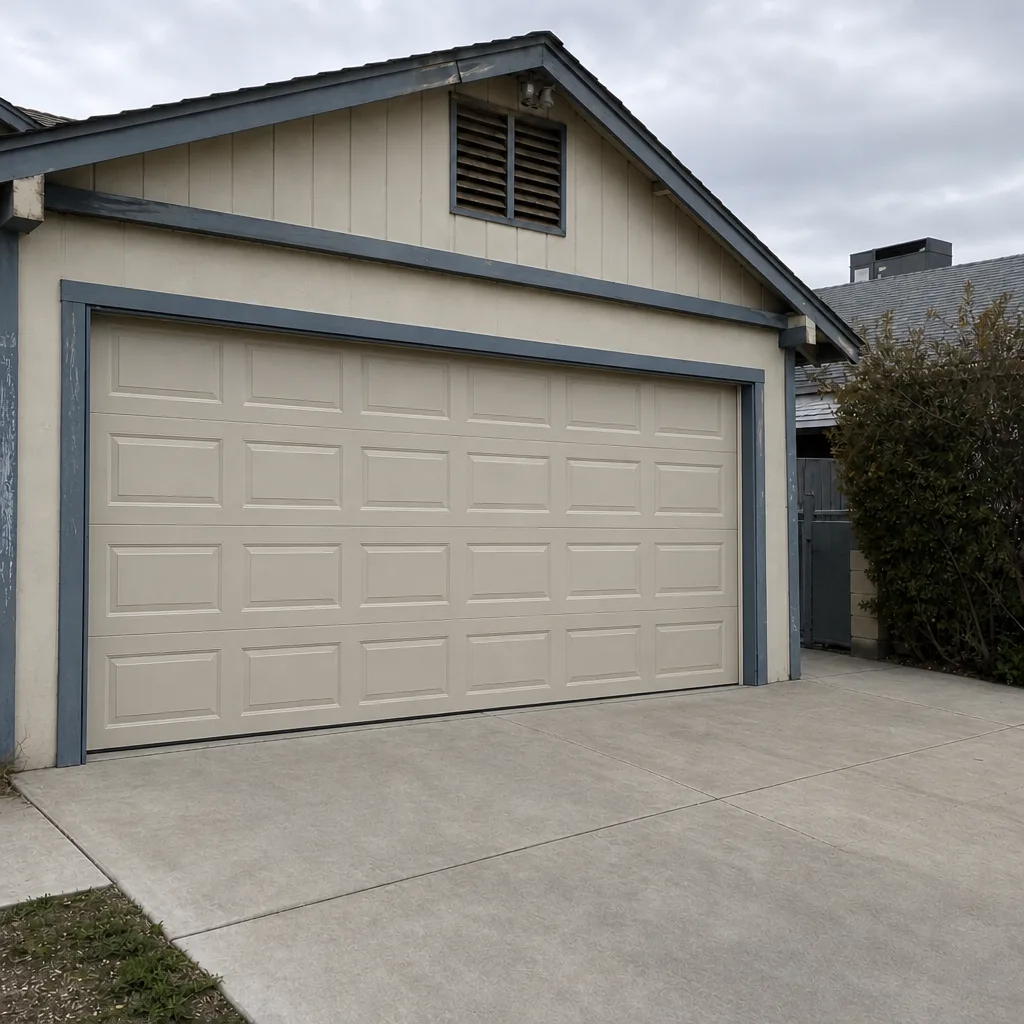 After
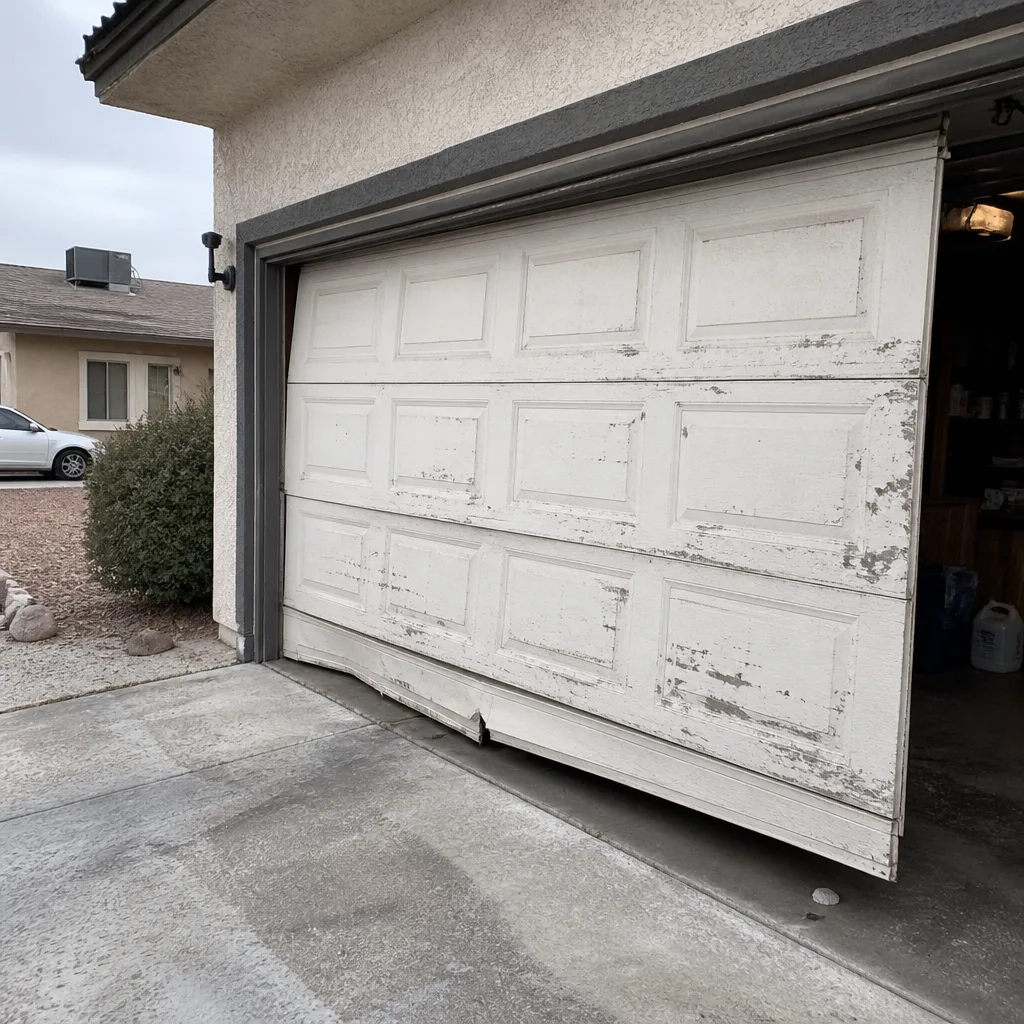 Before
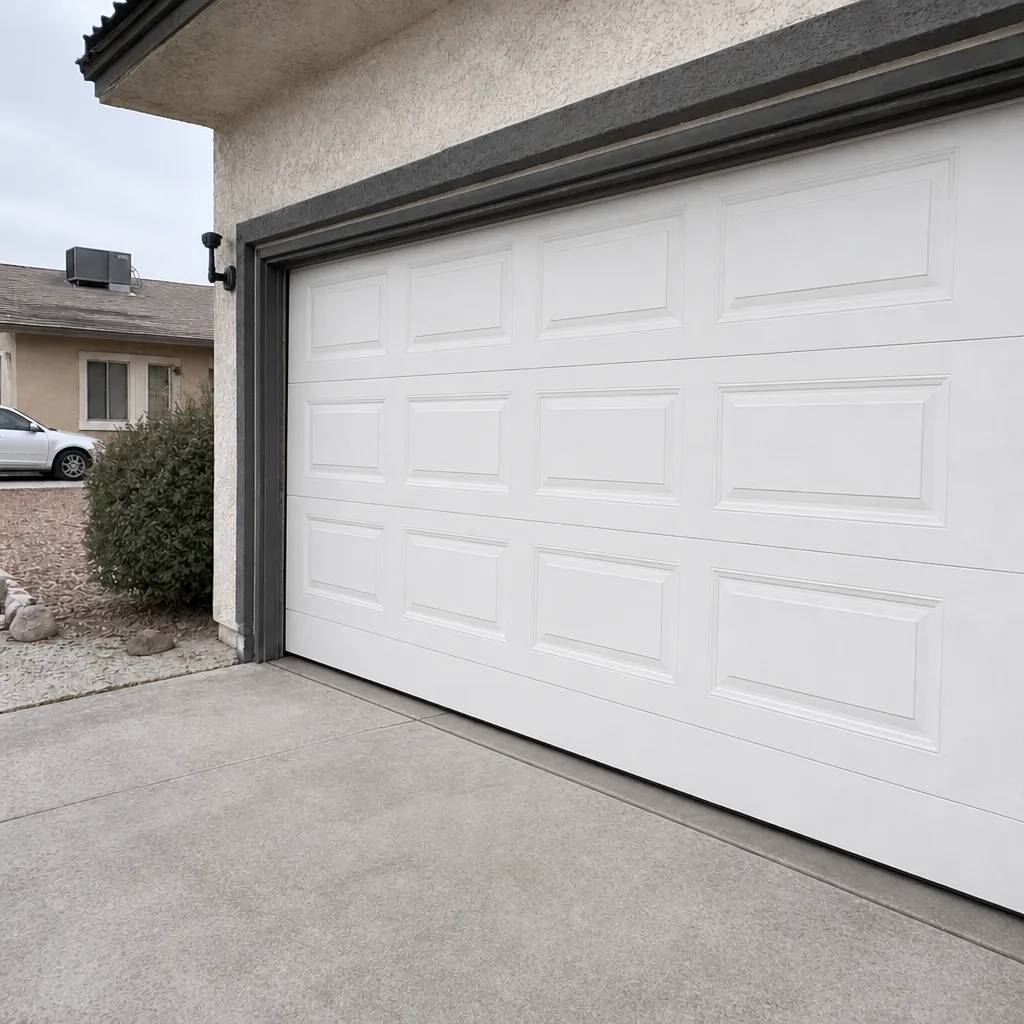 After
Frequently Asked Questions
Twice a year in Whitney: once in April, before the summer heat cooks the grease off the torsion spring coils, and once in October when the fall window opens. April is the load-bearing one. A spring that goes through a 110°F summer without fresh high-temperature lubricant will wear measurably faster than one that doesn’t. Call (888) 402-1096 for a full tune-up – estimates are free.
In our experience, torsion spring failure after a run of 100°F-plus summer days, followed by an early-winter cold snap. The summer heat fatigues the metal and the winter cold makes it brittle. That’s why we recommend the November inspection – it catches springs on their last thousand cycles before the cold gets to them. Call (888) 402-1096 for a written estimate on a spring replacement.
No. A torsion spring is steel held under enough tension to break bone, and unwinding one without the correct winding bars and training is how people get seriously hurt. We won’t give step-by-step instructions for this and no responsible technician will either. Call a trained professional – the original spring has a wire diameter and cycle rating that need to match, and that requires measurement.
Almost always the photo eyes. Summer dust events coat the two small lenses near the floor, the opener reads a phantom obstruction, and the door reverses. Clean the lenses with a dry cloth and run a two-by-four test. If the door still reverses, suspect the logic board or a force setting that needs adjustment. Call (888) 402-1096 if it persists past a couple of lens cleanings – estimates are free.
Three signs point to replacement: the door has hit its cycle count (most run 10,000 to 15,000 cycles), the panels have visible wind damage or structural cracks that can’t be fixed with a hinge and roller swap, or repairs are stacking up against replacement cost. If any of those sound familiar, it’s worth a measured visit and a flat written price for both paths. No same-day schedule on installation work – measured, ordered, scheduled, written.
A proper seasonal tune-up in Whitney covers: lubrication with high-temp-rated grease on springs, hinges, and roller bearings; a balance check with the opener disconnected; a safety reverse test; a photo-eye test; an inspection of hinges, horizontal track, cables, and rollers; weatherstrip condition; and a written record of findings. Call (888) 402-1096 for a written price before anything starts – Clause 1 of The Haven Standard, no exceptions.
The Bottom Line
Whitney doesn’t have four equal seasons, and your garage door care calendar shouldn’t pretend it does. Two stress periods (summer heat, winter cold), one wind season (spring), one calm window (fall). Lubricate in April with a high-temp-rated product, clean the photo eyes after every dust event, book a November spring inspection so the cold doesn’t surprise you, and handle non-urgent repairs in October when the weather lets you. Keep the rolling log and read it once a year. The door that fails on the coldest morning of the year is almost always the door that was telling you in October.
Servo Garage Doors Whitney quotes a flat, written price before any work begins. Every visit closes with a documented photo record of what was found and what was done – Clause 4 in practice. The technicians we connect you with are background-checked, licensed and insured as Nevada requires, and bring up to 11 years of experience. Calls are answered by a live person, 24/7, and you get a named technician and an on-the-way text, not a callback window. If you’ve got a written estimate from another company, bring it in for a free second opinion. Call (888) 402-1096 for a free estimate. Free estimates, upfront pricing, and a 365-Day Done Right Promise: if a repair isn’t right, we make it right.
Written by the team at Servo Garage Doors Whitney.